THE INTRODUCTION OF 5.45
The 5.45 Russian cartridge was developed in the early 1970s by a group of Soviet small arms experts. The Soviets were following the trend toward light calibers for service rifles. Having a lighter caliber for a firearm can greatly increase the muzzle velocity and range of a cartridge, all while reducing recoil and increasing the number of rounds a soldier can carry.

In direct response to the United States’ adoption of the 5.56 NATO cartridge, the Soviets decided to depart from the long serving 7.62x39mm rifle caliber. The 5.45 cartridge is a 53-grain, .22-caliber projectile that sits in a necked 39mm casing – the same casing length used in its .30-caliber predecessor.
PERFORMANCE OF THE NEW CARTRIDGE
This new Soviet cartridge achieved high velocities and increased the effective range of the AK platform. In of the major performance advantages over its 5.56 NATO rival, the cartridge was designed to be fired out of a 16.3-inch barrel to optimize performance and velocity in contrast to the 5.56’s intended 20-inch barrel.
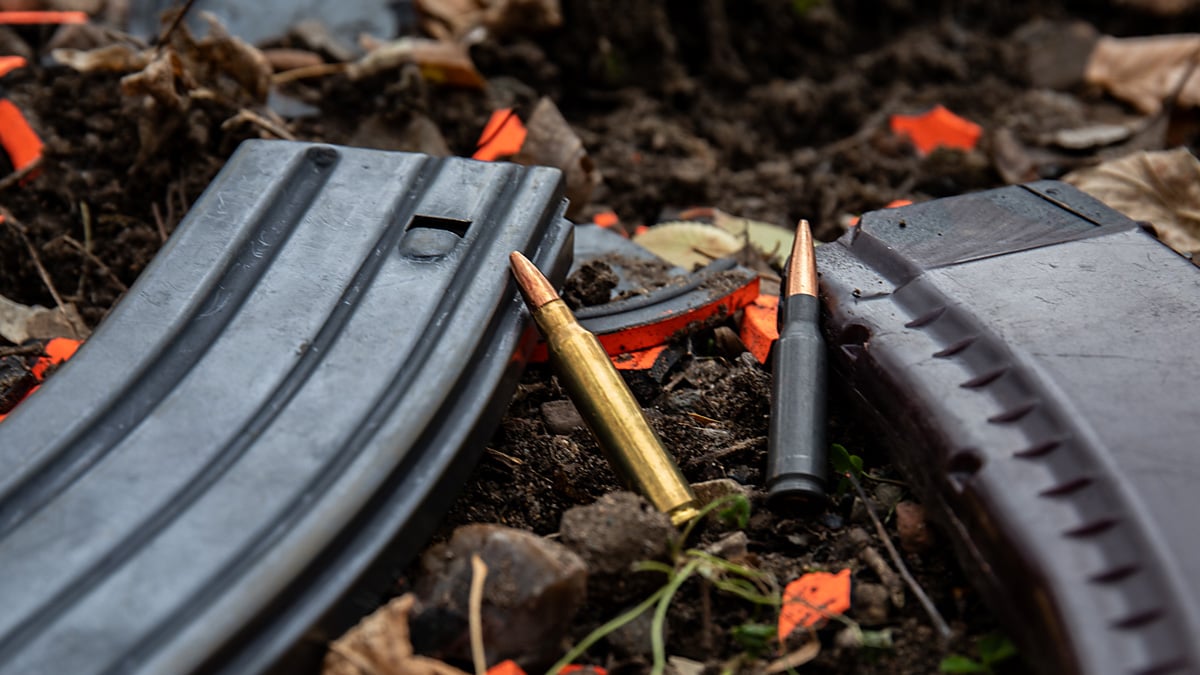
From a 16-inch barrel, a standard 5.45x39mm bullet (53-57 grains) travels at about 2,900 FPS. This increase in velocity bumped the effective firing range of the AK-74 to 500 meters, a 150-meter increase over the AK-47. While that is impressive performance, the new design also decreased the felt recoil, all while maintaining impressive damage performance.
ENTER THE 7N6 CARTRIDGE
The original 5.45 Soviet military round adopted in 1974 was designated the 7N6 cartridge. The 7N6 projectile features a steel penetrator core with a hollow cavity at the tip of the bullet casing. This design induces a crazy yaw and pitch to the bullet as it contacts its target.
Upon contact, the hollow tip causes the round to become unbalanced, leading to a tumble through the wound channel. The 7N6 does not fragment as much as many other cartridges, causing the entirety of the bullet to tumble and turn as it moves through soft tissue. This performance causes a massive energy dump into the target, leading to an extensive temporary wound cavity and an unpredictable bullet path.
LEGEND OF THE POISON PILL
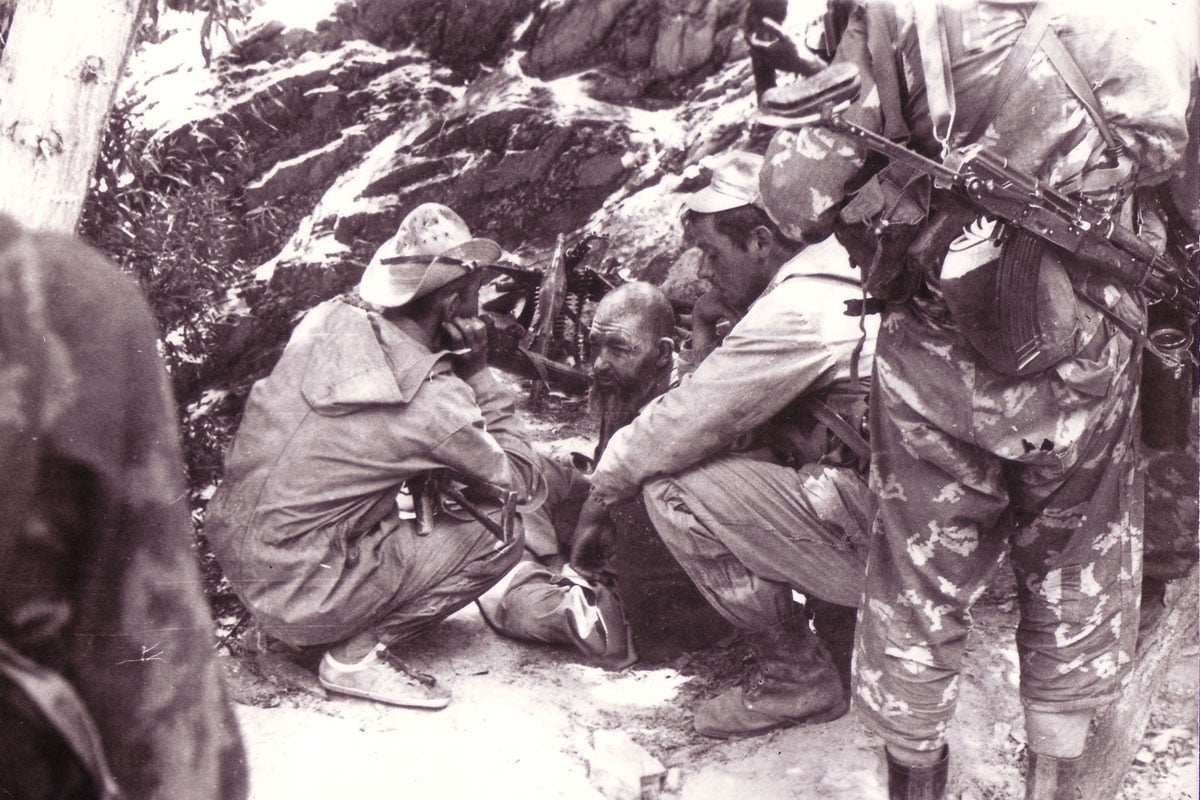
The AK-74 saw its first action in the War in Afghanistan during the late 1970s and 1980s. That theater earned the 7N6 cartridge earned the nickname the “Poison Pill,” as the unpredictable nature of the round caused massive internal damage. Due to the extensive tumble of the bullet, even wounds to extremities often proved fatal.
The 7N6 “Poison Pill” is one of the most renowned military cartridges, with a mythical reputation. However, the myth seems to become reality after being proven with ballistics tests. I previously highlighted my favorite Garand Thumb videos, and the 5.45 ballistic analysis is worth the watch.
PENETRATION ISSUES
While there are a lot of advantages to 5.45 and the performance has been praised, it is not a perfect design. There are two major disadvantages to the 5.45 cartridge, and they are oddly linked to each other.

The first disadvantage of the cartridge is its lack of penetration in armor. Due to the hollow cavity and massive energy dump of the round, 7N6 does not perform well against hardened targets.
In the past 30 years, body armor has become a more common practice with major militaries. This realization led post-Soviet Russia to have concerns over the performance of the 7N6 cartridge, if there were ever a conflict between the Russian Federation and another major world power.
In fact, 7N6 was replaced by a tungsten and cobalt constructed projectile (designated 7N39) due to its improved performance in hard targets. The 7N39 round is designed to compete with the performance of the M855A1, further confirming that the 5.45 to 5.56 comparison is perhaps the largest cartridge rivalry in the world.
ATF BANS IMPORT
The second disadvantage of the cartridge has to do with its availability in the United States. While world conflicts like the Russia-Ukraine War massively affect ammunition availability, that is not the leading cause of the round’s scarcity in the United States.

The 7N6 cartridge is the most common and widely available 5.45 round in the world. This cartridge was produced for almost 50 years, with enough production to properly arm the massive Russian military and its allies. There are hundreds of millions of rounds sitting in Spam cans in former Soviet warehouses across many different countries.
However, in 2014, the ATF banned the import of 7N6 ammunition to the United States. The ATF’s letter claims that the cartridge is classified as “armor piercing” and that since it can be fired from AK pistols, it would no longer be allowed into the United States.
The irony is that the cartridge was dumped by the Russians due to its lack of armor-piercing performance in the 16-inch barrel standard issue rifle. Apparently, when you shorten the barrel and lose velocity in the cartridge with an AK pistol, it is somehow an increased concern for the ATF. Prior to the ban, 7N6 was available by the crate, offering 2,100 rounds for less than $100. Now, you will have to pay an arm and a leg for a Spam can of poison pills.
ON THE RANGE
Anyone who has spent time on the AR platform knows the pure joy and ease of shooting and training on 5.56. With little to no recoil, it is incredibly easy to achieve accuracy and speed during target transitions.
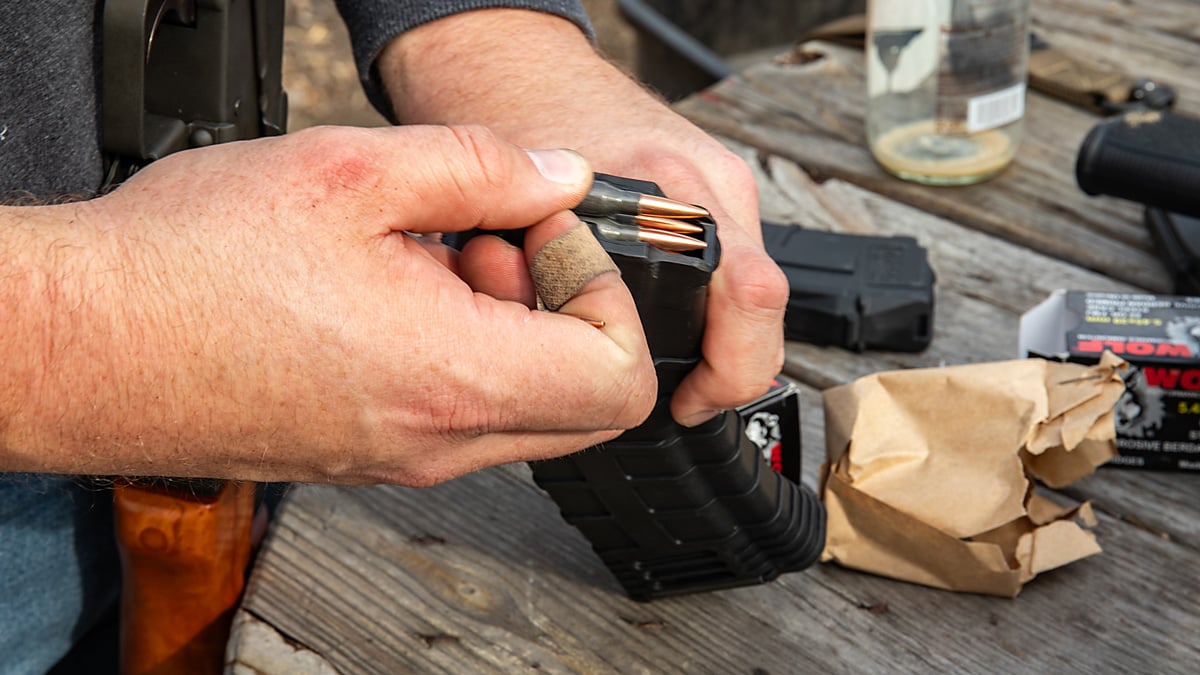
Shooting an AK in 7.62x39 is a little more of a rock-and-roll show. The .30-caliber cartridge tends to cause more of a jolt, causing the muzzle to rise more than its 5.56 counterpart. As much as I love shooting AKs, I have been beaten up by an AK before, especially after days of shooting 700-plus rounds.
In fact, in my recent overview of the Romanian CGR, I noted how violent the recoil impulse was in a plain, unmodified AKM variant. There is a misconception that the AK platform is inaccurate; however, I believe some of this is fueled by the fact that the platform can be a little more difficult to control.
The AK in 5.45 bridges the gap between the AK-47 and AR-15. The first time I shot 5.45, I fell in love. Smooth, light-recoiling, and easy to control, the AK in 5.45 is extremely easy to master. The smooth in-line recoil of the AK paired with a .22-caliber intermediate cartridge makes drills, target transitions, and long days of shooting a pleasure.
When comparing the 5.45 recoil to that of 7.62x39 (as seen in the video above), it is easy to see the difference and understand why the Russians decided to make the change. In comparison to 5.56, the benefits of the performance of 5.45 paired with a similar recoil impulse help push the round up on the best intermediate cartridge list.
SO, 5.45 or 5.56?
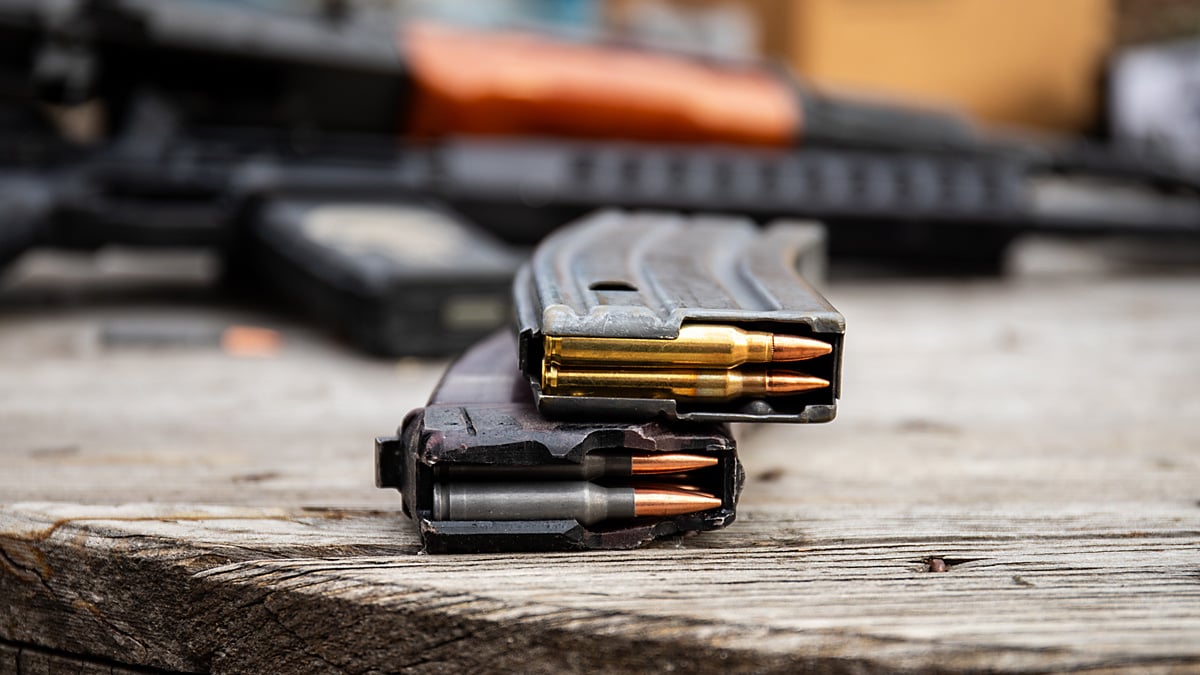
In comparison to 5.56, the 5.45 round is a worthy opponent. The nature of the design is well suited for comparable ballistics, effective distance, and projectile performance in a target. Each cartridge has its own distinct advantages and disadvantages.
So, which is better? In my opinion, there is not a clear answer. Each has an extensive track record that continues to build.

For me, I love the AK platform and I am continually impressed with the performance of the 5.45 cartridge. The light-recoiling round is a pleasure to shoot, while the round’s damage capabilities remain extremely impressive.
That said, the best caliber is the one you train with constantly. It doesn’t matter which side of the aisle you fall on if you don’t go out and practice on the range. Each round can be extremely effective if you put in the work and master the craft.