Overview
As a bit of the company's history, Bond Arms was founded in Texas in the 1990s and tackled the old-style Deringer/derringer concept with a new and much safer take that included a cross-bolt manual safety and a rebounding hammer. Making their guns modular, they used interchangeable barrels, which meant simple caliber changes were on the table at the user level. Further, going back to their Defender line that started it all, they used top-notch materials including high-grade stainless steel – no pot metal here.
The company's line even became somewhat bespoke with variants that sported high-polish satin finishes complete with optional engravings and rosewood grip panels. As far as caliber choices, Bond offered these in everything from rimfires to the Cyclops Big Bore, which comes in .45-70 Gov't (cue the "I fear no man" meme).
New for 2023 from Bond is the Honey B.
Part of the company's entry-level Stinger Rough Series with a more everyday carry-oriented aesthetic, it has a matte bead-blasted finish on a stainless-steel frame that Bond terms "Rough & Tumble." Unlike most of the Bond line that has a removable trigger guard, the Stingers (Honey B included) have a fixed guard due to the construction of the frame. The twin O/U barrels are stainless steel with fixed sights on the top barrel, while the extended grips are made of B6 resin. The barrels – and thus caliber – are swappable with any in the Stinger RS series, which is a nice bonus.
The Honey B is offered in 9mm, .38 Special, .380 ACP, .22 LR, or .22 Magnum. Bond sent us one of the latter to review.


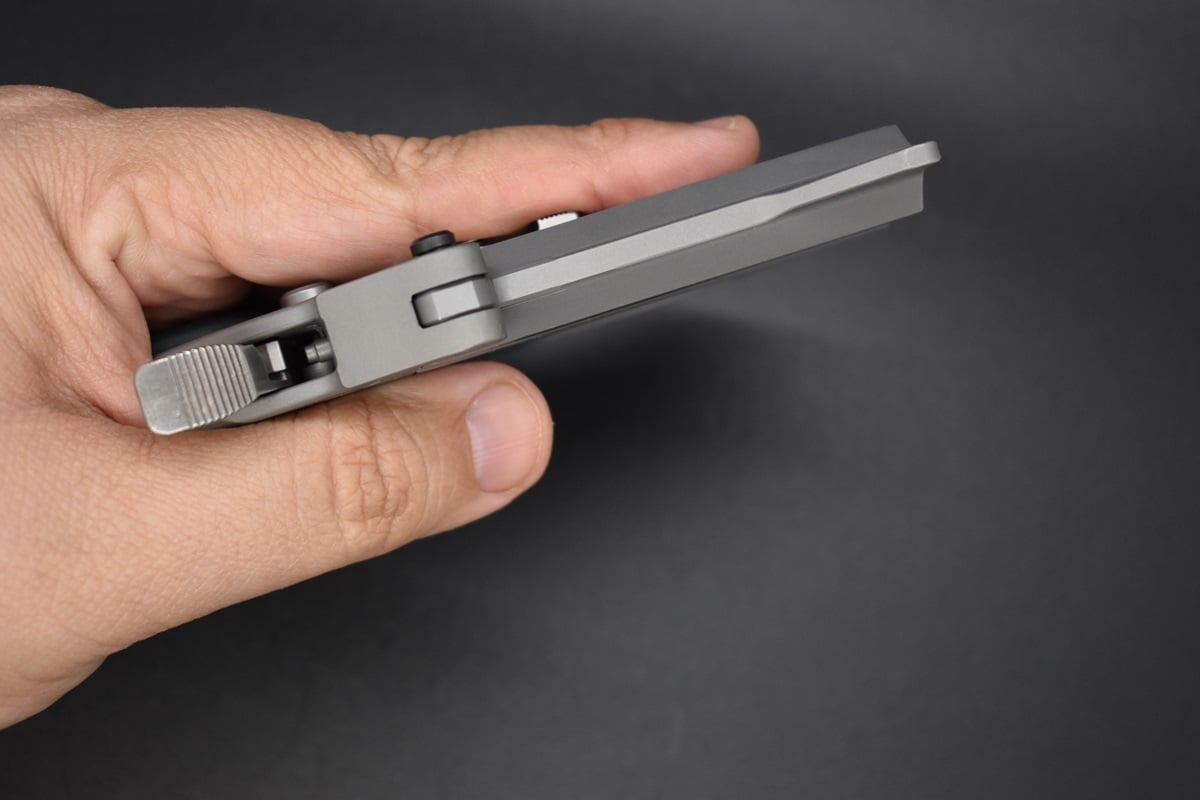


The Specs (as provided by Bond)
- Caliber: .22 LR, .22 Mag, .380, 9mm, .38 Special (22 Mag featured in review)
- Barrel Length: 3 inches
- Overall Length: 5.5 inches
- Height: 4.19 inches
- Width: 1 inch across the widest part of the grip
- Weight: 17.5 ounces
- Ammo Capacity: 2 cartridges
- Action: Single Action
- Trigger Pull Weight: 7 pounds
- MSRP: $320
Features
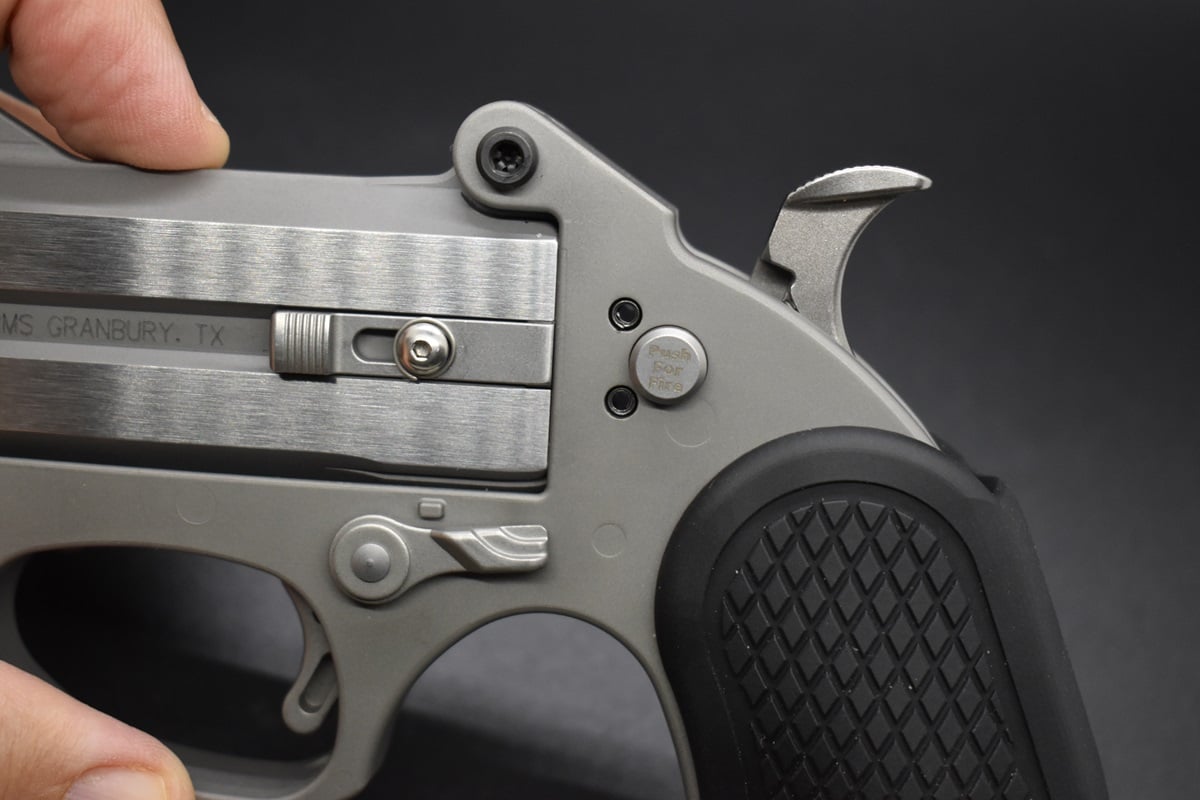


Trigger
The single-action trigger is very short and crisp, although the break is a tad heavy at an advertised 7 pounds. However, due to the concept behind a derringer, a lighter trigger would likely be considered a bad idea. The hammer, on the other hand, is stout to cock and has a lengthy travel. I could pull it off without breaking the grip even while shooting one-handed, but I have large mitts and almost abnormally long thumbs.
Observe:
Reliability
We tested the Honey B with a full 125-round carton of CCI's Maxi-Mag .22 WMR 30-grain polymer-tipped VNT Varmint ammunition. We also ran 50 rounds of Winchester gray box Super-X FMJ.

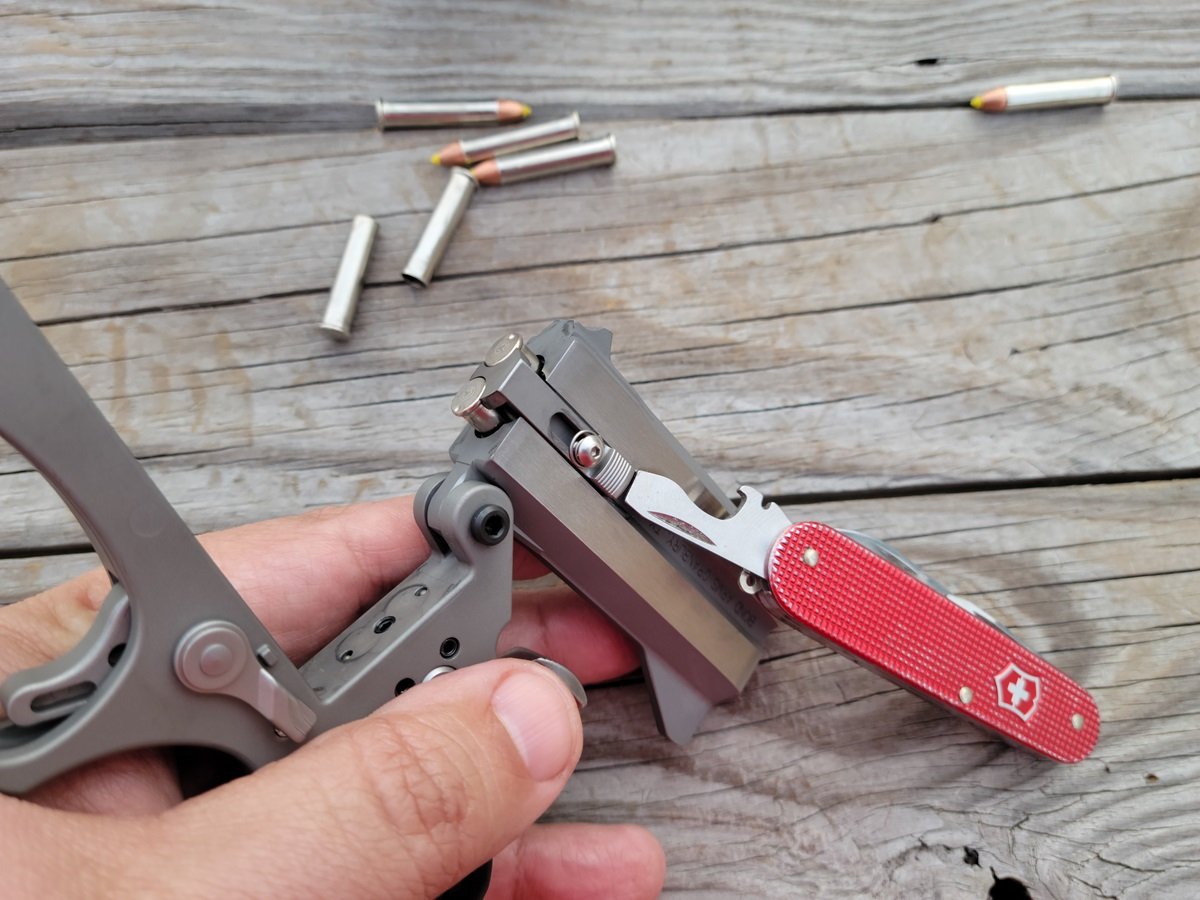
Also, while the recoil impulse was non-existent making the Honey B sweet (see what we did there) to shoot on the range, there was a noticeable fireball as unexpended powder hit the muzzle. Not a deal breaker, just something to keep in mind.
Observe, this on a cloudless winter day:
Accuracy
No one is going to lie and tell you that a derringer of any sort is meant for target work or shooting at a distance. They fall squarely into a category that some folks term a "belly gun," meant for close-in/last-ditch work. Still, with a two-hand grip and a bit of concentration, we were able to keep a 2- to 3-inch group at 7 yards. Working with a larger target, we were able to (usually) ring a 10-inch plate at 15 yards with the little gun.

Pros & Cons
Pros
- Slim and compact enough for pocket carry.
- Easy learning curve.
- Fun to shoot, especially with .22 WMR.
- Can easily be swapped out to different calibers.
- Good safety features.
- Less expensive than other Bond models.
Cons
- Limited capacity.
- Slow to load/reload.
- Primitive sights. 10-yard gun.
Conclusion
Gordon Bond and the gang over at Bond Arms have been playing the derringer game since 1993, back when they were Texas Armory. With 30 years now in the rearview, they have learned a thing or three about the platform. While some derringers give an amazingly bad experience on the range, the Honey B on the contrary was enjoyable to shoot and we had requests to pass it around. Of excellent construction with the frame and barrels crafted entirely from stainless steel, the fit and finish were superb while the beefy (for a derringer) B6 grips filled the hand and gave good control of the gun.
About the only complaints you could voice are those that handicap any derringer across the past 150 years or so, and that is the low capacity and the lengthy time it takes to reload. Plus, you are stuck with the sights you have. Some things you just can't change without going to another action.
Anyone looking for a great shooting derringer (yes, they do exist) would be well served in poking around for a bit of Honey B.