Why Does .22 Long Rifle Exist?
The .22 LR came out of the .22 Long, which came out of the .22 Short – the first American cartridge. Smith & Wesson developed the .22 Short for its No. 1 revolver back in 1857. It was a rimfire cartridge with a drawn brass case, a 29-grain lead bullet, and four grains of black powder.
The .22 Short cartridge gained popularity as a pocket pistol cartridge, but designers wanted more power. That resulted in the .22 Long, which was first produced in 1871. The .22 Long Rifle was derived with a different purpose as a true small-caliber rifle cartridge.
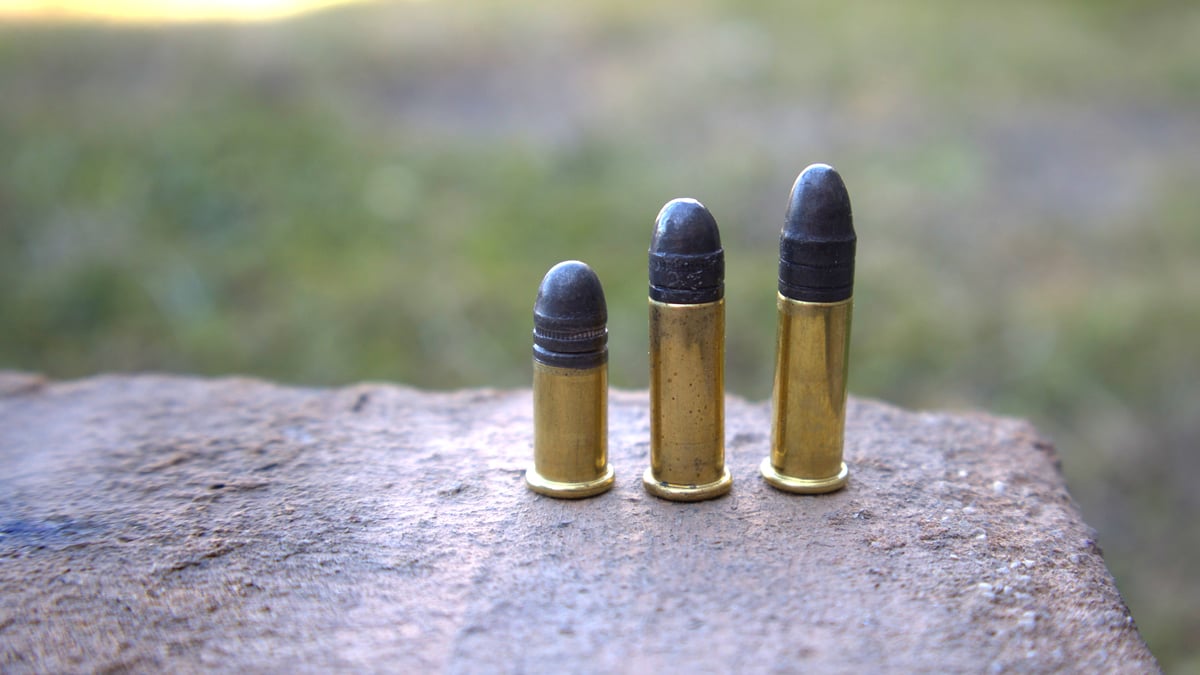
J. Stevens Co., famed for its single-shot Favorite and Crackshot rifles, developed the .22 LR in 1887. It used the .61-inch case of the .22 Long but packed it with a longer and more efficient 40-grain bullet instead of the Long’s 29-grain bullet borrowed from the .22 Short.
Early Development and Popular Acclaim
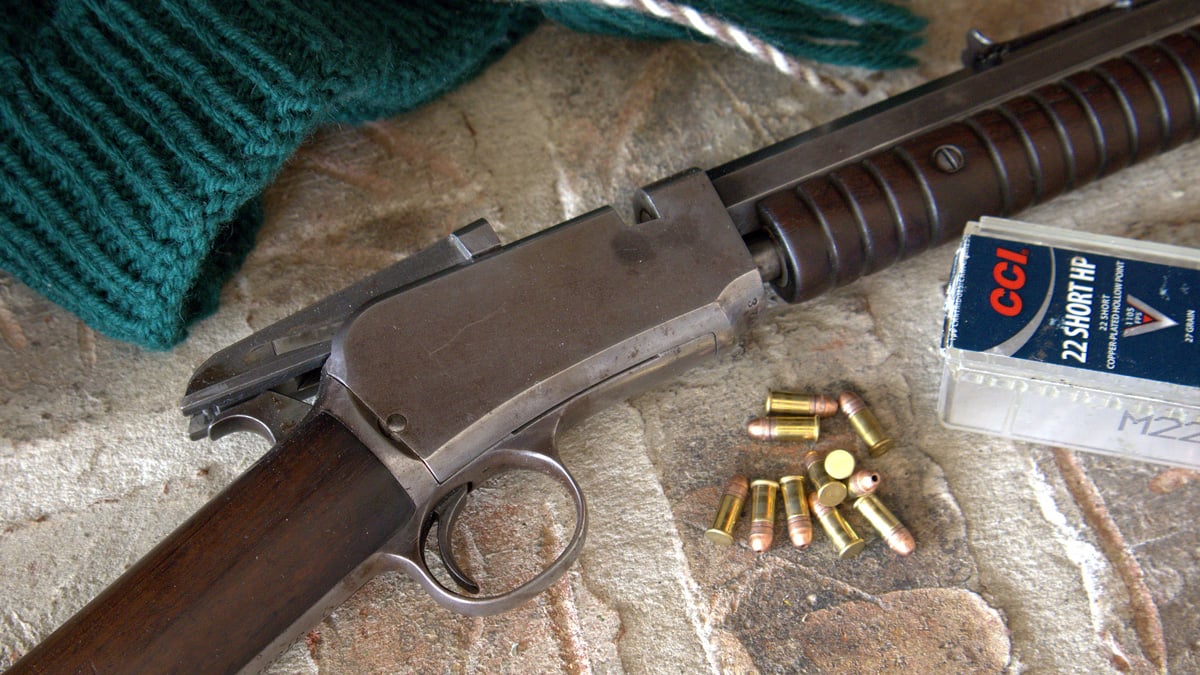
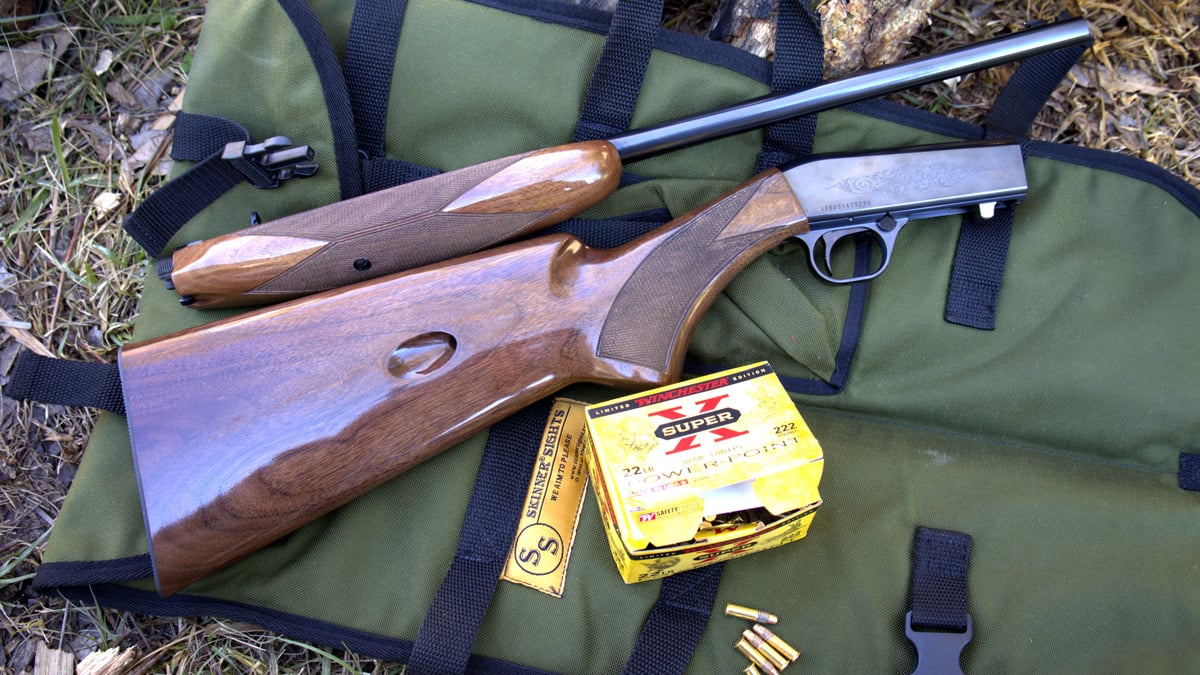
Early .22 LR ammunition boasted better accuracy than the .22 Long and more power than the .22 Short. The cartridge was used heavily in the inexpensive Stevens rifles and quickly caught on with repeating rifles. By the end of the 1910s, rifles like the Winchester 1890 and Browning SA-22 were available in .22 Long Rifle.
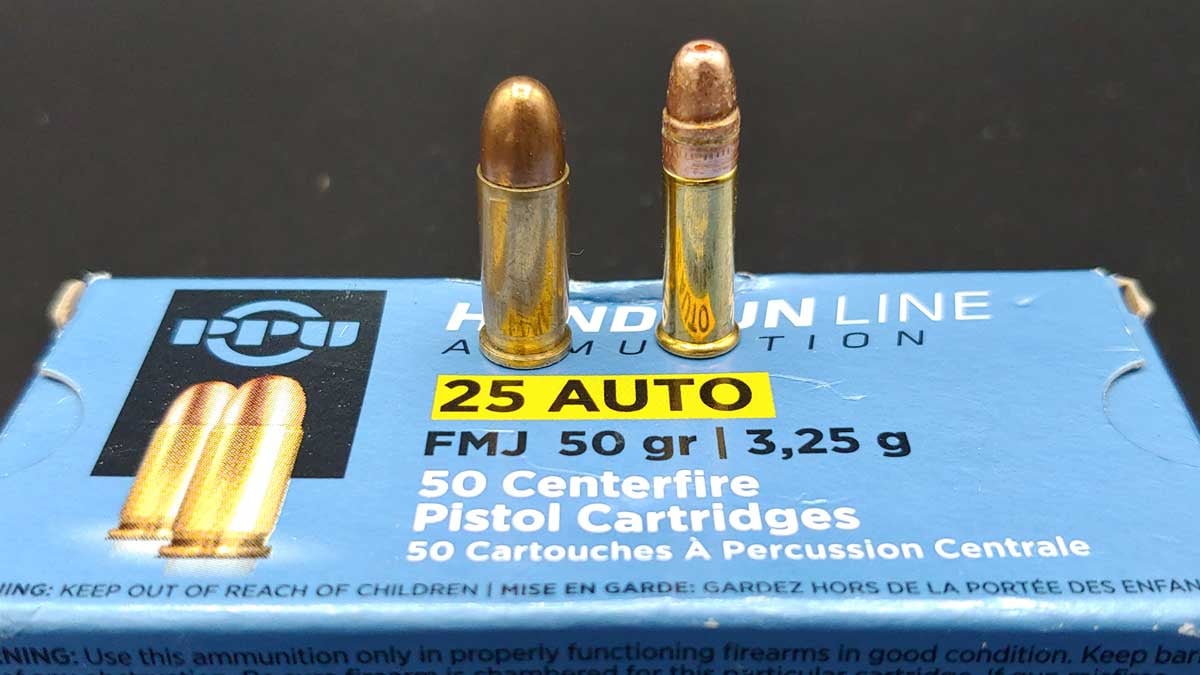
Concurrently, the .22 LR became an increasingly popular pistol cartridge with handguns like the Colt Officer’s Match, S&W K-22, and Colt Woodsman dominating target matches. Still, the overall length of the .22 LR was a problem for small pistols, where the .22 Short and .25 ACP ruled. The trend away from those cartridges and toward .22 LR only accelerated in the 1980s with the introduction of hypervelocity .22 LR ammunitions and new pistols that could cycle them.

By far, the .22 is most popular as a rifle cartridge, from popular classics like the Ruger 10/22 and Marlin Model 60 autoloading rifles to newer AR-22s and conversions. That is not to neglect the various bolt-action, lever-action, and pump-action rifles on the market as well.
Trends in .22 LR Firearms
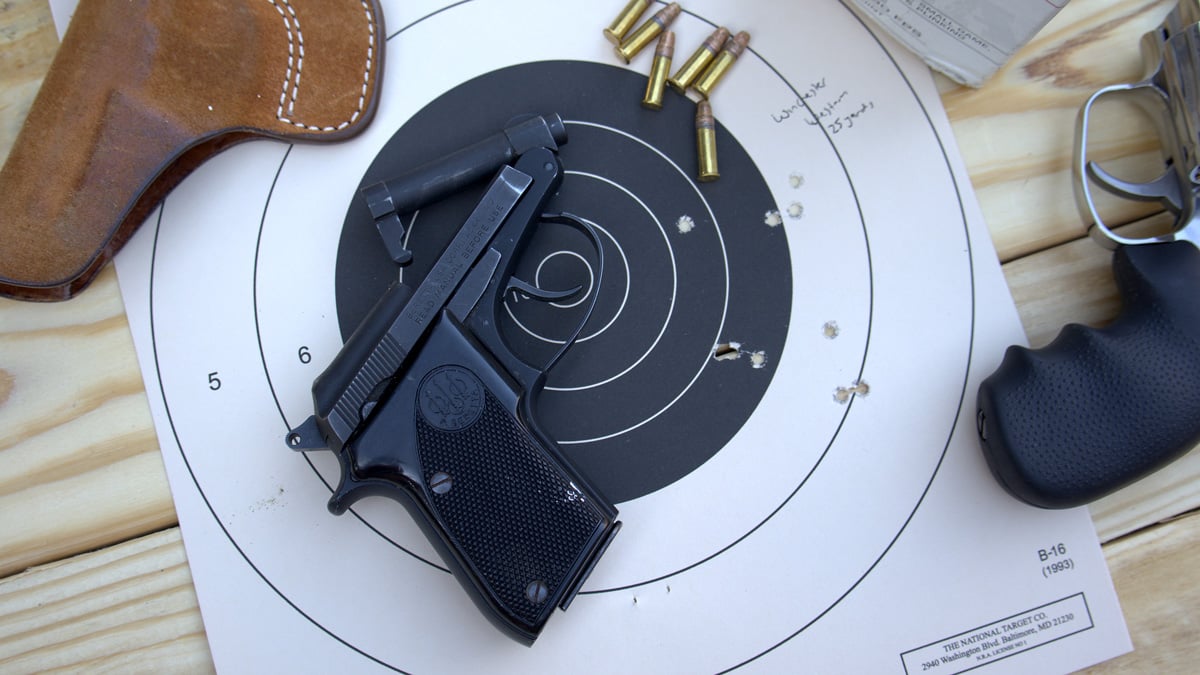
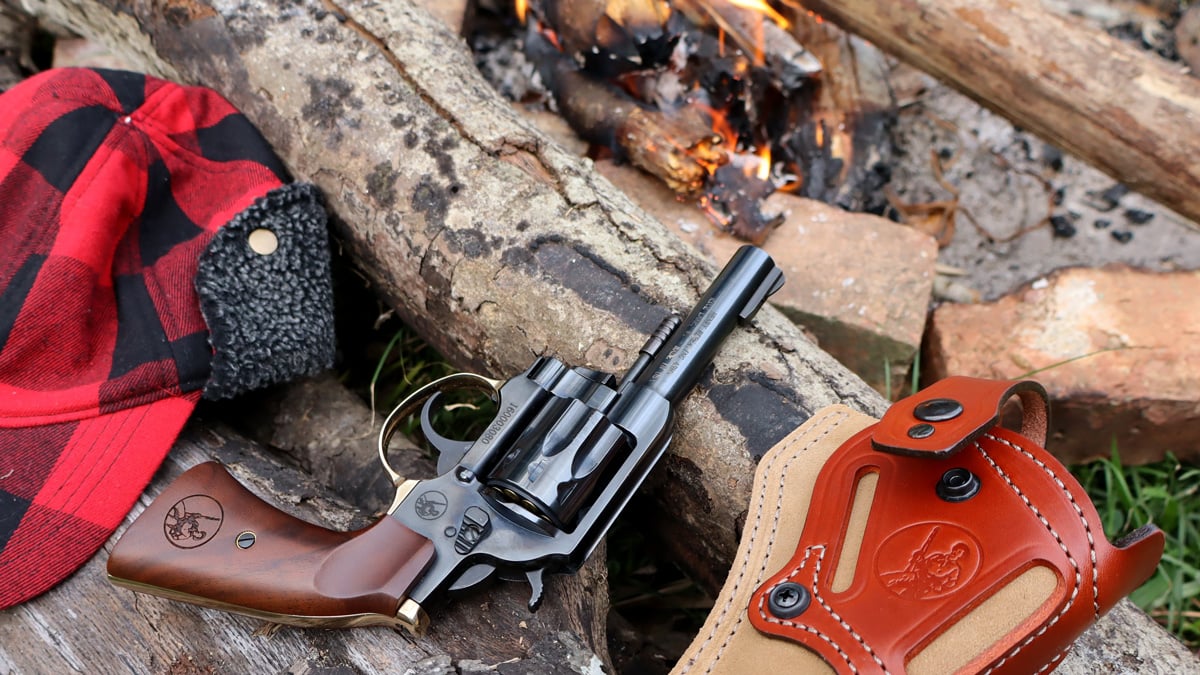
Although intended for rifles and later used in handguns for small game work and target shooting, the .22 Long Rifle is chambered for pocket pistols intended for everyday carry. This includes lightweight revolvers like the Smith & Wesson 43C and Ruger LCR, as well as all-steel options like the Smith & Wesson Model 63 and Colt King Cobra. Pistols like the Beretta Bobcat, Ruger LCP II, and Taurus TUC round up a broad category of small handguns meant to take advantage of the light-kicking .22 LR cartridge.
(Photo: Terril Hebert/Guns.com)
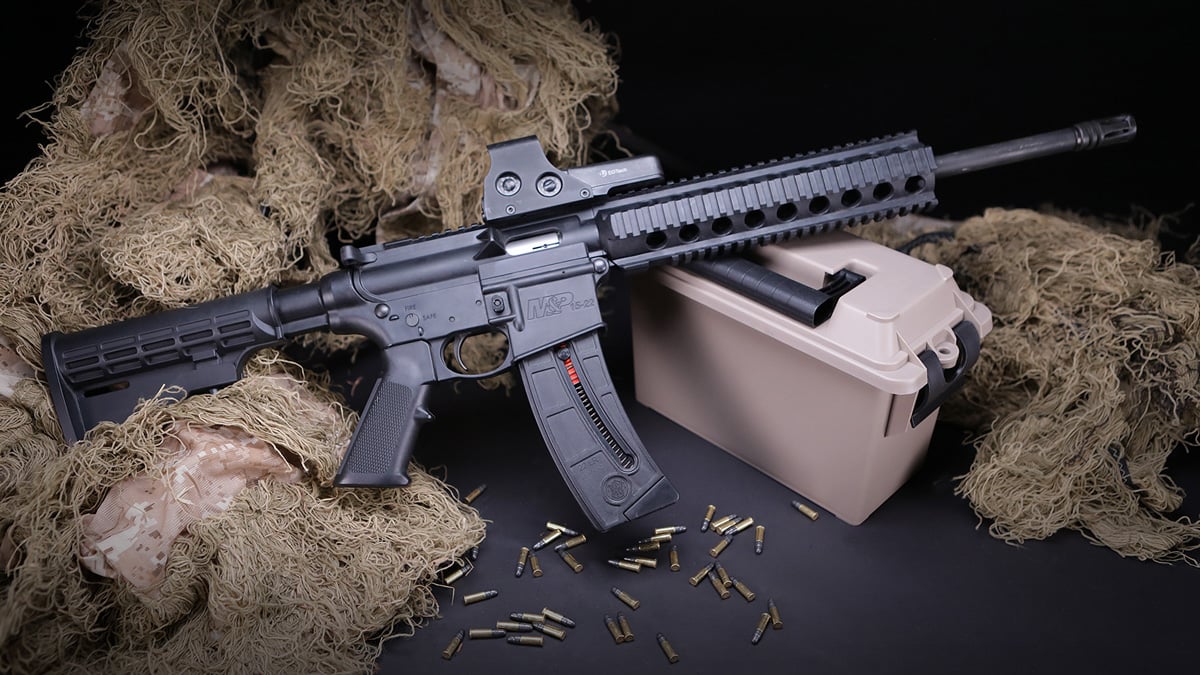
In between the realms of plinking, hunting, and defensive use, the .22 LR is an apt training round thanks to its low recoil, low noise, and low cost compared to centerfire ammunition. There’s a whole class of rimfire training pistols and rifles that operate like their centerfire counterparts. These understudies include rifles like the Savage Rascal and Smith & Wesson M&P 15-22 and pistols like the S&W M&P 22, Taurus TX22, and Walther WMP.
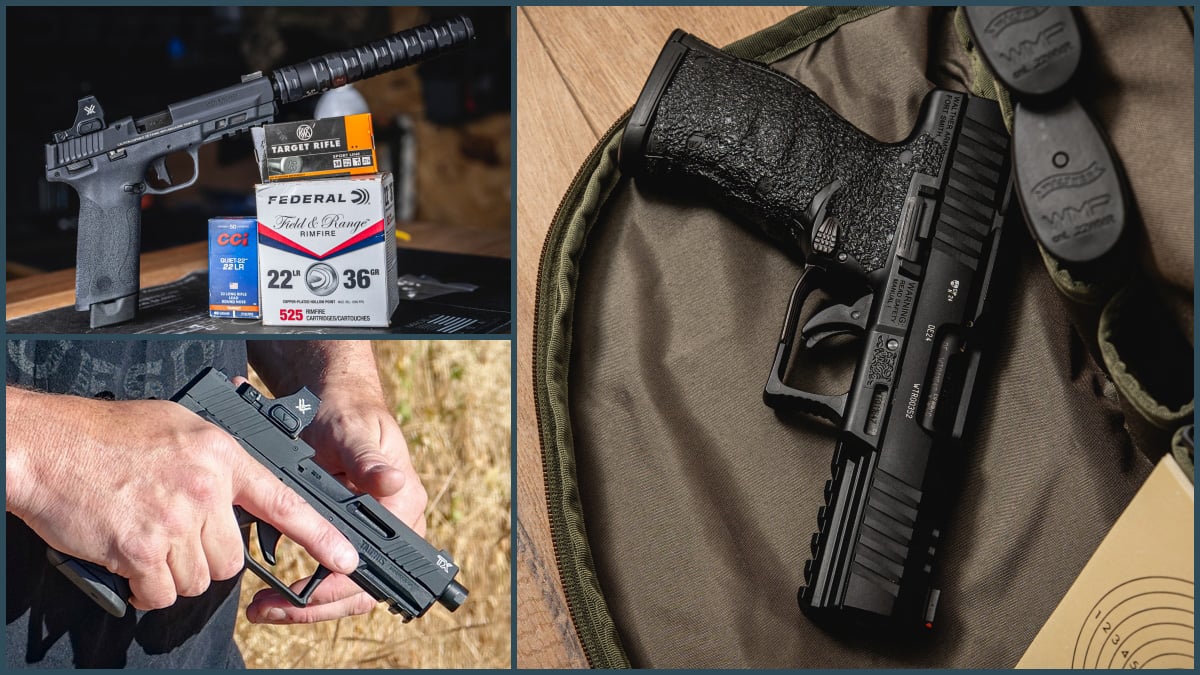
No major manufacturer can escape the allure of the .22 LR, and neither can the shooting public. The .22 LR dominates the rimfire market and the cartridge market as a whole. CCI estimates that some 2.5 billion rounds are produced every year.
.22 LR Ammunitions
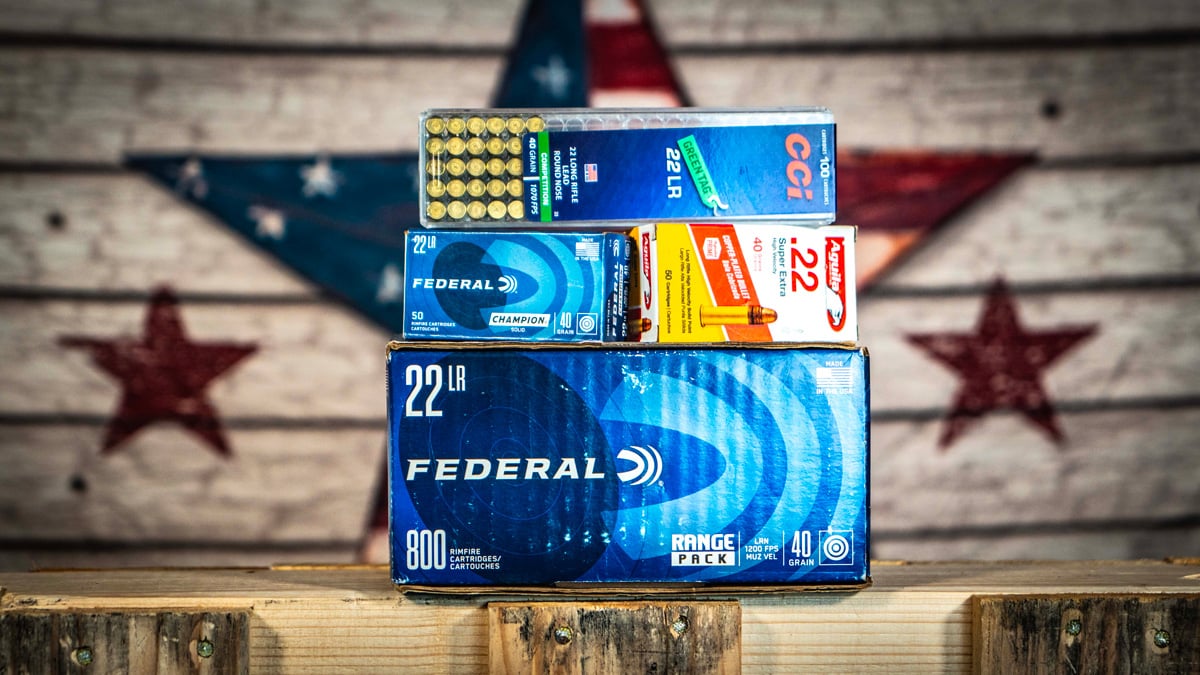
The .22 LR cartridge comes in four general grades of ammunition: subsonic, standard velocity, high velocity, and hypervelocity.
Subsonic ammunition, as a class, is rated at or below 1,080 fps and will be at or below the speed of sound. Subsonic and standard-velocity loads are often touted for accuracy with their proximity to the sound barrier. Their lower velocity also lends well to quiet shooting with a suppressed firearm, whereas the sonic crack of higher velocity rounds can still be heard.
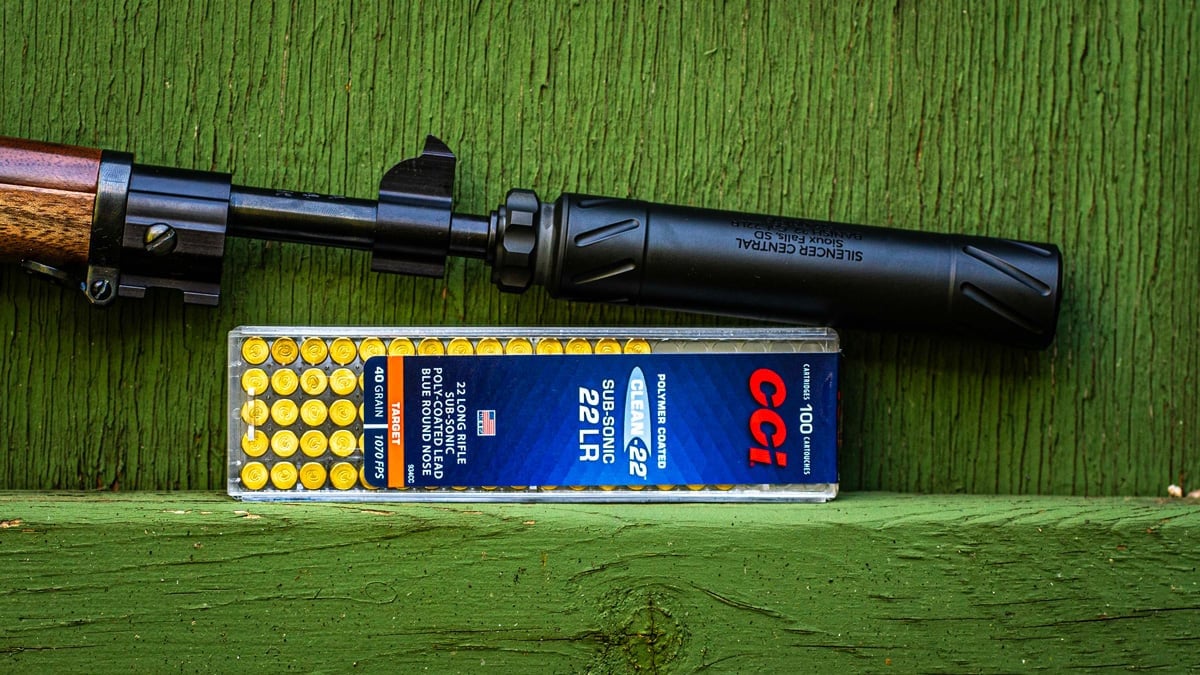
The downside of these ammunitions is that their lower velocity produces greater drop and less power overall. That is where high-velocity and hypervelocity rounds come into play.
High-velocity loadings for the .22 LR generally range from 36-40 grains in bullet weight and have a velocity of about 1,280 fps. High-velocity loadings are the most common variety and are generally available in small cartons or in cardboard bulk packs.
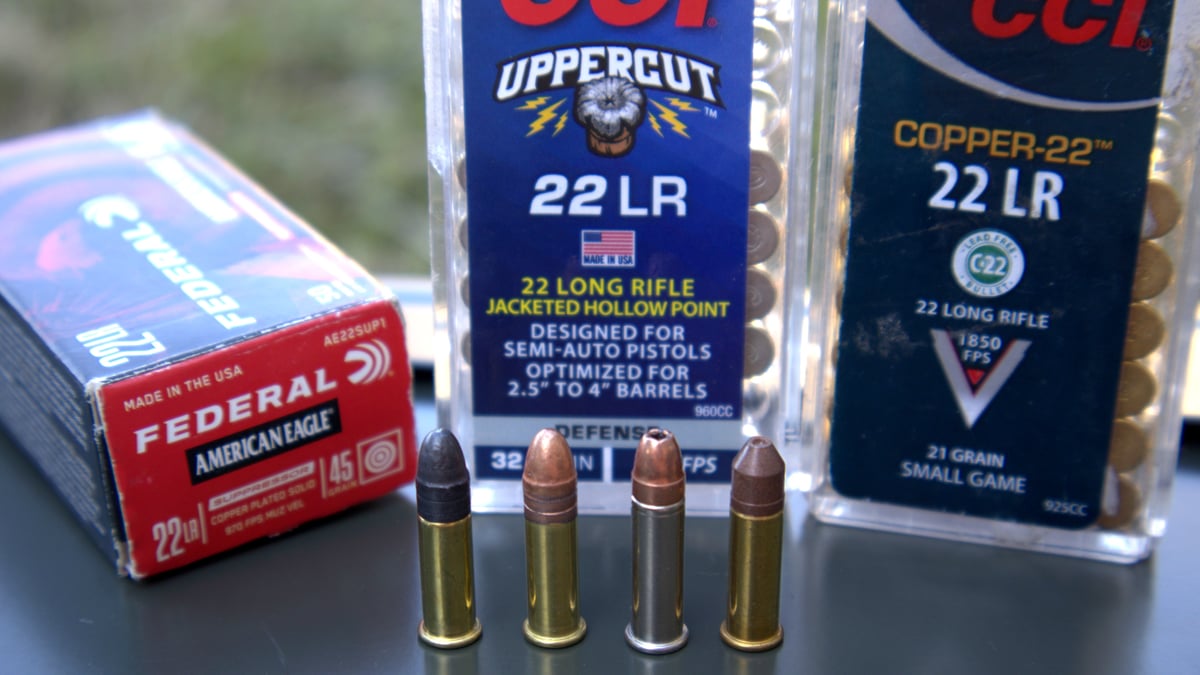
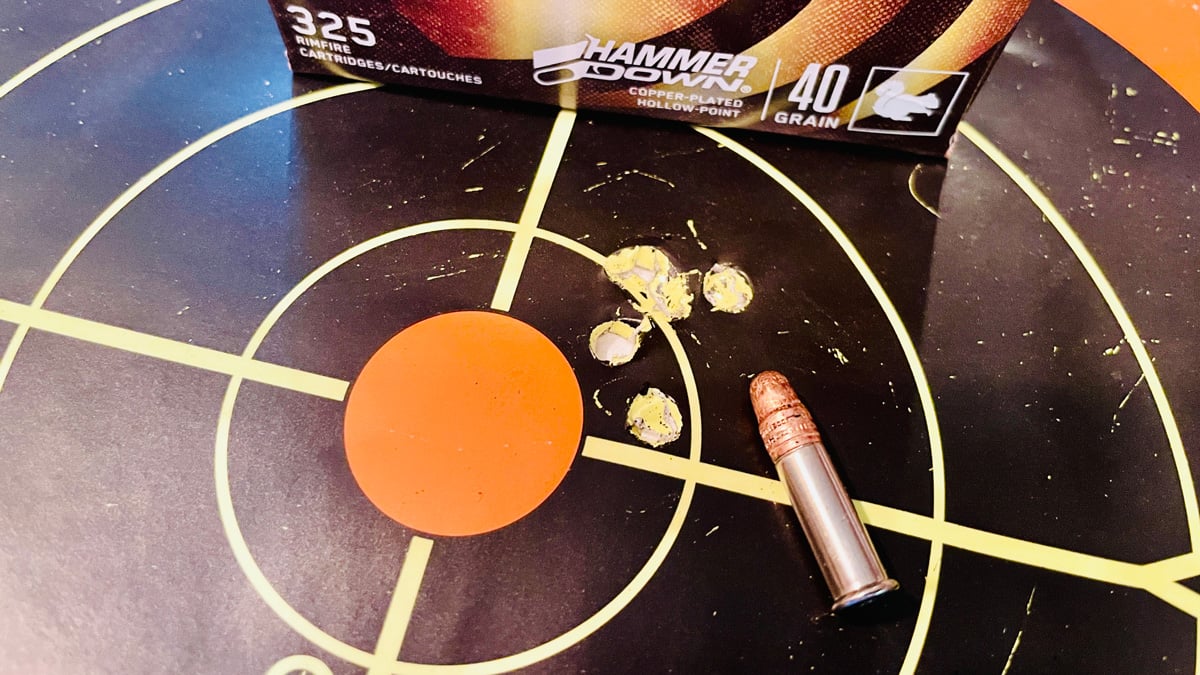
Hypervelocity loadings are a general category of .22 ammunition that boast velocities over 1,280 fps, with many approaching or exceeding 1,400-1,500 fps. This increase in velocity is usually achieved with a lighter 30-33-grain bullet. Pound for pound, hypervelocity ammunitions have less drop and more power but accuracy in some rifles and handguns can be erratic.
Ballistics: How Powerful is .22 Long Rifle?
The .22 LR might be described as a tale of two cartridges: small, lightweight, and low velocity, yet more efficient and capable than the sum of its parts.
Typical 40-grain high-velocity loads like the CCI Mini Mag achieve a velocity of about 1,280 fps for 146 foot-pounds of energy when fired out of a 16-inch barreled rifle. That is roughly half the velocity of 9mm Luger and comparable to .32 S&W Long and .380 ACP fired from a handgun.


In rifle configuration, this load, with a 50-yard zero, drops 7 inches at 100 yards. Beyond that distance, drop begins to decay to 30 inches at 150 yards – a rate that would be hard to compensate for on the fly.
Out of a handgun, long-range work is more out of the question, but high velocity and good performance at close distances is not. The .22 LR suffers little velocity loss when going from a rifle to a reasonable handgun-length barrel. The same CCI Mini Mag load, fired from a 5.5-inch barrel, yields a respectable 1,187 fps. The .22 LR loses steam paired with short-barreled handguns in the 2-3-inch range, in which it dips to 960 fps.
Terril James Hebert
Terril Hebert is the world's okayist historian and firearms journalist who occasionally moonlights as an NRA pistol instructor. In his spare time, he enjoys forensic accounting, waxing poetically about the efficiency of musket balls, and working on his latest fire-starting techniques.
View All Articles by Terril James Hebert