Borrowing from the Brits
The 1917 Enfield didn’t come from an American design. The concept dates to 1913 with the British Pattern of 1913. This rifle stemmed from the British plan to ditch the antiquated rimmed .303 British cartridge in favor of the rimless .276 Enfield. The Pattern 13 Enfield also incorporated a rear aperture sight, a major improvement over the forward-mounted rear ladder of the Short Magazine Lee-Enfield (SMLE).
Related: All About .303 British – Cartridge Conquered Major Battlefields of 20th Century
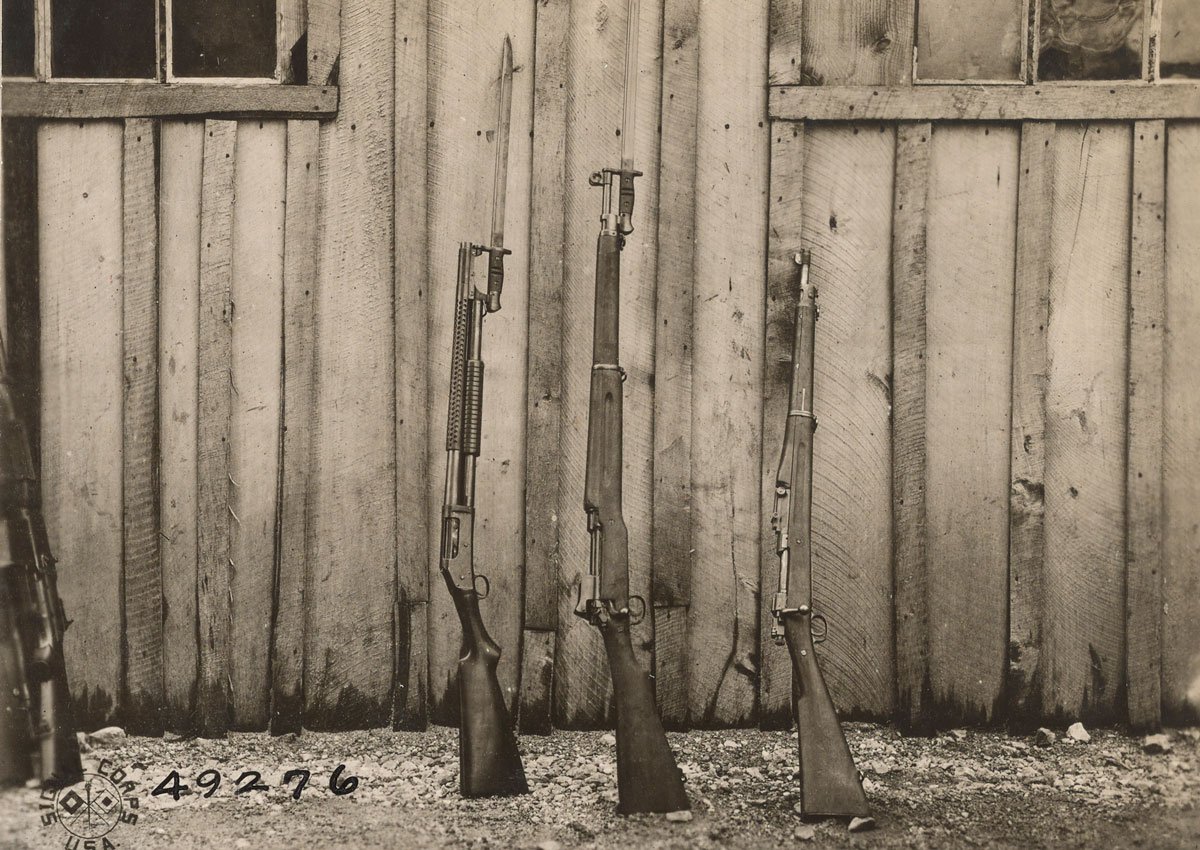
In 1914, with the start of World War I, the British realized that they did not have the time or resources to switch cartridges. They did not have the time or resources to domestically produce anything. This led to the development of the Pattern 14 Enfield, which retained all the aesthetic features of the Pattern 13 Enfield but still used the .303 British cartridge. This design was farmed out to three American manufacturers: Remington, Eddystone, and Winchester.

American production of the P14 rifle began in 1915, and the British received around 1.2 million rifles between 1915 and 1917. In early 1917, the United States realized that if the country were to join the war, its Expeditionary Force would not have an adequate number of 1903 Springfields for front-line service.
By 1917, only a little more than 1 million rifles were delivered, and there were concerns about heat treatment on many of them. With this realization, the U.S. War Department struck a deal with the British to license a version of the P14 rifle for production and use by the United States military.

In the summer of 1917, a .30-06 chambered version of the British P14 Enfield was accepted into military service to supplement the 1903 Springfield. This rifle was designated the U.S. Model of 1917, or simply the M1917 Enfield. By the end of World War I, the M1917 outnumbered the 1903 Springfield two to one in the Expeditionary Force. Still, the 1917 was never officially adopted as a service rifle.
Design
The M1917 Enfield is a classic cock-on-close Enfield bolt, a design made popular by the Short Magazine Lee Enfield and renowned for its speed. The rifle features a full-length set of iron sights, with an adjustable rear aperture that lines up with a set of protective wings around a front post. This iron sight design was used in later rifles like the M1 Garand, M1 Carbine, M14, M16, and even the 1940s refit of 1903 rifles for the A3 designation. The design was a major upgrade over the rear ladder sight of the 1903 Springfield.
Related: England's ‘Last-Ditch’ Rifle – The Enfield No. 4 Mk 1


Since the original P14 Enfield was chambered for the rimmed .303 British, the magazine of the M1917 Enfield could accept six rimless .30-06 cartridges plus one in the chamber, giving the rifle a 6+1 capacity. While the rifle did have a bigger capacity, it was still issued with five-round stripper clips, with the charger bridge being modified to accept the smaller 1903-pattern clips.
The M1917 accepted the same M1905 bayonet issued with the 1903 Springfield.
In Comparison: Springfield Model 1903
I happen to have a 1917-dated M1917 and a 1906-produced U.S. Model of 1903 in my collection. This seemed a perfect chance to compare the two. I had always read that the M1917 was preferable to the 1903, but I wondered if that was true.
Related: Memorial Day Salute – The Venerable Springfield 1903

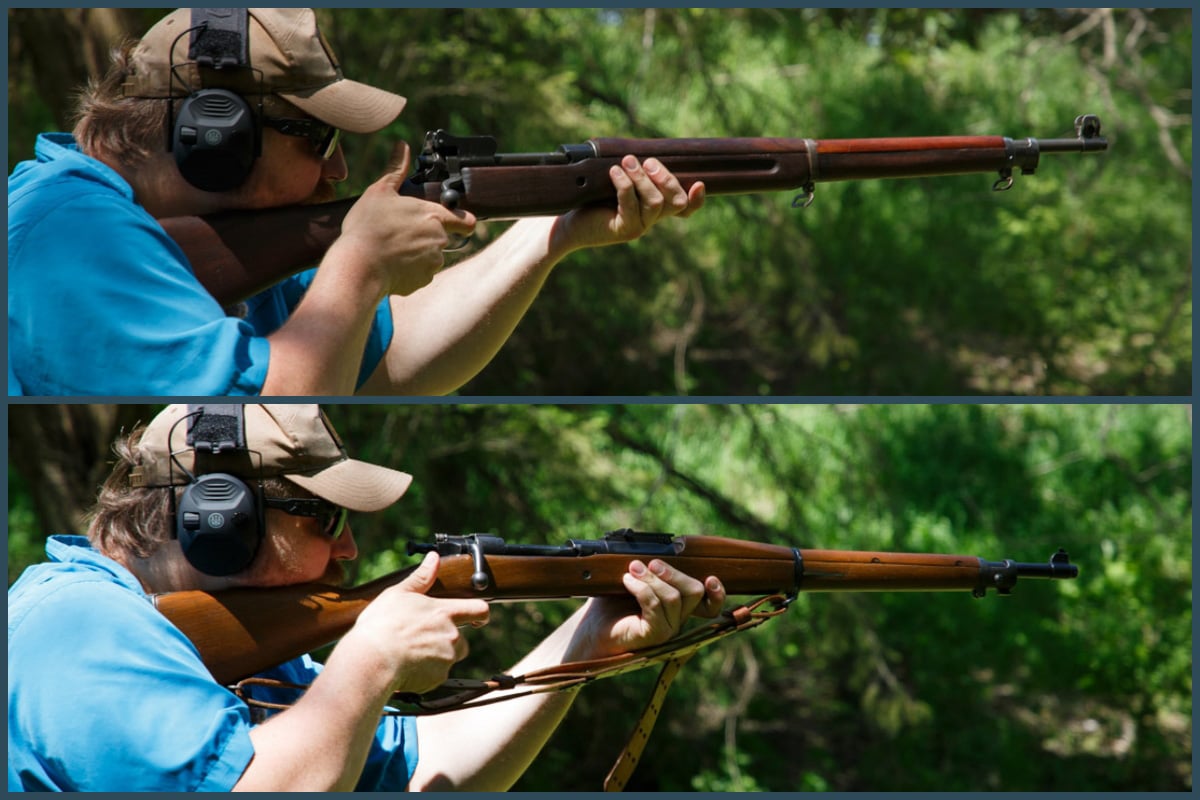
From an ergonomics standpoint, the M1917 feels much more comfortable. My Springfield 1903 is in its original World War I configuration with the S-pattern stock and lacks any angle to the grip. The stock shape is akin to that of a Mosin-Nagant, with no contour for the shooter's wrist. The M1917 has a more defined grip with a better angle for your wrist.

I would argue that the Mauser action of the 1903 cycles much faster than that of the M1917. While the Enfield action is renowned for its speed, the user must exert a lot more force on the bolt, as the cock-on-close requires a heavy push through the spring tension. The Mauser action has almost no resistance and can be quicker to actuate.
The magazine capacity is a tie, in my opinion. While the one extra round of magazine capacity is great, I am not sure how many soldiers would add a single round after topping the rifle off with a standard five-round stripper clip.
Shooting the 1917
The 1917’s real advantage comes with the sights. The 1903’s front sight post and forward-mounted ladder sight are difficult to pick up quickly, while the M1917 is almost effortless. The rear aperture gives a much more precise target picture, and it is much easier to quickly engage. The peep sight on the adjustable ladder is even smaller, providing a tighter sight picture.
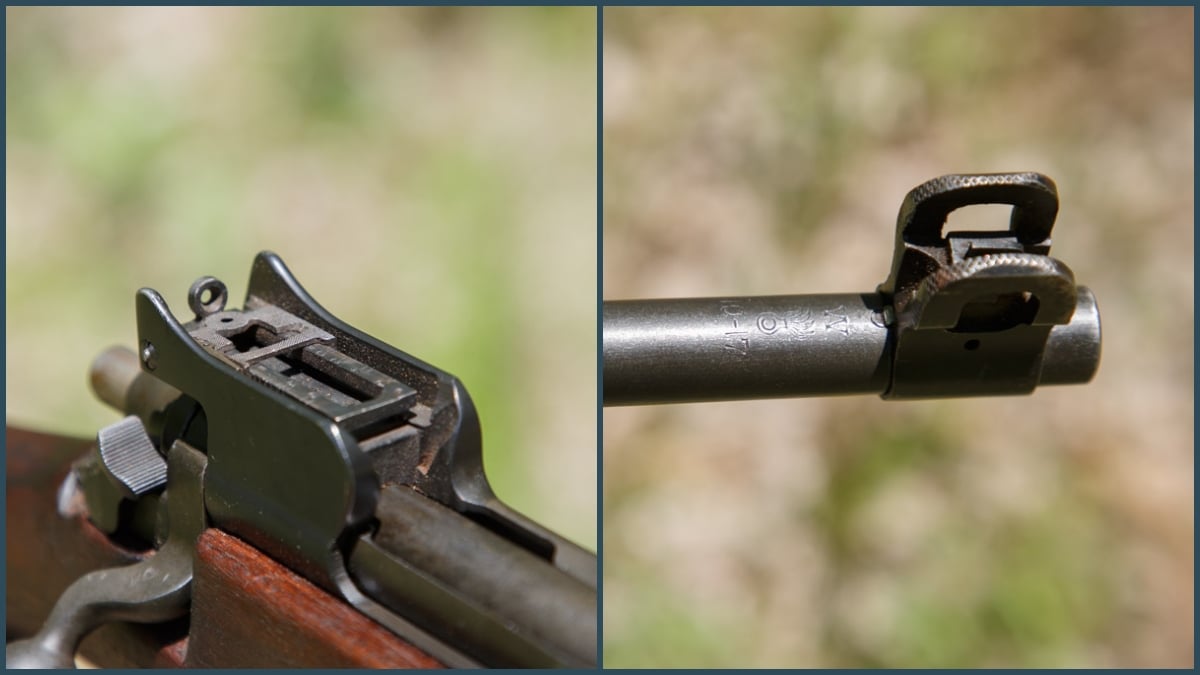
It is easy to see why the rifle was popular, especially with marksmen. It’s also understandable why the United States would retain this sight picture style all the way through the M16.

Time on the range brings quick appreciation for those who fought with full rifle calibers. After about 200 rounds of .30-06, my shoulder feels it and shows signs of bruising.
Summary
It’s sad this rifle is not as well-known as other models, like the 1903 Springfield. The rifle was used by American heroes, like Sgt. Alvin York, who is famous for actions that earned him a Medal of Honor.
Having shot many of the service rifles from the World War I era, I can see why this would be one of the best rifles of the time. The U.S. Model of 1917 Enfield is truly a well-built design that deserves the same respect given to the “official” service rifle.
Related: Two Allied Workhorses – Enfield No. 4 Mk 1 vs. M1 Garand Rifle