Video Review
Brief History
The first Thompson submachine gun came on the scene over a century ago. Brig. Gen. John T. Thompson invented the gun in 1918 to better arm American troops fighting in the trenches of World War I. Thompson envisioned riflemen transformed into mobile one-man machine gunners who could sweep through enemy lines with the aid of withering firepower.

A shipment of the guns under a project dubbed “Annihilator I” – which suggests a plan for an “Annihilator II” perhaps? – were headed to the front just days before the war came to an end. However, the Thompson submachine gun still managed to gain a small foothold with the U.S. military after the war.
Affectionately nicknamed things like the “Chicago piano” and “trench sweeper,” it saw service in a handful of conflicts in the 1930s, such as the Banana Wars with the U.S. Marines, and gained notoriety in the hands of gangsters and FBI G-men alike. But the real breakout moment for the Tommy gun came in World War II.
Related: Full Auto Friday – Tommy Gun Edition [Videos]
A few traits plagued Thompson’s submachine gun from the beginning. It offered great firepower, but at the cost of weight, complex manufacturing, and money. At the start of WWII in Europe in 1939, a new Tommy gun came in at around $200 – or a whopping $4,367 with inflation today. Worse, it took a lot of material and manufacturing time to make the gun right when the U.S. was looking to start arming millions of men.
After a series of cost and labor-cutting adjustments, the U.S. military chopped a lot of the fat off the original with its simplified M1 Thompson. Auto-Ordnance’s contract for the new gun in 1942 called for a cost of just under $43, or $837 today, and significantly trimmed the weight. Various models of that design continued in U.S. military service until it was retired in 1971.
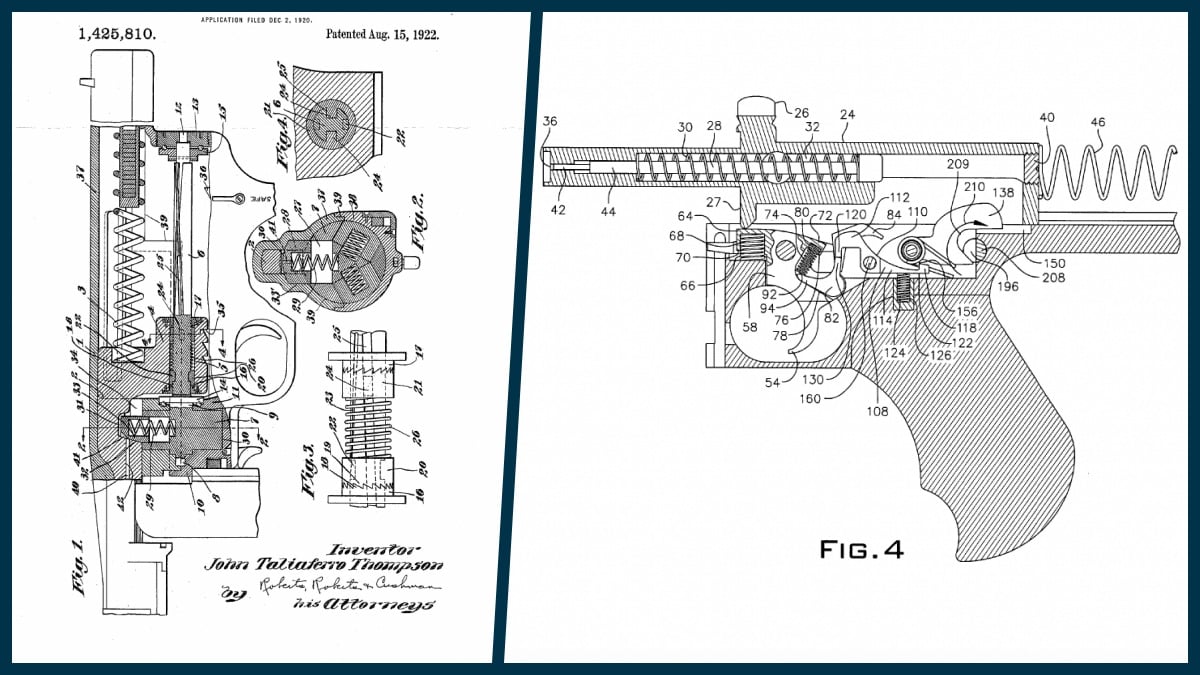
Auto-Ordnance was part of the Tommy gun’s journey from the beginning. It was founded in 1916 by the then-Col. Thompson himself, who died in 1940 without seeing the great success his design would achieve. In 2007, Auto-Ordnance filed a patent for a new semi-auto, closed-bolt system to bring the Tommy gun back to life for the consumer market.
Specs & Features

The 1927A-1 retains the general blowback concept of the original Thompson submachine gun with modifications to run it only as a closed-bolt, semi-auto firearm. That includes a bolt with a firing pin that is struck by a spring-loaded hammer when you pull the trigger to release the sear. Releasing the trigger reengages a disconnector, which is what keeps this version of the Tommy gun in the “pew” – instead of the always fun “pew, pew, pew” – mode.

All the wood furniture is American maple, and the receiver is blued steel on the T1 models. That steel creates a lot of weight, so Auto-Ordnance also offers a lighter aluminum receiver in its T5 models. This test gun is all steel, and you can really feel it in your hands.
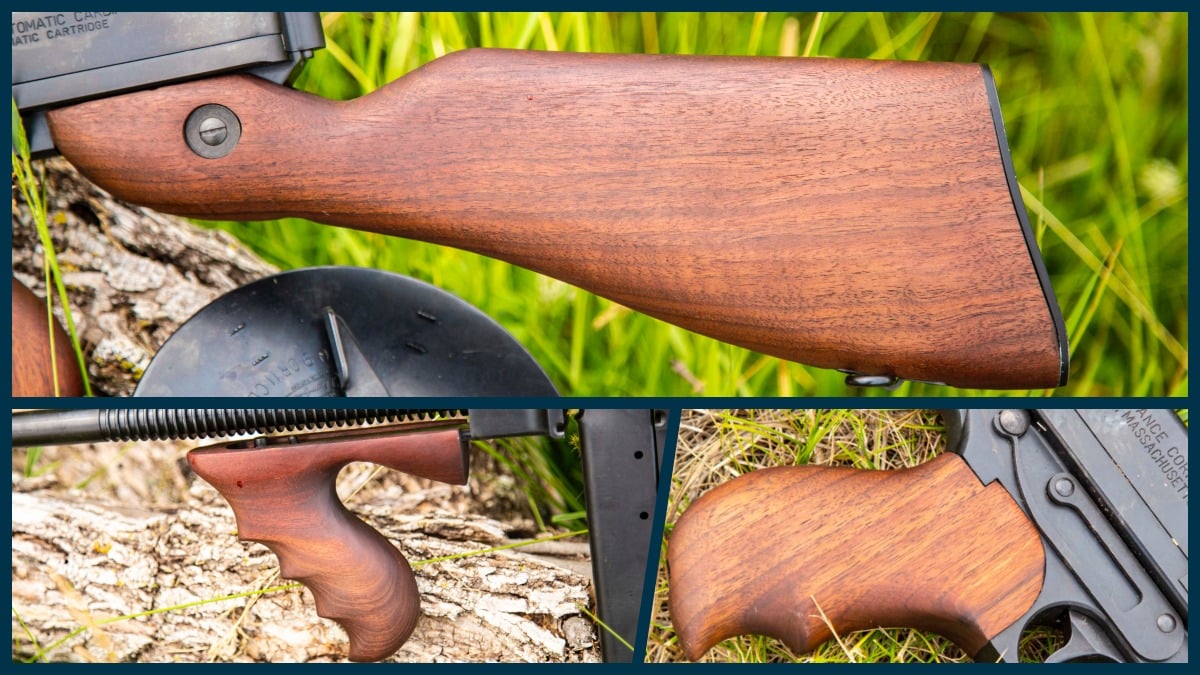
It weighs in at a whopping 13 pounds empty. You’ll add another 1.33 pounds with a 20-round magazine loaded with 230-grain .45 ACP. Or you can bump the total weight up 17.84 pounds with the classic 50-round drum magazine.
Here are some general specs:
Weight Unloaded: 13 pounds
Length: 41 inches
Barrel Length: 16.5 inches, 18 inches with pinned compensator
Sight Radius: 28 inches
Width: 1.8 inches
Capacity Options: 100, 50, 30, 20, 10
Auto-Ordnance may have made this gun semi-auto, but the trigger is still heavy and rather clunky. My first trigger gauge couldn’t pull the full weight repeatedly. After pulling out a second one, I measured it at 9.7 pounds.

Even so, the gun hosts a ton of great features that mirror the original. It has a very nice Cutts compensator pinned to the end of the barrel. There’s a front sight blade with a combat notch sight guarded by ears in the rear. The rear sight also flips up into an elevator-style peep sight for longer ranges.

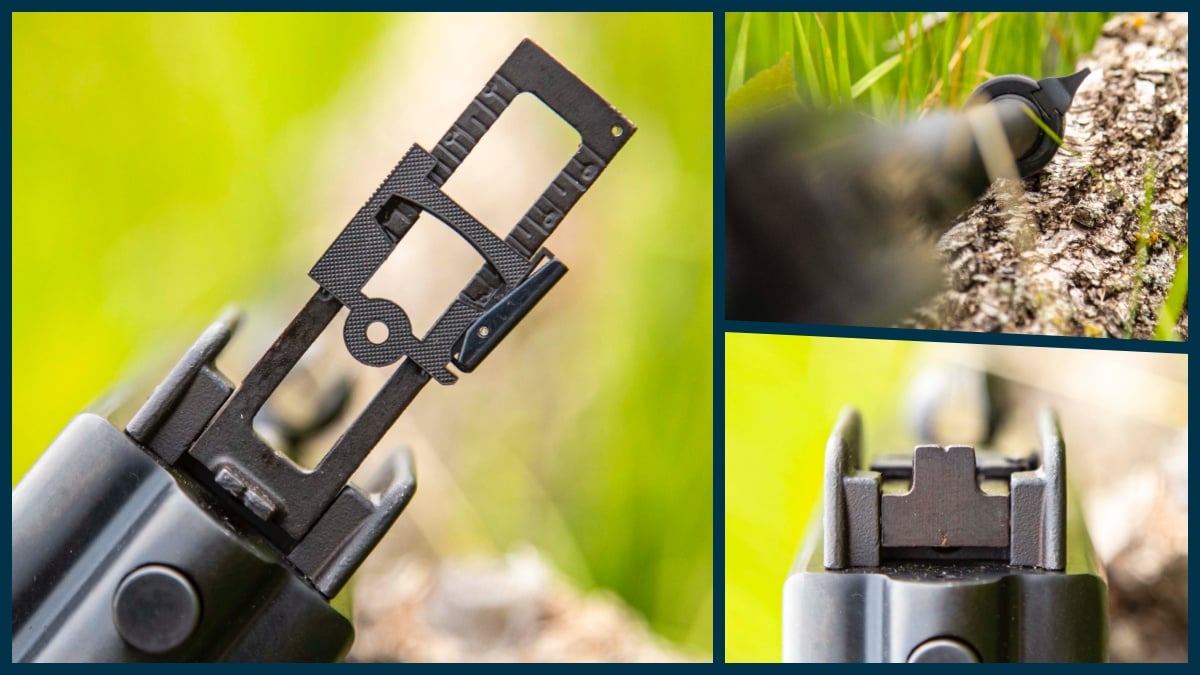
This version hosts a vertical foregrip, but Auto-Ordnance also offers a variety of furniture options. Cooling fins ring the rear of the barrel, which is a classic feature even if it does add some more weight. The top charging handle is cut so you can use the sights through the handle itself. This is also a classic feature, though later military versions would move the handle to the side of the receiver.
Related: Incredible Thompson Submachine Gun Collection
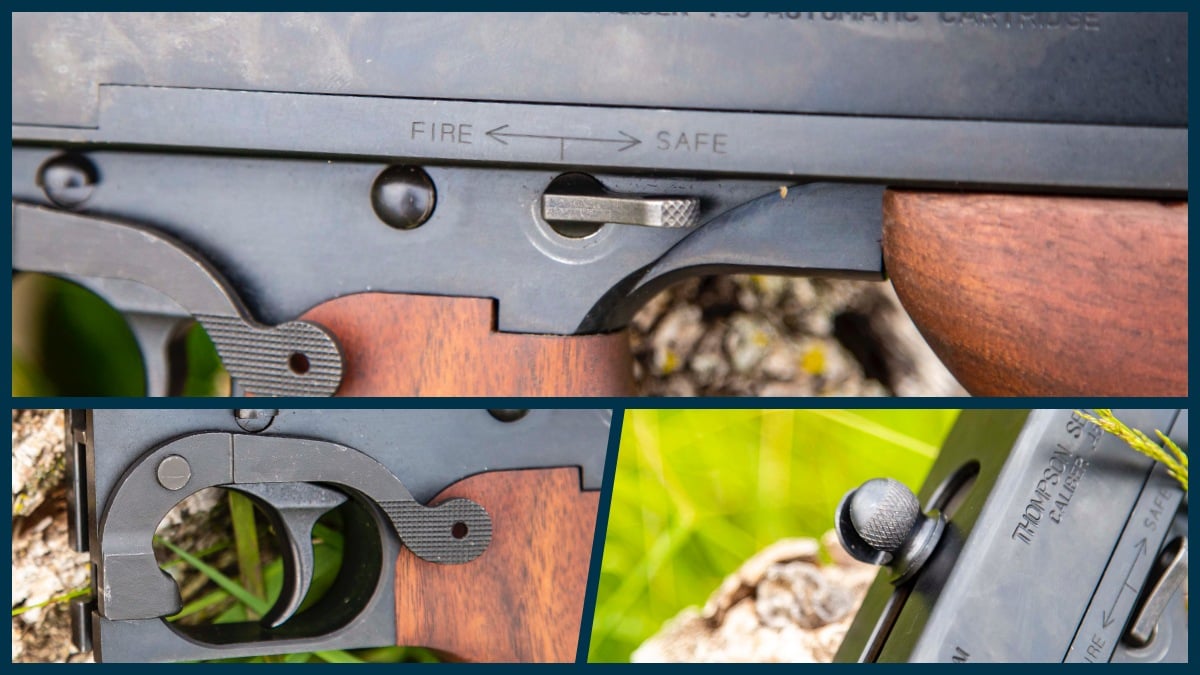
Don’t expect AR-like controls on this hefty gun. The lever thumb safety requires a full 180-degree rotation forward before firing. It’s not very ergonomic, but it’s significantly better than the magazine release, which is a long lever that requires a somewhat awkward upward push with your thumb.
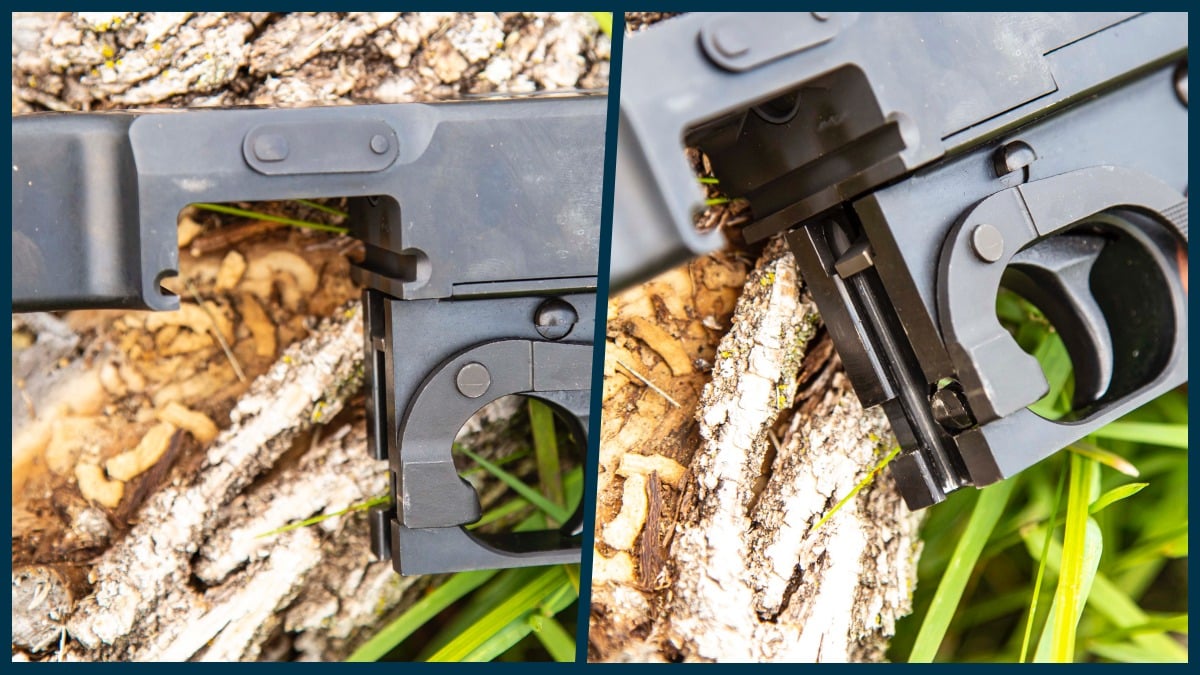
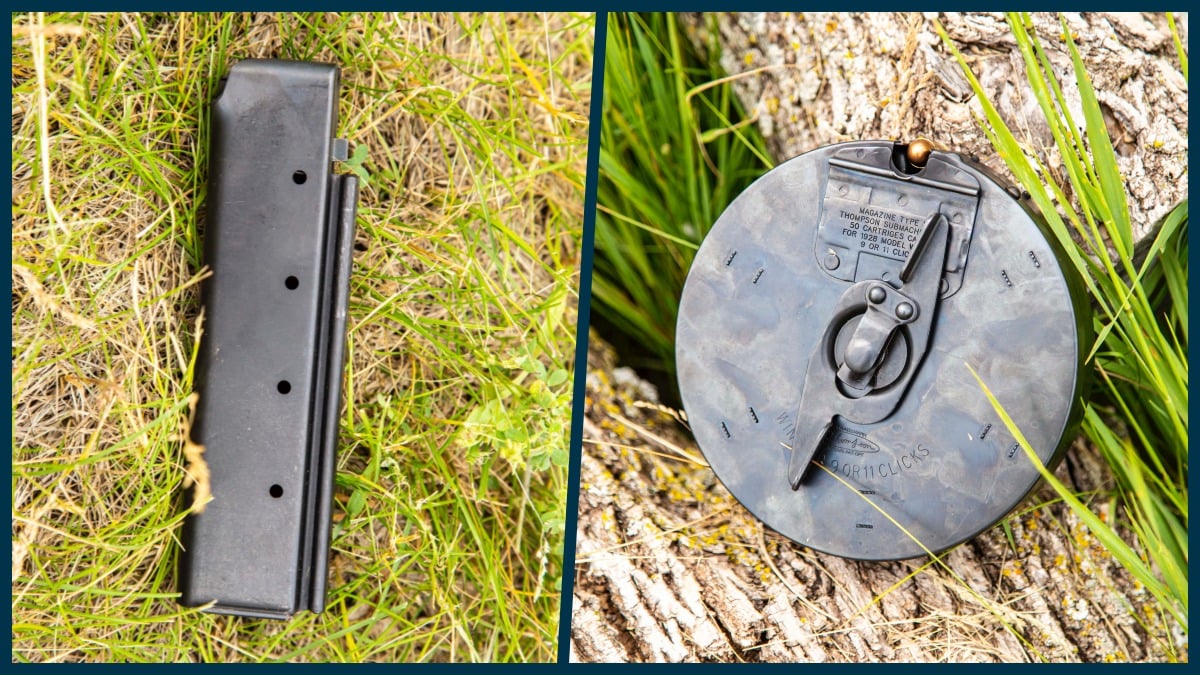
Stick magazines are loaded through a vertical rail. Drum mags slide in through a horizontal cut that was also eliminated on later military variants. Neither method is nearly as user-friendly as modern magazine wells on guns like the AR-15, so don’t expect blazing fast reloads. Though, I don’t recommend lugging it through a carbine shooting competition anyway.
Range Time

After spending my first day on the range with the 1927A-1, two things dominated my experience. First, this gun is just plain cool and a blast to shoot. Second, you can skip doing bicep curls on any days you’re taking this chunky gun to the range.
I put 250 rounds of mostly 230-grain FMJ Blazer through it for our testing. I suspect that the gun was never fired before that trip, because just charging the bolt required a lot of force. I’m talking about using your full arm and shoulder to really sling it when loading. While it’s beautifully machined to look like the original, that also means there are sharp corners and edges to the metal. Watch your hands when you’re first getting used to it.

The bolt did loosen up quite a bit after a day of shooting and a good cleaning. This is definitely a gun that needs a bit of a break-in period. Part of that is for the gun, and part of that is so you can really get comfortable with the controls.
There’s almost no recoil. That’s hardly surprising given the weight. But we did have seven stoppages. Most of these were simple failures to feed from the drum magazine, which requires a special tool to wind the internal spring after loading. Some of that might be new-user error, but it consistently ran smoother as we put more rounds down range. It’s also likely a fluke in the redesign, since the gun was originally meant to fire from an open bolt anyway.

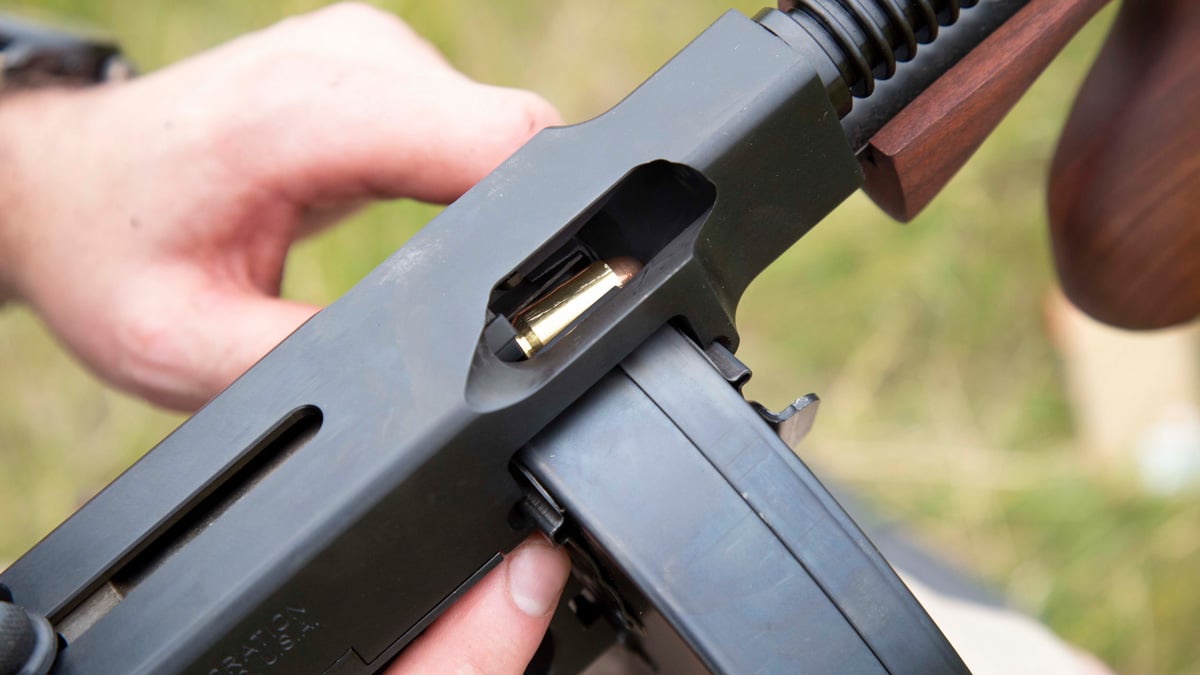
Personally, I preferred the stick magazines. The drum is heavy, slower to load sideways into the gun, and harder to carry. It has the cool looks, but I can see why the U.S. military eventually phased that feature out of its models.

The wooden pistol grip and foregrip were surprisingly comfortable. My hands are larger than average, but they wrapped around the finger grooves just fine. The buttstock was a bit trickier. It has a fairly dramatic drop to the comb, making your cheek weld feel slightly awkward. You get used to it, and the fun of shooting a gun like this makes most of those complaints disappear once you start pulling the trigger.
Pros & Cons

Here’s my shortlist of pros and cons:
Pros:
- Very well made with quality materials
- Mechanically and historically interesting
- Great Cutts compensator
- Low recoil
- Lots of magazine options
- Adjustable rear sight
- Comfortable pistol grip and foregrip
- Classic cooling fins on the barrel
- Far more affordable than an original
- Fun to shoot
Cons:
- Very heavy by today’s standards
- Somewhat awkward controls
- Heavy charging handle
- Heavy, clunky trigger
- Some sharp edges
- Relatively slow to reload
- Noticeable break-in period
-
Not exactly cheap
Final Thoughts

This gun will turn heads at pretty much any range. Better yet, it would be a heck of a display piece for your home office or gun collection. It’s a gorgeous firearm, but it’s well past its tactical prime. Still, it’s more than a paper weight.
These are firearms for the collectors or gun aficionados who just always wanted a classic Tommy gun. They’re not tactical and barely practical, but Auto-Ordnance’s Thompson replicas are darn fun to shoot and plenty available.
Like cool old firearms?
Check out our Military Classics and Collectors Corner for more.