Background
In 1985, the 9mm Beretta Model 92 FS, or M9, replaced the Colt 1911A1 as the U.S. military’s handgun of choice. After 30 years of service, the Army began searching for a modernized design in 2015 and named SIG Sauer’s M17 (commonly known as the P320) its main duty handgun in 2017.
Related: Beretta 92F and 92FS – The Story of How Beretta Sued the Army and Won
The M17 touted improvements in reliability, ergonomics, suppressor attachment capability, and most importantly, the ability to switch the pistol’s fire-control mechanism unit from one gun to another. This allows greater customization than ever.
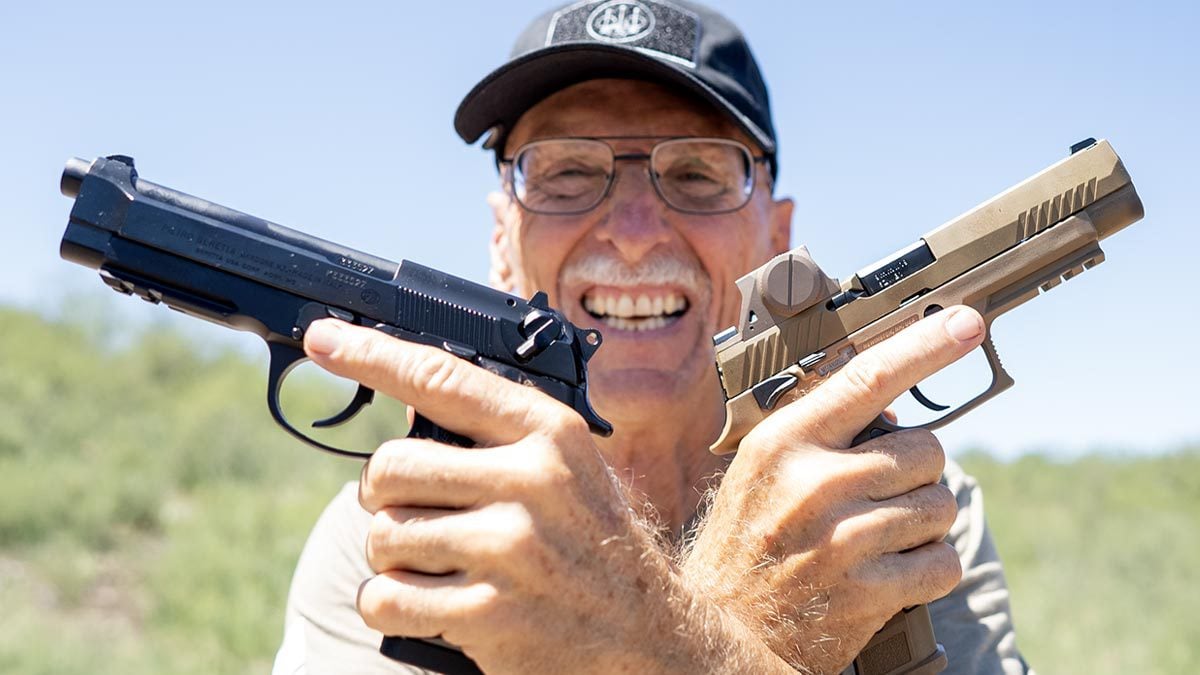
Both firearms are high-capacity 9mm pistols with legendary reputations, known for their reliability and accuracy among NATO allies. If you served in the military, you might have been issued one.
Beretta 92 A1
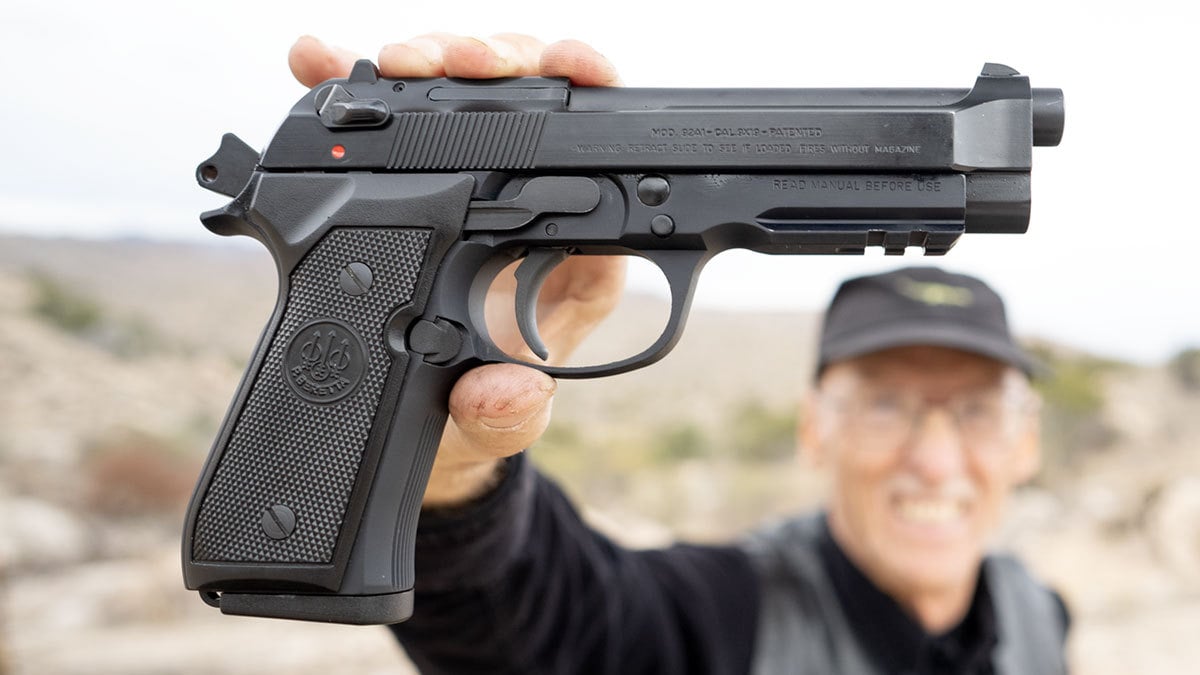
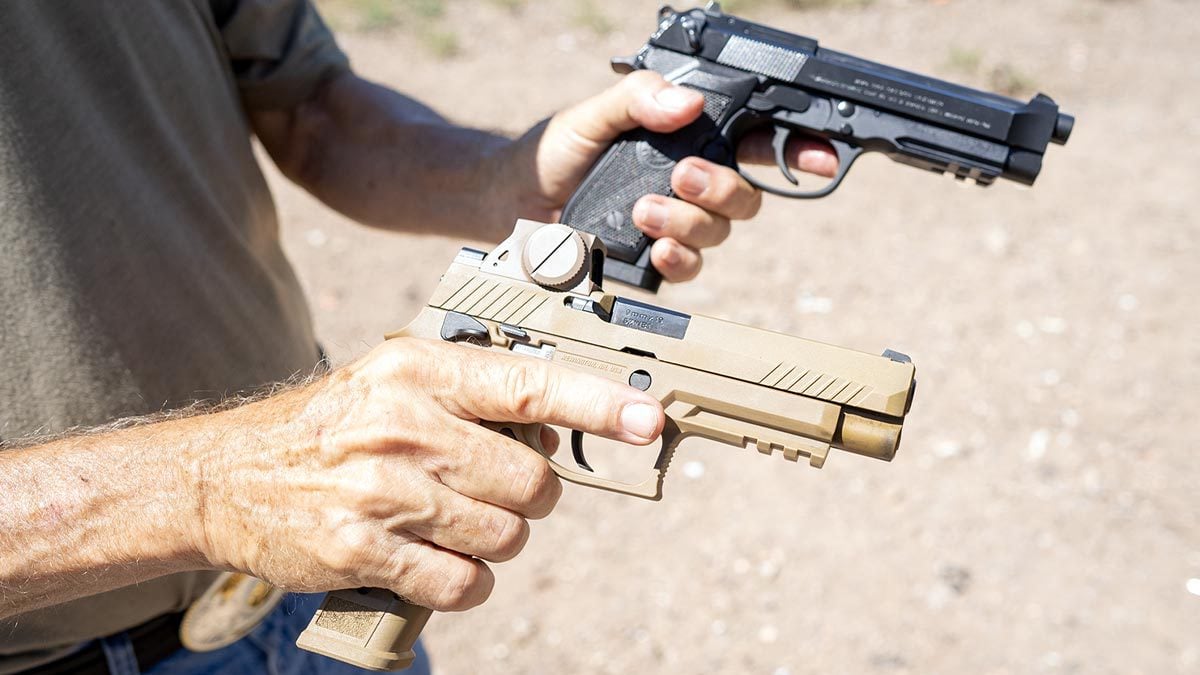
This is a big pistol. It feels heavy with a forward center of gravity, and the grip is noticeably wide to accommodate the double-stacked magazine. It feels chunky. If you have small hands, you may find it difficult to hold, but my medium-size hands grip it well. I find the grip reduces recoil by dispersing the kick somewhat.
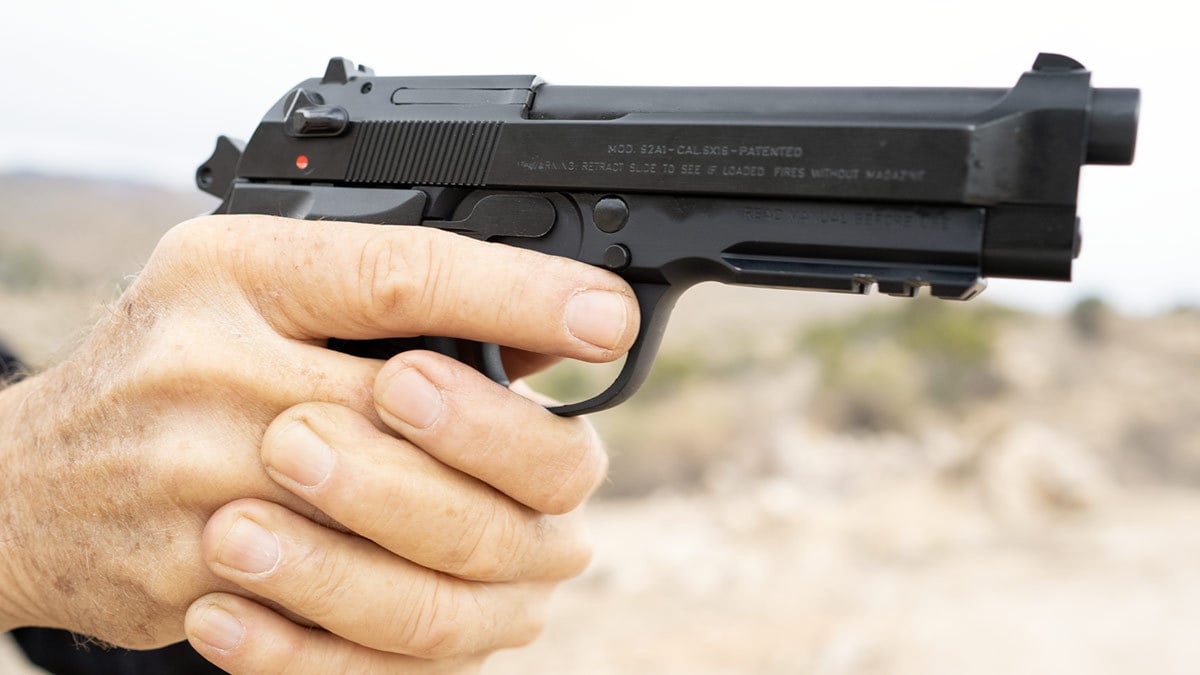
Most notable is the exposed barrel and lack of ejection port. Beretta wisely ditched the port to allow for reliable ejection; plus, the exposed barrel cools more quickly. The large recurve trigger is easy to reach and comfortable but requires substantial effort to squeeze in double-action mode. The single-action trigger squeeze is much lighter. It is staged with a noticeable amount of take-up prior to reaching the break point. I like the exposed hammer and ambidextrous safety, which give me the option to cock the pistol prior to firing and set it on safe mode if I wish.
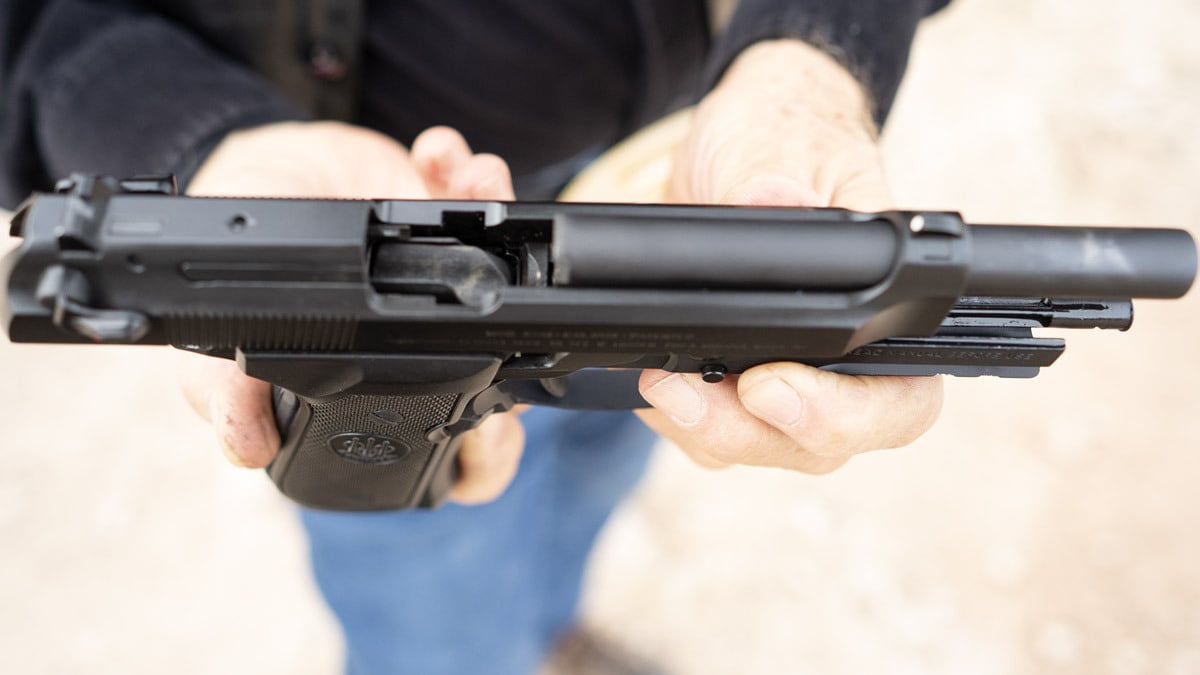
Related Review: Beretta 92 A1 – Handgun Is Famous for a Good Reason
Sights are fixed with three white dots that are easy to pick up and aim, but it’s too bad the sights are not adjustable. There is no provision for a red dot sight, although I like the forward Picatinny rail for mounting a tactical flashlight or laser sight.

The slide hold-open lever is right-hand only, but left-handed shooters can easily pull and release the slide to reload. The magazine release is a right-hand device that is bit difficult to reach and release.
The standard Beretta magazine is steel and has a 15-round capacity, and I will test a generic 17-round steel magazine as well. Both magazines are double-stack to single-feed.
Beretta 92 Specs
- Caliber: 9mm
- Weight: 2.1 pounds
- Overall Length: 8.5 inches
- Height: 5 inches
- Width: 1.2 inches
- Standard sight radius: 6 inches
- Barrel: 4.9 inches, hard chrome-lined
- Trigger pull: Double action 10.9 pounds, single action 6.5 pounds
- Exposed hammer
- Picatinny rail: 2 inches
- Magazine Capacity: 15 rounds, steel
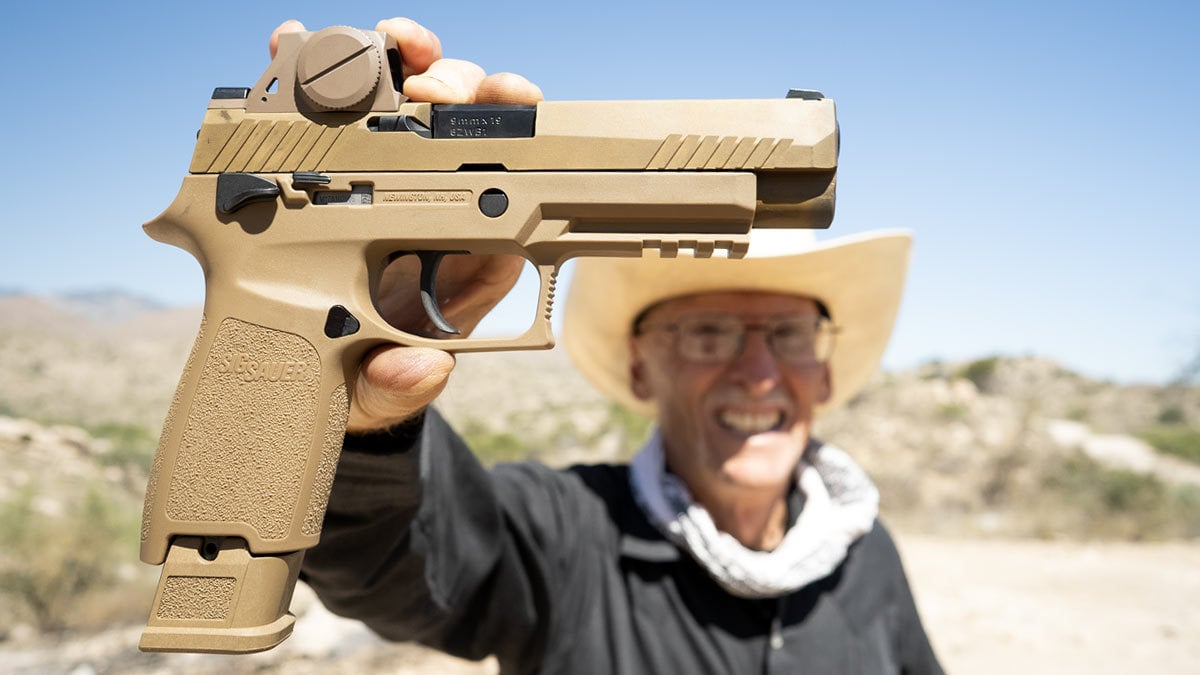
The M17 fits my medium-size hand well. It feels good, too. The grip has a mild sandpaper feel accented by a deep finger groove for my index finger. The semi-curved trigger is a nice compromise of target and combat designs. Striker-fired without an exposed hammer, the trigger has bit of creep before breaking sharply with no overtravel.

Slide hold-open and external safety levers are ambidextrous and easy to reach. The magazine release protrudes far enough to be easily reached and is reversible for left-handed shooters. The forward lower receiver has a molded Picatinny rail for accessory attachment.
Related Review: SIG Sauer M17 and Romeo M17 Optic – The American-Made Chosen One
I like steel magazines, and the SIG M17 comes with three units. The 17-round magazine is complemented by two 21-round units that are standard issue with the pistol. They are double-stack to single-feed, which is a great design for a 9mm handgun and aids in reliability and ease of reloading.

The magwell is slightly beveled with distinct finger grooves to aid in removing a stuck magazine – a good design, I think. Other useful features include a large trigger guard with checked front strap and front and rear slide serrations to help me rack that first round from the magazine.
Romeo Red Dot
What grabs my attention is the sight! The SIG Romeo M17 red dot optic is a low-mounted device that seems to grow naturally from the upper rear slide. It is customized to fit only the M17 and includes the rear tritium notched sight in its base. Although not a fan of red dots, I must admit that this sight is so low that it comes to view more quickly than I thought possible. I do not have to hunt for the red dot; it simply appears on target.
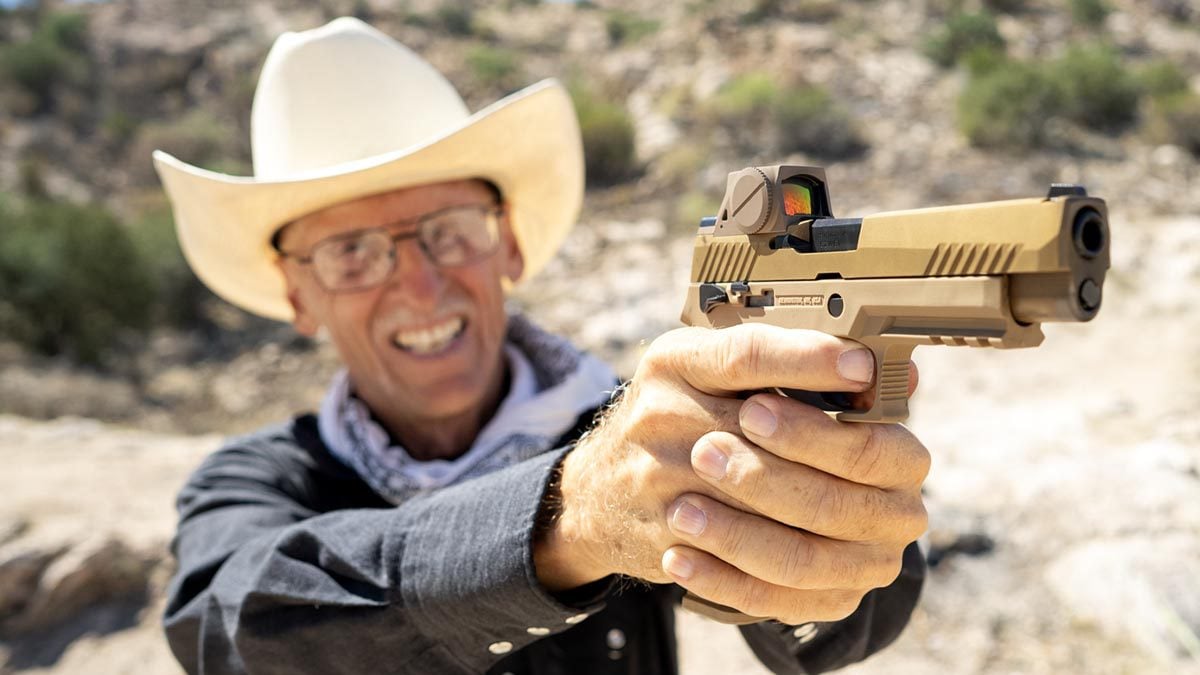
The dot is 2 MOA with a 32-MOA circle reticle. With 10 levels of intensity and a service life of 20,000 hours (about 2.5 years), I can set it and forget it! The left-side control button sets intensity and turns the unit off or on as needed. The sight’s internal glass is well protected in the housing and projects its parallax-free dot very clearly on target. Tritium notched external sights co-witness the red dot well.

M17 Specs
- Caliber: 9mm
- Weight: 2 pounds
- Overall length: 8 inches
- Height: 6.5 inches including sight
- Width: 1.6 inches
- Standard Sight Radius: 6.5 inches
- Barrel: 4.7 inches, carbon steel
- Trigger pull: 6 pounds, 6 ounces
- Action: Striker-fired, no external hammer
- Picatinny rail: 2 inches
- Magazine Capacity: One 17-round and two 21-round, steel with polymer base plate
Beretta 92 on the Range
My Arizona Area 52 site is prepared with a mixture of steel gongs and 2-liter root beer bottles at distances from 8 to 20 yards. This is a good test of the two short-range defensive handguns. Ammunition is a mixture of 124-grain FMJ PMC Bronze, 115-grain Magtech hollow points, Remington 115-grain hollow points, and SIG Elite Performance 115-grain hollow points. These various brands will be mixed within each magazine for both pistols.

The Beretta 92 is up first. The 15-round magazine loads easily, and the slide easily strips a round off to chamber. The initial double-action pull exceeds 10 pounds and takes some concentration to master. My following single-action shots are much easier and hit steel reliably. The heavy steel rings with center hits, and the flapper moves from side to side with an occasional head shot to test accuracy.
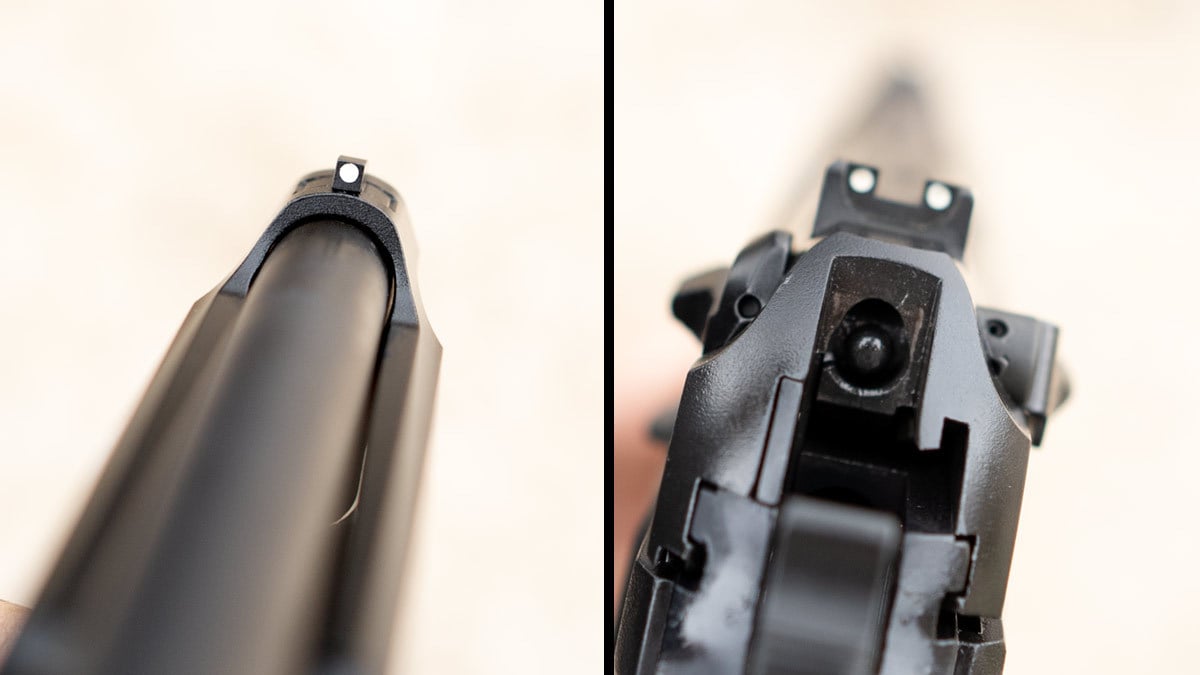
I find the Beretta shoots left and low for me. Although I can adjust by holding off, I wish the sights were adjustable for more precision. Soda jugs and cans explode violently, demonstrating practical accuracy and reliability. Empties are thrown clear and far from the chamber, and even the 17-round magazine functions well.

I find the magazine release to be difficult to activate, which can cost valuable time for reloading. The white dot sights are nicely visible, and although a bit simple, they allow hits on the smaller steel target at 20 yards. Three magazines were expended without jams or malfunctions.
Shooting the SIG
Next up is the challenger SIG M17. This modern handgun sports many new features, including a rugged red dot sight. Three magazines are standard issue: one 17-round and two 21-round. The extended magazine release aids in quick mag drops. The SIG lacks a hammer, and its trigger is always a smooth single-action pull. Its grip feels slimmer in my hand with better texture to improve control. The Romeo optic is much easier on my old eyes, and I feel more confident in hitting steel.
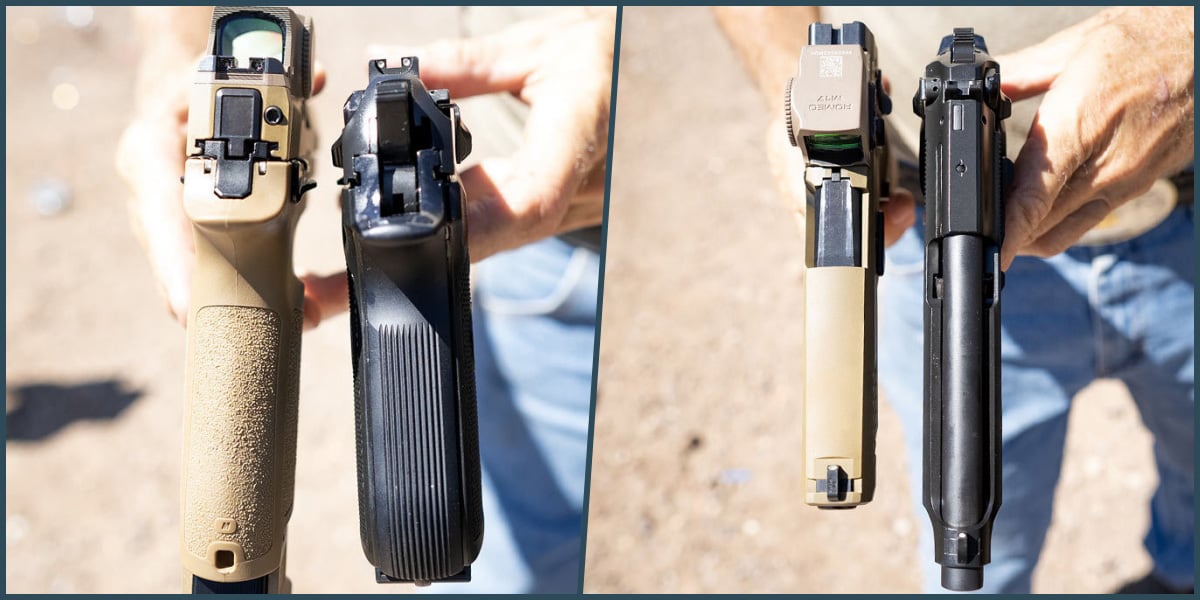
The tough optic sight allows me to rack the slide with more authority than the Beretta. Placing the dot on the target is easy and allows many hits on steel, moving the flapper from one side to the other.
Time to shoot root beer. The 21-round magazine protrudes below the grip but is not bothersome. The exploding soda jugs and cans prove I can acquire targets quickly and make accurate shots. These jugs launch upward like rockets. What a blast!

Does this gun ever run out of ammo? Even two soda bottles at close to 20 yards perched on rocks explode violently. The consistent trigger break is helpful in making longer shots. Again, three magazines were expended with no jams or malfunctions.
Pros & Cons
Conclusion
I like the old Beretta 92, but I love the SIG M17 with its M17 Romeo optic. The SIG feels better in my hand than the chunky Beretta. Accuracy is good with both, but superior with the SIG and its modern red dot sight. Magazine changes with the SIG in competition or informal practice won’t slow me down, and the higher round count is a plus. Trigger pull consistency is a big help with the SIG.

It is easy to see why the U.S. military is equipping its troops with the M17 SIG. It is solid, reliable, accurate, modern, and easy to shoot. It’s not only a great military pistol; it’s a great choice for self-defense or competition as well.
The Beretta 92 and SIG M17 are comparably priced for the handgun alone, but with the Romeo M17 optic, the M17 pistol can run quite a bit more. Both pistols are good choices, but the M17 SIG is my choice for best all-around handgun. Pick one up, and you will feel the difference.