MY IMPRESSIONS
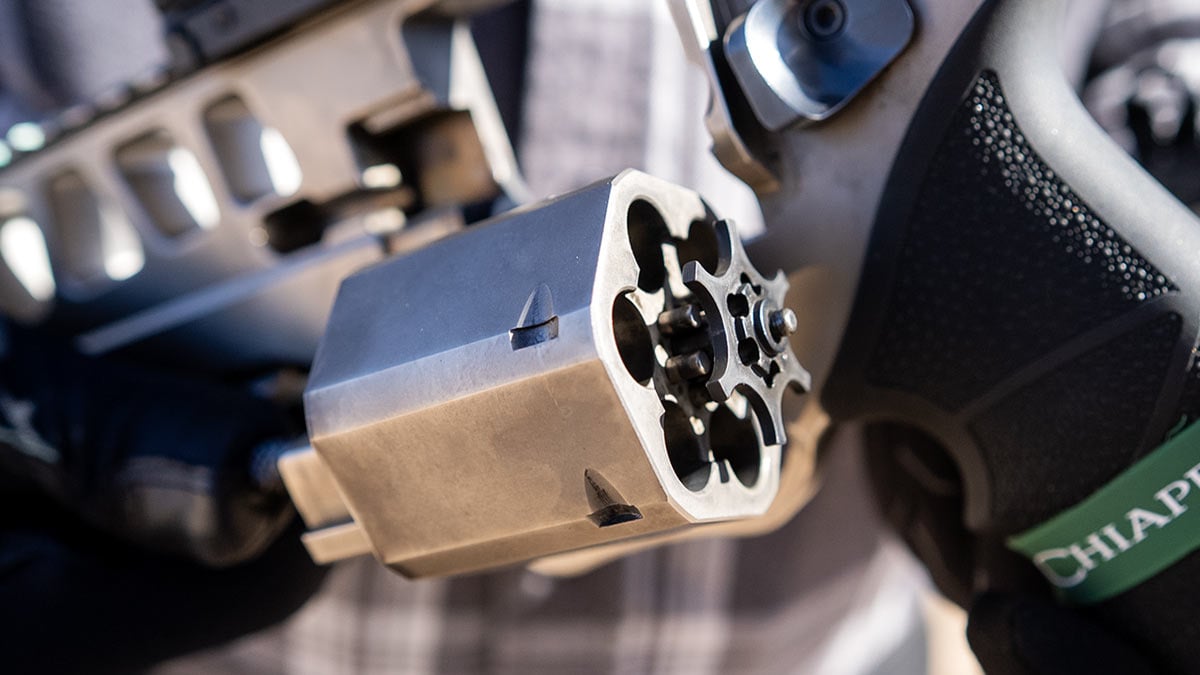
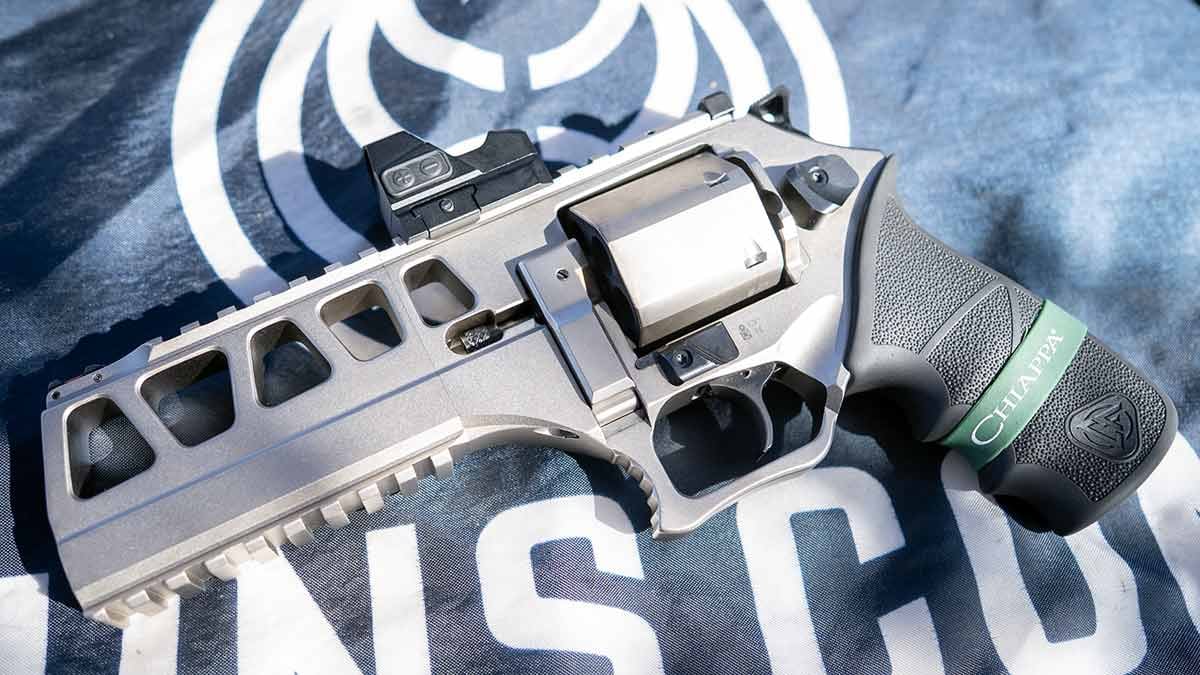
This is a big handgun. Large and ungainly looking, it resembles its namesake rhinoceros. Looking closer, I see similarities between it and a conventional revolver. The six-shot cylinder rolls out to the left when released, and the trigger and hammer appear normal, as does the grip.
The most unusual features of the Rhino are the low-mounted barrel and the false hammer. The barrel is set low on the frame so that it fires each round from the bottom of the cylinder, which Chiappa claims lowers felt recoil and muzzle flip. The raised rib must be high enough to place sights in the shooter’s line of sight but gives the revolver its unusual appearance.
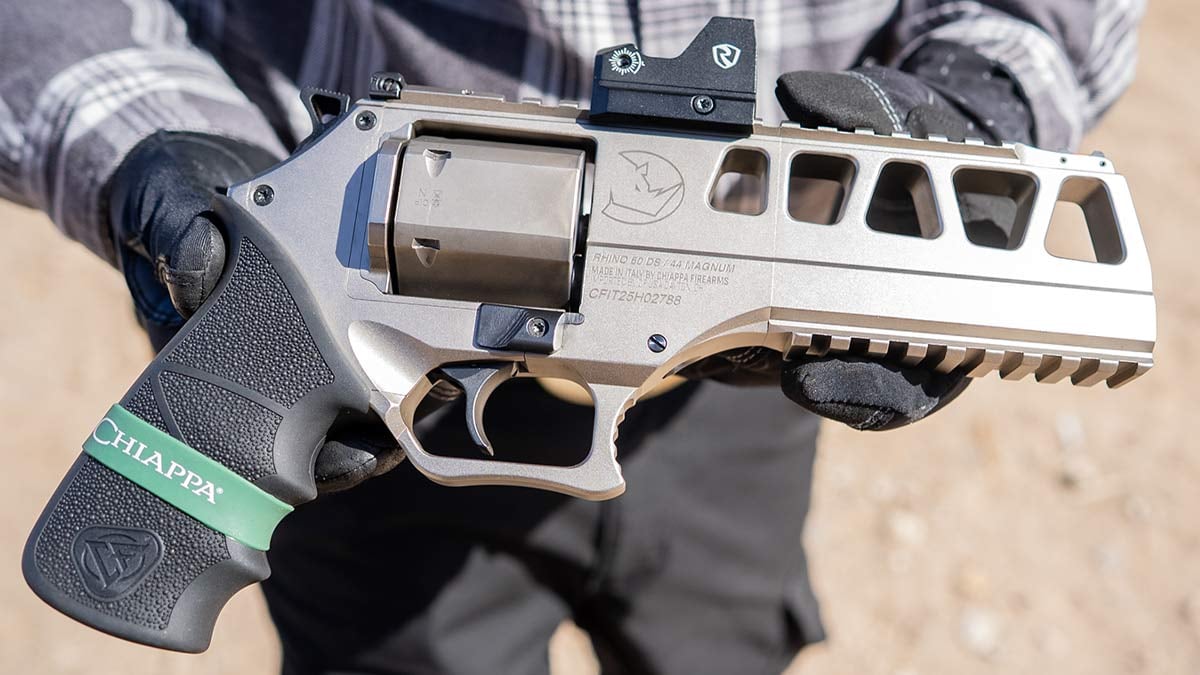
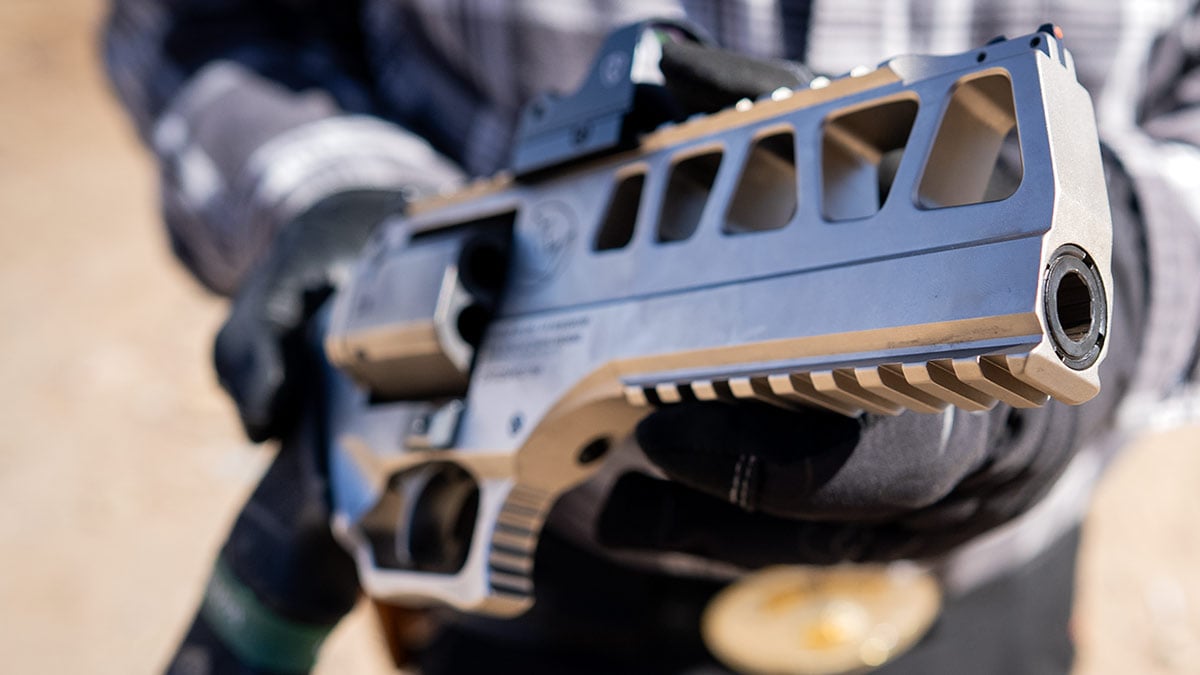
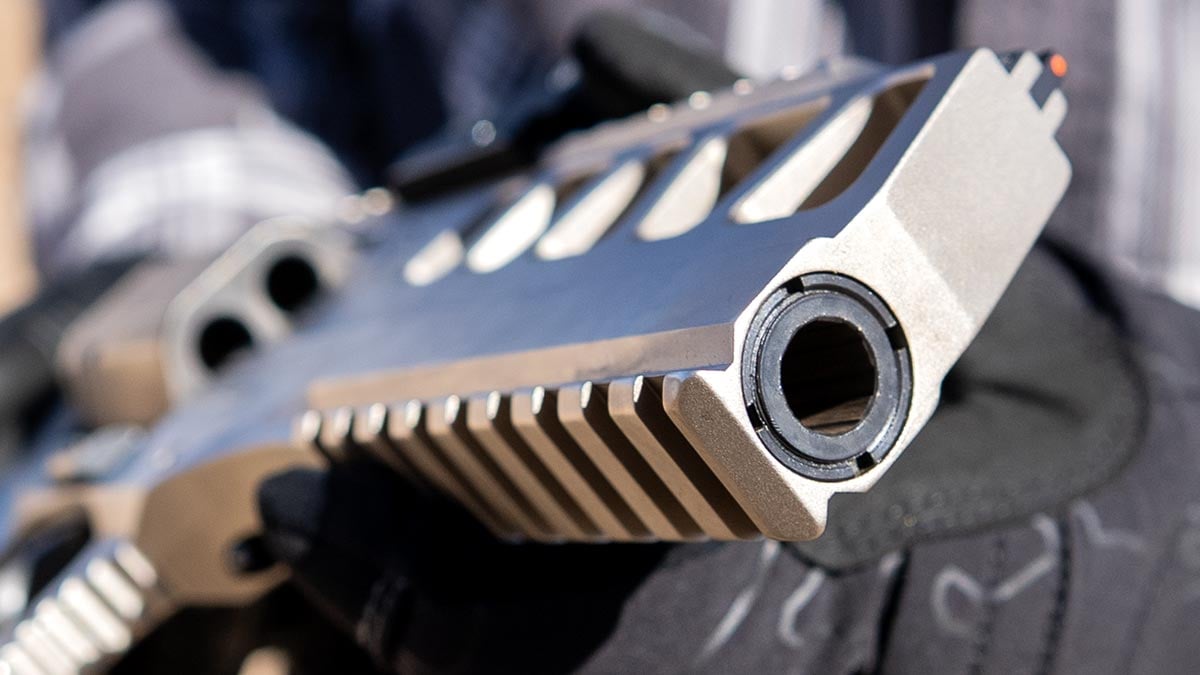
The Rhino is not a hammer-fired revolver. The false hammer does not strike anything, and it is striker-fired, not unlike a Glock-style pistol. It is crucial to understand its fire control system.
The Action
When shooting double action, the Rhino fires much like any other revolver. Squeezing the trigger causes the cylinder to revolve and fires a round from the lower barrel.
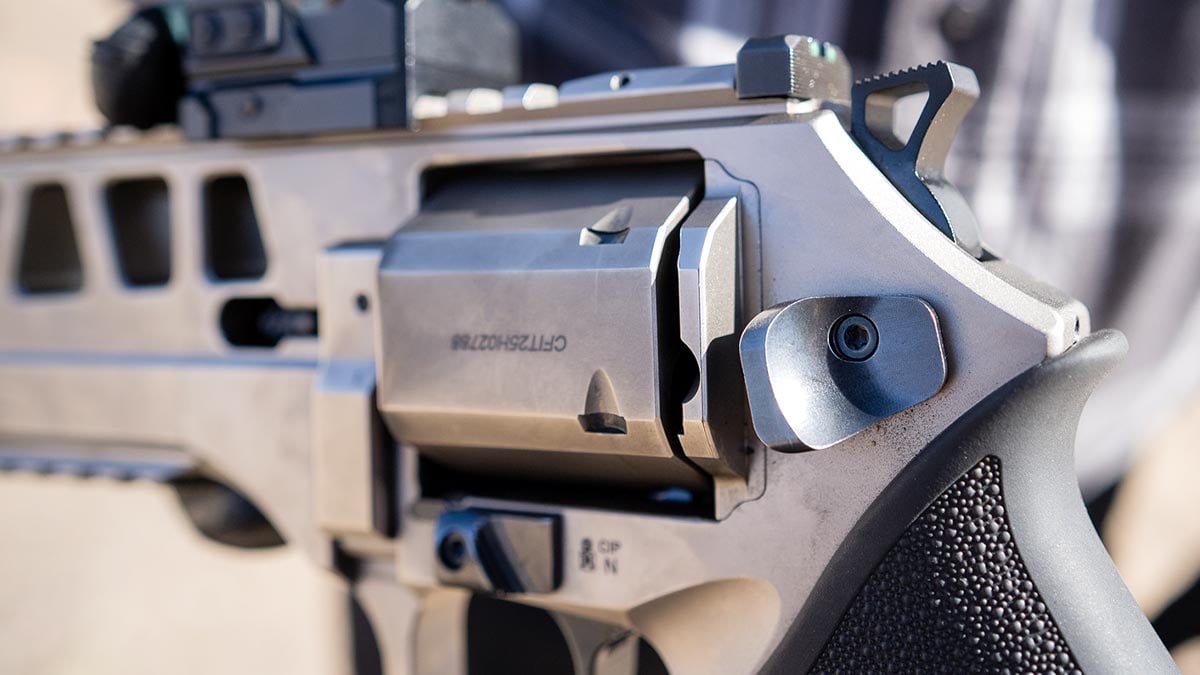
Firing single action requires the hammer to be pulled back prior to squeezing the trigger. Note that the false hammer does not stay cocked back – it returns to its forward position, and a red cocking indicator protrudes upward to show that the internal striker is cocked.
This is a huge difference in function from that of a traditional double-action revolver and should be considered carefully. De-cocking the revolver requires that the hammer first be pulled back prior to squeezing the trigger – an important difference from traditional revolvers.
More Features
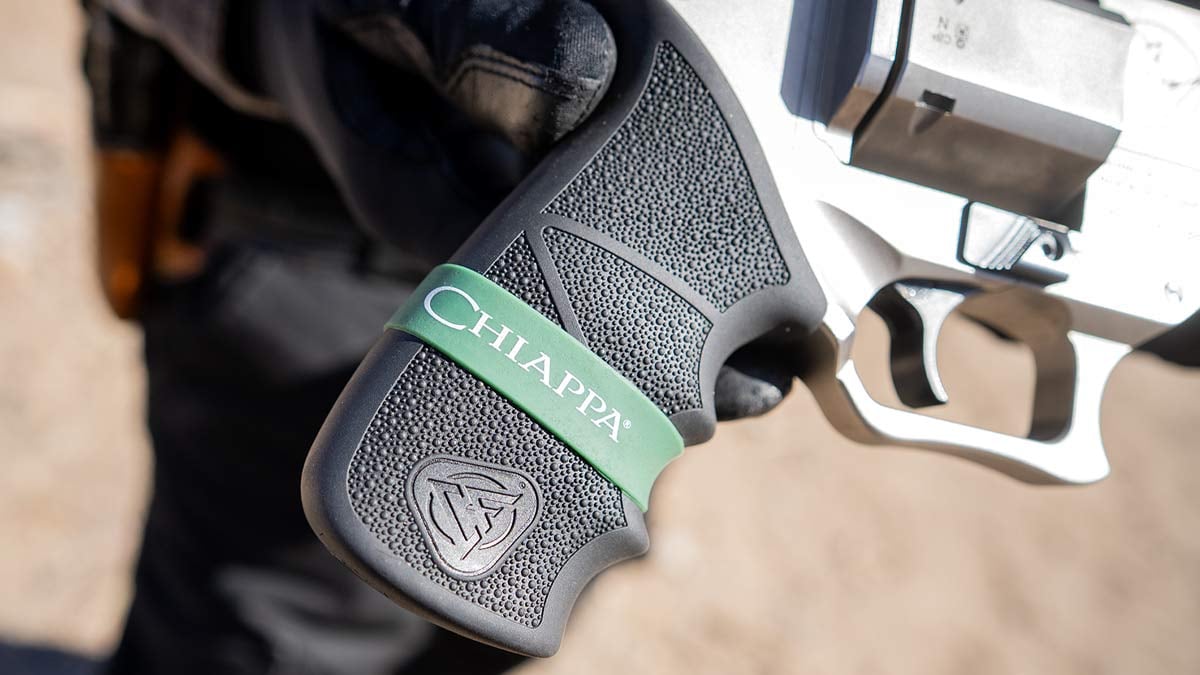
The Chiappa Rhino is a quality piece. Despite its size, it is not especially heavy. The frame is made from a light 7075-T6 alloy, while the cylinder and barrel are solid steel. I like the Hogue over-molded, textured grips. They help me to hold on tight, and the finger grooves give me the control I need. I also like the large trigger guard. Gloved hands and fat fingers will easily fit, and the forward trigger guard is nicely grooved for gripping with the weak hand.
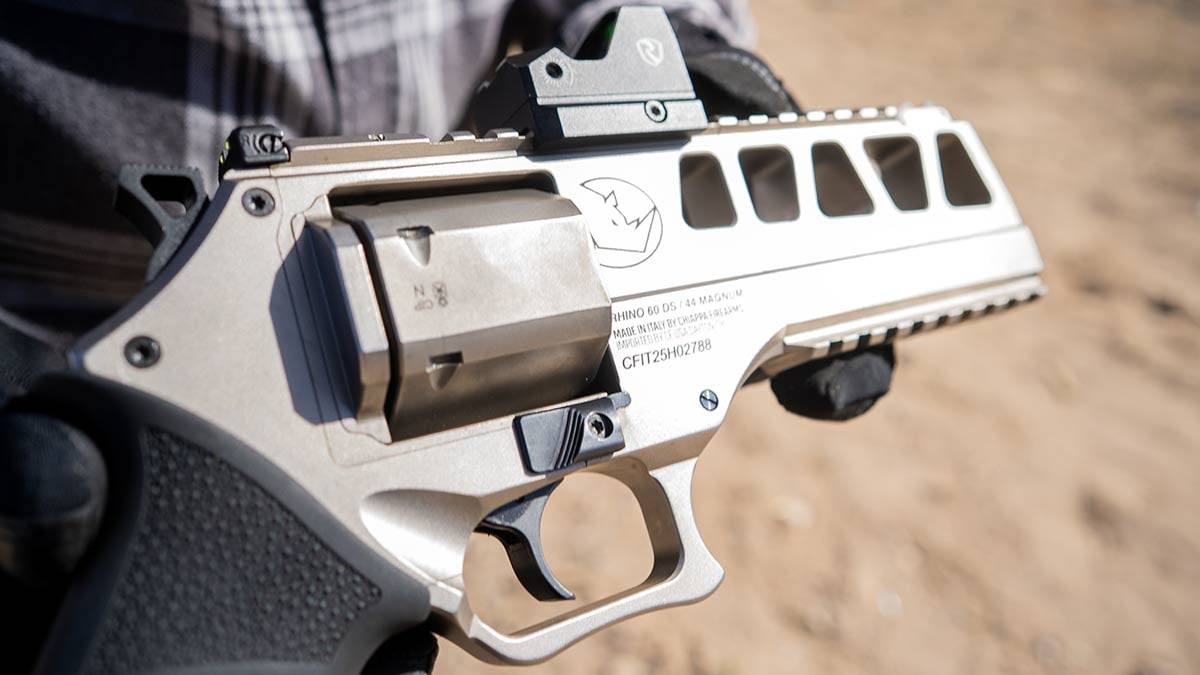
The finger stops above the trigger on both sides of the frame remind me of those found on some quality semi-auto pistols. They are intended to support the shooter’s weak hand thumb while firing, but I found this device to be a painful lesson in recoil with the .44 Magnum cartridge. Do not place your thumb on this finger stop prior to firing, or the Rhino will bite your thumb!
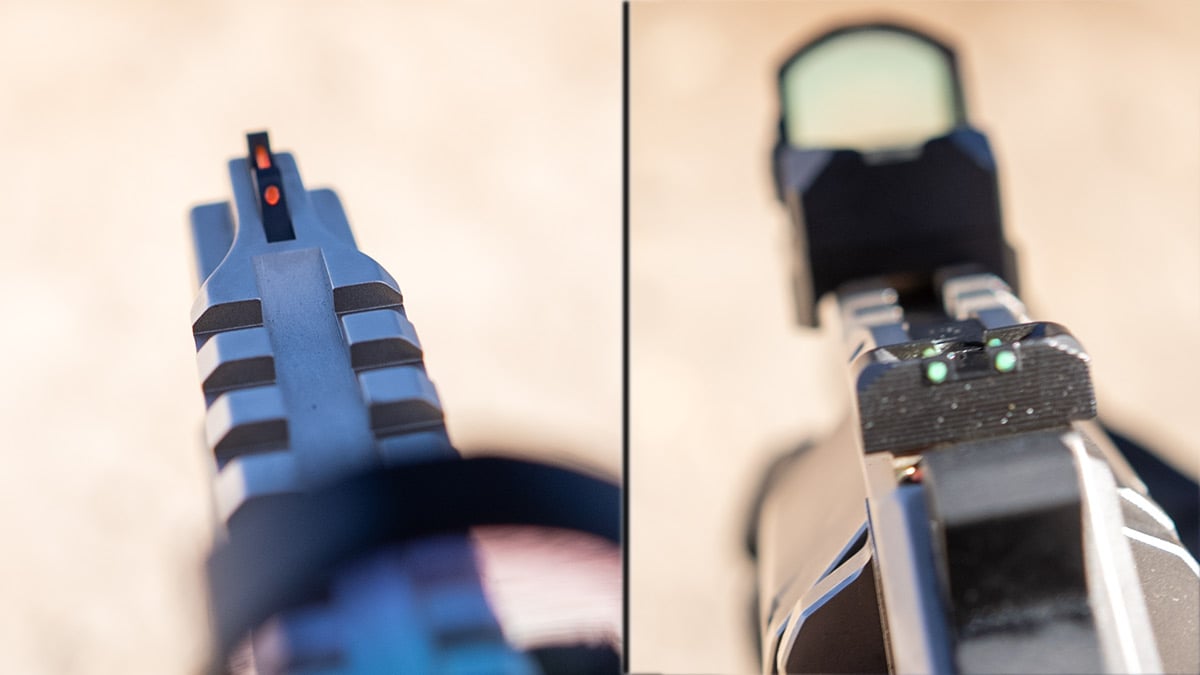
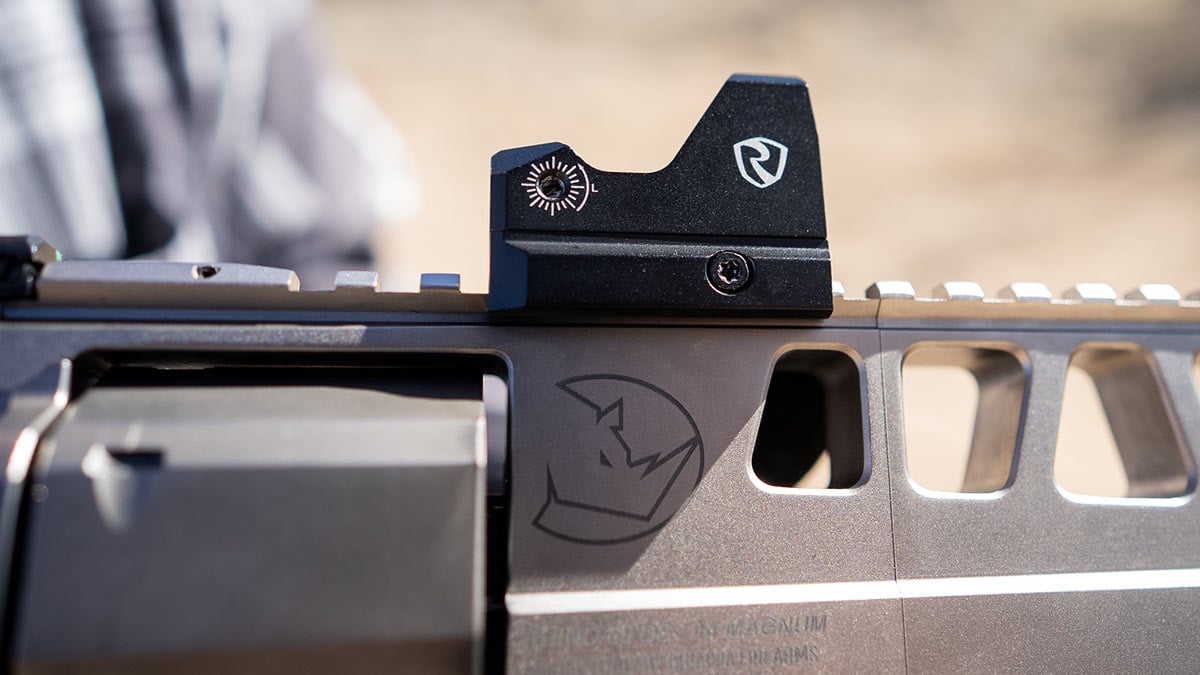
Sights on the Rhino are an adjustable fiber-optic green rear and red fiber-optic front. They are functional and highly visible. The long Picatinny rails are useful for adding a scope, red dot, light, or laser. My Riton X3 Tactix red dot sight is a great choice for the Rhino. It is compact and projects a bright red dot on my target; plus, it is reliable and can take the brutal vibration of the .44 Magnum cartridge.
SHOOTING TIME
For this test, I covered my Area 52 shooting range with targets including two steel plates and many 2-liter soda jugs between 20 and 30 yards. Ammunition was PMC Bronze 240-grain .44 Magnum hollow point and 180-grain .44 Special hollow points.
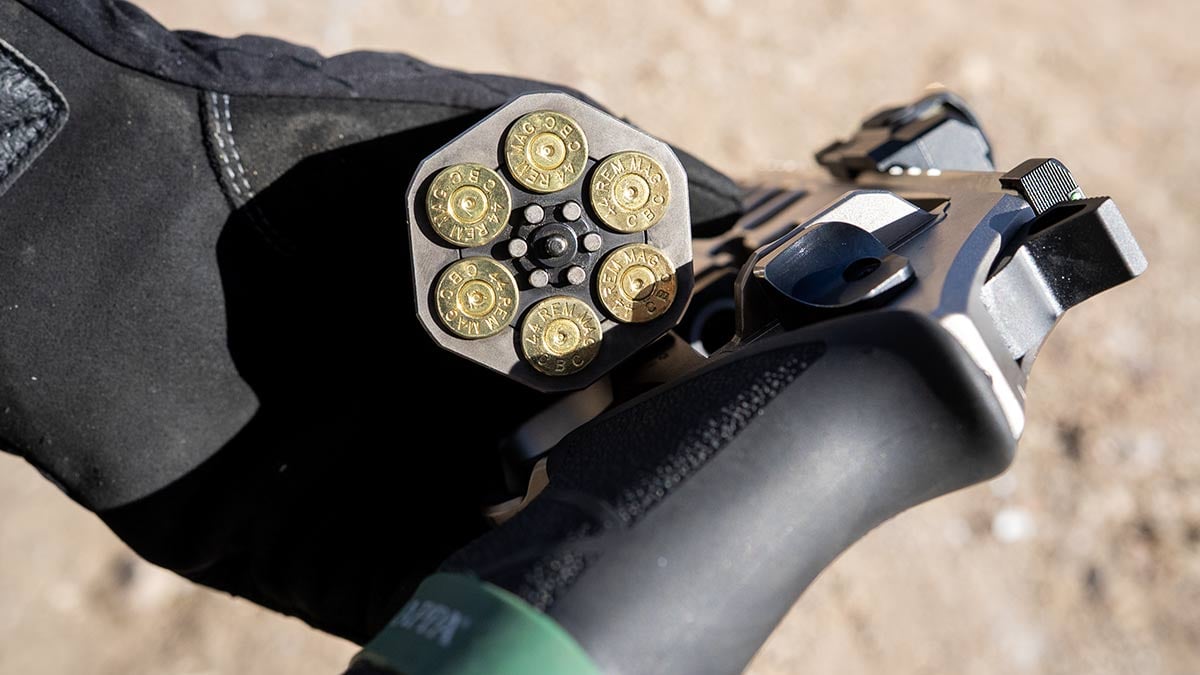
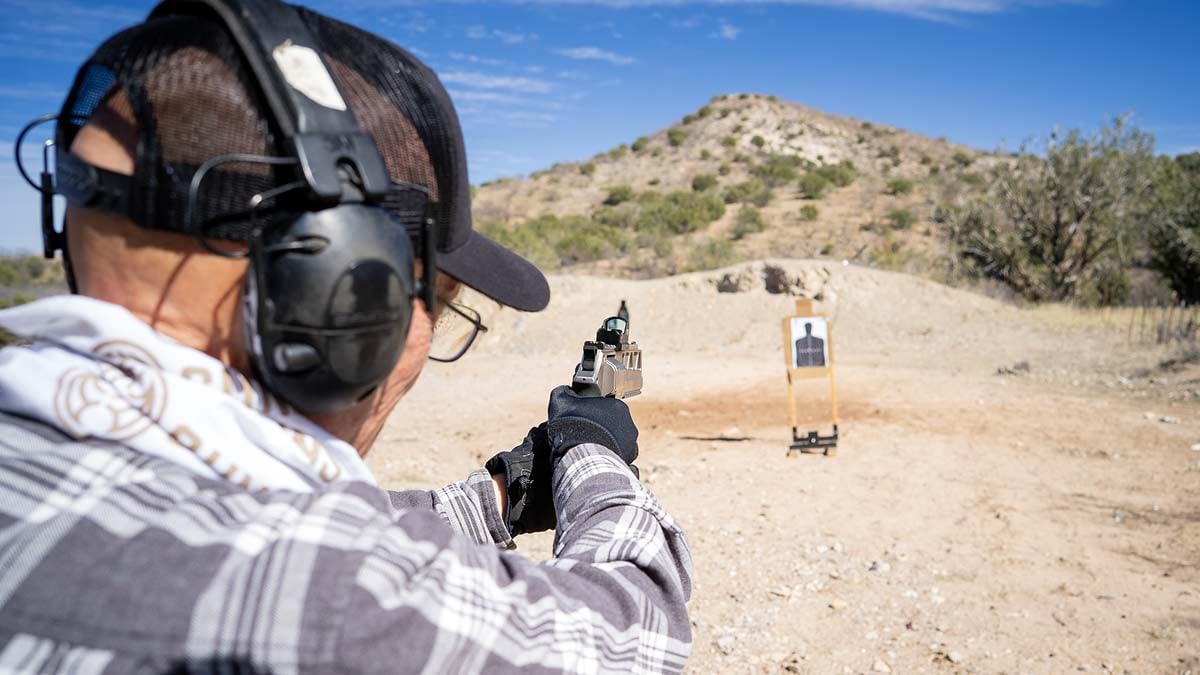
The Rhino is massive and nose-heavy, but the Hogue grip helps me control it. The double-action trigger pull is smooth and predictable, while the single-action squeeze has some take-up but breaks cleanly. I could hit steel reliably at both distances with ease, and my Riton red dot helped with precision hits.
The .44 Magnum kicks, but I noticed that the kick is different somehow. It really does come straight back into my hand with a lower felt impact. For everyday shooting, though, the .44 Special cartridge is my best choice. Its kick is much softer.
The 2-liter soda jugs were no match for the Riton-sighted Rhino. The .44 Magnum and .44 Special rounds rip them apart with explosive force. I would like to take this beauty with me to Alaska on a fishing trip to protect against grizzlies!
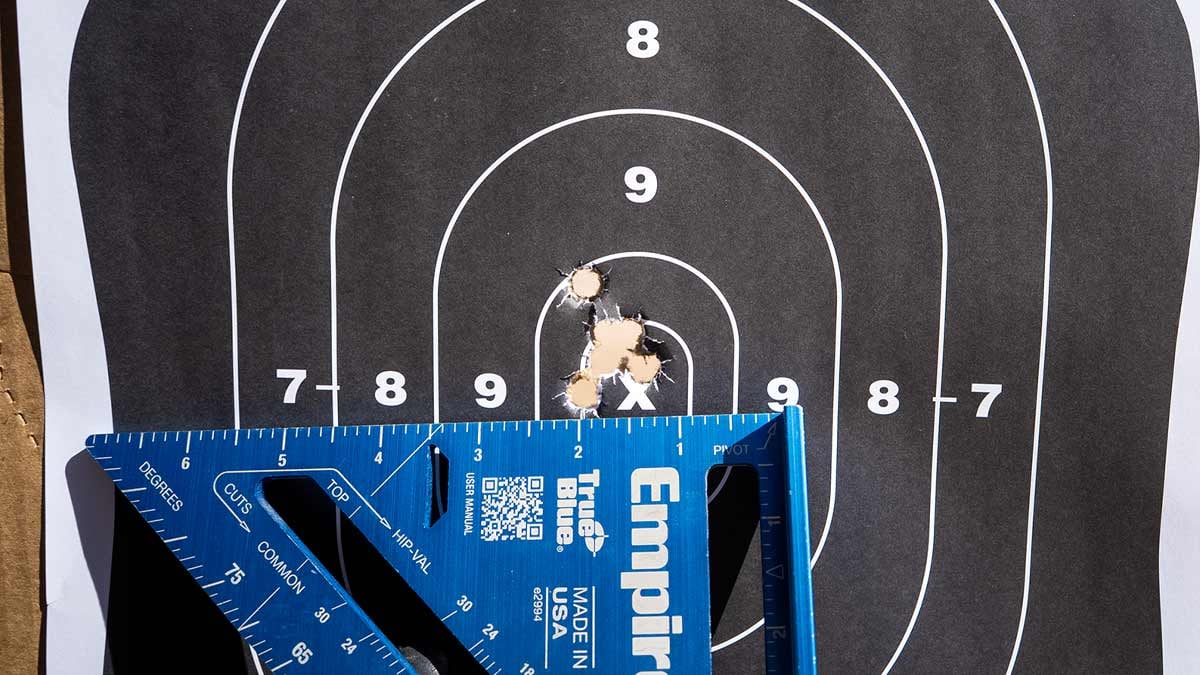
Shooting paper, I was pleasantly surprised to see the Rhino’s great accuracy potential. Firing six shots offhand at 10 yards yielded a 1-inch group with .44 Magnum cartridges – great shooting for such an unusually designed handgun.

Ron Calderone
Ron Calderone is a national record holder and recognized NRA competitor with a legendary background in Black Powder Cartridge Rifle Silhouette. A certified match director and former board member of the Tucson Rifle Club, Ron now enjoys retirement quail hunting with his French Spaniel and sharing his decades of competitive expertise.
View All Articles by Ron Calderone