Pocket Pistols
Lately, I’ve been running down a pocket pistol rabbit hole. I’ve been carrying concealed for a while now, mostly with appendix inside-the-waistband type holsters. I’ve had great luck with the Phlster Enigma system.

However, sometimes you just want to throw something into your pocket. If I’m just quickly letting the dogs out or just running to pick up some takeout food, I don’t always want to strap something on or make sure I’m wearing a belt. I think this is where pocket pistols shine.
Related: What's In Your Pocket? A Look at Pocket Carry
By pocket pistol, I mean something small enough to fit, with a holster, into jean pockets or shorts pockets without printing, and be easily drawn. For instance, for me, even a SIG P365 with a Holosun K optic is too big to be quickly drawn from my jeans because the optic gets caught. The 365 with iron sights would be fine, though.

I found lots of good modern polymer-framed options like the 365. However, I’m a 1911 fan and I really wanted something in that vein and made of metal (call me old-fashioned).
Meet the Mustang
Enter my test gun: the Colt Mustang .380 ACP. If you don’t know the Mustang, it is basically a super-small version of the 1911 chambered in .380 ACP. Released in 1986, the single-action Mustang was a chopped-down variant of the Colt Mark IV/ Series 80 Government Model -.380 Auto, which itself was a small .380 version of the 1911.
Related Review: Old Reliable Blaster – Colt Model 1903 Pocket Hammerless Type V .32 ACP

The Mustang kept the firing mechanism of the 1911 and Government Model .380, but it removed the barrel bushing, grip safety, and recoil spring plug, instead going with a dual captured recoil spring mechanism supported by a full-length synthetic guide rod.

It’s much more like a modern pistol than the 1911. There is no grip safety. The dual captured recoil spring makes takedown easier than on the 1911. Even though it has a thumb safety, you can rack the slide, check the chamber and take the gun down with the safety on, unlike on the 1911. This makes the Mustang a little bit safer and easier to use than the 1911.
Since it’s a Series 80, there is a firing pin block, but I don’t think the trigger pull suffers much because of that.
Models

The initial Mustang was all steel and had a capacity of 5+1. As it grew in popularity, more variants emerged. In 1987, the Pocketlite was released with a lighter aluminum frame. In 1988, the Mustang Plus II used the Government Model .380’s longer grip frame. This longer frame increased the gun’s capacity to 7+1, hence the “Plus II” name. In 1992, the regular Mustang got a capacity increase from 5+1 to 6+1.

The initial Mustang run went until 1997. In 2011, Colt re-released the Mustang Pocketlite, which was supposed to have several upgrades to increase quality and reliability and had the reputation of being better built than the earlier generation. And then, in 2013, Colt released the Mustang XSP with a polymer frame. Colt stopped all production of .380 pistols around 2020.
Related: Colt's Rare and Interesting Pocket Nine
Test Gun
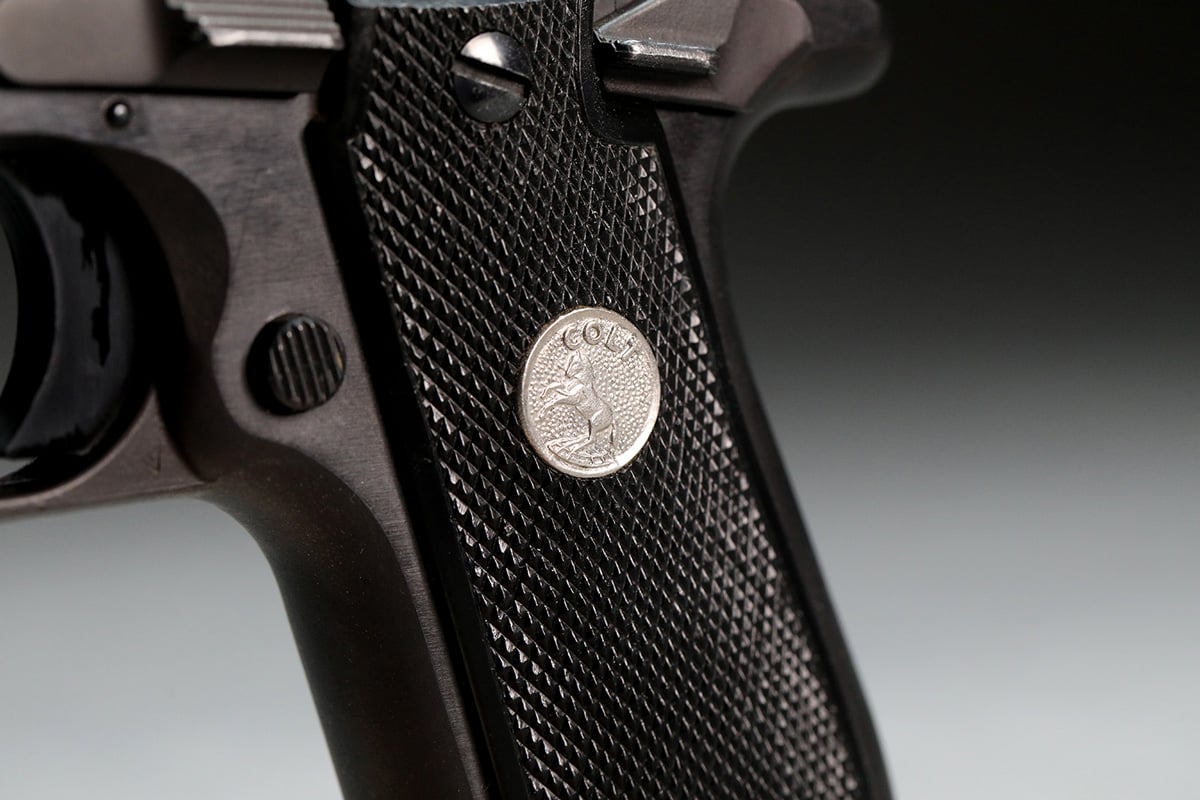
I found this Mustang Plus II in Guns.com’s Certified Used section. It was built in 1994 with an all-steel blued frame and slide. It weighs 18.5 ounces with no magazine and has a crisp 5-pound single-action trigger pull.
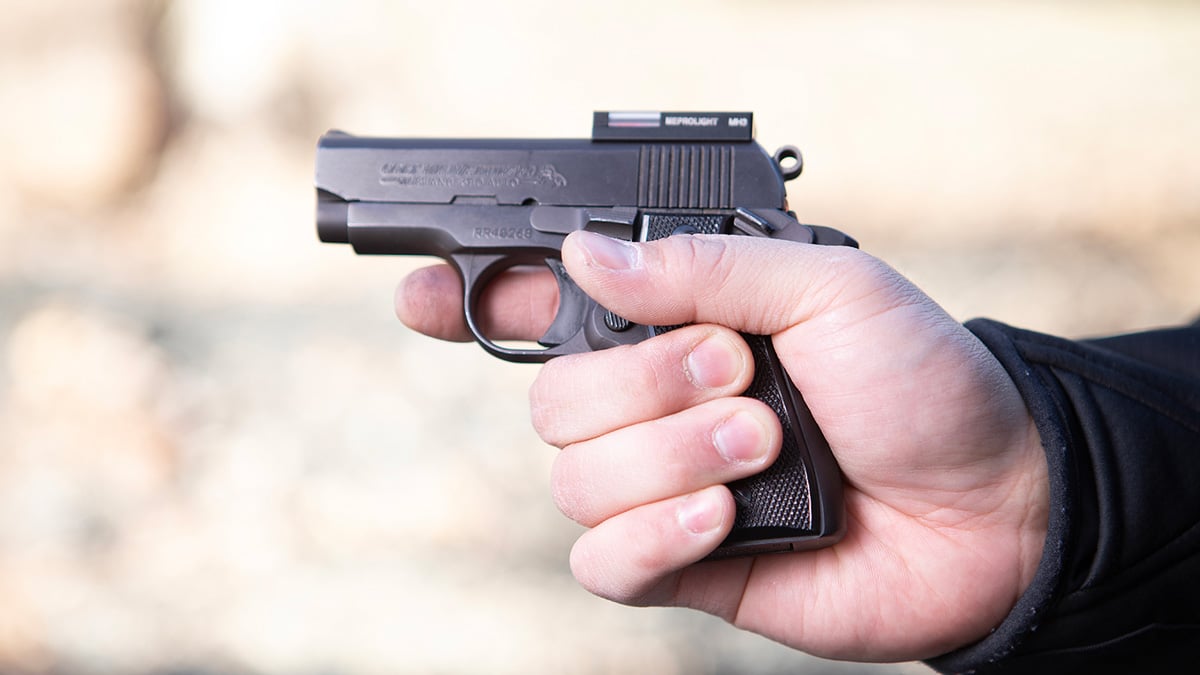
This thing is great to shoot. The larger grip allows me to get my pinky almost all the way on the gun, and I much prefer this larger grip to the standard Mustang grip. Even with the smaller .380 ACP round, a full grip gives much better recoil control and is more comfortable to shoot.
Related: .380 ACP vs 9mm for Self-Defense Ammo – What’s the Real Difference?

I can shoot quickly and controlled with the Plus II grip and nice single-action trigger. And even though the safety looks small, it’s very easy to actuate and locks up positively. Also, racking the slide is very easy, so it would be good for people with weaker hands.

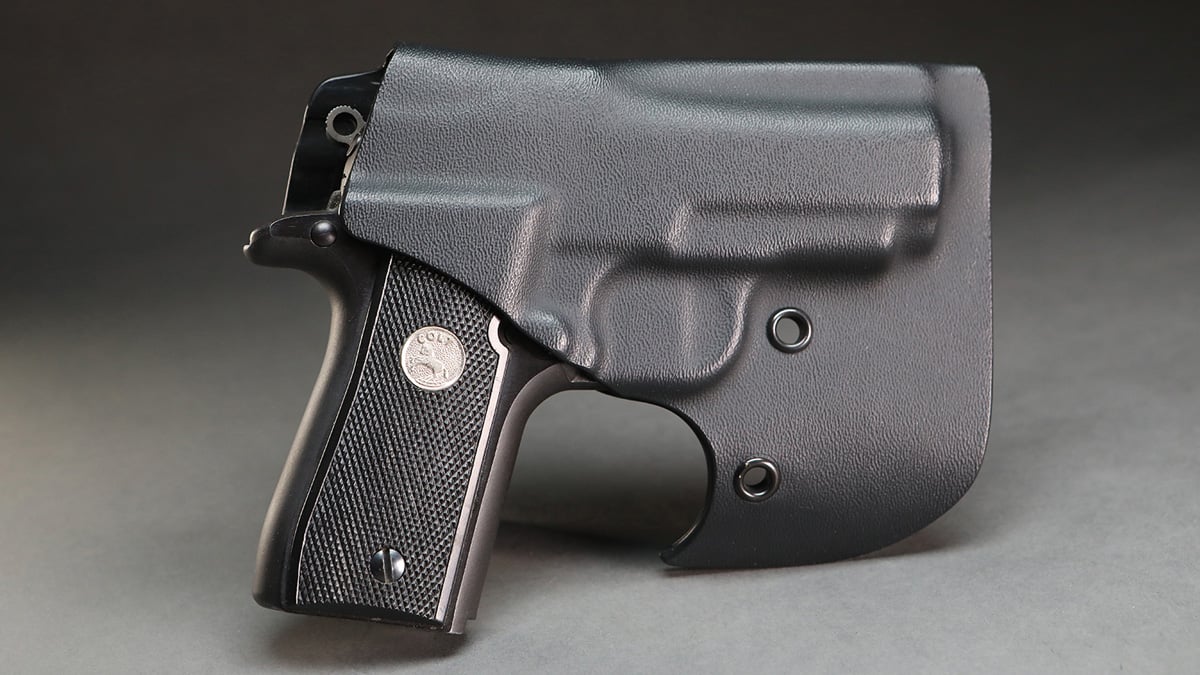
Being so small and thin, it conceals very easily in a pocket. I’ve been using a Vedder Pocket Locker, and it basically disappears in jeans, but it can also be easily drawn.
Pros & Cons

If it were only about the concealability and shooting experience, with its small size, great trigger, and extended grip, this gun would be a no-brainer.
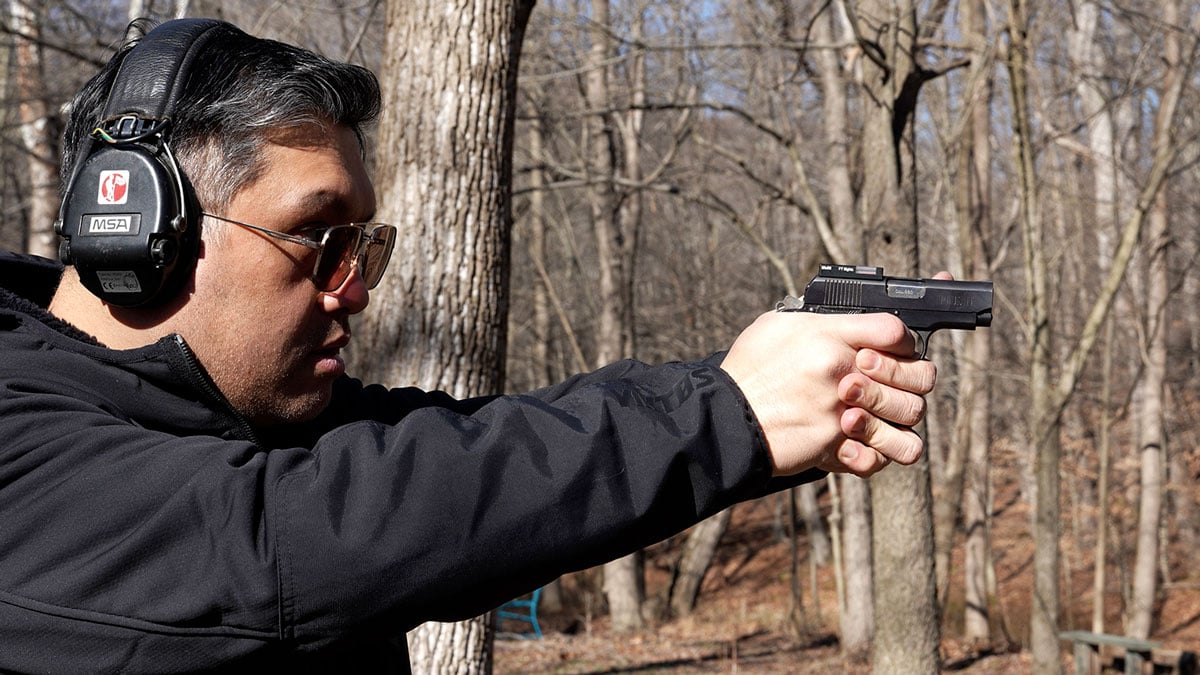
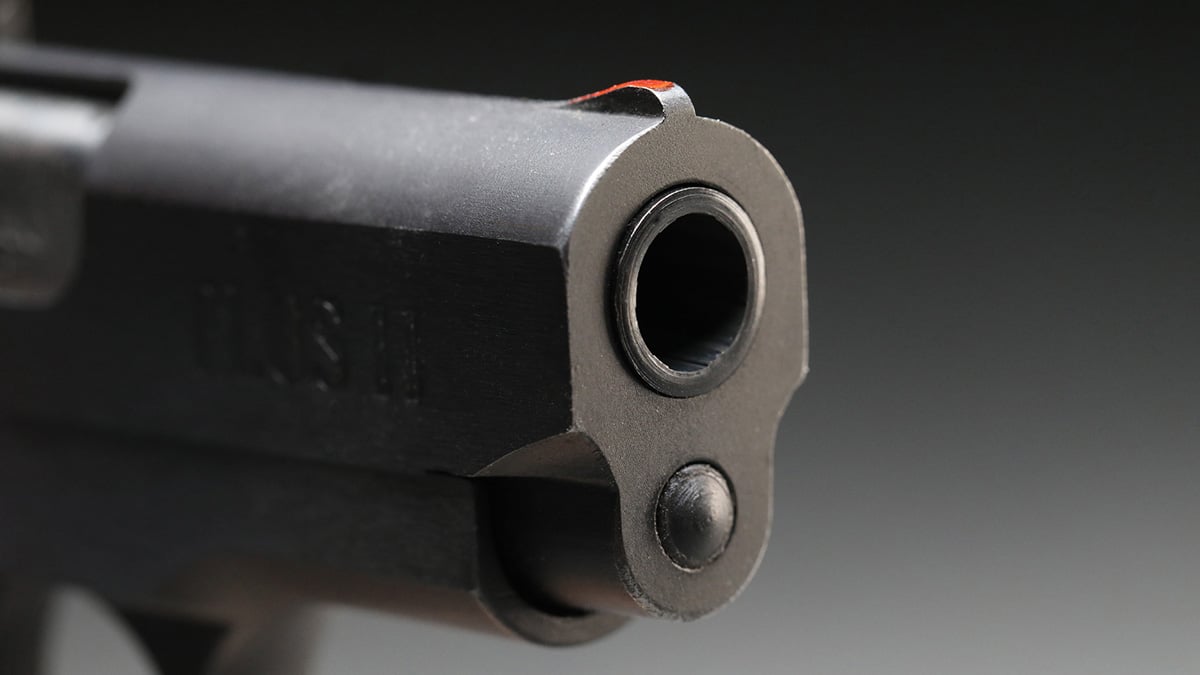
But there are a few issues. First, the factory sights are small, although for pocket pistols, even having sights is something of a luxury. The Mustang has a milled front sight post and windage-driftable rear sight blade. They are usable, but with my aging eyes, they are not the best for me.
Secondly, I don’t know if it is because of the small sights or not, but I was not able to get good long-distance accuracy out of this gun. I know – this is a pocket gun, so it’s not really designed for tight groups. Up close at under 10 yards, I would have no problem getting center mass hits, but groups are not tight. When shooting at my 66-percent IPSC target at 40 yards, I could maybe hit five out of 10 shots reliably.
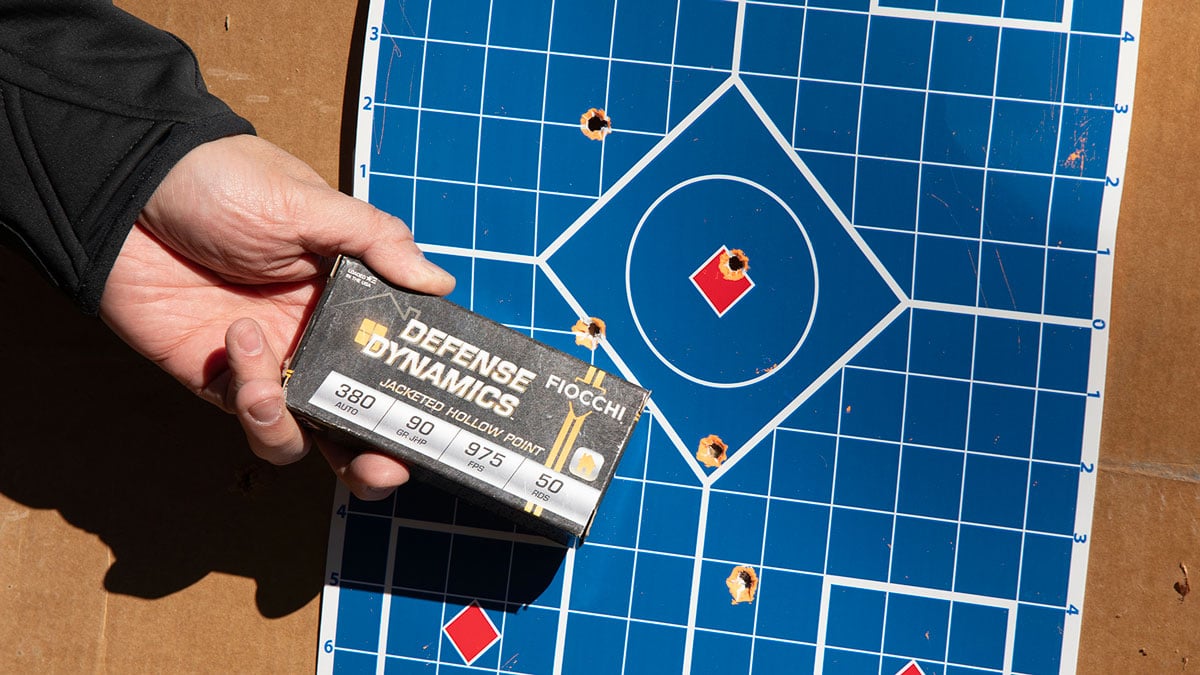
Third, reliability was not terrible but not good enough for me to wholeheartedly recommend this pistol. Out of 300 rounds, I had three stoppages, which could be due to any number of reasons. It could have been magazine-related, and I only tried two types of ammunition. I did not do an exhaustive reliability evaluation.
There are anecdotal reports of these older Mustang having reliability problems, but the re-issued 2011 models have a better reputation.
Pros:
- Small size is easily concealable
- Crisp trigger
- Extended grip fills the hand
- Slide is easy to rack
- Durable steel construction
- 7+1 capacity in micro-compact concealed carry size
Cons:
- Sights are small for my eyes
- Accuracy lacking over 10 yards
- Possible reliability issues with three stoppages over 300 rounds
-
Can be pricey, as it's no longer in production
Optic
There’s not much I could do with the reliability issue, but I did try to solve the sights issue. Normally, my solution would be mounting a red dot sight on the pistol. Even if not made for red dots, most guns can have their slides milled for them; however, in this case, a red dot really hurts the ability to conceal and draw the gun.

As I said earlier, with my SIG P365, which is about the same size as the Mustang, a red dot snags when drawing from my pocket. Also, since the front sight is integral to the slide, changing the front sight is out of the question.
This led me to the Meprolight MePro FT Bullseye Rear sight. This fiber optic and tritium sighting system is contained entirely in the rear sight housing – no front sight is needed. When the sight is lined up properly, the shooter sees a bright red dot inside a red circle. The sight is intuitive, and it didn’t take me long to get used to it. It’s designed for fast, up-close shooting.
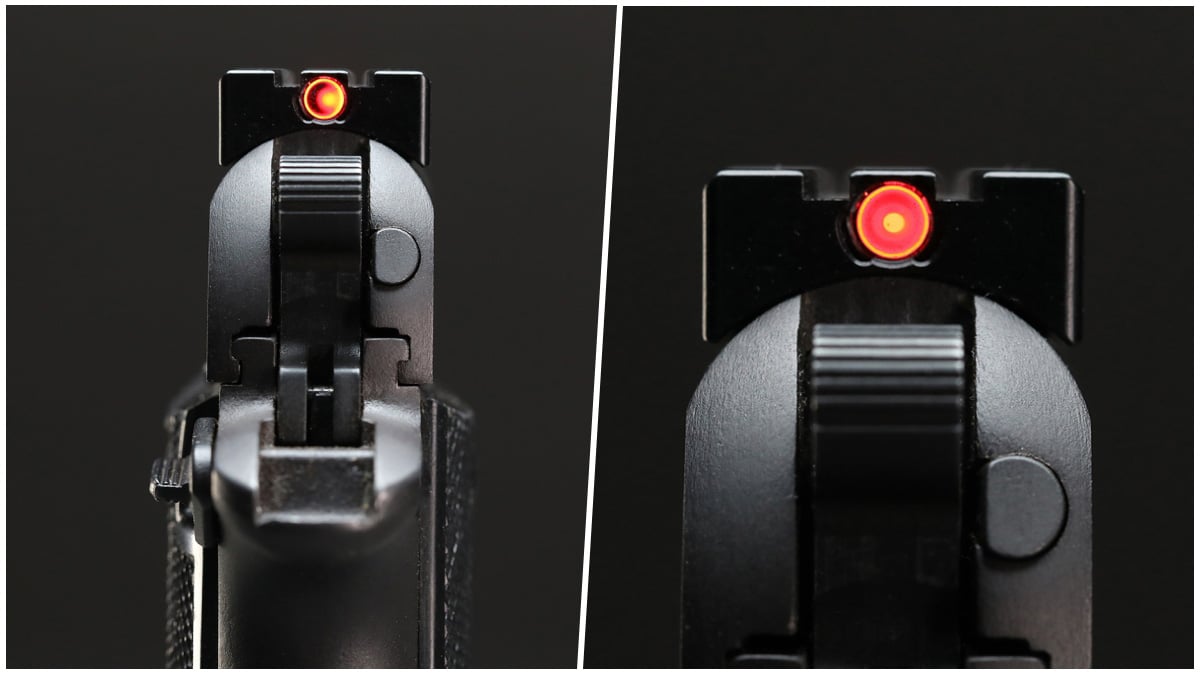
I found the Meprolight sight sized for the Remington R1 fit the Mustang very well and worked well at the distance for which it was designed. It’s bright and easy to pick up at speed, and I had no problems with fast shooting under 10 yards. It was also small enough to conceal very well. Initially, with the Meprolight sight installed, the Mustang did not fit into the Vedder holster, but a little time with a heat gun solved that problem.
The issue, though, was when I tried to take it out to past 40 yards, I was still not able to get consistent hits. I’ve seen reports that this sight can work at those distances, so I’m not totally sure if it is the sights or the gun, but it seems this particular system is only effective at close distances.
Conclusion

Despite loving the ergonomics, concealability and up-close shootability of the Mustang, the reliability and long-distance accuracy makes me pass on this as my new pocket daily carry. If you are looking for a close-up gun, I would consider the Mustang, but maybe look at one produced after 2011. Just make sure you like the 1911 battery of arms.
Price is a consideration as well. Although initially sold for around $280 in 1990, because they are no longer produced, used models can go from anywhere around $600 to over $1,000.
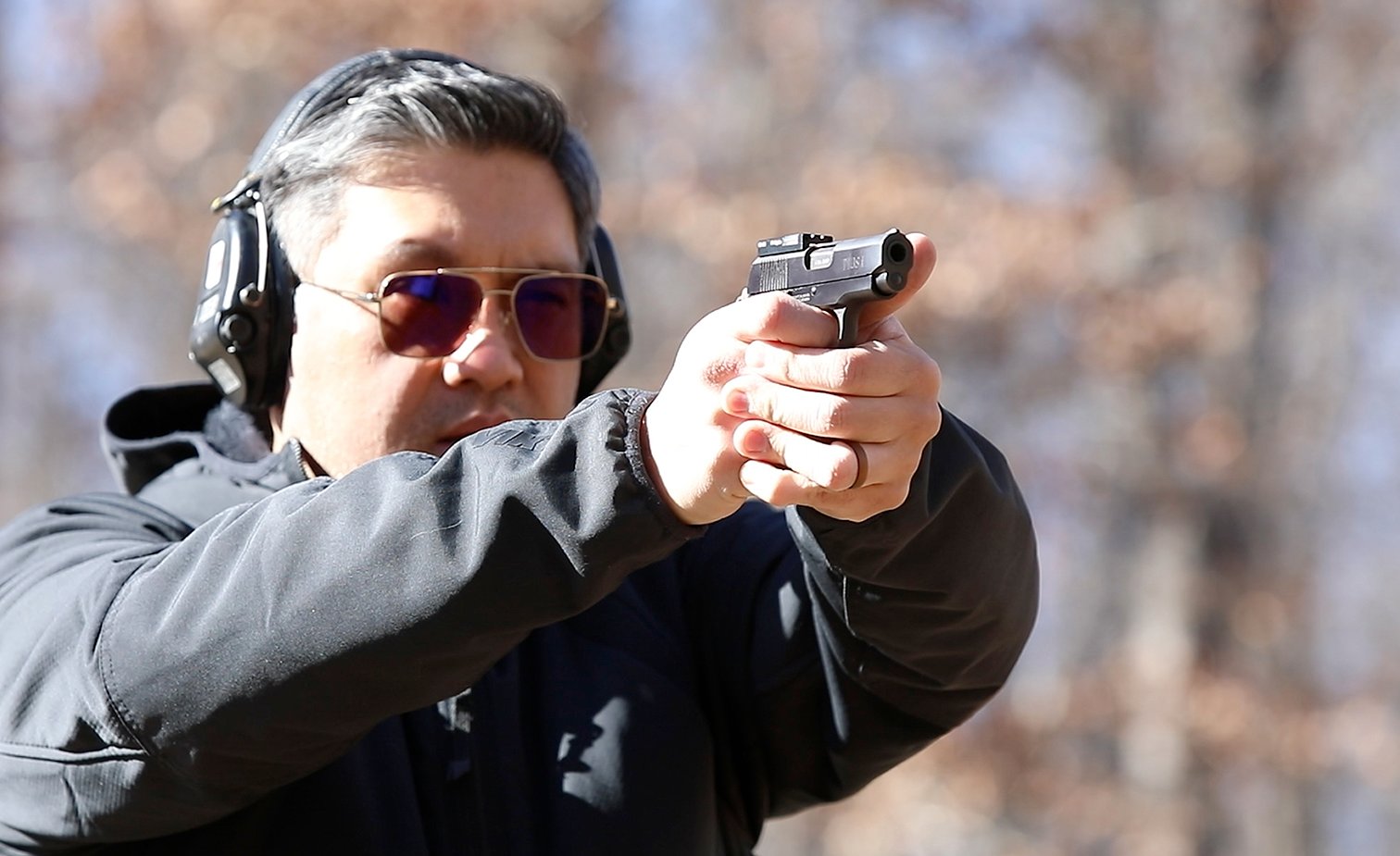
Thankfully, the design is still being produced by other manufacturers. Kimber, SIG, Springfield, and more produce similar pistols, so there are options if this sparks your fancy. I’ll be looking at some of these other guns in future reviews.