CZ 82 Hits the Concealed Carry Market

When these guns hit the U.S. surplus market, it didn’t take long for them to grab attention for their capacity, double-strike capability, and general compactness for concealed carry. Better yet, these unique double-stack guns came in at a budget surplus price and even the safety was familiar to any American hand that had held and fired a 1911.
Though, the CZ 82 was hardly lightweight – which actually makes it a comfortable, soft-recoiling shooter – it was reliable and offered a reasonable self-defense round with the 9x18mm Makarov. The story behind that round and why it differs from the Western 9x19mm NATO (of the 9mm Luger lineage) is a topic for another story. But while the round was less powerful than the 9x19 NATO, the Makarov chambering was already pushing the boundaries for a direct-blowback handgun at the time.

It’s not uncommon to find these guns simply listed as Makarov pistols because of their chambering, but that does not exactly make them Makarovs. While the original Makarov was a double-action/single-action design, it varied greatly from other East Block handguns like the Polish P-64 and the CZ 82 chambered for the same round. The ammunition selection was really more of a logistical pact to simplify supply chains. However, the slightly smaller round did lend itself to direct blowback designs that also kept the handguns in the Soviet sphere of influence rather small and handy from a concealed carry perspective.

RELATED: CZ 82 Pistols – Compact Cold War Firepower
Specs & Function
The CZ 82 is a direct-blowback design that features a double-stack 12-round magazine. The barrel hosts polygonal rifling instead of the traditional lands and grooves. Instead of the common parkerizing or bluing to protect the metal, the CZ 82 has a black paint coating on the frame and slide.
The gun boasts an ambidextrous thumb safety and ambidextrous but recessed magazine release. I have actually found that it is much easier to simply use your trigger finger to actuate the release. The thumb safety is quite positive and offers a generous click in either direction.

Featuring a 12-round, double-stack magazine, the gun’s 9x18 Makarov chambering splits the difference between 9mm NATO and .380 ACP. This squat little round lacks some of the power of the modern 9mm, but it is still effective and served as the standard pistol-caliber cartridge for the Soviet Bloc for most of the Cold War alongside the older 7.62x25mm Tokarev. I’ve listed some additional specs below. Of note, the weight should stand out as one of the bigger issues for this gun as a concealed carry piece.
Length: 7.88 inches
Barrel Length: 3.8 inches
Sight Radius: 5 inches
Height: 5.13 inches
Width: 1.38 inches
Weight: 1.69 pounds empty
DA Trigger: 8.63 pounds
SA Trigger: 5 pounds
Now, the CZ 82 has a double-action/single-action trigger design with the notable caveat that there is no decocker and the safety does not function when the gun is in DA mode. Suffice it to say that the design is more of a second-strike capability when compared to modern designs with a similar function. It also made sense with hard and often varying primer qualities from the East Bloc countries.
You could manually drop the hammer to make it a double-action carry piece – a somewhat risky prospect – but from surplus service holsters I’ve handled, the strap only functions when the hammer is back, implying that it was generally intended to be carried with the hammer cocked in those holsters. Unlike the original Makarov, the CZ 82 does not have a free-floating firing pin. Additionally, if your gun is in proper working order, the hammer should be blocked from contacting the firing pin when in the non-cocked position.
I have not seen the CZ 82 appear on the California-compliant firearms list yet, and the 12-round magazine could be one hiccup anyway. However, the gun has made the ATF’s Curio & Relics list, and the CZ 83 – a sister gun chambered for .380 – has achieved the feat of passing California compliance. Also, I would recommend you be somewhat wary of aftermarket magazines for this gun if you intend it to be more than a range toy. There are ones that work, but there are also ones that I have never managed to cycle through the entire magazine without having to clear at least one jam. The original magazine, for me at least, has run flawlessly with everything from old surplus steel-case ammo to Hornady Critical Defense.

That actually brings me to my next point, which is ammo and carry support options. While hardly as plentiful or as cheap as when the guns and ammo started flowing in from Eastern Europe after the fall of the Soviet Union, there is still surplus and modern-manufacture 9x18 Makarov ammo, including defensive loads. You can also find IWB and OWB holster options as far as the CZ 82 is concerned.
SHOOTING & HANDLING
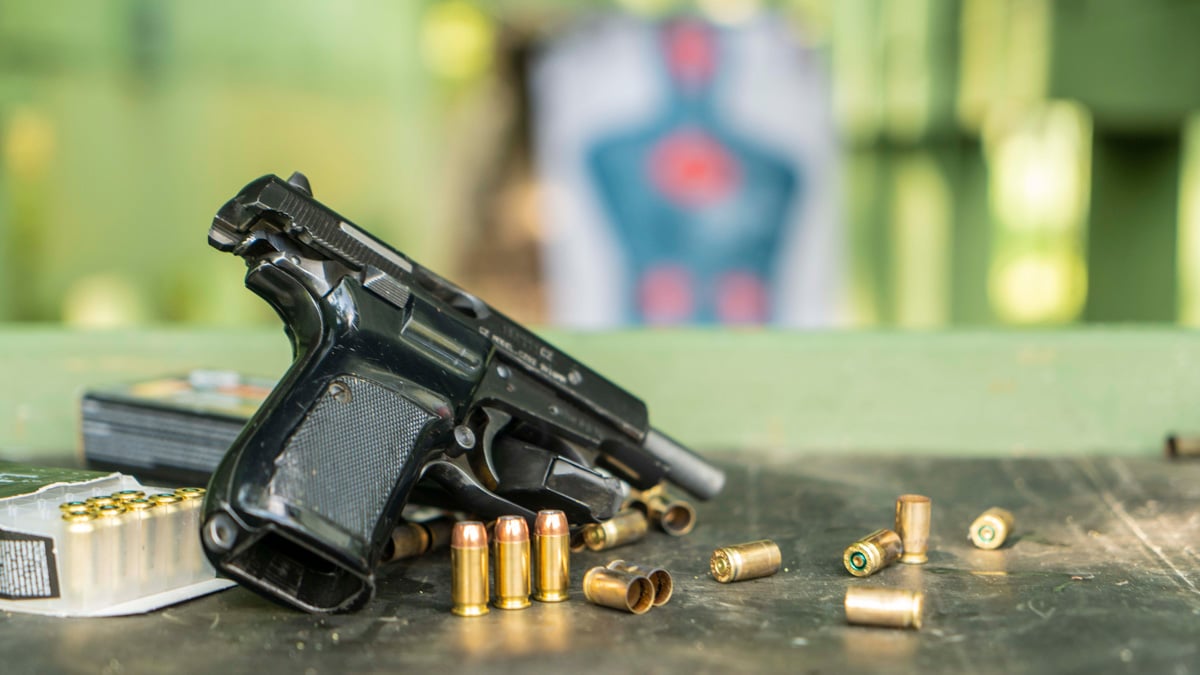
Despite the weight and age of the design, the gun is surprisingly nimble and form-fitting to the hand. I will say that the plastic-like grip panels are a bit slick, but it locks into your hands quite securely thanks to the shape of the grip, checkering on the sides, and ambidextrous thumb shelves.
For my hands, all the controls are easily accessed without modifying my grip. The one exception is the recessed magazine release. I usually find it easier to release it from the right side with my trigger finger, which does not require me to break my grip and is easily accomplished. I can activate it with my thumb, but that does take some adjusting.
Unlike most pistols of the period rolling out of gun factories in Eastern Europe, the CZ 82 actually has a somewhat generous sight. The rear square-notch sight is dovetailed and sports two painted dots, though these are well faded on my example. The front has a painted vertical line. I do not shoot the gun very often, but the recoil is very manageable.
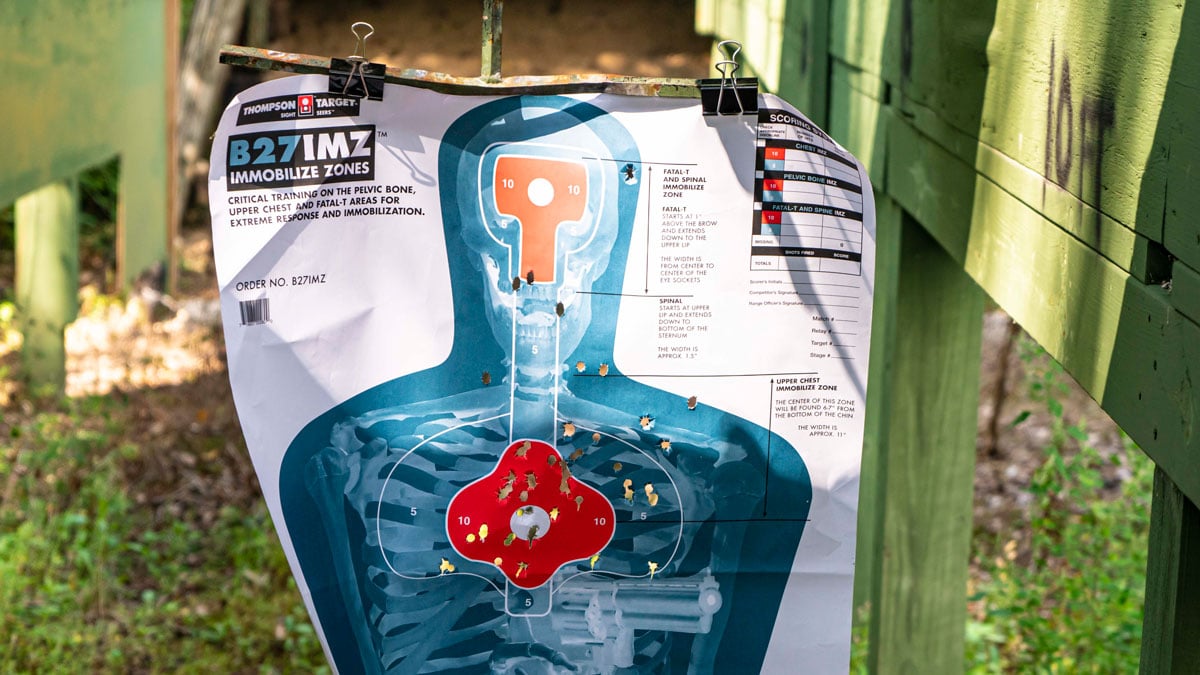
That said, the sights and trigger do require some practice if you are accustomed to SA-only firearms. Still, rapid-fire shooting at 15 yards is more than capable of effective self-defense shooting. I went about three years without firing my CZ 82, and my first mag through the gun was a messy but functional grouping. Given the ergonomics and trigger, I would expect to see significant improvement with just a touch of practice. Unfortunately, my ammo stash was a bit low for my last range visit.
FINAL THOUGHTS

I won’t claim to spend much time carrying my CZ 82, but I can see the appeal. For the time period, this little surplus pistol offered capacity and some nice features for an older military design. In fact, it’s still in service today in the Czech Republic, though production for the CZ 82 itself ended in the 1990s.
Interestingly, the CZ 83 pushed on in production well after the end of the Cold War and lasted until 2012. These guns still pop up from time to time, but I haven’t seen a bulk import of the CZ 82 in several years now. They’re likely still out there just waiting for their end of service. If it’s something you are interested in, I would recommend jumping on it sooner rather than later. The CZ 82 has a tendency of showing up at an affordable price only to vanish for years at a time.
Like cool old guns like this?
Check out our Military Classics and Collector’s Corner for more.