Video Review
Meet Henry’s Smoothbore .22
The Garden Gun (Henry Model H001GG) is a .22 Long Rifle smoothbore with an 18.5-inch round barrel. With its 15-round capacity tubular magazine, this gun sans rifling may be peculiar, but it has ample firepower for close-range business.


Features are mostly the same as the company’s other rimfires, with adjustable iron sights, a 3/8-inch grooved receiver for optics mounting, and a basic polymer buttplate.


The stock, however, stands apart from anything else in Henry’s lineup. It’s crafted of black ash and finished in a rustic fashion. The gun weighs only 5.25 pounds and measures 36.5 inches overall, yet maintains a full 14-inch length of pull. There’s the traditional quarter-cock safety, and like Henry’s other levers, it forgoes a mechanical push-button safety.
A Garden Tool
Per Henry’s website advertising, “Tuck it next to the seat of your tractor or riding mower and have it at the ready for when something slithers into view through the grass, dispatch those barn-dwelling birds without dispatching the barn around them, or exterminate the mice that are turning your garden into a buffet. This smoothbore lever action is a workhorse that belongs in a toolbox just as much as a gun safe.”

The Garden Gun’s utilitarian role is clear, even from its outward appearance. The receiver finish is a basic black, more practical than attractive. The stock has that “well used” look and feel of rugged, rough wood. There’s no need to worry about a few scratches or dents, because they’d hardly be noticeable.

It’s not a terribly expensive piece, with retail just under $500 and real-world prices considerably less. The Garden Gun is one you buy because you have a need, and even after putting over 100 rounds through this one, the gun looks, feels, and runs as good as new.
Range Time
For testing purposes, we stocked up on CCI’s .22 LR shotshells, which continue to be readily available both in stores and online. Sure, they’re more expensive than standard .22 LR rifle loads, but the rimfire shotshell serves a rather niche, albeit interesting purpose.
Related: Pests Beware – Uncommon Rimfire & Handgun ‘Shotshells’

First and foremost, it’s important to note that Henry has clearly stamped the barrel on the Garden Gun “for 22LR shotshells only.” Could you fire standard LR projectiles? Perhaps, but why, as accuracy would be for the birds?
Though one could easily add an optic with the grooved receiver, the name of the game for rimfire shotshells is close quarters. For that, the factory irons were more than sufficient. We wouldn’t balk at a little colored outline on one of the sights, though that’s easily enough added at home.
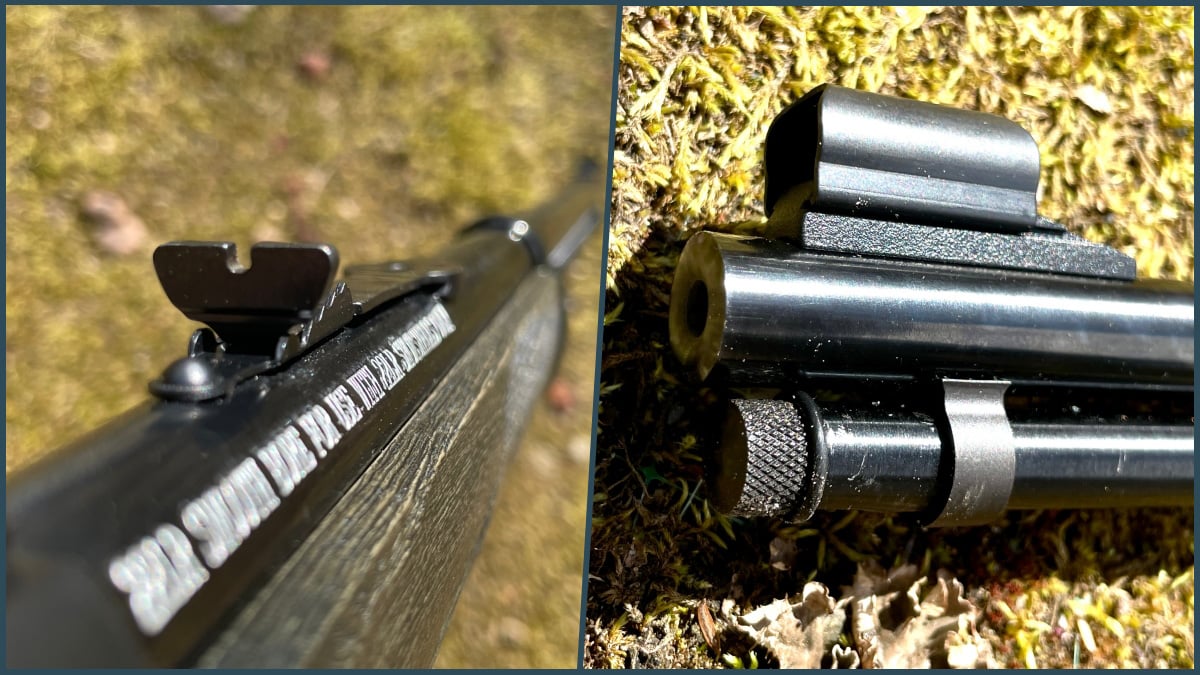
At the end of the day, though, the Garden Gun tackles up-close jobs in areas where firing a standard rifle might not be wise. If you’ve ever had to dispatch a small critter in a machine shed or on a bird feeder, you’ll understand. Before testing this gun, the idea of a dedicated shotshell rimfire never even raised an eyebrow over here. Since some time on the range, the tune has changed, and the Garden Gun has earned its keep.

The Garden Gun is lightweight, well-balanced, and silky smooth. It cycled all the ammo we fed it. The majority was CCI with the plastic shot cups, though we threw in a few crimped-brass-style rounds from Winchester as well. The Garden Gun is lightweight, slim in the hand, and quite a pleasure to fire. Whether plinking clays or protecting your tomato plants, the gun is built to run.
Field Notes
Make no mistake: a long-range rimfire this is not. It is, though, one heck of a vermin eradicator around the farm or its namesake garden. Invasive critters of the legged, winged, or slithery variety can be eliminated with minimal damage to surroundings.

We’ve fired .22 LR shotshells in standard rifled-barrel rifles and handguns. The fact of rifling is that it scatters shot quickly and rather wildly. The smoothbore, however, seems to keep things at least slightly more organized. Though by no means a scientific study, our effective range with a rifled .22 LR is 5-10 yards for pest control, depending on the piece.

With the Garden Gun, we were able to hold serviceable patterns out to 25 yards, though effective eradication zones would be less for most targets. The 15-yard mark would be a breeze for the Garden Gun and CCI combo.

The Garden Gun’s stock is a unique element, with a different look than a standard walnut affair. This one is rough in a way that almost feels unsanded and substandard. At closer study, it becomes evident it was made that way and is rather endearing and unique. Aside from the black ash dress and the rifling-less barrel, the metrics, feel, and quality are otherwise strikingly similar to Henry’s own Classic Lever Action 22, which uses the same blued steel hammer, lever, and trigger.
Conclusion
Henry’s Garden Gun is a neat piece. We’ve come to appreciate it in short order, but not everybody “needs” such an item. Smoothbore rimfires are such a niche market that this is the only such production piece on the market.
Even with its limited effective range, Henry continues to see demand for the Garden Gun six years after its release. When the birds in the barn are causing damage, the rattler threatens your next step, or little critters mangle your winter food stores, the answer lies with one of the most underrated, unusual little plinkers out there.