Video Review
Quick Overview & First Looks

Introduced in January 2025, Mossberg’s rotary safety for its 590R and 590RM shotguns is just part of what has turned into a bit of a tactical theme for the company lately.
The pair of new scatterguns was just recently joined by the even newer 990 AfterShock pistol-grip firearm, which is itself a kind of smash-burger combo of the pump-action 590 Shockwave and the recently upgraded semi-auto 940 Pro Tactical.

The simple fact is that Mossberg’s move to a rotary safety has some significant impacts on how these guns handle for users when compared to the older tang-mounted safeties that adorn most Mossberg shotties.
On that note, let’s hop into the specifications that make these two guns similar but also drastically different.
Comparisons: Specs & Features

Mossberg’s 590R and 590RM are the latest in the company’s collection of pump-action shotguns in the tactically inclined 590 series, which is an extension of the classic and incredibly successful Mossberg 500 line. The main difference between the 590 line and the original 500 series is simply the magazine tube.
The 500’s magazine tube is sealed at the muzzle end and bolted into place by threading it to a takedown screw that is integral to the barrel. Meanwhile, the magazine tube on the 590 is threaded at the muzzle end and topped with a cap nut that holds it to a takedown ring on the barrel without blocking the end of the tube.
This makes it easier to access the magazine tube for cleaning and maintenance, but it also allows for elongated magazine tubes and tube extensions. Since the Mossberg 500 barrel attaches to the end of the magazine tube, this would require an entirely new barrel for that design.
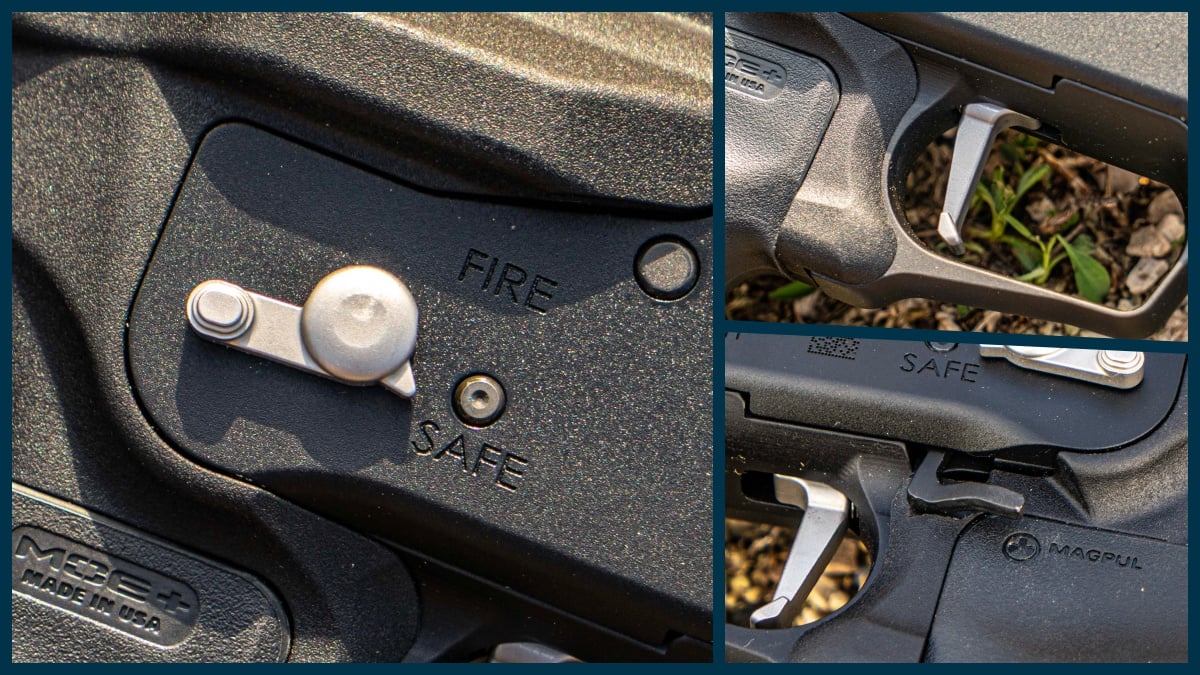
Now, let’s dive into the most important feature of both of these guns: the rotary safety selector. It seems so simple, but it fundamentally changes how a tactical shotgun can better incorporate a more vertical pistol grip with a straight stock, like the one included on the 590R and 590RM.
Sure, guns like Mossberg’s 590 Flex Tactical already had a pistol grip that was separate from the stock. However, the tang-mounted safety forced users to shift and break their grip to use it. That is the only way to swing the thumb from your shooting hand back under the stock and over the top to access a tang safety.
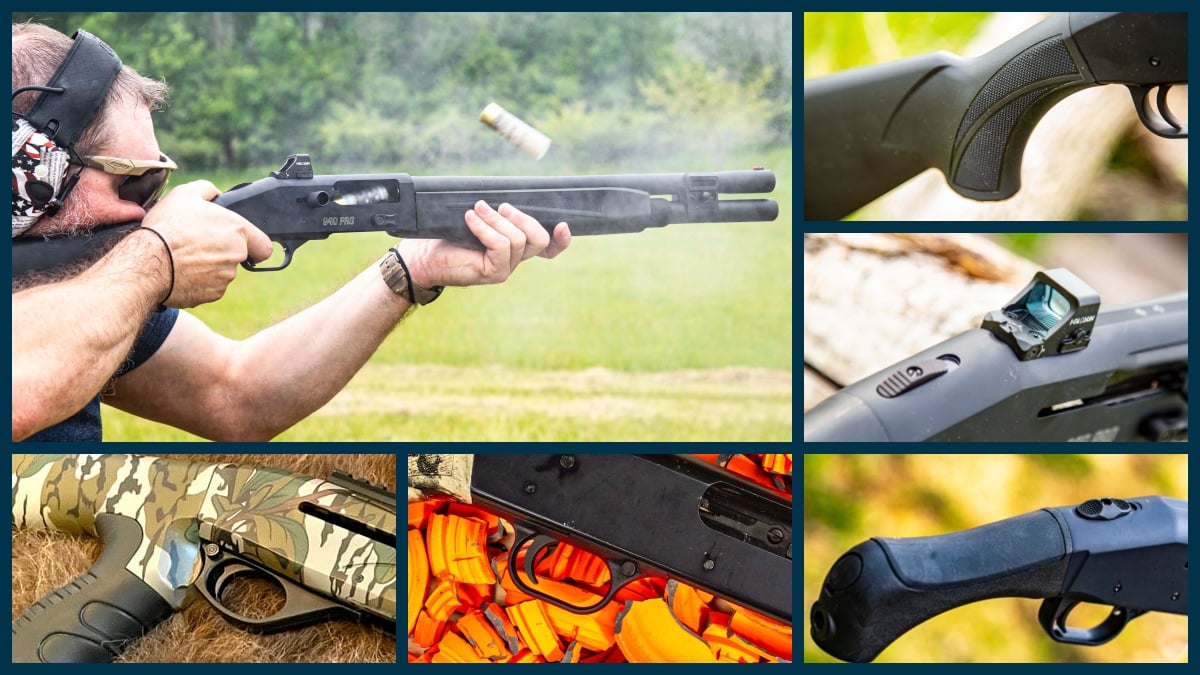
It’s just not exactly the most efficient safety for a tactical room sweeper. That’s partly why it’s so common to see slightly angled stocks and incorporated semi-pistol grips on many tactical shoulder-fired shotguns.
Here’s a quick comparison of the basic specs for both guns.

First, the specs for Mossberg’s 12-gauge 590R:
Weight: 7.1 pounds
Length: 36.25-39.5 inches
Length of Pull: 12-15.25 inches
Barrel Length: 18.5 inches
Chamber: 3 inches
Chokes: Accu-Choke System (comes with cylinder bore)
Picatinny Rail (Receiver): 6 inches
Capacity: 6+1 2.75-inch shells
Trigger Pull: 5.7 pounds
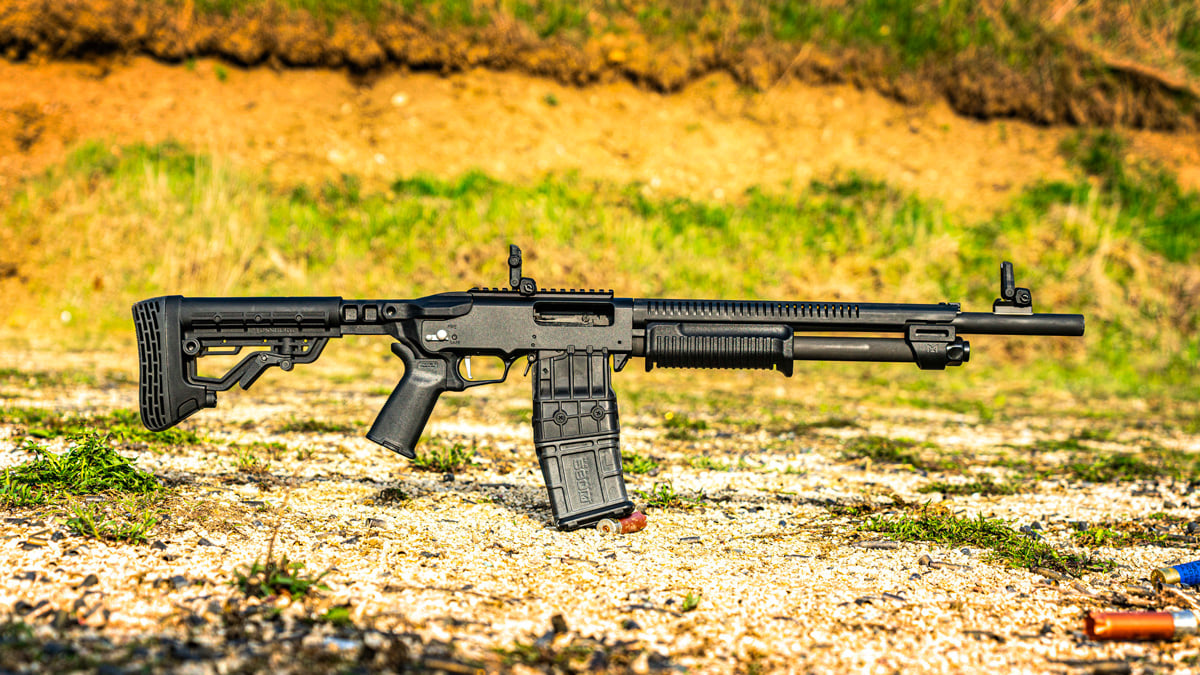
Now, the very similar specs for the 12-gauge 590RM:
Weight: 8.27 pounds (7.02 pounds, no mag)
Length: 36.9-40.15 inches
Length of Pull: 12-15.25 inches
Barrel Length: 18.5 inches
Chamber: 2.75 inches
Chokes: Accu-Choke System (comes with cylinder bore)
Picatinny Rail (Receiver): 6 inches
Capacity: 10+1 2.75-inch shells (5, 15, and 20-round options)
Trigger Pull: 5.7 pounds
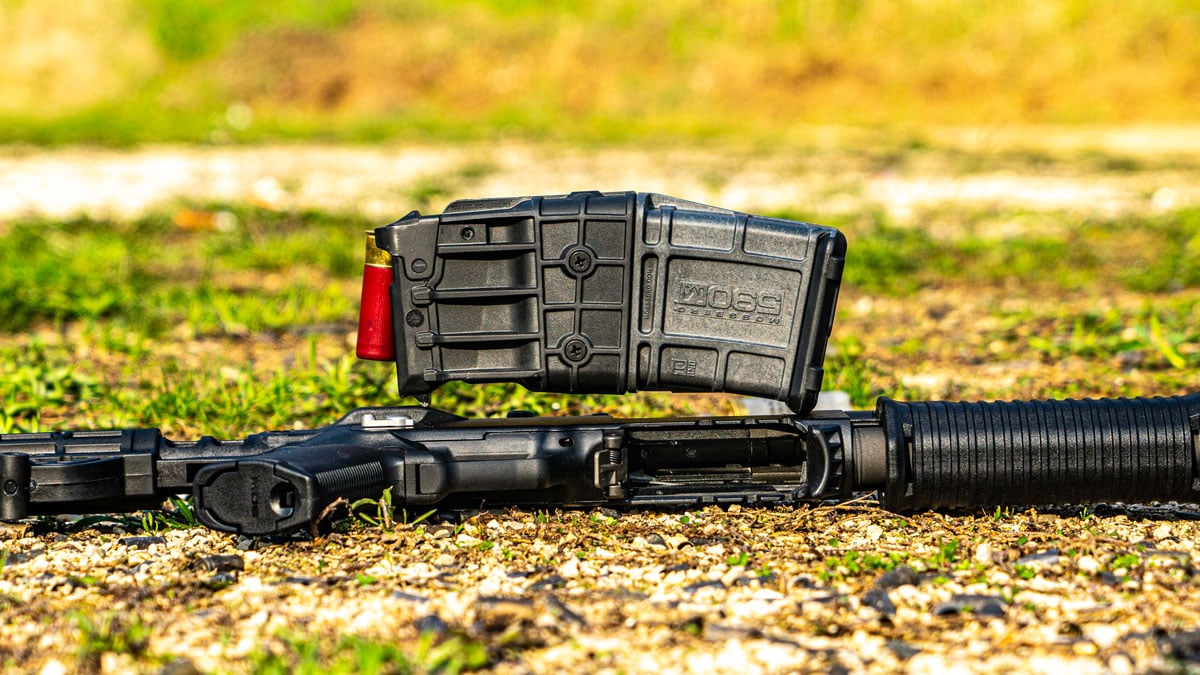
Weight, capacity, and loading are the biggest differences. Just the empty double-stack magazine for the 590RM weighs in at 1.25 pounds. That’s more than many semi-auto handguns.

Other key features shared by both guns include a very handy heat shield over the top of the barrel, which did its job nicely over multiple days of high-volume shooting for me. The five-position adjustable stock is well-dressed with a recoil pad, four QD sling attachment points, and a slot for threading a sling. You can swap this with similar AR-type mil-spec stocks as desired.

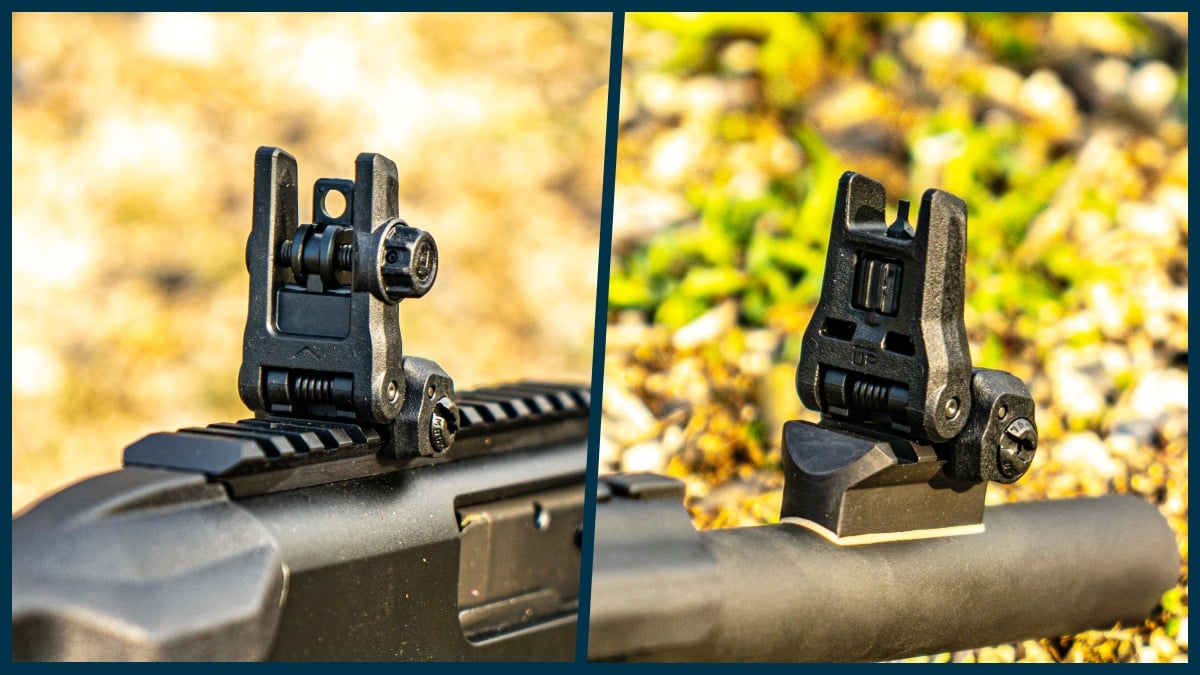

The barrel hosts a phosphate finish for rust prevention. The end is topped with three slots’ worth of Picatinny rail, and the receiver offers 6 inches of Pic rail for optics. Otherwise, both guns feature the same dual extractors, positive steel-to-steel lockup, and twin action bars that helped make the Mossberg 590 a very successful military, law enforcement, and self-defense shotgun since its introduction in 1987.
Range Time
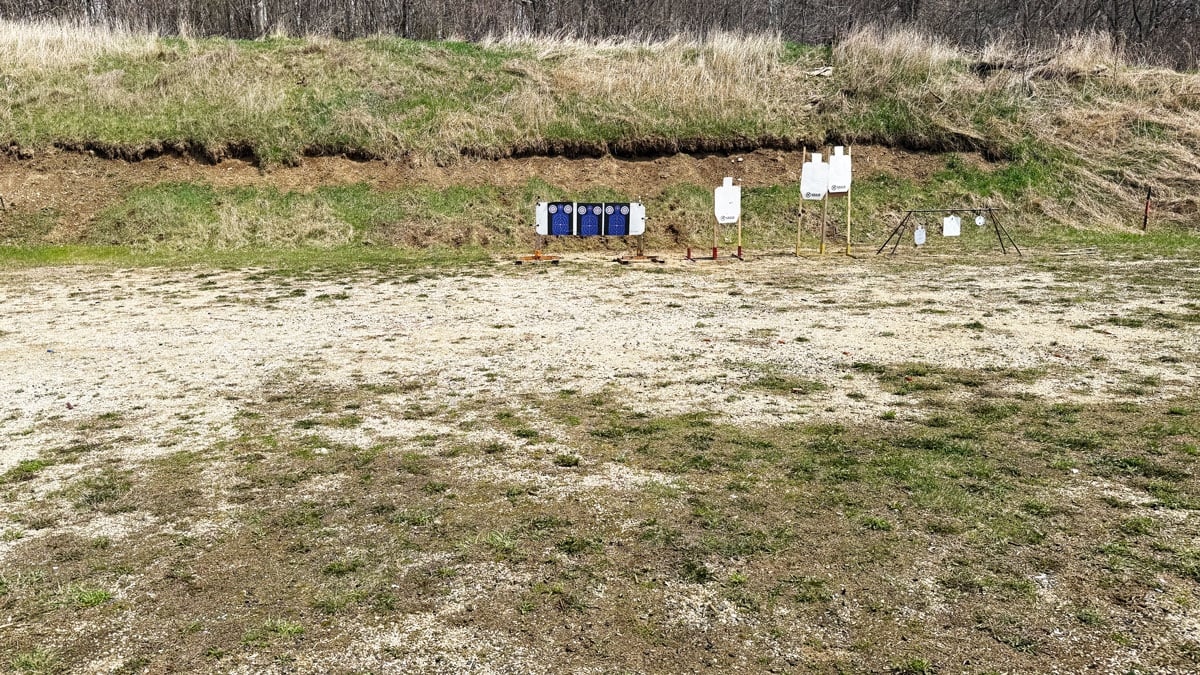
After speed-feeding these new shotguns a mix of 250 shotshells each, I got some solid takeaways for what I liked and disliked about both. I’ll give you my personal final pick at the end.
Let’s start with how these guns patterned. Since they both have nearly identical barrel lengths and came with the same cylinder-bore chokes, this three-shot test reflects both guns’ performance.

Both guns look and feel like tactical shooters. They have some heft to them, but it’s not excessive. Rather, they feel ruggedly overbuilt, which translates into a somewhat blocky feel. It’s not unpleasant. The guns feel more like tanks that want to plow forward when in the hand instead of swinging gracefully from side to side like a birding shotgun.
Related: Mossberg 940 Pro Tactical Shotgun Review
That weight was noticeable after several long hours on the range, and the 8.27-pound 590RM is bulky and weighty enough to become tiring after a while. The 590RM does indeed load far faster with its 10-round magazine, but the gun only came with one.
You can load single shotshells through the ejection port in a pinch if you leave in the empty magazine. There is no magazine tube or elevator, so you can expect to shell out more for extra mags if this is meant as anything more than a range companion for you.
Meanwhile, the 7.1-pound 590R loads just like every other Mossberg, one shotshell at a time through the bottom loading port. It works fine, but it’s not fast. The trade-off is that you aren’t limited by requiring a magazine, and you can reload as you go instead of running the gun dry.
Reliability was 100 percent for both, as long as I ran the pump with authority. As I got tired, I did short-stroke the pump slightly a few times with both guns. Part of that issue came from extending the stock too far and elongating the distance my hand needed to travel with the forend pump.
Similarly, the 590RM required more forward force to strip shells out of the magazine sometimes, and this caught me off guard on my first trip.
All of that is technically user error, and you can train around it. That said, these guns are stiffer to run than any of my hunting shotguns, which is partly because they are still relatively new and the designs are blocky because, well, these are tactical boom sticks.
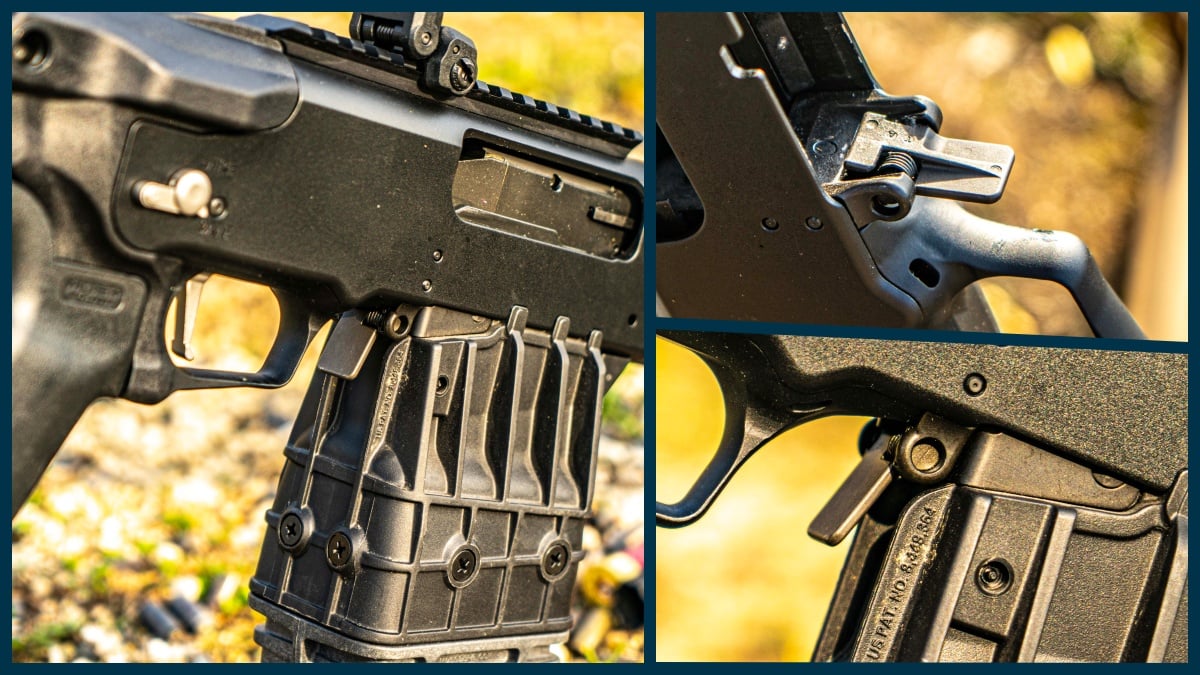
The fact that you have to carry multiple mags to make the 590RM worth the capacity advantages is only a small critique. With options that range from 5 to 20 rounds, reloading in a real-life self-defense situation should be minimal, and even then, 10+ rounds is more than most people have ready for home defense pumps.
My bigger issue is that the magazines for the 590RM are terribly bulky, and that makes the gun clunky and awkward, especially in tight spaces. It also means this gun is really only well-designed for high-volume shooting over short periods. It’s not a gun I would want to lug around any distance.
The 590R is nimbler and more flexible with its magazine tube. That’s really the only thing that put it on top for me on the range. Its lighter weight makes for a bit more felt recoil, but it’s still very manageable.
That brings me to my favorite and least favorite feature of the 590R and 590RM: the rotary safety selector. The rotary safety is a great idea. It sets up the controls in just the right configuration for my tastes.
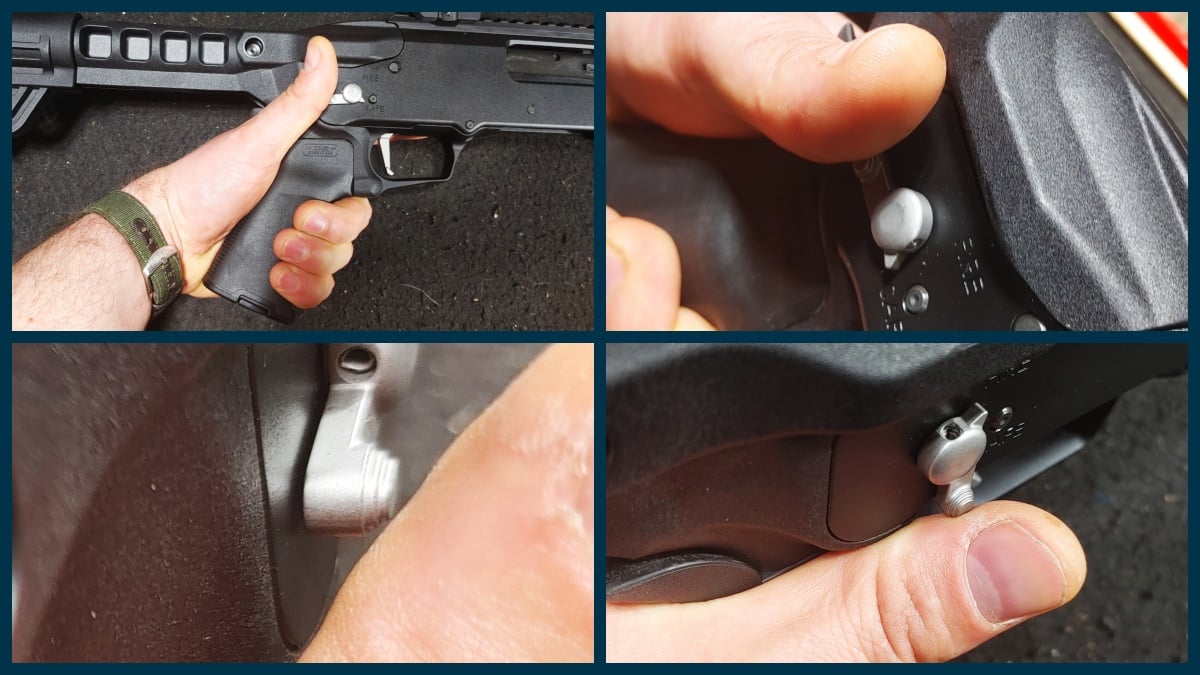
However, the fat shape of the receiver, the length of the safety, and the only slightly raised profile still make it somewhat hard to reach the levers without breaking my shooting-hand grip. The 90-degree throw is also a miss for me, and it puts the safety out of reach for my thumb when I want to reengage it. Instead, it forces me to use my trigger finger to flip the safety on the other side.
The rotary safety is great, and it’s a huge improvement on the old tang-mounted safety that was unreachable with a normal vertical pistol grip. It just could have been even better with a little bit more length and a shorter throw, which is the main thing I’d ask to see improved. Then again, I’m sure there will be aftermarket options for customizable lengths down the road.
Pros & Cons
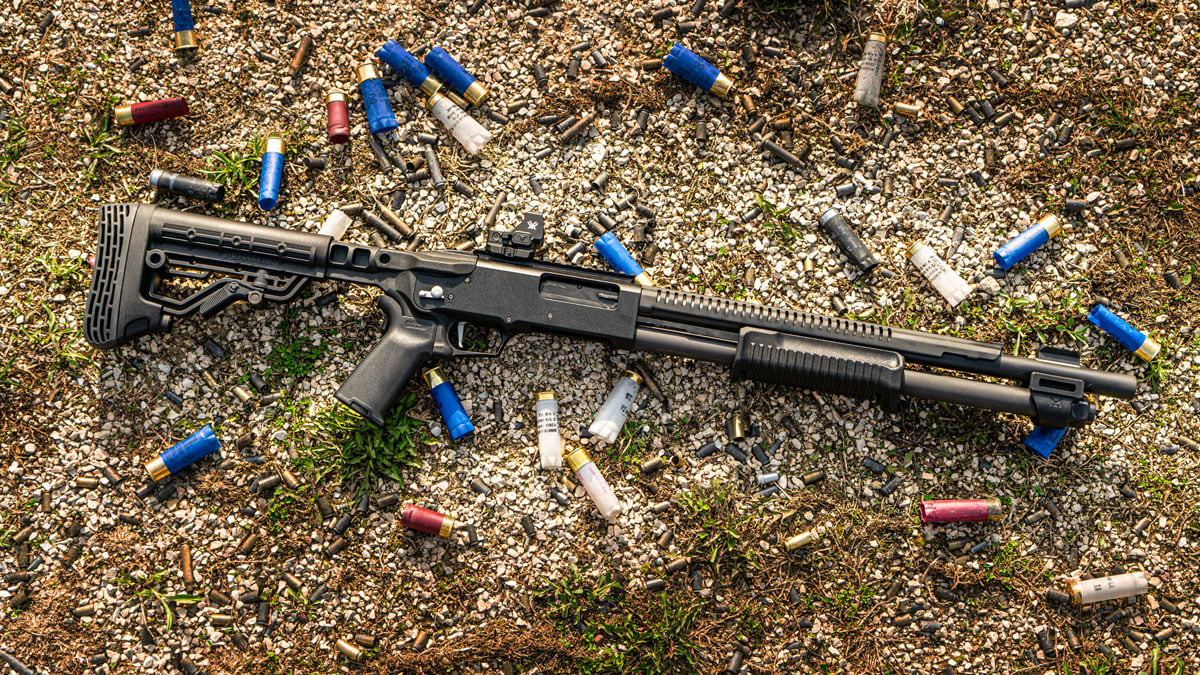

And here are my top five pros and cons for the Mossberg 590RM:
Pros:
- Equally reliable, even with the removable mag
- Reliable 5, 10, 15, and 20-round mags are amazing
- Rotary safety improves ergonomics
- Nice pistol grip and adjustable stock
- Tons of included features: sights, heat shield, etc.
Cons:
- Significantly heavier weight with the mag
- Pump is stiffer when stripping shells from mag
- Magazines are very bulky
- Requires extra mags for reloading
-
A bit clunky in tight spaces
Final Thoughts

If all I had to do was bring as much firepower to bear as possible in a very short period of time over a small distance, the 590RM is the clear winner. It offers volume and rapid reloads, but it does so at the cost of being bulky and a bit clunky as a result. However, when you run out of mags, you also run out of luck.
For basically every other kind of tactical shooting, especially over an extended period of time, I would lean toward the 590R. Both guns are tactical beasts and an improvement on past designs. I would love to see some other lever options for length and size, but it’s a strong foundation, for sure.
The Mossberg 590R and 590RM are both clear wins but not quite home runs just yet. Then again, few guns ever are.