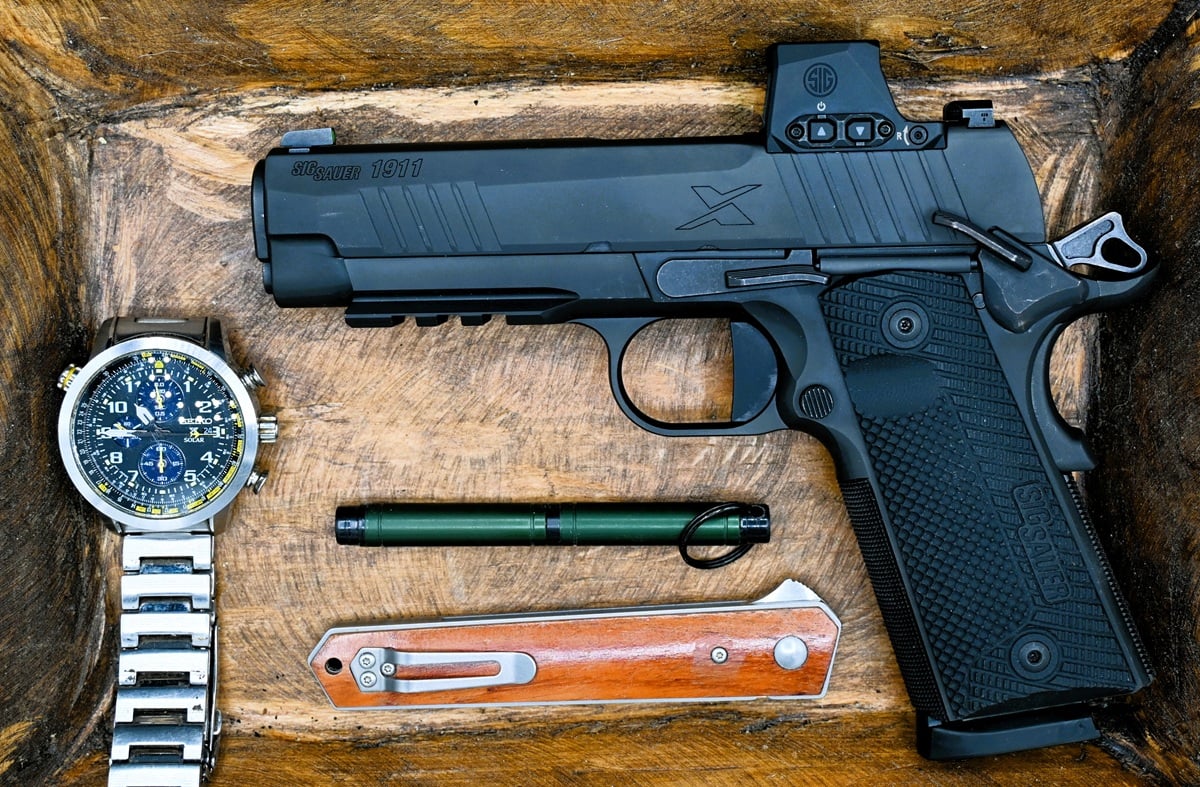
SIG Sauer isn’t well-known for its 1911 line, but the company has invested enough time to create an excellent entry to the genre in the XCarry series. We’ve evaluated one and have the full report. 

Table of Contents
 
Overview
The Specs
Features
Trigger
Reliability
Accuracy
Pros & Cons
Conclusion

Overview


SIG has been in the 1911 game for over 20 years, entering the market around 2004. The company hit the ground running and was one of the first M1913 "railgun" pistol makers available, then continued to enhance the century-old design and produced models with characteristic styling including the Granite, Super Target, and Spartan. 


SIG Sauer 1911 Nightmare Fastback
The SIG 1911 Fastback Nightmare – one of the best gun names ever – was always a favorite of ours. (All photos: Chris Eger/Guns.com)


Today, SIG catalogs five distinctive 1911 variants in .45 ACP, a more or less classic stainless 5-inch barreled government model for California markets, and four 1911-X models that balance classic engineering with modern features – namely a direct cut for Shield RMSc optics footprints, an excellent flat-faced trigger, and an accessory rail. Two of these 1911-X models are Emperor Scorpions and as such sport a Coyote PVD finish over a steel slide and frame, offered in both government and commander (SIG calls it Carry) sizes. 

Then there is the all-black 1911-XFull (5-inch) and 1911-XCarry (4.25-inch), the latter of which we feature in this review. Like the rest of SIG's 1911s, they use stainless steel frames and slides but carry the company's traditional black Nitron finish just like the well-loved P226s, P229s, etc. 
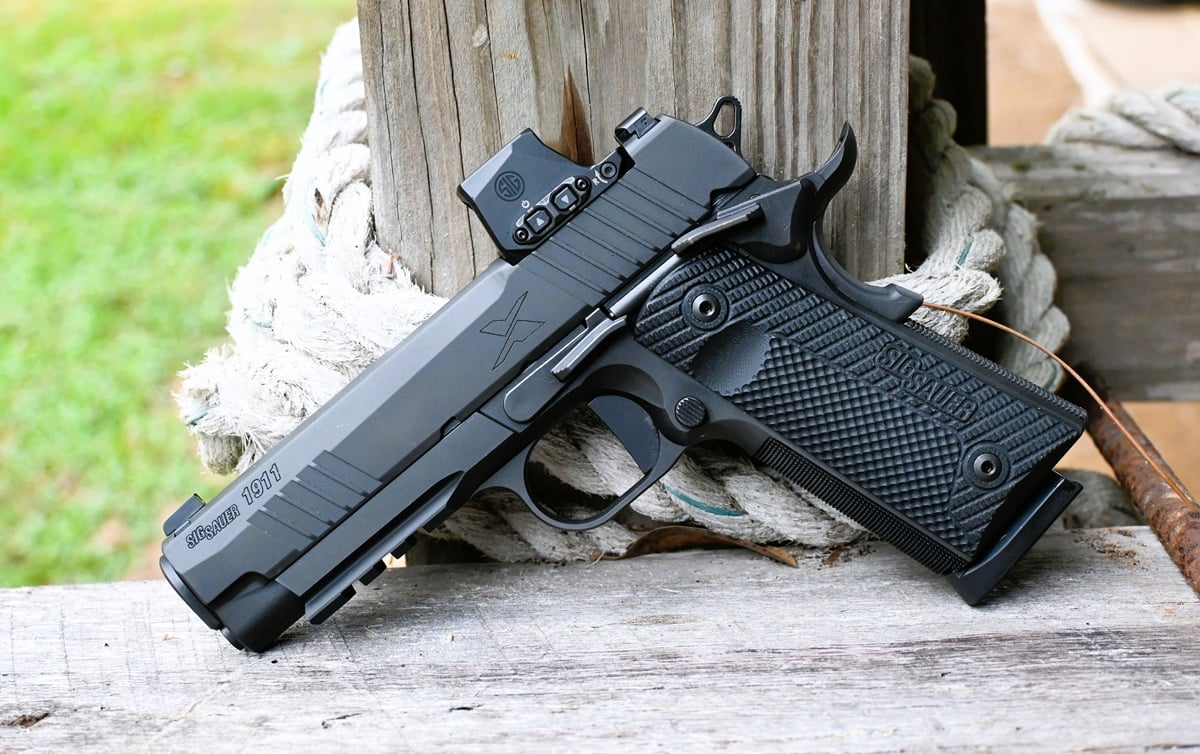
 

SIG Sauer 1911-XCarry .45 ACP
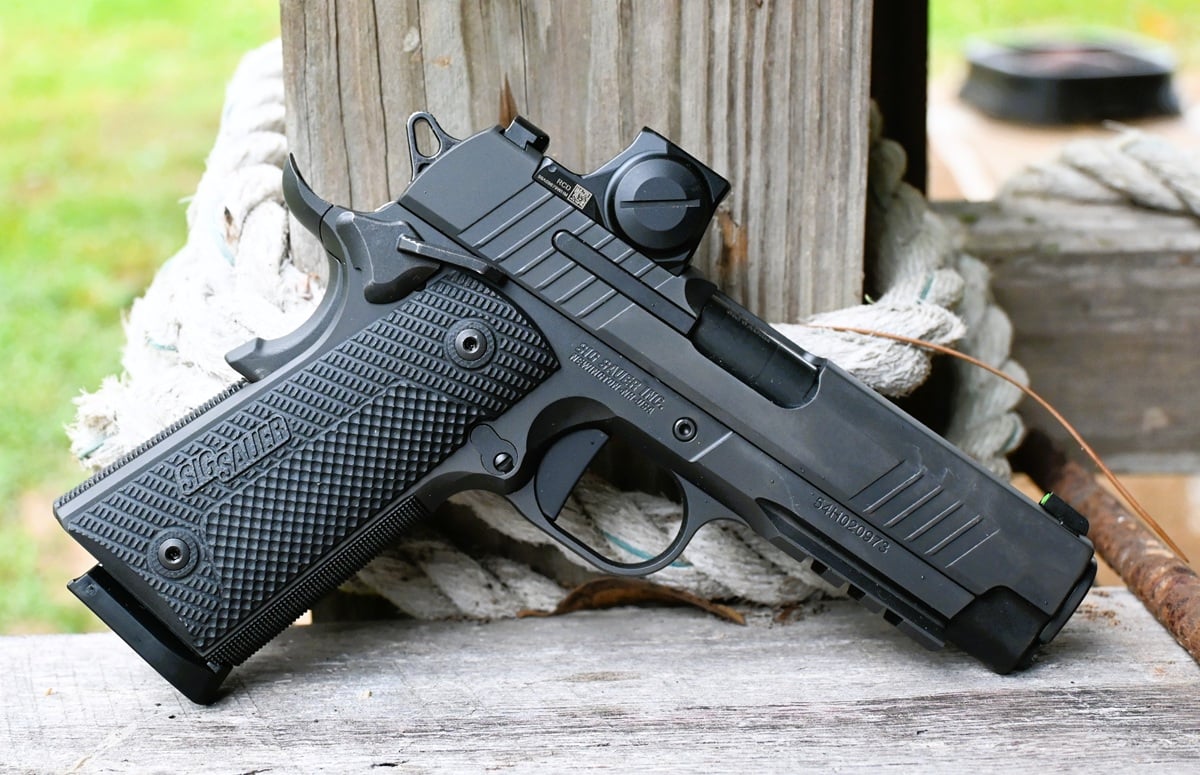
The SIG Sauer 1911-XCarry. This model was sent to us with an optional SIG Romeo-X Compact 3 MOA fully enclosed mailbox-style red dot optic installed, a package that is available to consumers. 
SIG Sauer 1911-XCarry .45 ACP
The commander-length 1911-XCarry runs a 4.25-inch barrel that gives it an overall length of 8 inches. 
SIG Sauer 1911-XCarry .45 ACP
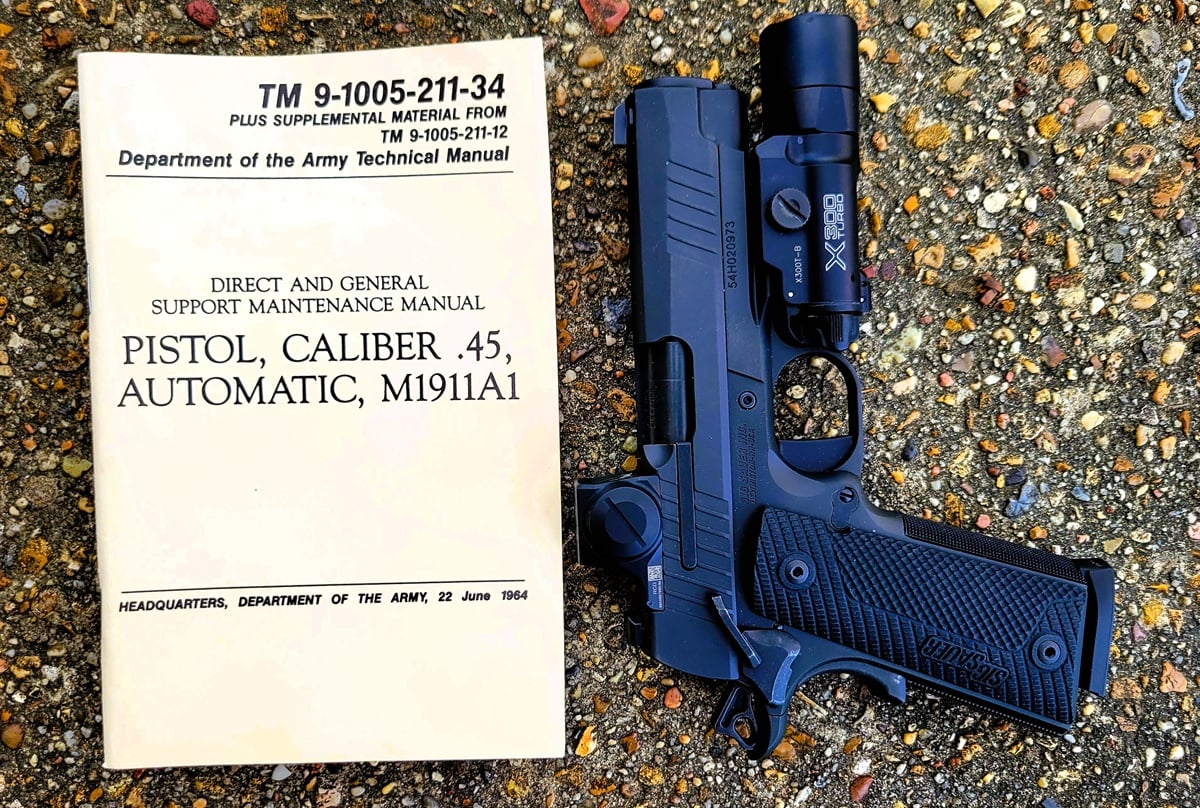
When stacked next to a GI-issue M1911A1, the updates to the old-school design are quick to spot. 


For full disclosure, SIG sent Guns.com this 1911-XCarry for review purposes. All testing was done on this one gun, which has been under evaluation since last November.


The Specs (Model 1911XCA-45-BXR3-RXX) 


  • Overall length: 8 inches
  • Barrel length: 4.25 inches 
  • Sight radius: 5.75 inches
  • Overall width: 1.4 inches at the widest point over the ambi safety levers, slide is 0.91 inches.
  • Overall height including standard mag and optic: 6 ­inches
  • Magazine capacity: 8+1 round standard 1911 pattern (ships with two steel Mec-Gars)
  • Trigger pull: 4.9 pounds (10-pull average)
  • Weight, with empty magazine: 39 ounces
  • Weight, loaded/equipped: 50.4 ounces (with 9 rounds of Federal Punch 230-grain JHP, Romeo-X Compact, and Surefire X300 light)
  • MRD Optic Footprint: Shield RMSc/Romeo-X Compact direct mount (no plates)


Features
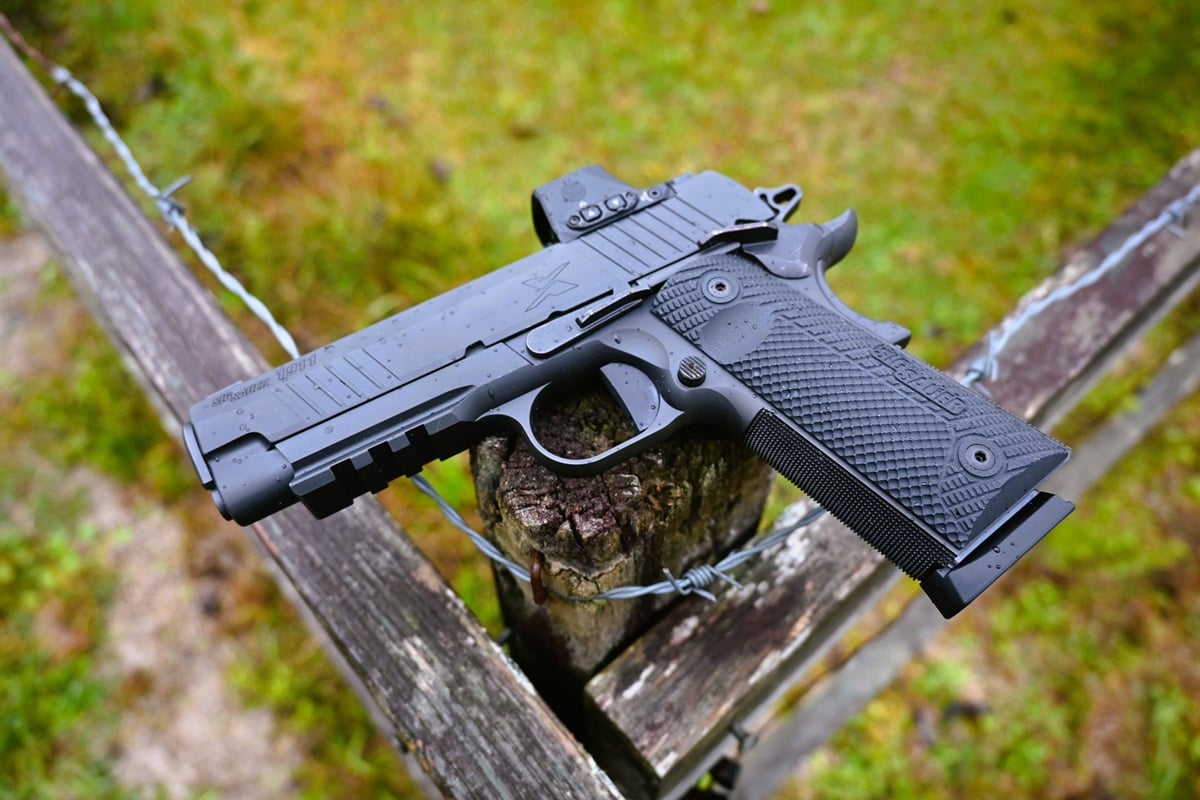
 

SIG Sauer 1911-XCarry .45 ACP
The SIG Sauer 1911-XCarry, with its hard-wearing black Nitron finish over steel construction, is a serious pistol. The only polymer here is the base pads on the Mec-Gar magazines. The grips are G10 garolite and even the Romeo-X red dot uses a CNC 7075 aluminum housing and an aspherical glass lens. 
SIG Sauer 1911-XCarry .45 ACP
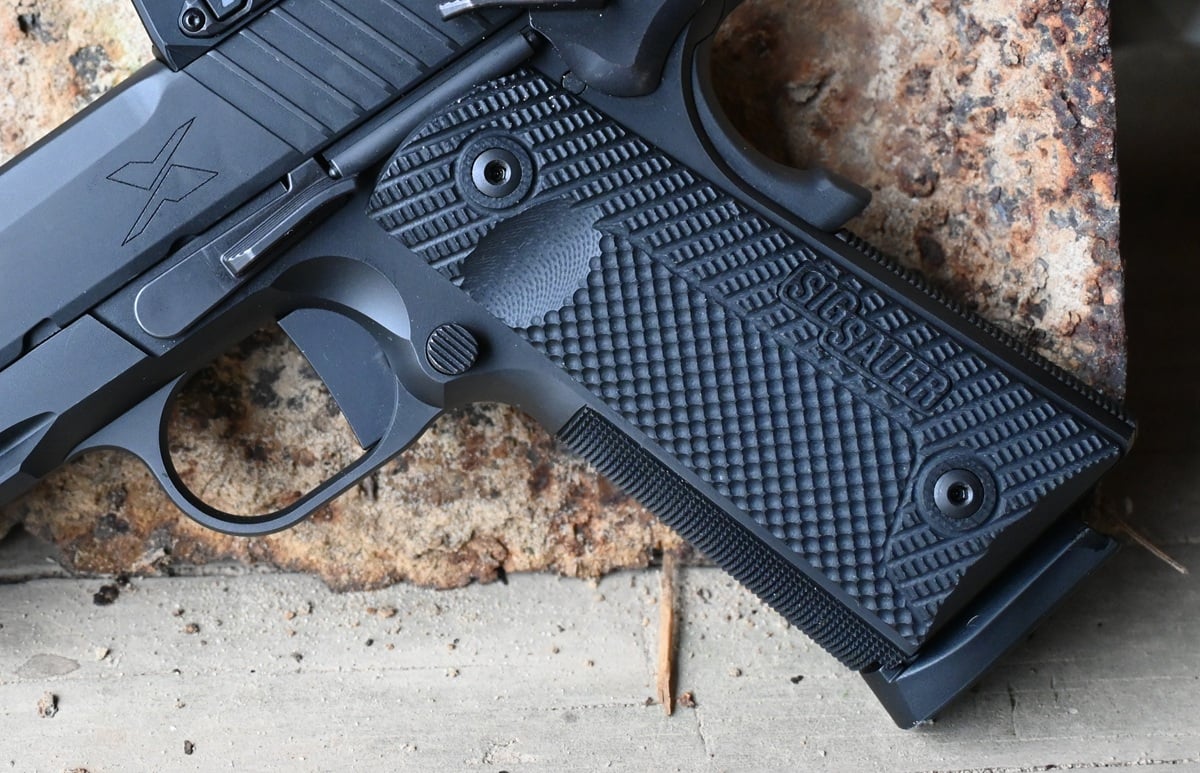
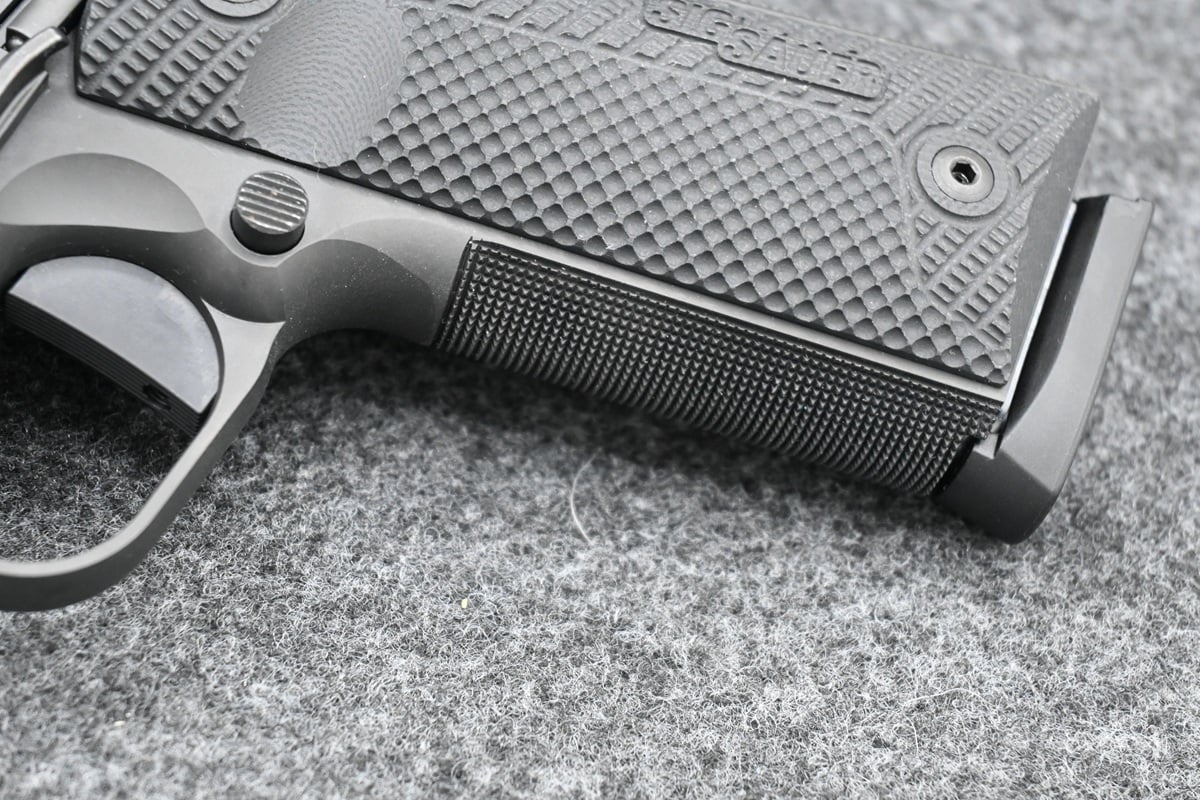
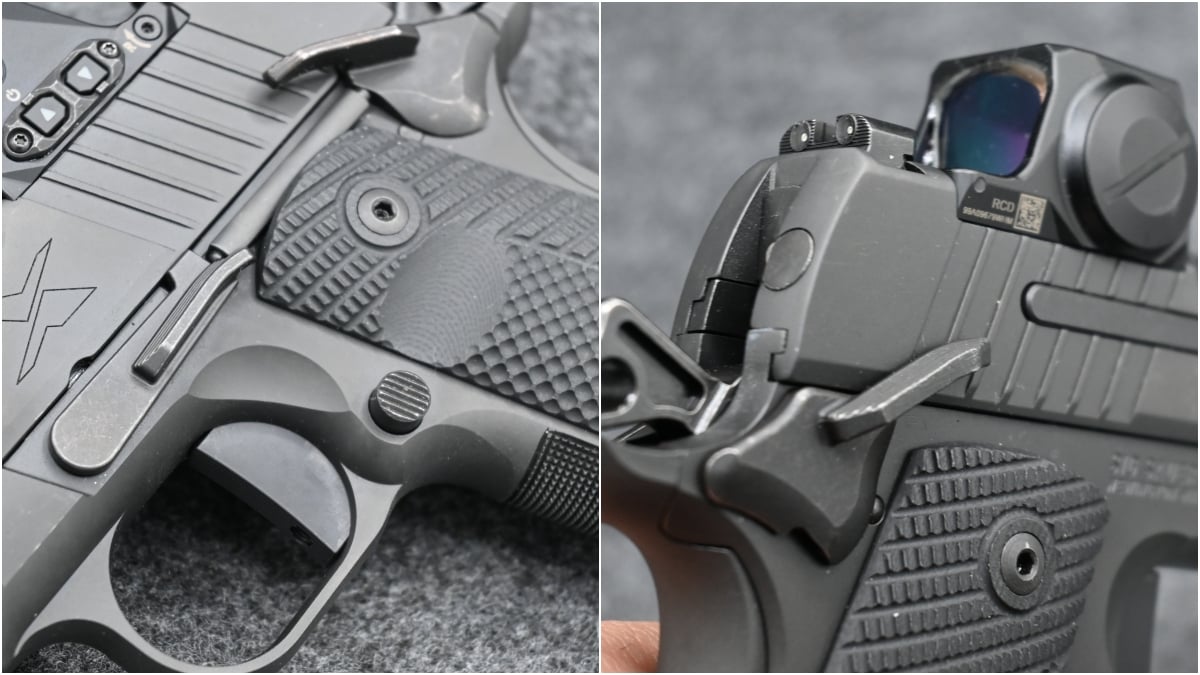
In terms of ergonomics, the high-swept extended beavertail safety and finely checkered straight mainspring housing are optimal and allow for an excellent grip. 
SIG Sauer 1911-XCarry .45 ACP
Speaking of grips, the G10 panels are custom-made for these models by LOK, which we've used for a lot of other pistols. They are not overly aggressive but still "stick" nice to the hand. 
SIG Sauer 1911-XCarry .45 ACP
Note the checkered grip strap and undercut on the trigger guard, the latter of which allows for a higher grip and better control. 
SIG Sauer 1911-XCarry .45 ACP
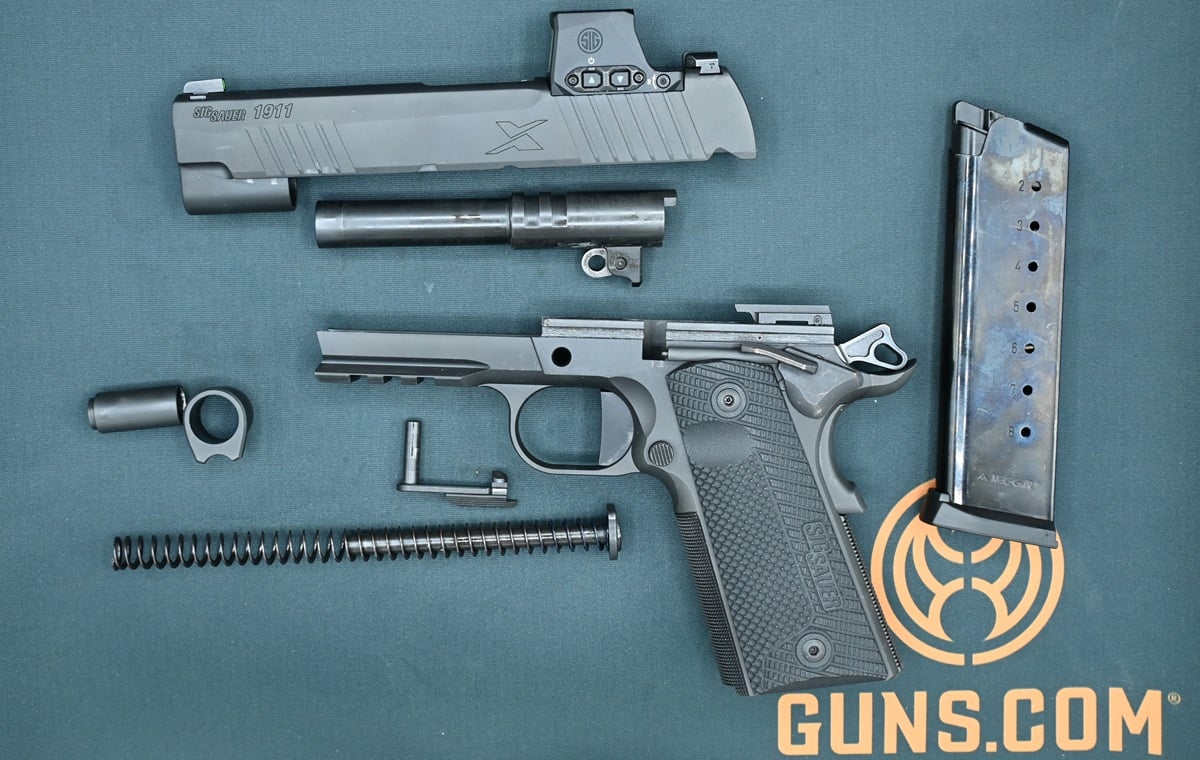
Takedown is straightforward, toolless, and is in the same fashion as most 1911s. 
SIG Sauer 1911-XCarry .45 ACP
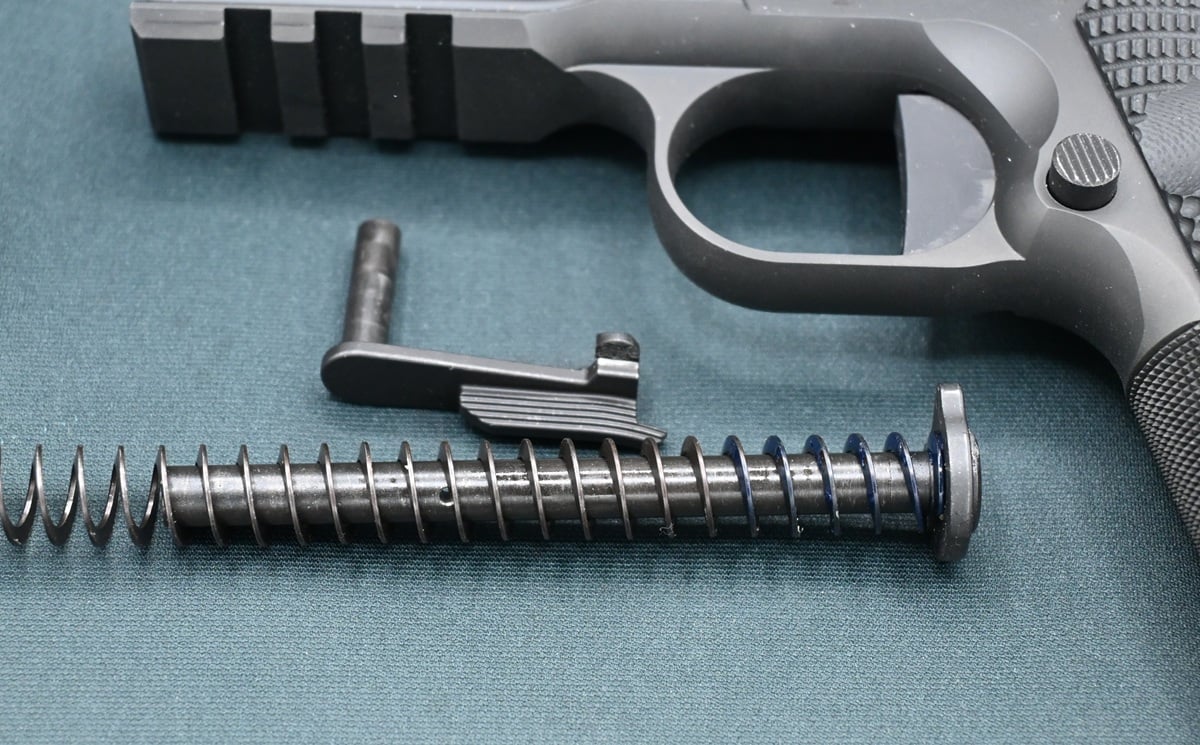
Note the full-length steel guide rod. You must use your thumb a bit to keep that spring in during reassembly for sure, but no barrel bushing wrench is needed. This is a Series-80-style 1911 with the internal firing pin safety plunger, meaning it is drop-safe all day. 
SIG Sauer 1911-XCarry .45 ACP
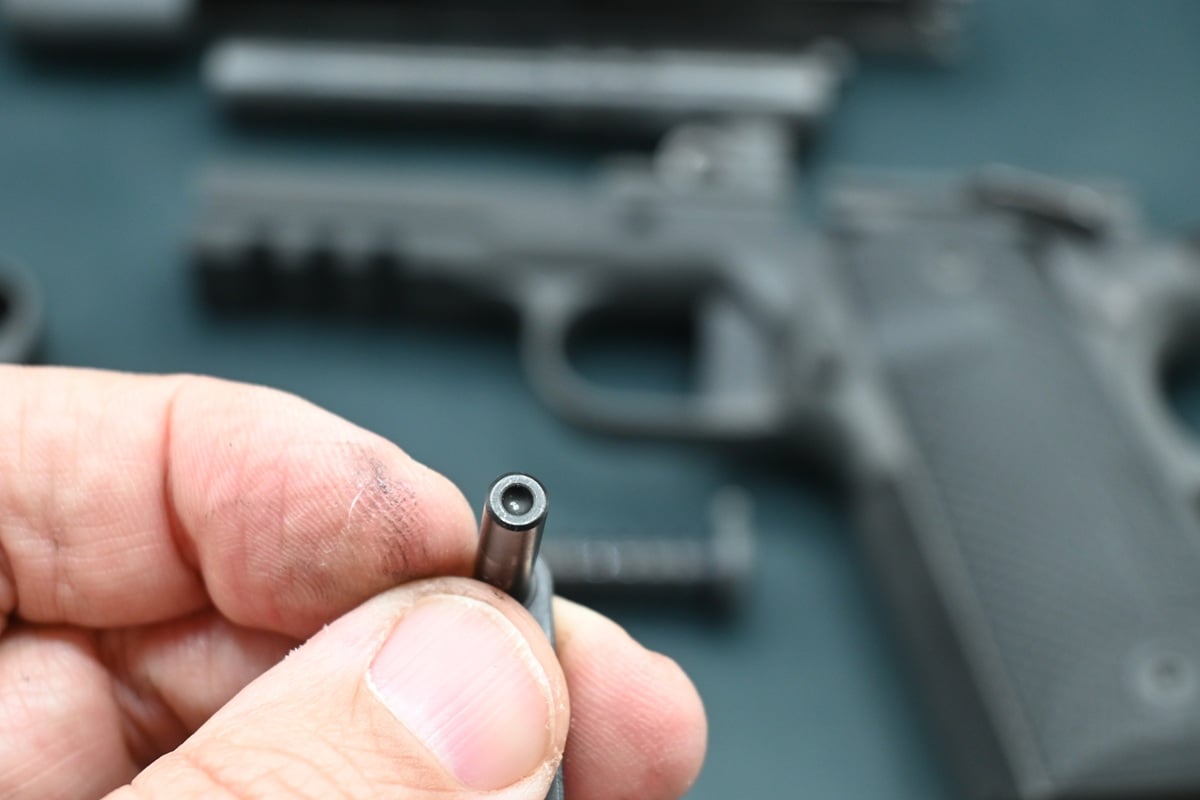
One interesting feature is the flush detent on the end of the slide stop/release lever rather than the more traditional bubble. An "innie" rather than the more common "outie."
SIG Sauer 1911-XCarry .45 ACP
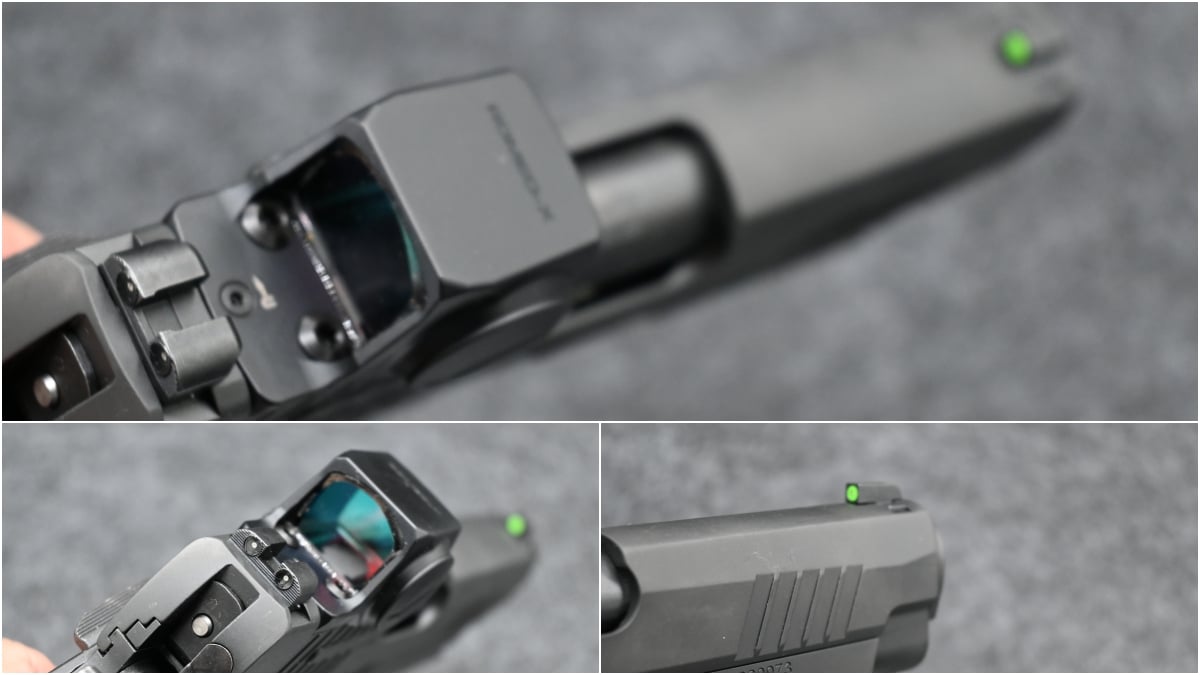
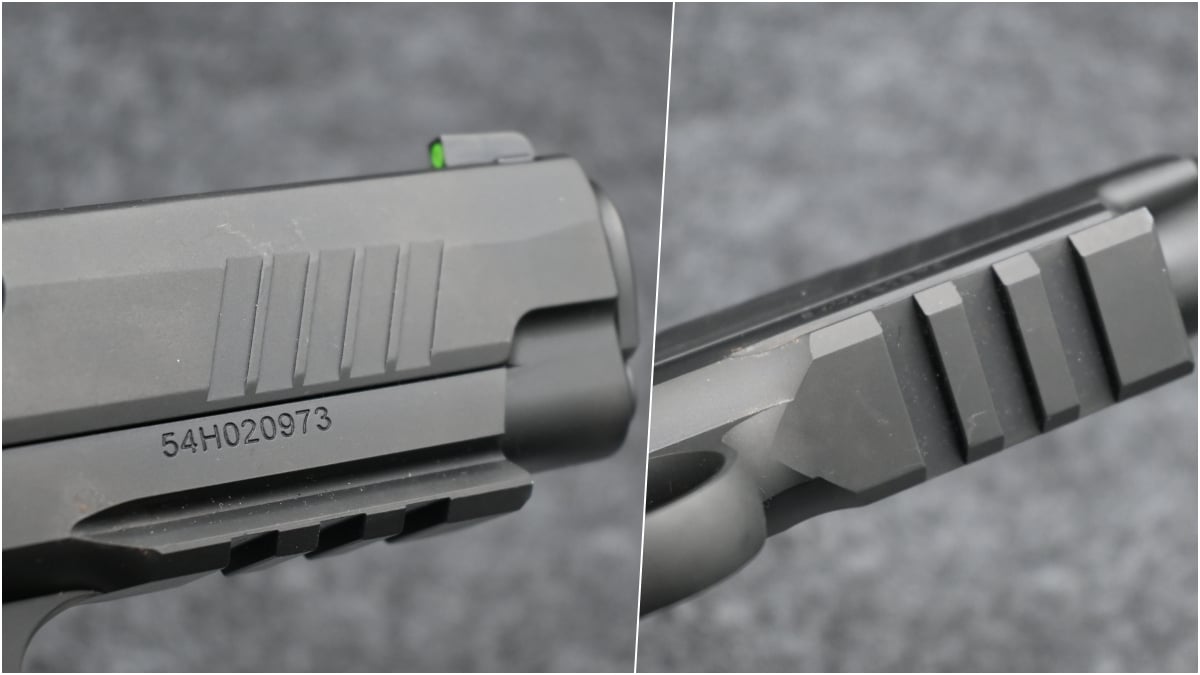
When it comes to sights, as mentioned previously you have a direct RMSc-pattern slide cut for optics while allowing a super low mounting. The installed Romeo X Compact red dot has a low floor already, and the steel XRAY3 day/night sights co-witness in the lower third. Even without the dot, the sights are excellent.
SIG Sauer 1911-XCarry .45 ACP
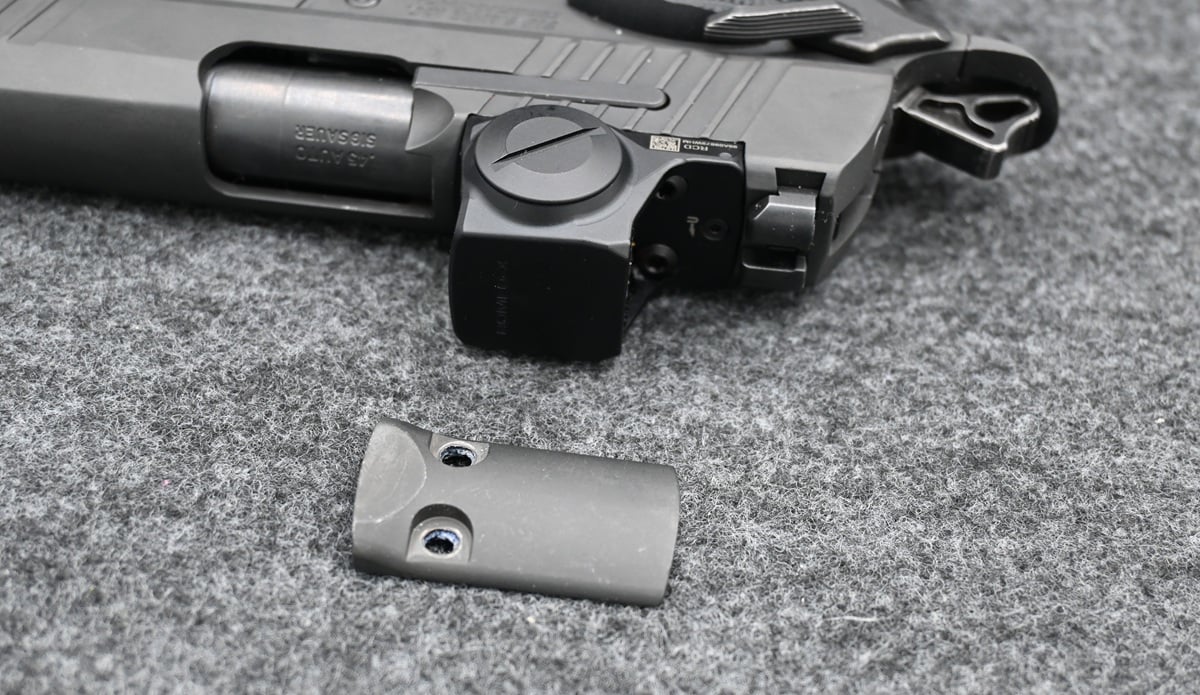
The cover plate is steel should you just roll with the sights. 
SIG Sauer 1911-XCarry .45 ACP
Surface controls are easy to reach and include an extended slide catch and ambidextrous manual slide lock/safety levers. The push-button magazine release is tall enough to drop mags without breaking the grip but not so tall as to snag or accidentally depress. 
SIG Sauer 1911-XCarry .45 ACP
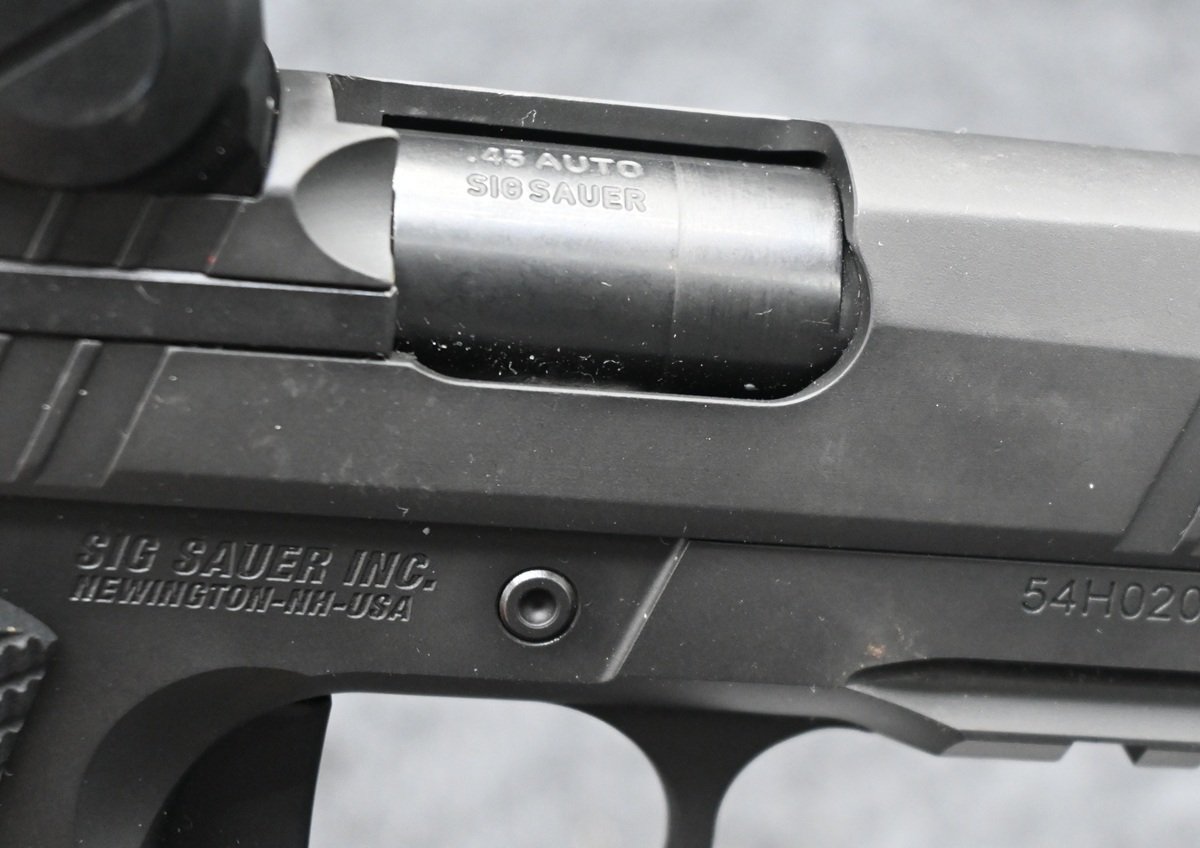
The ejection port is lowered and flared, and the pistol uses an external extractor, the latter a feature that Browning didn't have on the original 1911.
SIG Sauer 1911-XCarry .45 ACP
The M1913 Picatinny rail on the bottom of the frame is long enough for most lights. We ran a Surefire X-300B Turbo for most of the range time with no issues. 
SIG Sauer 1911-XCarry .45 ACP
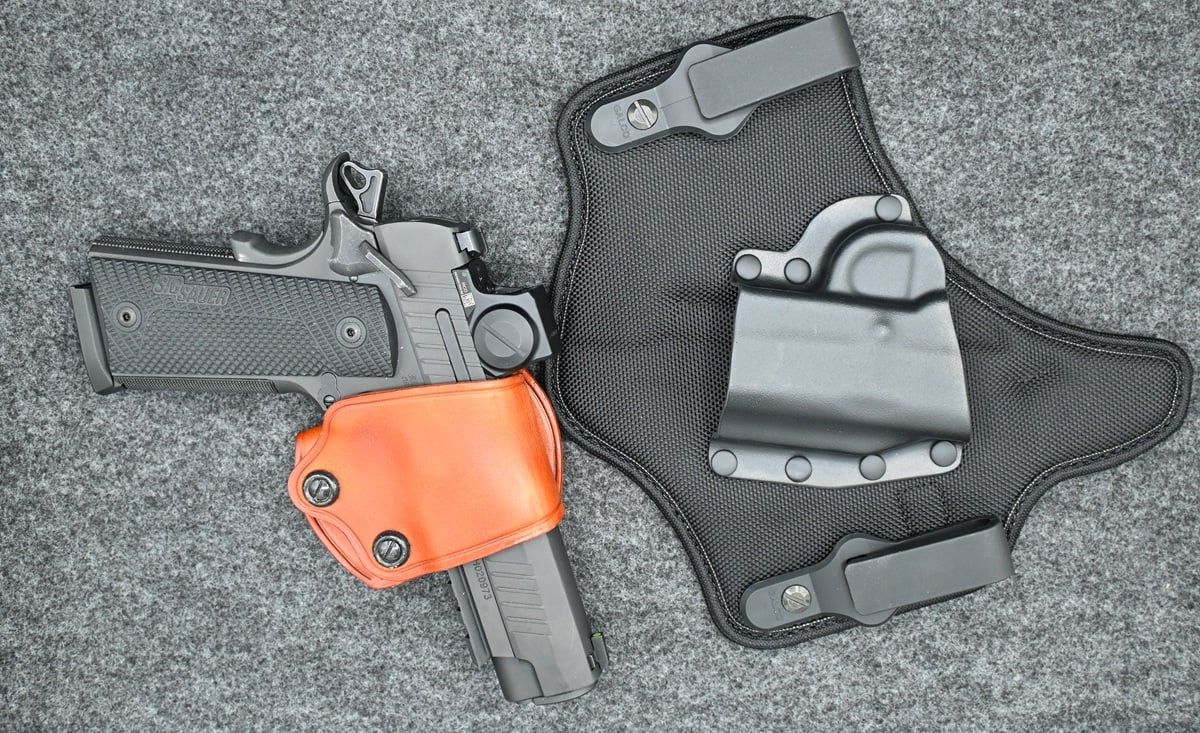
Holster fitment on railed 1911s is always hit and miss, especially on commander-length guns with an optic, but we found Galco's KingTuk Cloud IWB and the always reliable Yaqui slide to work. For those who haven't run a Yaqui, you should try it. 


Trigger


There have probably been fewer folks to opine on the Bible than there have been 1911 guys to preach about 1911 triggers. The factory-installed flat-faced single-action trigger on the 1911-XCarry falls into the "decent" category. You wouldn't mistake it for one on a $5K Les Baer or Nighthawk Custom, but it’s a far cry from those encountered on a $600 Series 80 Auto-Ordnance. 

We found it to break clean and straight back at an average of 4.9 pounds, coming almost immediately to a wall – which lifts the firing pin safety – and continues to fire. Series-70-style 1911s usually break closer to 3.5-ish pounds and aren't drop-safe, whereas for a Series 80 the weight isn't that noticeable. 

Roll that beautiful trigger pull footage:


Reliability


Everything on the SIG 1911X-Carry is set up for reliability. It has a self-tuning external extractor, a lowered and flared ejection port, a very stout recoil spring with a full-length steel guide rod, and the benefit of two decades of SIG's experience with the platform. As far as the optic mount, we never experienced a shift in POA/POI or found it to wiggle, even after 500+ rounds and racking it off the table by the housing several dozen times. 

When it comes to construction, you have a stainless-steel frame and carbon steel slide and barrel. The slide stop, hammer, and slide lock are MIM parts, but SIG has a reputation for doing MIM right – the chassis on P365s are MIM. The external finish is Nitron, which has a sort of BBQ grill/duty look and gets a bit scruffy over time but always holds up. I've run P229s for decades with the same finish and never had rust or crust issues.
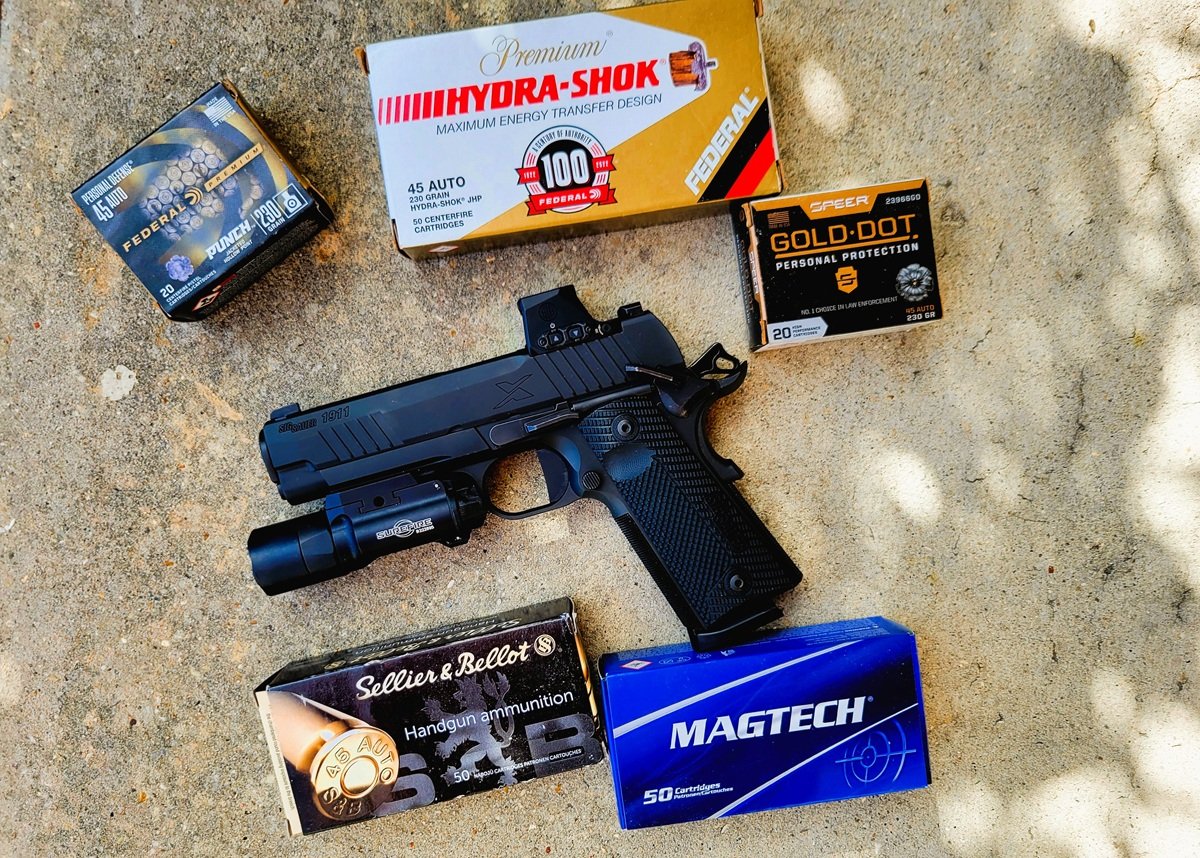
 

SIG Sauer 1911-XCarry .45 ACP
Ammo used in testing was a bit over 400 rounds of FMJ – imported S&B and Magtech 230-grain ball from the Czechia and Brazil, respectively – balanced with about 150 rounds of assorted Federal (Hydra-Shok and Punch) and Speer Gold Dot JHPs. 
SIG Sauer 1911-XCarry .45 ACP
Besides the two steel Mec-Gar eight-rounders, we tried several other 1911 mags with the 1911-XCarry, including some GI mags, Chip McCormick Shooting Stars, and WCs, with only one malfunction out of 500 rounds. That was a failure to feed the second round of an old GI cage-coded mag stoked with Magtech FMJ ball.


Accuracy


While the lock-up isn't as hard as on a custom 1911 it is still plenty accurate on the range even with budget ammo. Below is a typical group shot with a box of S&B ball from 15 yards offhand at a fairly rapid cadence. Keep in mind the Romeo X Compact is a 3-MOA red dot. 


SIG Sauer 1911-XCarry .45 ACP
The SIG 1911-XCarry isn't going to leave you hanging. This is with the rheumy eyes and peripheral neuropathy of a chunky guy in his 50s. 


Pros & Cons

Pros

  • Good ergonomics
  • Direct mount optics cut in a common footprint
  • Wonderful day/night steel sights
  • External extractor
  • Reliable
  • Accessory rail
  • Offered in both full (5-inch) and commander (4.25-inch) formats
  • It is an 80 Series gun with a firing pin safety (drop safe)
  • Quality eight-shot steel mags

Cons

  • Only offered in "God's caliber" 
  • It is an 80 Series gun with a firing pin safety (heavier trigger)


Conclusion


We found the SIG 1911-XCarry to be accurate and dependable, with only one malfunction using "range" ammo in an old non-factory magazine. The ergonomics are superb and about every aspect of the classic 1911 design has been updated for better performance – while it remains a 1911. The Series 80 trigger system has pluses and minuses, but SIG does it well and the trigger doesn't have the same "mush" common with the type. Someone has done their homework here. 

About the only rocks I can throw here is the fact there are no 9mm or, better, 10mm options (get on that, SIG), and holster fits can be challenging. 
 

SIG Sauer 1911-XCarry .45 ACP
The SIG 1911-XCarry is a 21st-century gun but still feels familiar. 
SIG Sauer 1911-XCarry .45 ACP
The closest competitor to the 1911-XCarry is the Springfield Armory Operator AOS Commander, which offers more optics footprints (but uses plates to do it) and has a more straightforward 70 Series trigger format. Plates or no plates. 70 or 80. The choices are on the table. 
SIG Sauer 1911-XCarry .45 ACP
Those looking for a well-performing modern take on a 1911 with a rock-solid optics mount and an accessory rail should take an XCarry for a spin. It is a tool for a gentleman in an era of boyhood.


Read More On:
revolver barrel loading graphic

Loading