History
The 1970s gave birth to the “Wonder Nine,” typically defined as a double-action/single-action 9mm handgun with a double-stack magazine. The original big three were the Beretta 92, CZ 75, and Smith & Wesson 59. The original Glock is also considered part of the group, due to its introduction in the same period and eventual takeover of the genre.
Related: Two Guys One Gun Podcast, Episode 2: Smith & Wesson Wonder Nines

The 59 eventually became the 5904 as part of S&W’s third (and best) generation of these DA/SA double stacks. Militaries and law enforcement agencies used the pistol through the 1990s, but by the 2000s, it was phased out in favor of the striker-fired craze. Smith engineered the M&P series to compete directly with Glock, leaving the hammer-fired crowd high and dry.
Related: Classic Wonder Nine – Smith & Wesson Model 59
Unboxing My 5904
I scooped up my 5904 without knowing much about its history. I knew it was “retro-cool” and had controls similar to my beloved 92. What’s most fun about searching for old-school firearms is scouring the available options for pieces that are in great shape, have some honest wear, and include additional items.

This 5904 came with two slides: one with low-profile three-dot white sights ideal for concealed carry, and one with the classic hooded adjustable sights. While the lower profile is more of a pristine plum-blue, the slide with hooded sights has more high edge wear, which looks great.
The two complete slide assemblies (barrel, guide rod, and spring), along with two magazines, sealed the deal for me. Older guns suffer from a lack of parts availability and support, so anytime you can snag additional parts, pieces, and magazines, it’s a win. The whole package came in a foam-lined hard case that is not original to the gun. It’s not a huge deal, but I do enjoy finding a classic with vintage packaging. It always unlocks a bit of nostalgia.

When I finally got to handle the 5904, I realized just how light it is. Another hallmark of Wonder Nines is weight savings thanks to the aluminum alloy frames. Not only does this hold 14 rounds in a mag (or now 15-17 with newer MecGar mags), but it also weighs less than a full-size 1911.

This model has some wear on the grip frame that looks a bit harsher than the beautiful wear patterns on the blued slide and controls. Nevertheless, the gun is in amazing shape for nearly 40 years old. I emailed S&W customer service and found this is a first iteration of the third-gen lineup: a 5904 “no dash” from 1988.
Specs & Features
The controls on the 5904 are nearly identical to those on my beloved Beretta 80 and 90 series handguns. The slide-mounted safety and de-cocker are easy for me to reach with my slightly larger-than-average hands. The beavertail prohibits any sort of hammer bite, and the magazine release is in its customary spot near the trigger guard. The grip contour fits me perfectly.

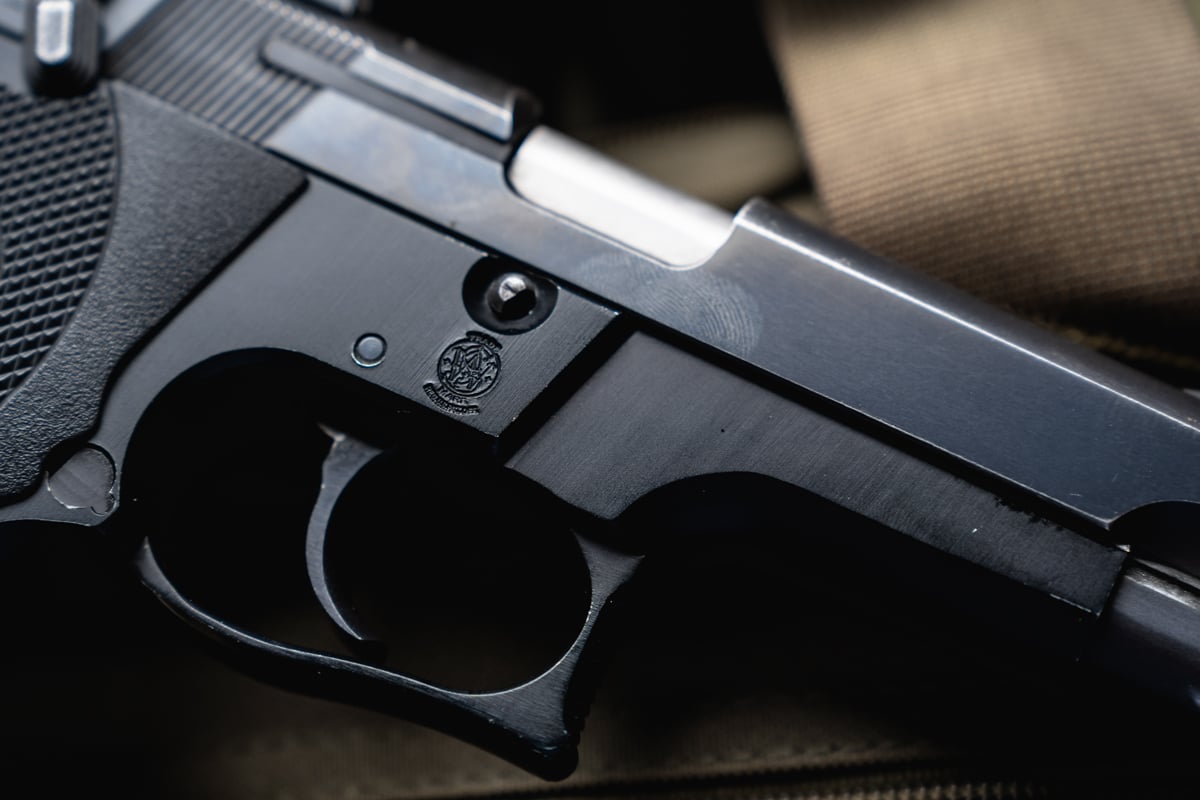
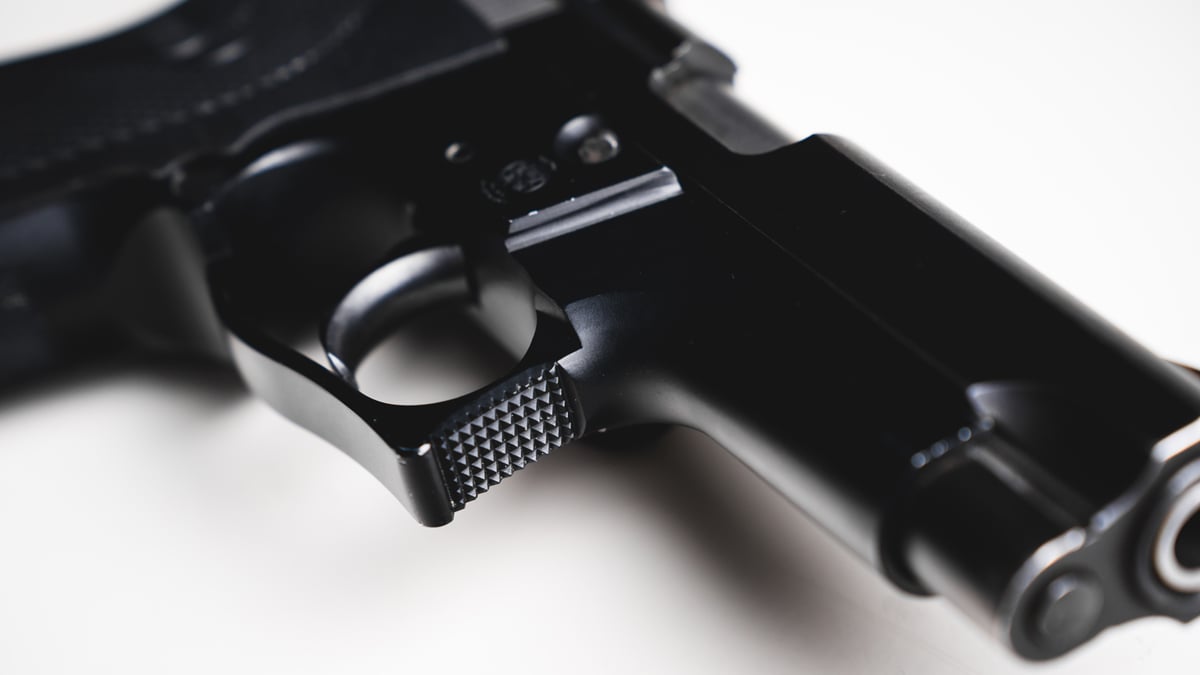
A distinct characteristic of the “no dash” guns is the ledge just in front of the slide stop and trigger, where the frame is a bit thicker. The front of the trigger guard is slightly flared with aggressive checkering to accommodate the support hand index finger, as in the shooting style of the ’80s.
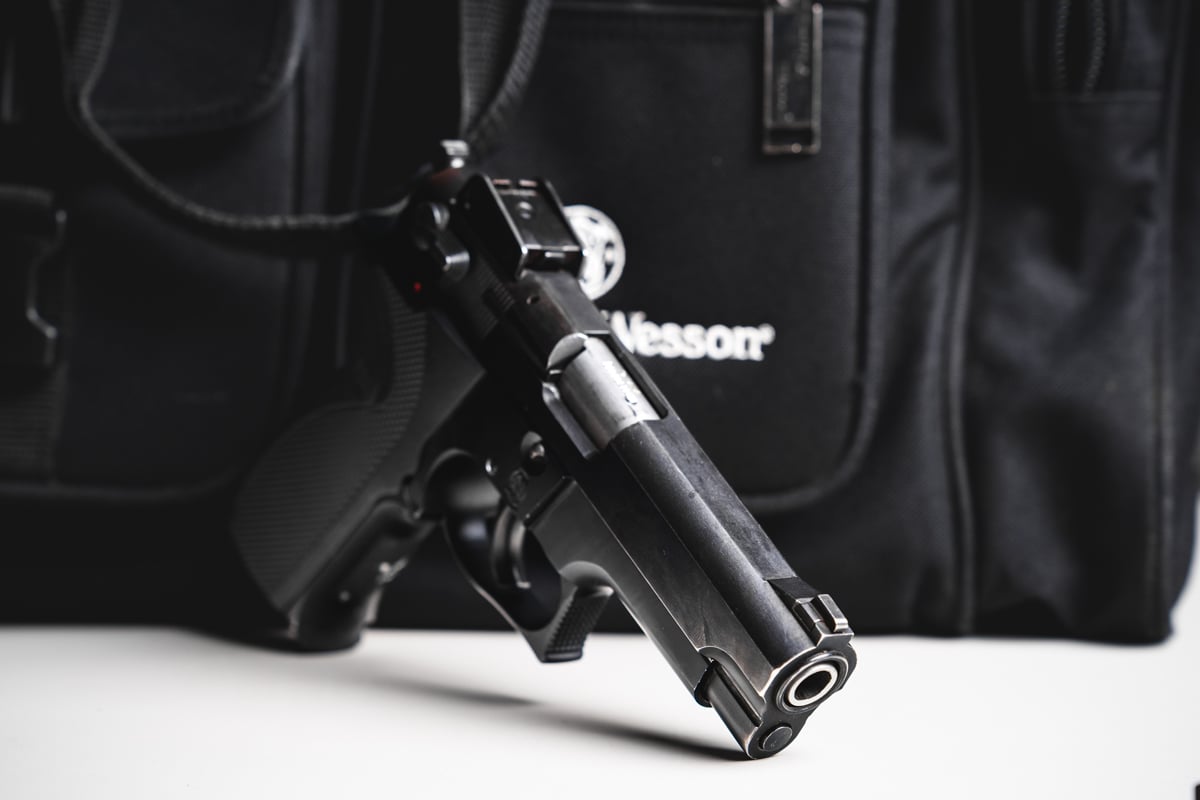
Here’s a quick rundown of some basic specs for this 5904:
- Caliber: 9mm
- Capacity: 15+1
- Weight: 26.5 ounces
- Barrel: 4 inches
- Action: DA/SA
- Height: 5.5 inches
-
Length: 7.5 inches
Trigger & Controls
The trigger is consistent, with the double action somewhat heavy yet smooth. There’s a bit of grit to it, which is one of the bigger criticisms of the DA/SA pistol. There’s a little bit of springiness to the single action, rather than just a slack take-up, followed by a distinct wall and a decently crisp break.
Related: Everlasting Wonder Nine – Police Trade-In Smith & Wesson 5906

I wouldn’t call this the most refined trigger of all time, but it is consistent. It’s more than serviceable for a self-defense or police duty sidearm. Within the entire aesthetic, it works to make the pistol feel solid and reliable.

A common complaint about many older models of firearms is the sharp edges. The beavertail and trigger guard have a tiny bit of smoothing, but overall, the 5904’s sharper edges did lead to some discomfort in extended range time and handling. To nitpick, I had to break my grip a bit to reach the small mag release. The magazine shoots out without sticking, though.
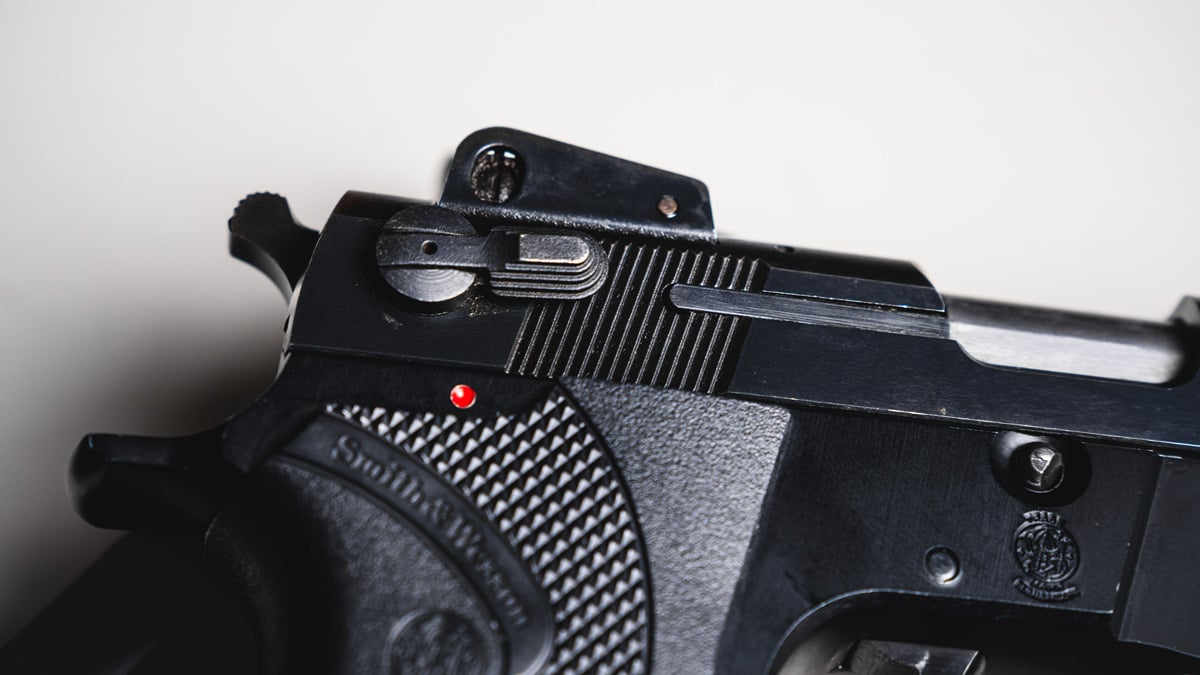
There’s a bit of rattle from the spring in an empty mag and on some of the controls. Although the plastic grips are checkered, they are a bit slick. Unfortunately, there aren’t many options for upgrading them.
Overall, the condition is superb. Personally, I enjoy some wear and tear, as it shows the gun has a little bit of history.
Range Time
I took three boxes of 9mm – Belom 115-grain, Blazer Brass 124-grain, and Fiocchi 115-grain – to the range. There was one failure to feed with Blazer Brass, which I cleared with a tap. I had two of the original mags and two brand-new MecGar 15-rounders.
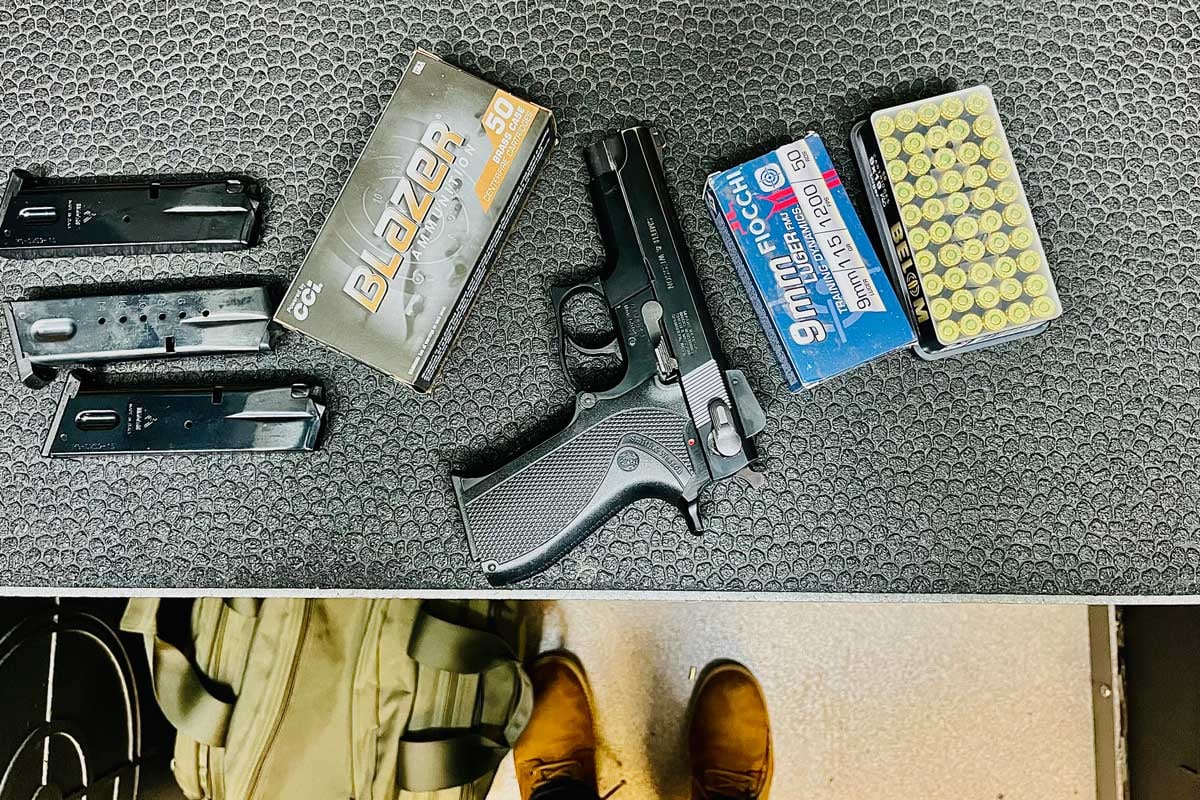
The gun grouped well enough, though I was consistently high and right. That was before I realized that my grip was canting it to the right, and I need a 6 o’clock hold on this one. I did not feel any hot spots or pain points around the edges, so that was a plus.
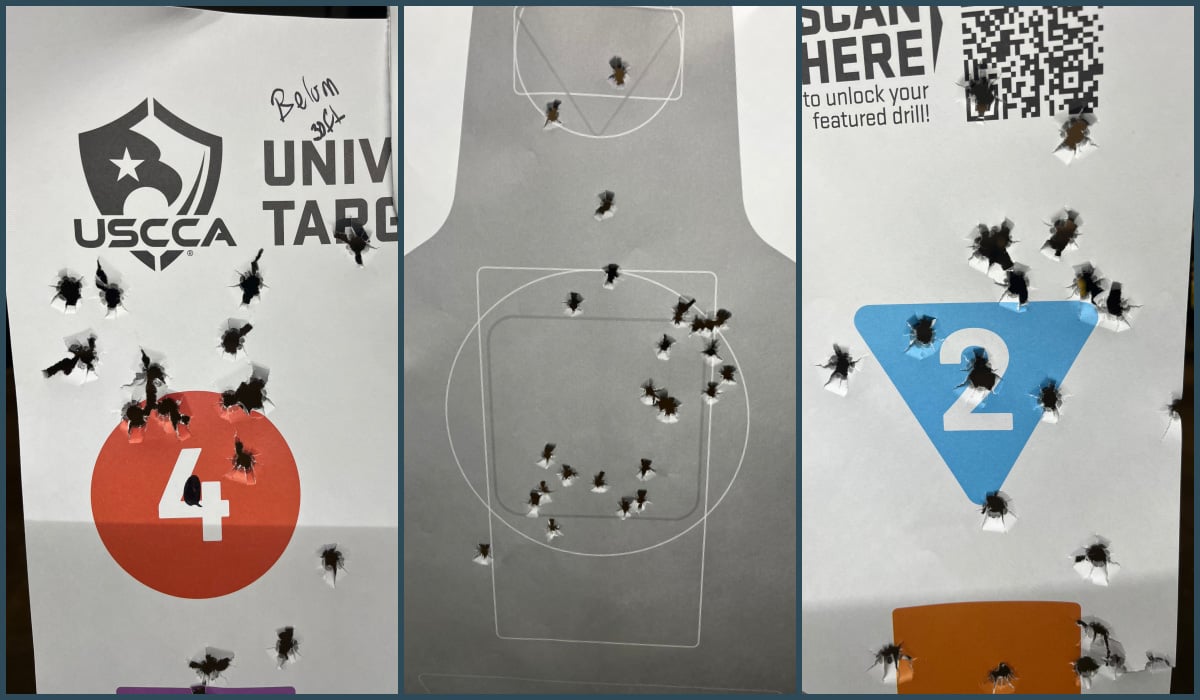
I was pleased with the results at 21 and 30 feet. I had limited time to run 150 rounds through the gun, and I saw improvement the more I used it. You can see where I changed my aiming point a few times on my target, using the USCCA logo and different shapes and color sets.
It won’t show exactly, but when I took my time to aim precisely, I could get a good 1-inch group. I tend to have a bit of an itchy trigger finger when my range time is limited, so I prefer to shoot faster. Excuses, I know.

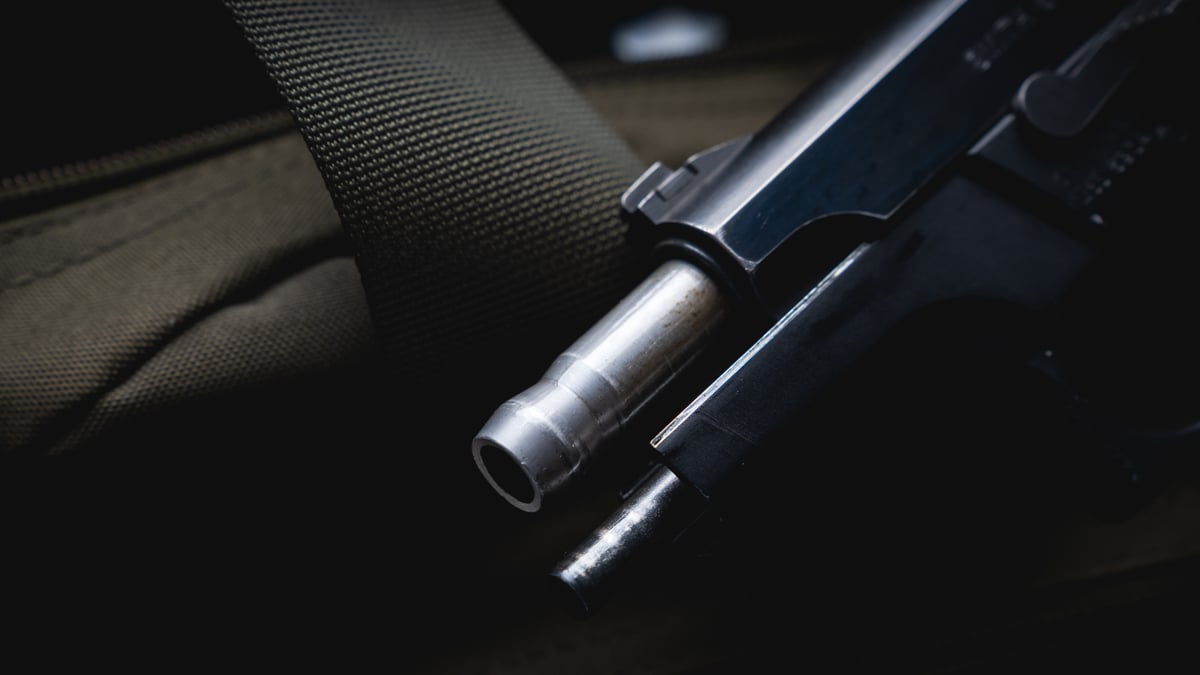
Recoil was a little more than expected. I’d attribute that to me being new to the gun and not bearing down enough, combined with the less tacky grip. The double action feels a bit heavy compared to the tuned Grayguns and LTT triggers I shoot in other platforms, but it’s smooth. The single action feels excellent. The reset is maybe 3mm, which is great for an older firearm, and it can be shot quickly for decent groups.
Comparisons

The full-size 5904 feels more like a semi-compact. Its 4-inch barrel and full-size grip are similar to a Glock 45 or Commander-length 1911. The double-stack frame is slightly wider than a Commander 1911, but a good 10 ounces less due to the alloy material.

It also compares closely to a Beretta 92 Compact or CZ P-01 – again lighter than either one.


The 5904 looks quite a bit smaller than its big brother, the 4506-1, another third-gen S&W in a stainless single-stack .45 variation.
Pros & Cons

Here’s a quick rundown on some pros and cons for this S&W 5904:
Pros:
- One of the original “Wonder Nine” guns
- Great for fans of hammer-fired guns
- All-metal design
- Double-stack capacity
- Familiar controls
- Aluminum frame cuts down weight
- Smooth DA/SA trigger
- 15+1 capacity is still decent by today’s standards
Cons:
- Discontinued, but plenty of originals left
- Limited aftermarket parts and upgrades
- Grips are less positive than some newer guns
-
Takes a bit of practice to get used to it at the range
Final Thoughts
As one of the original three Wonder Nines, the Smith & Wesson 5904 has earned a cult-like following. That’s for good reason. Its unique size is easy to handle and carry for long hours. It boasts a double-stack magazine and a smooth DA/SA trigger, and through all its iterations, the gun maintained a timelessly cool silhouette.
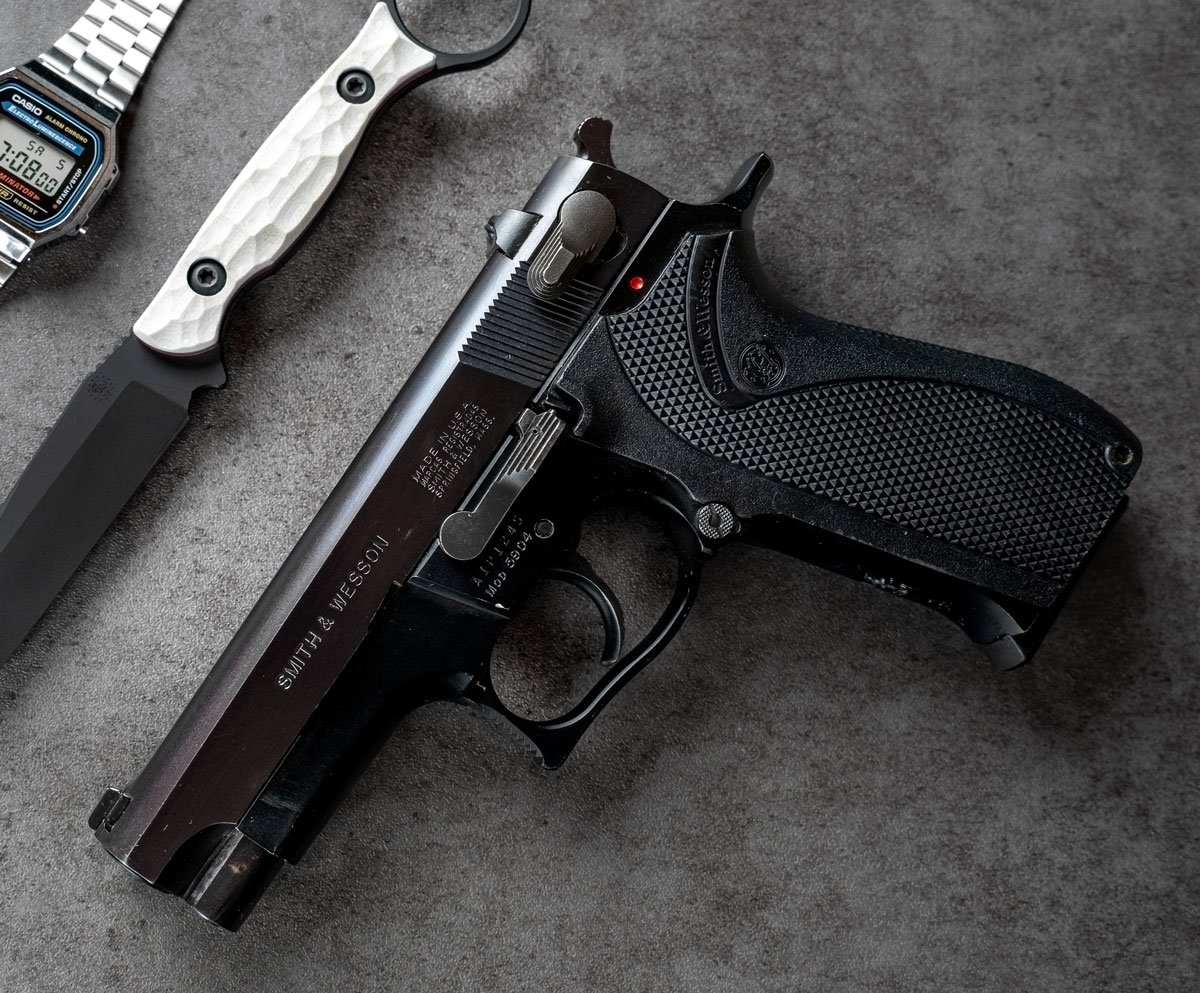
Calls for bringing back the third-generation models can be seen on just about any Smith & Wesson social media post. The company’s recent return of several older revolver models, along with removing the locks, is a hopeful sign that the third-gen models might make a comeback. In lieu of that, second and third-generation guns are available on the used market from personal collections and police trade-in lots.
Given its rather affordable price, the S&W 5904 offers a gateway to vintage collecting. Trust me, you’ll want to shoot it, too.