Mil-Spec Features
Springfield Armory has gone down the 1911 rabbit hole of double-digit capacity, RDO capability, and curious machining, but the company started with a basic GI 1911. The Mil-Spec line is the current sampling of base model 1911s, mechanically and aesthetically similar to the M1911A1 that soldiered through WWII and the Cold War.
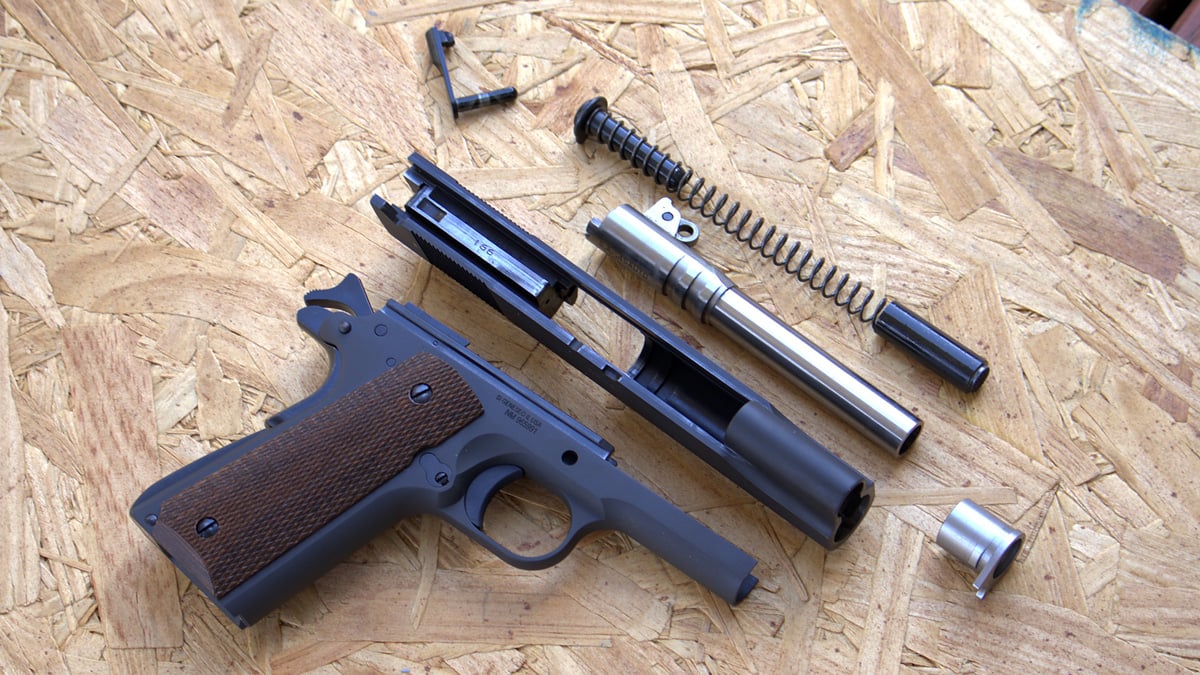
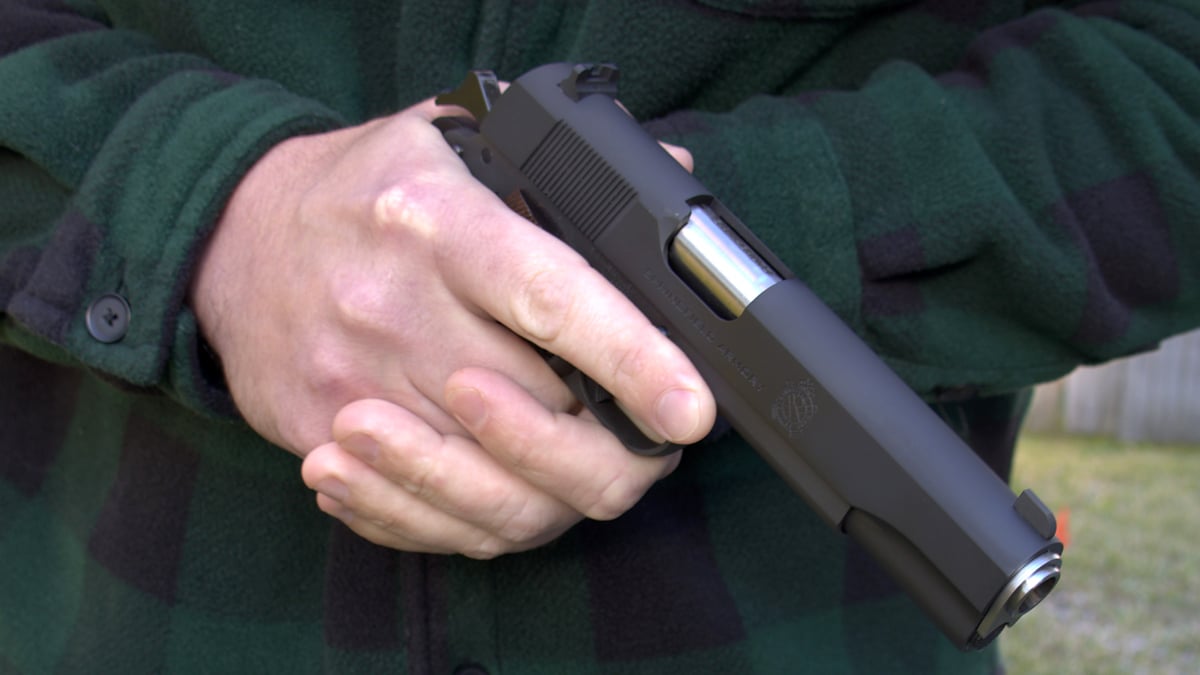
The pistol features an all-steel frame complete with an arched mainspring housing and A1-style grip safety, as well as the standard right-handed thumb safety, narrow spur hammer, and knurled magazine release button. The forged slide comes with standard vertical cocking serrations and wears Springfield’s crossed-cannon logo.
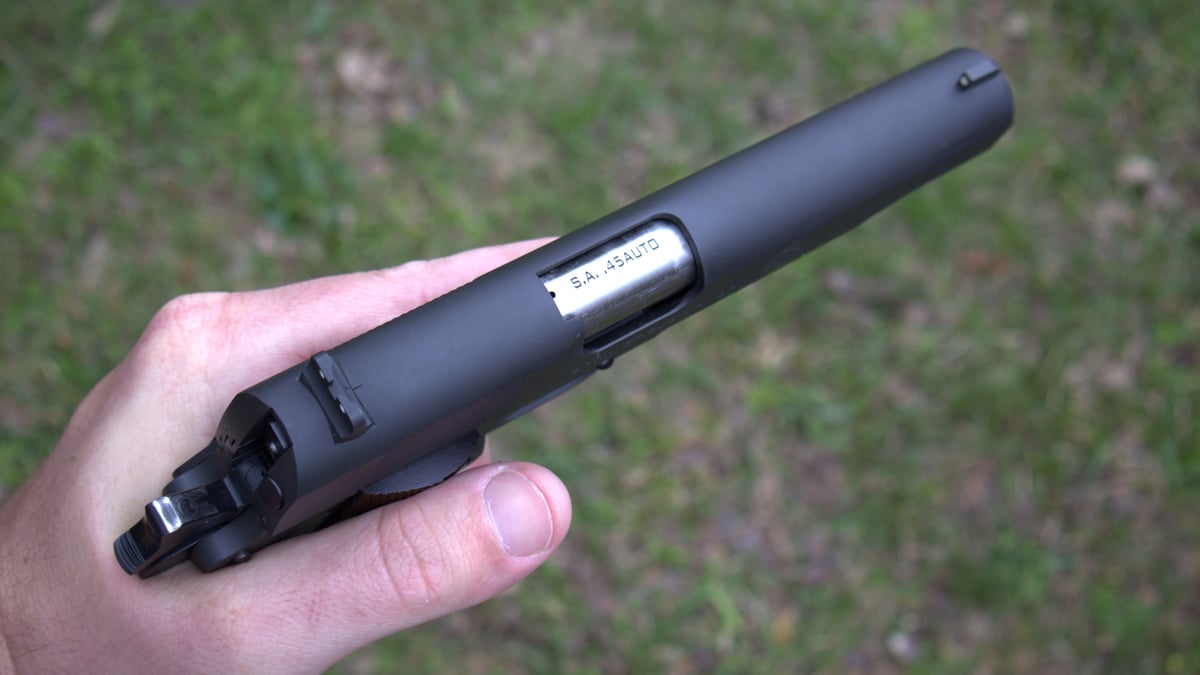
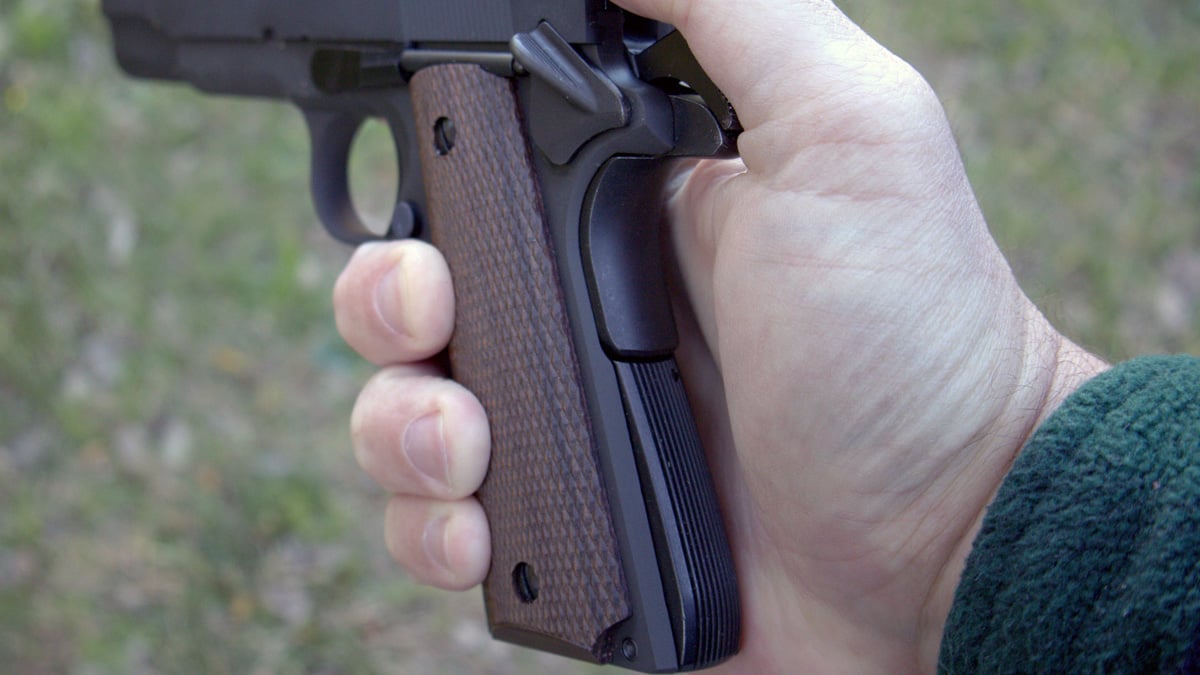
The Defend Your Legacy Series Mil-Spec line features simple checkered walnut grips and is available in a brushed stainless steel finish or a bright gray Parkerized finish. This example is the Parkerized model, which uses a carbon steel frame and a stainless slide. It is chambered in .45 ACP and feeds from flush-fit seven-round magazines.
Although created as a tribute to those wartime guns, the Mil-Spec has more features than I would expect. These includes a 5-inch polished stainless barrel, stainless barrel bushing, enlarged ejection port, beveled magazine well, and fixed three-dot combat sights.
Accuracy & Reliability
I put 300 rounds through the Springfield Armory Mil-Spec as I tested it alongside several other GI 1911 handguns. Ammunition included full metal jacket and jacketed hollow point loads, with accuracy tests at 10 and 25 yards. This was followed by offhand shooting out to 50 yards until I was out of ammunition.
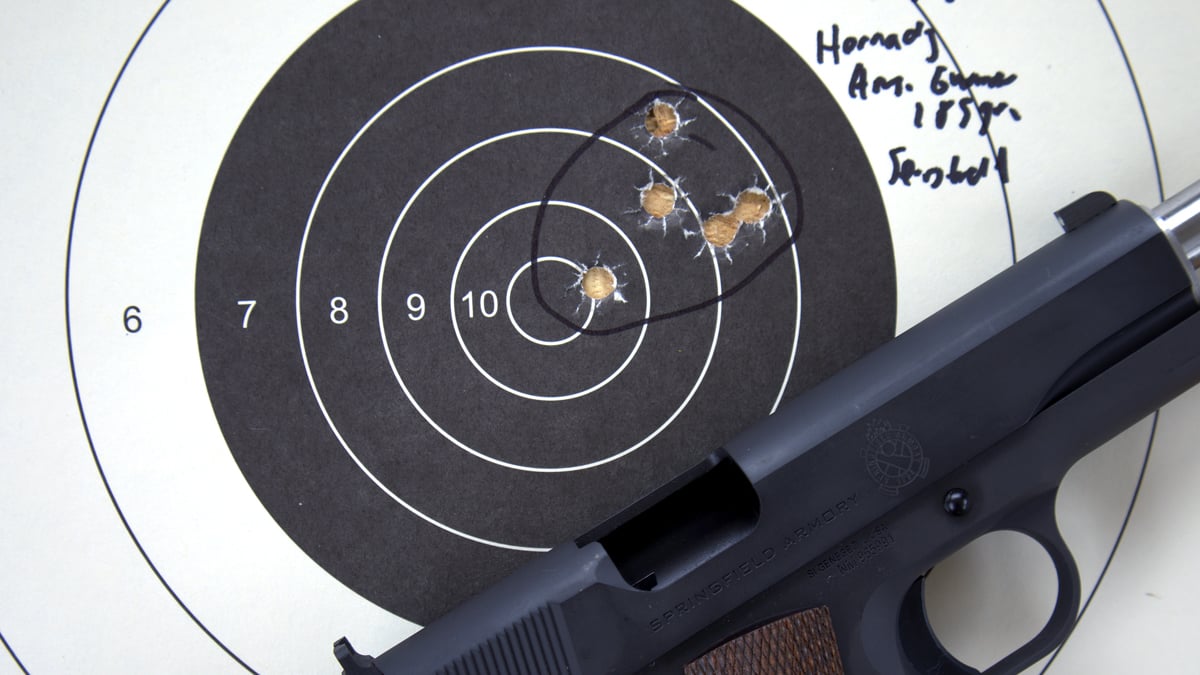
After a few shots on paper to check the sights, I set up paper targets at 10 yards and proceeded to shoot some offhand groups. I posted several six-shot groups with results as follows:
The Hornady American Gunner round boasted the least amount of recoil, thanks to its lighter bullet weight. It gave the best accuracy out of the ammunition tested with groups as small as 1.3 inches. At 25 yards from the bench, this load printed a 3-inch pattern. That said, all the ammunitions tested were similar in terms of overall accuracy.
I shot the Mil-Spec side by side with several other 1911 pistols ranging from my personal Colt Government Model to a Turkish clone and a Rock Island Armory GI model. Magazines were mixed and matched, and all manner of hollow point and ball ammunition was shot. The Mil-Spec emerged from its 300-round clinic with zero failures. I expected more excitement, but all I got for my trouble was a bag of brass.
Range Notes
The Springfield Mil-Spec has accuracy in spades, and I was able to gauge some ergonomic impressions with slow fire. As with any other handgun, the pros and cons are magnified when shooting quickly or going for distance. Hence, I took the pistol out for a mix of 7-yard Bill drills and 50-yard offhand work on a 1/2 steel silhouette.
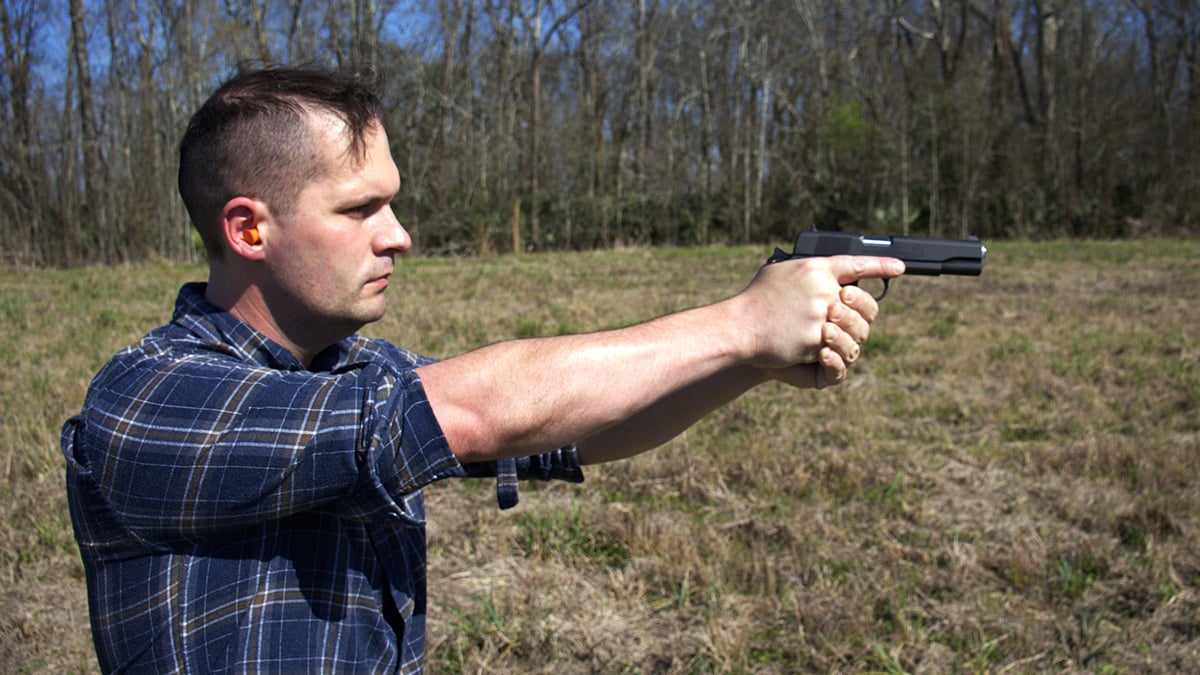
The Mil-Spec is inherently well-balanced, and the A1 grip frame lends itself well to pointing at the target like you would a finger. There is just enough mass up front to balance the rear. On the draw, the three-dot sights appear organically and are more visible than standard black-on-black low-profile sights you will find on most GI guns. At the close range of the Bill drill, I had nearly as much success drawing and firing my six rounds quickly by looking over the sights.
Although some runs were faster than others, I could reliably clean the drill in a 3 to 3.5 second window from the draw to the last shot. The platform both helped and hindered. The .45 ACP cartridge does have more recoil than a comparable 9mm, but the pistol is not snappy, and the recoil impulse is slower than other rounds. This is offset by the smart wood grips, and surprisingly, the beavertail. The fingers drop anchor even when drenched, and the beavertail affords a commanding hold.
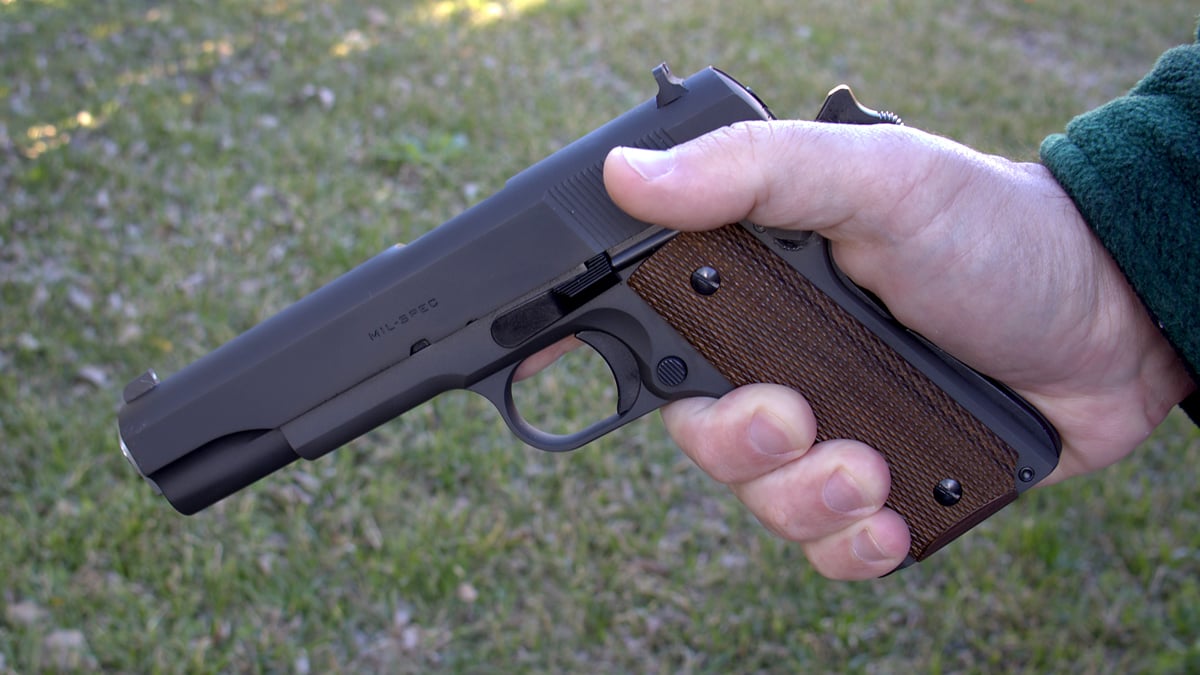
I was even surprised by the alack of cuts and bruising that the web of my hand usually takes from the beavertail and hammer when shooting GI guns. The taller sights allow for a fast gross alignment before pressing the trigger. The trigger itself is a shorter reach for bigger hands but is light, predictable, and quick. The trigger return spring resets with audible authority, further cutting down on wasted time. The manual safety is mechanically positive, and the shoe of the safety provides an adequate gas pedal to get a higher grip for the best possible recoil management.
Out at 50 yards, sights and trigger come more into play. In general, smaller sights are harder to see but do not cover up the target when shooting at distance. Some defensive-style sights that excel at close range are harder to see past when the paces grow. Thankfully, the stock sights were not onerous and the trigger’s lack of take-up allowed easy hits.


Terril James Hebert
Terril Hebert is the world's okayist historian and firearms journalist who occasionally moonlights as an NRA pistol instructor. In his spare time, he enjoys forensic accounting, waxing poetically about the efficiency of musket balls, and working on his latest fire-starting techniques.
View All Articles by Terril James Hebert