Live-Fire Testing Video
Specs & Features
I’ve gotten to blow apart a fair amount of polymer-based armor panels over the last year, but this Universal Armor is by far the most unique. It’s made from ultra-high-molecular-weight polyethylene (UHMWPE) just like most lightweight hard armor rated for level IIIA and III protection these days.

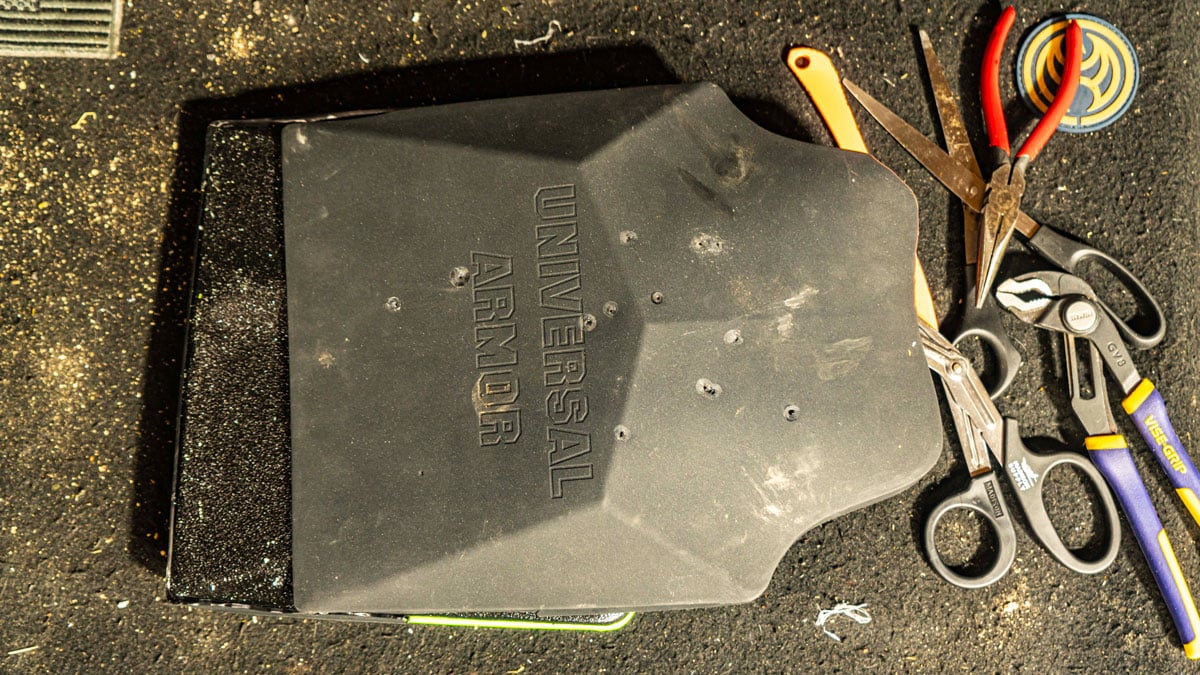
What sets it apart is the angled design and relatively thin profile. These are both results of the hot-press technique used to form the panels. The most obvious feature is the angled shape. It’s dubbed the “tank section” in TacticalXmen’s description due to its Panzer-like appearance.
Related: [VIDEO] LifePro Shield Body Armor – Level IIIA, III, & IV Ballistic Tests
Apparently, the angled shape “increases the equivalent thickness instead of the physical thickness to enhance the defensive capability,” according to TacticalXmen’s product description. I don’t know if this shape really prevents penetration per se, but our testing does suggest it absorbs a lot of the impact energy. More on that later.

The angled design makes the panels more comfortable to wear, and the curved cut along the shoulders does the same. Both features make it easier to shift your body into various shooting positions. That said, the size and shape of the armor require a larger plate carrier.
Here’s a quick breakdown of the basic specs:
Ballistic Material: UHMWPE (polyethylene) core
Weight: 2.1 pounds per panel
Thickness: 0.64 inches
Height: 12.2 inches
Width: 10.1 inches
Protection: Level IIIA – up to .44 Magnum (NIJ Standard-0101.06)
At a mere 0.64 inches thick by my measurements, these panels are already on the very thin side for hard armor. However, only a portion of that is the actual bullet-stopping UHMWPE. The front of the panel is covered in a protective layer of rubbery thermoplastic polyurethane (not polyethylene).

Related: Zastava M57 Pistol Review + Kevlar Body Armor Test
This shell serves as a protective layer to reduce wear. Since the polyethylene-based UHMWPE is sensitive to light, this rubbery polyurethane-based shell prevents it from breaking down over time when exposed to sunlight and the elements.

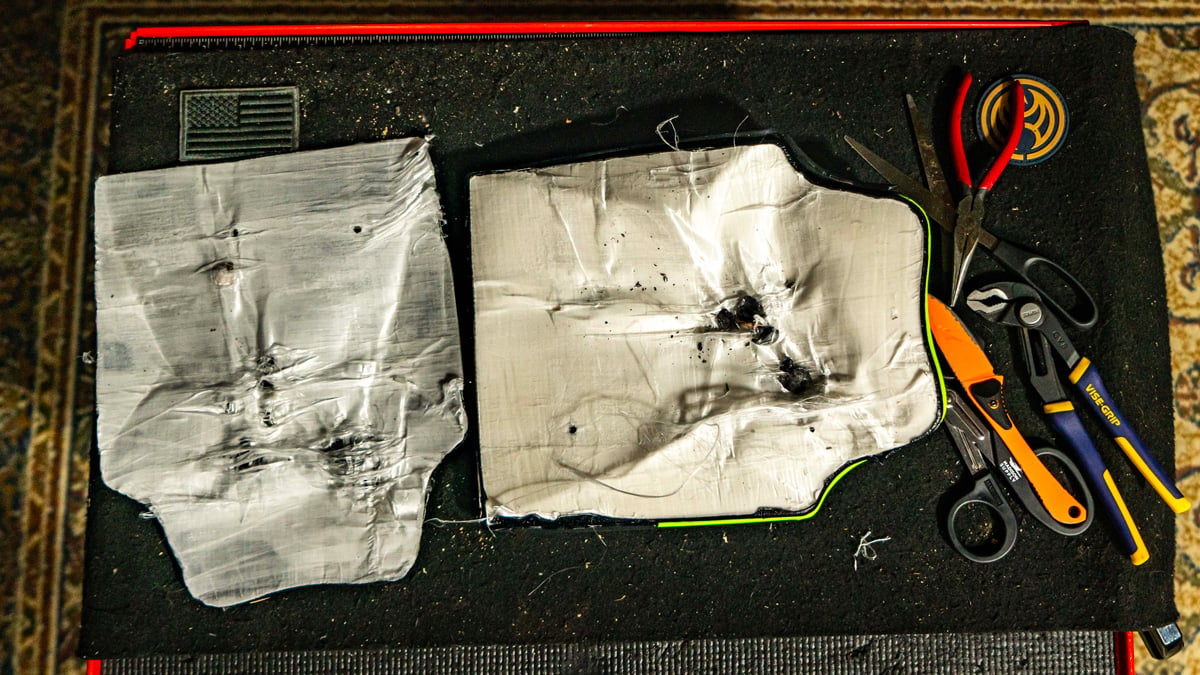
The neon-green backface is made of an impact-absorbing material from D3O found in high-impact industrial and sports equipment. All three layers combine to make what at least appears to be a promising ballistic sandwich.
Now let’s see if it survives testing.
Ballistic Test Results

All handgun test shots were made at 5 meters in accordance with the NIJ ballistic test standards. Our handgun calibers included 115-grain FMJ 9mm with an average muzzle velocity of 1,160 fps, 230-grain FMJ .45 ACP with a muzzle velocity of 890 fps, and 180-grain FMJ .40 S&W with a muzzle velocity of 1,000 fps. Velocities are based on the manufacturer’s specs for each round.
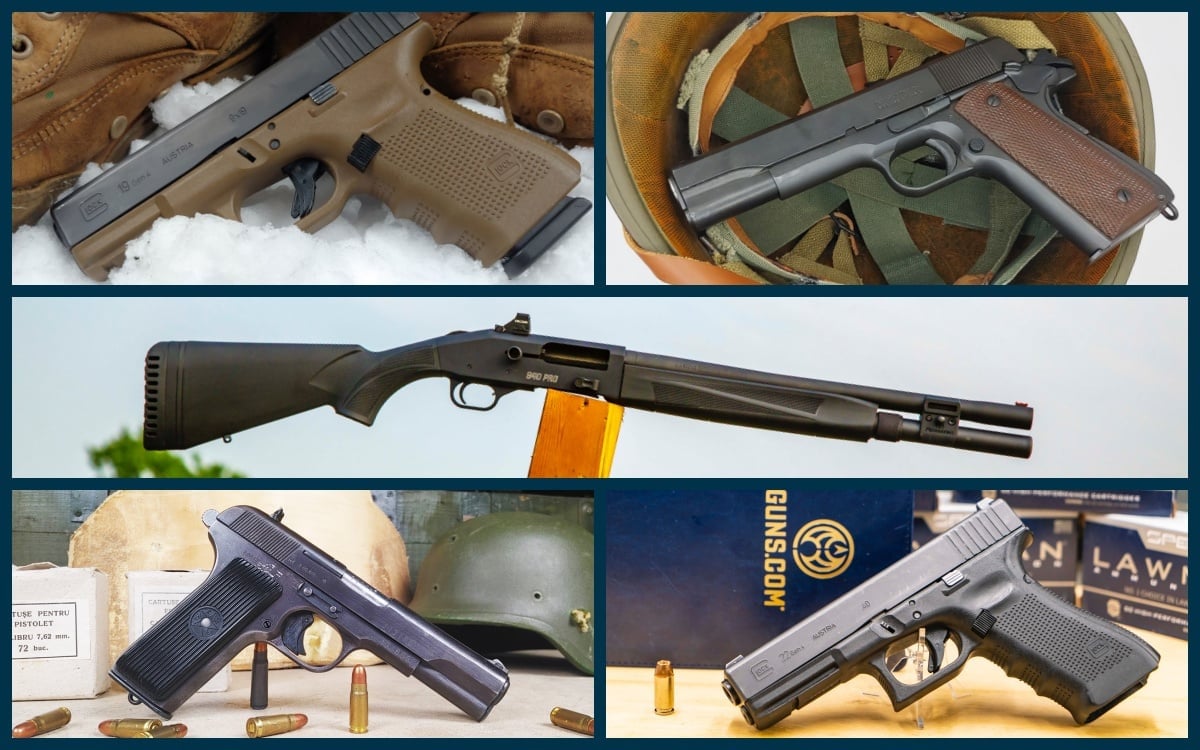
I rounded out the handgun testing with the 87-grain FMJ 7.62x25mm Tokarev round. That was our spiciest bullet with a muzzle velocity between 1,600 and 1,700 fps. I have personally tested this on various hard Kevlar armors, and it has occasionally defeated the Kevlar in similar testing that stopped 9mm NATO ammo.

For the final 12-gauge testing, we hit the armor with nine-pellet Winchester military-grade 00 buckshot with a muzzle velocity of 1,325 fps. I counted a total of 13 hits from our handguns and shotgun. All were stopped and captured inside the armor.
That’s more than I can say for your standard steel armor, which tends to cause dangerous spalling. Bullets also tend to bounce off hard Kevlar. Capturing the projectiles is generally the safest solution.

The backface deformation from our initial handgun rounds was noticeable but hardly catastrophic. It’s hard to measure, but the force of the impact was clearly spread across the angled surface of the armor. That stands in contrast to soft level IIIA armor, which deforms directly backward into the wearer.
Related: Deal or No Deal? LifePro Shield Level IIIA Soft Armor Torture Test
Our nine-pellet buckshot, on the other hand, completely caved in the face of the panel. Still, that angled shape gave the armor some flexibility. That placed the total backface deformation more in line with the edges of the armor. Normally, the backface deformation would bend the armor beyond the sides and into the torso of a wearer.
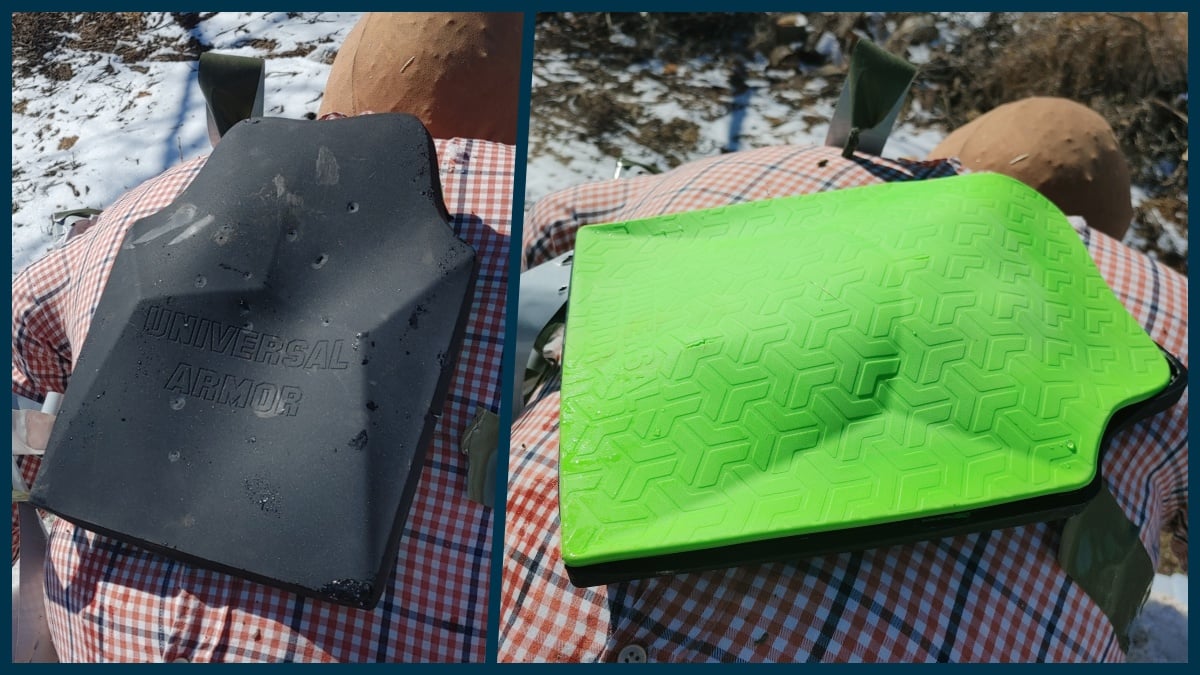
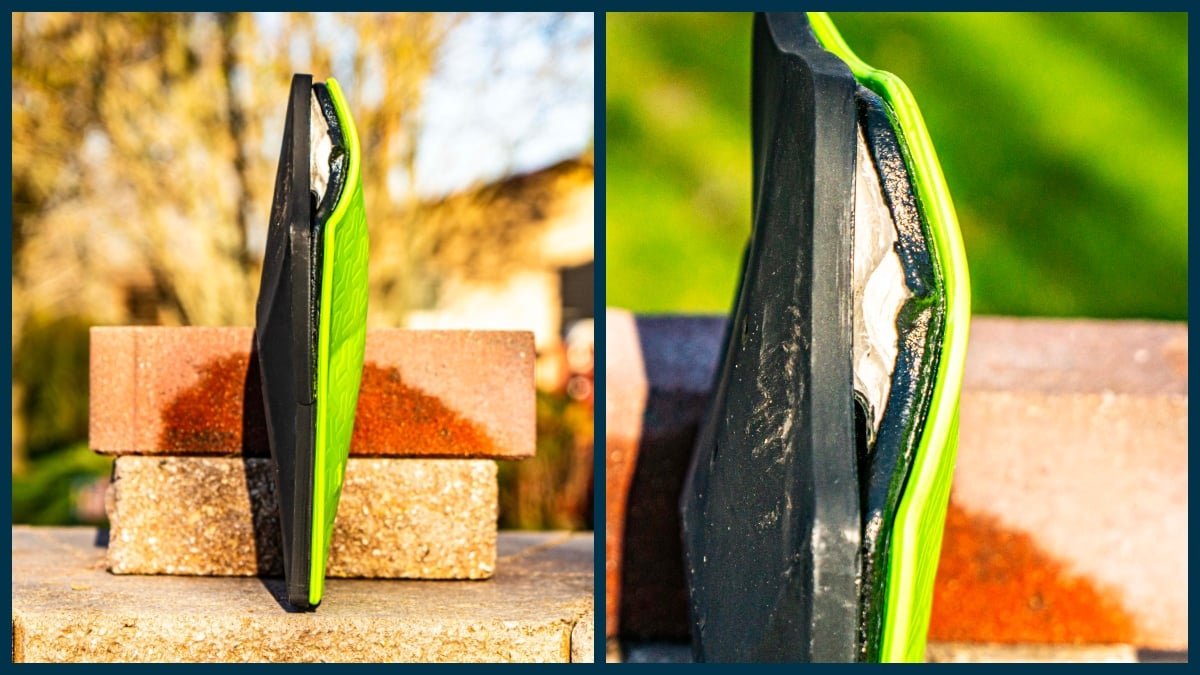
Translation? This affordable level IIIA armor is more than capable of stopping multiple hits at close range from sub-rifle calibers. The angled design also mitigates backface deformation. However, you are definitely going to feel the hit from a 12-gauge shotgun.
I imagine it kind of like a modern car. The armor crumples around itself with the impact, theoretically absorbing energy headed toward the user.
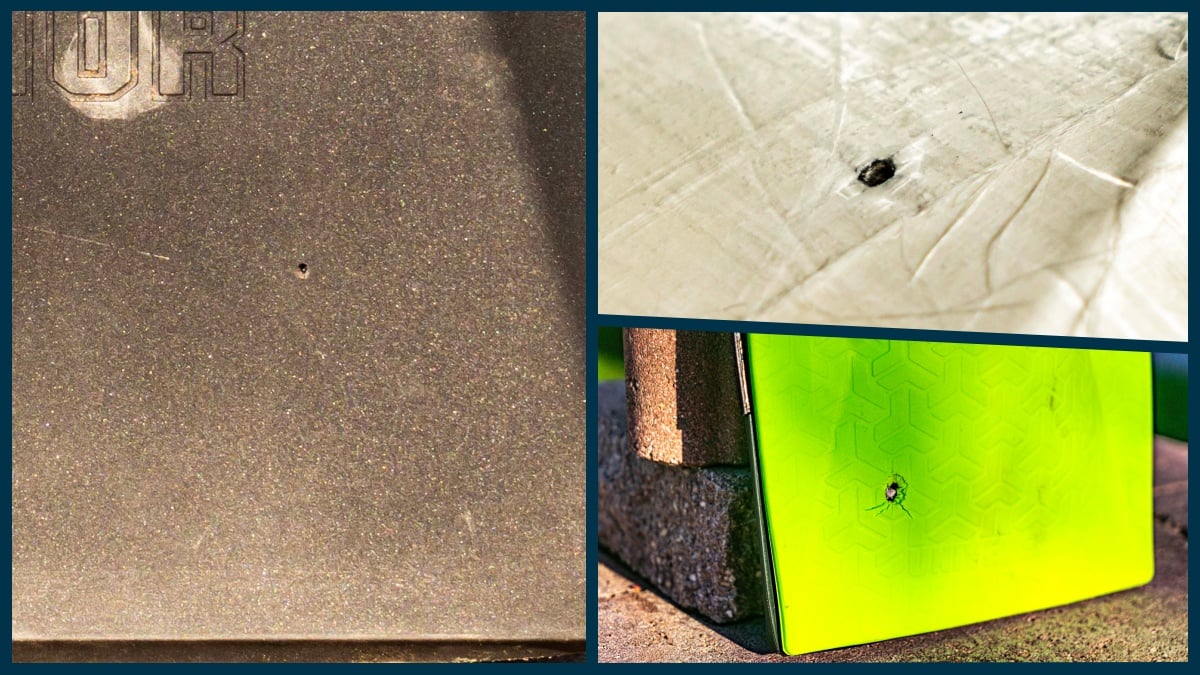
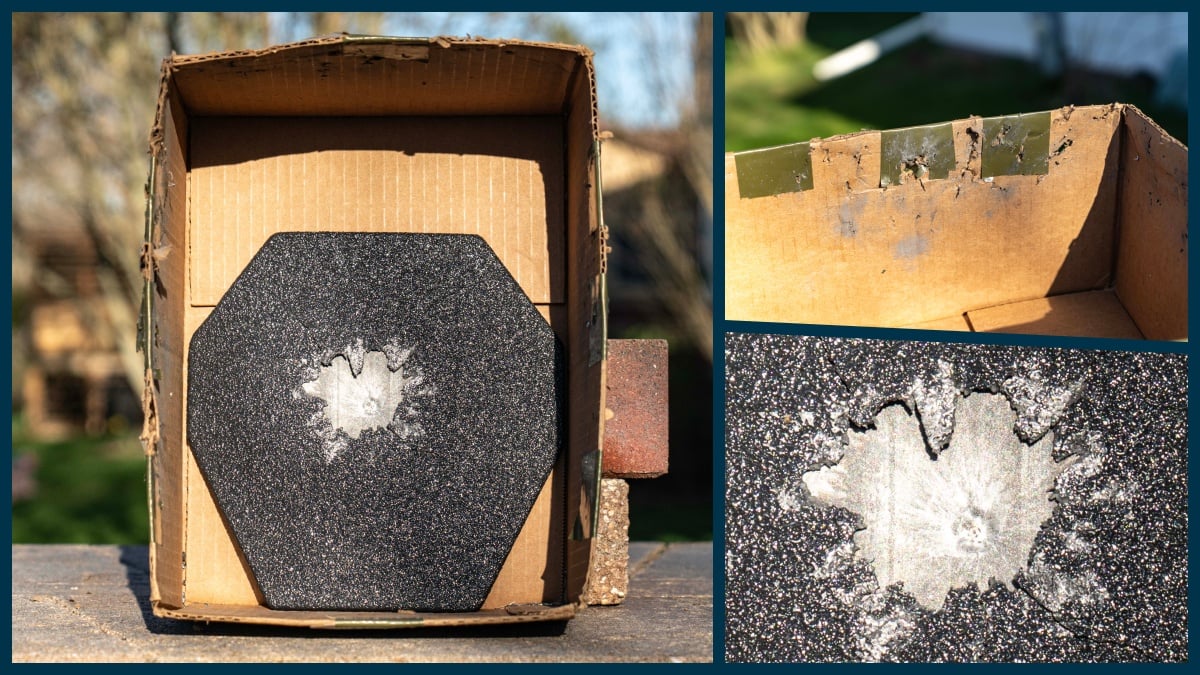
Finally, I put a single 55-grain 5.56 NATO M193 round into the bottom corner to verify that the armor protection level ended at level IIIA. That 5.56 NATO bullet sailed straight through the armor and barely left any signs of backface deformation. So, no, this angled armor will not stop high-velocity rifle calibers.
Pros & Cons

Here’s my short list of the pros and cons for TacticalXmen’s Universal Armor level IIIA panel:
Pros:
- Effective level IIIA ballistic protection
- Affordable price point
- Multi-hit capability
- Captures projectiles inside armor
- Comfortable angled design
- Lightweight and thin
- Durable construction
- Water-resistant material
Cons:
- Not rated for rifle calibers
- Unique shape requires a larger plate carrier
-
Shape makes concealment hard
Final Thoughts

For the money, these Universal Armor panels certainly fall into the functional and affordable category. The armor is limited to handgun/shotgun threats, but it makes up for it thanks to its lightweight and ergonomic shape.
The angled design is novel, and it seems to aid with backface deformation. The overall quality is solid, and I’d love to see more detailed testing on just how the armor’s angles affect measurable energy transfer. My personal tools are limited for that type of analysis.
Regardless, the armor did its job 14 times over for our testing.