Meet the Uberti Springfield Trapdoor Carbine
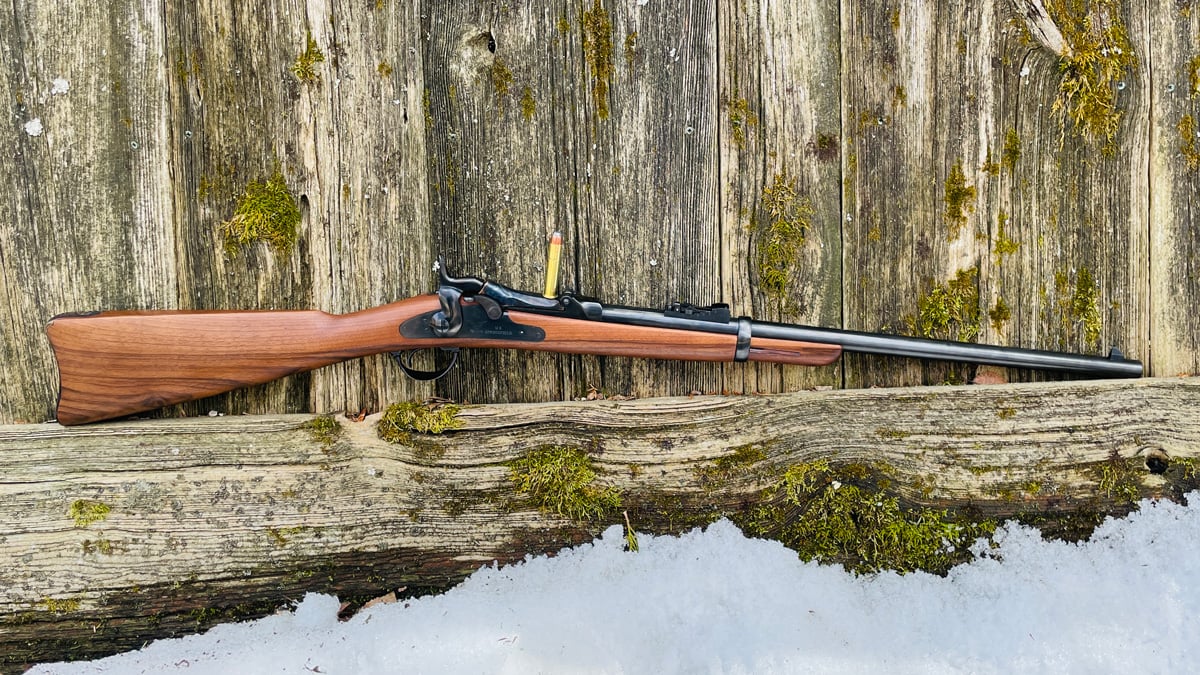
Chambered in .45-70 Government, Uberti’s take on the Trapdoor Carbine is built not merely to look like the real deal – but to work. Our test carbine is as it sounds, with a shorter 22-inch barrel and more compact stock than the longer Army rifle.
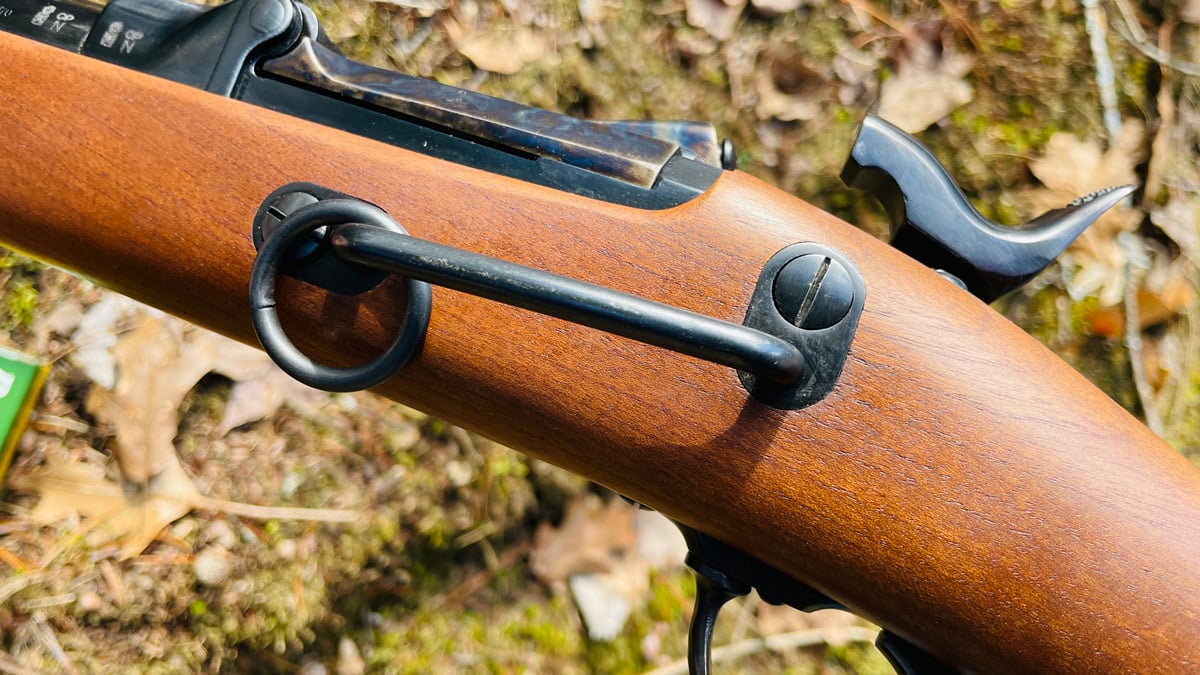
The Trapdoor Carbine is fitted with a sliding ring and bar, built for clipping to a carbine sling for carrying. This feature, unique to the carbine, is reminiscent of saddle rings.
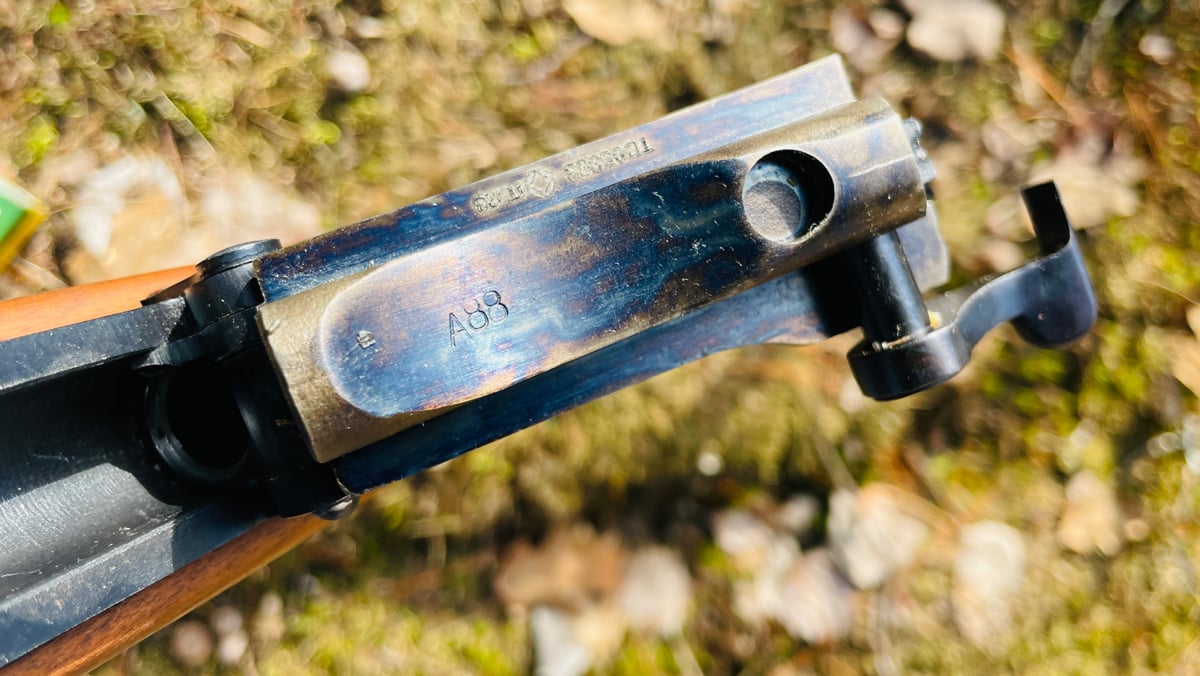
The hinged, arched breechblock pivots forward for charging. Satin-finished walnut stocks round out the package and prove an attractive companion to blued steel and bright case color.
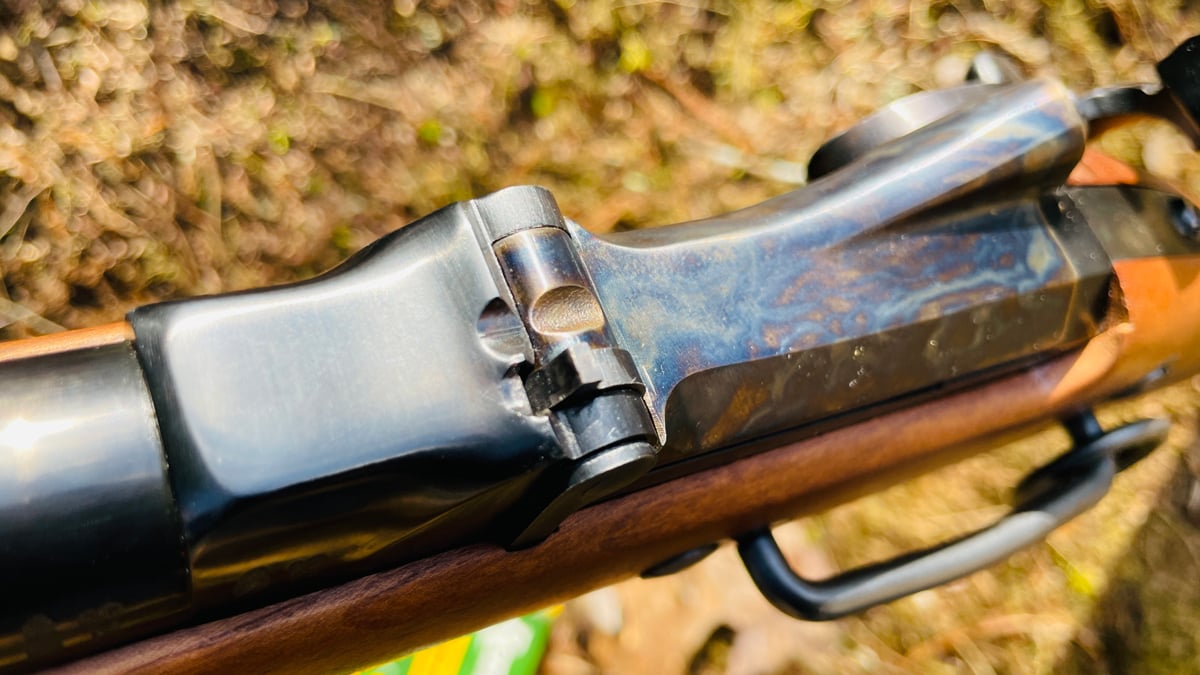
Initial impressions were solid, a word that explains the made-in-Italy Trapdoor. Built of blued steel and walnut, the reproduction creeps up on what defines an actual original. The one thing that cannot be replaced is the patina of age, handling, and history, but that’s no fault of any remake.
Field Notes
The Uberti’s case coloring is attractive and extends to the underside of the breech block and buttplate. The stocks, though noted as A-grade, exhibit impressive grain on our test gun, albeit with a knot on the right side of the buttstock showing a hairline split. The satin finish, though, is quite lovely, and feels about as close to original as modern mass manufacture might achieve.
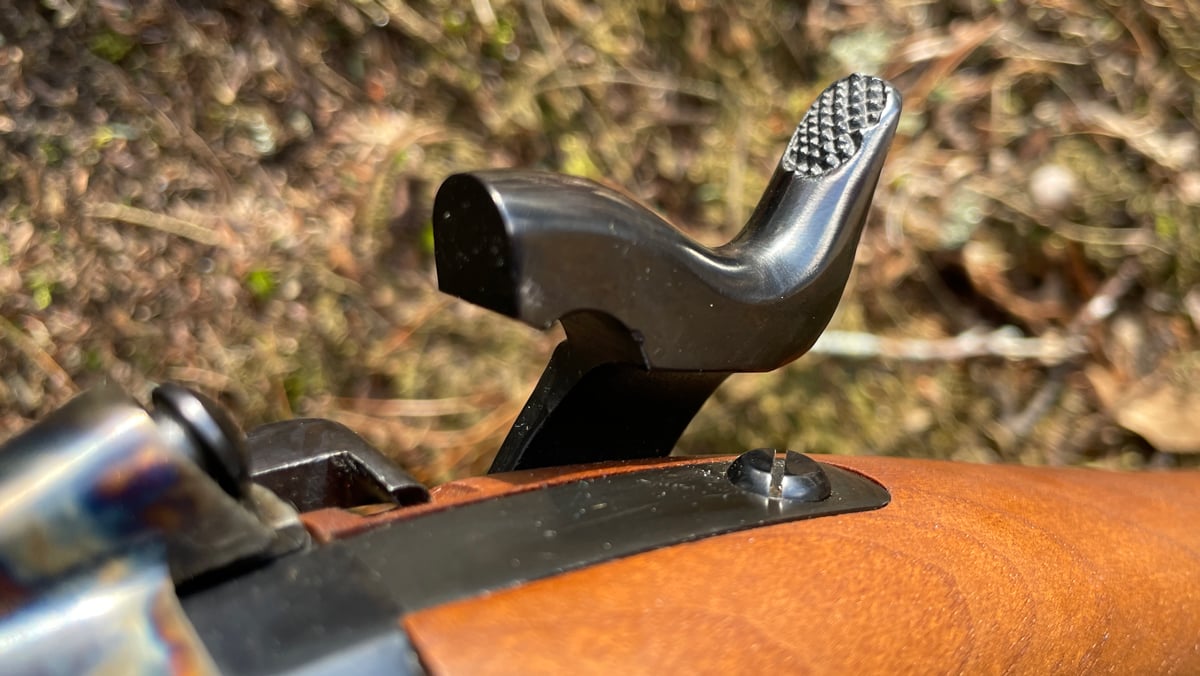
Most areas show the appropriate proud wood-to-metal fitment, though both the lower and upper tang stands above the buttstock, with screws notably higher still. This is certainly not a dealbreaker, and the original Trapdoors were built more for practicality than perfection, but it’s worth noting on a high-dollar firearm.
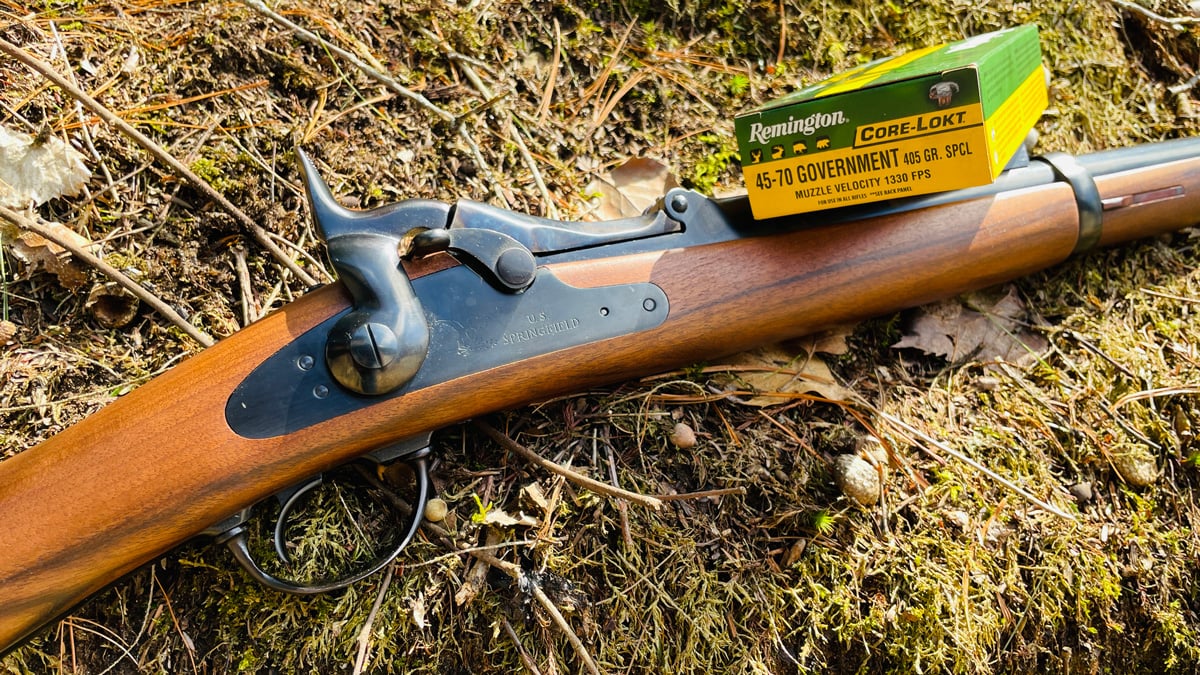
The only other maker we’re aware of building a trapdoor is Pedersoli, and this test Uberti appears eerily similar. Whether the former is building the latter or vice versa, the Italians somehow have the corner on U.S. Model of 1873 Springfield reproductions. Still, the U.S. Springfield engraving along with the eagle are found on the side plate, just as with the original.
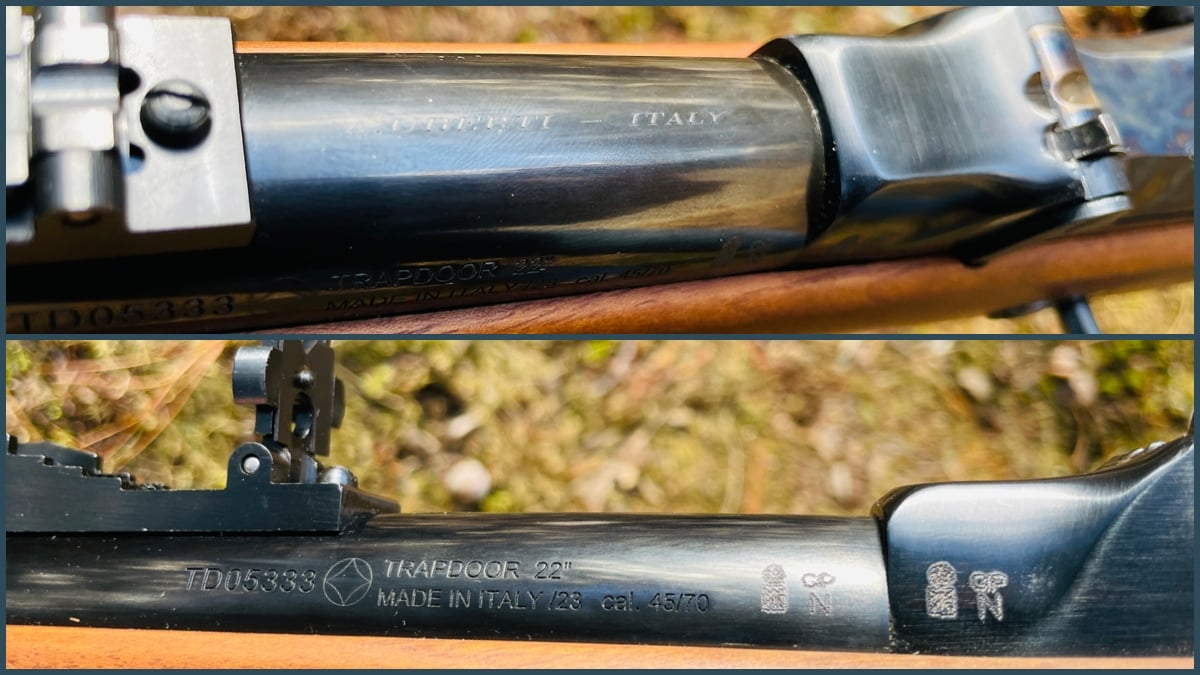
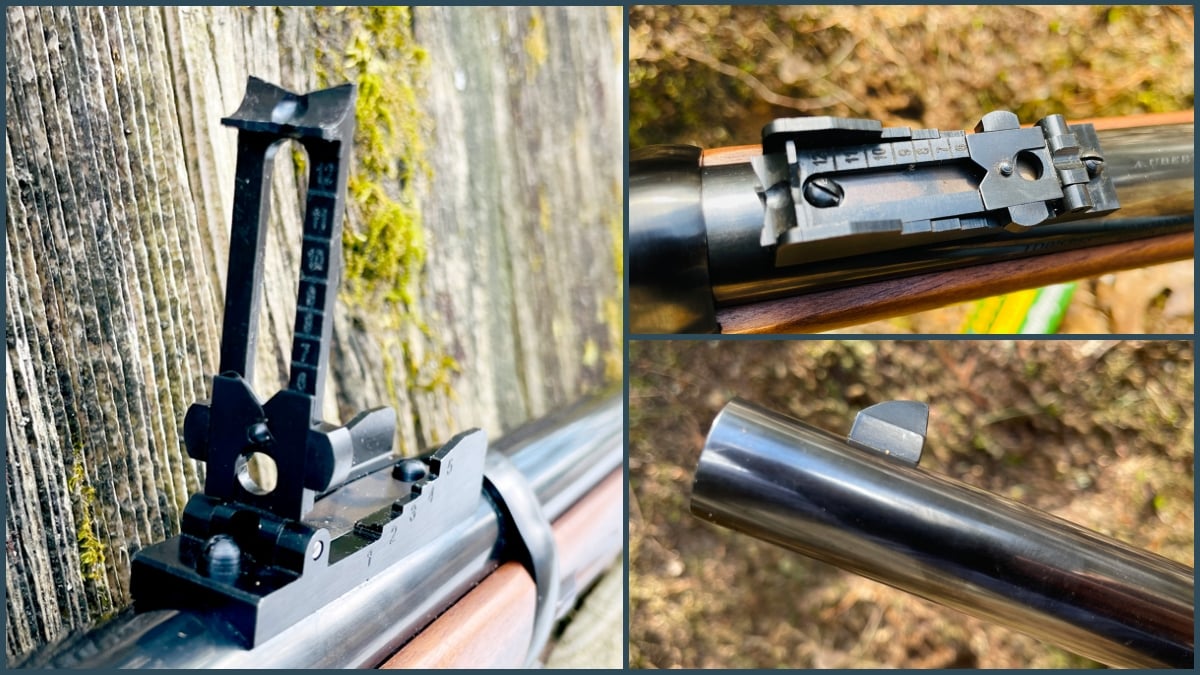
The gun, though it retails north of $2,000, ships in a basic white cardboard box with little attention to fanfare. The box sticker was clearly labeled as Uberti but also named partner company Stoeger on both the box and top of the barrel engraving. The sights are true to many originals, with a fixed front and ladder-style rear that adjusts for elevation easily, but not windage.
Range Time
The carbine shaves roughly 1.5 pounds off the weight of the full rifle, and while that makes a more compact and lighter platform, those weight savings mean the piece thumps the shooter even harder.
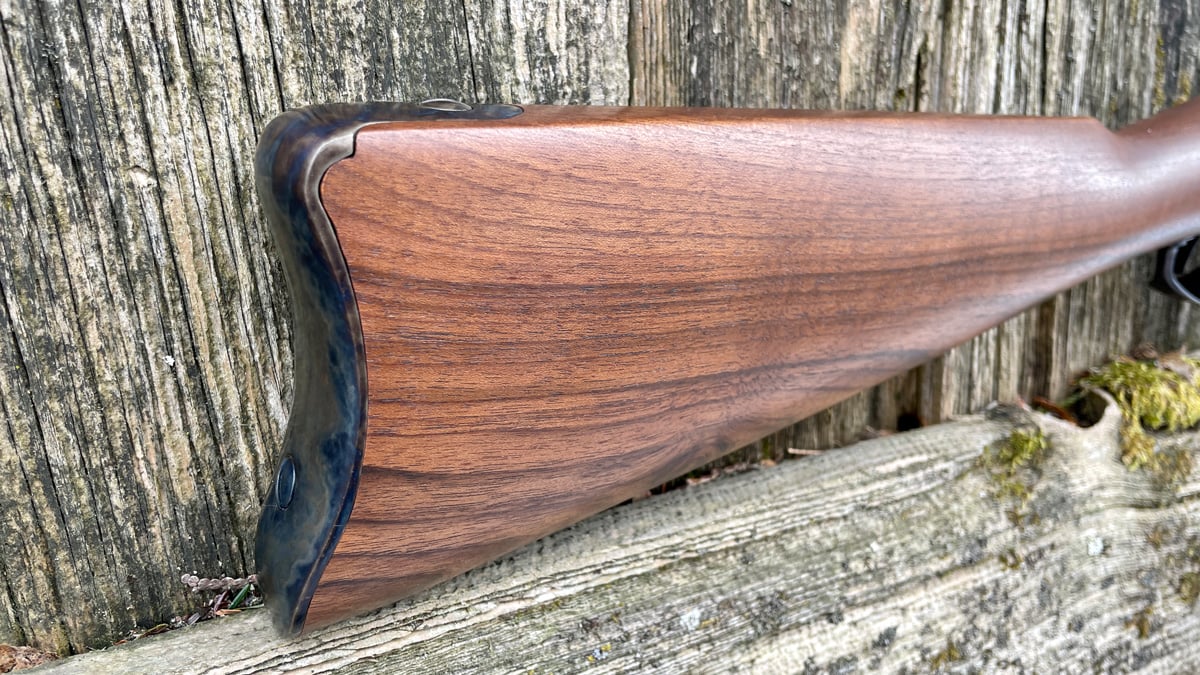
Don’t forget that steel buttplate. The cavalry had no cuddly rubber pads, and you’ll get none of that here. Firing the Trapdoor Carbine reminds you you’re alive, especially when pulling the trigger on hotter rounds. True originals, by and large, are only safely fired with black powder or reduced-pressure loads, but we’ll get deeper into that shortly.
Though the action is the same, little else connects the carbine and Army rifle variants. They both look and feel like significantly different firearms. The carbine’s half-stock, lighter weight, sights, and sliding bar ring define its purpose as a more compact, closer-quarters, traveling weapon.
Accuracy proved serviceable, albeit far from impressive. Average three-shot, 100-yard groups hovered around 3 inches, while 50-yard groups expectedly hit tighter at 1.85 inches. We can chalk some of that up to old-school irons, but several other considerations are at play.
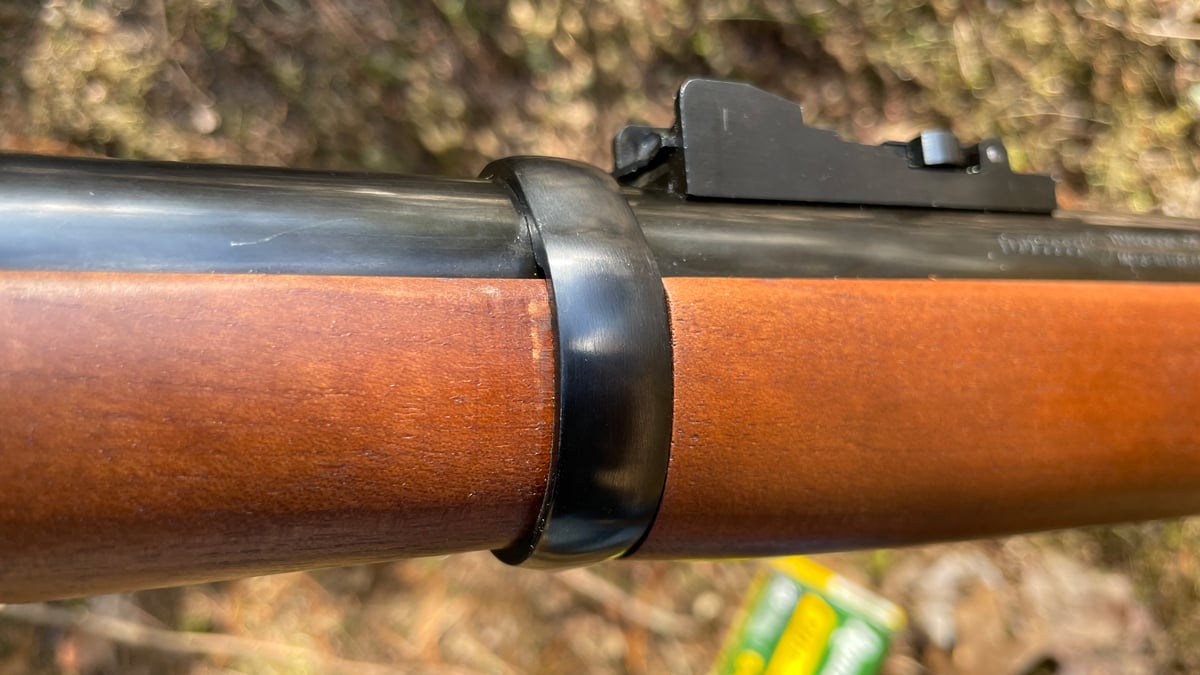
One contributing factor could be the front barrel band, as there’s significant movement there. While no such rifles exhibit the tightest tolerance, the band’s locking spring fits so loosely that the band on our test gun has 3/32 inch of play. Not only has this led to several scratches on the forestock, but it allows significant play between barrel and stock.
In a pleasant surprise, though, our test gun’s trigger broke repeatedly at 3.9 pounds on a Lyman digital pull gauge, albeit with a bit of grit on the takeup.
The Ammo Conundrum
By and large, modern production .45-70 loads at modest to standard pressures with smokeless powder are safe for these Trapdoor remakes. While it wasn’t listed in the manual, it seems unwise to fire souped-up .45-70 hunting loads, amped-up reloads, or those marked specifically for Ruger 1 single shots or Marlin 1886/1895-type actions.
Our Uberti’s manual is a single large sheet of paper folded in four. Because it applies to several models of Uberti replicas, there’s little technical information relevant to the variant in hand. That also means ambiguous data on which ammo is deemed safe and appropriate, other than to say the guns are proof-house-tested according to Italian law at the National Proof House in Gardone Val Trompia, Brescia.



Kristin Alberts
Kristin is a Staff Writer with a focus on hunting and the wilderness lifestyle. When she's not traveling the world on the next outdoor adventure, Kristin enjoys fishing, motorcycling, field-to-table cooking, canning, antiquing and reloading.
View All Articles by Kristin Alberts