Model 61 History

Winchester already had a smashing hit in the .22 rimfire world when it came to slide-action rifles. The Model 1890 was produced until 1932 to the tune of approximately 849,000 rifles and became widely regarded as one of the most successful repeating rimfires of its age.
Related: Modern Eyes on the Vintage Winchester 1890 Pump .22 Rifle
The guns featured a notably different profile to the later Model 61 with an external hammer and no side ejection port. Instead, it hosted Winchester’s traditional top-ejecting bolt akin to the company’s famed lever actions.
It was ostensibly replaced by the Model 1906 and later Model 62, which retained the classic external hammer, straight stock, and general classic looks. As other manufacturers launched competing “modern” designs with guns like the takedown Remington Model 12, Winchester set out to update its aging image.
The Model 61 joined the Model 62 in production in 1932 and brought a svelte new look to Winchester’s pump-action lineup with an internal hammer, side-ejection port, and semi-pistol-grip stock.

These features trimmed the gun’s receiver, but the internal changes also opened new doors for various ammo choices. I’ll dig into the design later, but the Model 61 used a clever elevator lever and track system to cycle rounds between the magazine tube and the chamber.
Where the Model 1890 could only shoot the specific round it was designed for between .22 Short, .22 Long, and .22 Long Rifle, the Model 61 could happily feed on all three. Its action used the rim of the cartridge to guide it into position along a track. Winchester eventually released a .22 Magnum version, and there was even a smooth-bore variant designed for .22 shot shells. The latter was more of a garden gun and no doubt particularly handy for trick shooting.

All told, Winchester pumped out around 342,000 Model 61s until ending production in 1963. The guns are truly charming, and I had several shooters stop by during my range visits with this one to share stories about Model 61s from their youth.
Specs & Features

In the clinical terms of Winchester’s patent, the Model 61 is an “improvement in firearms and particularly to that class of firearms having breech-bolts or equivalent members which reciprocate longitudinally of the arm.” More simply put, it improved on the pump-action design.
A huge part of the improved magic was a new enclosed firing system and a unique bolt face. Since the gun used a tubular magazine that rode parallel to the barrel/chamber, Winchester designed a bolt that had an “automatic means for coupling a cartridge to the bolt” such that it ensured “positive movement out of the magazine preparatory to its insertion into the cartridge chamber.”

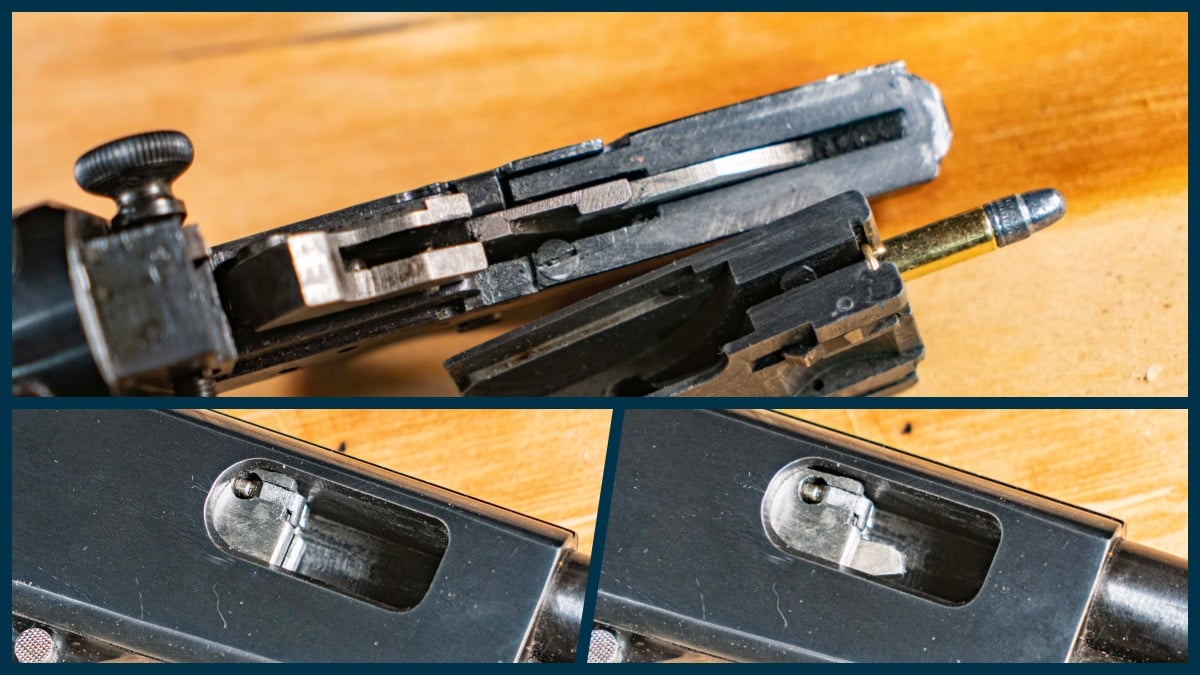
Effectively, the bolt system only cared about the rim of the cartridge, which allowed it to cycle everything from .22 Short to .22 Long Rifle. Slim, compact, and mechanically clever, this is the kind of machining that makes old guns like the Model 61 beautiful collectibles that are still capable shooters even after generations of use.

Since the gun features all steel parts minus the wood furniture and polymer butt plate, it is heavier than it looks. Here’s a rundown of the basic specs:
- Weight: 5.6 pounds
- Length: 41 inches
- Barrel Length: 24 inches
- Sight Radius: 19.25 inches
- Length of Pull: 13.38 inches
- Chamberings: .22 Short, Long, and Long Rifle
- Capacity: 14 LR, 17 L, 20 S
- Trigger Pull: 4.59 pounds
With a capacity of up to 20 rounds, it’s no wonder the Model 61 made an appealing plinker. But the trigger is surprisingly nice for such a gun. There’s effectively no take-up to the wall. You start right at that 4.59-pound break, which was notably consistent over 10 pulls on my gauge. It’s stiff, short, and predictable.
I have longer arms, and the gun still shoulders quick and comfortably even with a length of pull that is below that of modern rifles and shotguns that are normally 13.5+ inches. The sights also pop up very naturally for my eye when I weld my cheek to the stock.
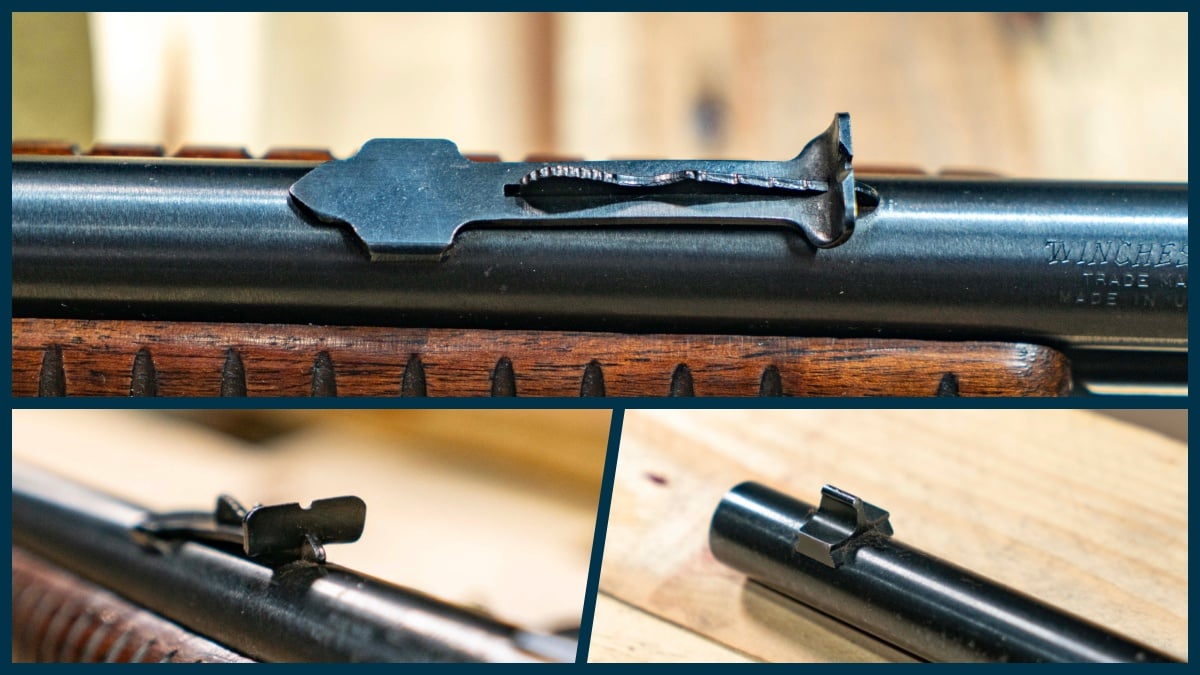

I was concerned the gun was so slender it would be awkward to sight, but it’s really not. The sights are rear-adjustable for elevation and drift-adjustable for windage at the front. Beyond that, they are your basic notch and front post affair. There are grooves cut into the receiver that could host an optic. The side ejection on the Model 61 makes this much easier than earlier top-ejecting designs.
There’s a basic cross-bolt safety on the front of the trigger guard and a rear action release. Both are textured. The trigger is also deeply grooved. Loading is done at the front of the magazine tube with a long, spring-loaded plunger that locks at the top and feeds rounds positively down the tube.

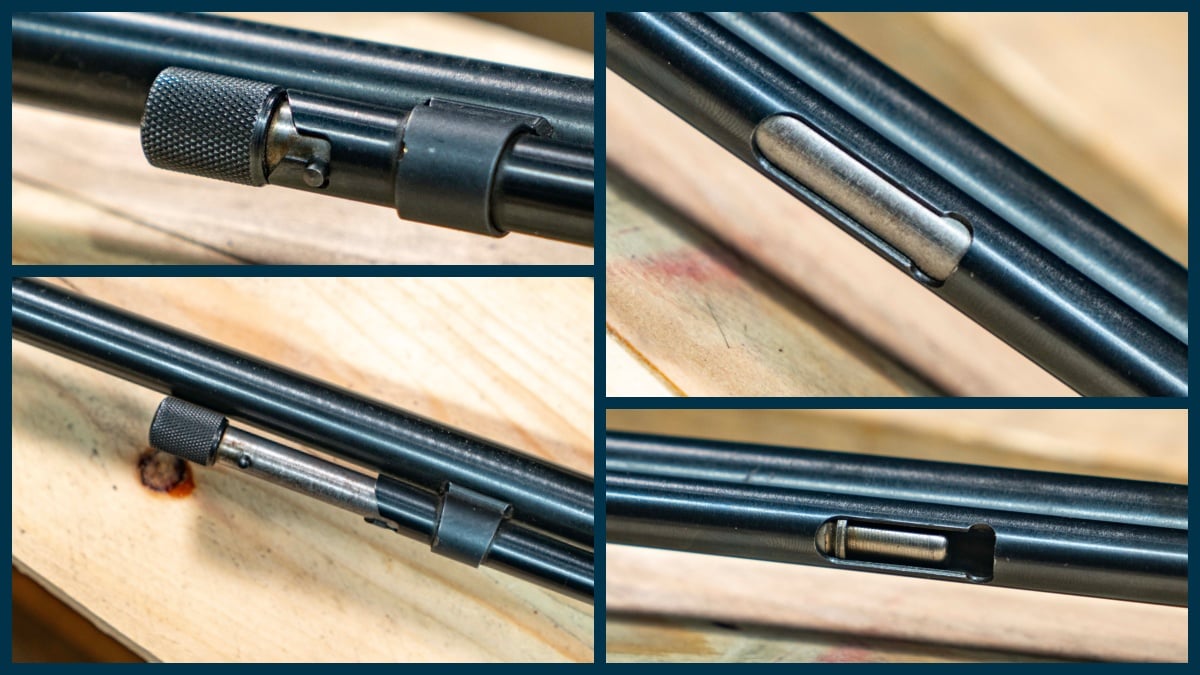
As was common with many designs of the time, the Model 61 has a captured takedown screw near the rear stock. This allows you to separate the two halves for transport and pull out the bolt and trigger system for maintenance.
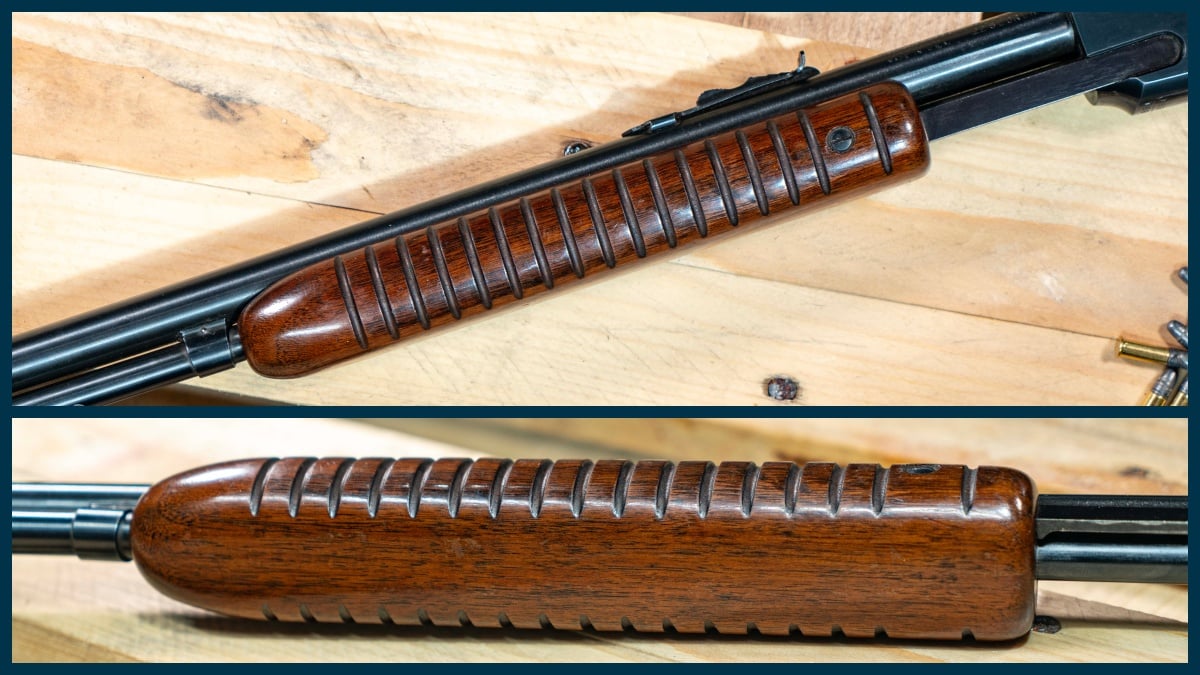
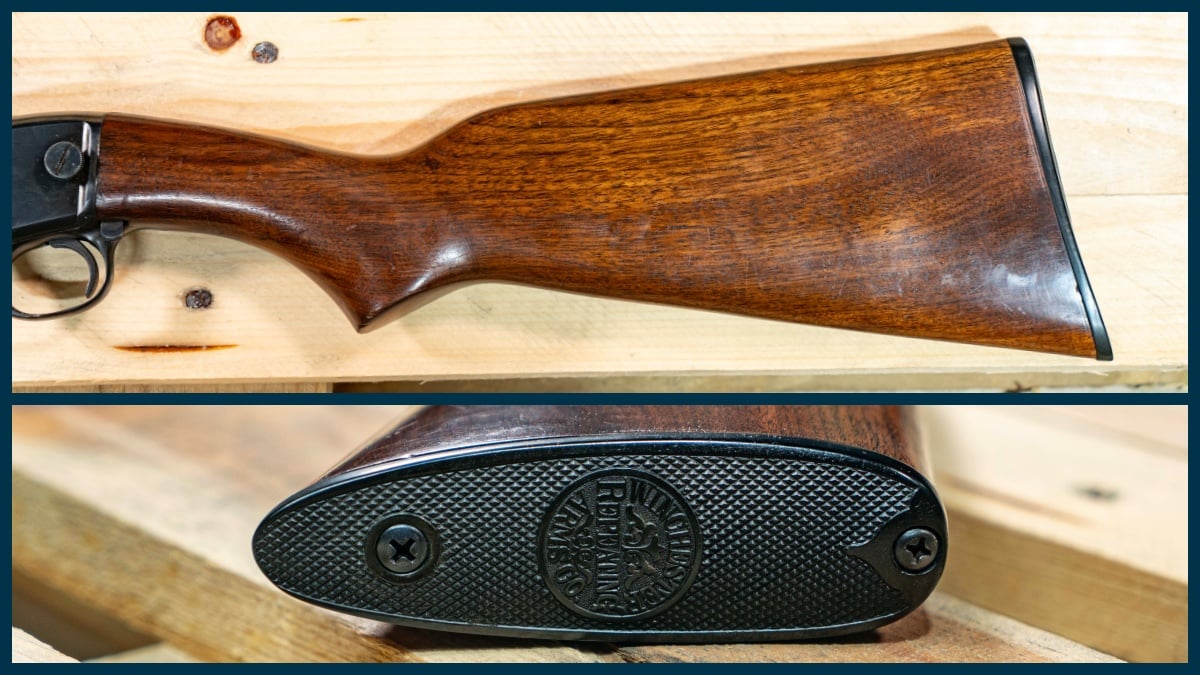
There’s no texturing to the rear stock and semi-pistol grip other than branding and light checkering on the butt plate. The forend has deep grooves on the sides and a boxy shape that is very positive in your hand.
Range Testing
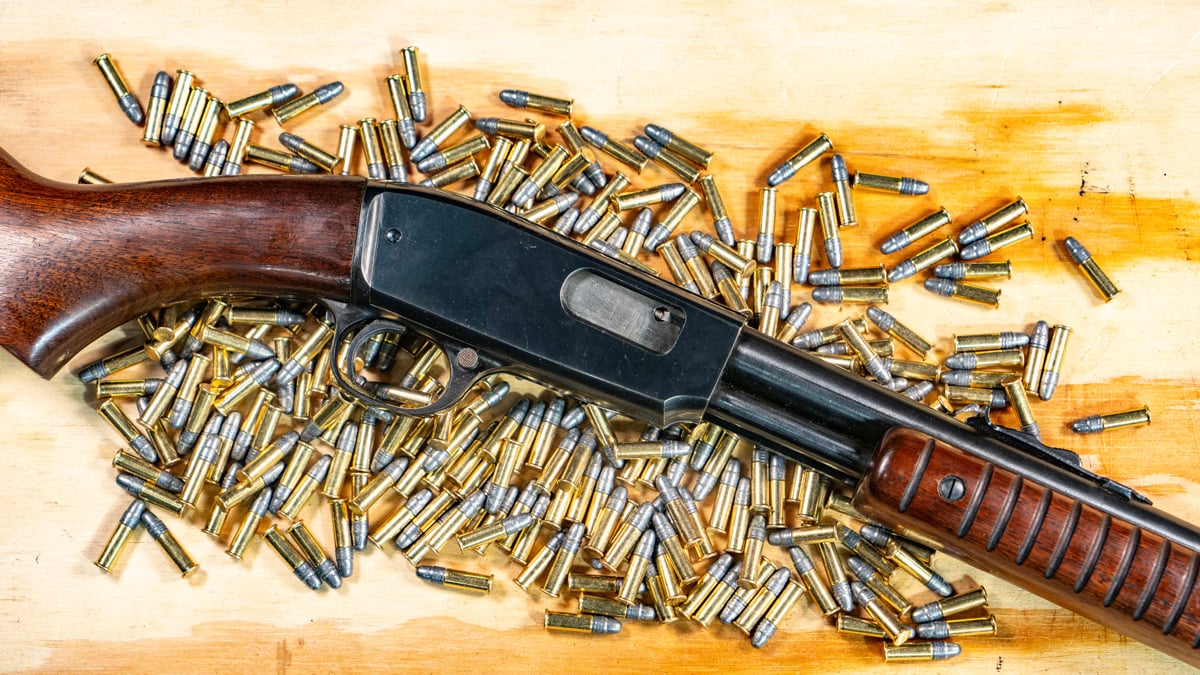
At 5.6 pounds, this gun has almost no recoil beyond a small bump that’s just hard enough to make it gratifying when fired. Despite the very slender profile, I had no issues getting onto the sights while shooting from a standing position or off my elbows.
However, the profile is so low that it was a challenge to fire the rifle off a rest at my local range. It was hardly meant to be a bench gun anyway. The sights are basic, and I’ve never been overly keen on notch sights. My groups below are from several range trips at 25 yards.

I must admit I expected better. Even subtracting some of the fliers, I have to believe this gun should be capable of something closer to dime-size groups between the 24-inch barrel, 19.25-inch sight radius, and solid steel construction. I imagine I could do better with some more practice, and the gun could certainly serve as a close-range companion for small game.
My ammo selection consisted of primarily several hundred rounds of 40-grain Federal Range Pack .22 LR. This round-nosed ammo proved very reliable with no issues feeding during my testing. The stoke is very short to the pump, so there’s not much risk of short-stroking the action. Plus, the bolt design creates a very positive feeding system for the gun.

I can tell why the Model 61 became one of the go-to plinkers when it came on the scene. It’s simply a pleasure to shoot between the reliability, pump-action design, and low-recoiling ammo. With 14-20 rounds of .22 in the tube, it also gives you a healthy amount of ammo before reloading.
There are more budget-friendly slide-driven rifles still in production today. However, the Model 61 fills that collectible yet functional niche many shooters are looking for now.
Related: Henry Octagon vs. Rossi Gallery Rifle – Pump .22 Showdown
Loading is about the only thing that I would ding the gun for on the range. The magazine tube is easy to fill, but you do have to invert the firearm and reload near the front of the barrel. The spring-loaded plunger is not captured, so make sure you also don’t let it fly off if you’ve loaded a full complement of ammo.
Pros & Cons
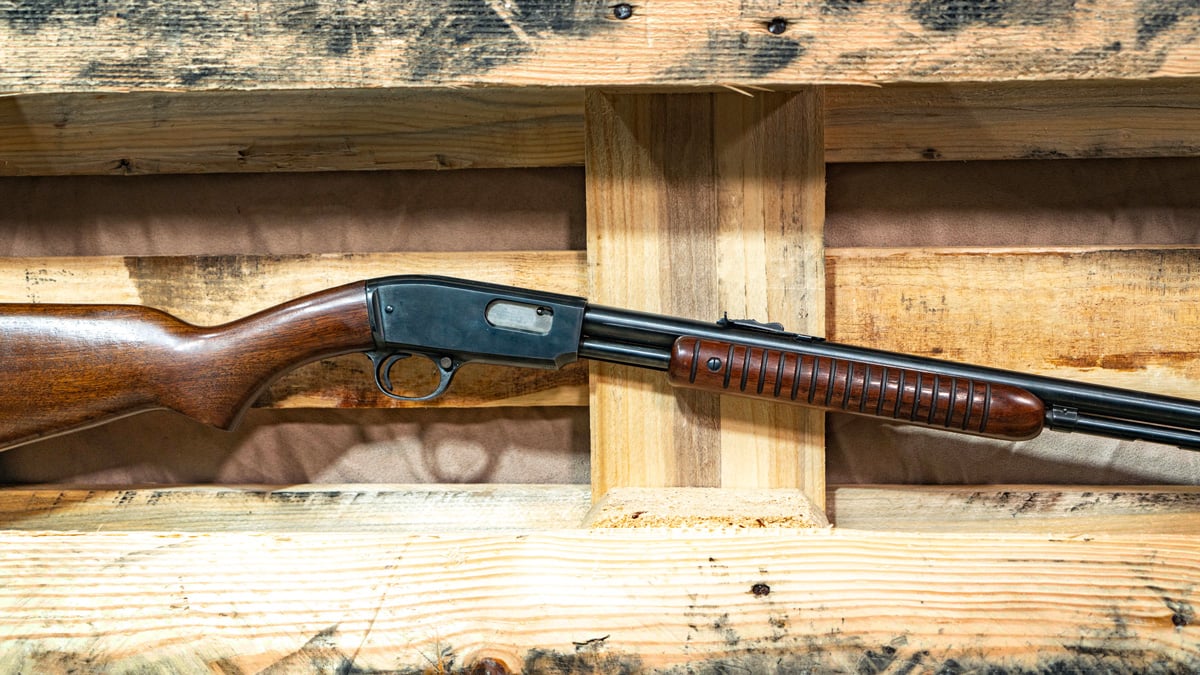
Here’s my shortlist of the pros and cons:
Pros:
- Very fun on the range
- Cheap to shoot
- Reliable and accurate
- Generous capacity of 14-20 rounds
- Collectible qualities
- Fairly available for an older gun
- Shoots .22 Short, Long, and Long Rifle
- Sleek and mechanically interesting
- Side-ejecting design
- Easy takedown and cleaning
Cons:
- Basic notch sights
- Relatively pricy for a plinker
- Somewhat heavy for its size
-
Magazine tube is slower to load
Final Thoughts

Collectability is a fine characteristic, and I was honestly surprised by how much attention this little gun got from other range goers. Several mentioned owning them as children as gifts from their parents.
The Model 61 is a joy to shoot and shoots well. That’s a praiseworthy thing, but the fact that this gun can reliably create memories from one generation to another makes it a lifetime investment. This is one of those guns that I would cherish for decades and look forward to handing down to a younger shooter.
That’s a quality you just can’t find in every firearm.