PPK History
Designed during the interwar period between World War I and World War II, the original Walter PP pistols were targeted primarily at law enforcement agencies in Europe. Indeed, that is where we get the Walther-assigned names PP (Polizeipistole: police pistol) and PPK (Polizeipistole Kriminal: police pistol criminal “office”).
Regardless, Walther was happy to pursue military contracts as well, which it did with limited success given the relatively small size and chambering of the PP series of handguns. Carl Walther GmbH developed the guns in the 1920s with a series of patents filed by Fritz Walther, son of famed gun designer Carl Walther.

Fritz Walther had a particular interest in the rising market for semi-auto handguns, which was reflected in his earlier work on the single-action-only .25 ACP Model 8 with its concealed hammer in the 1920s. The Model 8 was a significant departure from Walther’s earlier Model 1 and Model 4 pistols, which were simple blowback designs that lacked the takedown system, exposed hammer, and enhanced safety later featured on the Walther PPK.


Further Walther patents in the 1920s and early 1930s included a single-action/double-action design for a gun featuring a decocker safety. This furthered a move to an exposed hammer that was increasingly in vogue with Western militaries. These patents eventually converged to create the first Walther PP pistols in 1929. The more compact PPK itself followed in 1931.
Related: Classic Carry Piece – Walther PPK/s
While the Walther PPs saw relative success with European law enforcement, the smaller size of the PPK made it appealing for comfortable, concealable carry. It did gain some traction for military service, particularly as officer-issued sidearms and highly decorated gift pieces.

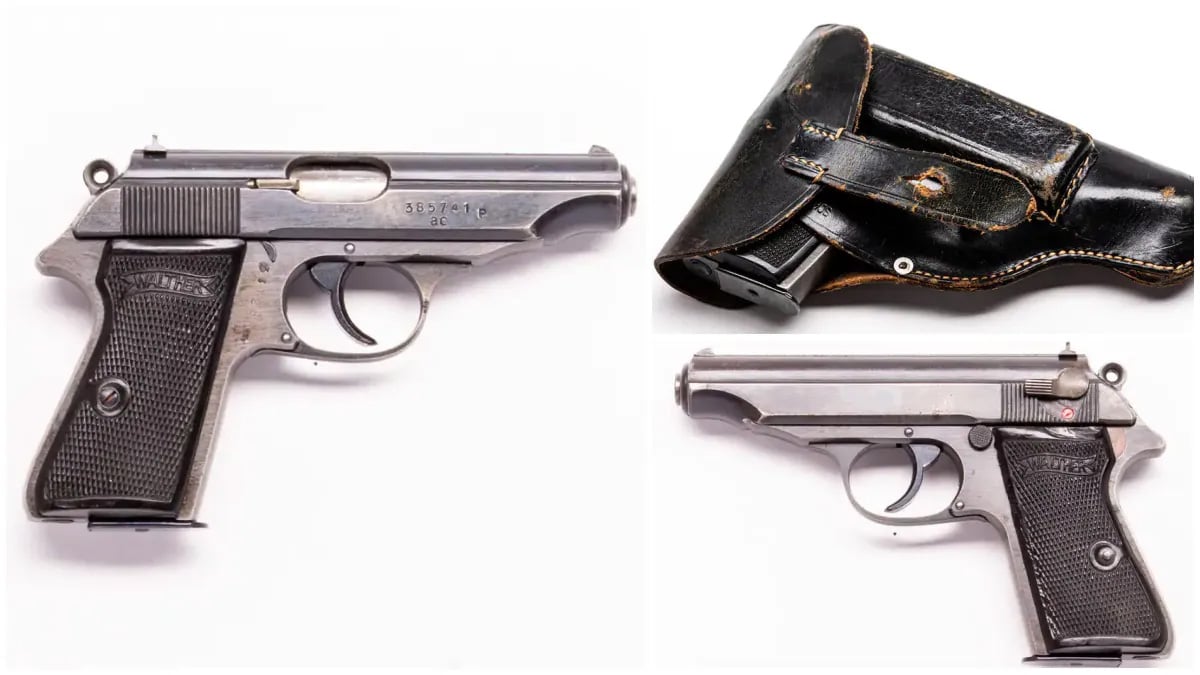
That’s not to suggest the guns didn’t find themselves on the front lines during WWII. While not nearly as common in combat as the German army’s larger standard-issue Walther P38s and Luger P08s, the Walther PPK did make occasional showings, particularly among the more select German military elements.
President Truman’s personal White House physician, Dr. Wallace H. Graham, recounted encountering one such gun during his time of service after he dashed into a German pillbox to avoid incoming artillery fire:
Walther’s PP and PPK pistols continued to serve after WWII, particularly with European law enforcement. They were popular war souvenirs among American GIs, and Walther itself tapped into the American market for such firearms. As the Cold War set in, Walther fled to West Germany. Allied forces initially barred the German-production of firearms, so Walther partnered with the French company Manurhin to create the parts needed for its PP pistols until 1986.

Walther also began production of the PPK inside the U.S. in the 1980s, eventually partnering with Smith & Wesson to create a slightly modified version manufactured in the states.
Design & Features
Despite hosting many design features that date back to nearly a century ago, there’s something oddly classy yet modern in the Walther PPK’s all-metal design. It’s a hefty gun featuring a simple straight-blowback system with a fixed barrel.

The recoil spring rides along the fixed barrel as a guide, while the slide reciprocates to the rear during firing. All of Walther’s PP designs used single-stack magazines holding anything from .22 LR, .25 ACP, .32 ACP, and .380 ACP to the uncommon 9x18mm Ultra. The latter was an attempt to more or less copy the Russian-designed 9x18mm Makarov, which was itself used in several guns that closely resembled the Walther PPK during the Cold War.
Related: S&W Walther PPK/s Review – Obsolete or Concealed Carry Gem?
Here are some general specs for a modern-production .380 ACP PPK/s:
- Weight (Empty Mag): 1.475 pounds
- Length: 6.7 inches
- Sight Radius: 4.1 inches
- Width (Widest Point): 1.2 inches
- Height: 4.8 inches
- Capacity: 7+1
- Double-Action Pull: 11.5+ pounds (advertised 13.4)
-
Single-Action Pull: 4.4 pounds (advertised 6.1)

One of the real technological advancements featured in the PP/PPK pistols at the time of their release was the use of a double-action/single-action trigger, decocker, and exposed hammer.
Exposed hammers were commonly requested on military gun designs at the time. But the DA/SA trigger inside the small PPK really set it apart from many of its contemporaries, which sent companies like Mauser on the hunt for designs to compete.

Related: Mauser HSc Pistol Review – Captured German History
The safety lever doubles as a decocker. Pushing it down will drop the hammer if it’s cocked and safe the pistol. Pushing the safety up readies the gun for shooting and moves a hammer block guarding the firing pin.

This gives shooters a heavy trigger pull for their first shot, which is followed by a much lighter and shorter single-action trigger for follow-up shots. Sights and grip texture were basic, even crude, compared to modern firearms, which was the standard for handguns when the PPK first arrived on the scene.
Variants & Copies
What’s the saying? Often imitated, never duplicated. You could certainly say that about the Walther PPK. Several nations pursued similar designs after World War II to equip their own armies and police forces.

In fact, many have become strikingly successful firearms in their own right. The Russian-made Makarov PM (1951) served in many Soviet countries such as Russia, Bulgaria, and East Germany. These guns were made in the millions and are still showing up in military conflicts around the world.
Related: Makarov PM – Russia's Warfighting 'Walther'
The Russian Makarov PM pushed the envelope with its 9x18mm Makarov cartridge, which was one of the hottest rounds ever run in Walther’s simple blowback design featuring a fixed barrel.

The Czech government during the Cold War made its own designs with the small vz. 50 and later double-stack CZ 82 pistols. Though they would heavily protest any claim that the Radom P-64 was a “Walther” in disguise, the Polish military also fielded a gun that’s clearly inspired by the PPK.
Related: Vintage Concealed Carry – The Polish Radom P-64
While the chamberings changed to the harder-hitting 9x18mm Makarov for many of the military variants, the basic design (hinged trigger guard, decocker safety, fixed barrel, etc.) generally remained remarkably similar to the original Walther PP firearms. The Walther design became so iconic many uninitiated commentators simply label all the above guns as PPKs.
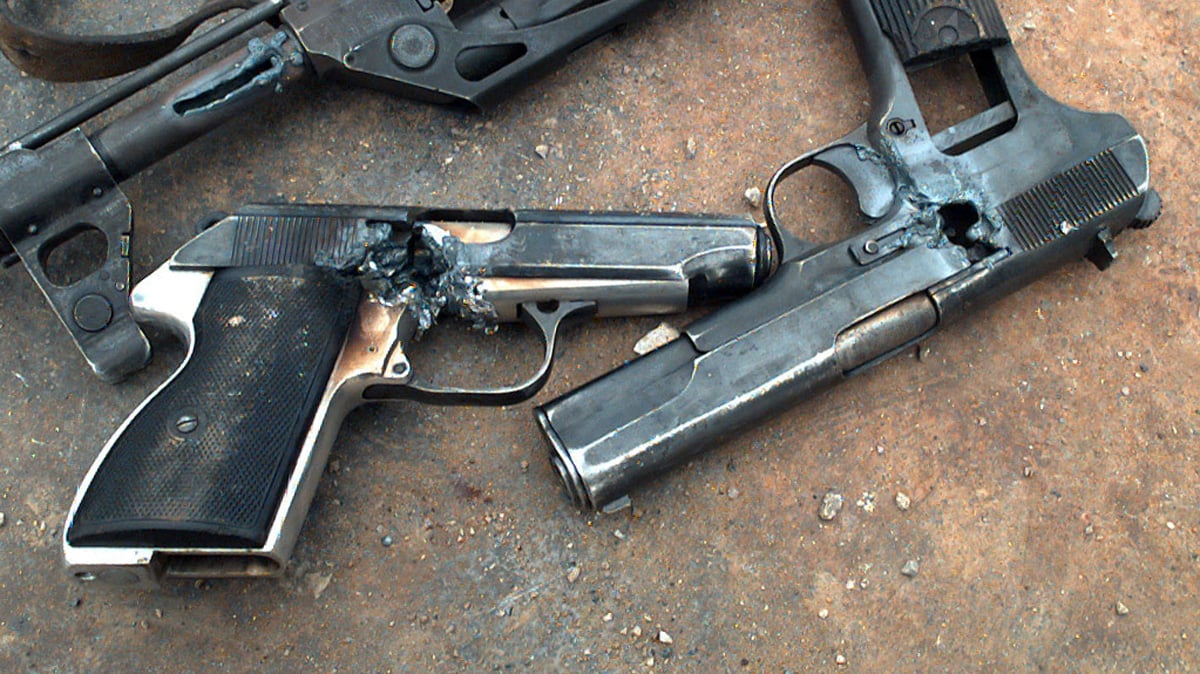
Bersa hopped on the bandwagon in 1995 with its Thunder 380. Essentially an unabashed, budget-friendly PPK clone, the Thunder 380 targeted an American market hungry for increasingly rare or pricey PPK pistols. It used a lighter aluminum frame over the all-steel PPK and replaced the trigger-guard takedown with a disassembly lever. Yet, the Bersa remained a PPK at its core.
Popularity Today

I only occasionally bump into folks carrying the Walther PPK/s these days, but I get asked about the gun a lot more than most of the other firearms I’ve tested over the years. The gun is iconic. Its post-WWII role as a souvenir for American GIs and regular on the silver screen in Hollywood movies has done a lot to make it likely more famous today than during its service life.
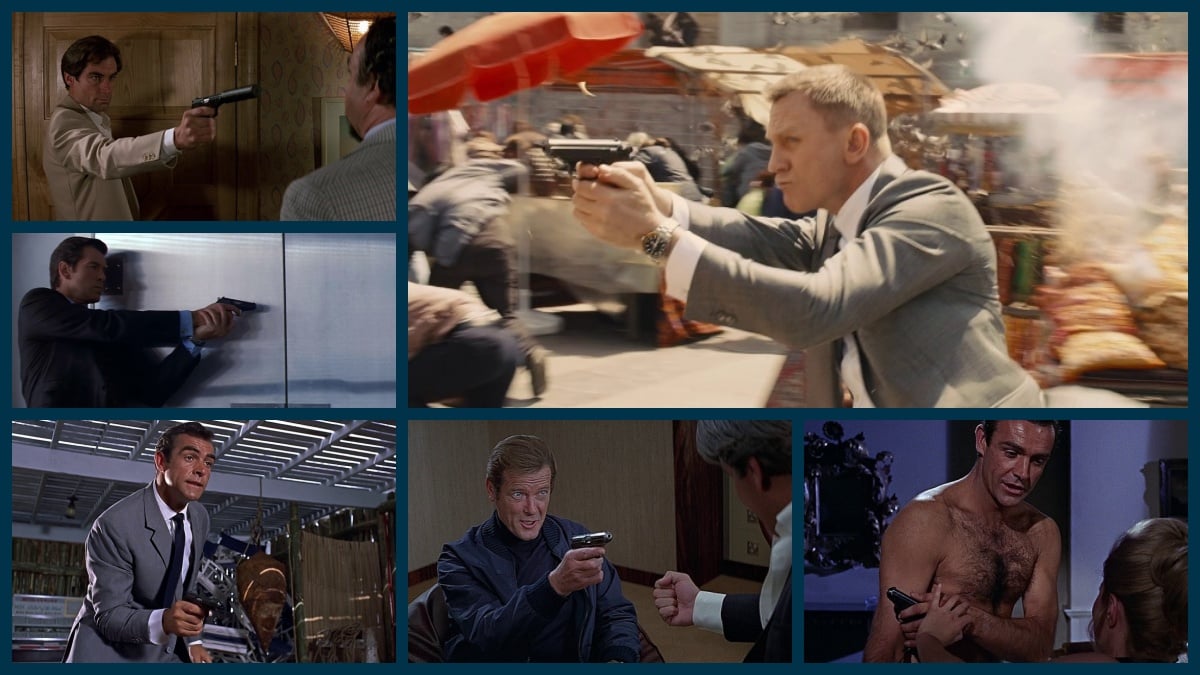
Even the non-initiated can recognize the Walther PPK when it appears in a starring role. In fact, I will go out on a limb and suggest that no one thing has done more for the legacy of the PPK in America than the James Bond movies. There, I said it. Though, Walther’s PP-series pistols have owned credit lines in a lot more than secret agent movies.

On a more serious note, Walther never really stopped its love affair with the PPK and now has it listed on its website alongside the tag lines “we invented concealed carry” and “a legendary design returns.” Offered in a black or stainless finish with an option for walnut grips, these guns follow the updated PPK/s pattern. They can be had in either .22 LR or .380 ACP.
Final Thoughts

It’s a cultural icon and proven performer. More than that, the Walther PPK is a gun design that has inspired firearm enthusiasts and other gun designers since its arrival more than nine decades ago. It’s my personal hope the gun is in production to celebrate becoming a centenarian in a few years.
In any case, I have had the pleasure of testing the modern PPK/s, and it’s a gun I recommend any shooting enthusiast at least test. Despite its age, it just feels right in your hands. It’s a functional piece of firearms history that is still filling screen time in movies and the holsters of Walther PPK lovers around the country to this day.