Quick Comparison
To keep things fair, I elected to compare the base factory models for the 10/22 and Wildcat. The 10/22 offers a world of custom options, including plenty of factory-made variants. That is a feather in its cap that the limited options of the Wildcat cannot compete with yet.

There were things I immediately liked and disliked about both of these rifles. I enjoy the vintage feel and aesthetic lines you get with wood-stocked guns, but the wood used in the standard 10/22 these days tends to ding somewhat easily. That’s fine on a plinking gun. It’s just that the polymer stock used on the Wildcat is lighter, offers more color variations, and is less prone to damage from weather and hard use.
Related: New Hunting Rimfires We’re Excited to Try in 2024
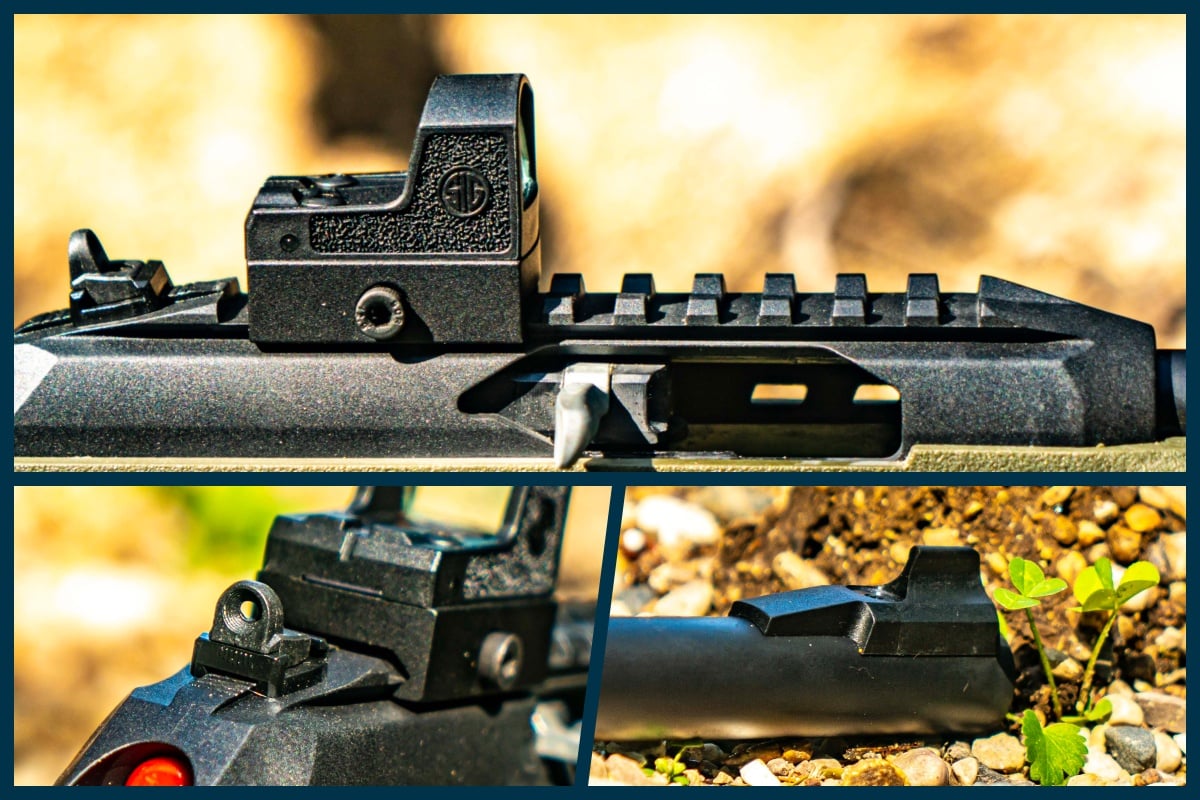
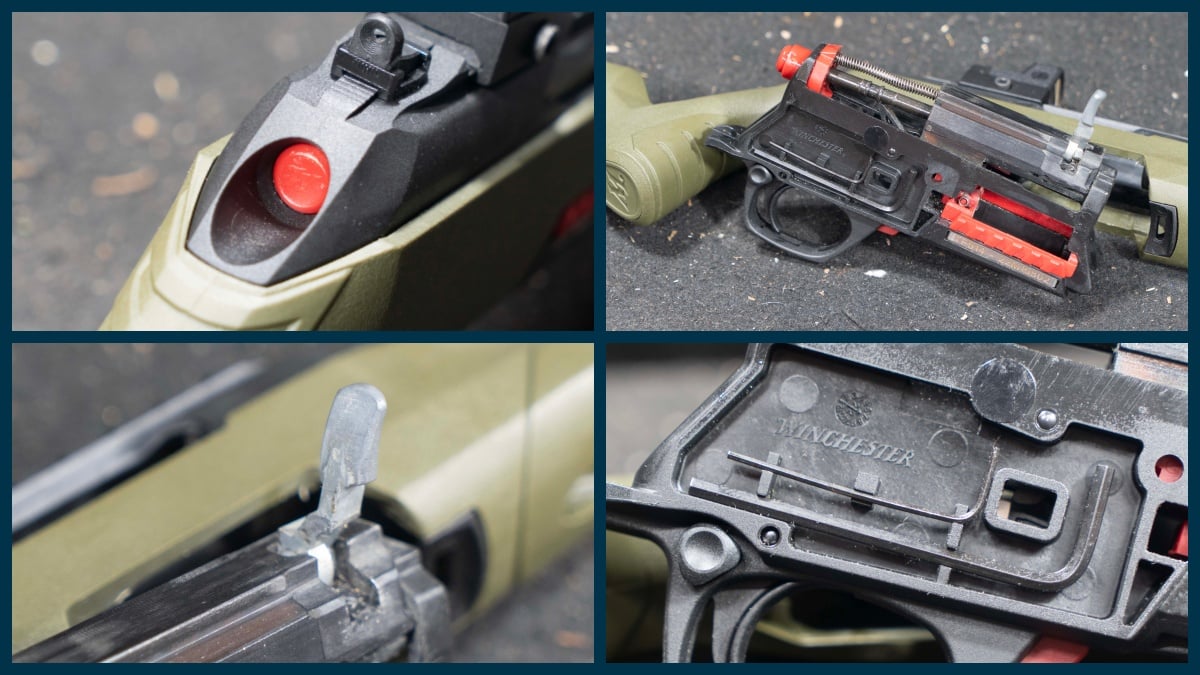
I like the longer sight radius and peep-style sights used on the Wildcat more than the notch and front bead on the 10/22. I also like that the Wildcat has a far easier takedown system that includes built-in tools for disassembly and sight adjustments. It even uses most Ruger 10/22 aftermarket magazines.
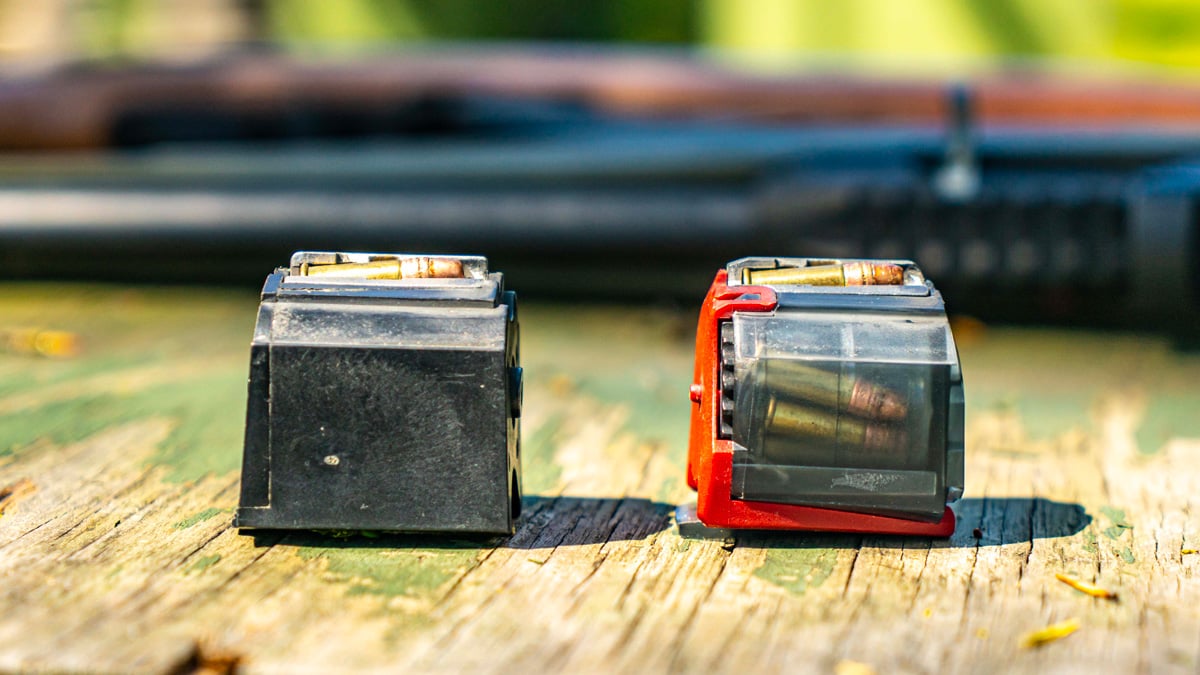
On the other hand, the 10/22 with its classic lines is mechanically simpler, has a decades-long track record, and offers a massive aftermarket for parts and accessories. It already comes in takedown models and heavy-barrel target options. The Wildcat is what it is – for now – and simply offers a wide range of stock colors and some wood-stocked options. Both guns can be had with suppressor-ready barrels.
These guns feel very different in my hands. The 10/22 feels bulkier with its wider wooden stock, and the Wildcat seems nimbler and more controllable, thanks to its lighter weight and slender profile. Reliability for both has been excellent for .22 LR rimfire rifles.
Ruger 10/22 Specs & Features

Ruger’s 10/22 uses a simple blowback operating system. The chunky, squared-off bolt recoils to the rear along a thin guide rod after firing. The recoil spring on the guide rod pushes the bolt back to its forward position. There’s a stock metal buffer pin at the rear of the receiver to help disperse the bolt’s reward energy. Shooters commonly upgraded that part to a polymer option to extend the gun’s shooting lifespan.
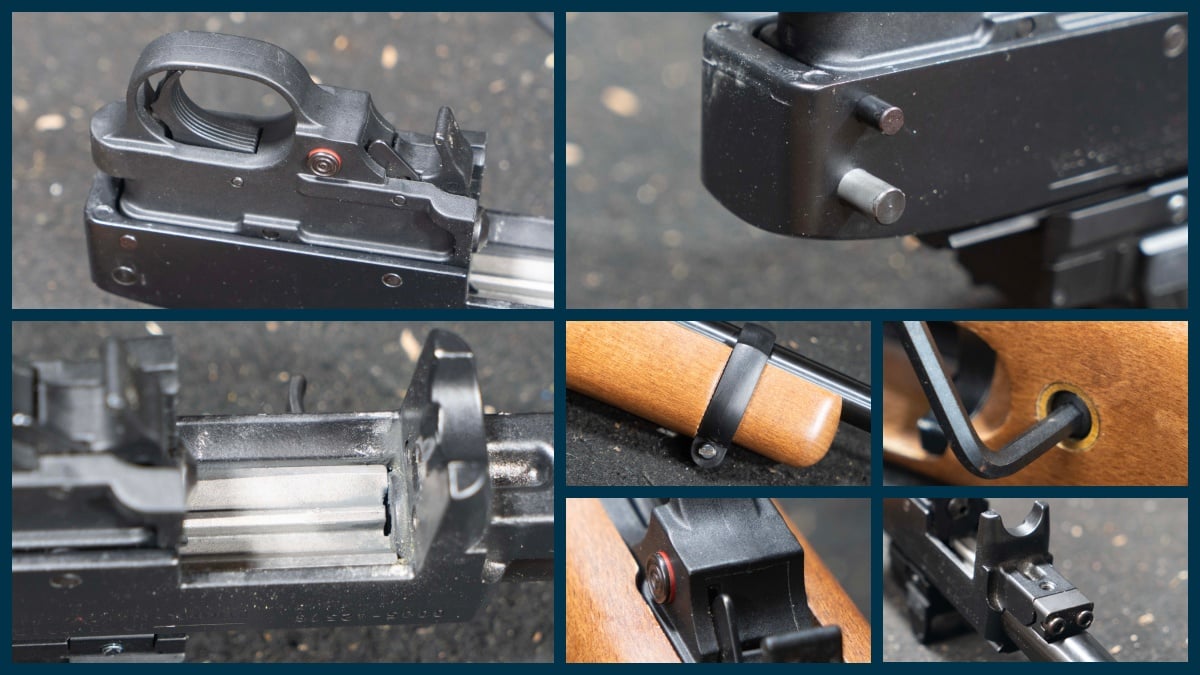
The bolt, guide rod, and recoil spring all operate inside a large channel inside the receiver. The polymer trigger group is held in by a series of pins that connect it to that receiver. Disassembly requires an Allen wrench. Disassembling the 10/22 and even readying it for an optic is a more involved process than it is with the Winchester Wildcat.
Related: My First .22 Plinker – Budget Ruger 10/22 for the Win
Here’s a quick rundown of the specs for this base-model Ruger 10/22:
- Weight: 5 pounds
- Length: 37 inches
- Sight Radius: 15 inches
- Barrel Length: 18.5 inches
- Length of Pull: 13.5 inches
- Stock Width: 1.9 inches
- Widest Point: 2.11 inches
- Trigger Pull: 4.93 pounds
The stock trigger on the 10/22 isn’t anything to write home about. It’s crisper than the Wildcat and just a touch heavier at 4.93 pounds, based on the average of 10 pulls from my trigger gauge. I think the real advantage to the 10/22 trigger group is that it can be popped out as a single unit and upgraded to whatever custom kit you want with very little effort.
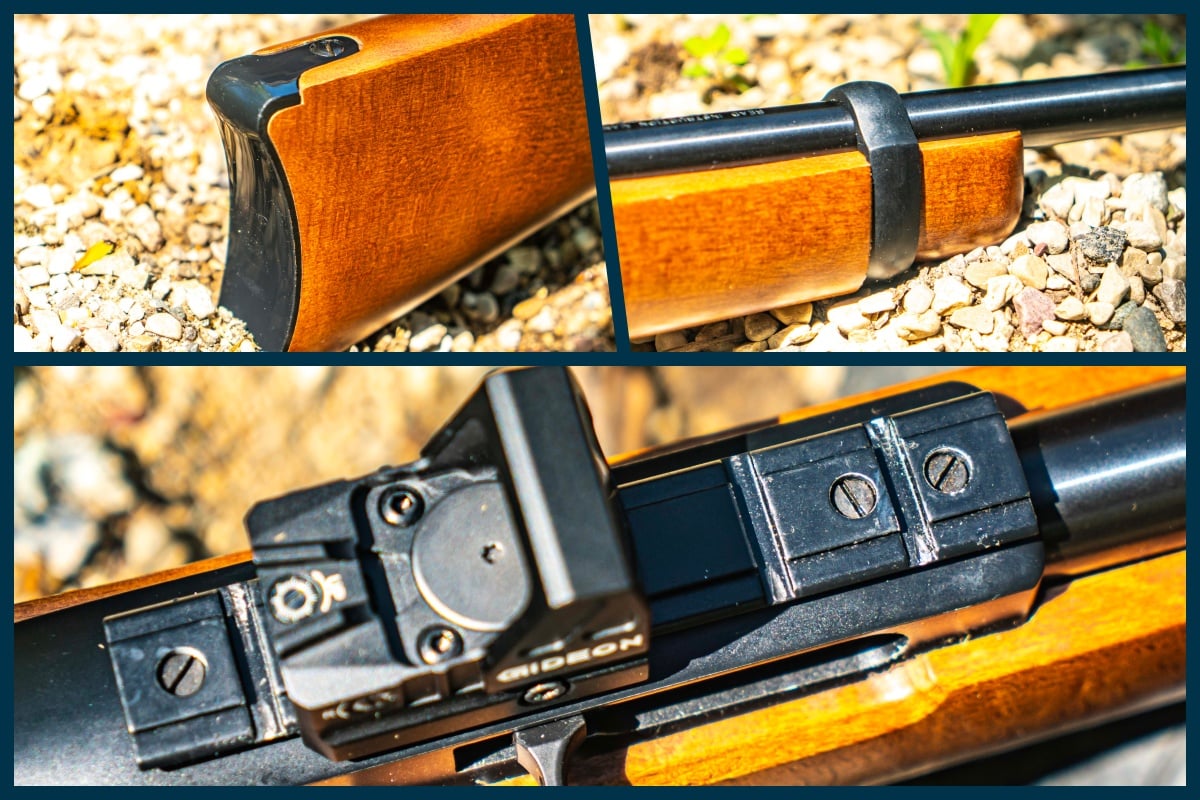
At 5 pounds, the gun is light enough to be very easy to wield while still feeling like a true rifle in your hands. The length of pull is shorter than I prefer at just 13.5 inches. It’s still enough for quick shouldering and a solid cheek weld.
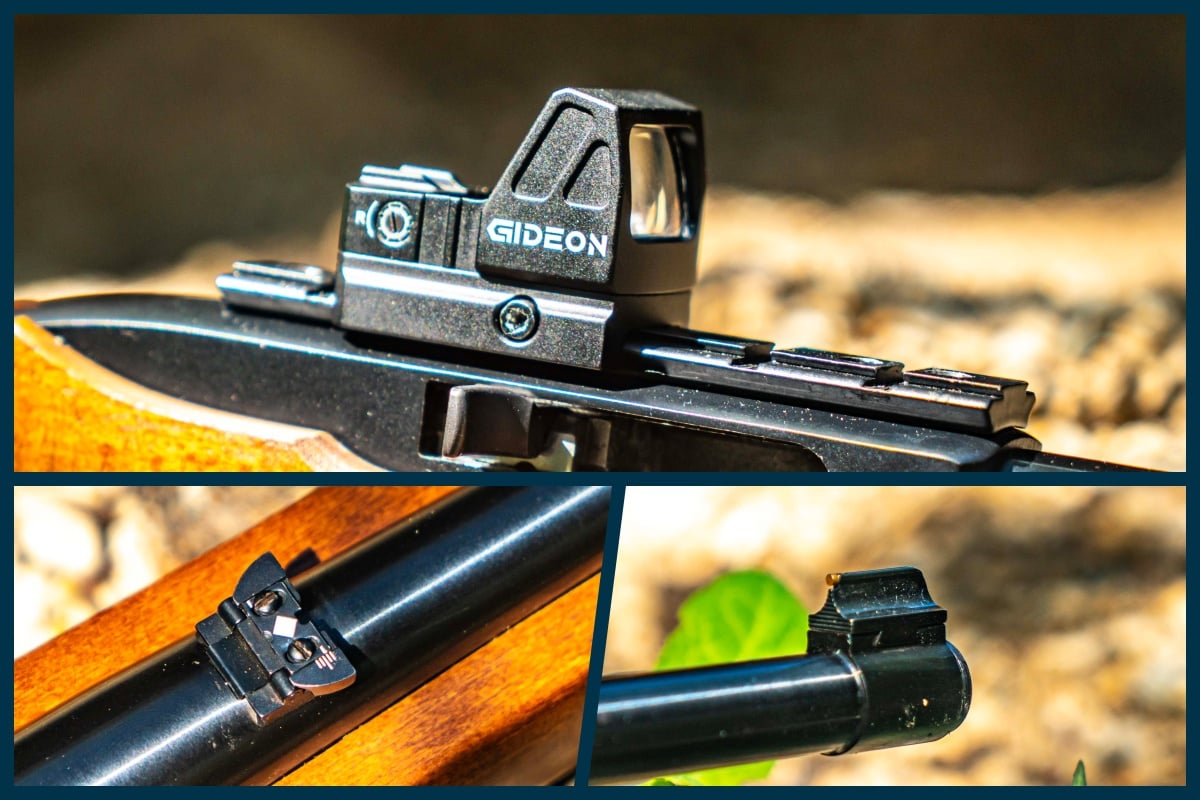
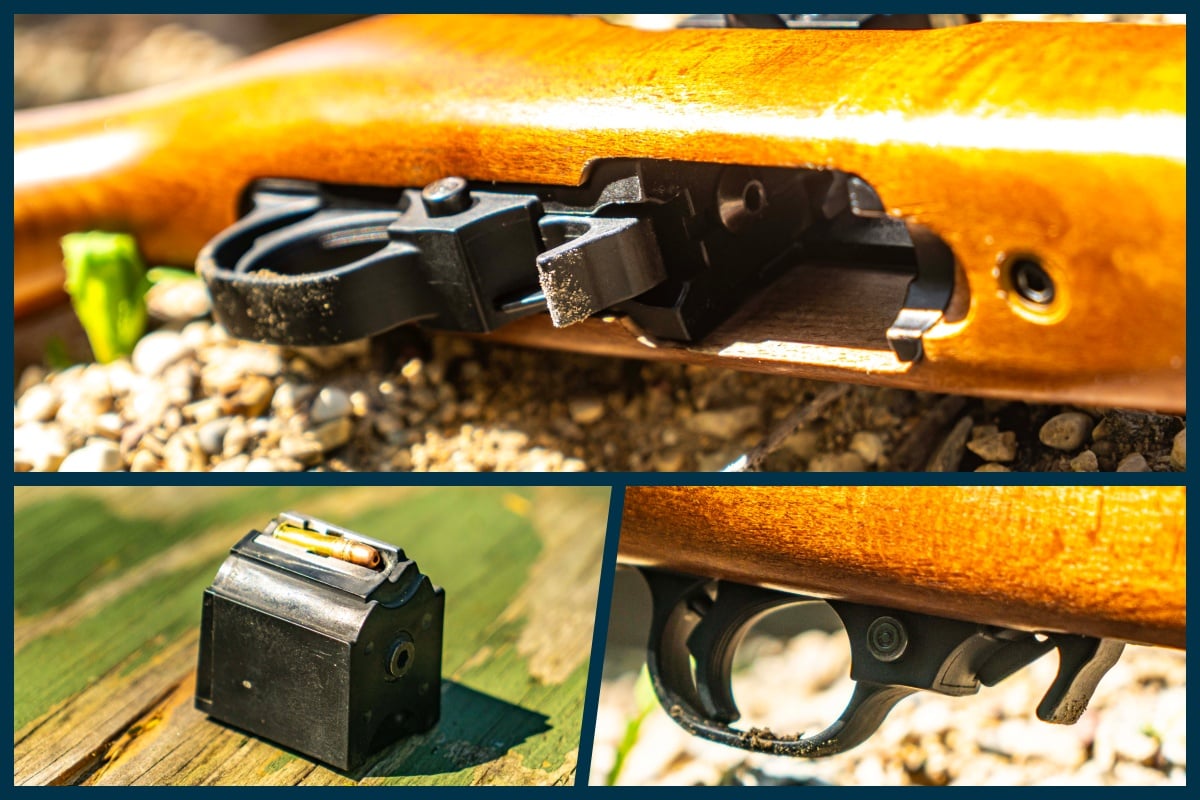
You can run the 10/22 with just its iron sights, or you can attach a length of Picatinny rail to the top of the drilled and tapped receiver. It’s not a huge deal, but this adds more parts and screws to the gun. Similarly, the barrel is fixed to the receiver with a lug and two screws. I have seen these walk themselves loose after extensive shooting and ruin a gun’s zero. So, you’ll likely want to add Loctite to both your barrel screws and your rail screws at some point.
Your average new 10/22 these days comes with a polymer barrel band. New standard 10/22s have far more polymer overall in them than the older versions, and many factory guns also lack sling attachment points.
Wildcat Specs & Features
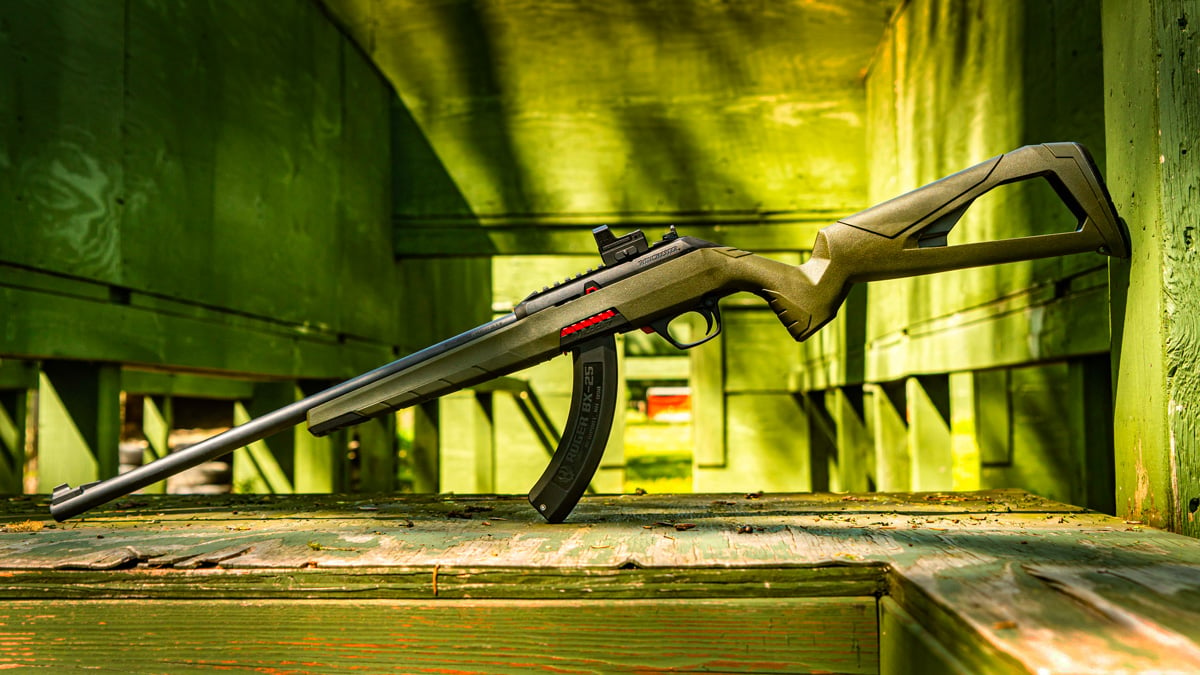
Winchester basically looked at the aging 10/22 design and decided to fix a bunch of pesky shortcomings that have annoyed shooters like me for quite some time. The gun is still a simple blowback design like the 10/22, and it even runs on most 10/22 aftermarket magazines.
The list of upgrades I like are many: hold-open feature after last round, one-button takedown with internal tool storage, integral Picatinny top rail, windage and elevation-adjustable peep sight, external bolt release, improved magazine releases, integral sling mounting points, integral front Picatinny accessory rail, fewer pins and screws, Anschütz-like near-vertical grip profile. The list goes on, but you get the picture.

Related: Winchester Wildcat Brings Polymer Rimfires Into the Modern Era
Here’s a quick rundown of the specs for this base model:
- Weight: 4 pounds
- Length: 36.4 inches
- Sight Radius: 22.1 inches
- Barrel Length: 18.25 inches
- Length of Pull: 13.75 inches
- Stock Width: 1.61 inches
- Widest Point: 2.15 inches
- Trigger Pull: 4.57 pounds
There’s a springy feel to the break of the trigger. It’s light enough to lend itself to accurate shooting. There’s a very short take-up to the wall, which offers a stiff break with a brief amount of mush to it. I prefer the 10/22’s trigger, personally, but it’s acceptable for a stock gun at this price point.

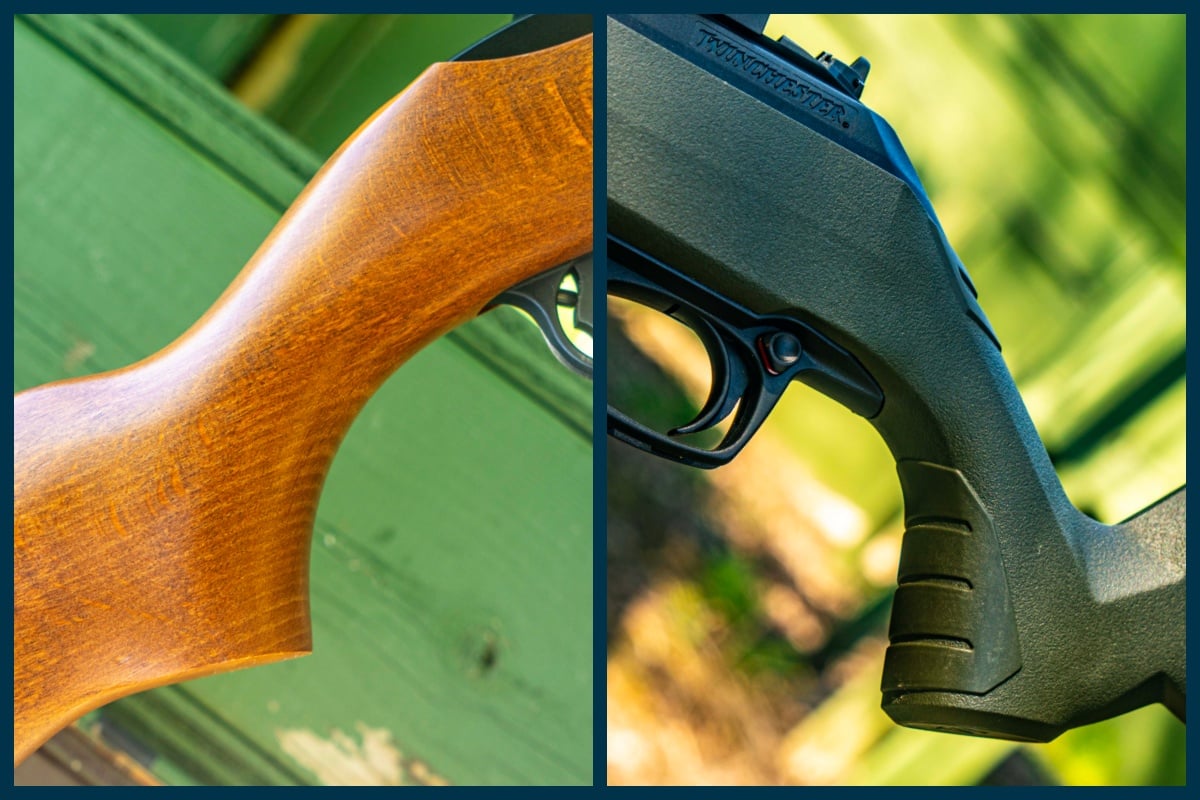
I handed this gun to another shooter at the range the first time I had it out for testing alongside the 10/22. Interestingly, that shooter said it felt smaller with a shorter length of pull. However, the Wildcat’s LOP is actually longer than the standard 10/22. I suspect the 22-percent lighter weight and thinner stock profile made the gun feel less substantial when he was shooting.
I’m a fan of the weight, looks, and feel of the Winchester Wildcat. It’s small and lightweight, and that’s what I expect from a .22 LR plinker. However, not everything is a home run on Wildcat.
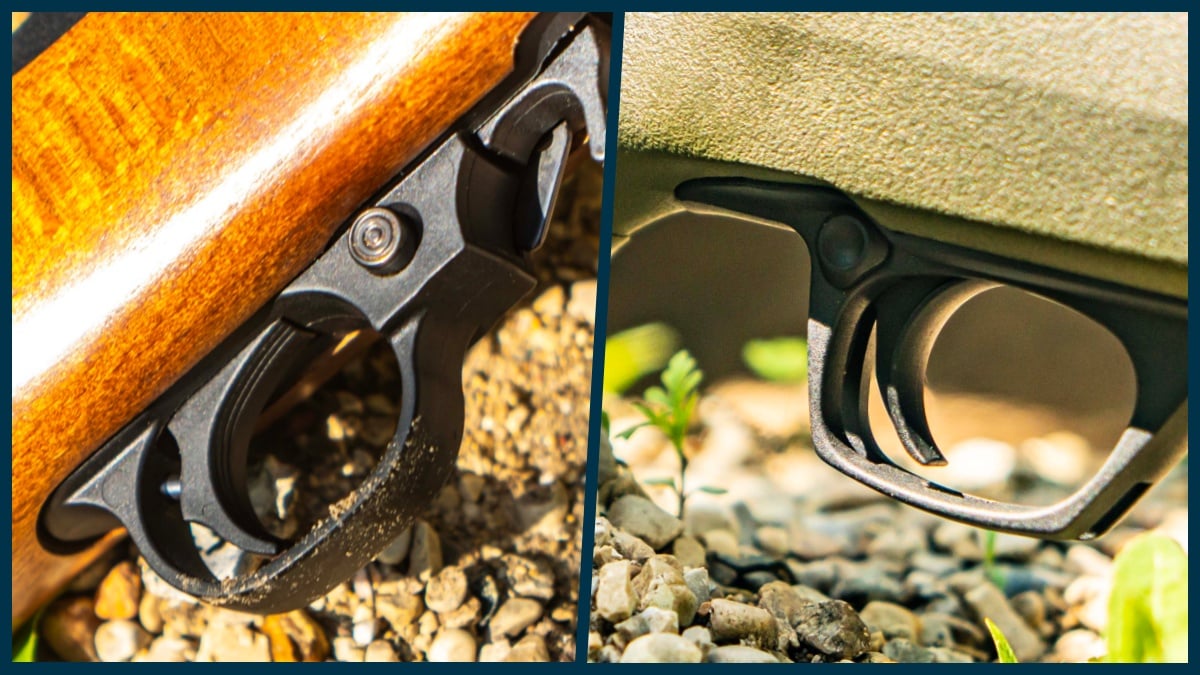
I prefer the 10/22’s forward button safety to the Wildcat’s safety at the rear of the trigger guard. It seems like a small thing, but rear crossbolt safeties like the one on the Wildcat force an unnatural movement of your shooting finger and hand. You either have to move your trigger finger behind the trigger or adjust your hand to use your thumb to actuate the rearward safety.
It’s biomechanically inefficient. I’ve also found myself fumbling and missing shots on fast-flying ducks because of similar safeties on my hunting shotguns, and I dislike them even more on semi-auto rifles.
Shooting Comparison & Ammo Test

I’ve run well over 1,000 rounds through both of these rifles for just this testing. That includes a healthy mix of eight different types of ammo. Both guns ran with predictable reliability with just a few minor malfunctions that are common with cheap .22 LR ammo. Frankly, I cannot say I saw any difference between the two guns for reliability.
Recoil is barely worth mentioning for these guns. I did shoot the Winchester Wildcat’s peep sights a bit better at 50 yards than the Ruger 10/22’s notch sights. I chalk that up to the fact I normally shoot peep-style sights better anyway.
For true accuracy testing, I mounted the same U.S. Optics TS-12X scope on both guns and tested eight different types of ammo at a distance of 50 yards. All shooting was done on the same day to ensure there was no difference in the shooting conditions.
Related: U.S. Optics TS-12X Scope Review – Affordable & Compact
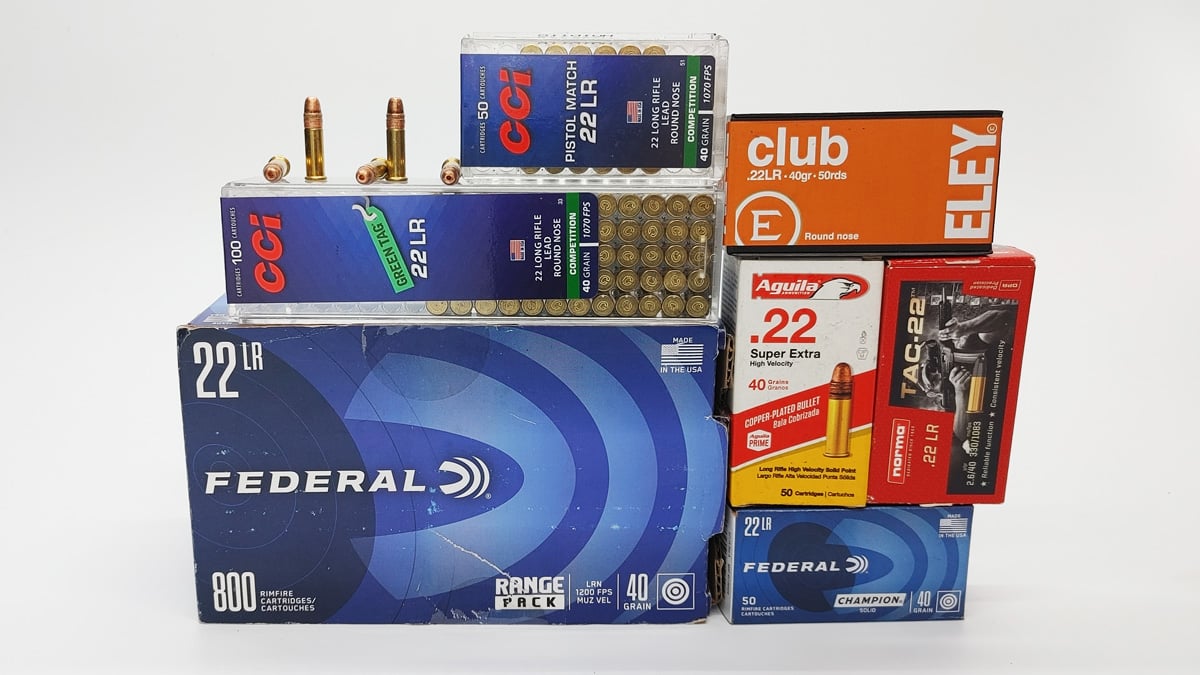
I started by getting a general 50-yard zero for both guns using 10 rounds of Federal Champion Target .22 LR. From there, I set up a target for each rifle and put 10 rounds of each of the following rimfire ammo options downrange:
- 36-grain lead hollow-point Federal Black Pack
- 40-grain lead round-nose Federal Range Pack
- 40-grain lead round-nose Federal Champion Target
- 40-grain round-nose Eley Club
- 40-grain high-velocity copper-plated round-nose Aguila Super Extra
- 40-grain round-nose Norma Tac-22
- 40-grain lead round-nose CCI Pistol Match
- 40-grain lead round-nose CCI Green Tag
All my shots were aimed at the center of my targets and fired with no sight adjustments off a sandbag. That’s important because I saw a notable variance in drop and shot patterns between the various ammo types.
Here are the results for the Ruger 10/22:
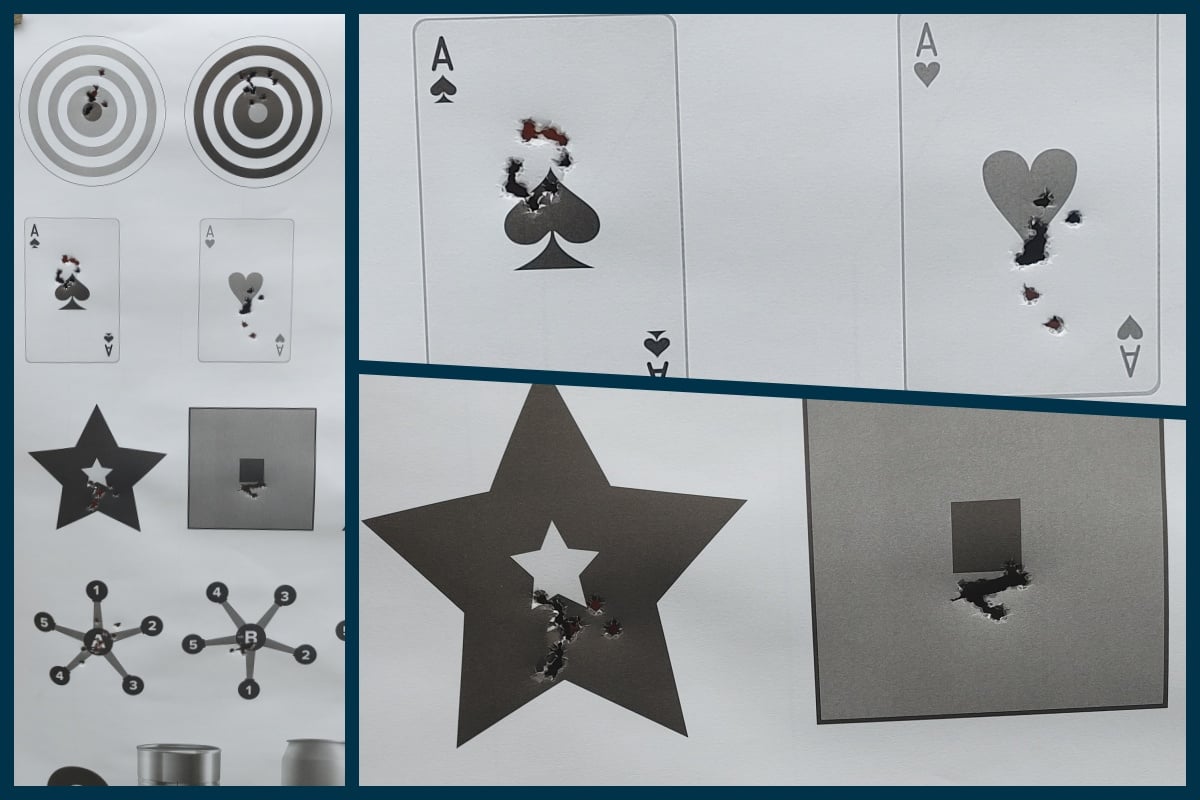
Now, here are the results for the Wildcat:
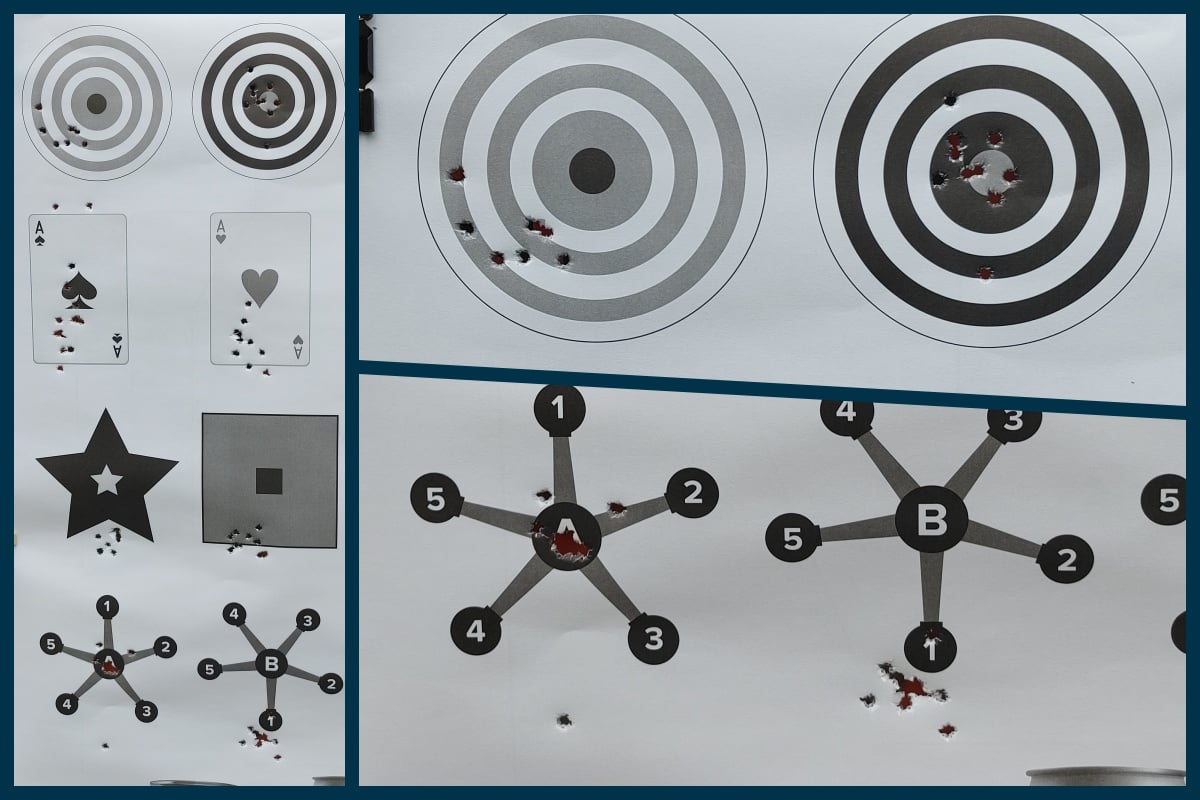
There’s a reason many manufacturers only guarantee MOA accuracy for rifles chambered in .22 LR out to 50 yards. Bullet variances tend to create enough accuracy issues past that distance to make it seem like the gun is the issue instead of the ammo.
That said, we have a clear winner here with the Ruger 10/22. It provided the smallest shot sizes while also shooting at a noticeably flatter trajectory across the various types of ammo. Some clear performers shine on the third target (Aguila Super Extra), sixth target (CCI Pistol Match), and eighth target (Eley Club) with 1-inch groups and no flyers from any of the shots.
Our Wildcat essentially doubled our group sizes at 50 yards compared to the 10/22. It also had far less predictable elevation and windage performance. I honestly did not expect to see nearly this drastic of a difference.
Our Federal Champion Target ammo (target seven) was dead on the center of the target with sub-1-inch performance minus two slight flyers and a low third shot. Yet, the next shots from the Eley Club (target eight) dropped nearly 3 inches but still packed the shots into a tight group. Other groups spread past 2 inches.
The takeaway for me is that the 10/22 is far less ammo picky when it comes to accuracy out to 50 yards, but the more affordable Wildcat can still perform to similar standards with the right ammo.
Pros & Cons
Here’s my top five pros and cons for both guns.
We’ll start with the Ruger 10/22:
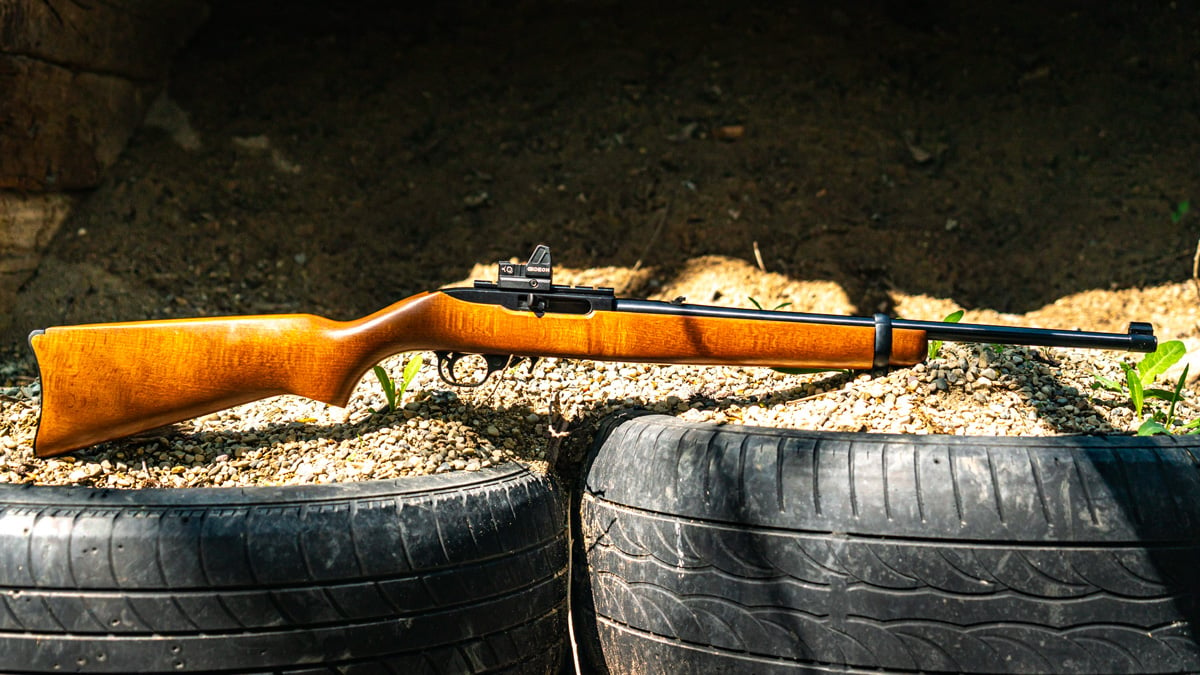
Pros:
- Classic Americana design
- Very reliable and more accurate
- Lots of upgrade options
- Forward button safety
- Better trigger
Cons:
- Harder to disassemble
- No integrated Picatinny rails
- No sling points
- Heavier
- Bolt doesn't lock on last round
And now for the Winchester Wildcat:
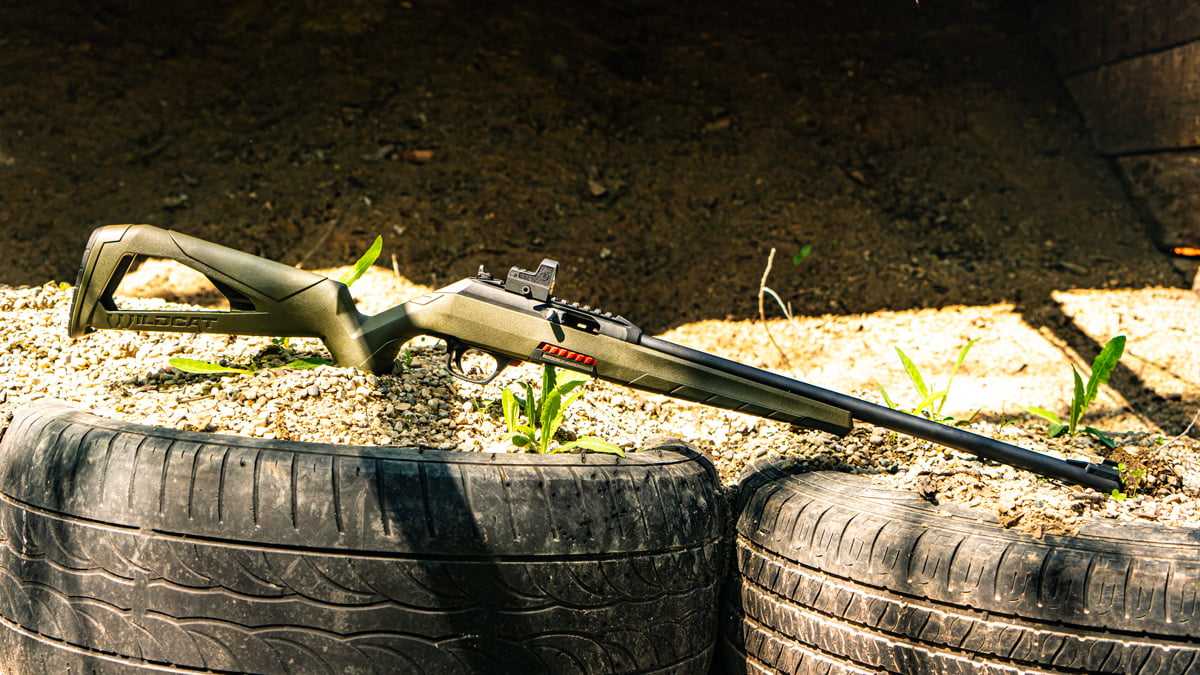
Pros:
- More affordable
- Integral Pic rail for optics and accessories
- Better bolt and magazine releases
- Adjustable peep sights
- Very easy to disassemble/clean
Cons:
- Less accurate overall
- Rear button safety
- Few upgrade options
- Ammo picky for accurate shooting
-
Less crisp trigger
Best Pick for You
I enjoyed both these guns so much that each has a place in my personal safe. However, I would recommend them differently to various shooters depending on their needs. Here’s how I think they stack up for eight specific goals:
Reliability: Equal from my testing so far.
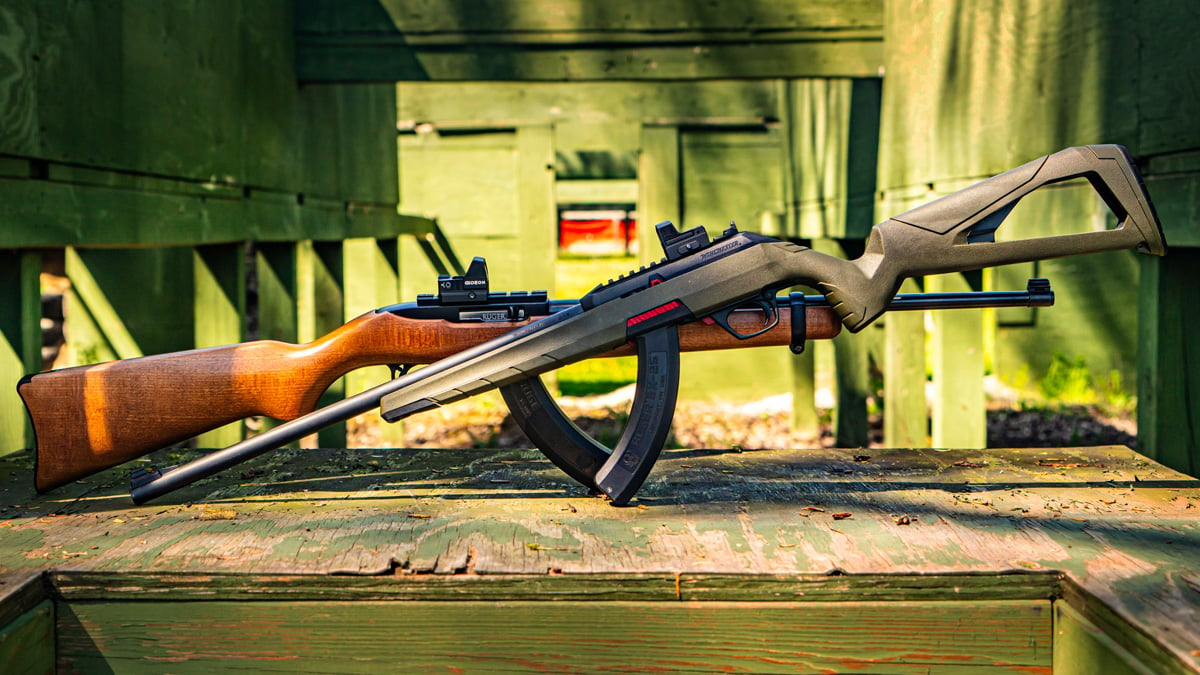
Best Overall Value: Wildcat. If you’re just going to keep you gun just as it came from the factory or only pop on an optic for plinking or small game hunting, the Wildcat comes in at a lower price point and offers a lot of upgrades over the older 10/22 design.
Best Features: Wildcat. This gun has all the upgrades that remove my personal gripes with the 10/22: external bolt release, bolt hold-open feature, improved magazine releases, adjustable peep sights, integrated sling mounts, integrated Pic rail, easy takedown system, etc.
Easiest to Maintain: Wildcat. Winchester did a great job massively simplifying the takedown and cleaning of its gun compared to Ruger’s offering.

Most Accurate: 10/22. I think my targets speak for themselves with easily half the shot pattern sizes at 50 yards when compared to the Wildcat. The 10/22 also had far less windage and elevation variance.
Classic Plinker Feel: 10/22. Ruger’s little semi rimfire is an American classic at this point and feels the part in your hands. It’s still my favorite for range fun time.
Most Upgradable: 10/22. There are literally hundreds of quality upgrades already out there for the 10/22 that include everything from precision barrels and custom drop-in trigger groups to modular stocks.
Best First Gun: 10/22. This is a hard one. The Wildcat would be a great first gun, especially for small-framed shooters. It’s lightweight and offers lots of easy controls. But if you fall in love with plinking, you’re going to add a 10/22 to your safe at some point anyway. It’s the kind of gun you pass down to your children.