The Second Generation
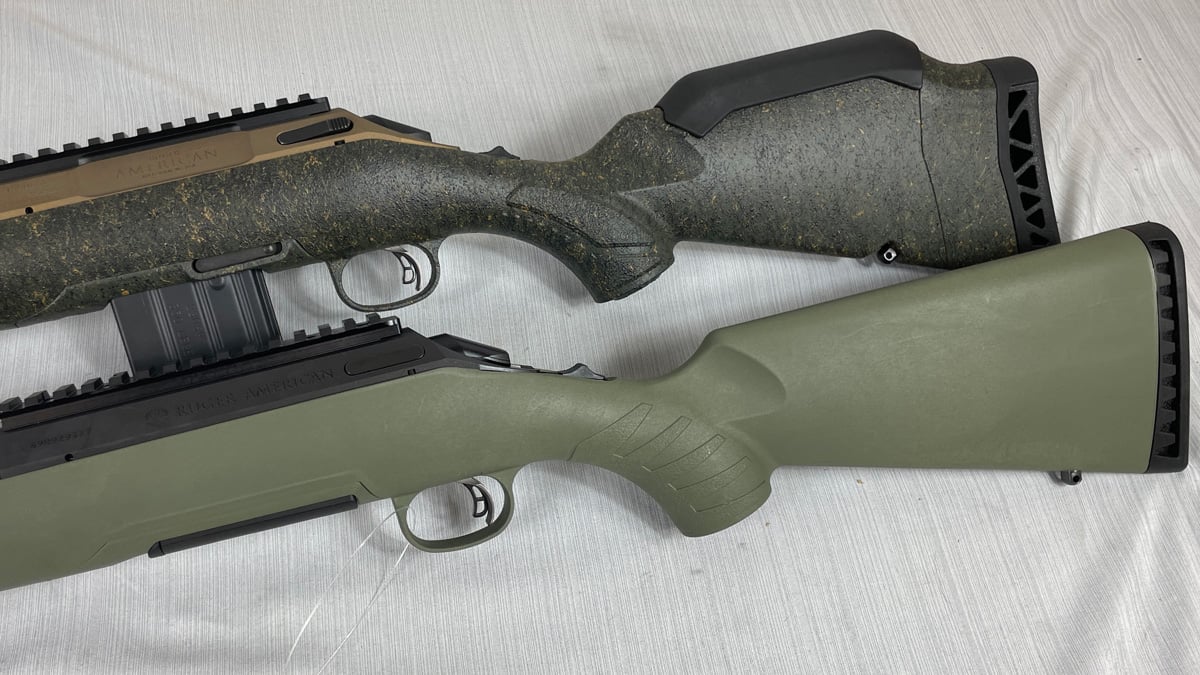
Ruger’s original American rifles represented the company’s entry into truly affordable, yet still accurate hunting bolt actions. The Gen II version was totally unexpected but somehow much improved, and now there’s no going back. So far, the company has released a trio of new variants:
Gen II Standard: Gun Metal Gray Cerakote. Dark Gray stock with black and light gray splatter and 20-inch barrel.
Chamberings: .350 Legend, .400 Legend, 6mm ARC, 6.5 Grendel, 6mm Creed, 6.5 Creed, .308 Win, .223 Rem, 7mm-08 Rem, .243 Win, .450 Bushmaster, .204 Ruger, .30-06 Sprg, .270 Win, .300 Win Mag, 6.5 PRC, 7mm PRC, .22 ARC.

Gen II Ranch: Cobalt Cerakote. Flat Dark Earth stock with black splatter with 16-inch barrel for a lighter, more compact platform.
Chamberings: 6mm ARC, 6.5 Grendel, 6.5 Creed, 5.56 NATO, 300 Blackout, 7.62x39, .450 Bushmaster, .308 Win, .350 Legend, .400 Legend, .22 ARC.
Gen II Predator: Burnt Bronze Cerakote. Green stock with black and bronze splatter and longer 22-inch barrel.
Chamberings: 6.5 Creed, .308 Win, 7mm-08 Rem, .243 Win, 6mm Creed, .204 Ruger, .450 Bushmaster, .350 Legend, .400 Legend, .223 Rem, .22 ARC, 6mm ARC, 6.5 Grendel, .30-06 Spfld, .270 Win, .300 Win Mag, 6.5 PRC, 7mm PRC.
Related Review: Making a Good Hunting Rifle Even Better – Ruger American Gen II
The Original American
The original lineup still catalogs seven variants, though it remains to be seen how long the company will keep them listed as current production.
Standard: Black synthetic stock, 22-inch barrel, matte black finish. Left hand options.

Predator: Moss green synthetic stock; Threaded barrel. Matte black metalwork, except for distributor exclusives. Left-hand options.
Ranch: Flat Dark Earth Synthetic. Matte Black finish, except distributor exclusives.
Hunter: Gray Magpul Hunter American synthetic stock. Matte black finish, except distributor exclusives. Threaded barrel.
Compact: Black Synthetic stock. Matte black finish. 18-inch barrel. Shorter LOP.

Go Wild: Go Wild Camo Synthetic stock; threaded barrel. Burnt Bronze Cerakote metalwork. Muzzle brake.
Related Review: Ruger American Go Wild Rifle – 6.5 Creedmoor Bolt-Action Precision
Vortex Scoped Combo: Options on both Standard and Predator models.
Ruger has not leaked word of a scoped combination setup on the Gen II, so the original is your answer for a turnkey setup. But we wouldn’t be surprised to see more additions to the second-generation lineup.
Comparing the Features
Ruger’s original American bolt action had plenty to offer for an entry-level hunting rifle, and by and large, performance and accuracy exceeded its price point. Somehow, Ruger found ample room to offer upgrades, reworks, and aesthetic appeal – while maintaining the most successful attributes.
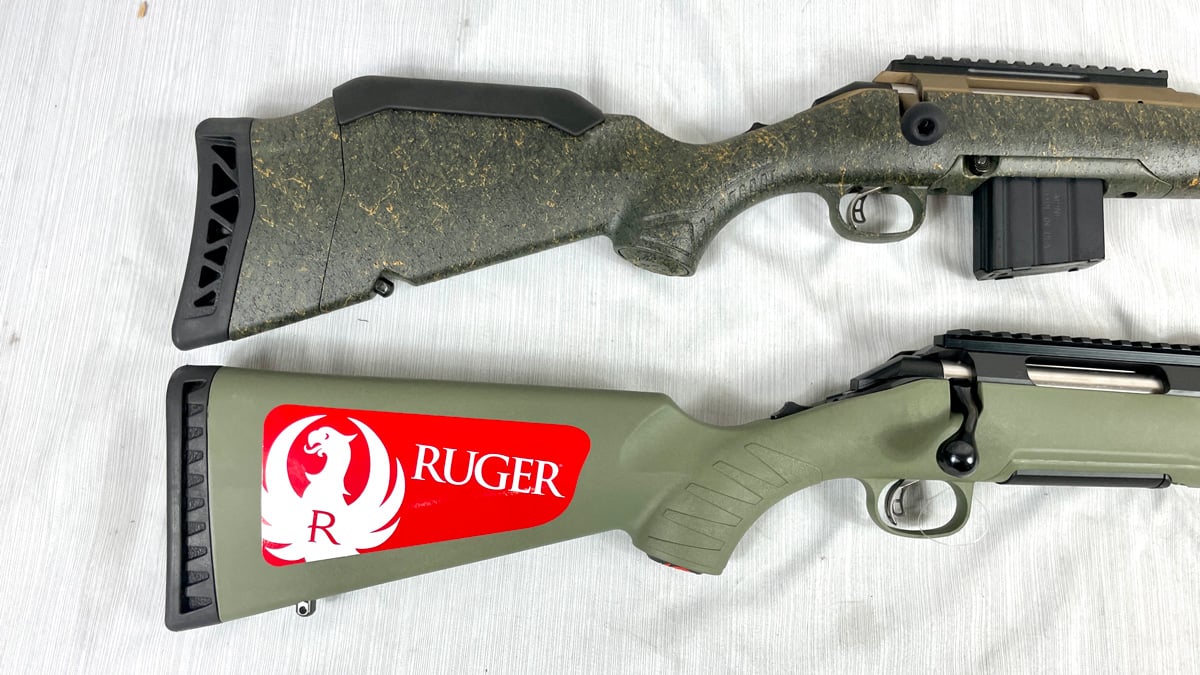
The stock is one of the most noticeable transformations. The original’s stock differed by variant and was useful enough, but not overly comfortable, customizable, or eye-catching. The Gen II’s splatter-finished synthetic stock comes in three distinct tones clearly denoting the model variants (Gray=Standard, Tan=Ranch, Green=Predator).

The majority of Gen I Americans used basic matte black finishes, though the Go Wild editions lit a fire with their snappy bronze-camo combination. Ruger used that as a launch pad, setting a clearly defined Gen II lineup, with Cerakote hues denoting the variants. Cerakote covers the barrel, muzzle brake, receiver, and bolt handle.
Molded grip areas at pistol grip and forend replace angular grooves from the original, and the new forend angles are more ergonomic. Gen II also upgrades to a more ventilated and ergonomic recoil pad.
Comb & LOP
Continuing along the stock discussion, Ruger’s American Gen II ups the ante with further stock customization at both the comb and length of pull. Comb inserts can be added to improve eye-to-optic alignment or removed altogether. Likewise, the rifle’s length of pull can be adjusted from 13.75 to 12 inches by removing the pre-installed spacer.

Additional spacers are available from Ruger along with additional comb height risers (the low comb is included). Ruger even offers a stock weight accessory kit that adds up to 1.6 pounds to the buttstock for recoil absorption and balance when using hefty muzzle devices. The improvements here are legit.
Barrel & Accuracy
Get a look at that deeply spiral-fluted, medium-contour barrel on the American Gen II. Not only is it threaded, but it comes with a radial port muzzle brake installed at the factory. Though not surprising these days, it’s worth noting that none of the models we’ve seen, past or present, included iron sights, but they are equipped with an optics rail.

Ruger uses what it calls “patented power bedding,” which means an integral bedding block that offers a solid receiver base while allowing for a free-floated barrel, which seems to be very similar, if not identical to the original.
We can’t discuss barrels without mentioning the end result: accuracy. Every Ruger American we’ve fired since its 2011 inception has been easily less than minute-of-deer-heart accurate, and in many cases, MOA or less. We weren’t expecting much improvement in the X-ring department, but boy, were we pleasantly surprised!
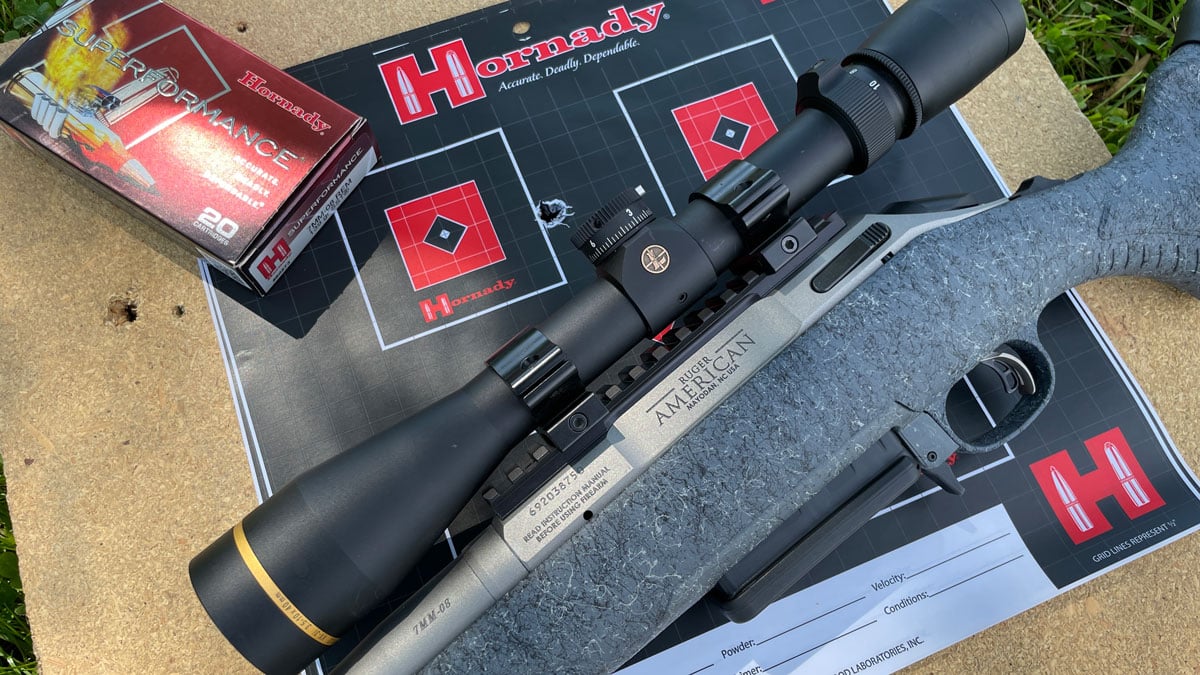
Our test model Gen II Standard in 7mm-08 shot repeated raggedy cloverleafs time and again using factory ammunition. Whether that was an exceptional specimen or the new norm for American bolt actions remains to be seen, but color us impressed.
Controls
The safety on Ruger’s American was already a winner, with its ambidextrously friendly tang location, but the three-position upgrade on Gen II is another big win. Not only does it move quietly, but it allows shooters to load the rifle with the safety engaged, and the bright red and white lines are quickly identifiable.

The latest iteration’s bolt handle is oversized for solid manipulation. In addition, the end is threaded at 5/16x24 TPI for easy replacement of the knob. While we’re on the topic of the bolt, it’s a one-piece affair CNC-machined from stainless steel with a throw of 70 degrees (same as the throw of the original, which similarly advertised a one-piece, three-lug bolt with dual cocking cams).
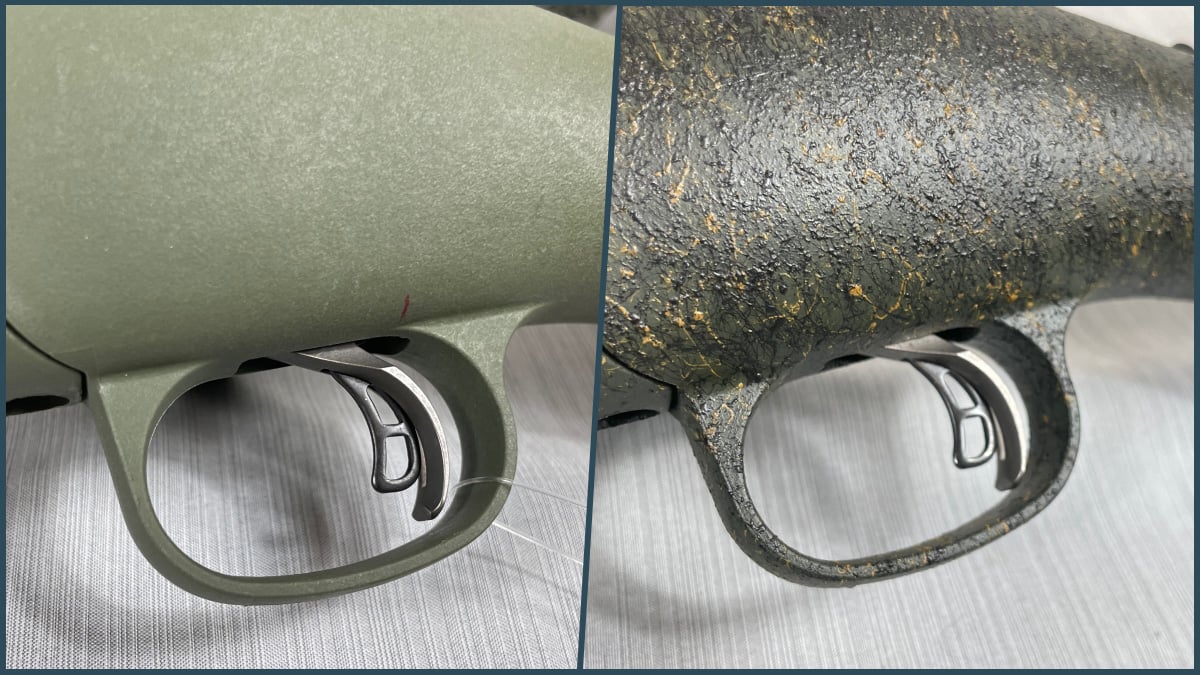
The Ruger American deserves praise for an above-average trigger, at least given its price point. Ruger’s Marksman adjustable trigger remains standard on the Gen II, with a crisp pull that can be set from 3 to 5 pounds.
Magazine
The American series is fed by detachable box magazines. The majority of Gen Is used flush-fit mags, though several variants went the way of AR, Magpul, and other styles. Gen II, however, goes back for a redesign to the magwell, release latch, and overall round capacity.
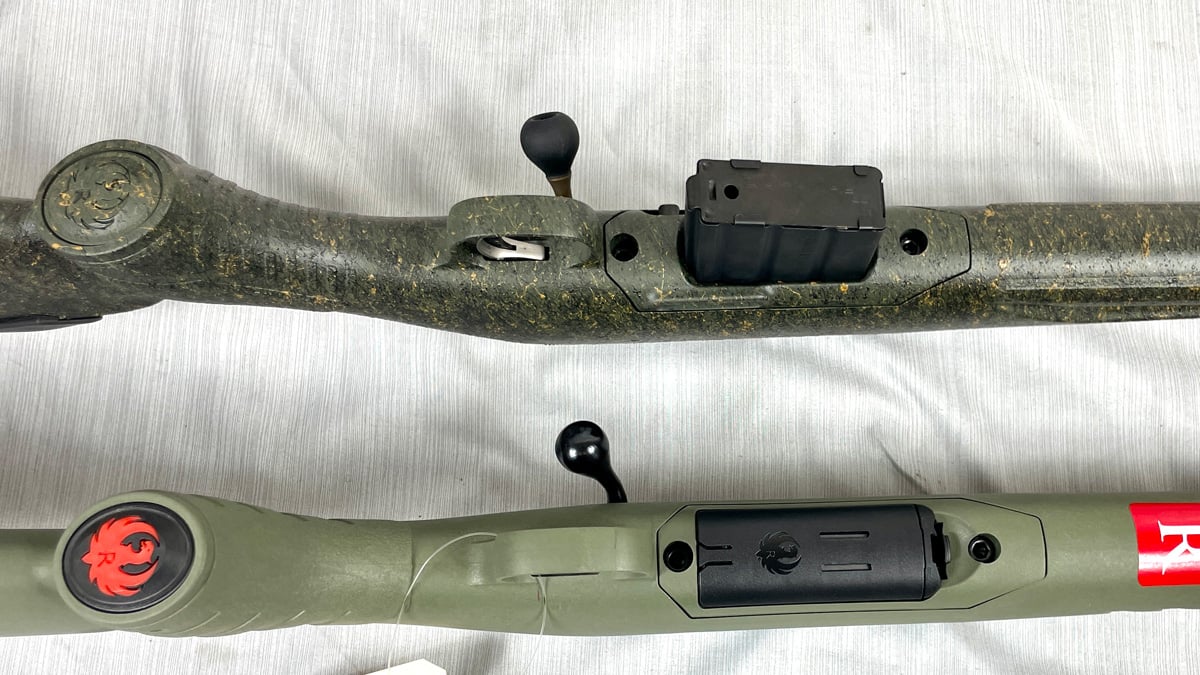
Depending on the chambering and model variant, it appears five different magazine styles are being used: single stack (PRCs & Magnums), flush fit (.30-06, .270), AR-Style (ARCs, .223, Legends), AI-style (.204, .243, 7mm-08, .308), and Mini Thirty (7.62x39).
Naturally, capacity varies by chambering from three to 10 rounds, though many show increased capacity over the originals. Plus, the expanded magazine types open possibilities of aftermarket options.
Price
It’s difficult to compare apples to apples here, as Ruger’s initial American family evolved into a bevy of model variations with differing features and cost points. The most basic black synthetic lists for $599, while the priciest Hunter checks in at just over $1,000.