In the Wild
Perhaps you, like me, learned to be prepared as a youth before going into nature. Many of us don’t even leave the bedroom without at least a pocketknife. Hunters spend a great deal of time outside, often in isolated, remote places. The game we pursue tends to be in the wilder parts of our world, and when we enter those areas, there is some risk involved.
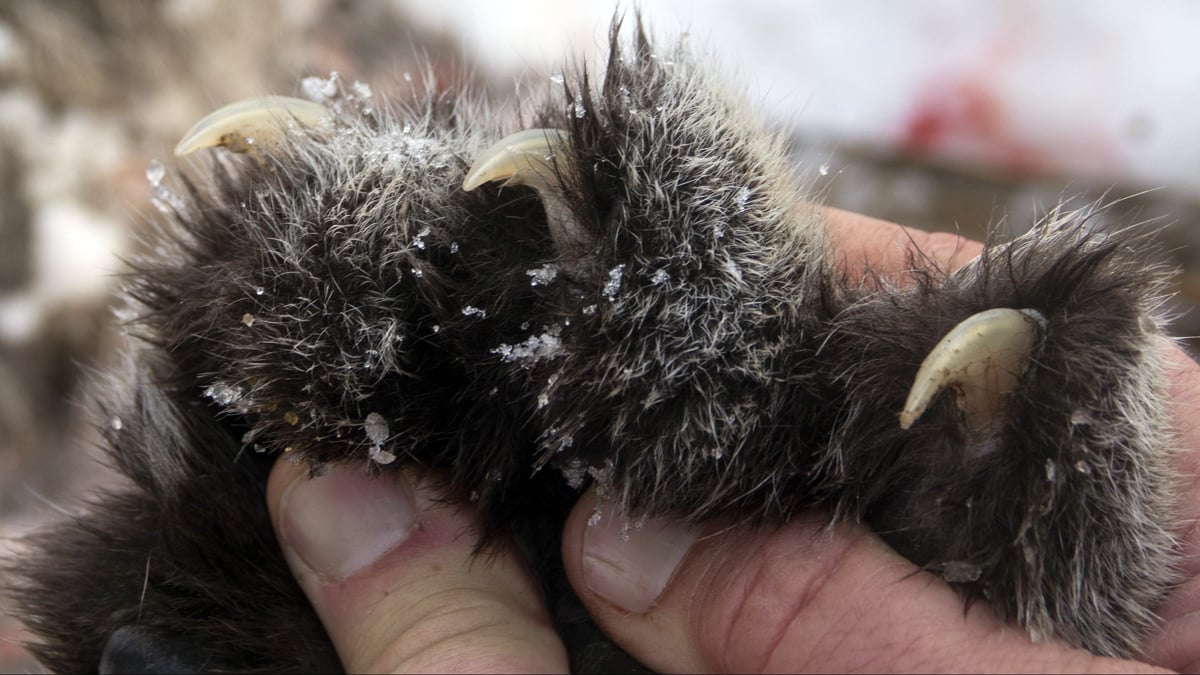
Anything from frostbite to bear bites could be a reality. Just as we prepare our equipment for the act of hunting, we should also prepare for our survival. That could mean bringing granola bars and a map, but in wild places it can also include tools for defending yourself.
A Typical CCW
For those of you who carry concealed, self-defense is already something you do on a day-to-day basis. So, adding your carry pistol to your hunting routine is an easy transition. If you are hunting in the flooded forests of the south, the danger could come from snakes or alligators. Among the alpine peaks of the Rockies, the danger could be from grizzly bears or mountain lions.
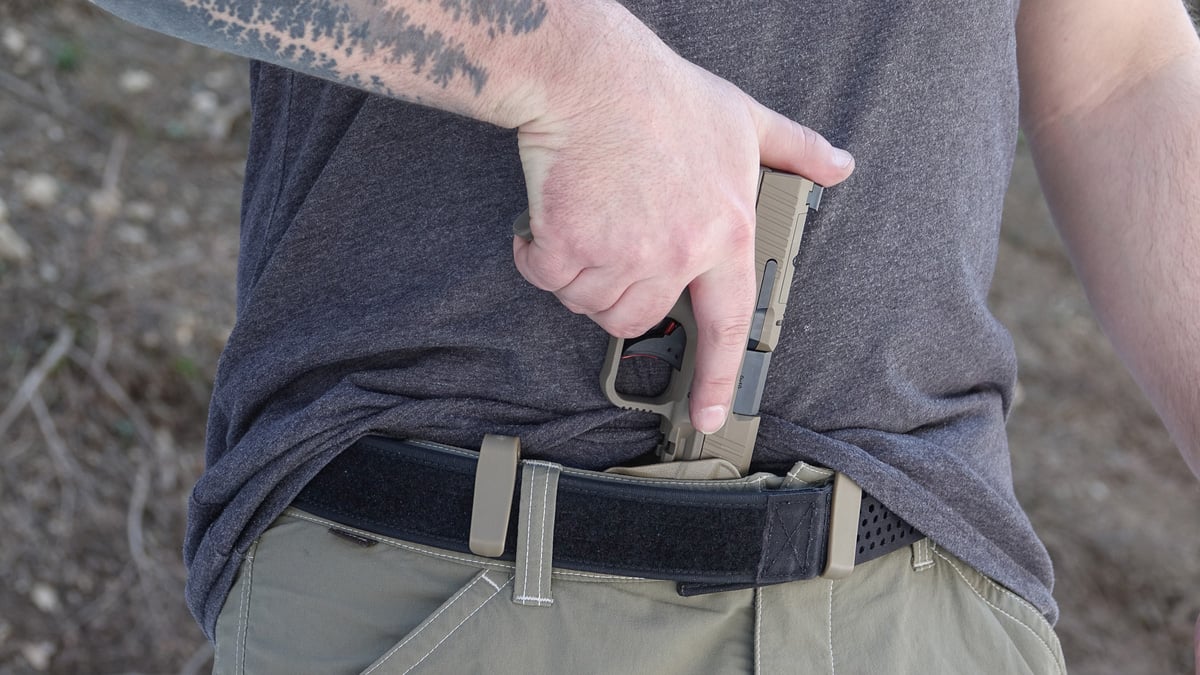
A typical CCW pistol like a Glock 43 or 19 might be perfectly adequate for certain situations. An aggressive cougar, for example, can be dispatched with a 9mm defensive round, and pistols designed for concealed carry usually offer good ammunition capacity.
Running into aggressive cougars, whether two or four-legged, is likely about all I would use a typical 9mm carry gun for. In a place with larger predators like bears or big gators, I would want something more.
Big Semi-Autos
I carried a Glock 29 for a little bit – a compact 10mm auto that carries quite the punch. I also spent some time behind a Smith & Wesson M&P 2.0 chambered in 10mm. Guns like these have more power for defending against larger threats, with some loads often carrying double the energy on target as a typical 9mm.
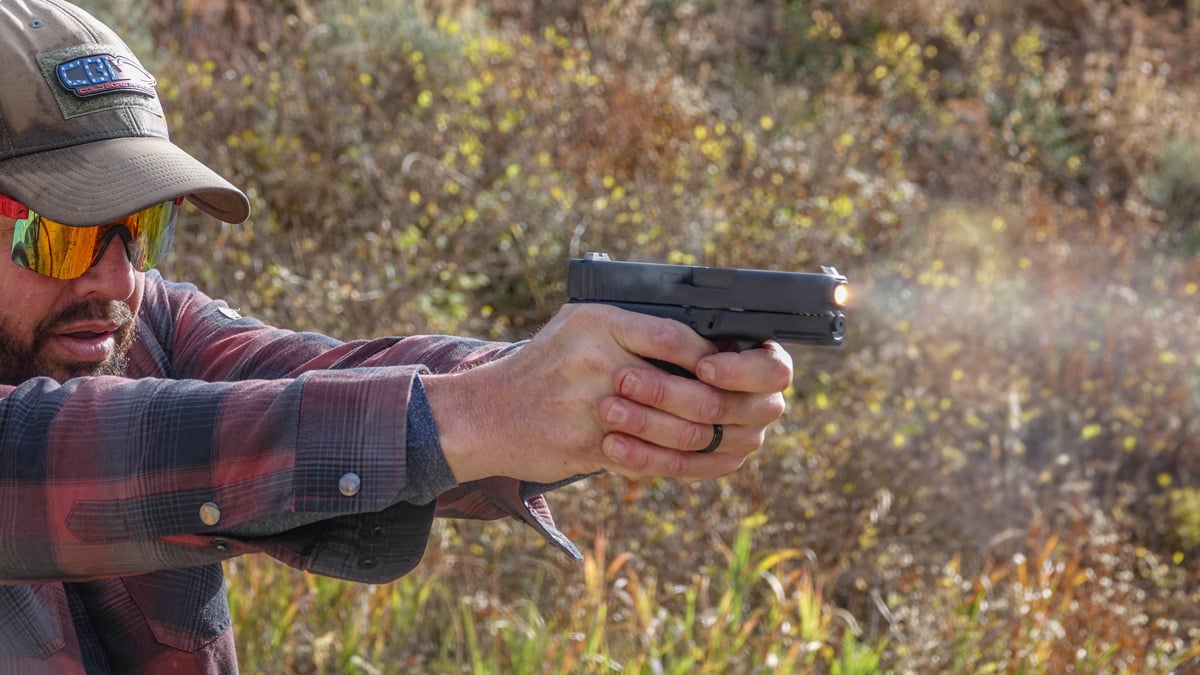
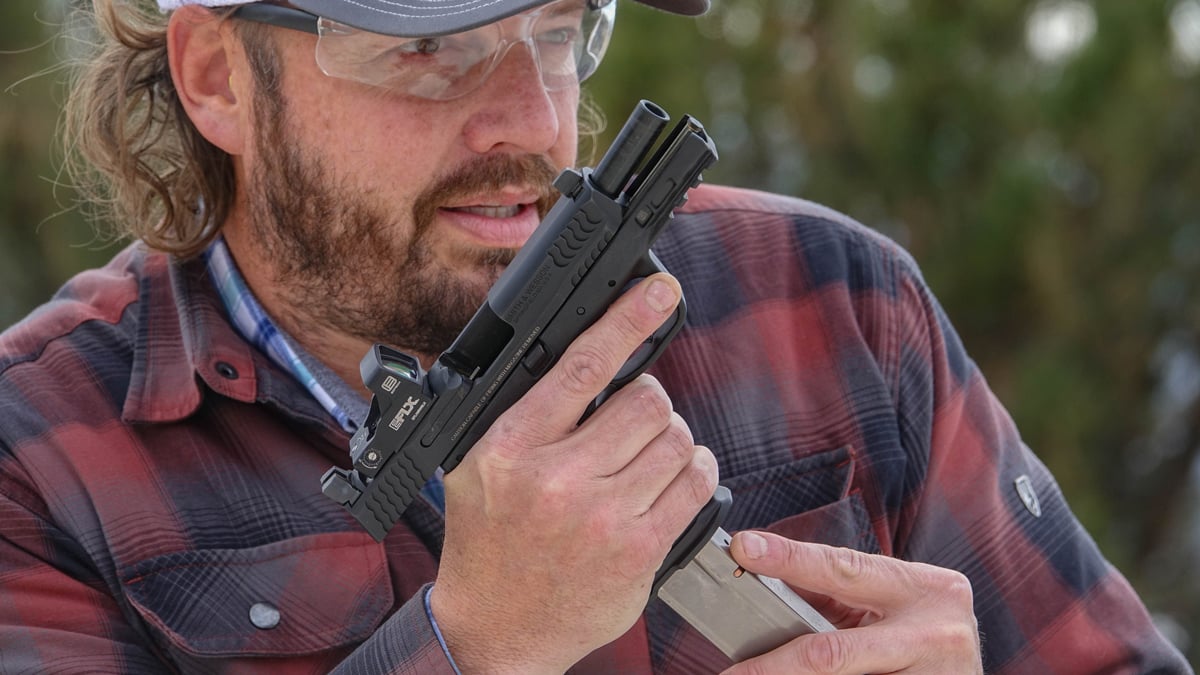
For all you 1911 guys, this is your chance to put the heavy bullets of the .45 ACP into use for some additional stopping power. I would look at something like the SIG Sauer 1911 Ultra Compact for easy portability that won’t get in your way. These autos offer an increase in power without giving up capacity.
Revolvers
Americans have a love affair with revolvers, and this is one area where they certainly shine. The only demerit you might give revolvers is their limited capacity compared to an autoloader. There is no question that a big revolver is potent medicine for defense against predators of all kinds.
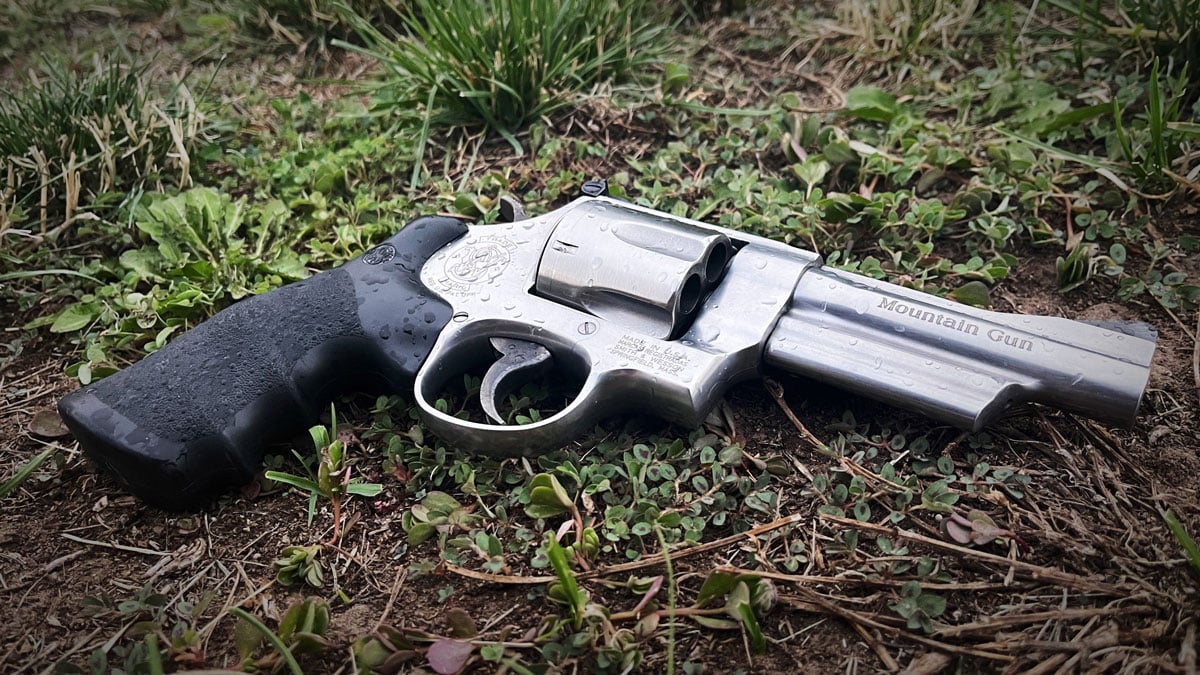

When I hunt the extremely remote Kootenai forests, I rarely go without a good handgun. I really like the Smith & Wesson 629 in .44 Magnum, as it provides ample power. As the darkness surrounds you up there, with wolves, grizzly bears and other hungry predators, the heavy steel against your side feels reassuring.
I also am a big fan of Ruger’s Super Redhawk Alaskan. Whether it be in .44 Magnum, .454 Casull, or .480 Ruger, it is bound to put big holes in your target. The Alaskan model, while still quite robust, is small enough to easily carry while fishing a river or hiking through forests.
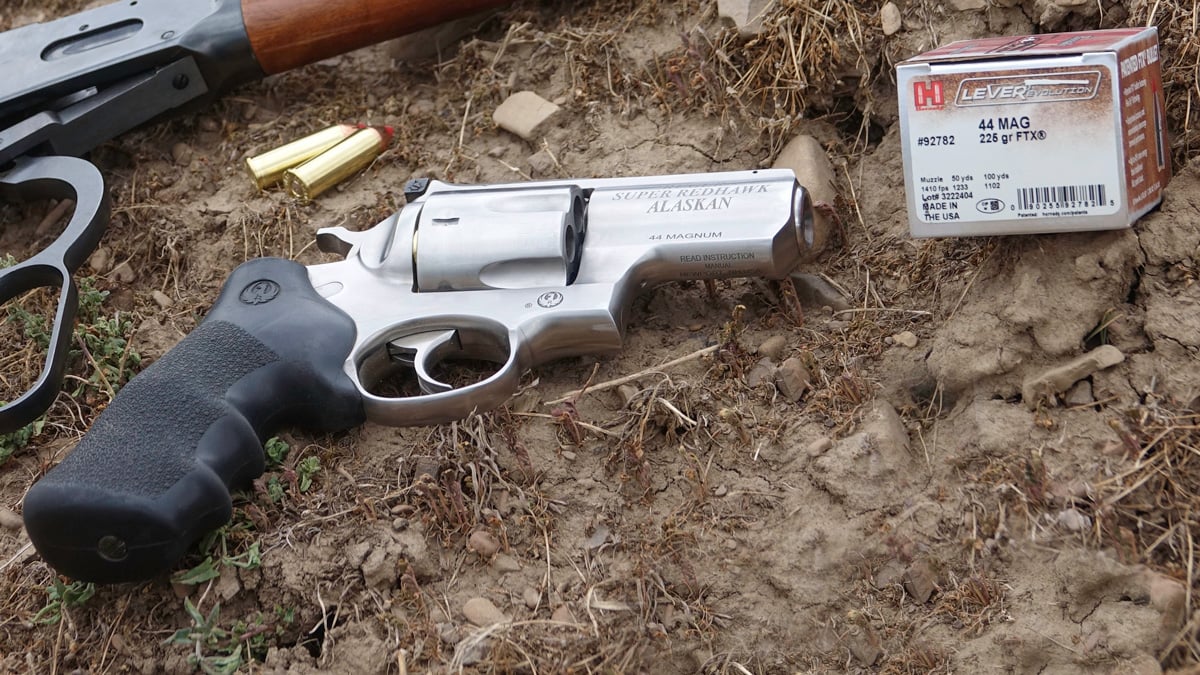

You certainly don’t need to go heavy, either. There are plenty of good revolvers suitable for self-defense that are light and powerful as well. The Ruger SP101 and LCR are much smaller than the large-framed pistols mentioned above. Chambered in .357 Magnum or .38 Special, they still offer some stout energy on target.
Close Carry
Of course, having a handgun for defense is only good if it’s close. Carrying your defensive pistol wouldn’t do you any good if it’s inside your backpack, so a good carry solution is in order. Depending on your hunting practices, using your standard CCW holster might be fine. Even large OWB holsters are usually not a big problem when hunting and work well for big wheel guns.
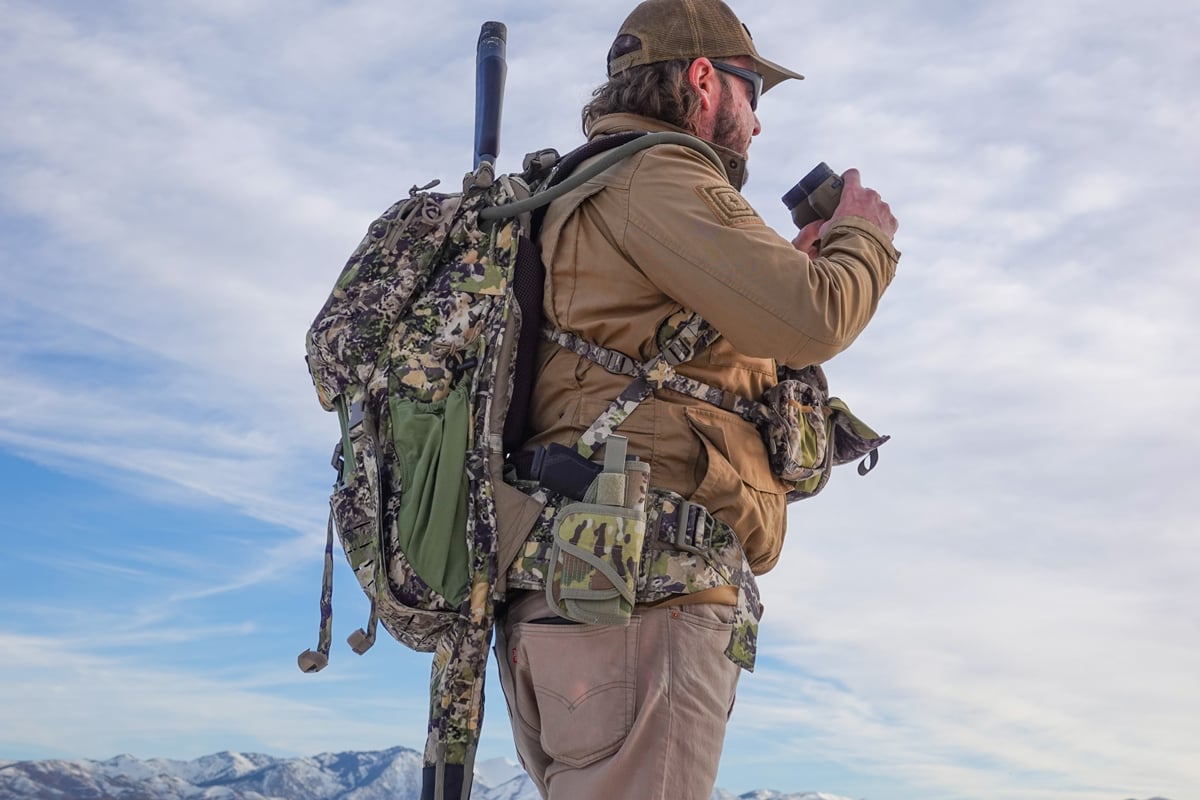
I also like chest carry rigs like those from Alaskan Guide Creations. A chest rig keeps your pistol safe and close at equal distance from either hand. Except for maybe when drawing a bow, it’s out of the way for the most part.
I sometimes have a holster attached to the waist belt of my pack; this is much more comfortable while packing. But this also runs the risk of separating you from your defense if you remove the pack, so that’s something to evaluate.

Last Words

With any luck at all, you will never need to defend yourself during a hunt, but it’s always best to be prepared. Make sure you have the right tools for the job and practice with them regularly for insurance should the time come. When you look a cougar or bear in the eyes, you’ll want the comfort of a self-defense gun in your hand.