About PRS
To begin, let’s establish a few terms. “PRS” refers to the Precision Rifle Series, but also in general, that type of long-range precision/tactical rifle competition.
Several organization and rulesets comprise this world, such as PRS, NRL, NRL Hunter, and multiple “outlaw”-style matches that fall outside any governing body. Each organization also has many different divisions and classes, each with its own rifle limitations, so every subcategory will have its own optimal rifle and cartridge combination.

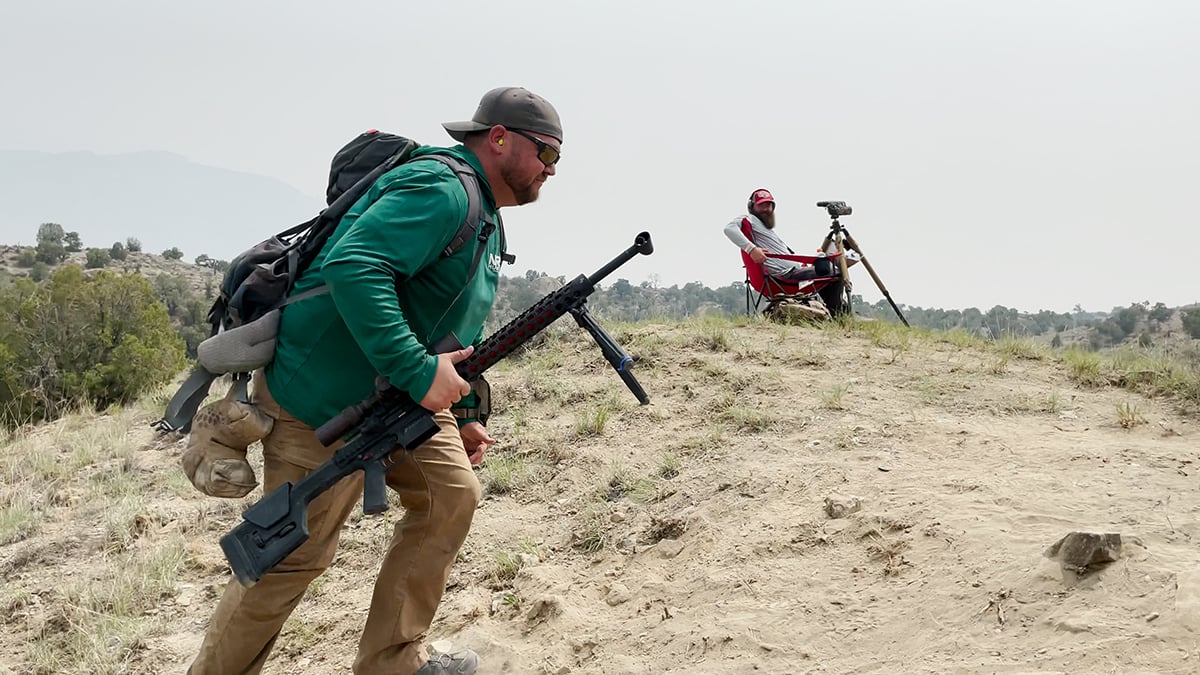
For this article, I’m going to stick with a general recommendation that should fit most of these rulesets. The elements universal to all these disciplines are the fundamentals of ballistics, wind reading, positional shooting, and general marksmanship. As you can see, caliber selection is only one part of the package.
Recoil & Ballistics
Beginning precision shooters should prioritize cartridges with moderate to low recoil. You should choose something with less recoil than you think you can handle. Heavy recoil slows follow-ups and makes spotting your hits harder, and being able to spot your hits is key to progression in this sport.
The real danger, though, is developing a flinch due to recoil. Recoil tolerance is a skill that needs to be built gradually.

Wind drift and trajectory are important considerations. For beginner PRS matches out past 1,000 yards, rounds with high ballistic coefficients and good velocity help flatten wind calls and reduce holdover complexity. Flatter-shooting rounds with better BCs are simply more forgiving. The sport is difficult enough already; new shooters want every advantage possible when it comes to ballistics.
Ammunition Cost & Barrel Life
In practical terms, cost might be the most important consideration. Long-range practical competitions are an expensive sport, and ammunition costs are a big factor.
While reloading can reduce the cost per round, it assumes you already have all the necessary equipment. If you aren’t a rifle reloader, it is a significant expense to get into it, and it’s a major time commitment. A beginner doesn’t need to handload from day one. Rounds with broad factory support allow you to shoot and practice without agonizing over inventory and the cost of specialized components.

The PRS Landscape
Before getting into recommendations, let's see what the pros are shooting:
- 6mm Dasher dominates PRS usage – nearly half of top pro shooters run it.
- 6mm GT and 6mm Creedmoor also appear in the data, though at lower percentages.
- .25 calibers such as .25 Creedmoor and 25x47 Lapua are trending upward among elite shooters.
- 6.5mm Creedmoor, long considered the “default” long-range round, still places in the mix.
- .308 pulls up the rear, although many top competitors still use it.
This tells us the landscape is dominated by mid-caliber, high-efficiency cartridges, but what’s right for a professional competitor isn’t always right for a beginner.
My Recommendations
My first recommendation for a beginner would be the 6.5mm Creedmoor. This round is a great starter choice. If you’re building your first PRS rifle and want a cartridge that feels forgiving, has excellent factory ammunition availability, and isn’t overly specialized, the 6.5mm Creedmoor is hard to beat. Plus, it’s still relevant in competitions and was used by the overall PRS champion in 2025.

It offers excellent long-range performance with manageable recoil. Its ballistic performance makes reading wind more forgiving due to higher-BC bullets, and low recoil makes misses easier to see and correct. There are also common production division setups available for new competitors, and broad factory support from major brands such as Hornady, Federal, and Nosler.
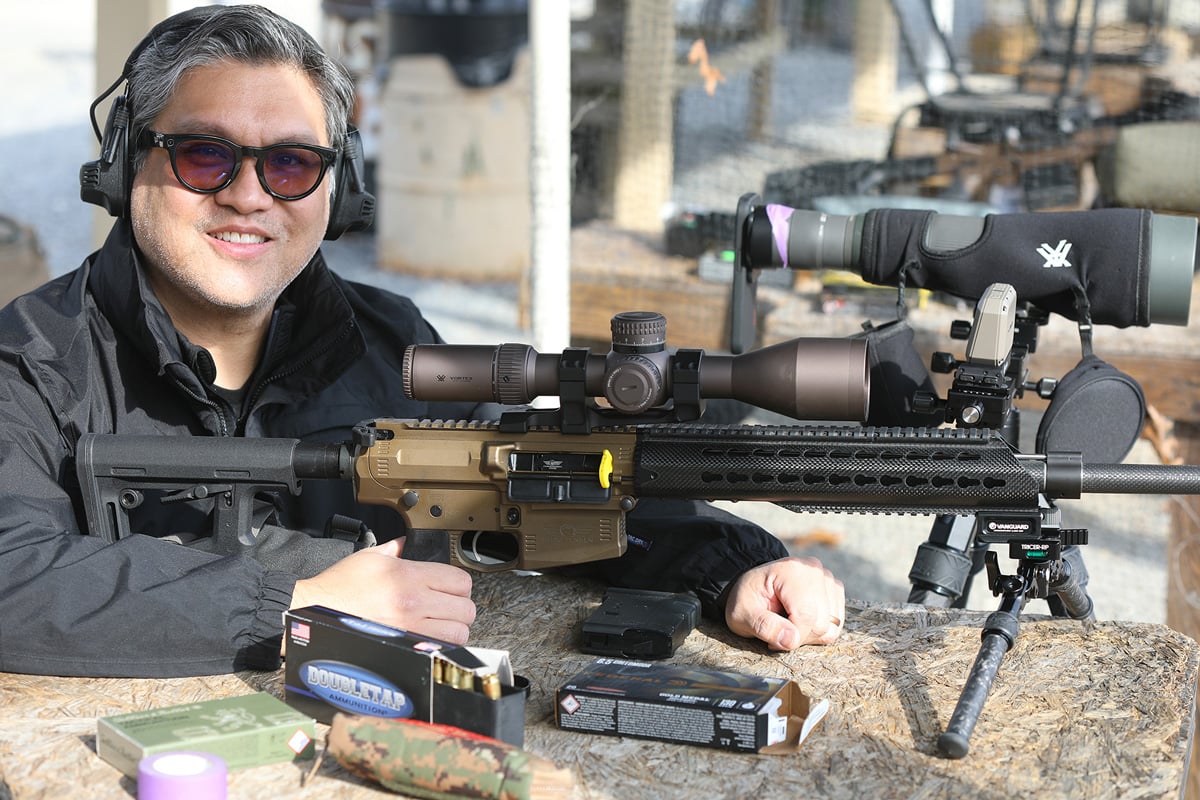
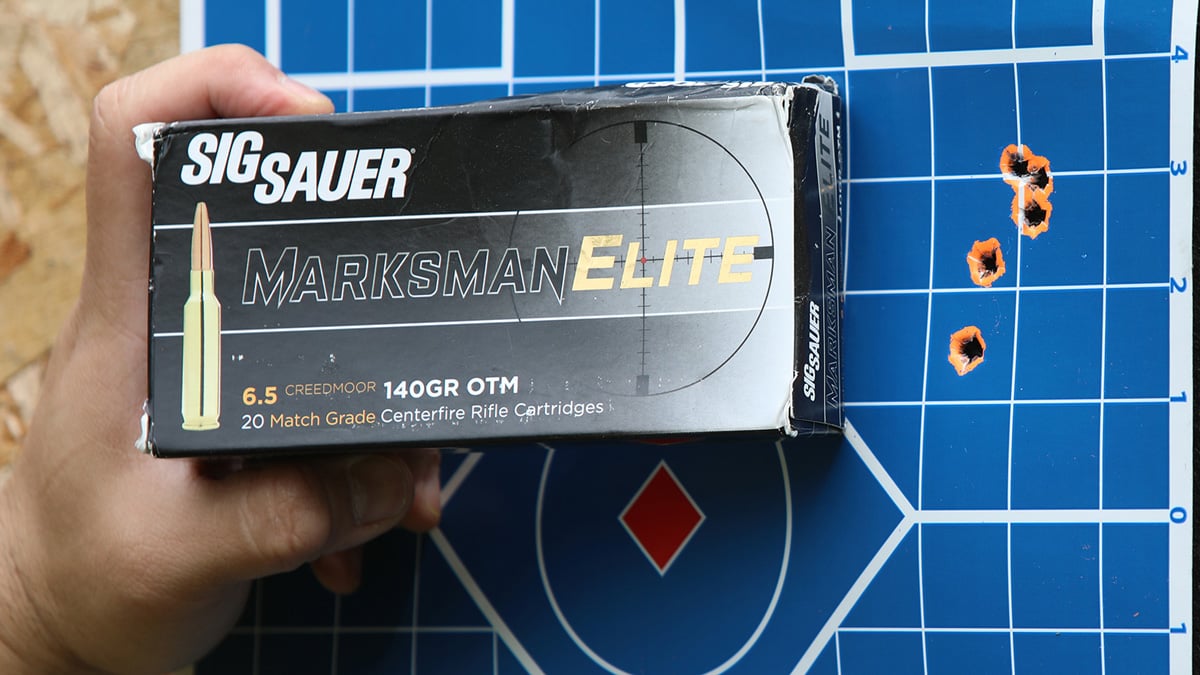

The drawback is that 6.5 CM is not as flat shooting as some 6mm rounds; however, it is still more than sufficient for PRS matches if you do your part. It also has slightly more recoil than smaller 6mm rounds, though it is still a very soft-shooting cartridge.
If you don’t want to handload, want straightforward ammunition availability, and prefer a cartridge that lets you focus on fundamentals first, the 6.5mm Creedmoor belongs on your short list.
Use What You Already Have
Many people already have a suitable rifle, at least to begin learning PRS, chambered in .308 Winchester or .223 Remington, also known as 5.56 NATO. Shoot what you have. It’s the shooter, not the equipment. Worry about gear later.
Both .308 and .223 have ubiquitous and relatively inexpensive factory ammunition options. They differ in recoil, but both are still very usable. These cartridges are also familiar platforms for many shooters coming from hunting or service backgrounds.
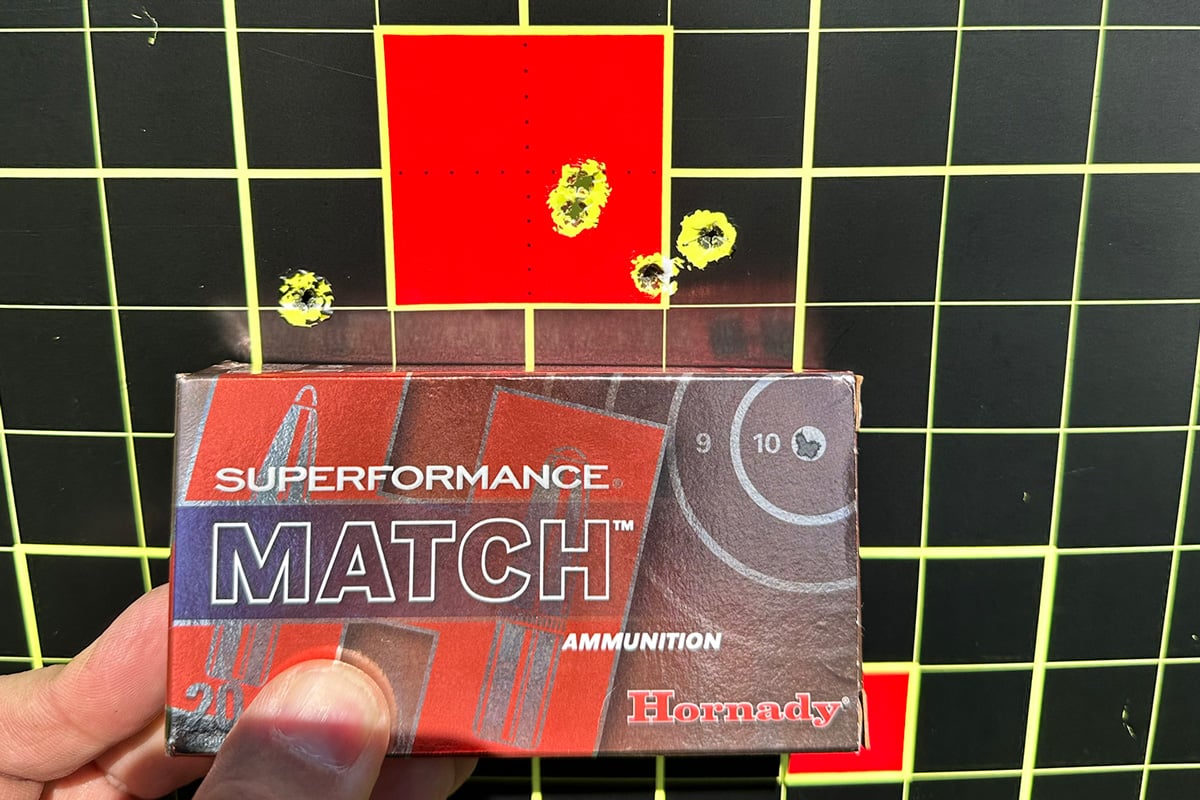
Ballistically, .308 trails mid-caliber options in wind drift and velocity. As for .223, match offerings can be quite effective for shorter distance matches out to 600 yards. For a beginner focusing on stage execution and fundamentals, either can serve as a logical starting point.
Additionally, many beginner PRS-style matches have divisions or classifications that allow only .308 and/or .223.
For the Experienced Reloader
Finally, if you’re already familiar with rifle shooting and reloading, you can set yourself up with a 6mm Dasher. There is a reason the Dasher is the most popular round among top PRS shooters.
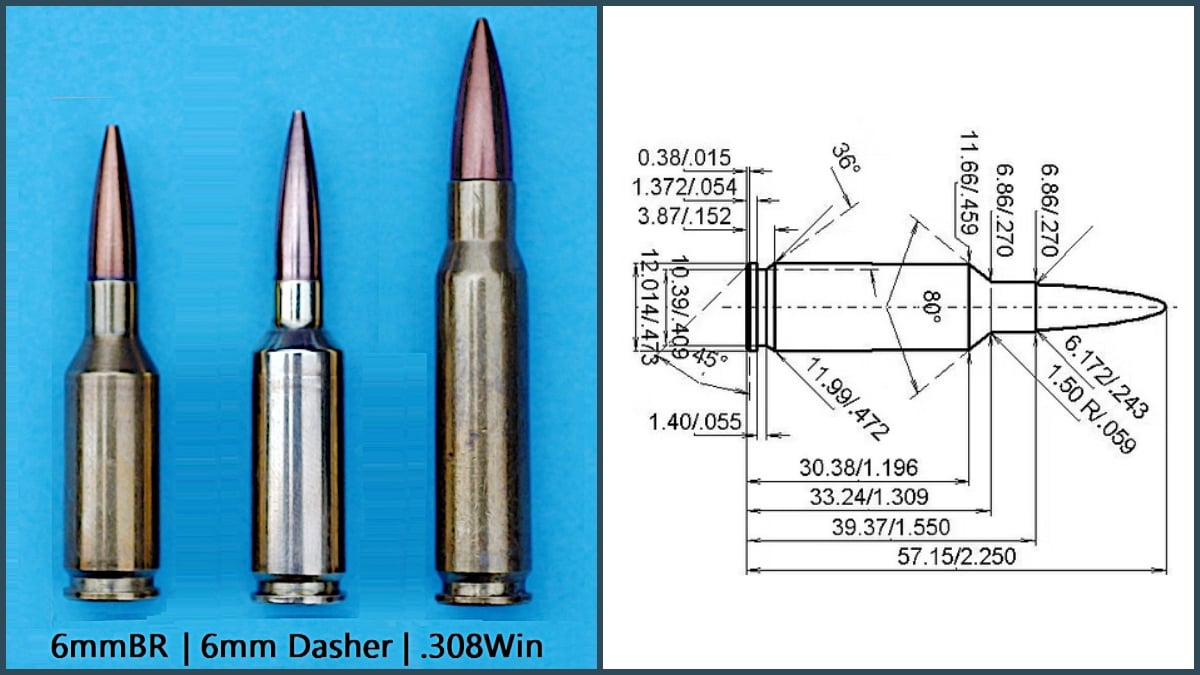
It delivers excellent wind performance due to high-BC bullets at good velocities. It has light recoil, aiding spotting and follow-up shots. It also has a reputation for consistent accuracy and tight group potential.
The trade-offs, though, are significant to a novice. Factory ammunition is almost nonexistent, so this is a handloader’s cartridge. You’ll be forming brass, experimenting with powders, and iterating loads. Barrel life is also shorter compared to some other options.
Cartridges to Avoid
Let me caution you about a few rounds beginners should avoid. First, magnum cartridges such as .300 Win Mag, .338 Lapua, .300 PRS, and similar options may be excellent for extreme long ranges, but their recoil and cost make them poor beginner cartridges.

Also avoid obscure or boutique rounds. Cartridges with limited ammunition support or expensive brass, such as many wildcats, are interesting but not practical for an entry-level build.
Final Thoughts
To sum up, if you are looking to purchase something to try PRS-style competition, the 6.5mm Creedmoor is the best starter round for factory ammunition availability, an easier learning curve, and broad rifle support.
The reality is there is no one perfect cartridge. There is only the best fit for your goals and commitment level.
Start with a round that allows you to shoot, learn, and enjoy the competition; then optimize from there. That is most likely the rifle and chambering you already have. If you own a .223 or a .308, buy some match ammunition and go shoot a match or attend a training event. You won’t be disappointed.