A Brief History
The turn of the 20th century was marked by an explosion in advancing firearm technology. One of those advancements was the move from the revolver to the semi-automatic pistol.
In the United States, there was a need for a semi-automatic pistol “chambered in a caliber no less than .45,” according to U.S. Army Colonel John T. Thompson. The colonel was not satisfied with the anemic performance of the M1892 revolver in .38 Long Colt during the Philippine-American War.
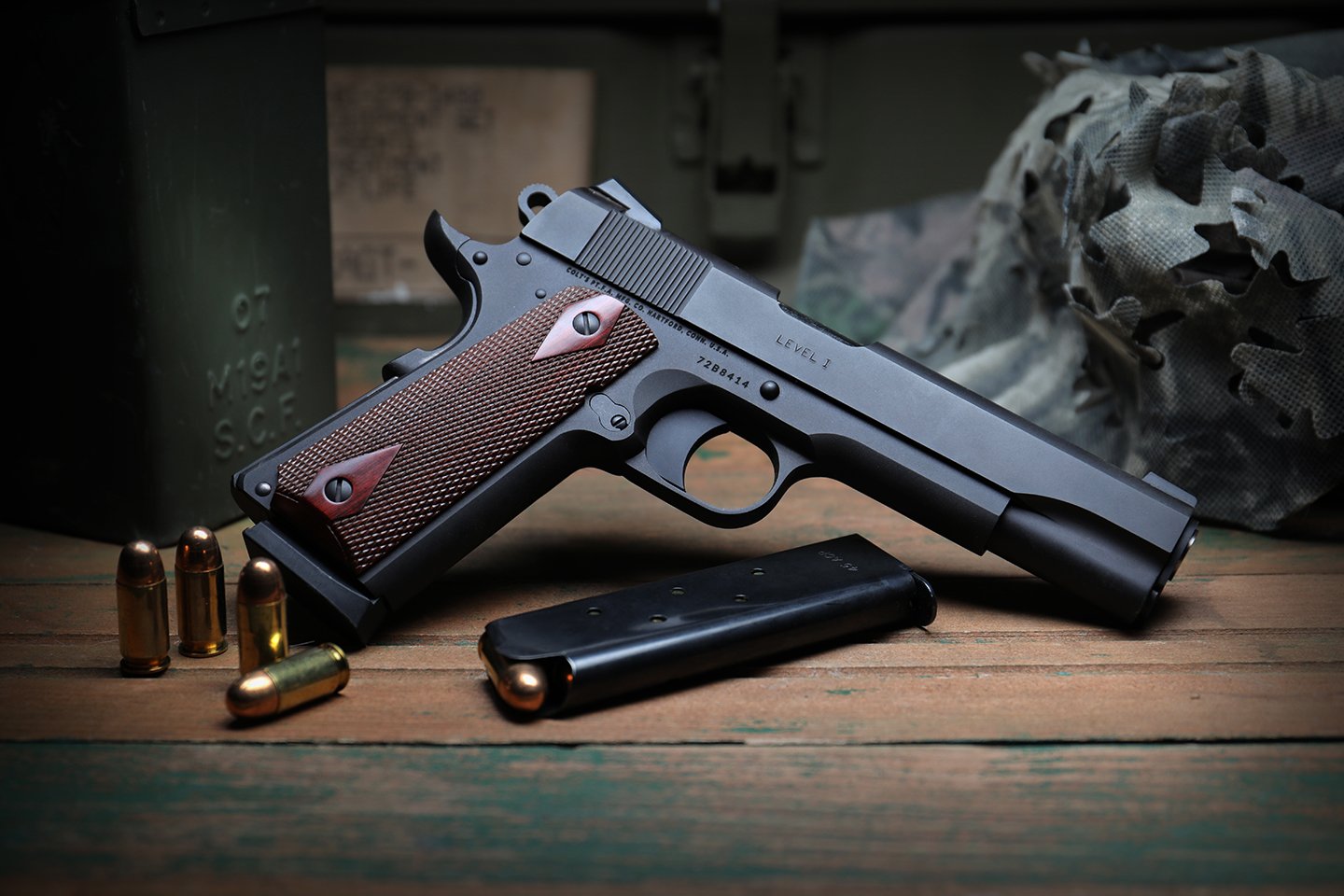

This led John Moses Browning, the patron saint of firearm invention, to introduce a semi-automatic pistol chambered in his .45 ACP caliber. The handgun competed against six other designs for adoption with the U.S. military.
After a series of trials and 6,000 rounds fired through one Browning-designed .45 ACP handgun in two days with no failures, the design was adopted in 1911. It went on to serve for 74 years, the longest-tenured handgun design in U.S. military service by a long shot.
The 1911 in American Culture
Due to its long service record, the 1911 has become an iconic all-American handgun. With the 1911 and the .45 ACP cartridge both having a U.S.-born inventor, its deep American roots are proudly embodied by those who carry it.
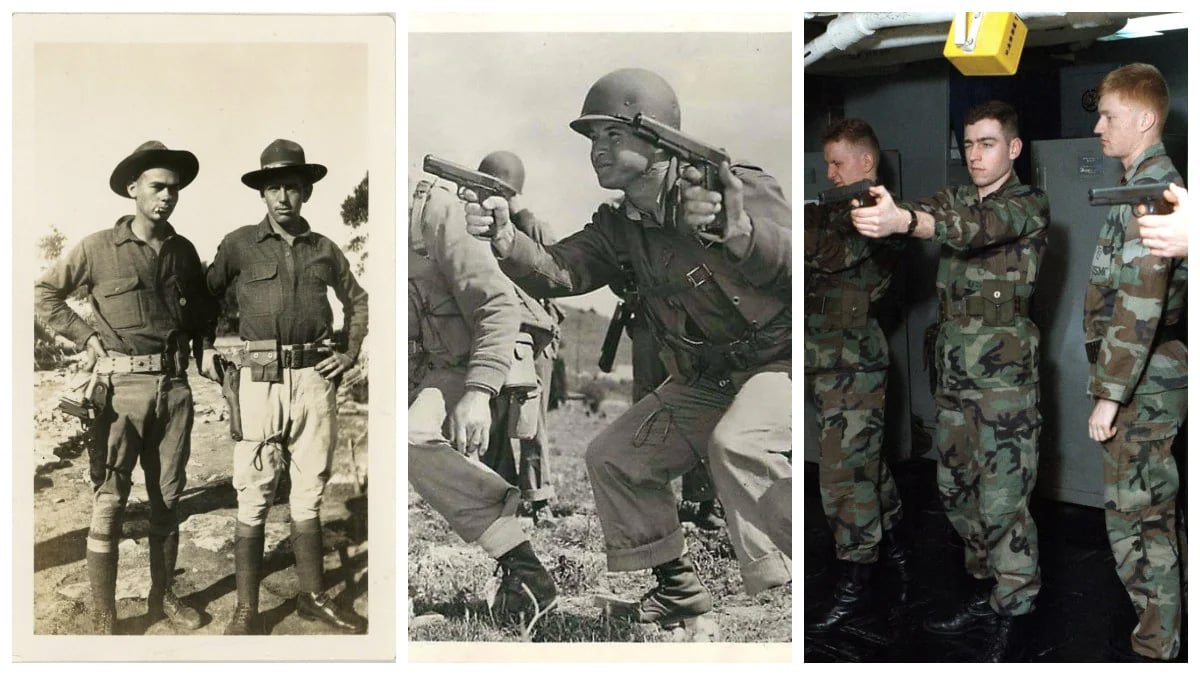
As a design that weathered both world wars, Browning’s pistol is often referred to as the “back-to-back world war champ.” Colonel Thompson’s report requesting a handgun and caliber with more “stopping power” is responsible for the almost mythical abilities that many 1911 enthusiasts have associated with the handgun and its .45-caliber cartridge.
It’s a piece of history that can easily knock a man out of his shoes, if they find themselves on the wrong end of it – at least according to those who carry the handgun.
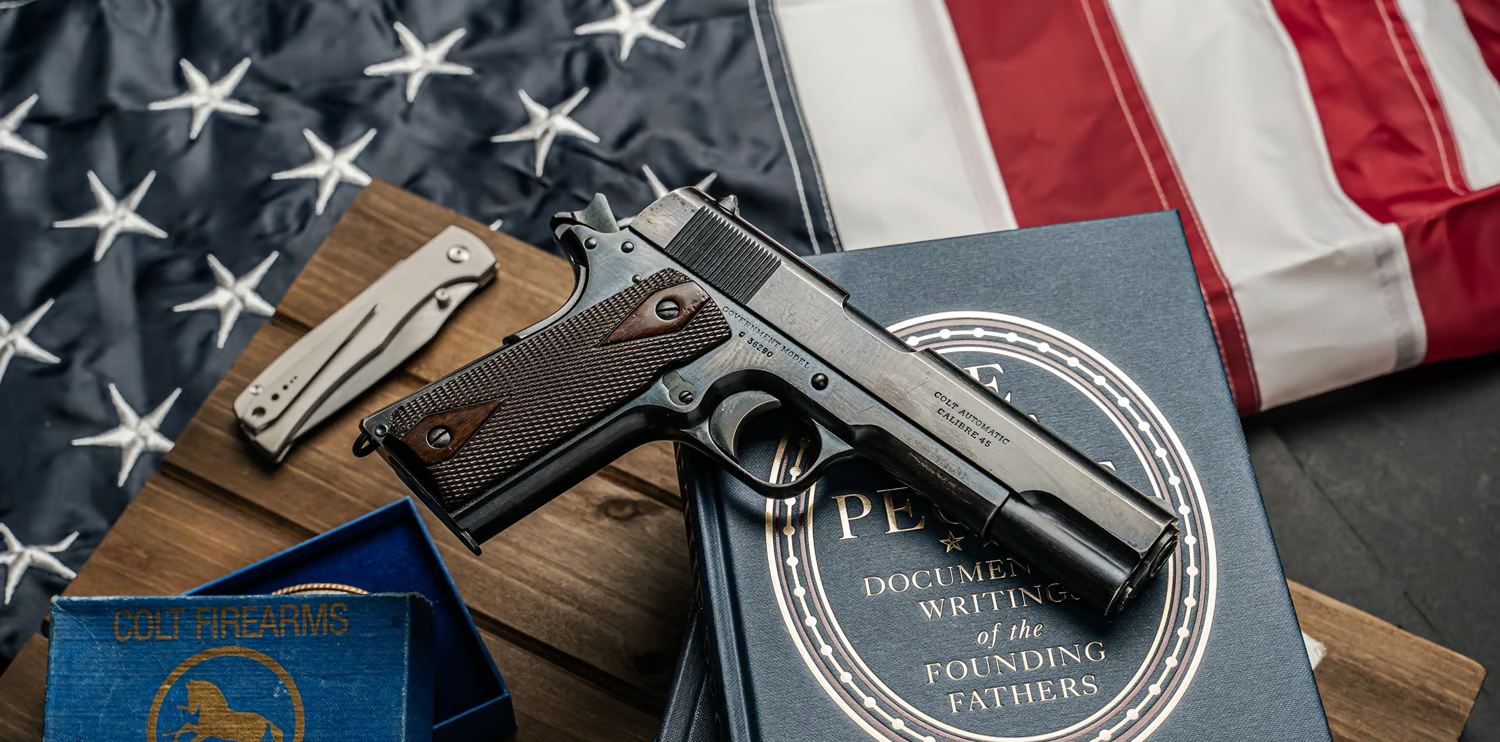
The 1911 is also a prime choice for media in the United States. From historical pieces like “The Pacific” or “Band of Brothers,” to action movies like “The Terminator” or “The Punisher,” the 1911 is synonymous with many gun-fueled films and TV series. Even the “Kill Tony” comedy show has a 1911 prop sitting on the judges’ table on set.
Manufacturing
While Colt strictly guarded early manufacturing of the 1911, the design has since become one of the most copied and cloned handgun designs in history. With pretty much every 1911 patent expiring in the 1930s, the design became public domain prior to World War II.


Eventually, the 1911 went into production at factories all over the world. With millions produced by countless nations, the 1911 is one of the most mass-produced handguns in the world.
Due to its massive production numbers and long history of manufacturing, the 1911 has more aftermarket support than most other firearm designs. There are countless aftermarket parts and customizations available for the 1911.

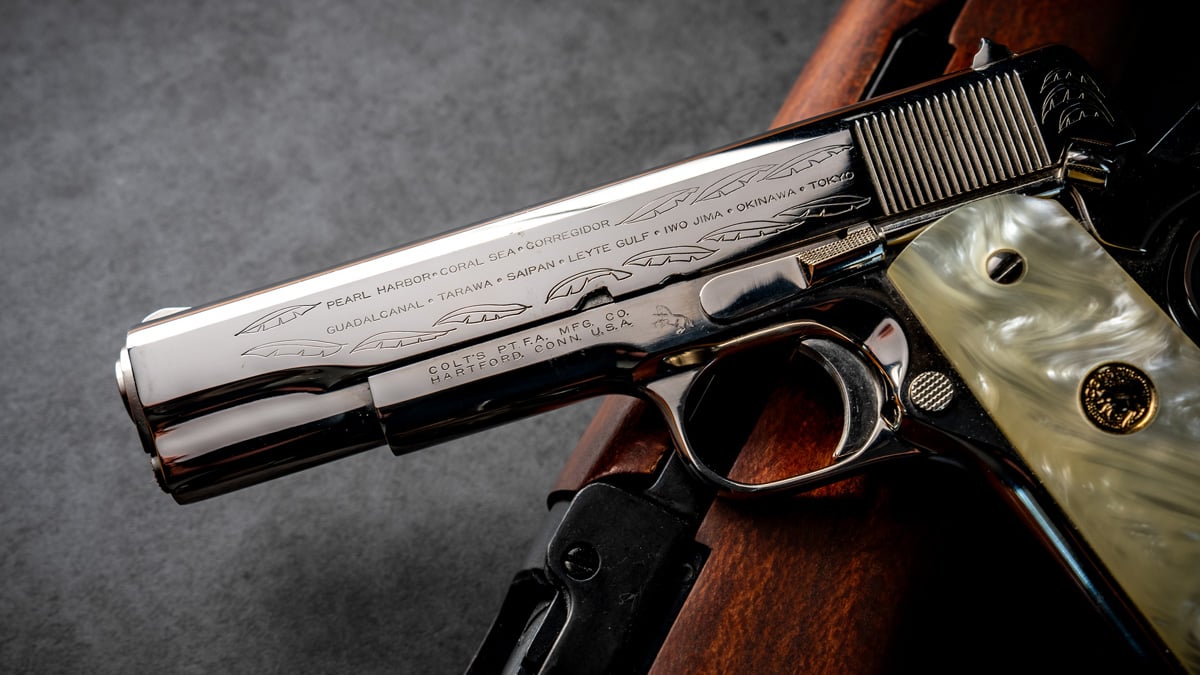
On the high end, the 1911 is also known as a status piece. Companies like Cabot manufacture 1911s with exotic materials such as meteorite rock, mammoth fossil grips, or gold-plated finishes. Custom builders including Wilson Combat, Les Baer, Ed Brown, and Nighthawk meticulously assemble these pistols for optimal performance. Many of these models become the centerpiece of large firearm collections.
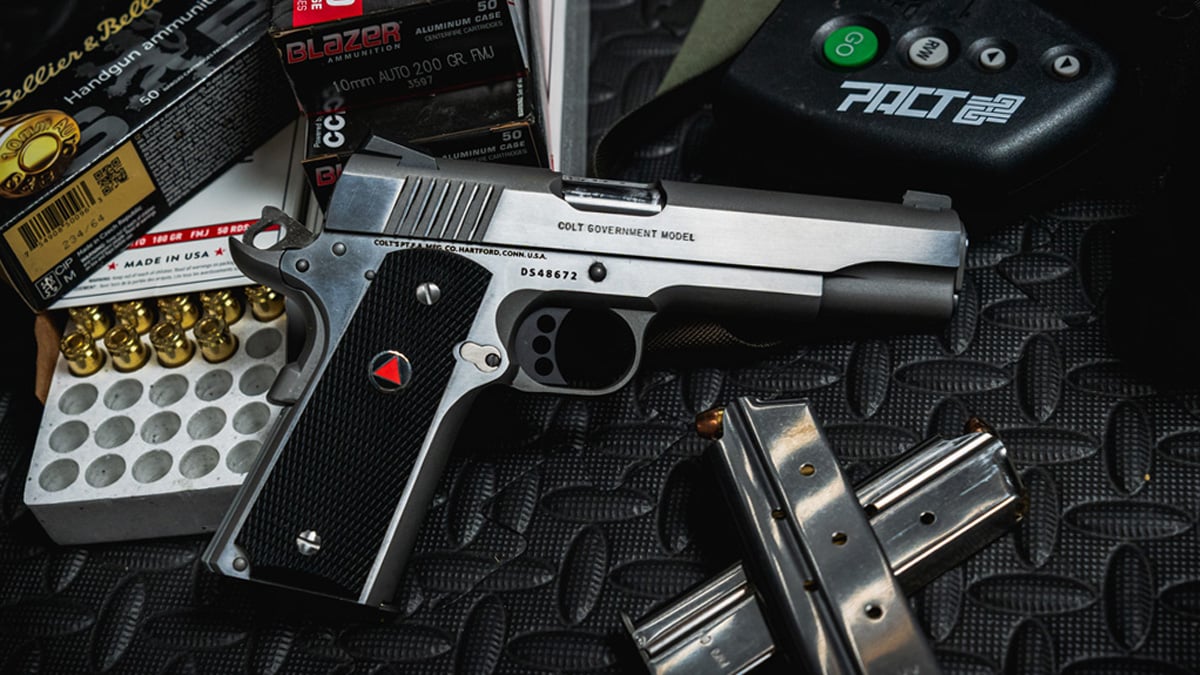
The 1911 is also adapted to many different calibers. With the popularity of 9mm came a plethora of new 1911s designed for everything from concealed carry to competition shooting. The design was improved further with the introduction of the more modern double-stack 9mm, colloquially known as the 2011, thanks to Staccato. You can find 1911s in other popular calibers like 10mm, .22 LR, and even .357 Magnum.
Ergonomics and Performance
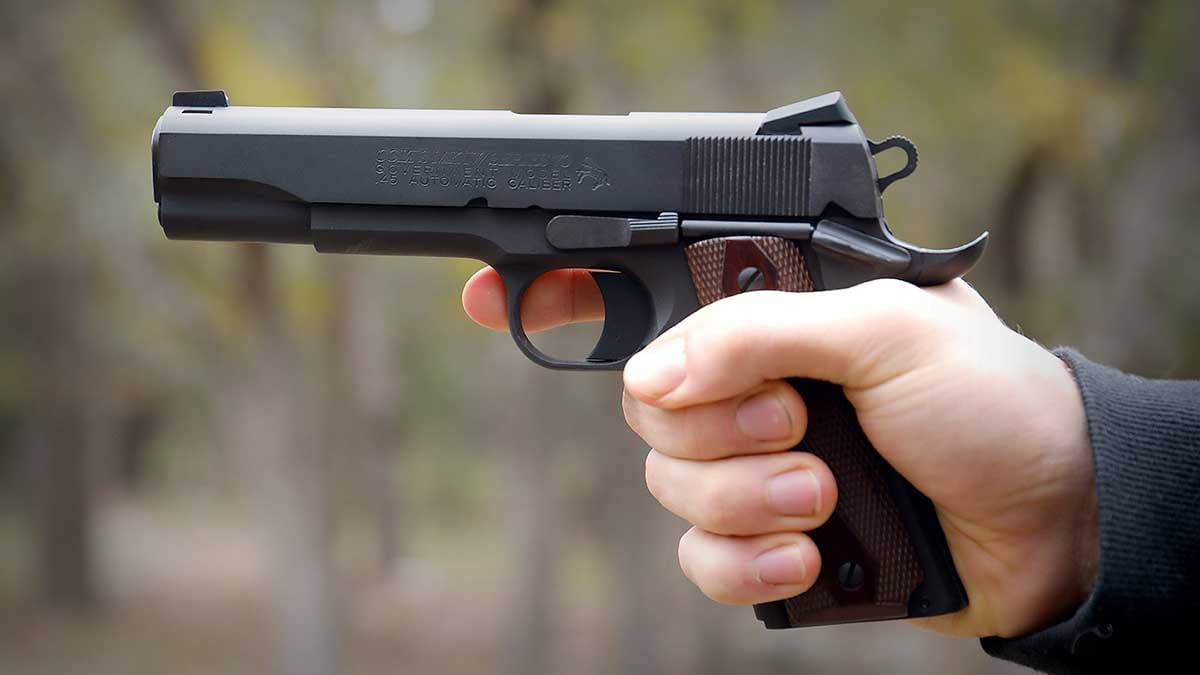
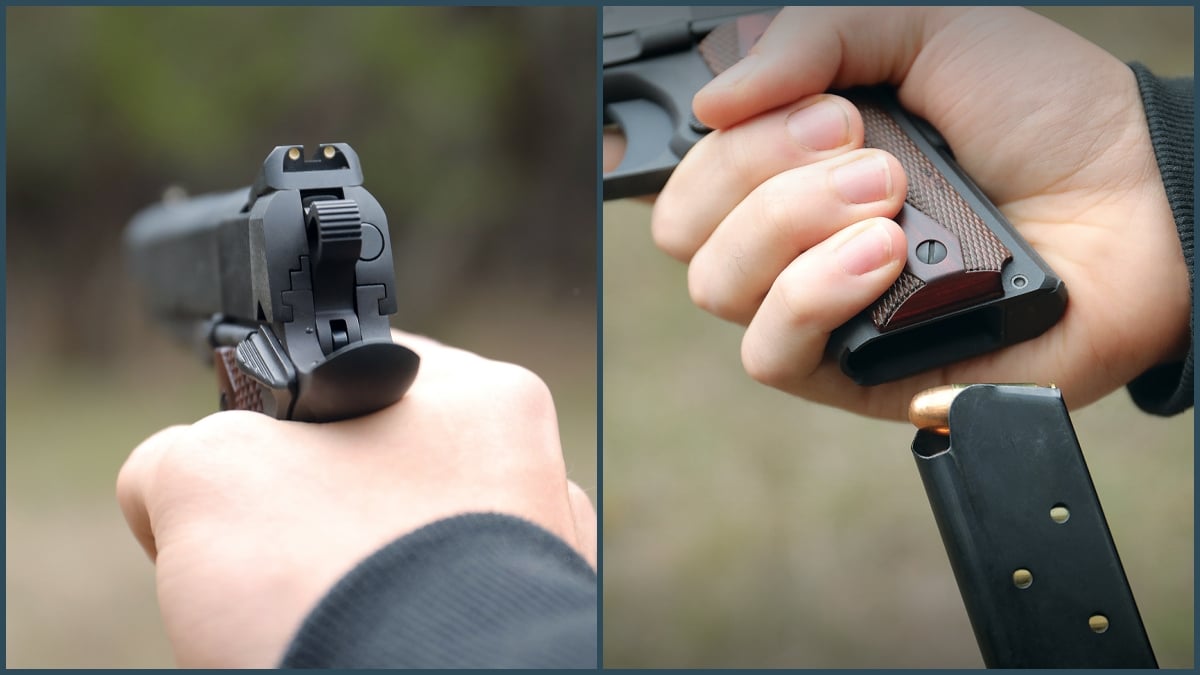
The 1911 design is known for its ideal grip angle, light trigger, and redundant safety features. The heavier, all-metal construction aids in dampening recoil and softening the jolt of the cycle, making it an easy handgun to master. Instructors often issue 1911s to help new shooters master the basics of a handgun that is comfortable to wield.
While other designs may be naturally more reliable, with proper maintenance and cleaning, the 1911 is dependable.
Summary
With all this lore, it is easy to see why the 1911 was my first carry handgun. Like many folks, I wanted an iconic American design with stopping power, a deep history, comfortable ergonomics, and reliable function.
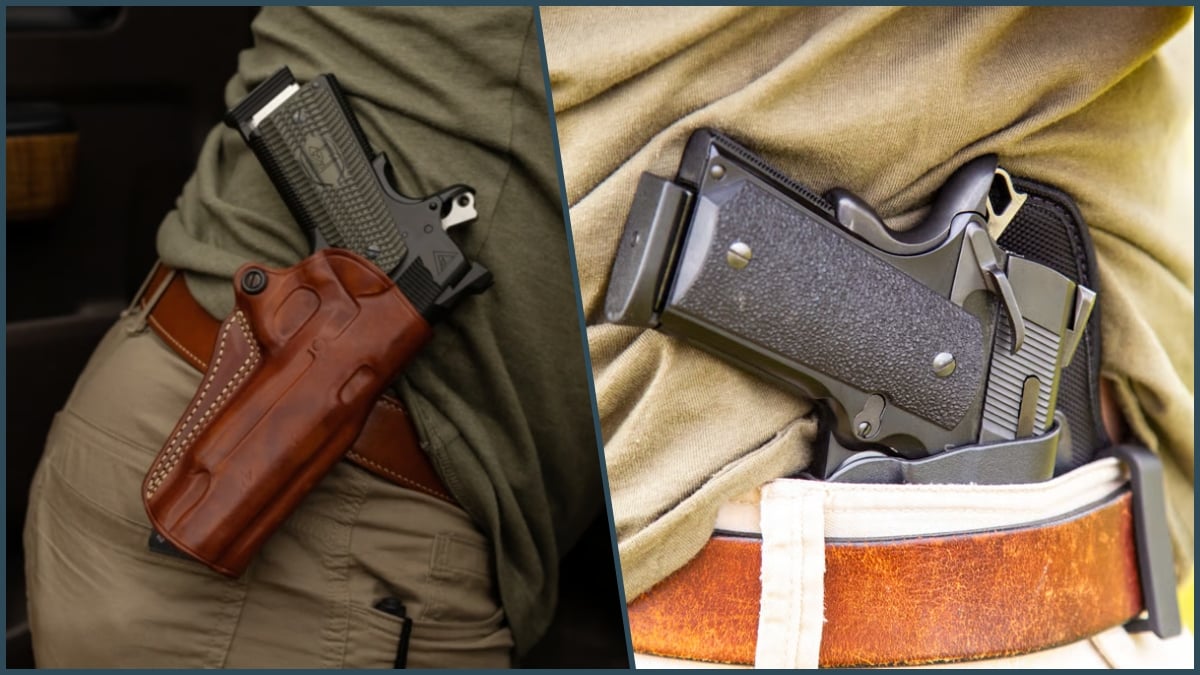
The 1911 fits that bill, and that’s why it remains the go-to handgun for so many. The 1911 isn’t going anywhere, and let’s be honest: everyone needs a 1911 in their collection.