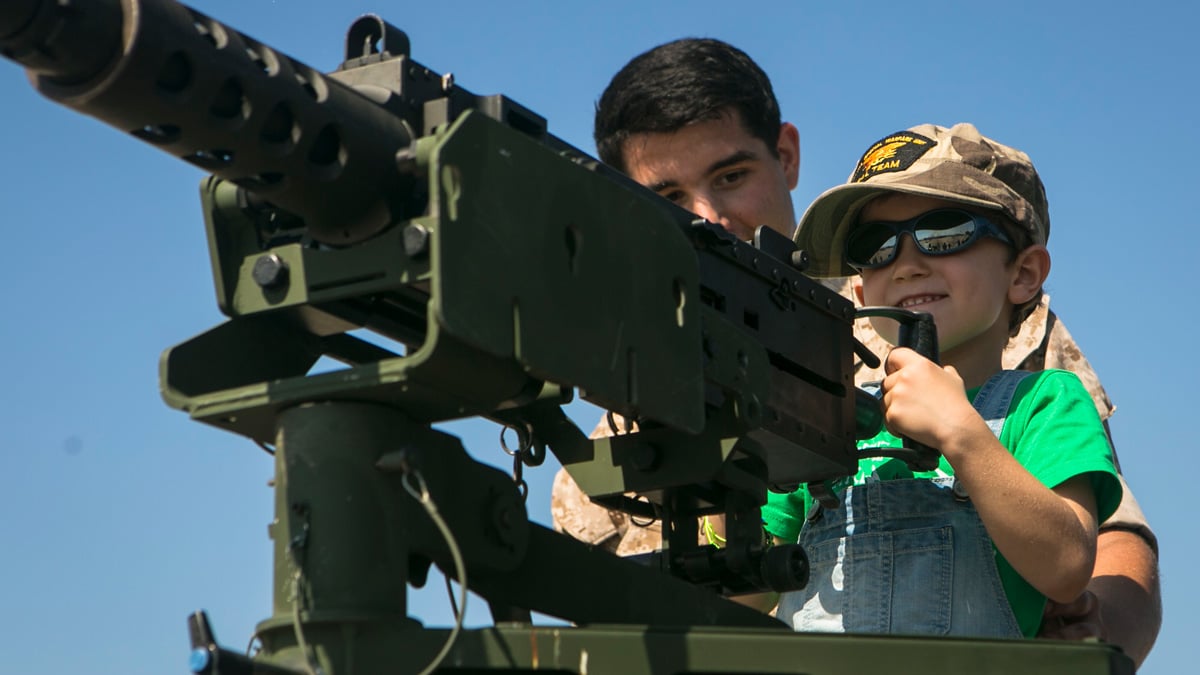
.50 BMG History

In what started as a hunt for something to address the new airplanes hawkishly commanding the skies during World War I, the U.S. military turned to America’s firearms pioneer, John Moses Browning, and America’s premier arms manufacturers for help.
This need only became more urgent with the arrival of armored vehicles and tanks on a battlefield that was also dominated by fast-firing artillery and machine guns. Having already designed a host of cartridges and automatic firearms, Browning set to work on what would become the infamous M2 Browning heavy machine gun.
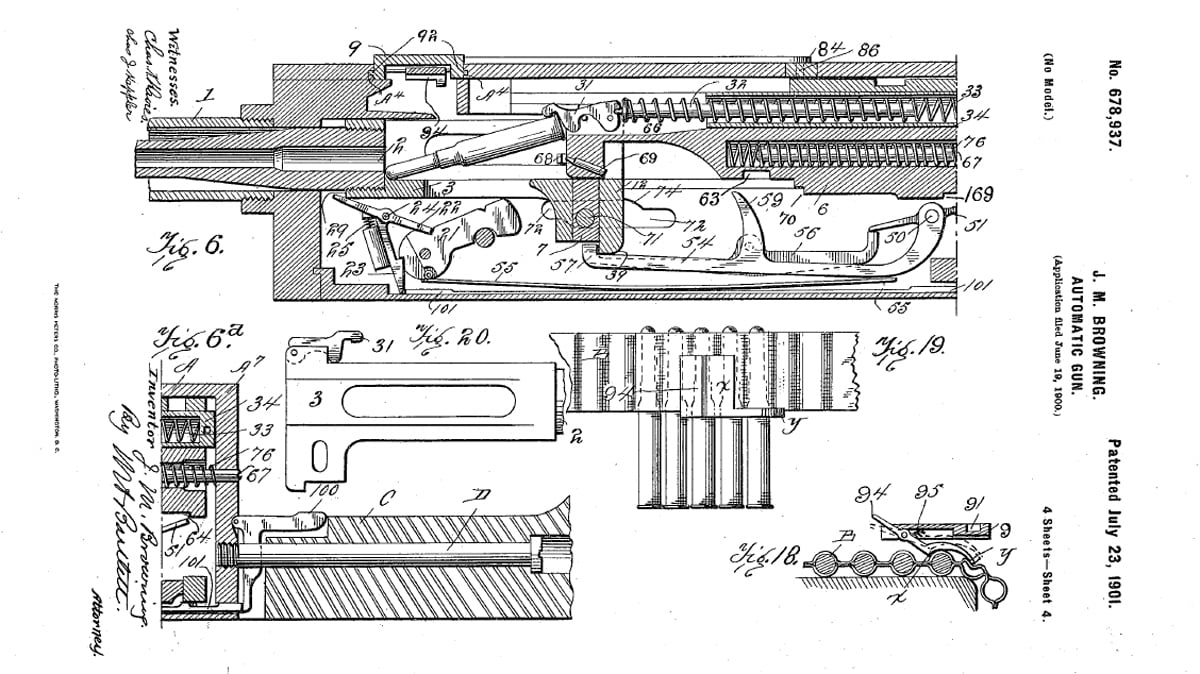

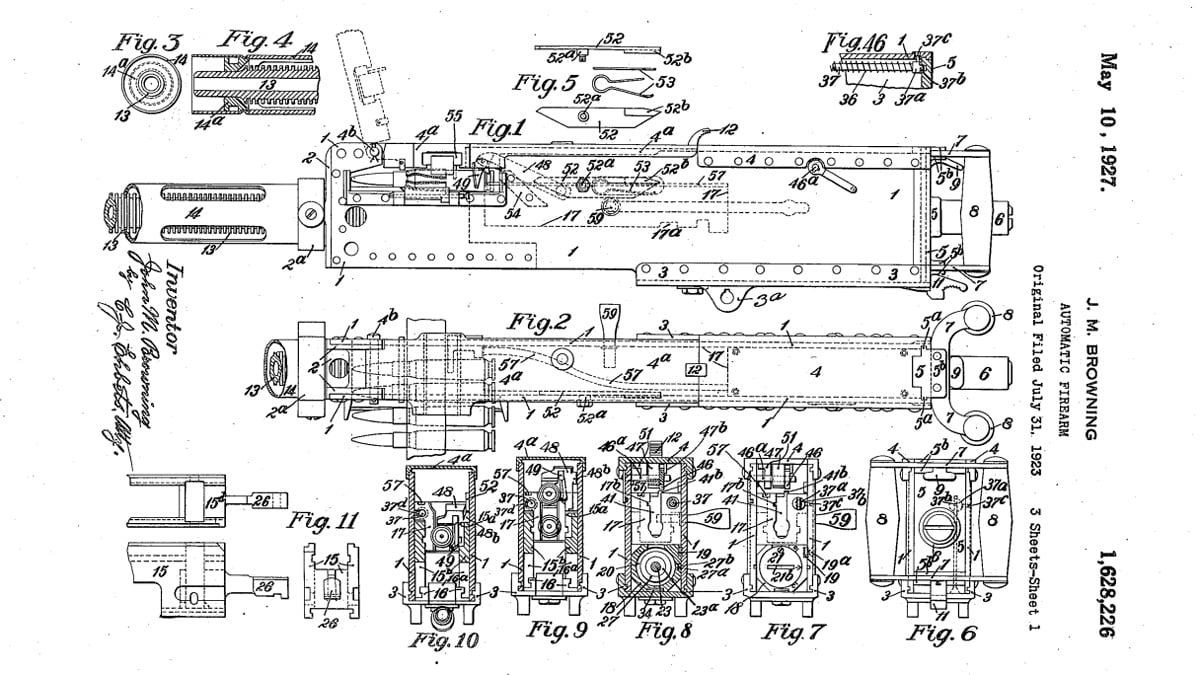
The military wanted something that could deliver high volumes of fire with heavy projectiles moving at speeds approaching 3,000 FPS. That was a tall order for the early days of machine guns and relatively new centerfire cartridges featuring smokeless powder.
Browning set to work on a firearm that could manage such a large and powerful cartridge, and Winchester – later Frankford Arsenal – took the lead in designing a cartridge to go with it.

Related: America’s Ammo Moses – John Browning’s Cartridges
Alas, the clock was ticking as other nations raced to field heavy-caliber weapon systems, such as the German Mauser 13.2mm TuF cartridge introduced in 1918. It was fielded in the rudimentary Tankgewehr M1918 anti-tank rifle and was destined for the MG 18 TuF heavy machine gun, which never arrived in time to impact World War I.
In the end, Browning delivered his first prototypes in the waning days of WWI before they could directly impact the war. But the stage was set for his M2 Browning machine gun and the .50 BMG to take center stage in future conflicts.
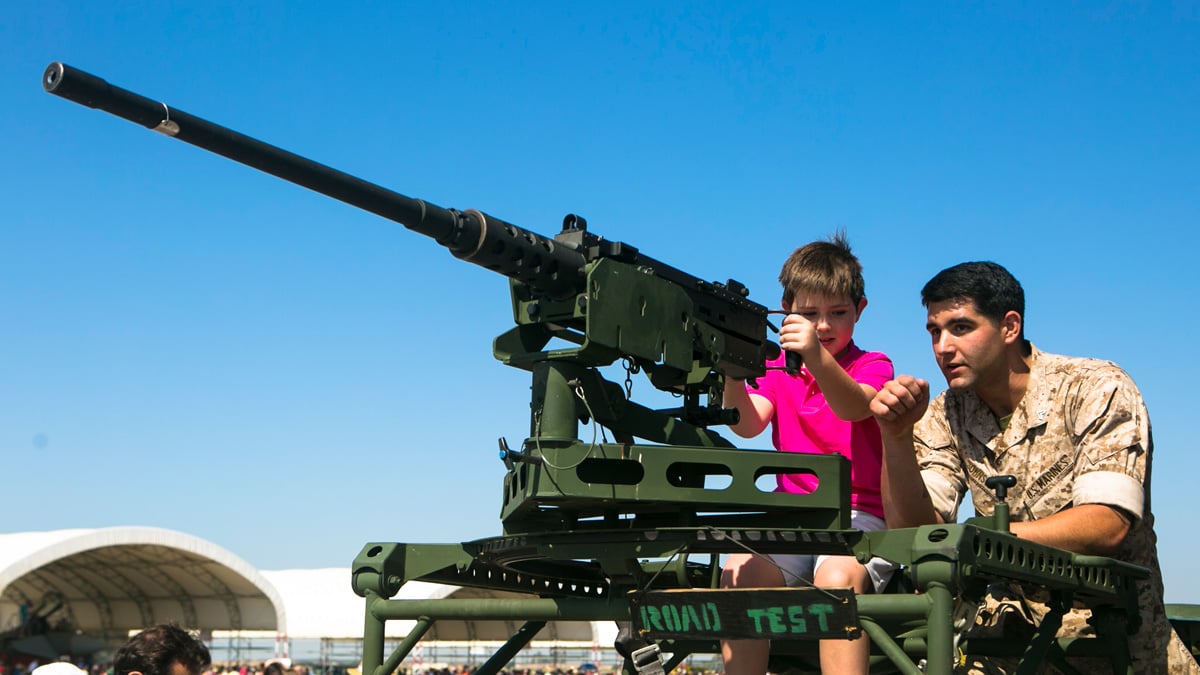

By the time the U.S. dove into World War II, the .50 BMG and M2 Browning were essential tools of war for the rapidly modernizing American military. Factories produced hundreds of thousands of Browning’s machine guns during the war, and the .50 BMG was at the heart of the action on every front. Few examples are quite as iconic as the famed “ball turret” used in the B-17 and B-24 bombers.
Related: WW2 Ball Turret with twin .50 cals at Big Sandy Shoot (VIDEO)
The M2 Browning heavy machine gun is still a staple for American aircraft and vehicles. It’s so effective and beloved among troops that some daring soldiers and Marines have gone so far as to unmount the 84-pound weapon system for direct-fire uses in the field. That’s a true commitment, since the real weight is more like 128 pounds with the very necessary tripod, not even counting ammo.
There are a growing number of man-portable rifles and machine guns chambered for the .50 BMG these days. The Barrett M82/M107, aka the Light Fifty, helped popularize the .50 BMG for use in a proper rifle platform in the modern era for both the military and commercial markets.

Even more potent multi-barrel rotary machine guns like the GAU-19 are now capable of delivering a withering 2,000 rounds per minute of the unforgiving .50 BMG. From the Zastava M93 Black Arrow and the recently reintroduced Bushmaster BA50 to the Auto-Ordnance TAU50, the market has grown substantially for commercially available .50 BMG rifles.
Related: Holy Tao! Kahr Launches Auto-Ordnance TAO50 .50 BMG
As far as battlefield cartridges go, the .50 BMG has an incredible range of applications that it seems almost tailor-made to perform.
Ballistics & Specs

At 5.45 inches long, running standard .50 BMG ball ammo through the M2 Browning heavy machine gun at the cyclic rate is like speed-feeding renowned hot-dog-eating champion Joey "Jaws" Chestnut average-sized weenies at a rate of 450 to 600 dogs per minute.
It’s an impressive feat.

Exact cartridge lengths and bullet weights vary depending on what type of .50 BMG round you’re looking at, so here are just some of the options out there these days:
- M33: Standard general-purpose ball ammo with a full metal jacket
- XM1022: Match-grade precision
- M2 AP: Hardened steel core penetrator for light armor
- M903 SLAP: Saboted Light Armor Penetrator with a tungsten core
- M962 SLAP-T: A tracer version of the above M903
- M17 Tracer: Red/orange tracer options
- M20 API-T: Armor-piercing incendiary tracer
- Mk 211 Mod 0: High-explosive, armor-piercing incendiary
And the list goes on. The main point is that the size and popularity of the .50 BMG open it up to a lot of different design options that are not available to smaller calibers.
Related: Going Big with .50 BMG – Barrett M82A1 Rifle Review

For the purposes of this article, let’s just take a quick look at the basic specs and ballistics for the simple M33 ball ammunition. Here’s a rundown of the technical details:
Projectile Type: Full metal jacket with steel core
Cartridge Length: 5.45 inches
Case Length: 3.95 inches
Bullet Length: 2.3 inches
Bullet Diameter: 0.51 inches
Bullet Weight: 660 grains
Maximum Range: ~7,436 yards
Max Effective Range (Point Target): ~1,640 yards
Max Effective Range (Area Target): ~1,970 yards
Energy: ~12,400 foot-pounds
Velocity: ~2,900 fps
*Specifications and ranges vary by manufacturer, operating system, elevation, and shooting conditions.
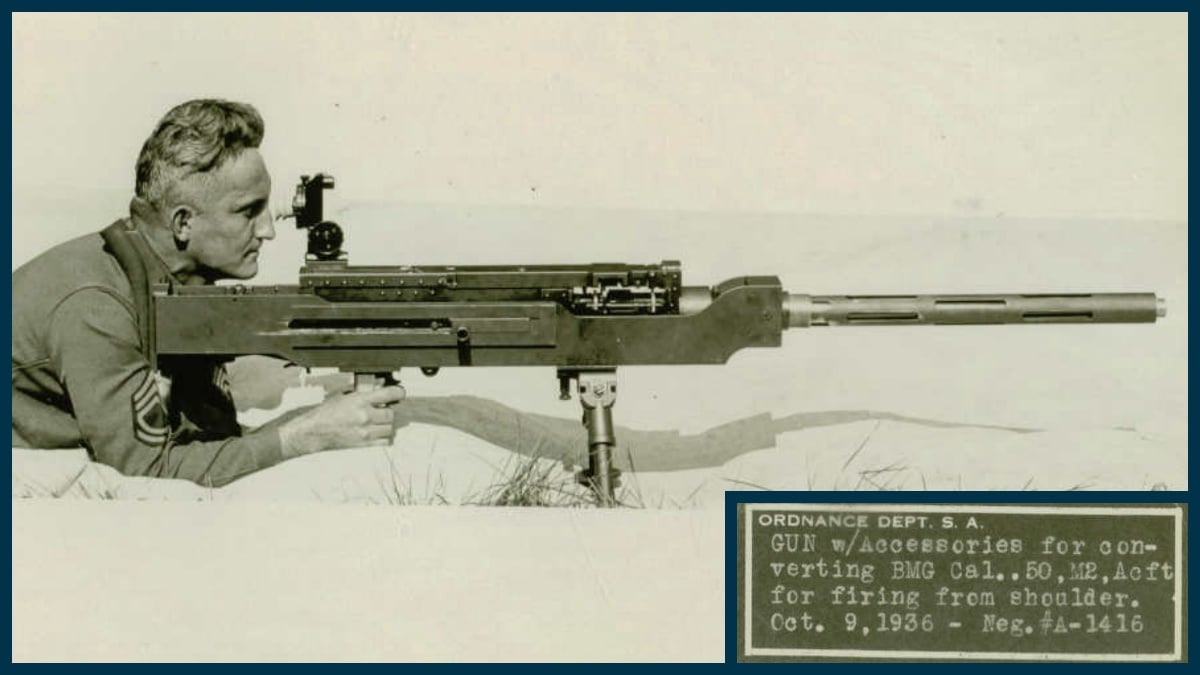
In general practice, a system like the Marine Corps’ M2A1 Browning heavy machine gun isn’t intended for extreme precision engagement of small targets at long ranges. Machine guns vibrate – a lot – and that impacts accuracy.
Instead, a machine gunner can use the gun’s more theoretical “beaten zone,” which is an elliptical pattern formed by the area bullets impact at various ranges. Here’s an example from the Marine Corps’ “Machine Guns and Machine Gun Gunnery” handbook:

While I wouldn’t be surprised to learn that someone out there has armor-piercing M903 SLAP rounds hot-loaded in their home defense Barrett M82, the .50 BMG’s bread and butter is still technically resource denial and barrier penetration.
More specifically, it punches holes in things most people consider effective cover. It also breaks almost anything the enemy can drive, fly, eat, wear, sleep inside, or mail back home in a box larger than a deck of cards.
Pros & Cons
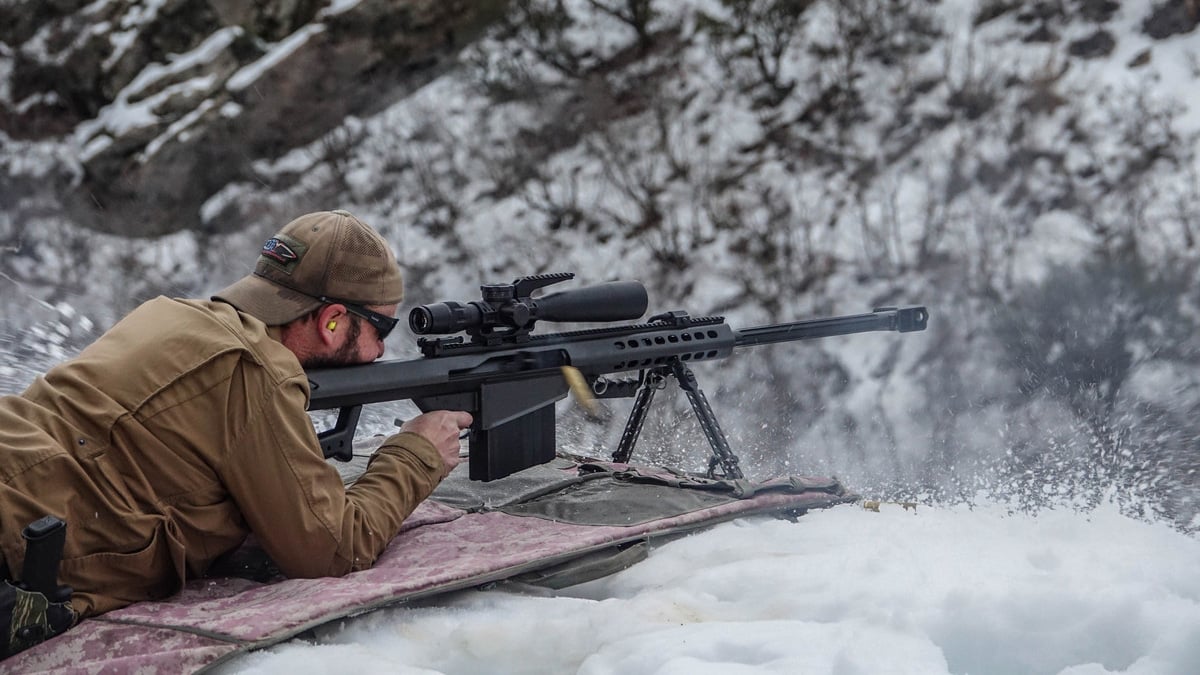
There are plenty of things that shine for the .50 BMG; however, big bullets and big guns have some big problems as well. Here are my top five pros and cons of the .50 BMG:
Pros:
- Powerful, long-range capabilities
- Lots of ammunition options for specific needs
- Great armor/barrier penetration capacities
- Relatively large and growing family of firearms that use it
- Well-documented effectiveness for over 100 years
Cons:
- Requires a large and often very heavy firearm
- Ammunition is also heavy
- Was never really designed for extreme precision
- Accurate shooting generally requires a stable support platform
-
Over-penetration is a concern in many situations
Final Thoughts

For a round like the .50 BMG to live – even thrive – for more than 100 years is a testament to its effectiveness. It’s an equal testament to the fact that it’s hard to beat, at least in any way that could justify replacing the stockpiles of ammo and firearms that already exist.
Newer cartridges like the smaller .338 Norma Magnum have gained traction in the U.S. military as a long-range alternative, but only for limited applications so far. At the moment, it’s hard to see the .50 BMG and its many firearms disappearing anytime soon.
Related: Twin Water-Cooled .50 Cals Roar at Big Sandy
Beyond its stellar military and commercial record, shooting the .50 BMG is the kind of experience you don’t forget easily. Combined with its century-long reign as America’s heavy machine gun champion alongside the M2 Browning, I imagine the .50 BMG will still wow shooters for at least a few more generations to come.