Bottleneck pistol cartridges
First, let’s dive into the concept and reason behind bottleneck pistol cartridges. The bottleneck design’s primary advantage lies in increased muzzle velocity and a flatter trajectory. As the casing holds more powder with a smaller surface area to propel the gases when the primer ignites, there is a more concentrated force propelling the bullet.
While not the first semi-automatic pistol to be invented, the C-93 Borchardt is considered the first successful commercially available semi-automatic handgun to hit the market. Several years prior to the beginning of the 20th century, the C-93 was released in 7.65x25 Borchardt. Before this, handgun cartridges were straight-walled and rimmed in order to function properly in revolver chambers.
Bottleneck cartridges feed better from magazines, and the rimless nature can eliminate rim-lock from binding the casings during the feed.
Early designs
While 7.65x25mm Borchardt was one of the first bottleneck pistol cartridges, it would not be the last. In the early 1900s, handguns went through a significant changing of the guard from capacity-limited revolvers to semi-automatic designs that fed from box magazines. In the same era, several straight-wall cartridges were adopted to meet the demand of the new designs, competing against several iconic bottleneck concepts.

Early on, 9mm Luger and .45 ACP established a sort of dominance in the handgun market, but several firearm designs split between bottleneck and straight-wall casing designs. Most notably, the Germans used the 9mm Luger round in the P-08 Luger, while the Swiss Luger opted for the bottleneck 7.65 Parabellum cartridge.
Conversely, the 1911 was chambered in .45 ACP, while the Russians provided a similar design concept with the TT-33 Tokarev chambered in the bottleneck 7.62x25mm. In fact, 7.62x25 basically was the only bottleneck pistol cartridge to see wide adoption and use through the mid- to late 20th century.
Early success of the bottleneck design did not last much past the 1950s. The straight-wall design came to dominate in most major militaries, which were seemingly content with 9mm and .45 ACP, and there would basically be no innovation to the design until 1994.
A Reason to Bring it Back
In 1994, following the Miami-Dade FBI shooting, law enforcement took an inventory over the effectiveness of the 9mm cartridge. This inquisition led to the short adoption of the 10mm round, which increased both the velocity and size of the standard pistol round.
The reign of 10mm was short due to the harsh recoil affecting agent qualifications. Several companies then threw their hats in the ring to work out a solution, bridging the gap between 9mm and 10mm. Most notably, Smith & Wesson developed a design that cut down the 10mm casing length, creating the .40 S&W cartridge.
Related: Glock 22 – Is .40 S&W a Dead Cartridge or Still Relevant? (Ballistic Test)
SIG Has a Solution
While the .40 S&W saw major success and was officially adopted by the FBI, that was not the only cartridge solution offered. In 1994, SIG Sauer took a different approach.

Understanding the need for increased power, SIG took the 10mm casing and necked it down for a 9mm bullet. This new cartridge saw a flatter trajectory and extended range over 9mm, while nearly matching the energy transfer of 10mm with less recoil.
Easily forgotten, the .357 SIG has seen success in many law enforcement departments across the United States. With standard loads traveling at excess of 1,400 FPS in handgun barrel lengths, it has proven to be an effective cartridge. However, due to the adoption of .40 S&W, it has not seen great commercial success and has remained a rather pricey option.
FN and NATO Breed the 5.7
Around the same time SIG was working on its bottleneck .357, FN was working on a new cartridge for competition in NATO contracts. In the late 1980s, NATO had started a search for a new weapon system for vehicle crews, protective services, special operations units, and counterterrorism divisions. They wanted a design that would be more compact and more powerful than things like the MP5.
FN designed the P90 chambered in 5.7x28mm to meet the criteria for the NATO Personal Defense Weapon (PDW) program. While the P90 saw success and adoption with agencies like the U.S. Secret Service, NATO recognized the potential of the 5.7x28mm cartridge as a possible replacement for the 9mm NATO.
Related: 5.7x28mm – History or Zippy Future?
In 1998, FN released the FN Five-seveN, a handgun meant to go in tandem with the P90. With a standard capacity of 20 rounds and muzzle velocities over 2,000 FPS, the new handgun design went on to be adopted by over 40 nations across the globe.
The Comparison
While there is an impressive history with the development of both cartridges, they seem to still elude the mainstream public market.
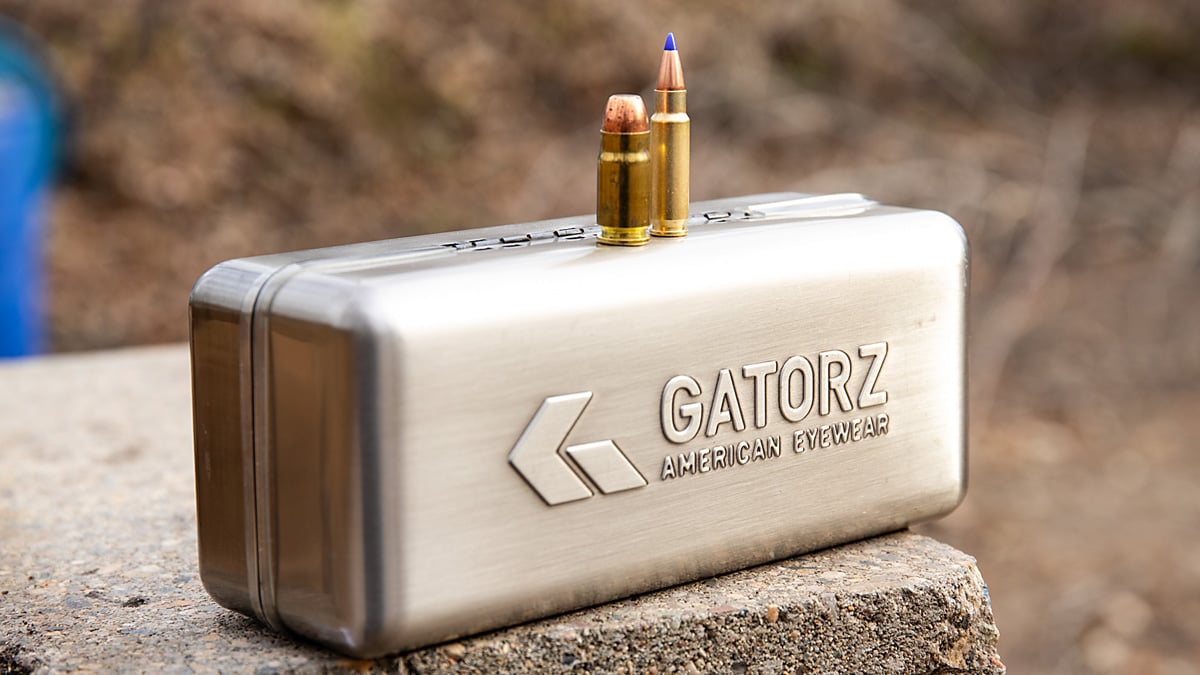
So, how do these two cartridges compare? Both the .357 SIG and 5.7x28mm designs are defined by their flat trajectory, extended range, and increased velocity – all positives in comparison to their straight-wall casing contemporaries. At the same time, they are different in many ways.
.357 Design Features

FN’s zippy 5.7 round is much faster than the .357 SIG. This cartridge is designed to penetrate hard targets and punch right through body armor. The increased velocity of this round makes it a little more challenging to find a good carry load, as there is increased risk of over-penetration.
The 5.7 is becoming more popular as time goes on, seeing a lot of success in pistol caliber carbines. In certain barrel lengths, the 5.7 can travel more than 3,000 FPS.
Related: 5.7x 28mm as a Defensive Round?
On the Range
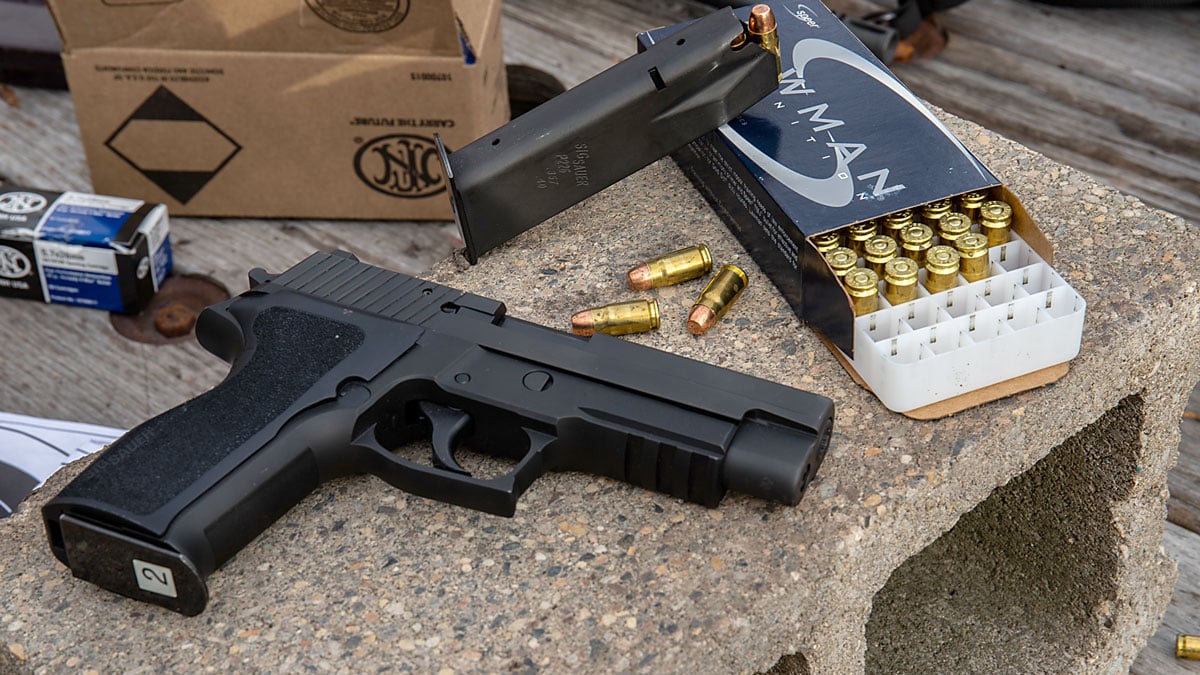
I took a SIG Sauer P226 chambered in .357 SIG and a Smith & Wesson M&P in 5.7 and compared their performance on the range. It’s not often that you get to take two less common cartridges and compare their performance side by side.

Starting with the SIG, there is something to be said about the construction and performance of a P226. I think the P226 is the gold standard of hammer-fired semi-auto handguns, but this is more about the performance of the .357 SIG cartridge. In the full-size P226, you get 12 rounds of standard capacity. The recoil impulse is very comparable to a .40 S&W, although I assess that it is a little less snappy. The round is very controllable and easy to shoot.
The Smith & Wesson 5.7 is a completely different animal. The handgun has a 22-round standard capacity and basically a .22 Magnum recoil impulse. It is very easy to keep the muzzle down and shoot quick drills and target transitions. The velocity and power coming out of such a small and controllable platform is impressive.
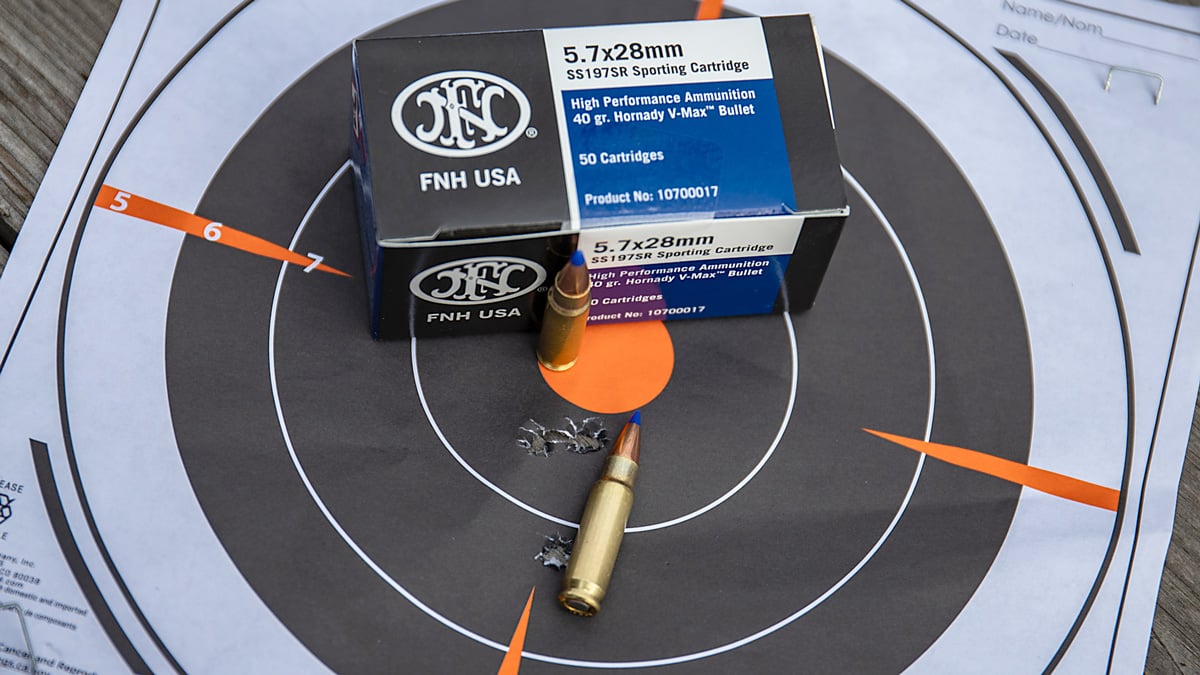
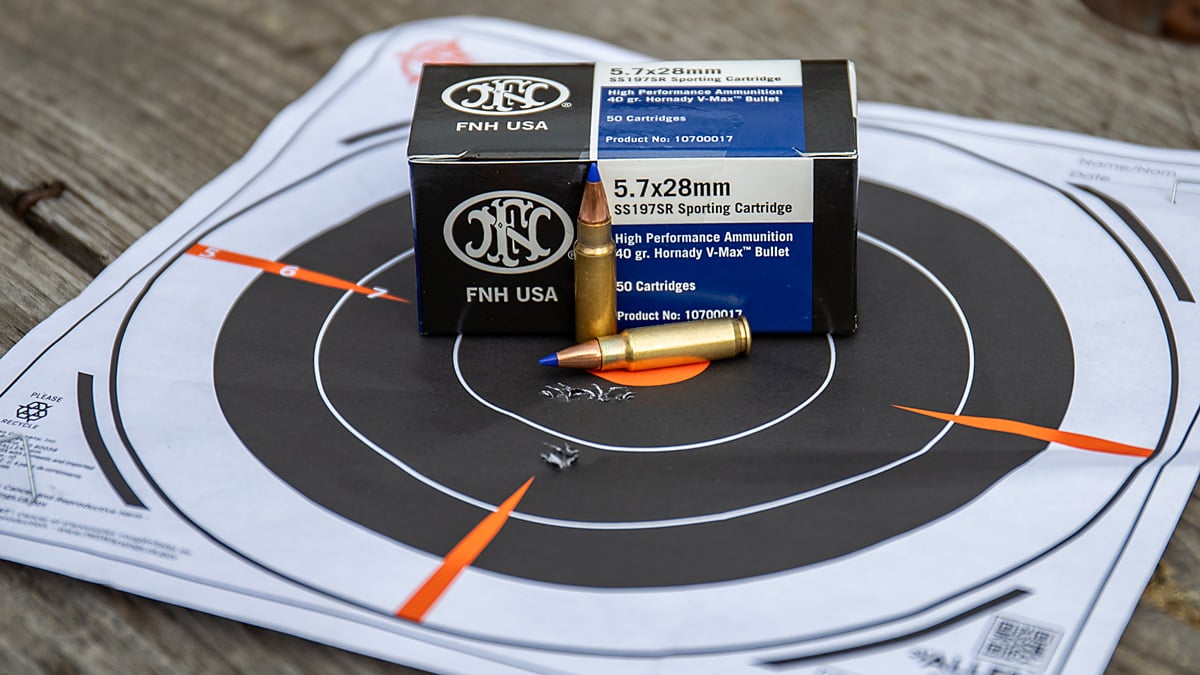
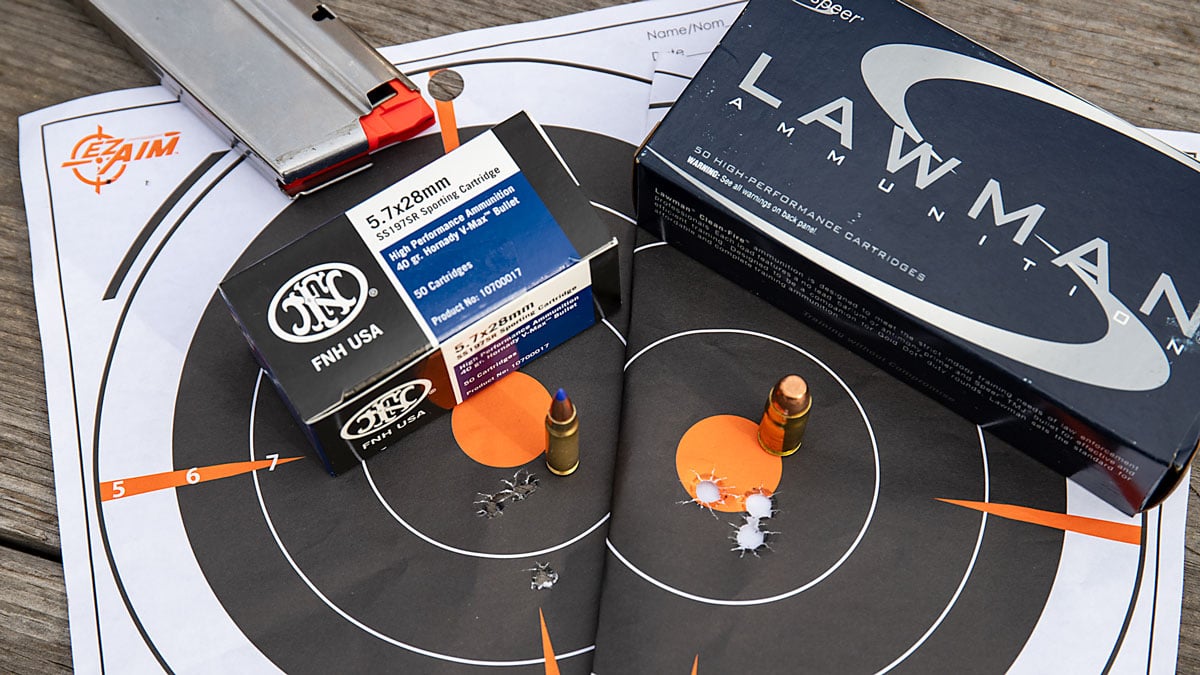
I shot three-round groupings at 7 yards, and it was relatively easy to get a nice tight group with both cartridges. Even on paper it is easy to see which round would be better suited for a duty handgun.
Performance and Practical Use
For me, both cartridges have different roles to fill according to their strengths and weaknesses. The .357 SIG is a great handgun cartridge well-suited for everyday carry. The round has an extended range over much of its competition, all while not over-penetrating the intended target, eliminating excessive risk. The recoil is slightly more than 9mm, but still very controllable. The one downside is limited capacity, as full-sized handguns allow for only 12-15 rounds of capacity.
I would love to see the .357 SIG get more love in the carbine game, as I believe it would make an excellent sub gun. Imagine a CZ Scorpion or MP5 with a little more range, a flatter trajectory, and a similar recoil impulse to .40 S&W. I think there is potential to be the modern 7.62 Tokarev. Maybe a few companies out there will read this and make my dreams come true.
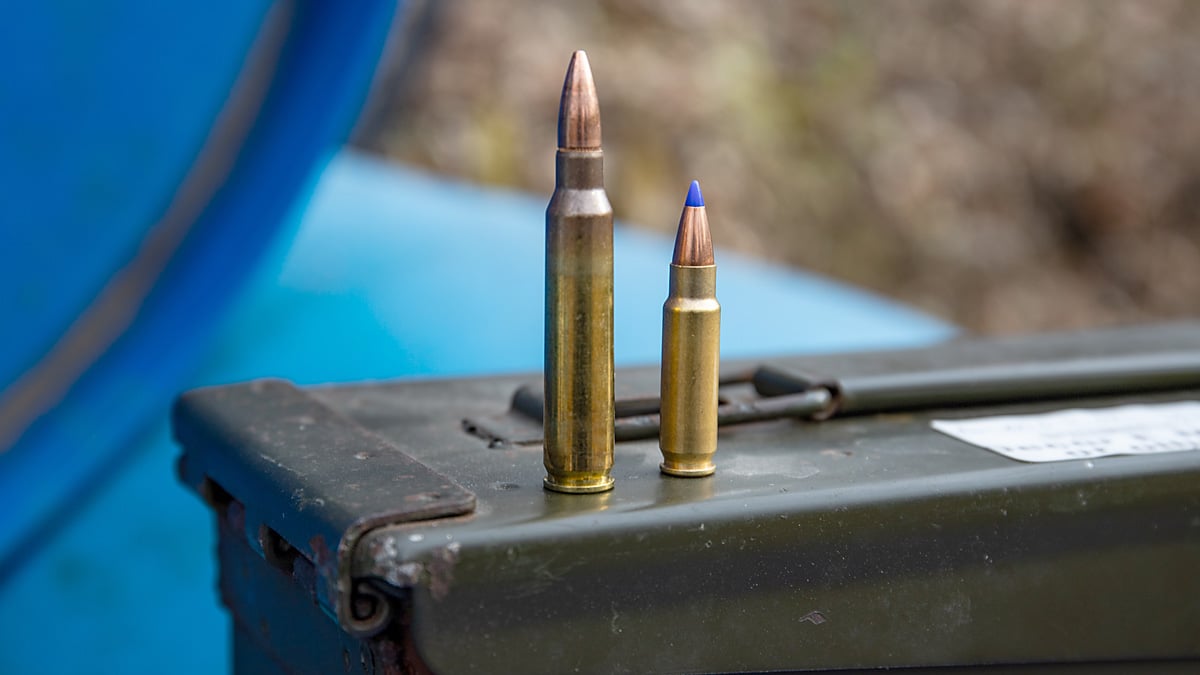
To me, the FN 5.7 round is ideally paired with a bit of a longer barrel, making it a perfect carbine cartridge. With velocities that rival intermediate rifle cartridges, this round will defeat just about any hard target, not to mention the flat-shooting trajectory and nonexistent recoil. The small nature of this design also lends itself well to standard capacities that are much higher than competing designs.
On the flip side, one of the disadvantages is in its use in a handgun. The risks of over-penetration and the .22-caliber size of the round do not make it ideal for an everyday carry for me. The 5.7 design is almost its own new cartridge category. NATO had intended it create a PDW cartridge designation and make the 5.7 the poster child, and I actually think that is its perfect place.
Conclusion
So, which one is best? Well, I think the answer is subjective, and my own conclusion is that they fit different roles. If you get a chance to shoot either, do not pass it up as they are both a blast on the range.
As always, the best cartridge is the one that you train on. The one downside to both calibers is the expensive nature of ammunition. in my opinion, if you have a limited budget, it’s better to get something cheaper, buy lots of ammo, and hit the range to master the craft.
However, if you have a little spending money, I think every collection should have some bottleneck pistol cartridge love.