Why Matte Blue?
I understood the stainless Python, given the default steel for many pistols today is stainless steel. Going for a high-polished blue is an easy appeal to the traditionalist, but when Colt introduced its flagship revolver in matte finishes, I was left shaking my head.
The more I thought about it and the more I handled and shot the Matte Blued Python, the more I understood.

Both the Matte Stainless and Matte Blued Pythons are slightly less expensive and open the door to shooters who might otherwise shirk at the MSRP of the high-polished models. Having shot and carried those higher-end models, I came to the conclusion that these Matte models are more conducive to use and abuse, whether it is repetitive dings from the safe as a house gun, holster wear from a carry gun, or the indignity of clawing branches and dampness in the field as a hunting companion.
With hard use in mind, the shooter might refrain from using those prettier guns too often. The Matte Blued also gives off the utilitarian appeal of a vintage Parkerized World War II Colt Commando or Victory Model revolver. The Matte Blued Python takes a page from history but looks and feels all business.
Features
The Matte Python is available in configurations ranging from a 2-inch snub-nose with trim wood grips to a rubber-grip hunting model with an 8-inch barrel. All feature a blued finish dulled by a glass bead-blasting process, as well as the same action and styling of the present-day Python lineup.

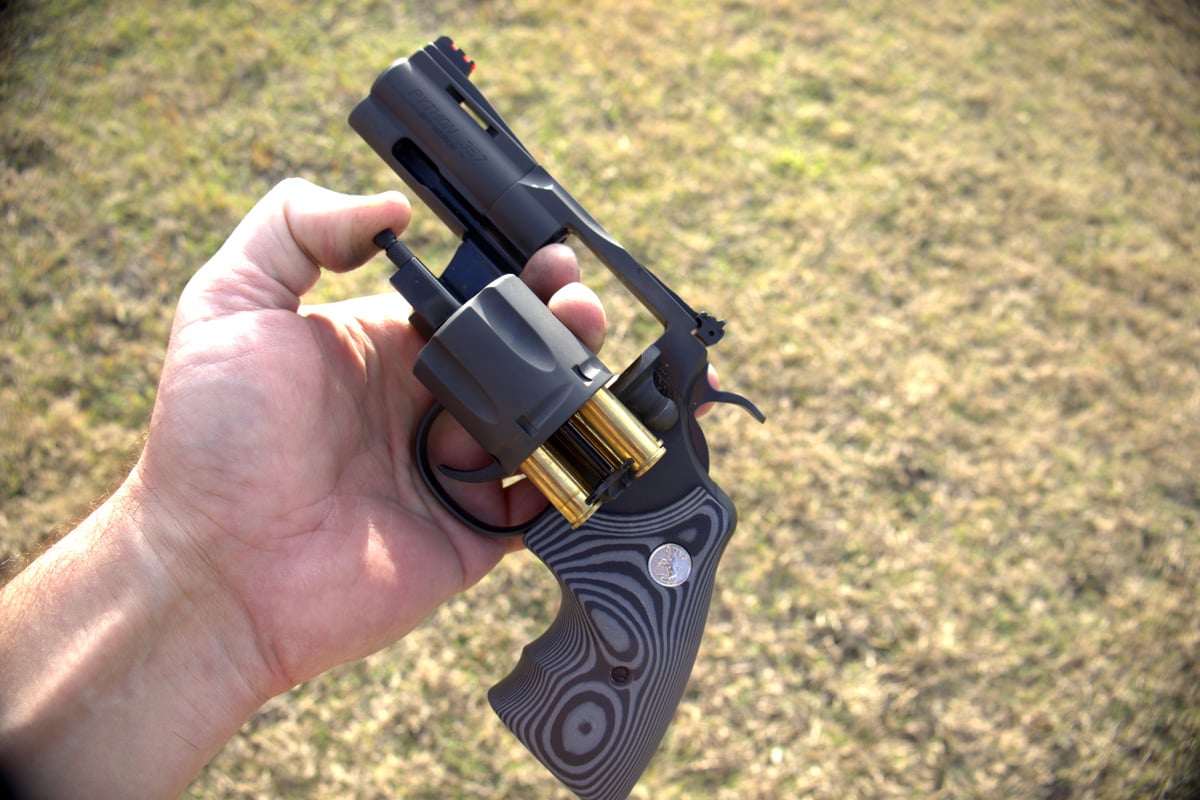
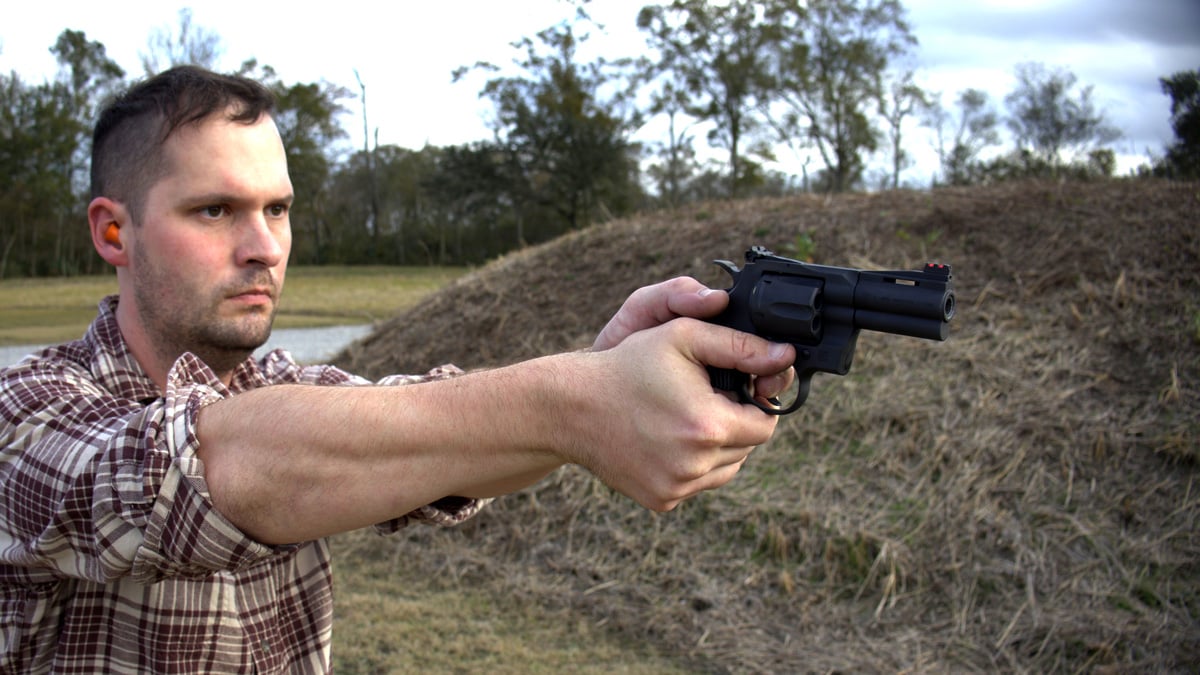
The 3-inch version is a favorite, as it has enough barrel to achieve good velocity with .357 Magnum ammunition, but is more carryable than a 4-inch model. The 3-inch Matte Python is just a bit more concealable, as it ships with a pair of G10 boot grips. These grips are shorter but heavier than the wood grips on a standard 3-inch Python, giving the Matte Python a quick-pointing but rear-heavy balance.
The sights are also a departure, with a red fiber-optic post instead of an orange ramp for a front sight, while the original rear square notch is retained.
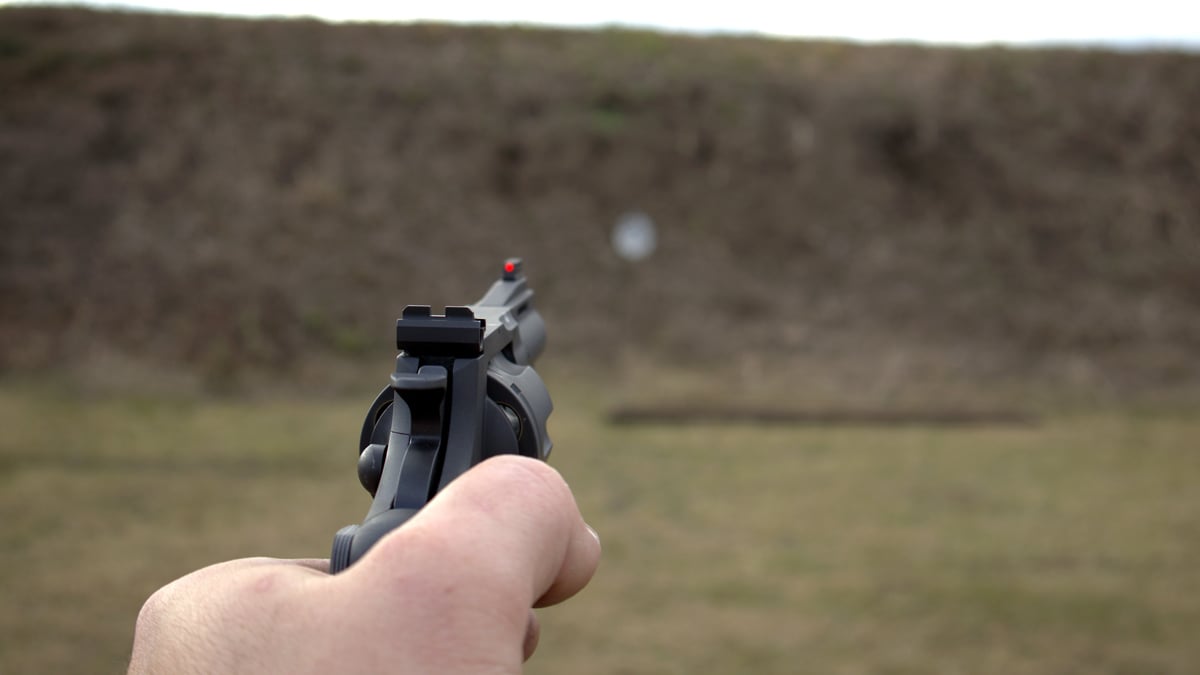
The Matte Python has the same unmistakable silhouette and action of its more polished brethren. This includes the distinctive vent rib barrel and shrouded ejector rod, the trademark clamshell Colt cylinder release, fluted six-shot cylinder, serrated trigger, and enlarged target hammer.
Specifications
On the inside, the Matte Python has a few MIM parts, though large components like the trigger and hammer are forgings. Despite its rough exterior, the trigger on the Matte Python stands up to my blued Python. The double-action trigger pull stacks and breaks at 6 pounds, 7 ounces on my Lyman trigger scale. The single-action trigger pull is an unmoving wall that breaks at 4 pounds, 5 ounces. The single-action pull is heavy by old Python standards, but the 2020 Pythons prioritize a light and forgiving double-action pull.

- Caliber: .357 Magnum
- Barrel Length: 3 inches
- Overall Length: 8.5 inches
- Height: 5.25 inches
- Width: 1.5 inches (cylinder)
- Weight: 2 pounds, 8 ounces (unloaded)
- Safety: Passive transfer bar
- Finish: Matte Blued
- Grips: Gray/black G10
-
Sights: Adjustable rear square notch/fiber-optic front post
Range Time
Regardless of its rough appearance, the Matte Blue Colt Python slogged through a 300-round shooting test with real polish. The test was shot with a 2:1 ratio of .357 Magnum to .38 Special ammunition on paper offhand at 10 yards, from the bench at 25 yards, and on steel at various distances out to 50 yards.
I began with a close-in offhand shoot to see how each ammunition grouped and to get some feedback on the sights, trigger, and initial handling. This was done at 10 yards in double action.

Loading the Python is straightforward. Pull the cylinder release rearward with the shooting thumb, and roll the cylinder out to the left side. Load the cylinder with ammunition, and push it back into battery. I started out with my .38 Special loads, then graduated up to the more stout Magnum ammo.
My first shots were 6 inches high and to the right, but a few turns from my Wheeler screwdriver kicked the rear sight down and to the left, and I was on target. As it happens, this is my third Python whose sights were grossly off. In any case, it was fixed readily.
Accuracy
My six-shot groups at 10 yards were as follows:
- Winchester .38 Special 130-grain FMJ: 2.5 inches
- DoubleTap .38 Special 148-grain wadcutter: 2.1 inches
- Federal .38 Special +P 158-grain LSWHP: 1.3 inches
- PMC Bronze .357 Magnum 158-grain SP: 2.4 inches
-
DoubleTap .357 180-grain Hard Cast: 2.2 inches
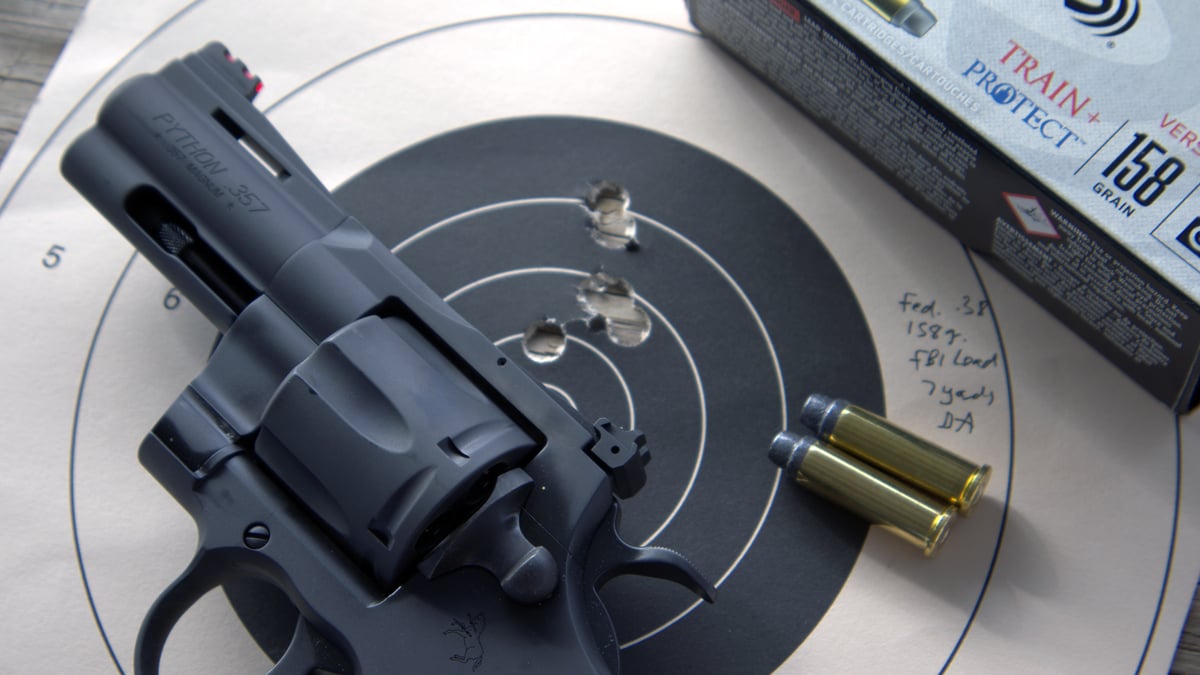
At 25 yards from a bench rest, the .38 Special loads tended to fall off in group size except for the DoubleTap .38 load, which printed consistent 3-inch groups. The Matte Python shined best with the PMC Bronze .357 load. This moderate Magnum printed groups consistently under 2.5 inches.
The Winchester 130-grain .38 Special load, despite being the most sedate of those tested, performed the worst. It was hard to keep a group narrower than 4 inches.
Round Burndown
After getting on top of the sights, I spent several range sessions on the steel range out to 50 yards. Although ergonomics can shine through up close, I always found that distance magnifies the issues and the merits of any platform.
The Matte Python performed to expectations. The single-action trigger pull with the hammer cocked breaks like glass and makes hitting 8-inch plates at 50 yards more than possible. But I found it easier to pull through the slightly heavier double-action pull to make those hits without shifting my grip to thumb cock the hammer. The sights also help on those more distant targets but also make it quick to shoot quickly inside 25 yards. The red fiber optic front sight pops out readily, especially in low light, and all it takes is a simple alignment with the rear square notch.
In terms of recoil control and follow-up, the 3-inch Python is a sweet spot between being compact enough for carry and comfortable to shoot while firing Magnum loads. All .38 Special ammunition recoiled lightly and allowed for fast follow-up shots. The moderate PMC .357 load slowed down my times slightly, and I felt significant blast on my face, but not in the hand. Even the 180-grain DoubleTap bear load left me no worse for wear, thanks to those rear-heavy G10 grips.
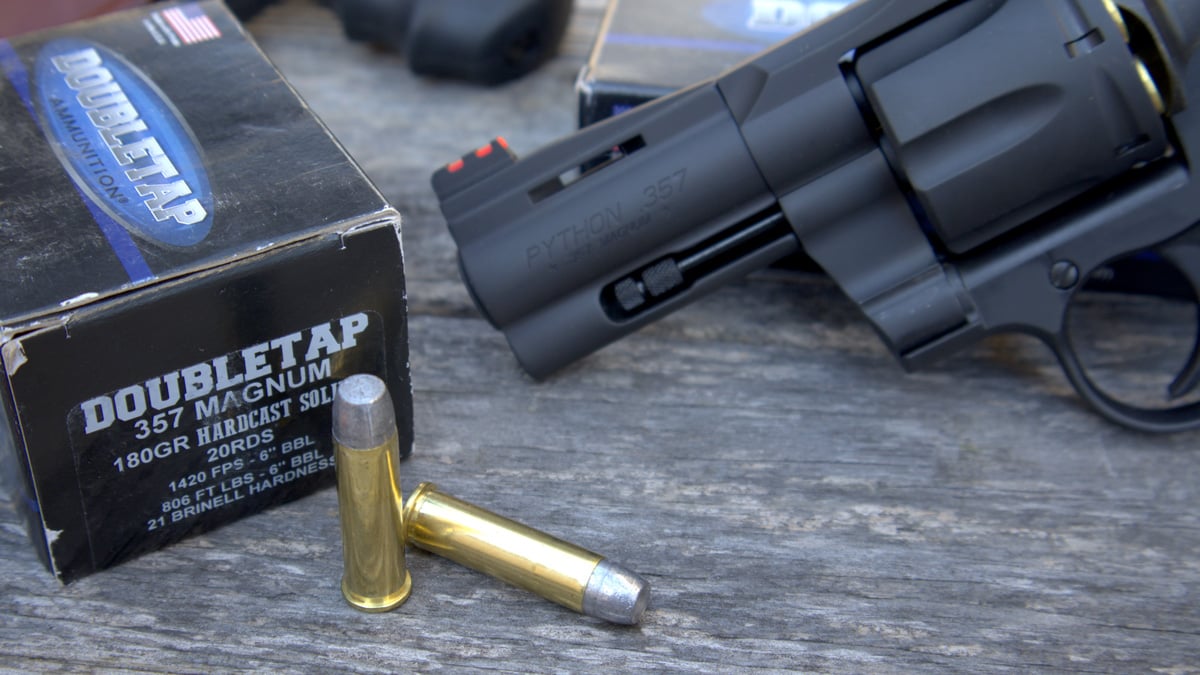
Reliability is the strong suit of a well-regulated revolver, and the Matte Python did not fail to fire or eject any of the ammunition used – the sole exception being the PMC Bronze load. Previously, I had no issues with this round, but this lot gave me persistent failures to fire in double action and single action. I tried some of these rounds in my Blued Python and ran into the same issue – likewise, my S&W 686. This was the only drama in an otherwise straightforward performance.
Pros & Cons

Terril James Hebert
Terril Hebert is the world's okayist historian and firearms journalist who occasionally moonlights as an NRA pistol instructor. In his spare time, he enjoys forensic accounting, waxing poetically about the efficiency of musket balls, and working on his latest fire-starting techniques.
View All Articles by Terril James Hebert