OVERVIEW
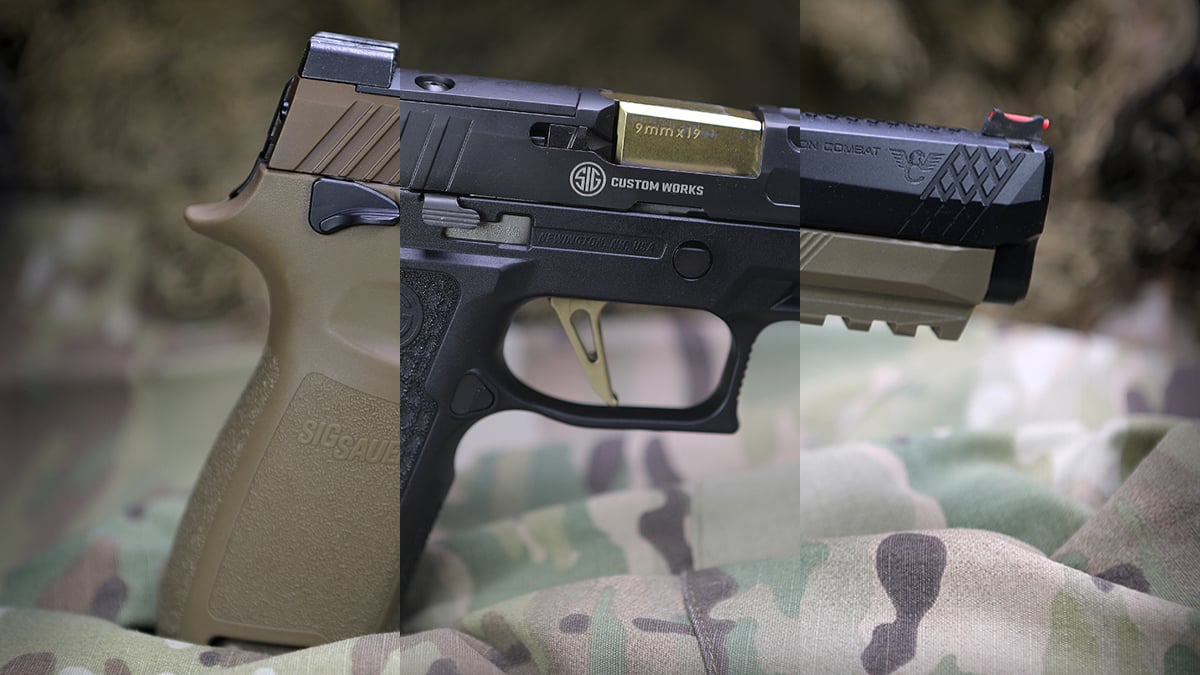
In the review of these three Sig pistols, we will primarily be looking at the grip, slide, iron sights, optic options, trigger, and price.
We won’t be talking about accuracy or reliability because all three guns use basically the same Sig internal parts and all performed very similarly. In general, Sigs are known for good accuracy and reliability. In our testing, we found nothing to contradict this conclusion.
To help me with the review and give some different perspectives, I brought three friends: Officer Pete, a veteran police officer and competitive shooter; Professor VJ, a Brazilian Jiu-Jitsu world champion and talented novice shooter; and longtime civilian enthusiast and competitor, Shooter Greg.
GRIP MODULE
The P320 M18 is the commercial version of the M18 pistol that was issued to all the branches of the U.S. military. The M18 uses the standard P320 Carry polymer frame in coyote tan. In overall size and feel, it is bulkier than the Wilson but not as large and blocky as the Spectre. Grip texture is the least aggressive of the three. There are no magazine-well bevels, but there are mag cutouts to allow a better grip to rip out the mag if it gets stuck.
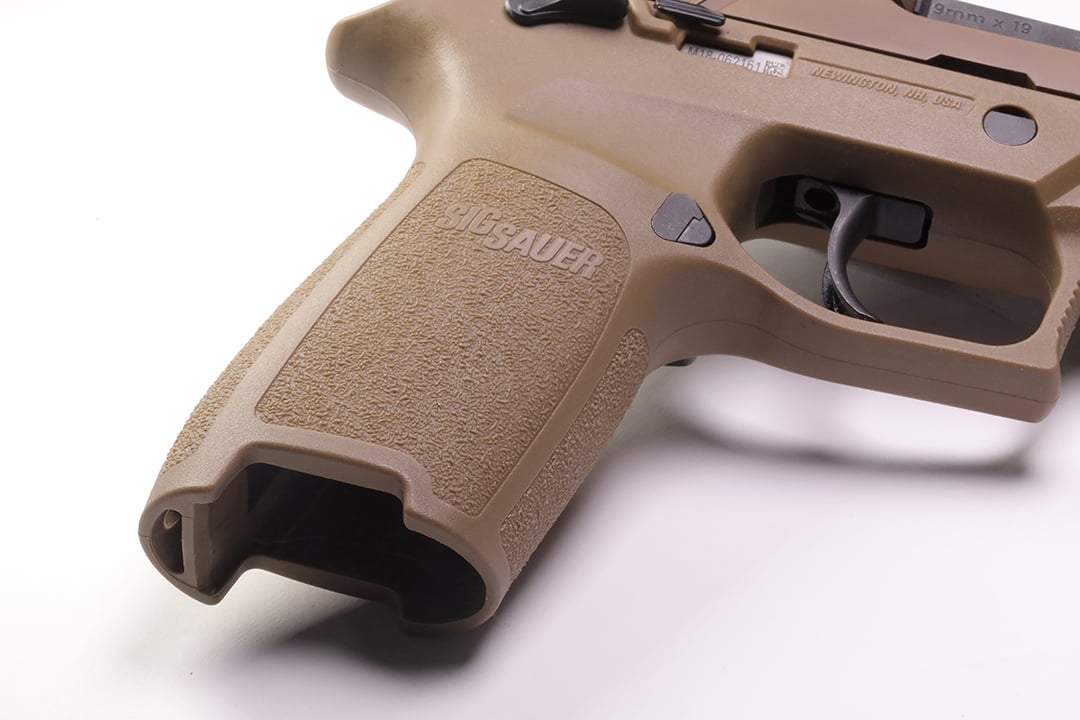
The most notable difference on the M18 frame is the addition of a manual safety due to military requirements. The safety is well executed and feels very crisp and positive. Many people, such as Shooter Greg, do not like to have an external safety because they are simply not used to them. For me, carrying in the appendix position, I really like having a safety on a light striker-fired gun for an added layer of protection. In my opinion, the only downside of this safety is that it is a bit close to the slide-stop lever and does not give much room to operate the slide stop.
The P320 XCarry Spectre is a creation of the Sig Custom Works shop. It uses the LXG grip model, which is the thickest and most rectangular of the three pistols. It’s probably best for larger hands. The grip module is laser engraved, which gives it the most aggressive texturing. All testers liked this texture. It gives a sure grip and is also very aesthetically pleasing.
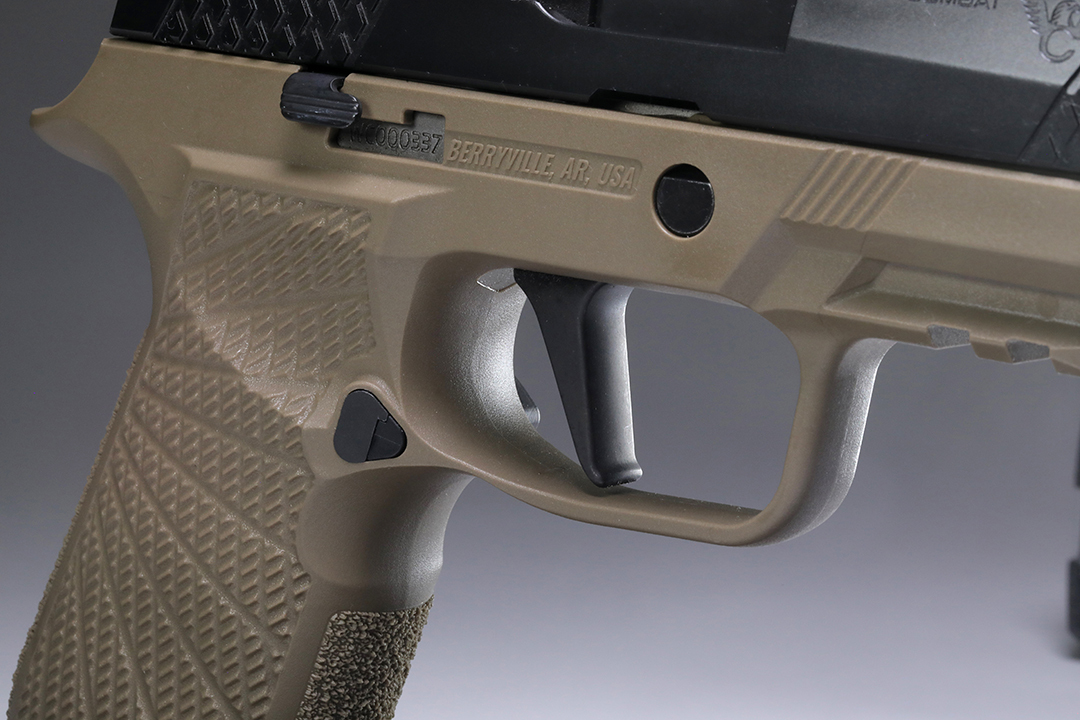
Wilson Combat is a semi-custom firearms manufacturer with a reputation for putting out high-end products. The WCP320 Carry is their take on the P320. They produce their own unique grip module for this gun. Three out of the four testers chose this grip as their favorite. It’s by far the slimmest, so it will fit the widest range of hands. The texturing is grippy but not as aggressive as the Spectre. It also has integrated magazine bevels to help with speed reloads. Although the dust cover is a bit shorter, like the other three guns, it has three Picatinny slots for accessories.
The shape is what really makes Wilson Combat's grip shine. It’s not too blocky, like the Spectre, but not too oval, like the M18. And it has an amazing little hump on the bottom corner that allows for a lot of pinky pressure. As I have developed as a shooter, I’ve realized that pinky pressure is huge for sight acquisition and recoil control. Seems as if Wilson Combat understands this and designed a frame to help shooters maximize it.
SLIDE
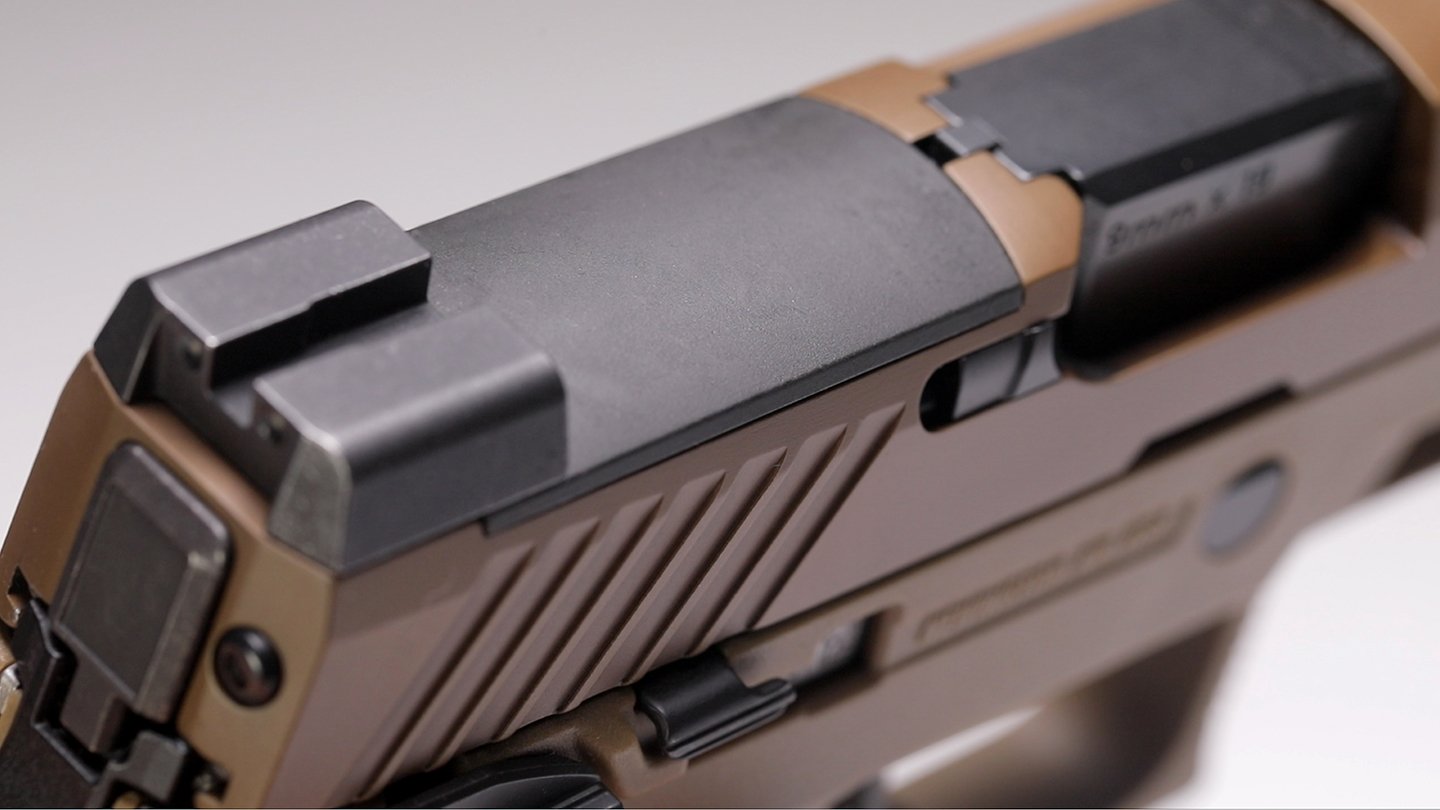
The M18 slide has a coyote PVD coating. It has the least-ornate slide serrations, but they work fine for manipulating the slide.
The Spectre slide has the exclusive Spectre X-pattern engraving and lightening cuts. The slide is very attractive. The engraving and cuts allow for the best slide grip of all the guns, especially if you use the front pinch method for racking the slide. The only thing that gives me any pause is the lightening cuts. In terms of reliability, it’s possible that dirt and debris could enter the gun through those cuts. If you drop this gun in the mud, there would be more possibility of a malfunction with this pistol.
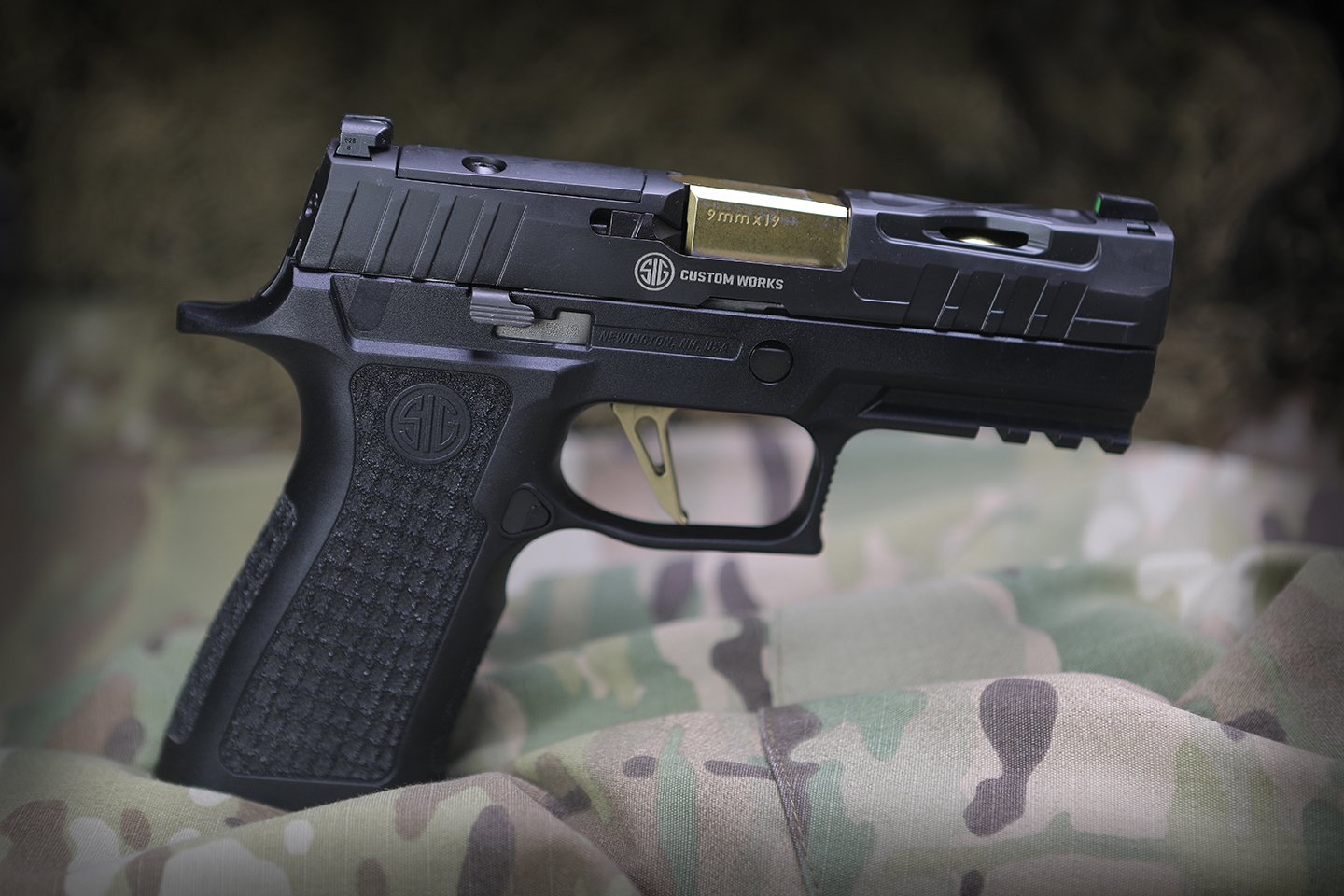
The finish is a Nitron DLC. The DLC finish on both the Spectre and the Wilson should theoretically be more durable than the M18’s PVD, but we didn’t test it.
The Wilson slide has carry bevels, and the Wilson Combat signature X-Tac pattern serrations. They do the job, but I found the forward cuts to be too close to the muzzle end.
IRON SIGHTS
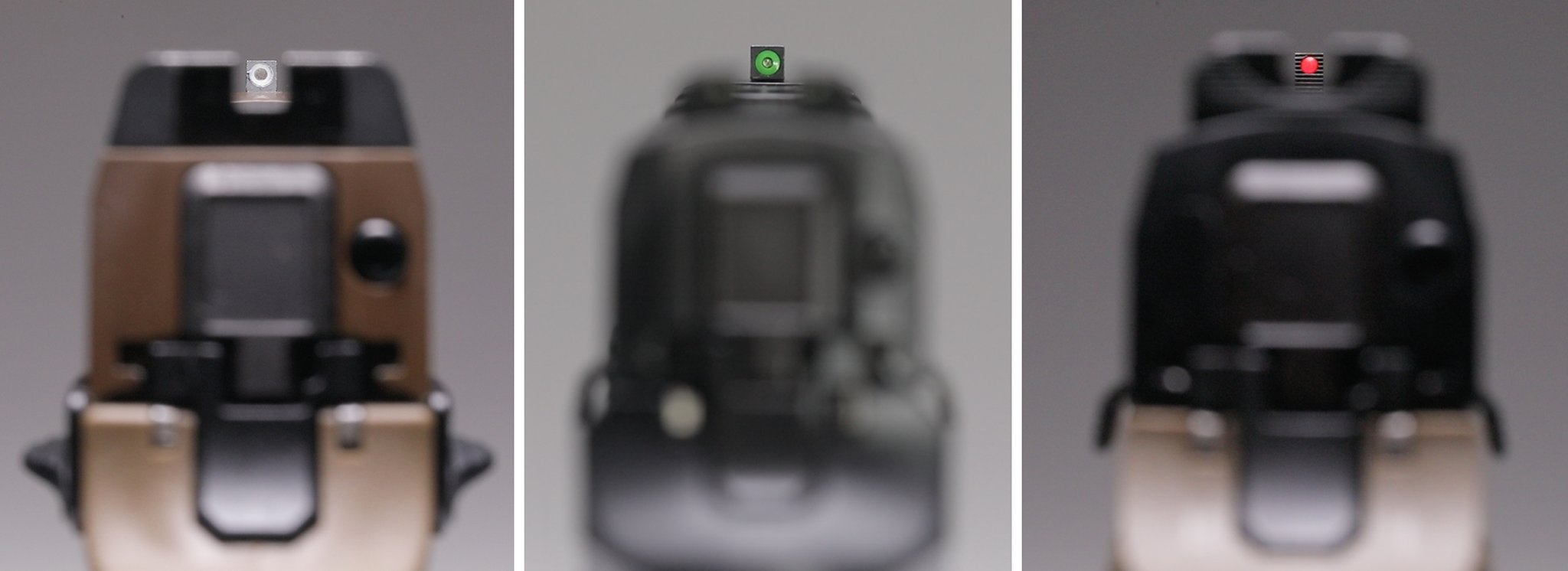
The M18 comes with Siglite front and rear night sights. These were all the testers' least-favorite sights. The length of the rear sight posts allows the least amount of light into the sight picture. This aspect, and the overall overbuilt construction of the rear sight, made for a poorer slight picture when compared to the others.
The Spectre comes with XRay3 Day/Night sights. If you like night sights, these are good. Both Officer Pete and Professor VJ preferred these sights. I personally think there are better sight options because I like a thinner front post.
The Wilson has Wilson Combat Battlesights with a red fiber-optic front sight. I really like fiber optic front sights. I feel they really pull the eye to the front sight, especially for aging eyes like mine. However, I didn’t love the U-notch rear sight. The U is supposed to funnel your eye to the front sight like a peep sight, but in use, I have not found that to be the case. It’s a distraction to me. I like right angles in my rear sight.
OPTICS OPTIONS
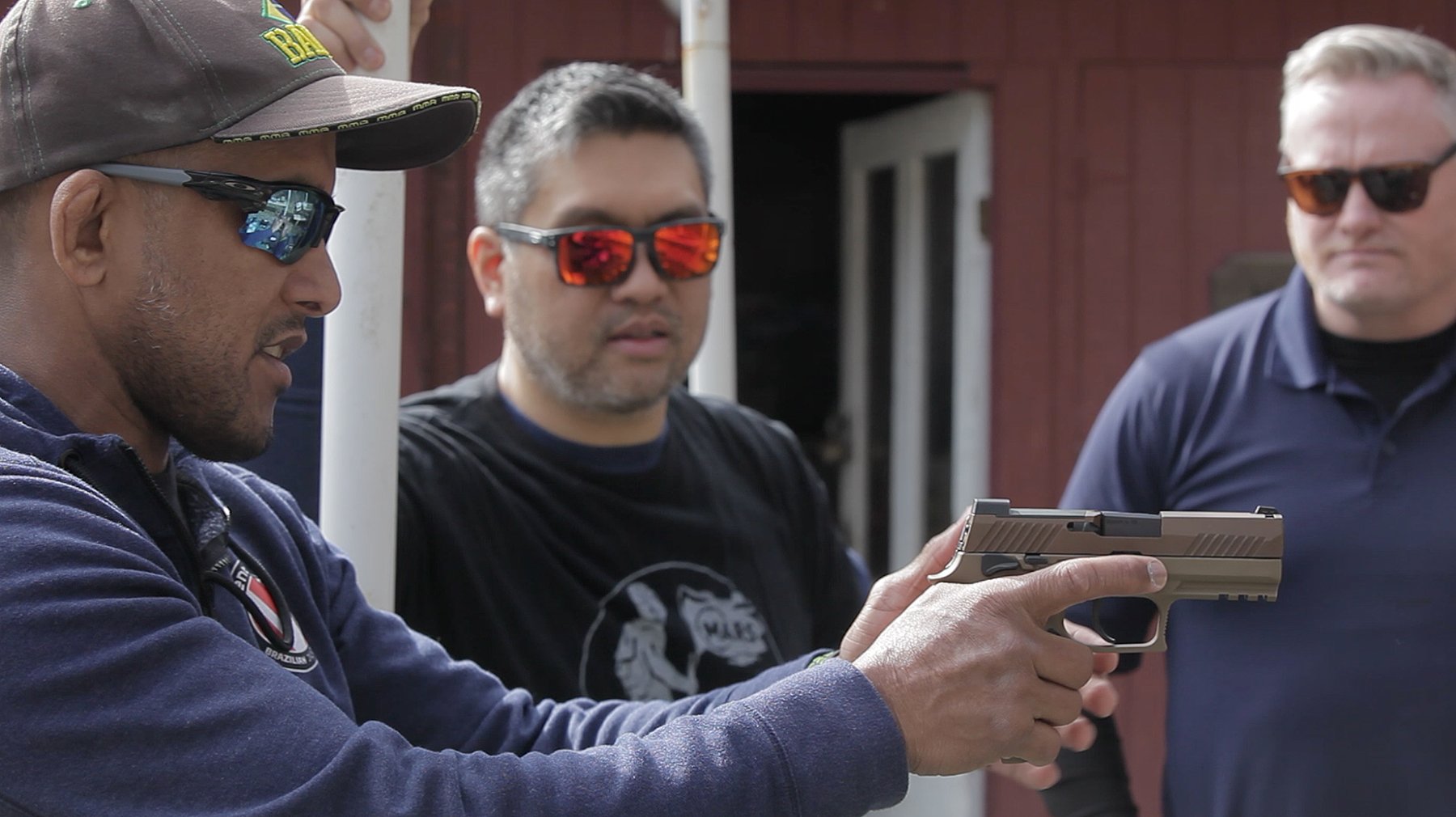
The M18 is cut for a red-dot optic. It is directly compatible with the Sig Romeo1 Pro. Other optics can be used if a separate adapter plate is purchased. However, directly mounting optics to the slide is usually the preferred option for two reasons. First, it allows the dot to sit closer to the slide. Second, it reduces any potential tolerance-stacking issues.
If you purchase this pistol, make sure to check what generation optic cut you are getting. Over the life of this model, Sig has evolved the optic cut so older generations have a different hole pattern. Sig can easily check for you if you tell them the serial number.
Another minor inconvenience I notice was that the M18 optic plate is accessed from the bottom of the slide. The striker assembly must be removed before the optic plate can be taken off. This is not particularly difficult, but it is an extra step.
The Spectre has the best optics options of the three choices. It is directly compatible with the Romeo1Pro, Romeo2, Deltapoint Pro, and RMR footprints. This is an excellent upgrade. Sig is seeing the red-dot sight trend and listening to its customers.
The Wilson has the worst optic options because, well, there are none. I would assume you can special order one with an optics cut, but as of right now, it is not a factory option.
TRIGGER
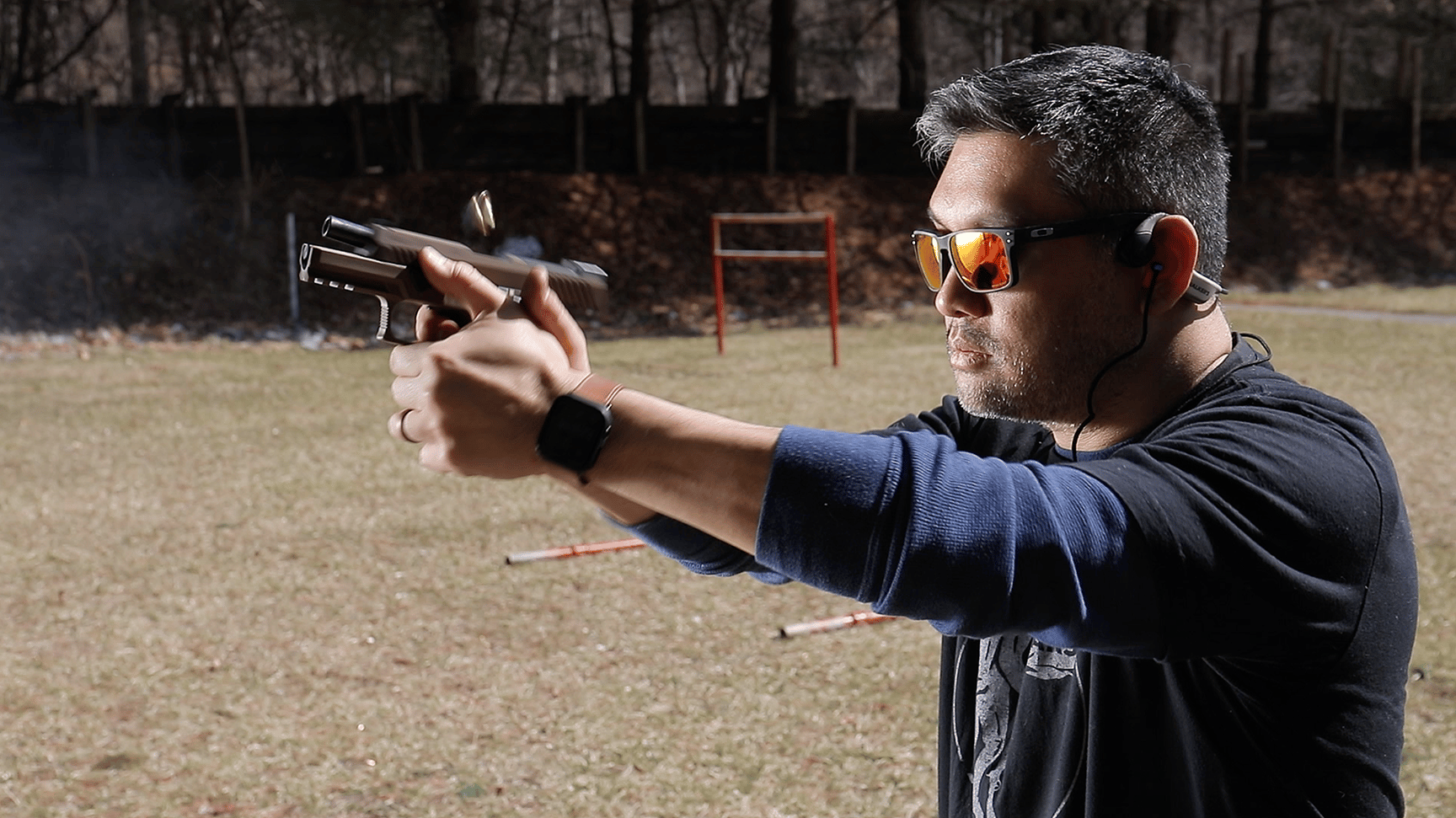
In general, all three triggers are very similar with a short take-up, some creep, a good break, and a medium reset. The M18 has the standard curved trigger that broke at around 6.5 pounds. The Spectre has the XSeries flat skeleton trigger with TiN Gold finish, which matches the barrel. It broke the lightest at 4.5 pounds. The Wilson comes with a Sig factory X-Full size steel trigger with the option of flat or curved. The test model broke at 5 pounds.
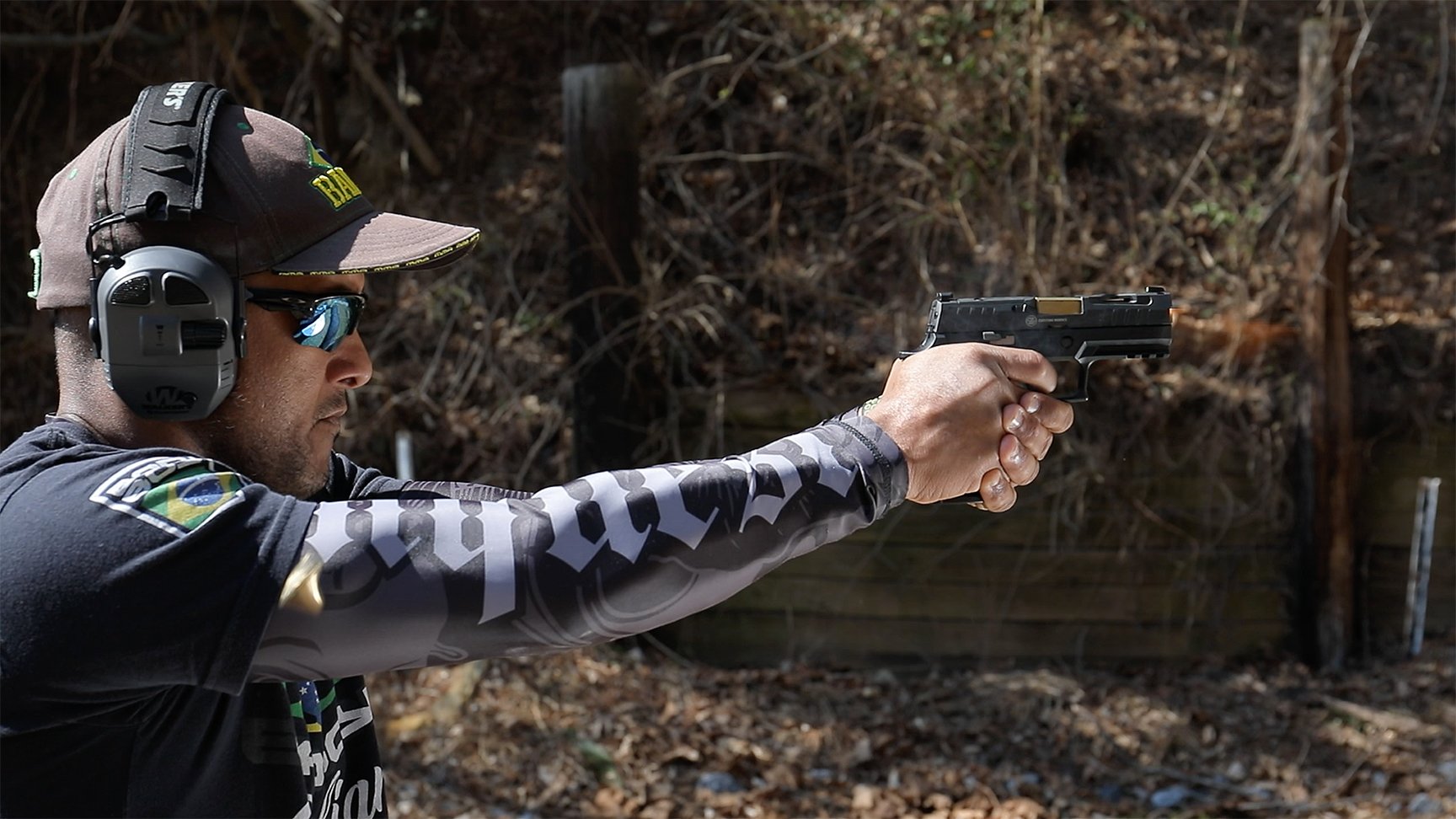
I’m a fan of flat triggers because I just like the feel, but that is a totally subjective opinion. Neither is inherently better or worse. In terms of trigger weight, I don’t think there is a huge difference between 4.5, 5, and 6.5 pounds in terms of combat/self-defense shooting. If you want a competition gun, an argument could be made for the lighter trigger. In a practical sense, really trigger shape and appearance are the only differences.
CONCLUSION
Personally, if the prices were a consideration, I would choose the M18, hands down. It’s a great value. Officer Pete agreed with me. He really liked the straightforward simplicity and comfort of the M18.
But if price was not an object, both Professor JV and I would choose the Spectre because we liked the upgraded features, especially the optics options since we are red-dot guys. However, I would also buy the Wilson Combat grip module for only $68. Shooter Greg picked the Wilson because of the ergonomics of the grip.
By additionally purchasing a Wilson grip, I get the great ergonomics of the Wilson Combat frame with the trigger and slide features of the Spectre. This is really the beauty of the P320 design. You can mix and match to your heart’s delight. Regardless of your requirements, there is a combination for you.