10mm and the Glock 20
The 10mm Auto was introduced in 1983 with the Bren Ten pistol. This .40-caliber pistol cartridge pushed the boundaries of an auto pistol cartridge in an era where .45 ACP was aging and law enforcement was well acquainted with the power of the .357 Magnum revolver.
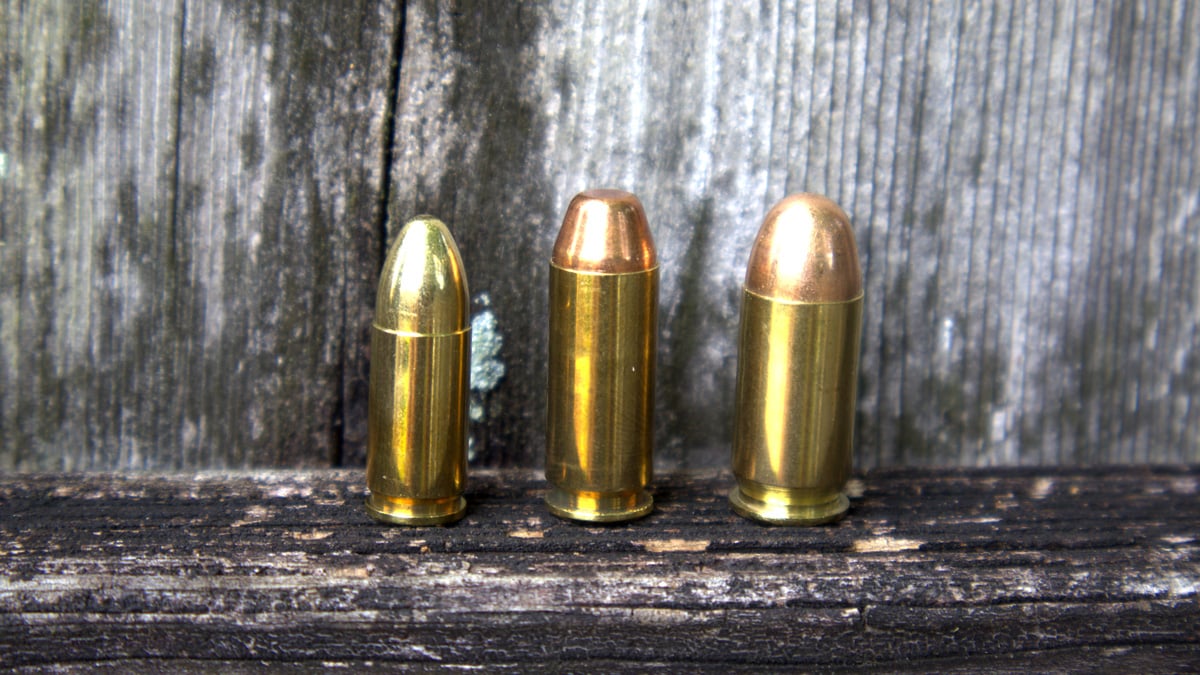
The Bren Ten was ultimately a failure, but the FBI’s decision to adopt the 10mm in 1989 sparked a race to produce a duty-ready 10mm pistol. Although the FBI dropped the 10mm after a few years, one of the exponents was the Glock 20 pistol. The G20 emerged as part of Glock’s second generation of pistols in 1991 and has subsequently been updated through the fifth generation.
Glock 20 Gen5 Features
The G20 Gen5 is a polymer-framed, striker-fired pistol with a 15-round capacity. It is a full-sized handgun comparable in size to the Glock 17 duty pistol, aside from a longer grip that accommodates the longer 10mm cartridge. The dimensions are identical to the later Glock 21 in .45 ACP. Beginning with the Gen3 Glock 20, the model has been designated as a short frame model with a reduced grip circumference and improved trigger reach over the original.
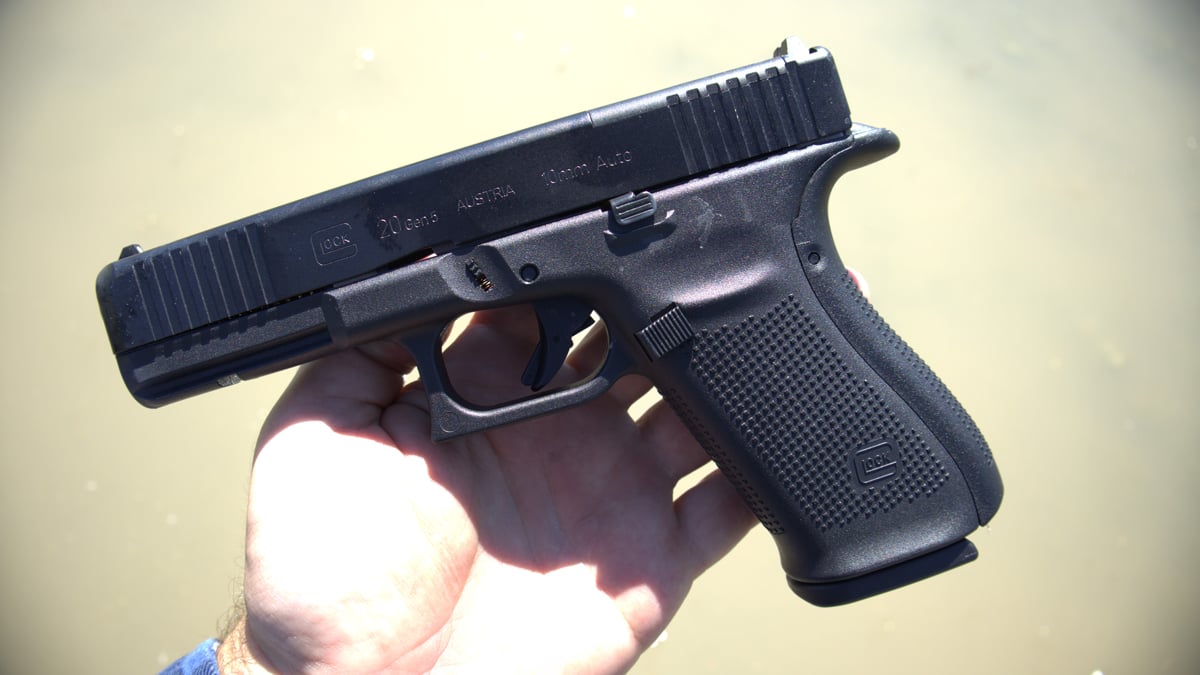
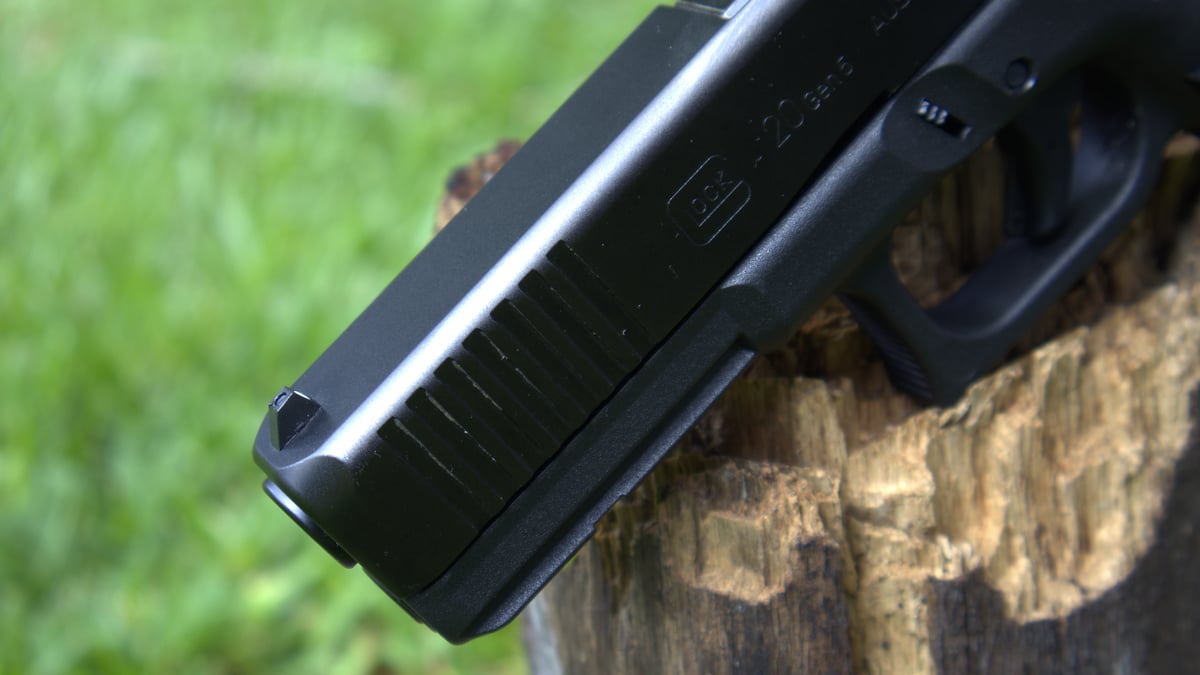
The Gen5 carries over the same full-length accessory rail, polymer Glock iron sights, squared-off trigger guard, and safe-action trigger seen on previous models. The Gen5 grip has more concentrated stippling and dispenses with the maligned finger grooves from Gen4 models. The Gen5 is also more southpaw friendly with a reversible magazine release and an ambidextrous slide release.
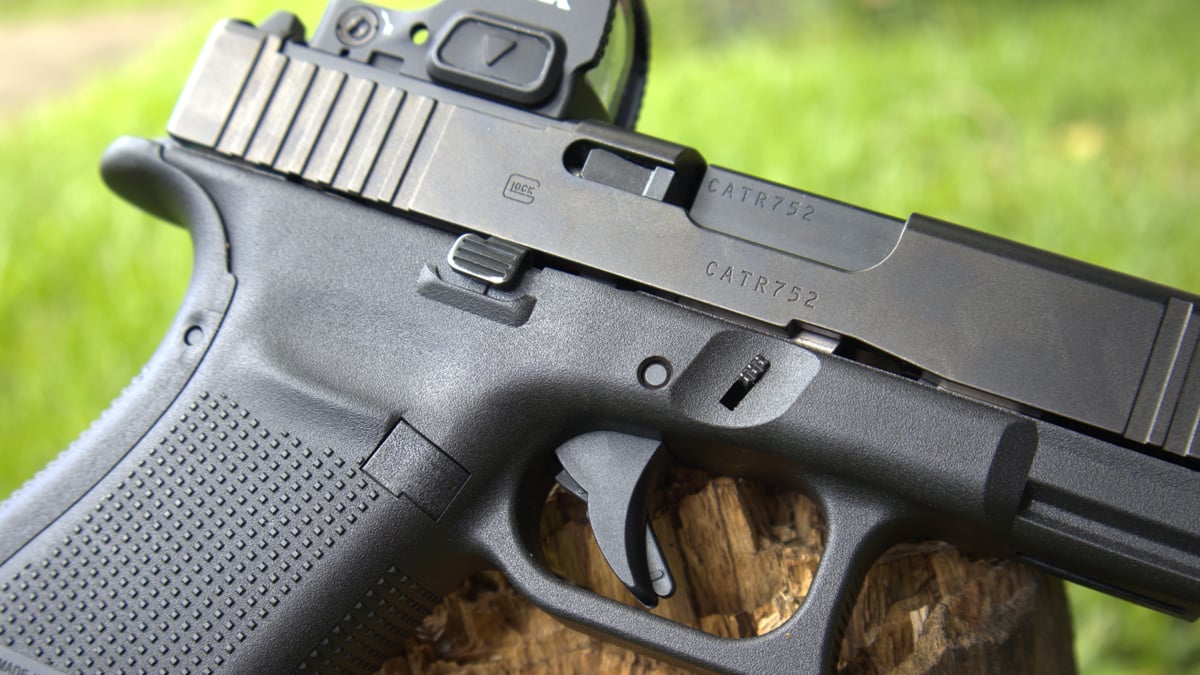
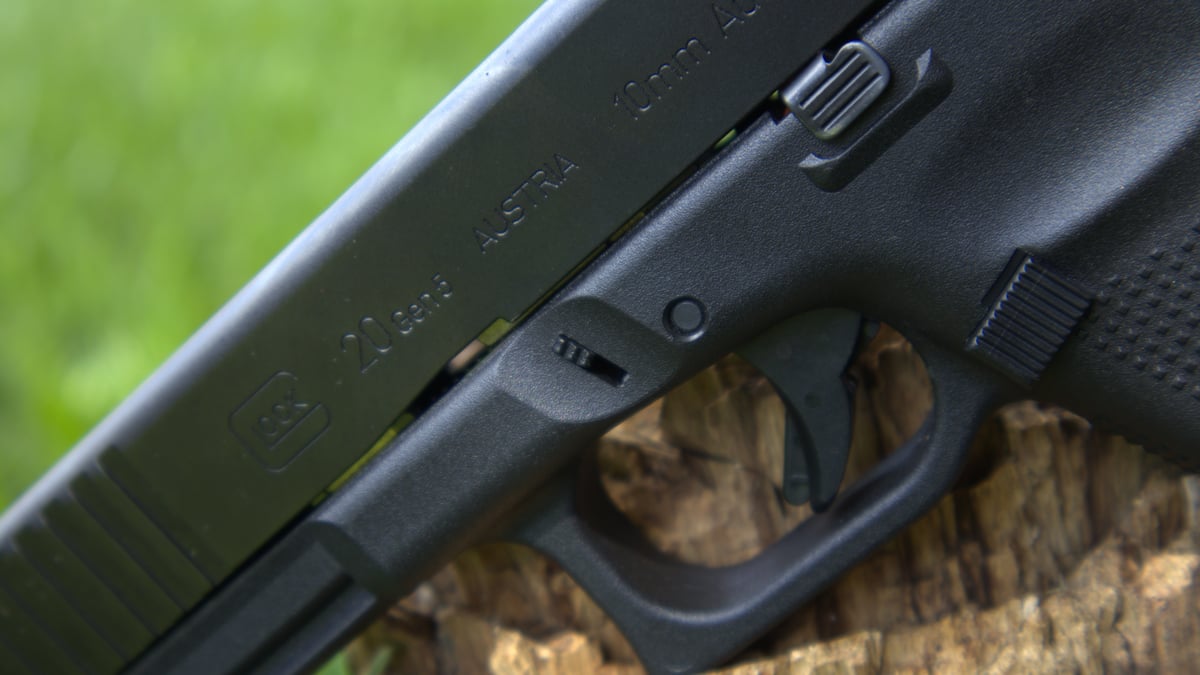
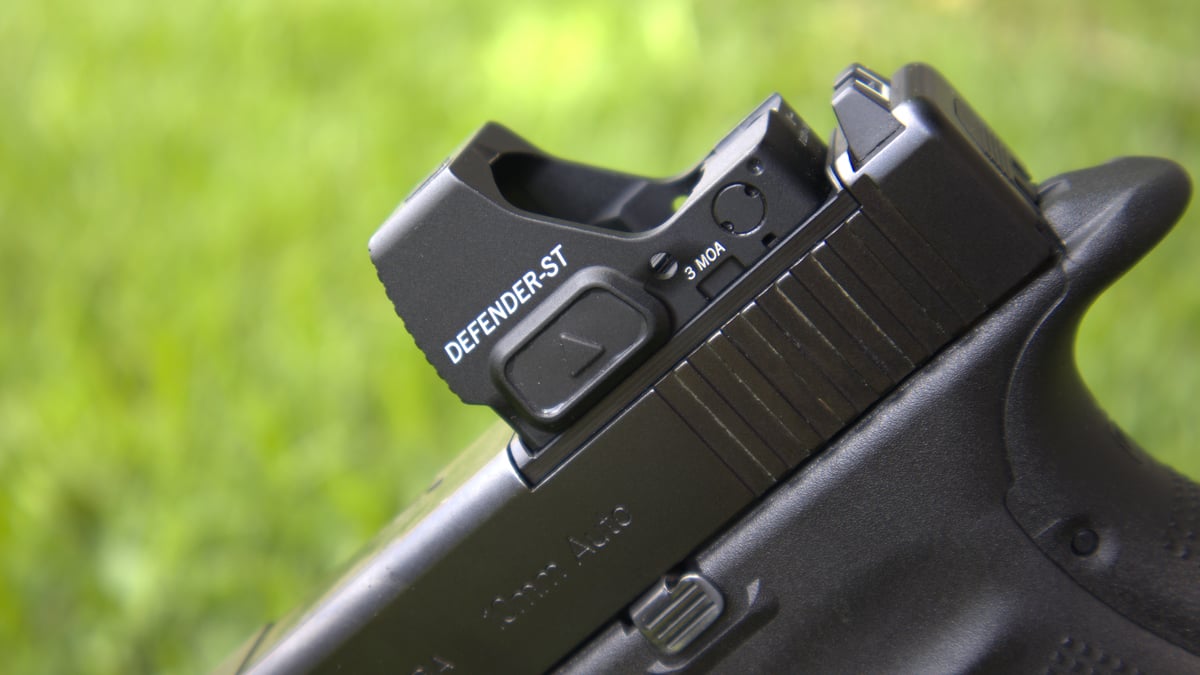
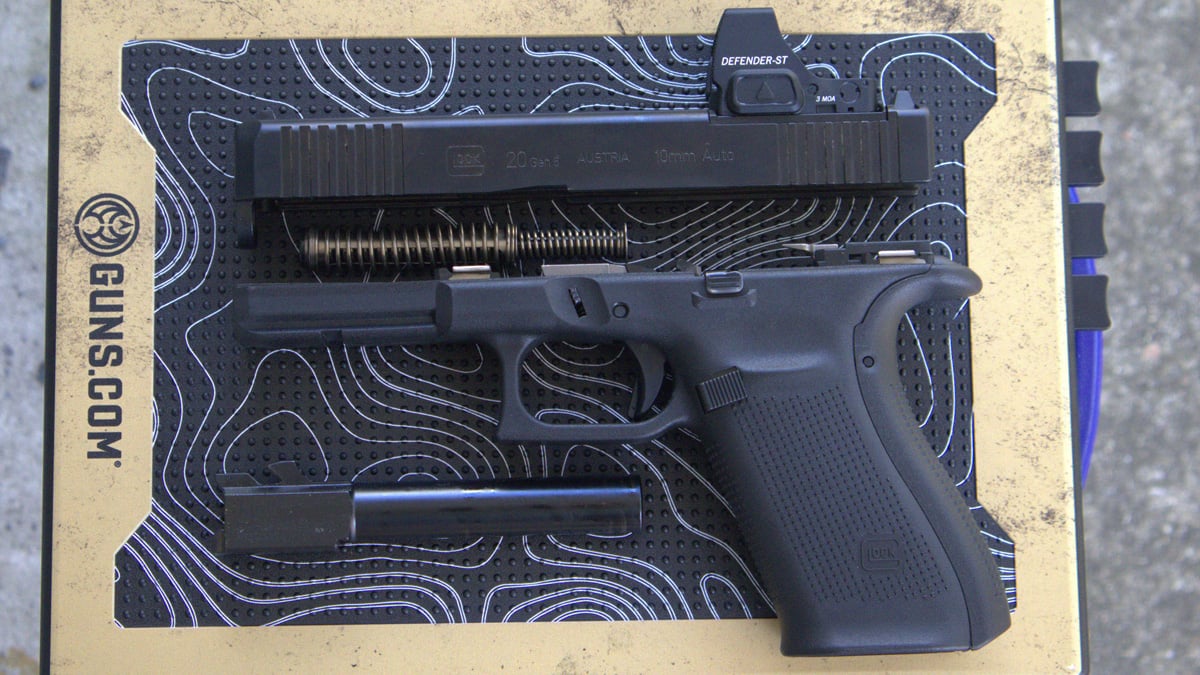
The Glock 20’s slide has the standard parallel cocking serrations at the rear as well as the front with the Gen5 upgrade. Curiously, the Gen5 is available with an MOS optic-ready slide, although the model was not cataloged as an MOS model. The user can directly mount a SCS footprint optic or use two of the available optic plates to mount an RMR or DeltaPoint Pro-style optic.
The Glock 20 Gen5 ships with a hard case, three magazines, a small cleaning kit, two adapter plates, and four additional backstraps.
Shooting Impressions
Bulky yet light, the Glock 20 skirts the line of what would qualify as an everyday carry pistol in town. The format is just about ideal for the outdoor-oriented user who must pack light but requires the power of the 10mm for handgun hunting and wilderness defense applications. In its Gen5 configuration, the Glock 20 is friendlier to a wider range of shooters, and the optic-ready capacity allows the user to make anatomically significant hits on hardened critters.
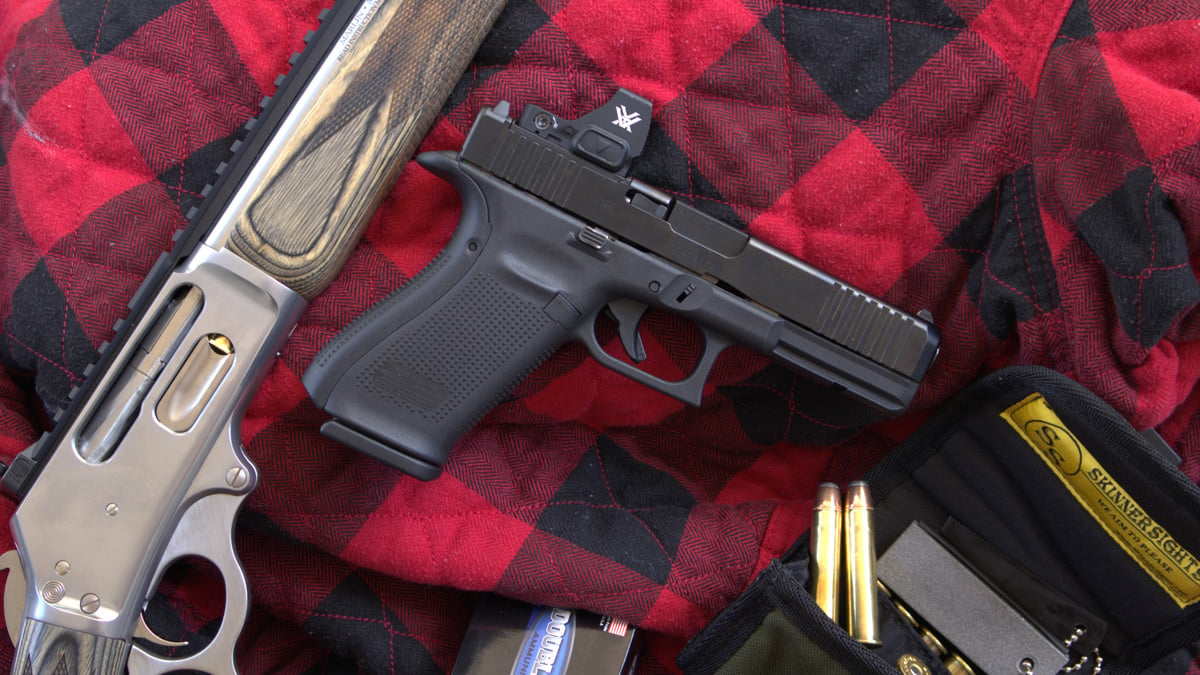
As a predominately left-handed person who also shoots right-handed, the G20 is easy to manipulate. The hefty slide gives plenty of surface area to cock the pistol. The controls are equally easy to use with each hand, although the slide release on the right side of the frame is visibly smaller than on the left side.
The grip provides plenty of texture and gives a good trigger reach for an above-average to large hand. The stock grip angle works, but the G20 is not as pointable as other semi-autos. The inclusion of extra backstraps helps.
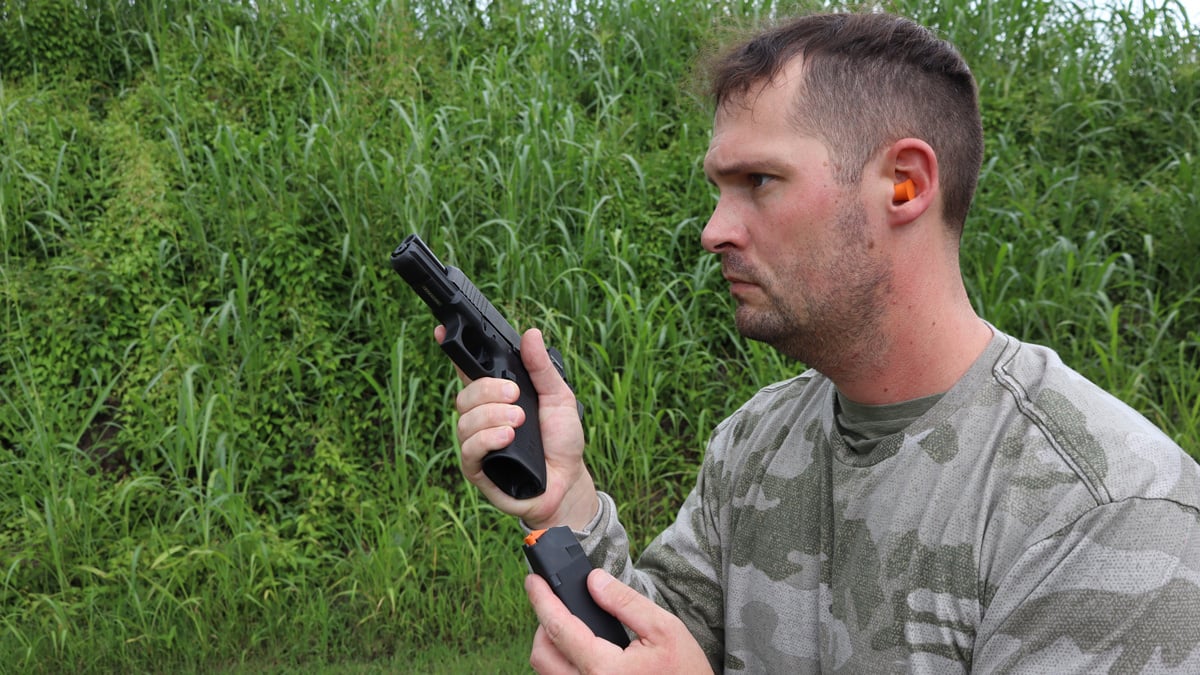
From a shooting perspective, recoil with standard FMJ loads is sharp, but painless. The heavier Double Tap and Federal Loads produced more recoil and slowed follow-up shots.
Accuracy & Reliability
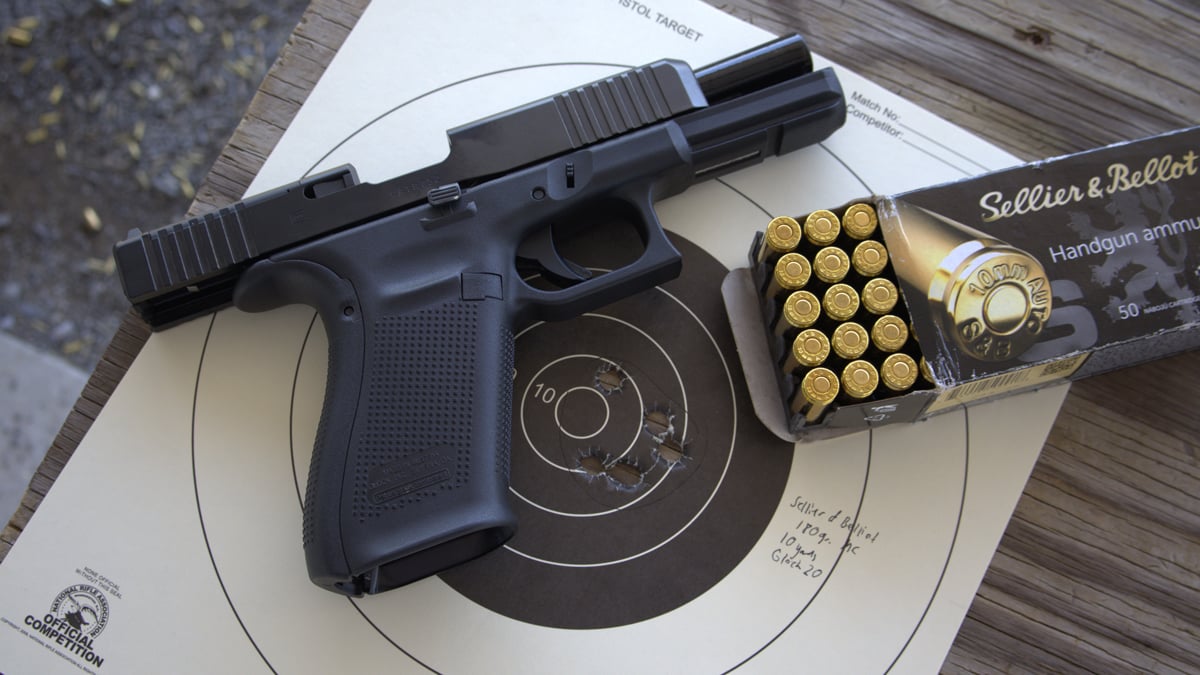
At distances of 10 yards and less, the Glock 20 is acceptably accurate. The only downsides are the blocky iron sights and the spongy Glock Safe Action trigger. The trigger broke at an even 5 pounds, 2 ounces on my Lyman trigger scale.
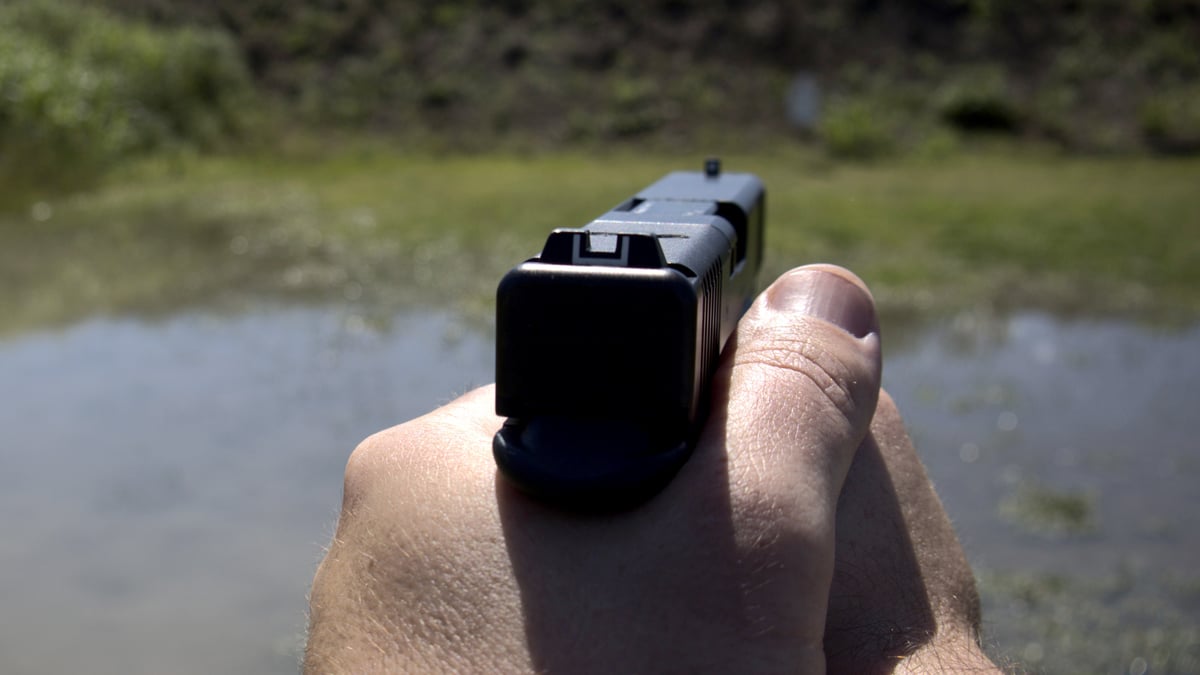
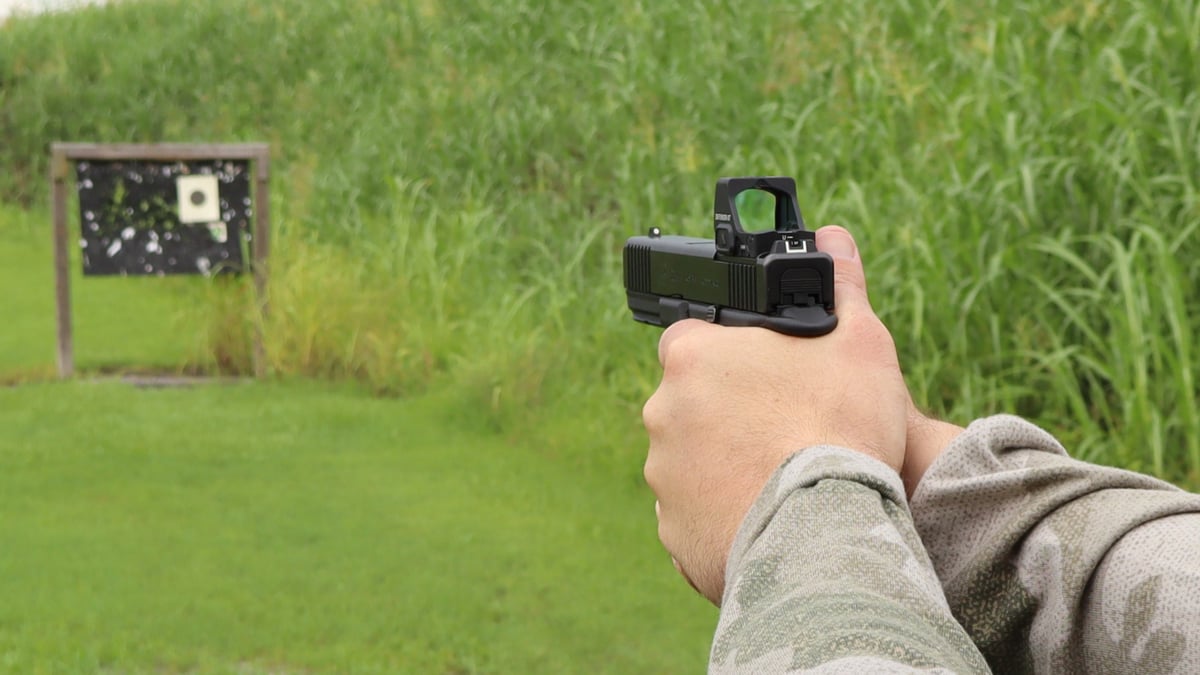
In short, the G20 is not a target pistol, but the addition of an optic changes the equation. The finer aiming point makes it easy to replicate results farther away. I tested several 10mm loads through the G20 with results as follows:
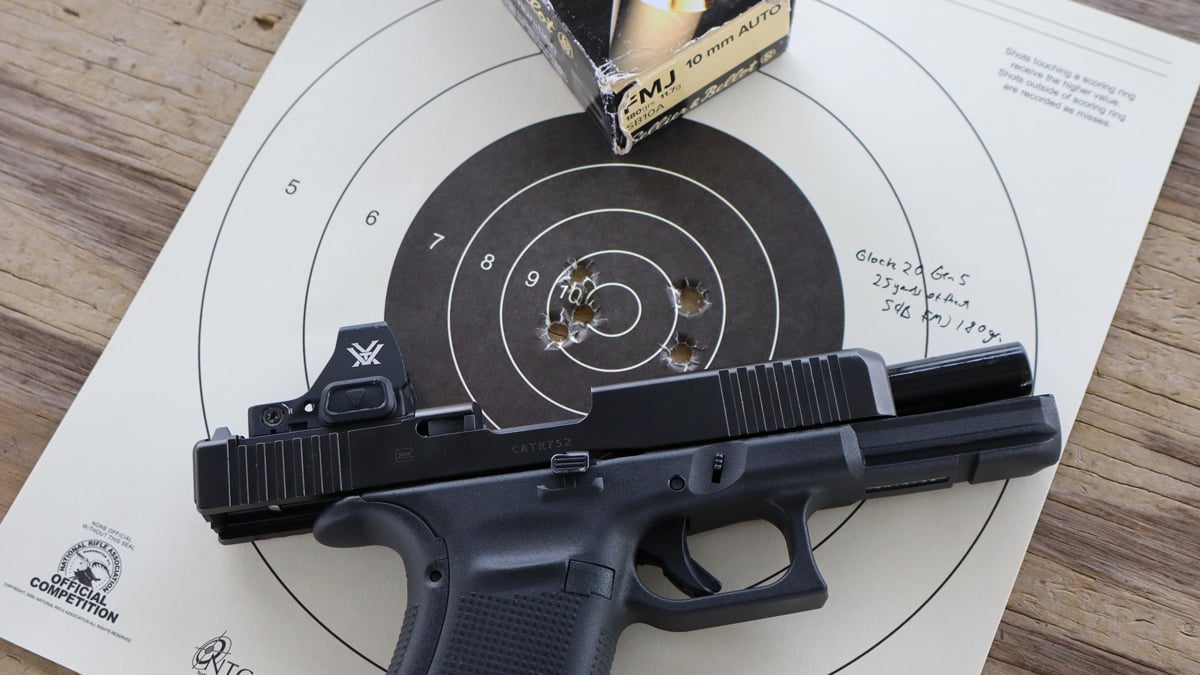
At 25 yards offhand, I could easily land five shots of Sellier & Belliot 180-grain ball rounds inside 2 inches, which is essentially what I could do at 10 yards with the iron sights. With lax caffeine, all ammunitions I tested produced a respectable 4-inch group at 50 yards – more than enough to hit the boiler room of any big game.
Generally, 10mm pistols are less reliable than their smaller counterparts. The pistols are big, must feed a longer round, and feeding and cycling is a longer journey, which can invite problems.
But Glock pistols became the default handgun for so many because of their ability to work in tough conditions, and the G20 is no exception. Out of 300 rounds fired, this one had no failures to feed or fire. Even the wide, flat nose of Double Tap and Federal Bear Loads failed to make it choke.
Terril James Hebert
Terril Hebert is the world's okayist historian and firearms journalist who occasionally moonlights as an NRA pistol instructor. In his spare time, he enjoys forensic accounting, waxing poetically about the efficiency of musket balls, and working on his latest fire-starting techniques.
View All Articles by Terril James Hebert