The Case for the ARC
The 6mm ARC was designed for many of the same reasons as its parent case, the 6.5 Grendel. Both were intended to shoot heavier bullets out of a case that could fit in an AR-15 magazine. The 6 ARC shoots bullets in the 60-110-grain class at velocities much higher than the popular .223/5.56 cartridges that most AR-style rifles use. This offers a big advantage at longer distances or up close.
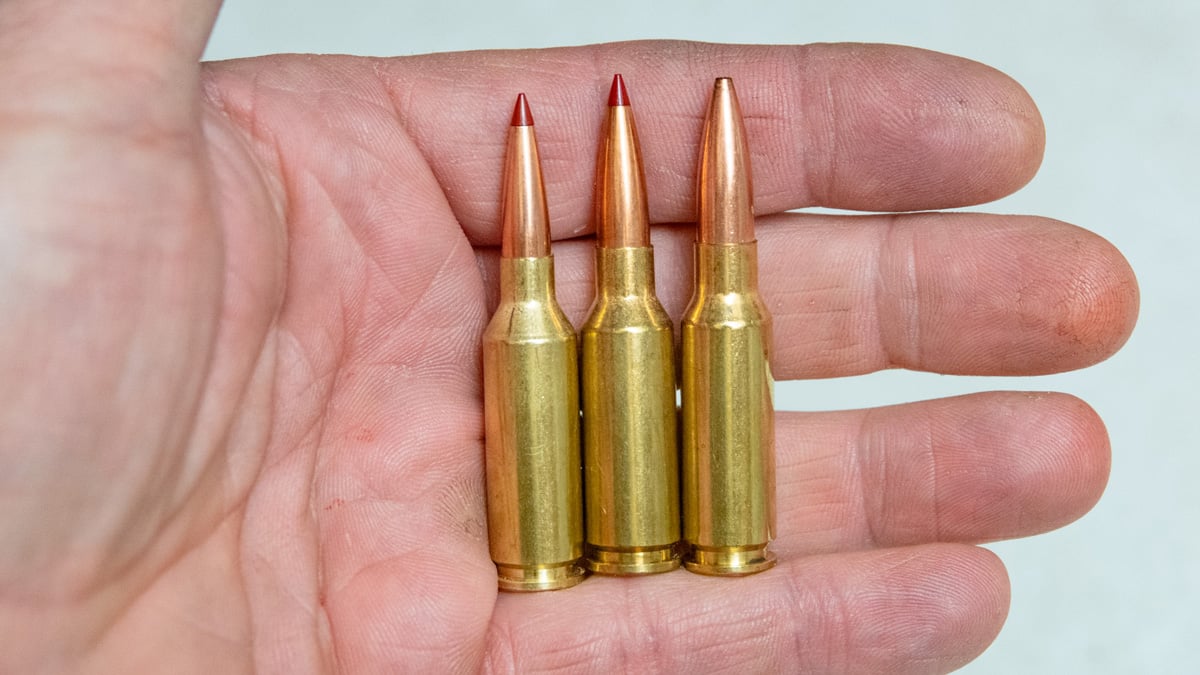
Shooting heavier bullets has a great effect on power delivered to downrange targets. It also greatly improves ballistic performance, shooting flatter and preventing deviation from wind. All of this from a cartridge that can fit into most any AR-15 receiver – of course, using a different magazine, bolt, and barrel, as well as giving up a few rounds of capacity.
Making the .22 ARC was a natural evolution, as it seems handloaders are fascinated by creating new cartridges out of existing ones. The ARC isn’t just another .224-caliber cartridge, though. There is more to it than its neck. With its short body, and faster specified twist rate, this chubby little cartridge was also built for pushing bigger bullets.
A Different Approach
The case is shorter than cartridges like the .223 Remington. This helps fit longer, heavier bullets into the case, and allows these cartridges to fit in magazines and cycle in actions when loaded with these long bullets. To boost capacity to make it worth the trouble, the cartridge was also enlarged to the .441 case-head size. Making it larger in diameter and shorter gave it the capacity and proportions needed to exceed the performance of other cartridges.
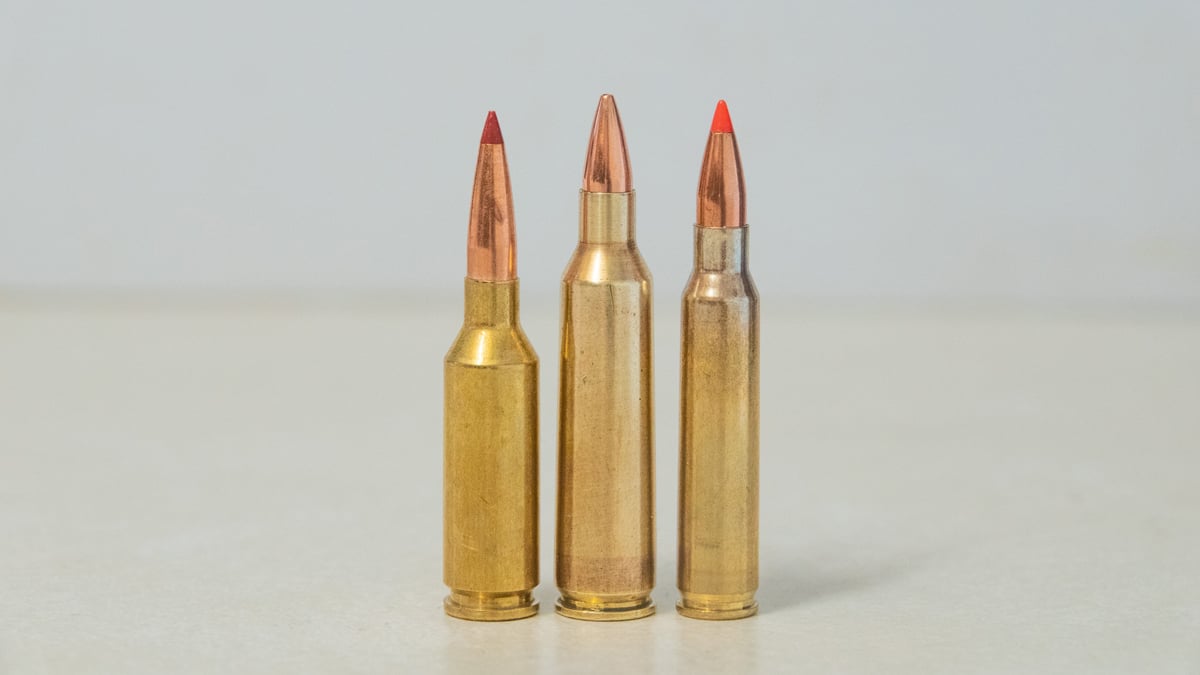
For example, compared to the .223, the .22 ARC case is shorter, allowing longer bullet seating. The popular .22-250 is even longer than the .223, which allows even less room for seating bullets out. Most .22-250s use slow twist rates like 1:12 or 1:14, which means they can’t shoot heavier bullets anyway. Thus, their use is limited to 40-55-grain bullets for the most part.
.22 ARC Specifications
- Max OAL: 2.260 inches
- Bolt Face: .441 inches
- Trim Length: 1.525 inches
- Shoulder Angle: 30 Degrees
- Case Capacity (H2O): 34.6 grains
- Barrel Twist: 1:7 standard
-
Bullet Weight Range: 60-90 grain (typical)
Heavier Bullets
I’ve been loading 75-grain BTHP bullets for AR-15 rifles for decades, because they simply perform better at farther distances. Years ago, my brother and I were shooting a steel target at roughly 700 yards, if I recall correctly. I was dinging the steel repeatedly using my AR loaded with 75-grain bullets.
My brother, shooting his .22-250, was having trouble hitting it with 50-grain bullets. This made a lot of sense once we retrieved the target and found his bullets barely sticking into the wooden target hanger like a dart.
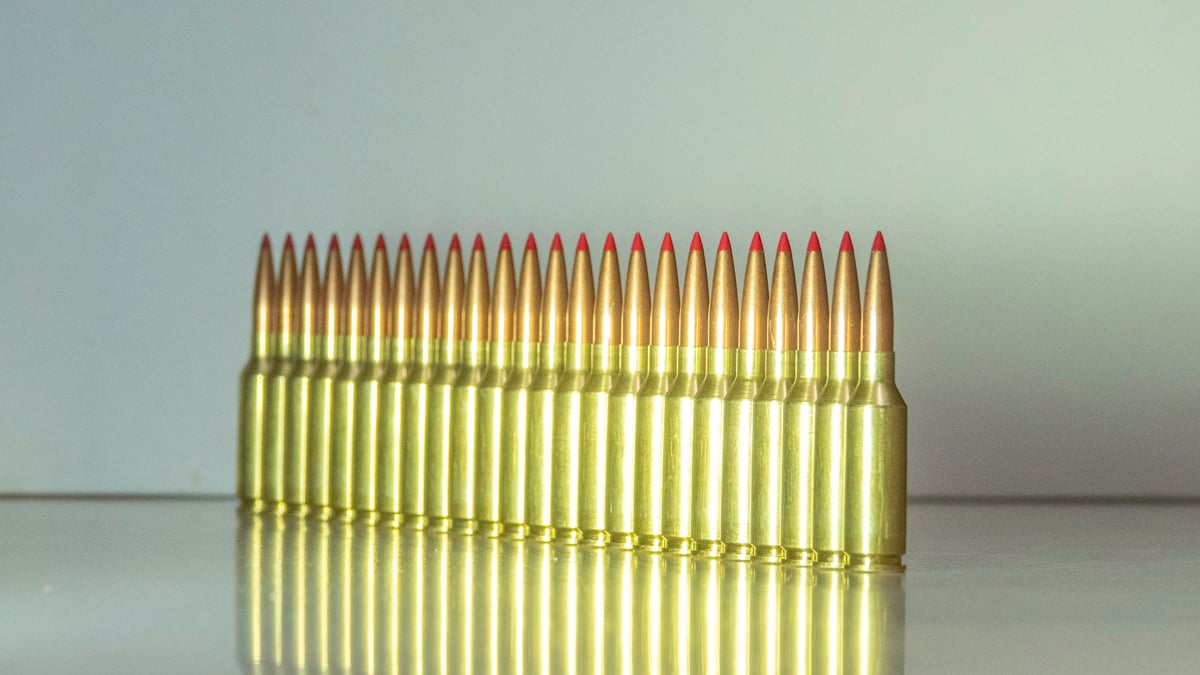
The much higher velocity of the .22-250 burns off too fast in a small bullet for long-range shooting. That’s why, in this case, my .223-chambered AR was superior. A rifle chambered in .22 ARC would have been even better, shooting 70-90-grain bullets at higher velocities than the .223 can hurl.
Even if you don’t want to shoot far, the .22 ARC still has a lot to offer you. Shooting lighter bullets up close, the .22 ARC gives devastating performance just like the aforementioned .22-250.
Hunting with the .22 ARC
I’ve already gone over the long-range and target-shooting case for the .22 ARC, but the cartridge is also an excellent choice for hunting. It can easily take the place of any of your favorite centerfire .22 rifles for hunting, whether that be a fast-moving varmint rifle shooting 60-grain bullets at prairie dogs or marmots, or putting the lights out of a coyote near or far.
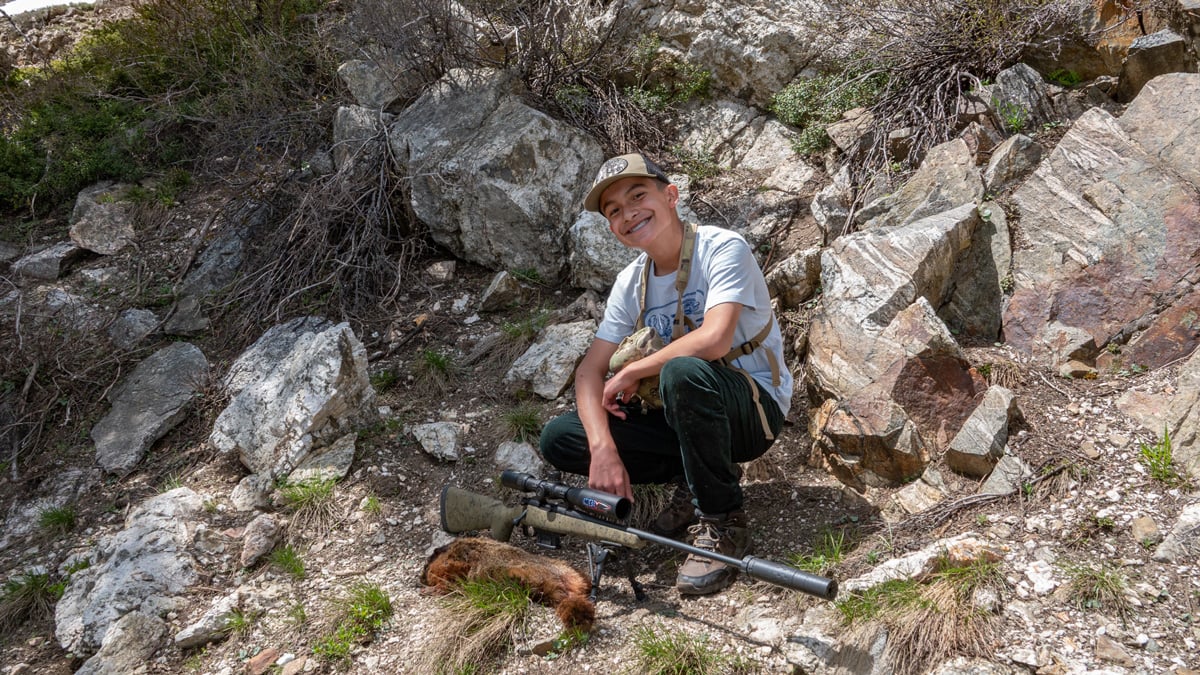
It could even be used for smaller big game animals when loaded with larger bullets. We’ve taken several pronghorn antelope and mule deer using 75-grain ELDM bullets, and the .22 ARC does well with them. I expect the .22 ARC would do even better loaded with 80-90-grain bullets, as they carry more energy and a slightly lower velocity. That might prevent the bullet from deforming too much.
We have used the .22 ARC for all that, and it has been a fantastic varmint rifle. My kids used it for deer season as well. The .22 ARC also does very well from a bolt-action rifle, which is what I have. The Howa Mini action runs the cartridges flawlessly from its magazine.
Loading the .22 ARC
Loading your own .22 ARC cartridges is easily done with brass from Hornady. You can also get it from Alpha Munitions and Petersen Cartridge Company. Small rifle primer pockets are used in the ARC, and modest charges of powder will get you excellent velocities.
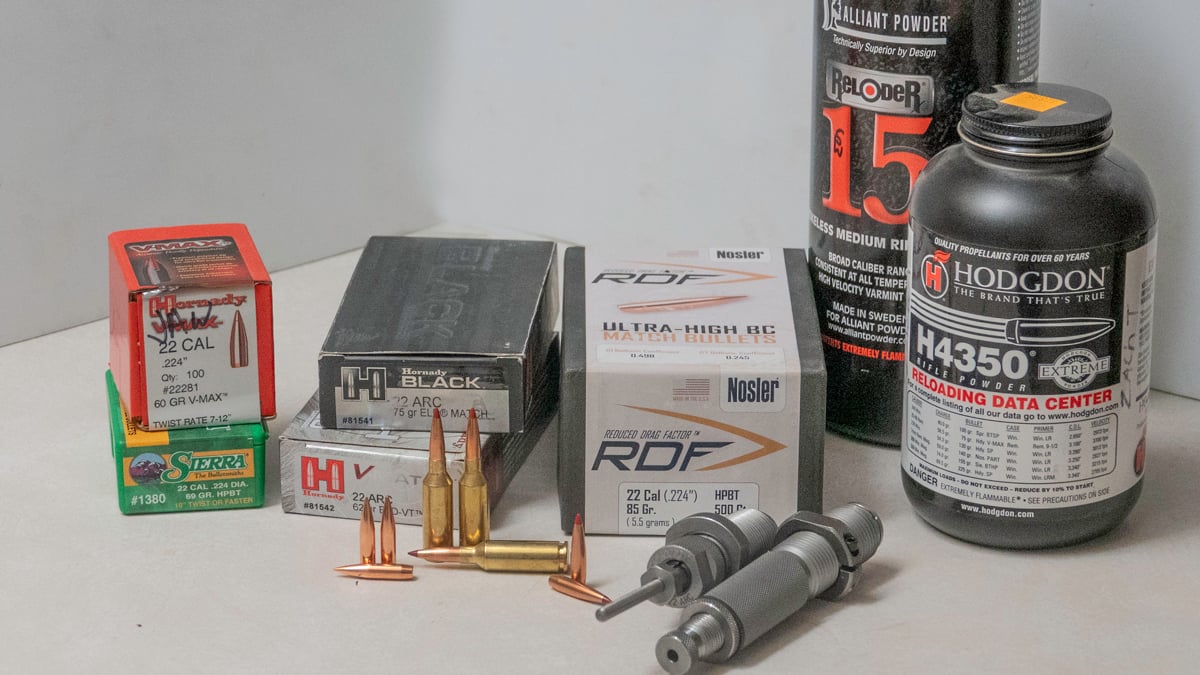
My favorite load, and one we used for most everything, used 28-ish grains of BLC-2 under a 75-grain ELDM. This produced a fairly modest 2,920 fps without pushing hard, and great accuracy.
With the fast 1:7 twist of the .22 ARC, you’ll need to be careful with many of the lighter bullets. They could be pushed fast enough to disintegrate leaving the muzzle if you push too hard. According to Hornady’s load data, 55-grain bullets can be pushed over 3,600 fps, which is quite a hustle.
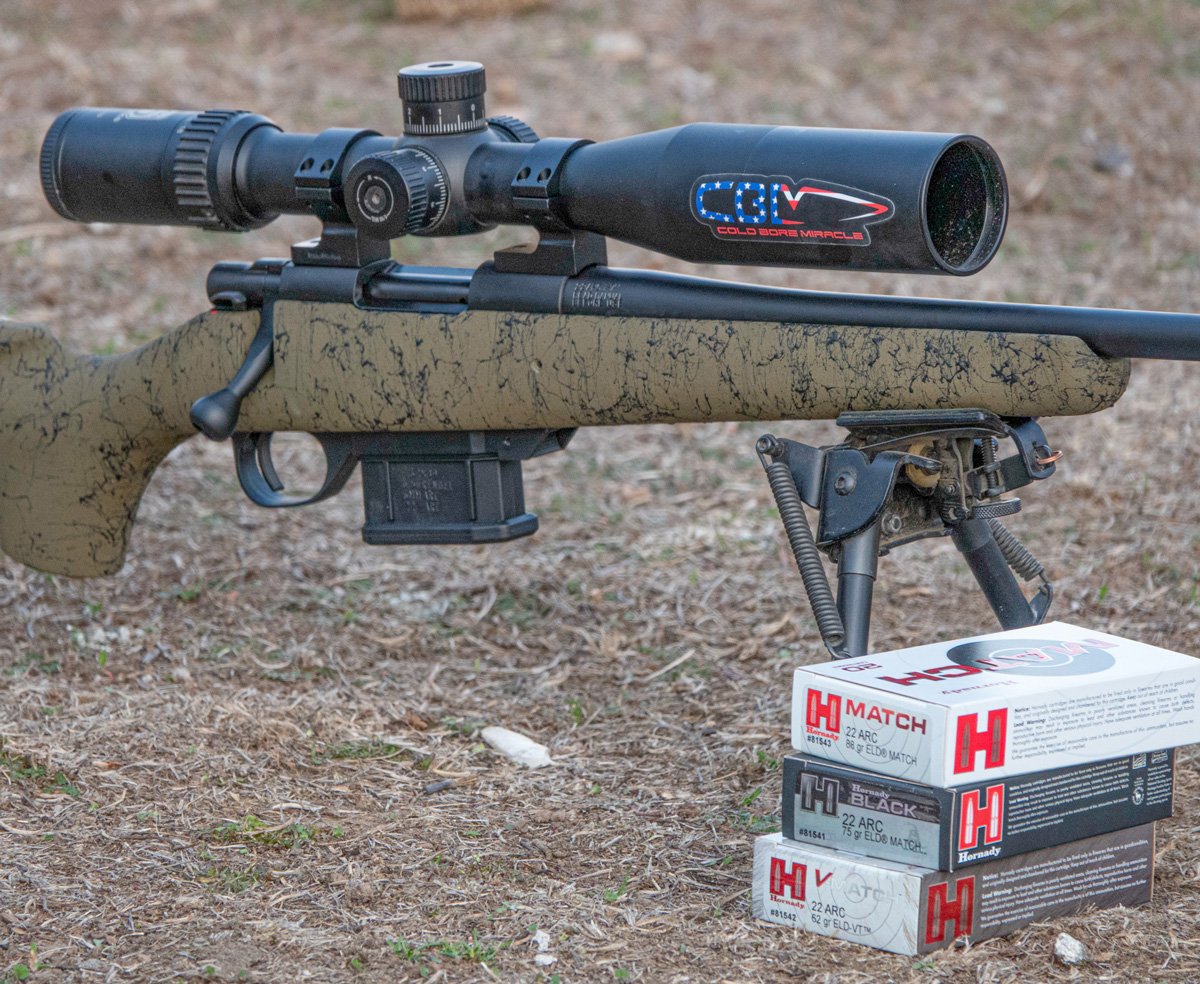
Hornady’s factory ammunition offerings range from 62 grain ELD-VT ammunition up to 88-grain ELDM. I expect this is where they found the ARC to shine, so 60-90 is likely the sweet spot. Some of the heavier bullets might be a touch long for AR-15 magazines, but there is a lot more room than when loading a typical .223 case.
Do You Need a .22 ARC?
Here’s my short and easy answer. You can do almost anything with a .223 that most other centerfire .224-caliber cartridges can do, but that has never stopped any of us from getting something else for the job.

The .22 ARC has the advantage of taking the place of a variety of cartridges. It can be your target cartridge in a precision AR build or take the place of .22-250 in your coyote rifle. It provides higher performance than other options without costing a lot more.
Comparable boxes of ammunition are roughly $1-2 more than .223 ammunition and between $3-10 cheaper than comparable .22-250 ammunition. Despite the round being relatively new, it already has a great deal of support on the aftermarket.
Final Thoughts
If you are looking for an excuse to try something new or just want to get a new gun, the .22 ARC is worth a look. With big support from Hornady and the aftermarket, I expect the .22 ARC will be around for a long time, and the littlest ARC has the numbers to stand on its own.