Pocket Carry
Pocket carry is one of the oldest forms of concealed carry and one of the original purposes of pistols. In my research, I found pocket guns are practical. Real world data shows that self-defense shootings are not the prolonged gun battles we all imagine. They are usually very close range, last only a few seconds, and consists of only a few shots.
Related: Two Guys One Gun Podcast, Episode 23 – Mouse Guns
While a fully loaded combat pistol with red dots, lights and laser might make us feel better; in reality, a five-round pocket gun would statistically be sufficient. What makes a difference is if you are actually armed.

With some practice from a good holster, I can get 1 to 2-second draws from jean pockets. I want to stress “holster,” though – I don’t recommend pocket carrying without a holster.
So now that I knew I wanted a pocket gun, I had to decide on caliber. The two most common CCW calibers are .380 ACP and 9mm. This review is about the .380 guns I tested. With modern defensive loads, I believe .380 guns are perfectly adequate for self-defense applications. I will do another review on all the 9mm pocket guns I tested.
Metal Guns
Next, I went to Guns.com’s Certified Used list and did a search on .380 guns with barrels under 3 inches long. Of those guns, I picked the more traditional metal-framed guns. I have no problem with polymer-framed guns; I like them, own them, and shoot them. But personally, there is just something about metal guns that I prefer.

Also, I think extra weight is a good thing for a pocket gun, both from a recoil mitigation standpoint and for holster drawing. These guns are already so small, and a lighter gun gives less tactile reference in a pocket. I think the extra weight of a metal pocket gun is good, as it lets you know it’s there. I believe there is “too small” and “too light” in micro-compact pistols. I’m looking for the Goldilocks point.
I found four guns that fit my criteria in the Guns.com Certified Used inventory: AMT Backup, Magnum Research Micro Desert Eagle, Colt Mustang, and SIG P238.
AMT Backup

First, let’s look at the AMT Backup in .380. This is a straight blowback pistol with a fixed barrel and internal hammer. It is all stainless steel and weighs 16 ounces without the five-round magazine. The gun itself is 5 inches long, 3.5 inches tall, .9 inch thick, and has a 2.5-inch barrel.
Related Review: AMT Backup .380 – Fun With a Retro Pocket Pistol

There is a grip safety and a manual safety, which is along the frame where a magazine release is usually placed. The magazine latch is European-style at the bottom of the magwell.

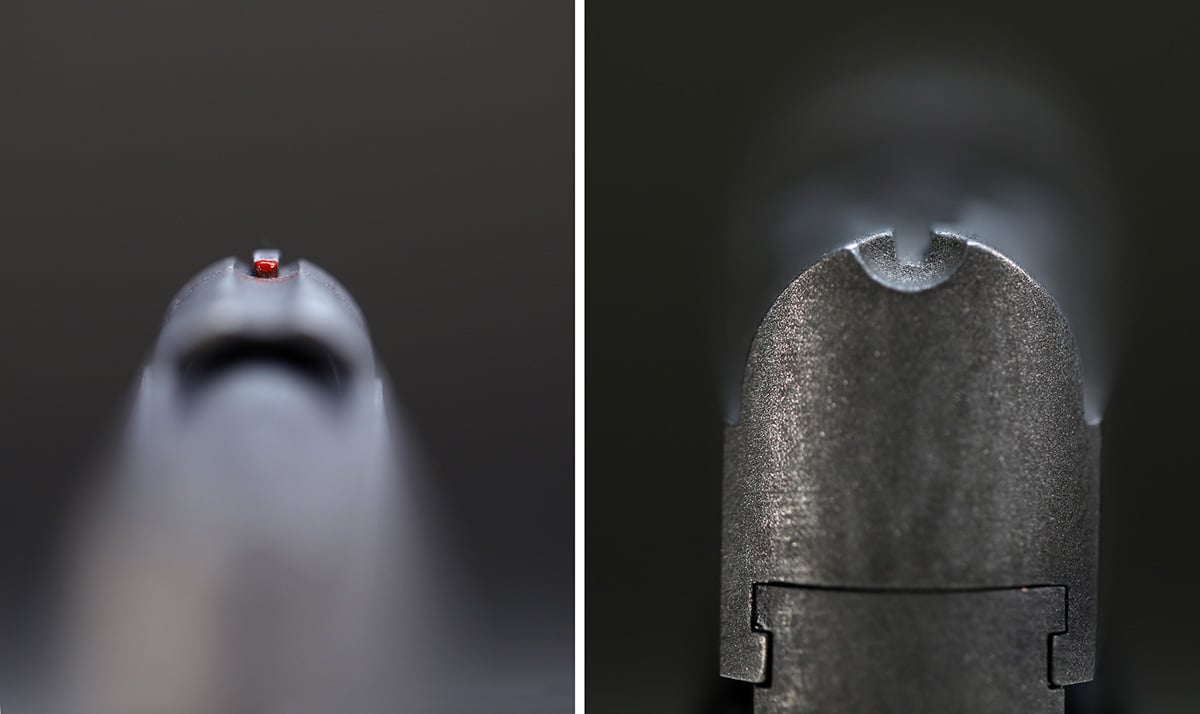
The trigger is curved and single-action only. The pull is about 7 pounds, which is heavy, but the pull is short and straight to the rear. The pull itself a bit gritty but the reset is short. Sights are small and trough-style, machined into the slide. Ejection comes out the top where the ejector is located.
AMT Backup Specs
- Caliber: .380 ACP
- Magazine Capacity: 5 rounds
- Overall Length: 5 inches
- Barrel Length: 2.5 inches
- Width: .9 inch
- Height: 3.5 inches
- Weight: 16 ounces without magazine
-
Trigger Pull: 7 pounds
Pros & Cons

Shooting-wise, I found my test gun both reliable and accurate. I was even able to get consistent hits at over 30 yards, even with the tiny sights. My main complaint was that the angles of the grip cut into my hand, which made for a painful shooting session.

During its production, AMT’s quality control fluctuated. So, there are great Backups out there, and there are lemons. It’s very hard to know which you are getting until you buy it and test it.
Pros:
- Accurate for a tiny gun
Cons:
- Complicated takedown
- The ergonomics did not work for my hand, so it cut me.
-
Reliability reputation of this gun is spotty.
Micro Desert Eagle

Next, we move on to the Magnum Research Micro Desert Eagle. This is a gas delayed blowback pistol with a fixed barrel and bobbed exposed hammer. It is steel and aluminum and weighs 12.5 ounces without the six-round magazine. The gun is 4.5 inches long, 3.25 inches tall, .9 inch thick, and has the shortest barrel of this review at 2 inches.
Related: Magnum Research Factory Tour with Select Fire

There are no manual safeties other than the double-action trigger pull. The double-action-only trigger is heavy at 8 pounds but smooth with negligible over-travel. Reset is long like most double-action-only guns.
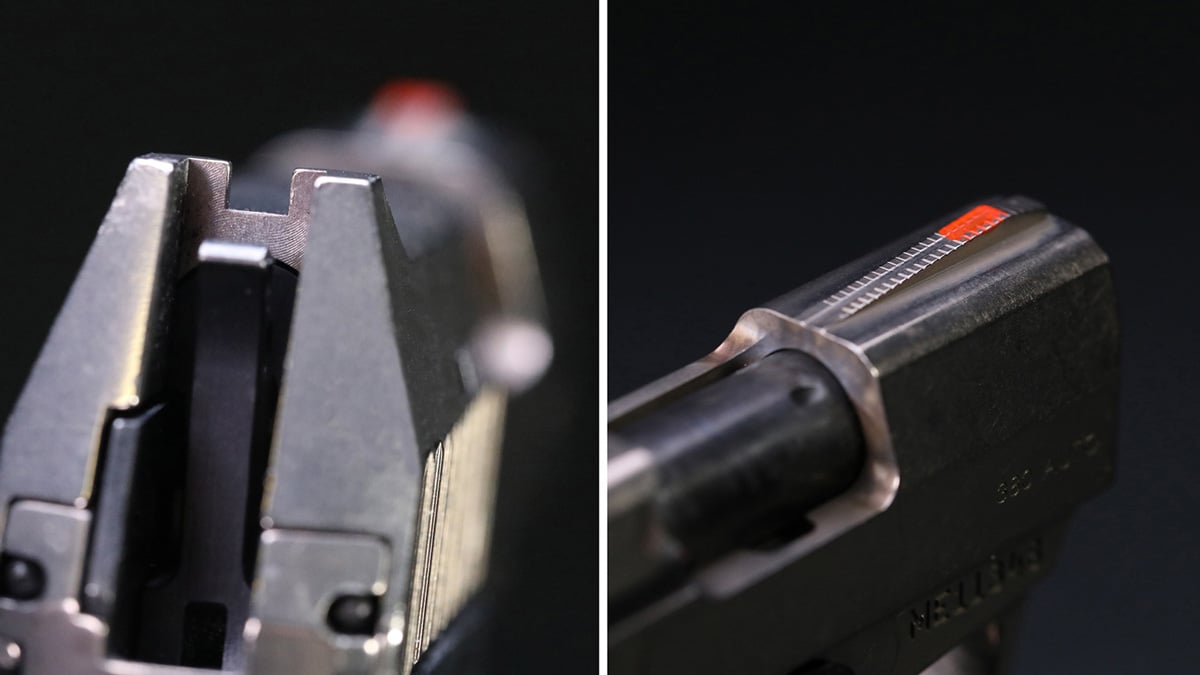
The sights are integral to the gun, with a small ramp on the front and a notch at the rear. I painted the front sight for easier acquisition.
Micro Desert Eagle Specs

- Caliber: .380 ACP
- Magazine Capacity: 6 rounds
- Overall Length: 4.5 inches
- Barrel Length: 2 inches
- Width: .9 inch
- Height: 3.25 inches
- Weight: 12.5 ounces without magazine
-
Trigger Pull: 8 pounds
Pros & Cons
This gun looks and feels very well made. Machining is excellent, and it’s completely dehorned. Reliability was 100 percent, and I was able to get consistent hits at 30 yards even with the heavy trigger. Being double action only, it’s very simple to use: just point and shoot.


However, it hurt me when I shot it. Even though it’s been smoothed over, there are still some corners that dig into my hand when fired. These guns with smaller grips are just not fun to shoot, at least for me. I believe you need to train with your carry gun and shoot it a lot to get proficient with it. If you don’t like shooting it, that will lead to you not wanting to train with it.
Pros:
- Well made, quality machining
- 100-percent reliable during testing
- Double action is simple to use
Cons:
- Grip not comfortable for my hand
-
Heavy trigger pull
Colt Mustang Plus II

The next gun I tried was the Colt Mustang Plus II. The Mustang is basically a 1911 shrunk for the .380 round. This one is all steel and weighs 18.5 ounces without the seven-round magazine. It’s 5.5 inches long, 4.25 inches tall and 1 inch wide. The barrel is 2.5 inches.
Like the 1911, it has a manual safety, but unlike the 1911, there is no grip safety. The single-action trigger pull is a crisp 5 pounds.
Related Review: Colt Mustang Plus II .380 ACP – 1911-style Pocket Pistol
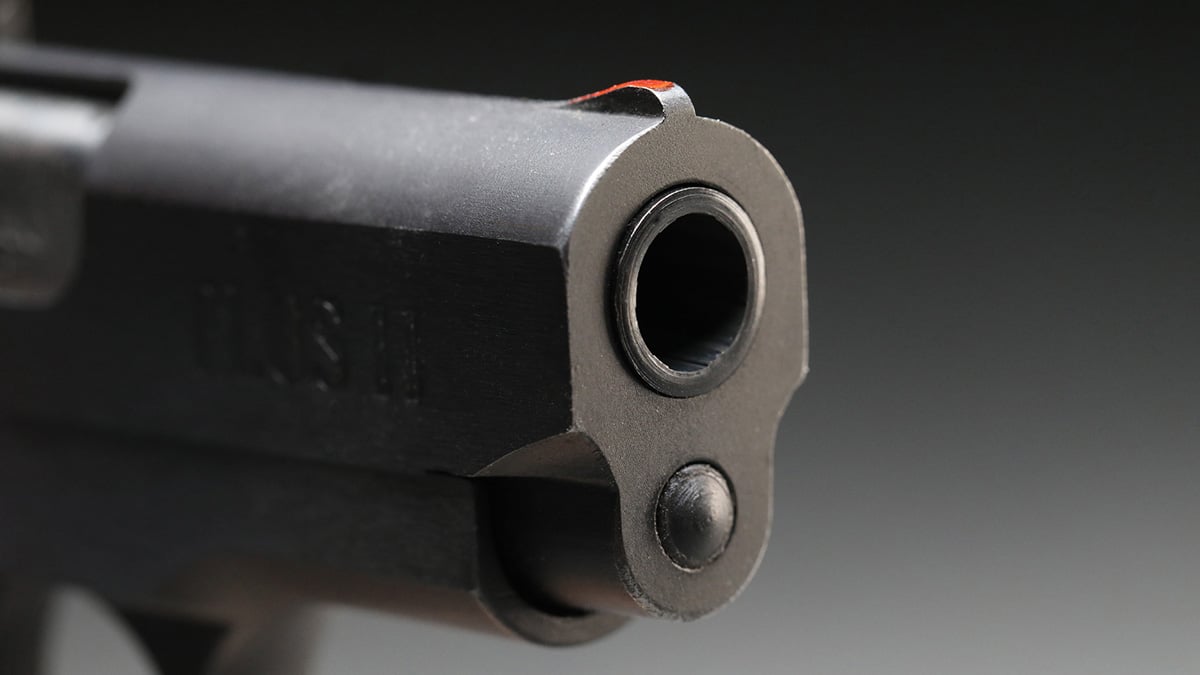
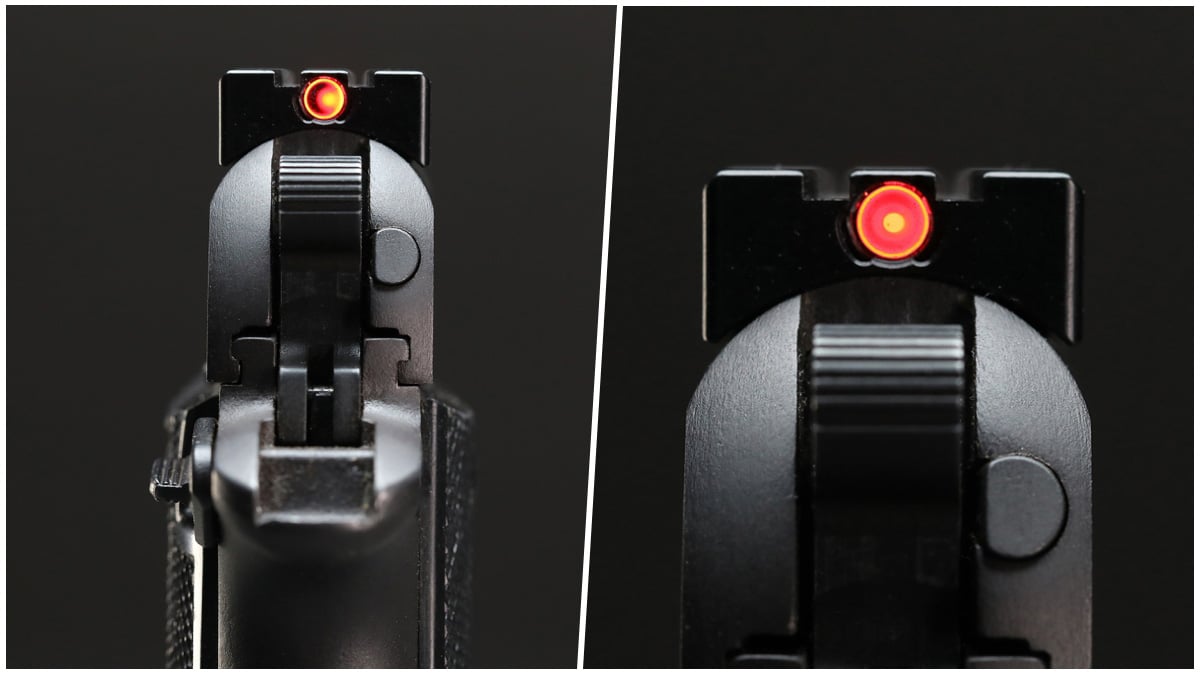
The front sight is a milled-in ramp, and the rear sight is a draftable blade style. Both are small, so in an attempt to improve sight acquisition, I installed Meprolight MePro FT Bullseye sights for some of this review.
Colt Mustang Plus II Specs
- Caliber: .380 ACP
- Magazine Capacity: 7 rounds
- Overall Length: 5.5 inches
- Barrel Length: 2.5 inches
- Width: 1 inch
- Height: 4.25 inches
- Weight: 18.5 ounces without magazine
-
Trigger Pull: 5 pounds single action
Pros & Cons
From a comfort standpoint, this gun was probably my favorite of all these guns. It was the most enjoyable to shoot, probably because of the heft, longer grip, and great trigger.
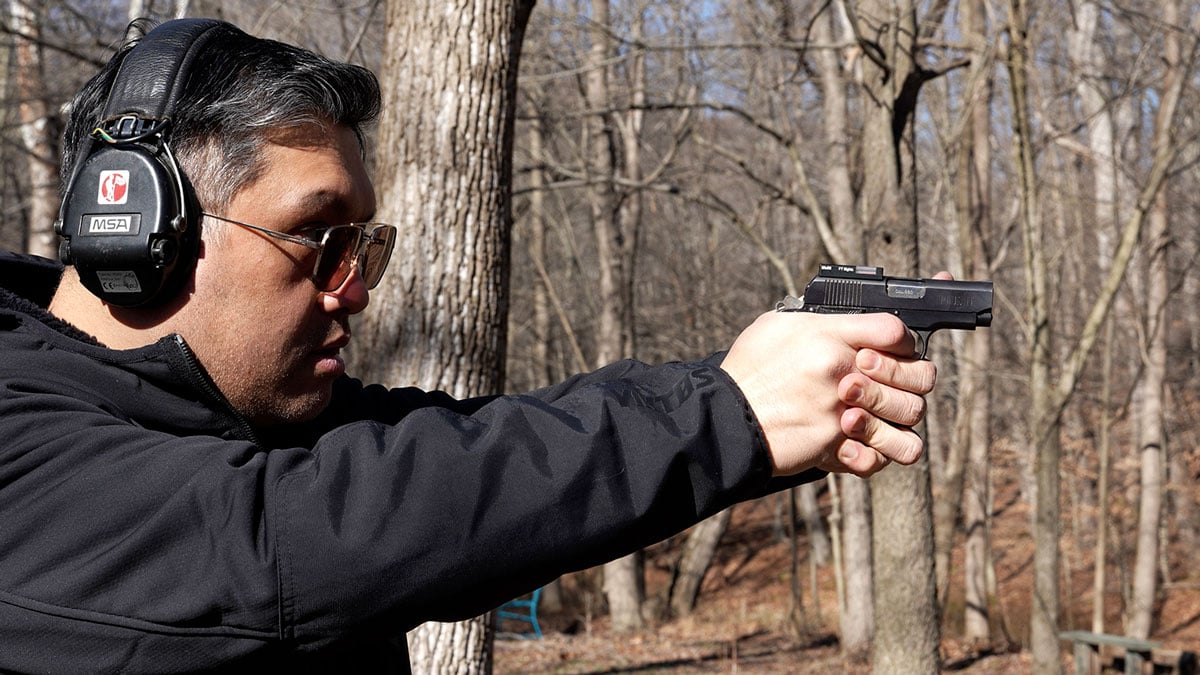
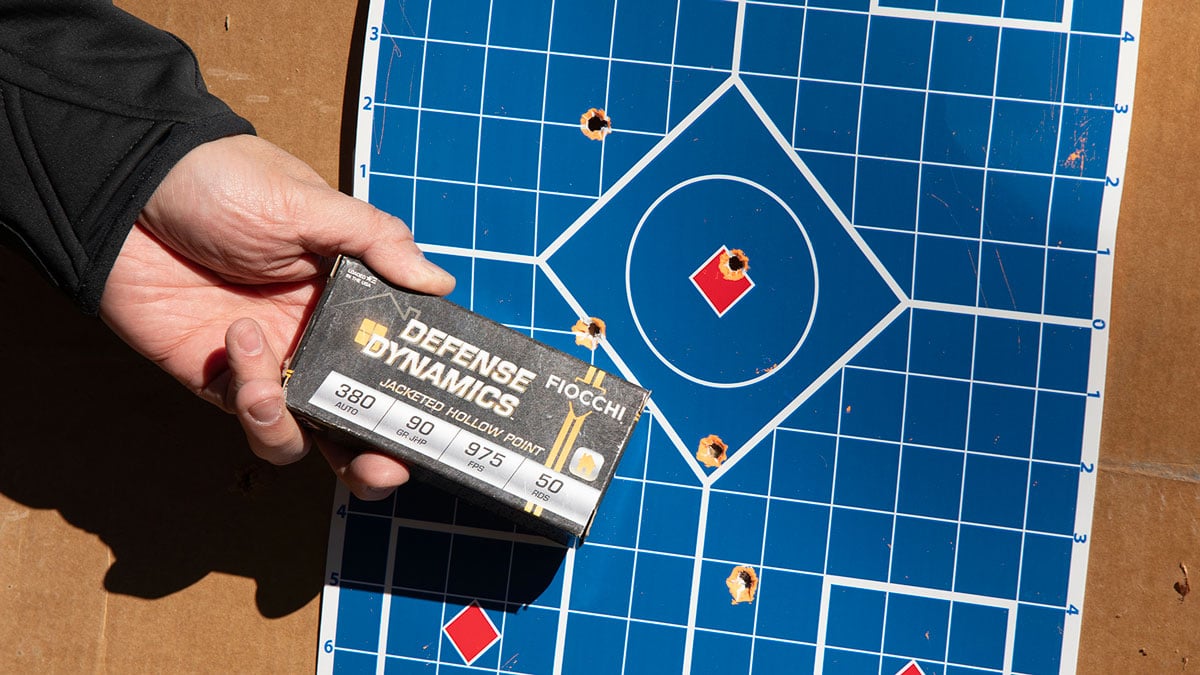
Unfortunately, it was neither reliable nor accurate. I attribute that to the fact that it was a 1994-constructed pistol. From my research, the guns Colt built after re-releasing this model in 2011 were better built and should resolve these problems.
Pros:
- Most comfortable of the group to shoot
- Great trigger
- Longer grip
- Heavier weight helps with recoil
Cons:
-
Test gun not reliable or accurate
SIG Sauer P238
After shooting the Mustang, I realized I really like the 1911 battery of arms in pocket pistols. I like shooting standard-sized 1911s, so shrinking it down to a pocket pistol made sense to me. Also, I like having a manual safety on a gun that sits in my pocket.

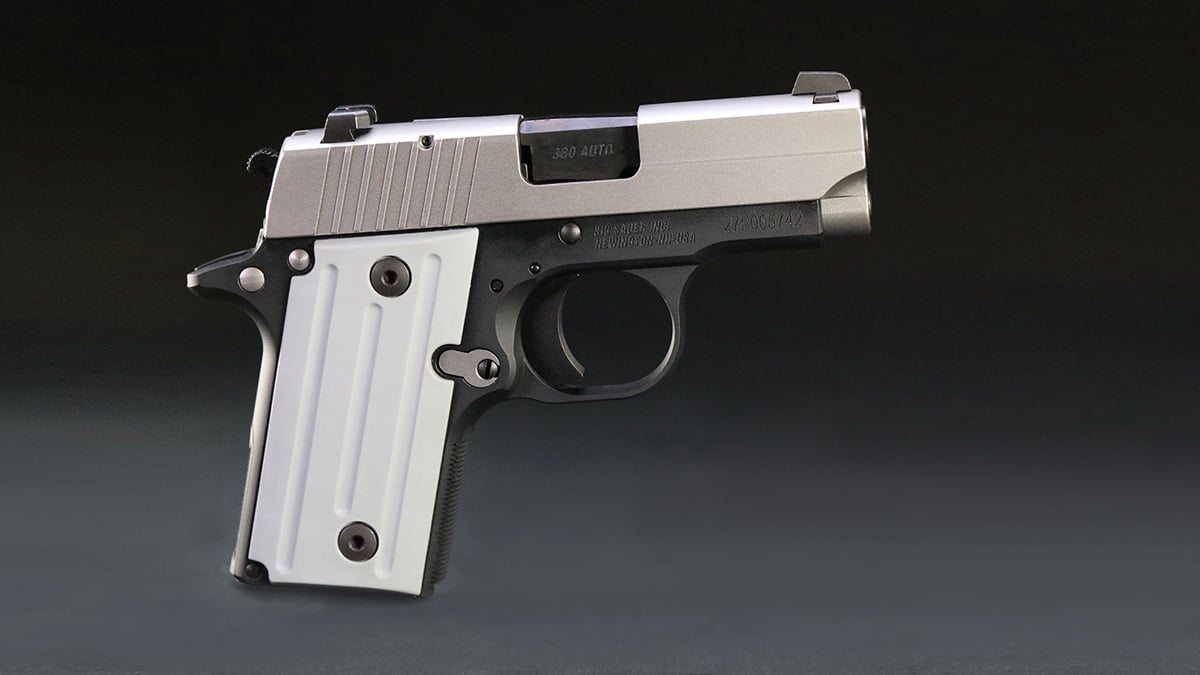
This leads us to the final gun of this shootout: the SIG Sauer P238. The P238 is basically SIG’s take on the Mustang. There are cosmetic and feature differences, but the P238 is essentially a Mustang clone.
Related Review: A Look at the SIG P238, A Year Later
The frame is aluminum, and the gun weighs 13.5 ounces without the six-round magazine. The length is 5.5 inches, height is 3.25 inches, and the width is 1 inch. The barrel is 2.5 inches.

Just like the Mustang, there is a frame safety but no grip safety. The single-action trigger broke at a nice 4.5 pounds.
SIG P238 Specs
- Caliber: .380 ACP
- Magazine Capacity: 6 rounds
- Overall Length: 5.5 inches
- Barrel Length: 2.5 inches
- Width: 1 inch
- Height: 3.25 inches
- Weight: 13.5 ounces without magazine
-
Trigger Pull: 4.5 pounds single action
Pros & Cons
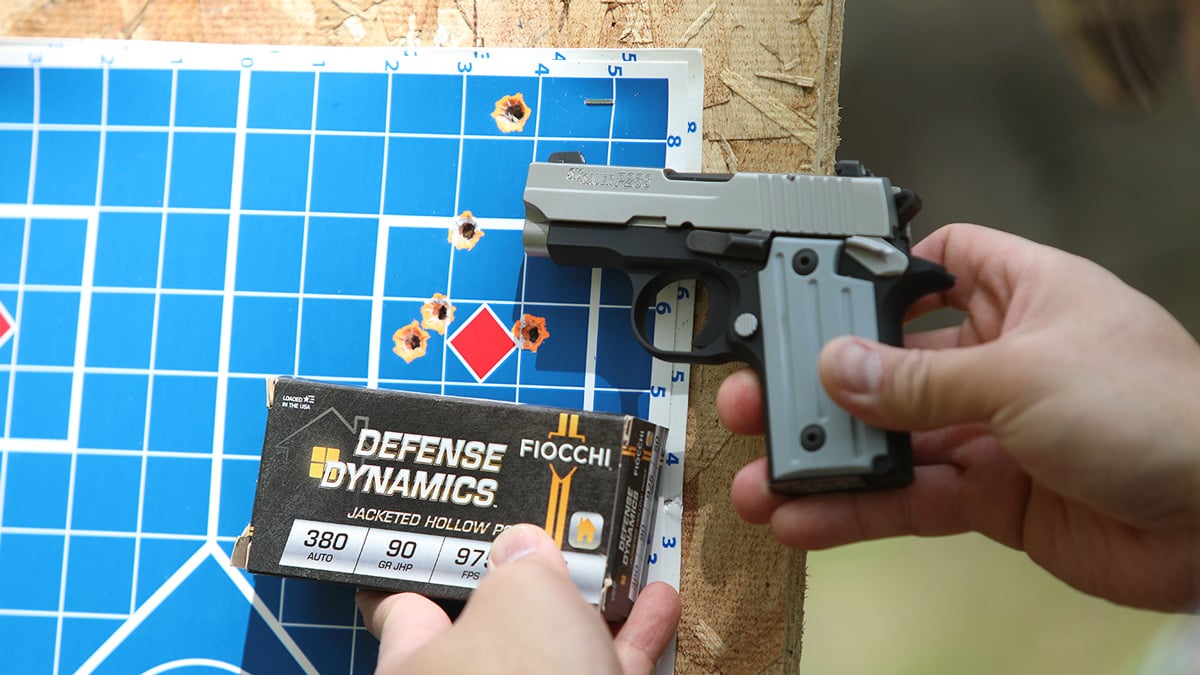
Everything l liked about the Mustang holds true with the P238. It’s great to shoot. But now, it’s both accurate and reliable. I had no malfunctions, good accuracy, and 30-yard shoots were no problem.
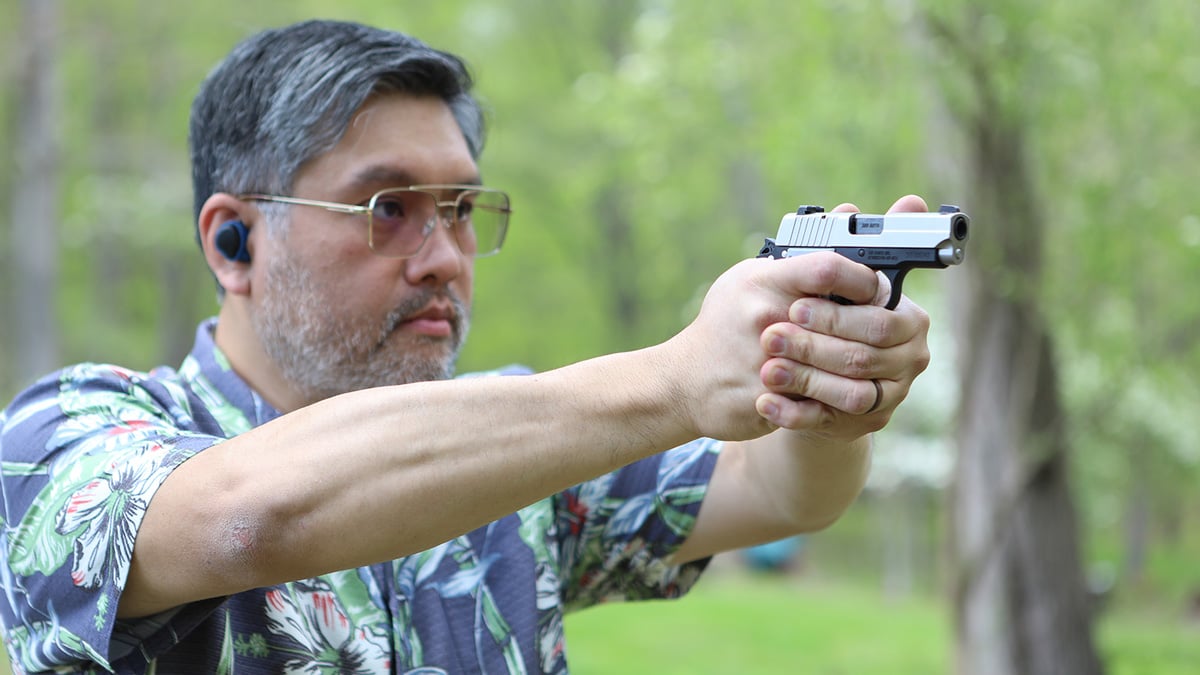
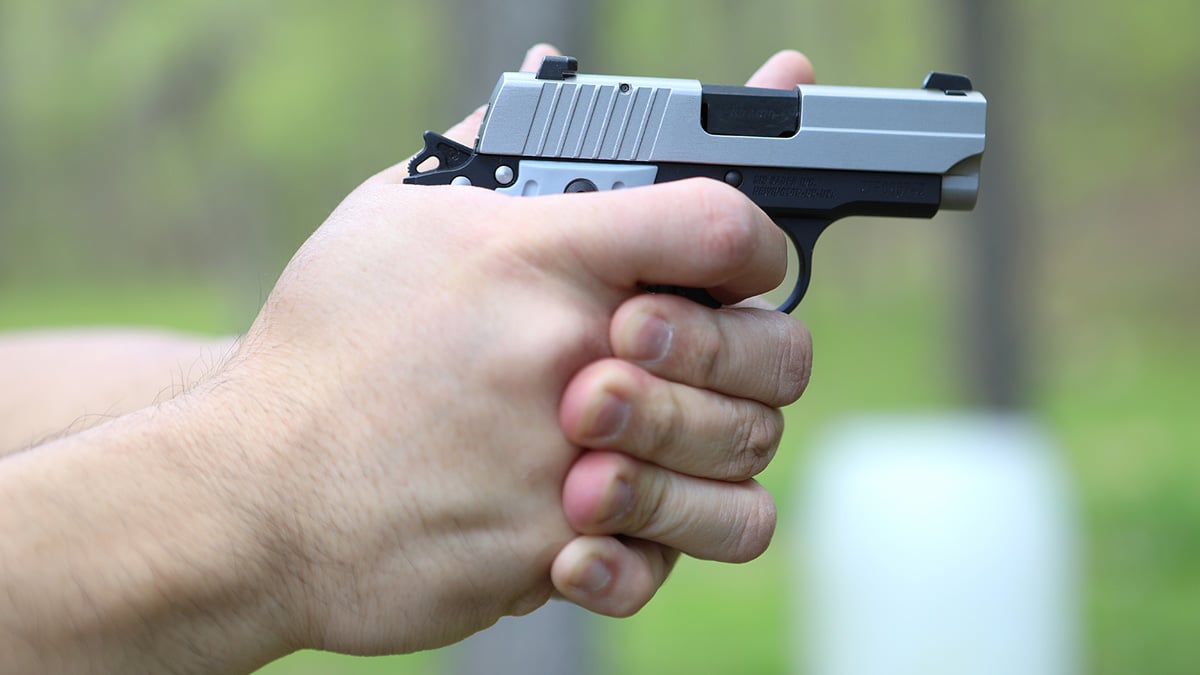
This is because modern machining makes it a better built gun, but also, the nice big three-dot sight makes getting a fast and precise sight picture much easier.

In conclusion, my choice is clear. The SIG P238 is the winner and my preferred traditional .380 pocket pistol.
Pros:
- Accurate and reliable
- Comfortable to shoot
- Well made with quality machining
- Big three-dot sights easy to see
Cons:
- No grip safety