Meet Remington’s Latest .22 Short
The newbie is marketed to two distinct markets: first-time shooters and varmint control specialists. At launch, Remington is offering a 27-grain hollow point alongside a 29-grain round nose. Advertised muzzle velocity is 1,105 fps on the former and 1,080 fps for the latter. These freshly branded .22 Short rounds replace a similar load that the company discontinued several years back.

Speaking of branding, the new load is named simply .22 Short, with a new logo and the expected Remington green and yellow packaging. The rounds sell in 50-round clear plastic sleeves. If that packaging looks familiar, it’s the same as CCI’s sliding top rimfire sleeves – not surprising since Remington, CCI, Federal and other ammunition powerhouses all fall under the umbrella of the Kinetic Group. Like all the company’s other ammunition, .22 Short is loaded right here in the USA.
Background
We won’t delve too deeply into rimfire history here, but appreciating the .22 Short requires a good glance back into the past. Introduced back in 1857 to a country governed by President Lincoln, the scant little round claimed the title of America’s first self-contained cartridge.

Its initial popularity hit home with competition pistol shooters, pocket guns, and of course, dispatching vermin. It remained a small but dominant factor but faded in popularity when the .22 Long was introduced 14 years later. That round’s run of dominance ended fairly quickly with the 1887 advent of the rimfire king we know now: the .22 Long Rifle.
Related: Rimfire Cartridge Basics
Field Testing
How many of today’s shooters own a rifle chambered in .22 Short? The number is likely far higher than many realize. While it has become more uncommon for modern manufacturers to stamp their rifles as compatible with .22 Short, Long, and Long Rifle – due no doubt to the waning interest in Shorts and Longs – the truth is that most .22 LR-chambered firearms can safely fire shorts. While the pint-sized load is unlikely to cycle the action of semi-automatics, there are still plenty of options.
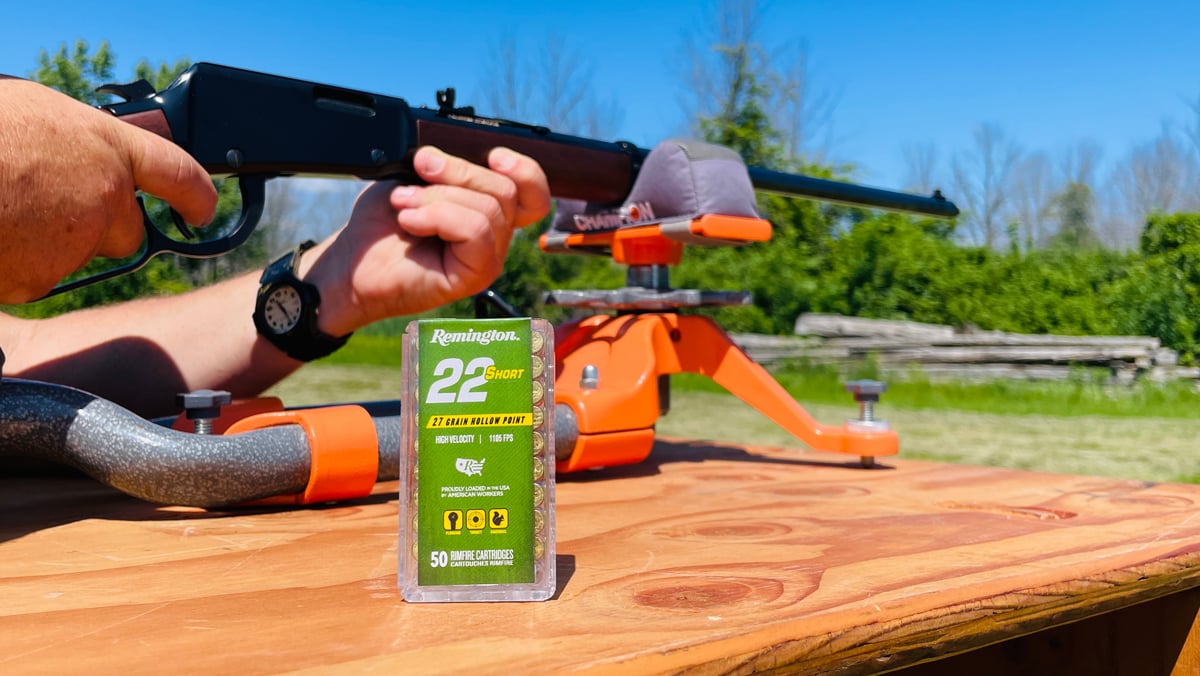
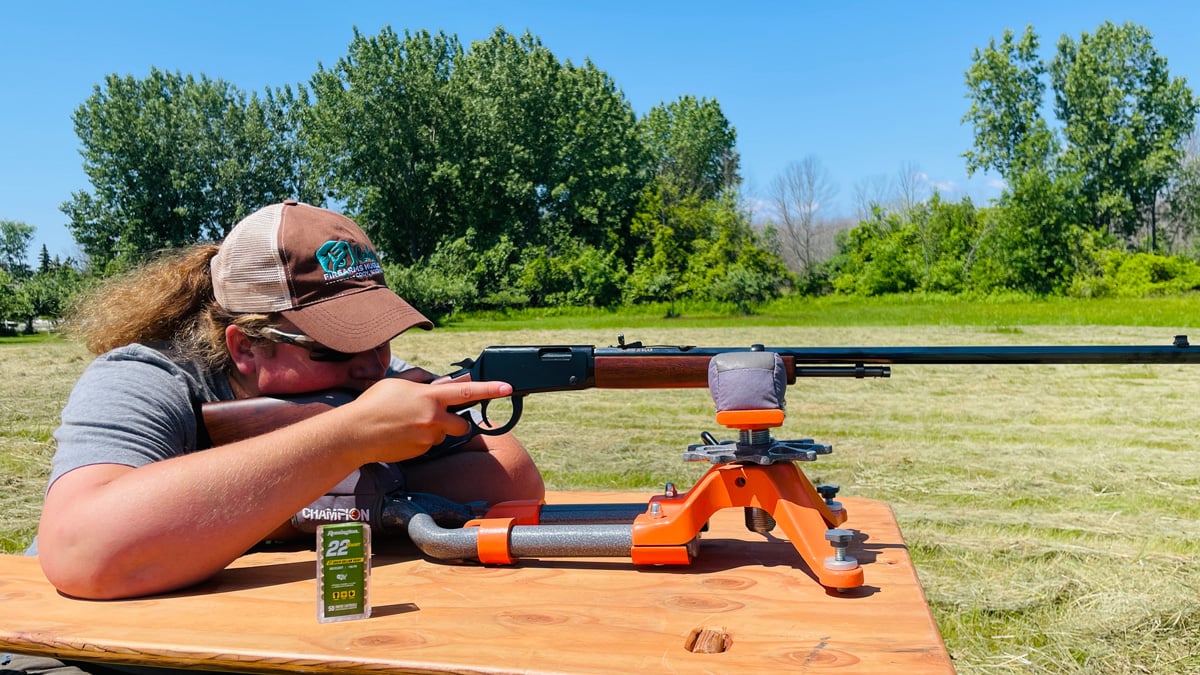
Henry Repeating Arms, true to its classic styling, continues to mark both its lever actions and pump rimfires to handle .22 S, L, and LR. Naturally, that’s where we first looked for a testing partner, using both the Henry Frontier Threaded lever gun and Henry’s Pump Action Octagon.
Firing a mag tube of LR and then one of Shorts reveals a noticeable difference in report. It’s difficult to say whether Shorts recoil less than .22 LR, because the latter is already such a mild plinker. Part of Remington’s .22 Short marketing campaign targets first-time shooters, who are often the most sensitive to noise and recoil. While it’s hard to find any real issues with starting someone on .22 Long Rifle, it’s also difficult to argue that the pint-sized Short is even more friendly.
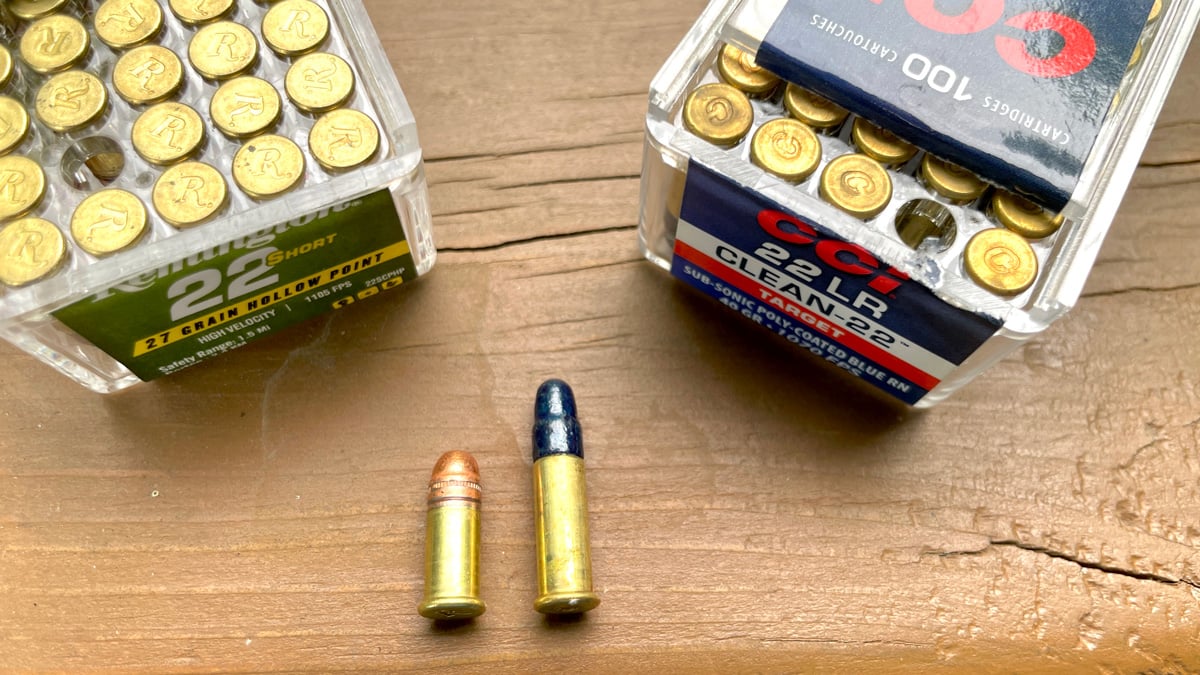
On the varmint or vermin front, I’ve known more than a few folks who swear by .22 Shorts to rid their garden or yard of pests, without disturbing neighbors or other critters. What’s more, the range of the Short is less than an LR, potentially making it more ideal in certain environments. Don’t take that as a free pass for illegal activities or unsafe shooting, but there is certainly a time and reason for the qualities of a .22 Short.
Why & When .22 Short?
For the majority of rimfire applications, the gold standard .22 LR is fine and dandy. Yet, in some cases, .22 Short is ideal. That’s especially true with some guns, mostly older specimens, chambered specifically for the Short. That list includes classic gems like Winchester 1873, Browning SA-22 Short, High Standard pistols, Gallery Guns, and many early Remington bolts, pumps, single shots, to name only a few.
An added benefit to shooting Shorts, especially noticed with tubular magazines, is the extended capacity. For instance, the same Henry lever-action .22-caliber rifle holds 15 rounds of LR and a whopping 21 of Shorts due to that abbreviated cartridge length.
It’s not all sunshine and roses, though. In exchange for the most gentle and quieter nature, shooters in turn receive weakened ballistics and shorter effective ranges. Though this can differ by firearm, load selection, and target type, 50 yards is generally considered the maximum range, with ethical distances inside that even more realistic. A 20-35 yarder is more ideal for most applications.