World Conflict Breeds Innovation
To tell the story properly, we must travel back to the First World War. While the United States is known as a major military power today, in 1914, we were hardly that. The delayed involvement of the United States provided time for American designers to observe the changing tactics of the war and to make needed adjustments to properly outfit the American Expeditionary Force.
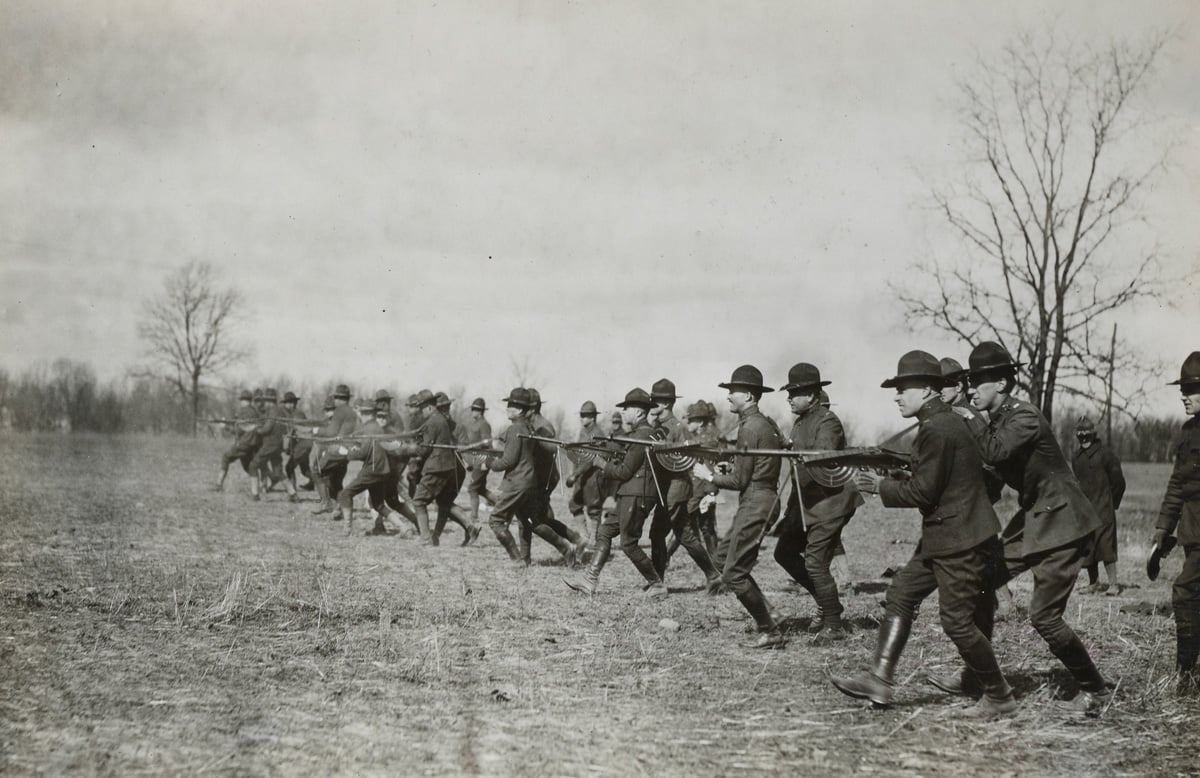
One of the most notable advances in World War I was the mass introduction of the machine gun. This new weapon changed the landscape of warfare, drastically altering tactics and rapidly increasing casualties. With this advancement, the early part of the war saw the United States outsource its issued machine guns by purchasing British Vickers and Lewis guns and French Chauchats. Production of these newly adopted machine guns was limited, and all had their own problems.
Related: The Browning M1917 Machine Gun – Browning’s water-cooled heavy
The Original 1918 BAR
Seeing the need for some American innovation and production, John Moses Browning jumped on the opportunity to start working on a few new machine gun designs. One of those was the Browning Automatic Rifle, chambered for the American .30-06 cartridge, and known simply as the 1918 BAR.
In studying the tactics of trench warfare, Browning devised an entirely new way of implementing the machine gun. His new design was lighter and more mobile than other designs of the day.
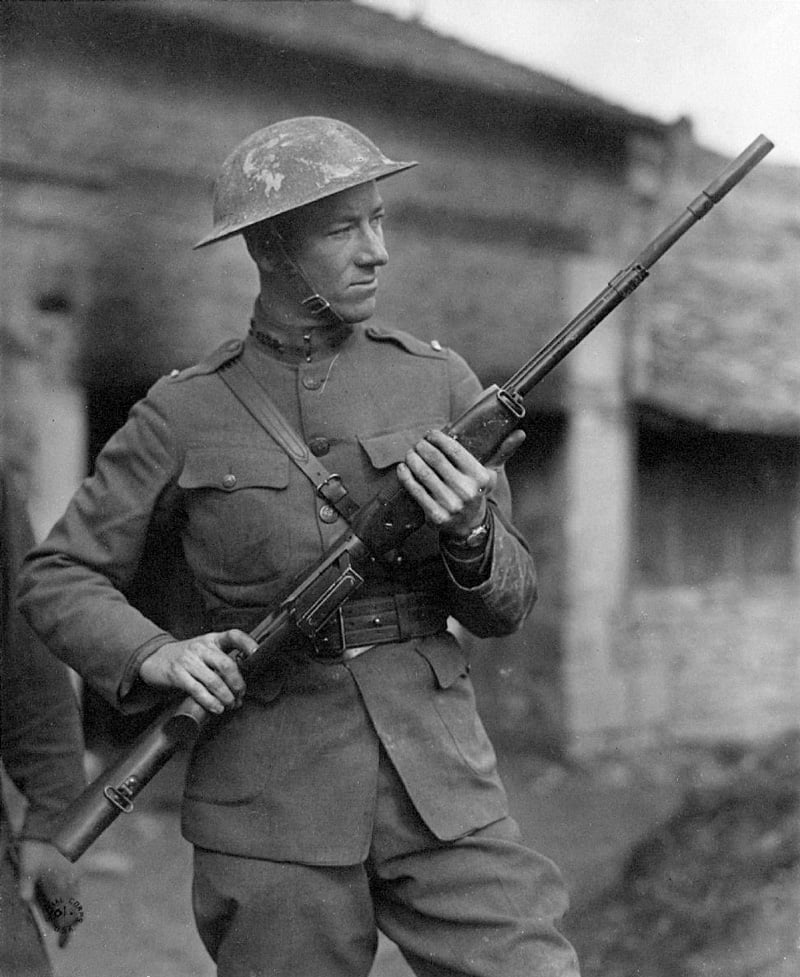
Browning’s “walking fire” concept involved a line of advancing infantry to include several BAR gunners firing from the hip in semi-auto, suppressing the enemy as the rest of the infantry column advanced. Once the column entered the trench, the rifle could be switched to full auto and used to clear trenches. This is similar to the concept of the assault rifle, which wouldn’t be adopted until the 1950s.
While the BAR was adopted by the United States military in 1917, units were not delivered until the spring of 1918. Due to the BAR’s late arrival and sparse numbers, the “walking fire” technique never really caught on.
New Concepts and a Facelift
Although “walking fire” was not widely adopted as a tactic, the concept of suppressing fire became popular toward the end of the war. This concept led to a facelift to the BAR in the late 1920s. With many nations adopting new “light machine guns” to adapt to new squad tactics, the BAR was updated with a new handguard, a removable bipod, a carry handle, and a fast and slow full-auto firing selection, eliminating the semi-auto function.
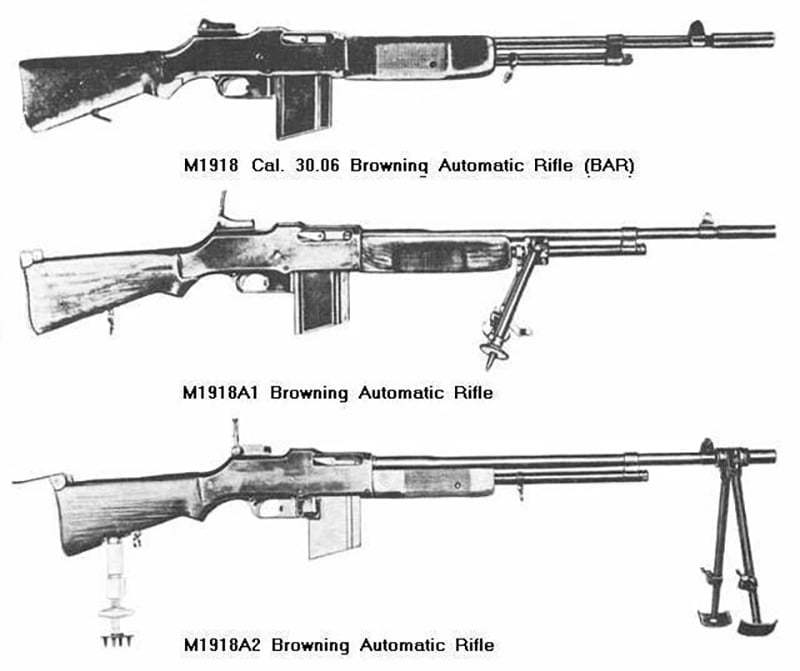
The update transformed the rifle into the American light machine gun. Ironically, for a light machine gun, this update also added about 5 pounds to the rifle. The updated generation of the BAR was designated the M1918A2.
While the original concept of the BAR was innovative and cutting-edge, the design ultimately made a poor support rifle. At over 20 pounds fully loaded, with a limited 20-round capacity, the wide adoption of lighter submachine guns meant the BAR was antiquated. This led many soldiers to strip the rifle of its bipod and carry handle and use the design in a more traditional rifle role.
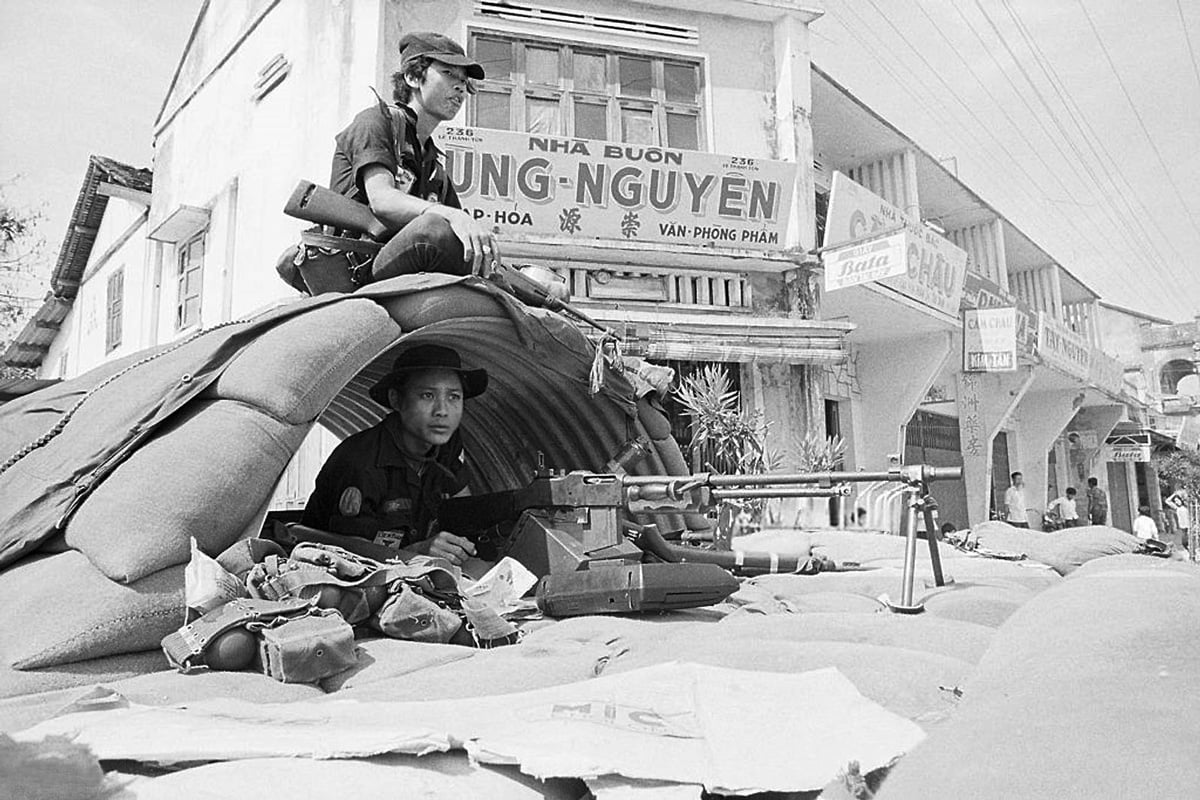
Ultimately, the design served through World War II, Korea, and Vietnam before being phased out of service. Production officially ceased in 1960, leading many to believe that this iconic American rifle once at the forefront of firearm advancements was going extinct.
Classic Design Reintroduced
Thankfully, in the 1990s, Ohio Ordnance Works founder Bob Landies began production on a domestic version of the BAR. This new venture would preserve and extend the legacy of one of John Moses Browning’s most recognizable designs.

The Ohio Ordnance Works BAR 1918A3-SLR is a closed-bolt, semi-automatic version of the Browning rifle. The first few batches were built using a varying degree of surplus BAR parts. Today, the OOW 1918A3 is made entirely in house right here in America. The design closely resembles the 1918A2 configuration, with a more “light machine gun” construction.
On the Range
As someone who is obsessed with military service firearms, the OOW BAR has been on my wish list for a long time. So, when Guns.com got one in stock, I immediately bought an entire World War II outfit online so that I could LARP out on the range. After all, guns are meant to be shot, so why not get into character while you do it?


The obvious question is, what is it like to shoot a BAR? It gives you a whole new appreciation for those who went before and fought with the BAR. At around 19 pounds loaded, the BAR is a beast to shoulder. While I adore the effort OOW put into all the different pieces, it’s easy to see why troops in the field ditched the bipod and carry handle to save weight. Running and gunning in the full World War II getup with the 24-inch-barreled BAR will make you question your shoulder strength and cardio.

Interestingly, while the rifle is heavy, the .30-06 still has a stout recoil. The A2 (and A3) version of the BAR has a sight ladder that’s difficult to use. When flipped down, the rifle has a simple rear notch with a skinny front sight post. When the ladder is flipped up, there is a small circular peep aperture that can be adjusted for distance. Unfortunately, the skinny post gives the shooter a lot of dead space in the aperture, making it difficult to land consistently accurate shots.
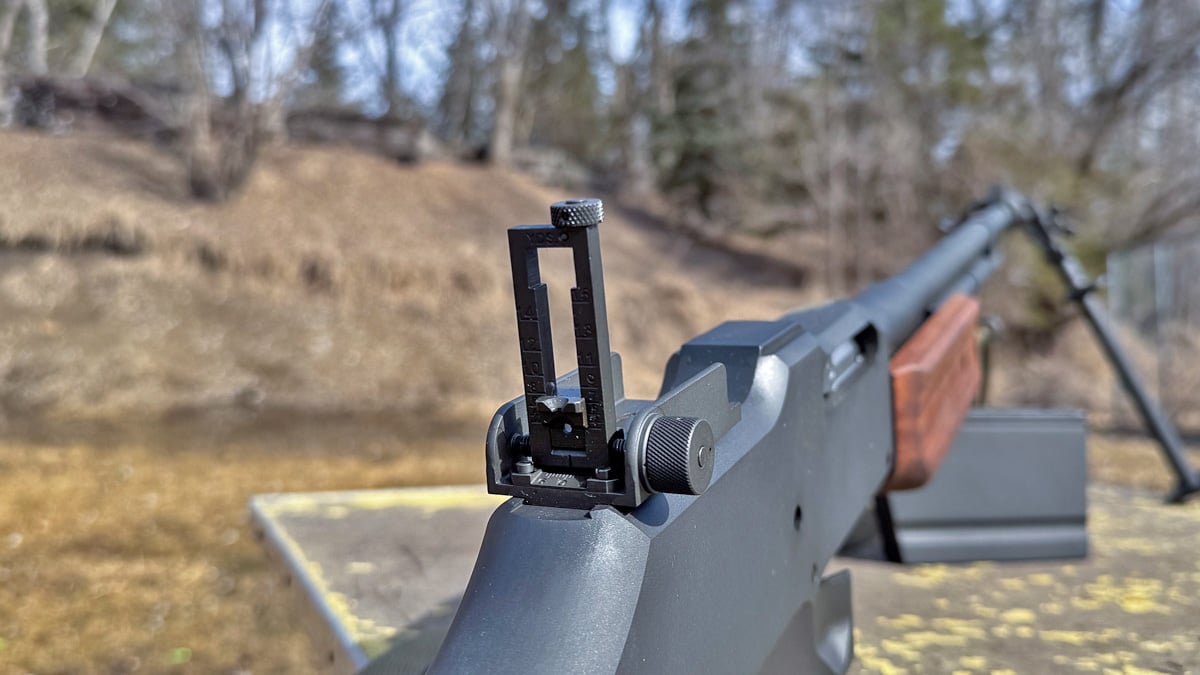

I did shoot a group at 100 yards, and after a magazine of missing the target completely, I found a sweet spot and settled on some practical hits at distance. It’s not winning any competitions, but with a lot more practice on the range, I am sure I could master it.
Final Thoughts
While it is heavy, the sights may not be the best, and it has an awkward pistol grip, it was a treat to shoot the BAR. Every round is a joy with this unique shooting experience. It’s a piece of living history, and to have that experience on the range is amazing.

The experience is even more memorable considering this design started at the forefront of firearm technology, and today Ohio Ordnance Works claims that same position in the industry with new designs like the REAPR. The BAR tops the list of favorite guns in my collection, and I will cherish every chance I get to take it to the range.