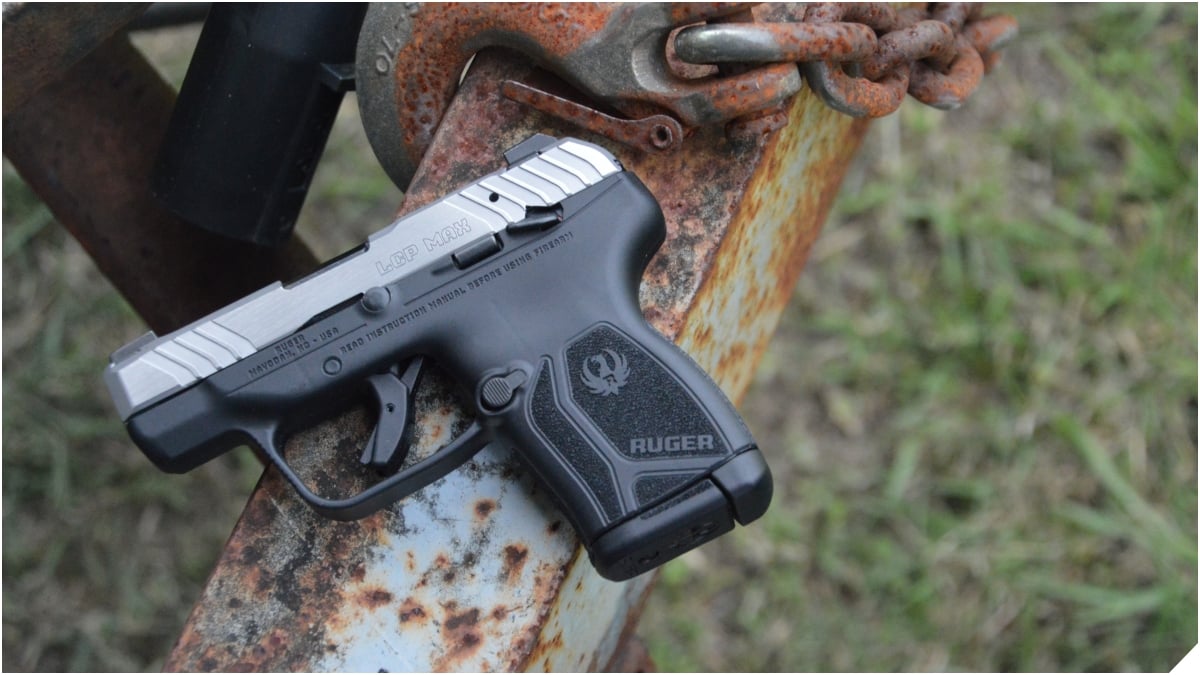
Overview
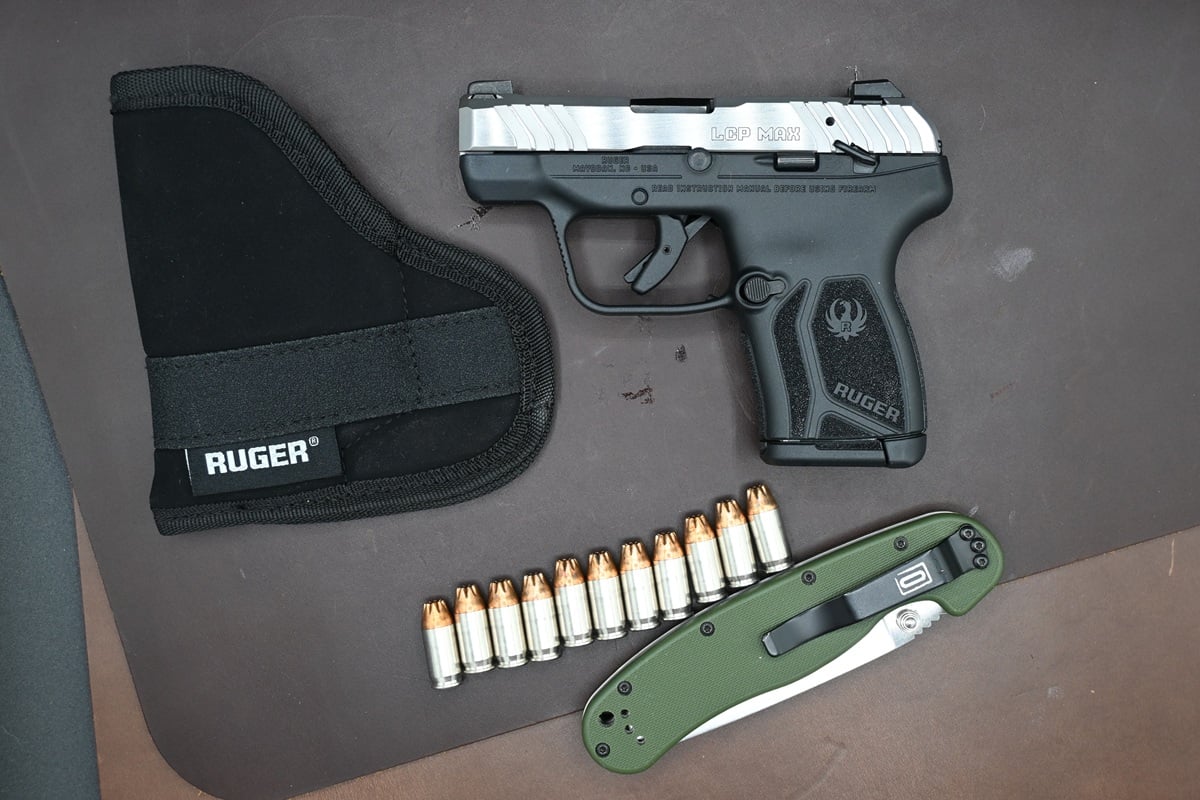
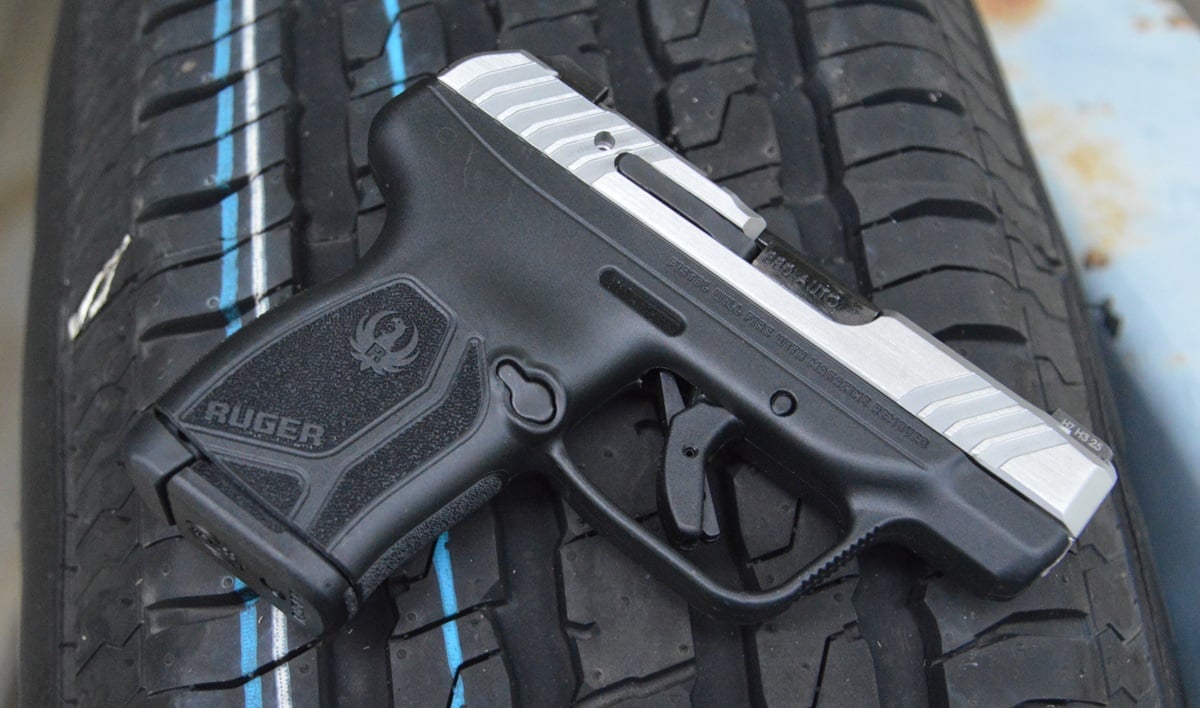
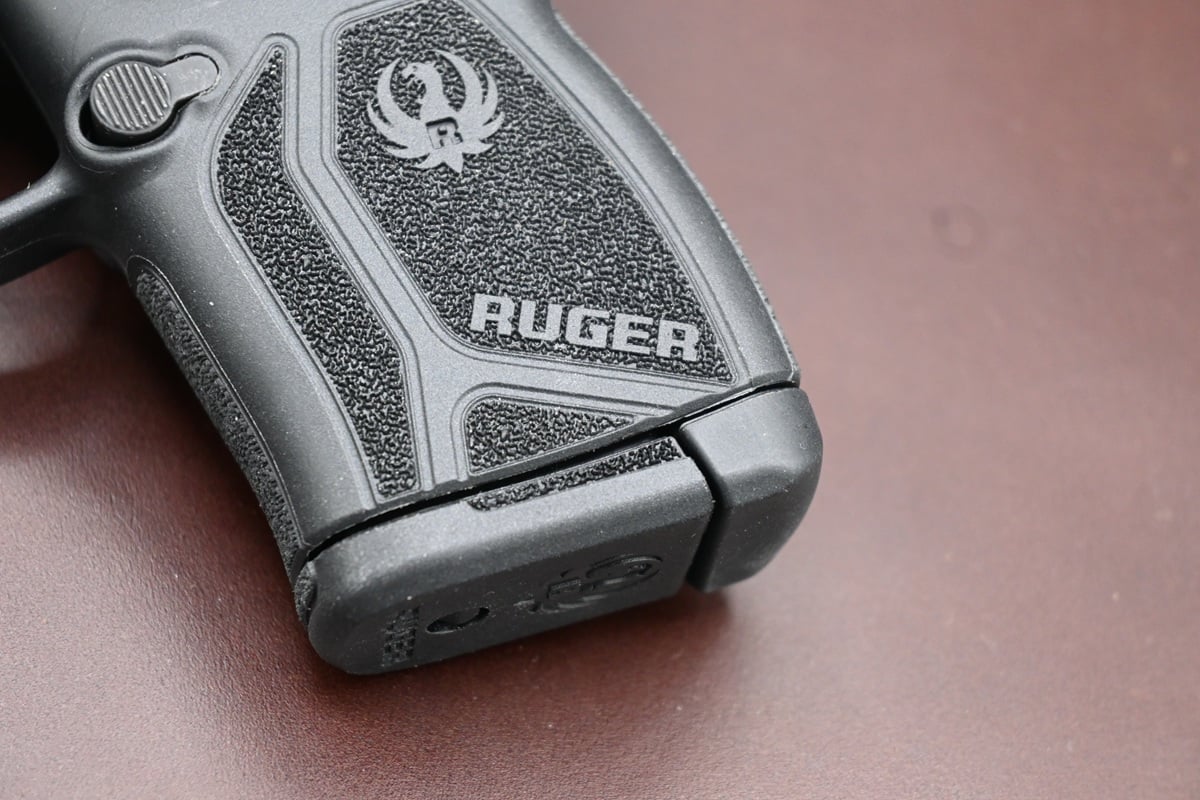
Ruger debuted the single-stack LCP in 2008, and, as perhaps an overshare, I've owned a few since then and have been opining on the platform here at Guns.com for almost as long. I have always thought it was a handy little .380. Following up on the single-stack 6+1 capacity LCP II in 2021 with a pistol that included options for a 10+1 flush-fit and 12+1 extended capacity magazine, the LCP Max still measures less than an inch wide and hits the scales at less than 11 ounces.
Related Review: LCP II vs. LCP Max
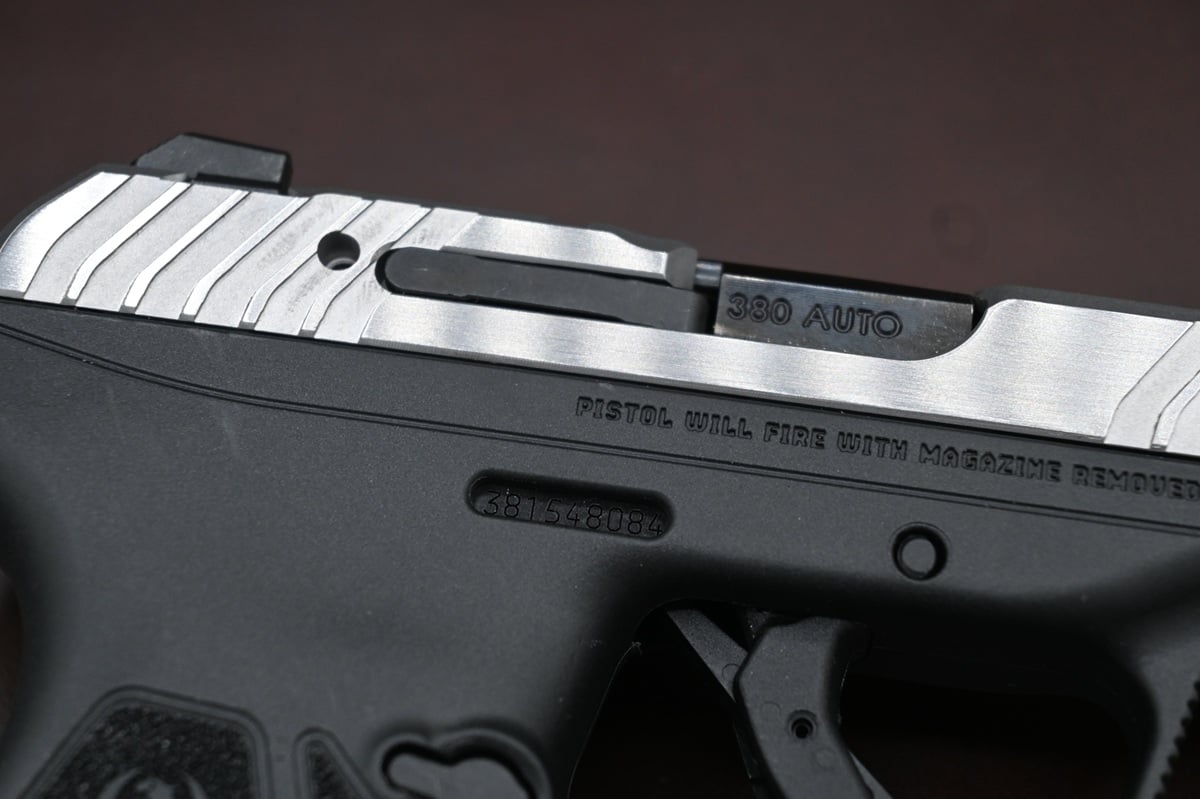
Answering requests from LCP Max fans, the company now offers two new variants (Models 13749 and 13754) that feature an easy-to-use manual safety lever on the left side of the frame. The 13754 even goes a couple of steps further with safety features, including a loading chamber indicator on the top of the slide and a magazine disconnect that prevents firing when the magazine is removed.
We have been evaluating a 13749, which has the manual safety lever but not the magazine safety.
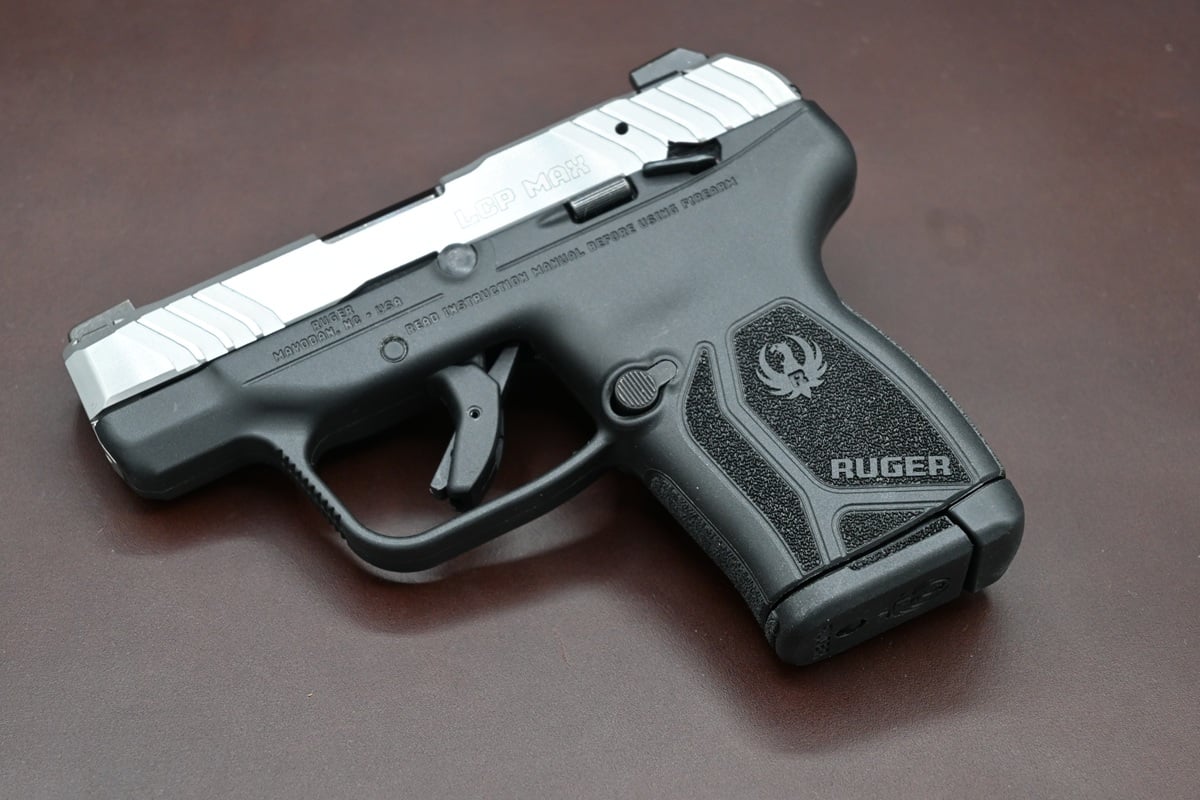
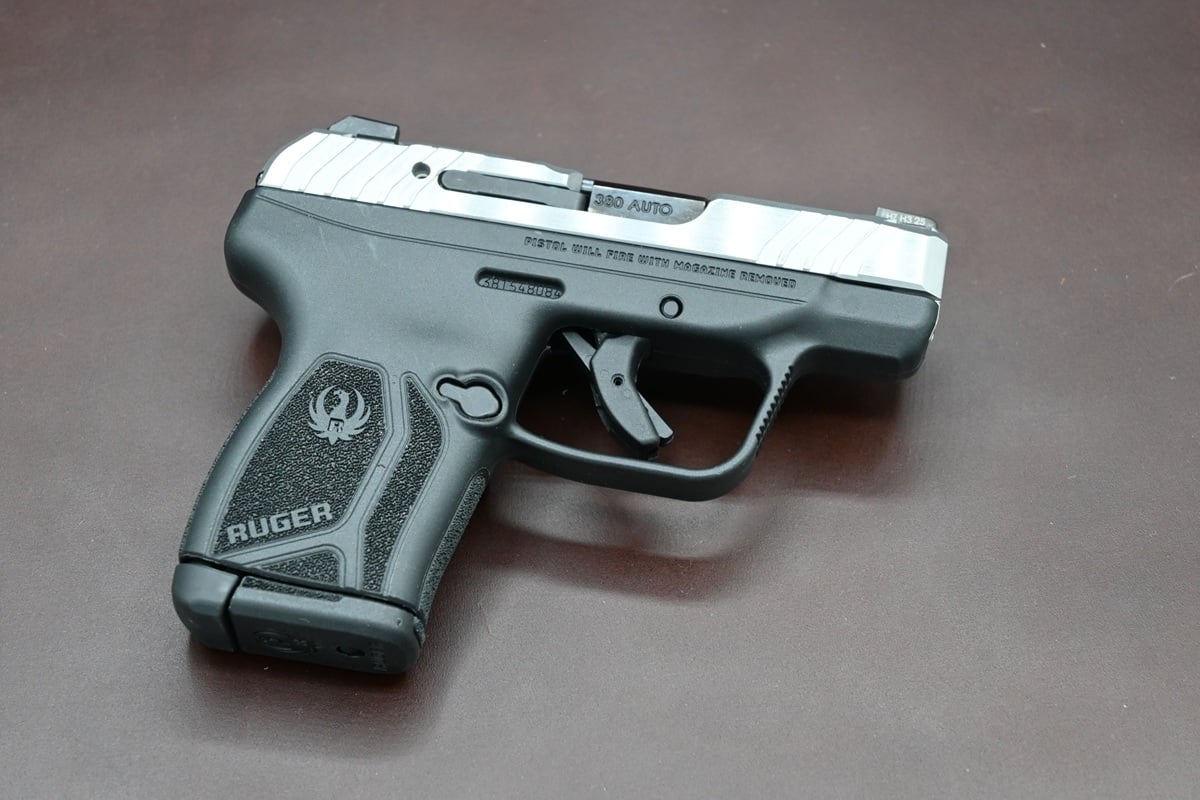
For full disclosure, Ruger provided this LCP Max to Guns.com for review. All testing was done on this one gun, which has been under evaluation since early July.
Specs
- Caliber: .380 ACP
- Capacity: 10+1 flush fit, 12+1 with included extended floorplate
- Trigger Pull: 6.5 pounds (10-pull average), DAO hammer-fired
- Weight: 10.6 ounces with an empty 10-round mag
- Barrel Length: 2.8 inches, 1:16 RH twist
- Overall Length: 5.17 inches
- Sight Radius: 4 inches
- Height: 4.12 inches
-
Width: 0.81 inches over slide
Features
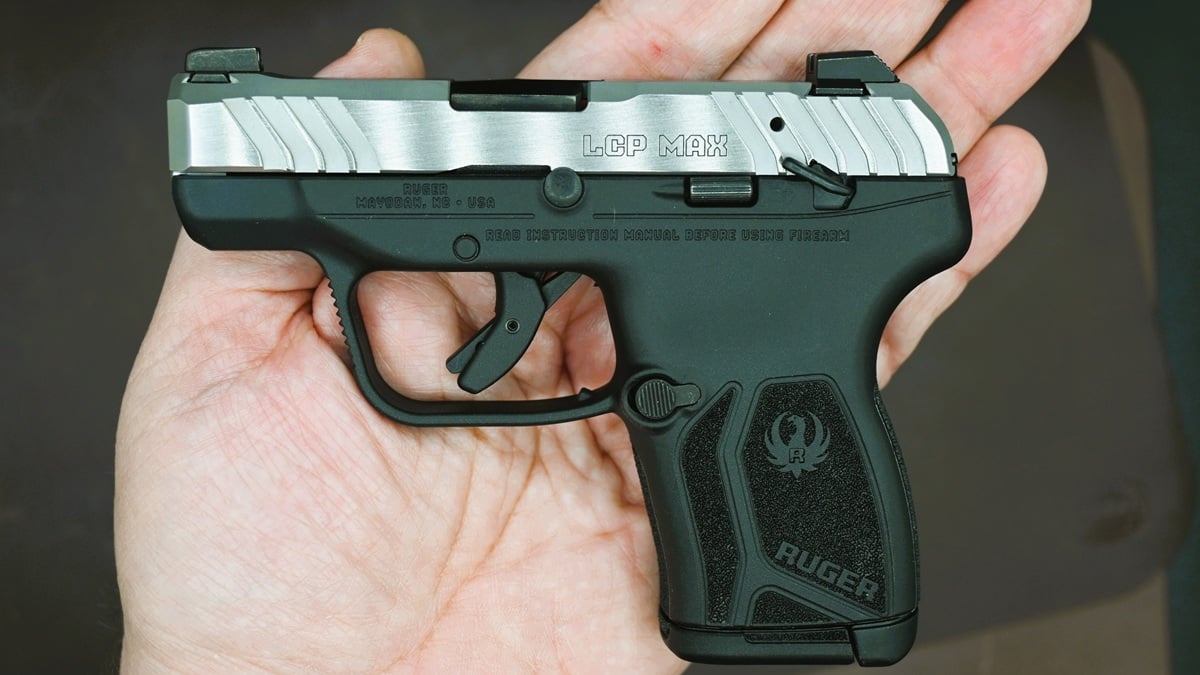

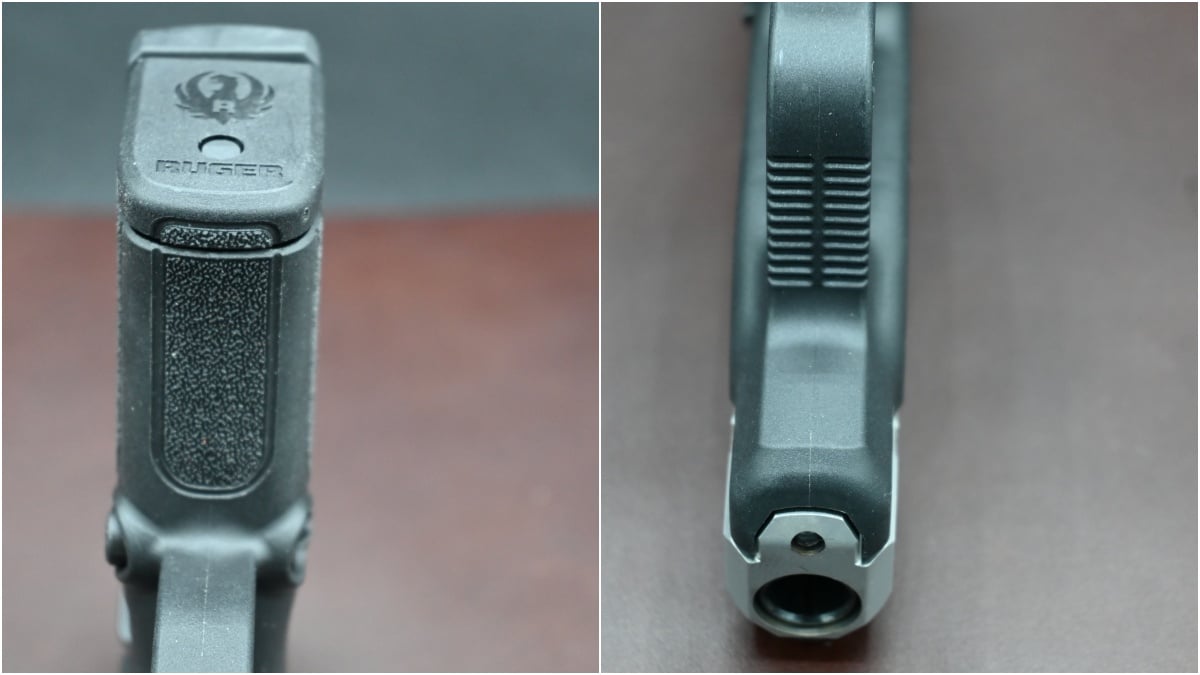
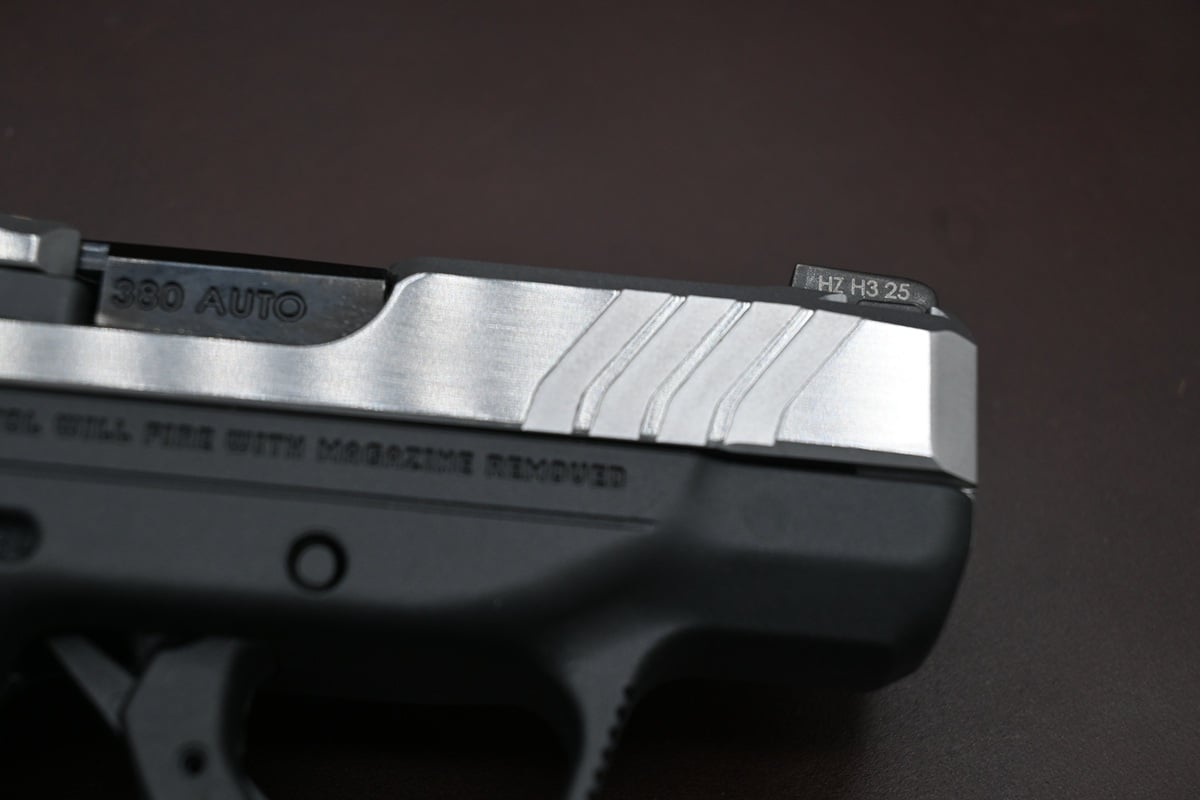


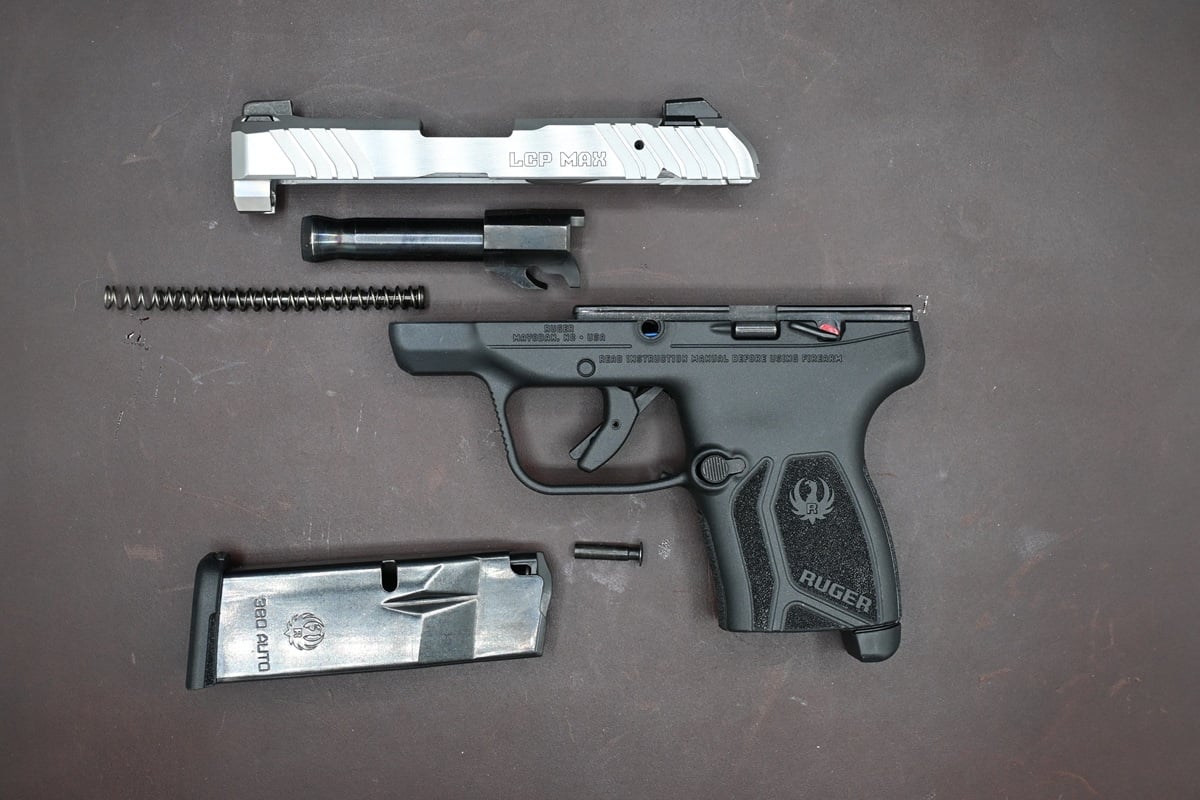
Trigger
The bladed-safety trigger has a notable amount of slack until you get to the wall, with a clean break at an average of 6.5 pounds, followed by a positive reset. Dubbed by Ruger as its Secure Action fire-control system, it uses a lightweight firing pin, neutrally balanced sear with significant engagement, and strong spring tension and hammer catch to help prevent the hammer from contacting the firing pin unless the trigger is pulled.
The trigger footage:
Reliability
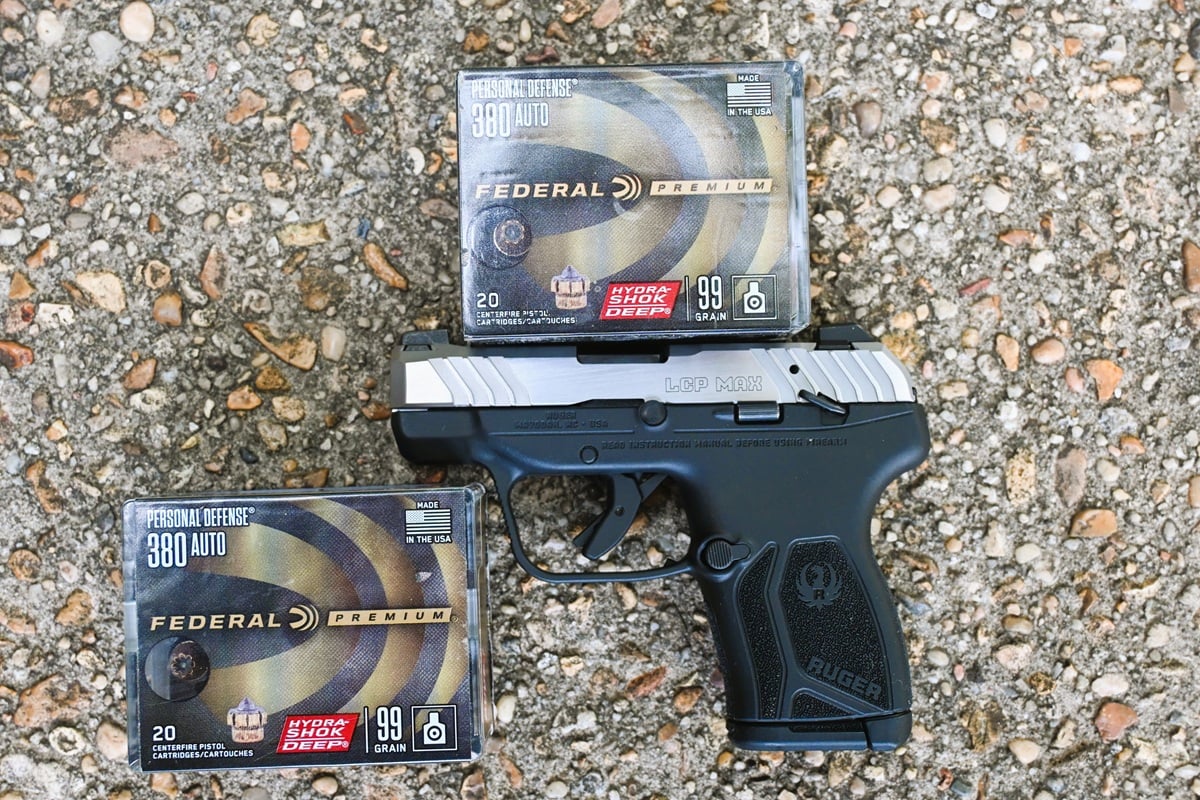
We spent a couple of days on the range with the LCP Max and put about 500 rounds through it, cleaning it midway through the test. The bulk of the ammo used was American Eagle Indoor Range Training Lead Free 70 grain (1,110 fps), and Federal white box 95-grain FMJ (980 fps).


Let's be honest. No blowback-action .380 that fits in the palm of your hand is enjoyable to shoot. Rare is the person who will take a case of ammo to the range with such a pistol, looking for a fun day. However, the LCP Max is controllable, and you can still make hits with it and train with the pistol without soaking your hands in ice water afterward.
My wife, who carries and uses a now old-school LCP (not an LCP II or LCP Max), had no problem with it on the range.
Her video, below:
For those looking to tone down the felt recoil with the stock spring, folks like Galloway Precision and MCarbo make heavier "extra power" springs that step that up to as high as 13 pounds. On the downside, that makes it harder to rack the slide.
Accuracy
With a 4-inch sight radius, a DAO trigger with a decent amount of take-up, and a 2-inch barrel, you aren't presented with a winning hand with the LCP Max when it comes to chewing out the 10-ring of a target at Bullseye distances. However, keep in mind that this is not a match competition gun. It is a personal protection gun for use at close-in self-defense distances. We were consistently able to keep everything in the center-mass alpha zone of an ICE QT target at 7 yards.
Moving past that, the group spreads.

Pros & Cons
Pros
- Accurate at self-defense distances
- Reliable
- Aftermarket support
- Manual safety lever
- Bladed trigger safety
- "Melted" profile ideal for pocket carry
- Hammer-fired
- Decent ergos
- Good magazine capacity for its size
- Affordable
Cons
- Almost too small
- Short range
-
Pocket carry is a skill set
Conclusion
The Ruger LCP has been around for almost two decades, and the LCP Max can be seen as the gun's third-generation evolution with a better trigger, sights, ergos, and capacity. It proved dependable in testing, has great ergonomics, and is a good carry option. Accurate at close engagement distances, you get a decent magazine capacity, especially for its size.
Speaking of size, while the LCP Max can be carried in a belt holster, disappearing in an IWB format, it shines in pocket carry, and Ruger knows it. It was already a safe design, being hammer-fired with a tabbed trigger bar. The addition of the manual safety lever, which is easy to click off during a draw stroke with a little training, doubles down on this. Plus, it works, which is not something you can say about some other pocketable .380s on the market.
Adding to that, the price is super affordable. MSRP is $379, with actual prices running $299 or less. It is tough to find a better .380 for the price. For instance, the Smith & Wesson Bodyguard 2.0 has an asking price of $437 for the entry-level model.
When it comes to throwing rocks, you must keep in mind that this is not a gun designed for the average shooter to run past 15 yards in a high-stress situation. Still, the sights and barrel length are better than your average snub-nosed revolver – the pocket carry staple – while giving the user almost twice the rounds on tap and a faster reload. When speaking to pocket carry, as with every other form of carry, the user needs to get in touch with their training to draw and fire. Don't just wing it. And remember, you pull the holster out of the pocket to reholster.
In closing, this is a mouse gun that roars.