Initial Thoughts
Anyone who’s spent time around firearms has likely handled a Ruger 10/22. It’s light, accurate, and easy to shoot – but at 37 inches overall, it’s not especially compact.
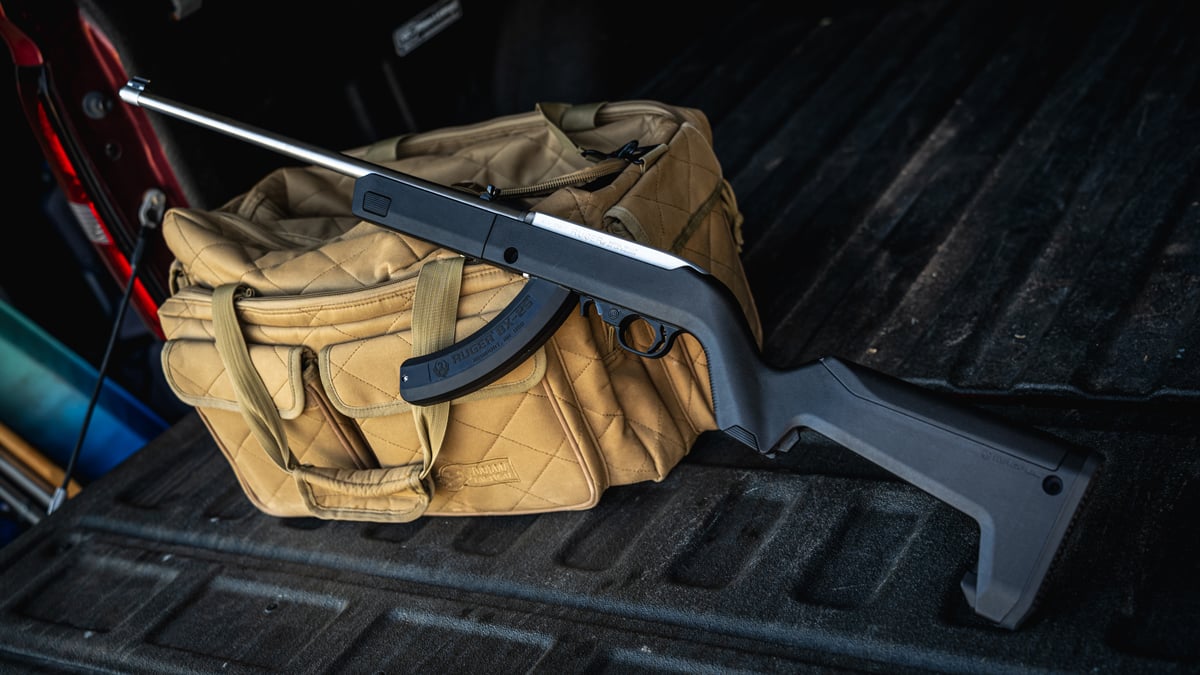
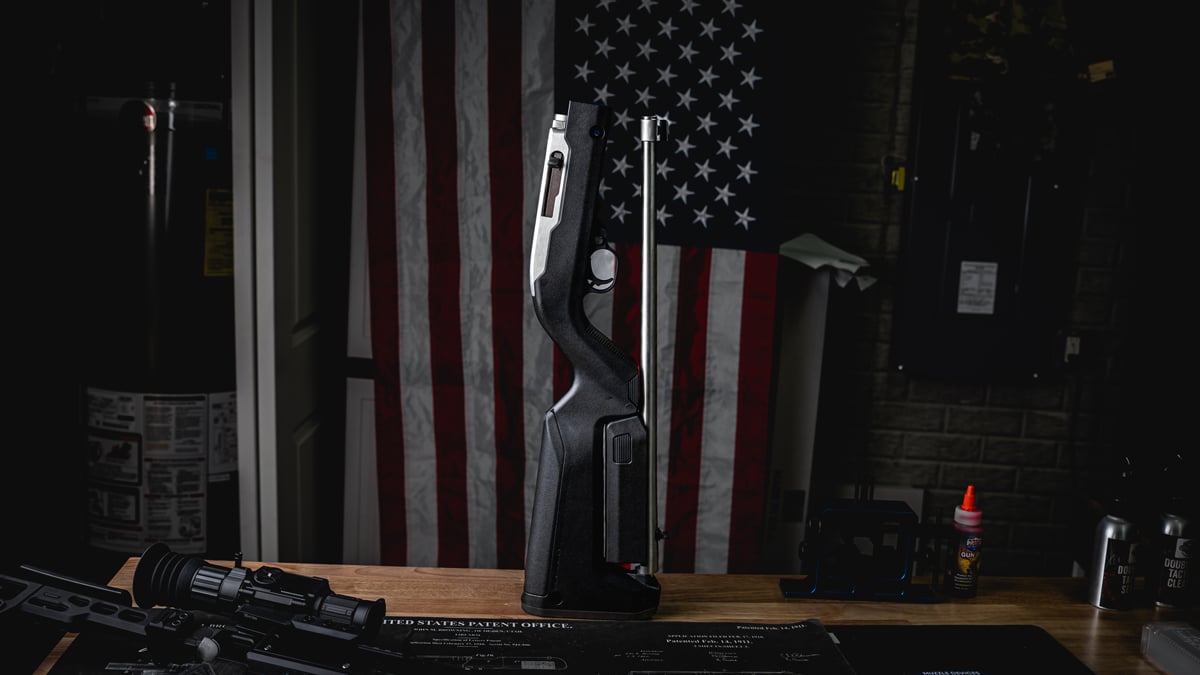
The Takedown model addresses that limitation, breaking down into two pieces. Paired with Magpul’s X-22 Backpacker stock, the system becomes even more practical, locking the barrel into the stock for a compact, self-contained package. For hiking or extended trips, even lightweight rifles can be cumbersome. This setup significantly reduces bulk while maintaining the usability of a full-size rimfire rifle.
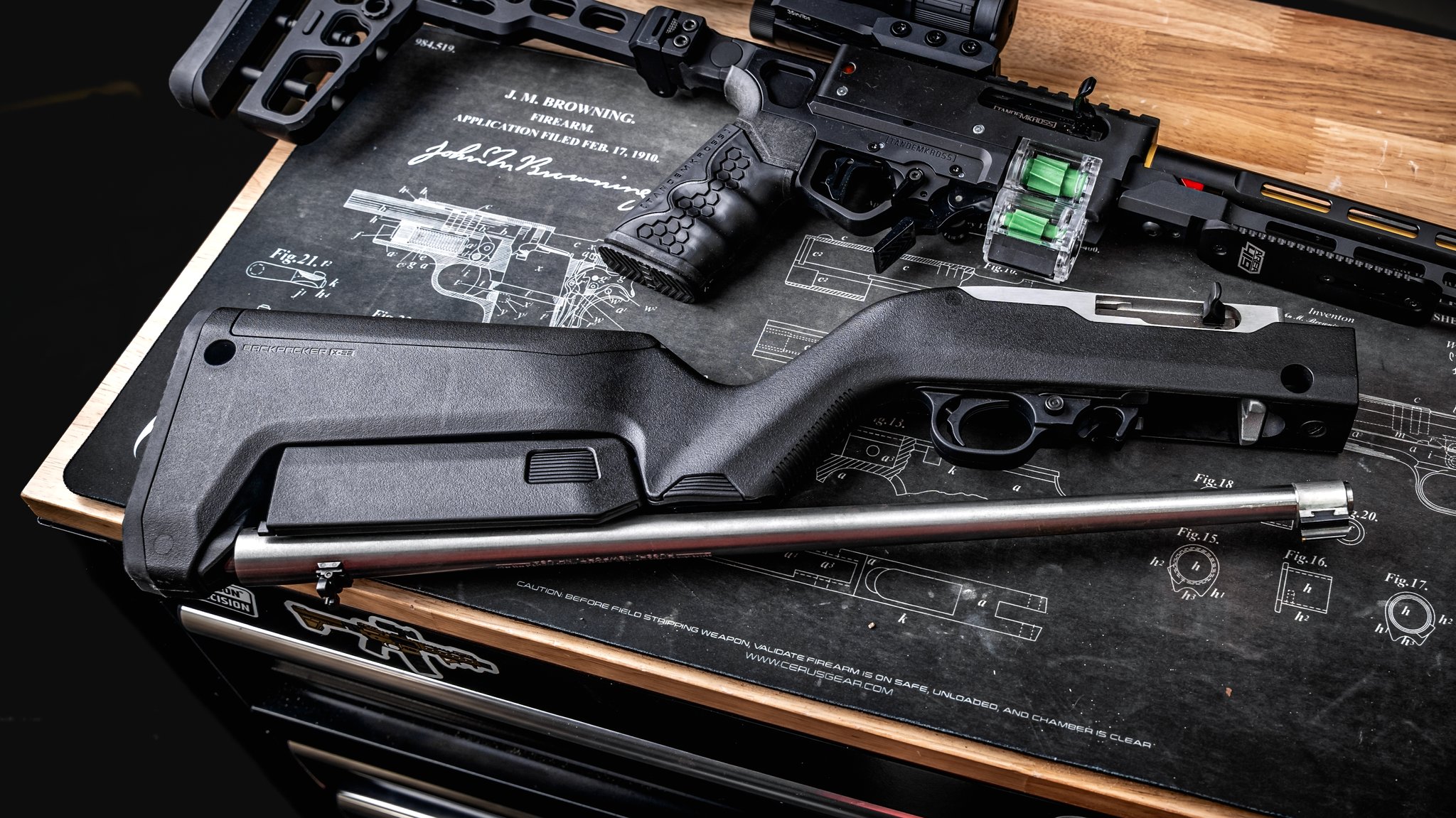
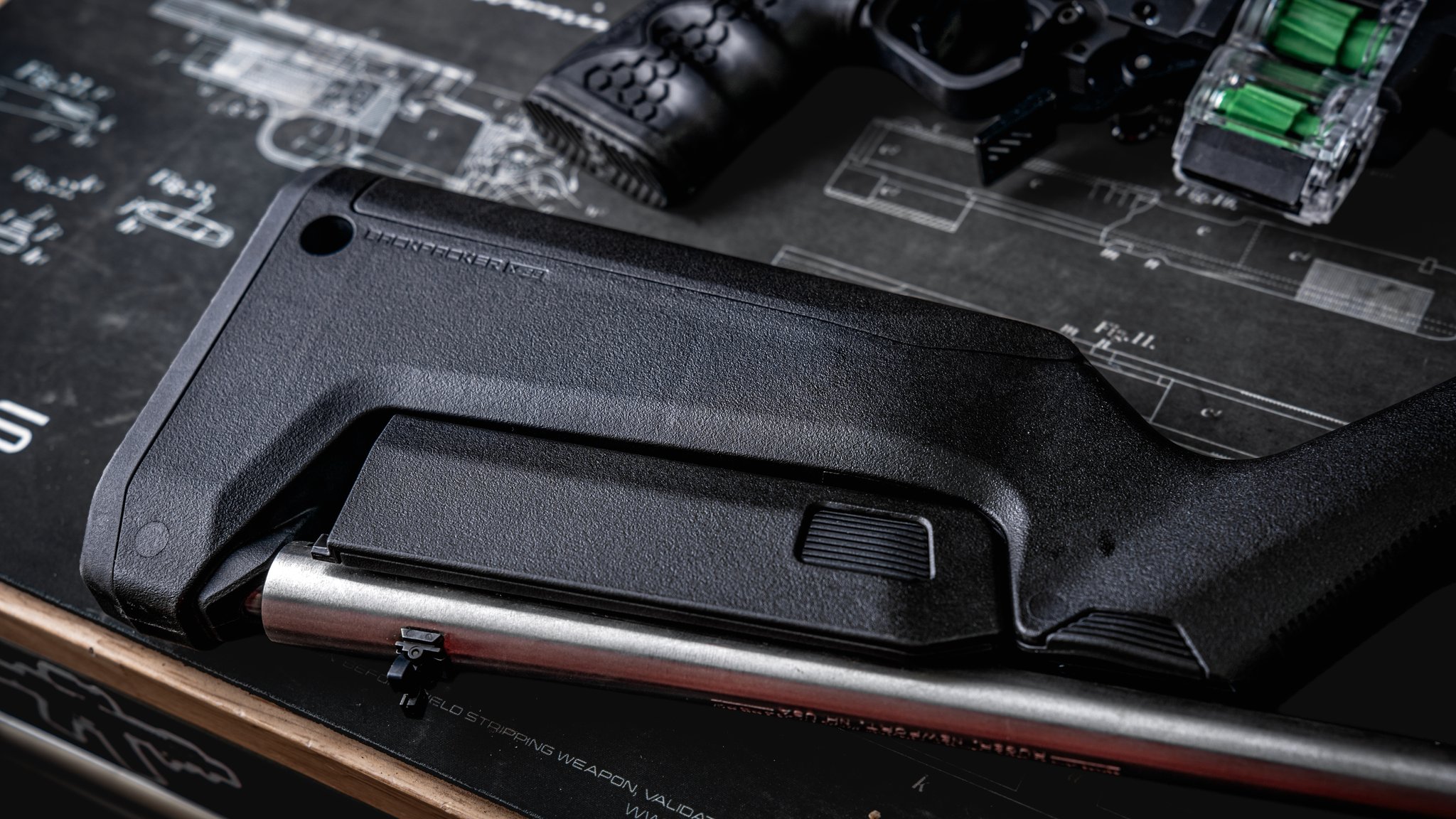
At just 4.4 pounds and under 20 inches when packed, it delivers impressive capability in a small footprint. The Magpul stock stores three 10-round magazines, with a fourth on board, keeping everything neatly contained. Like the AR-7, this system keeps rifle and ammunition together and allows for 24 additional rounds. Add a brick of .22 or a couple of Ruger BX-25 magazines, and it transitions easily from a practical field tool to an enjoyable range companion.
Features
The 10/22 platform is known for its simple controls, reliable operation, and solid accuracy. The example reviewed here began as a standard Takedown model (using Ruger’s serial number lookup) and was later upgraded with the Magpul X-22 Backpacker stock.
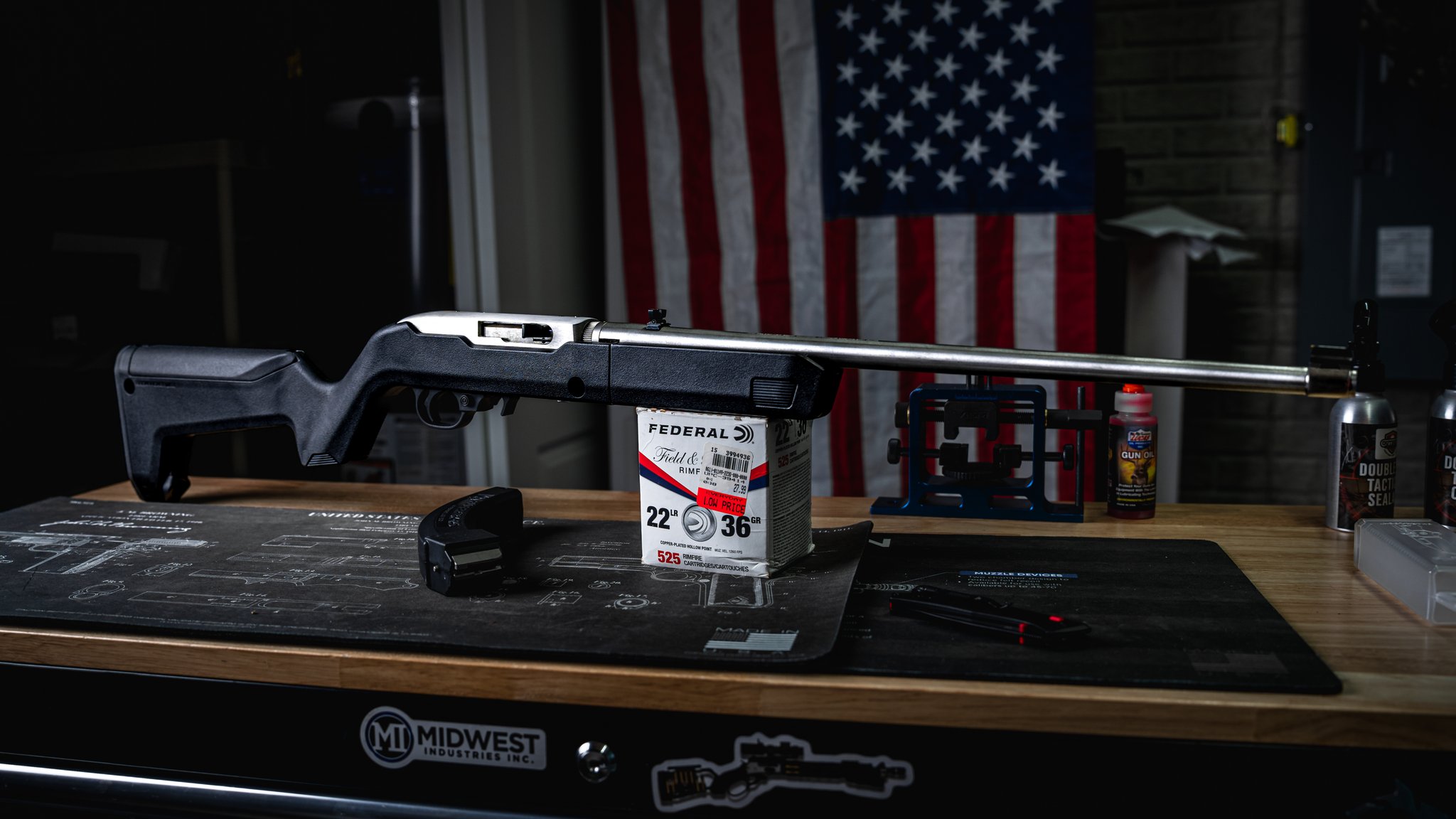
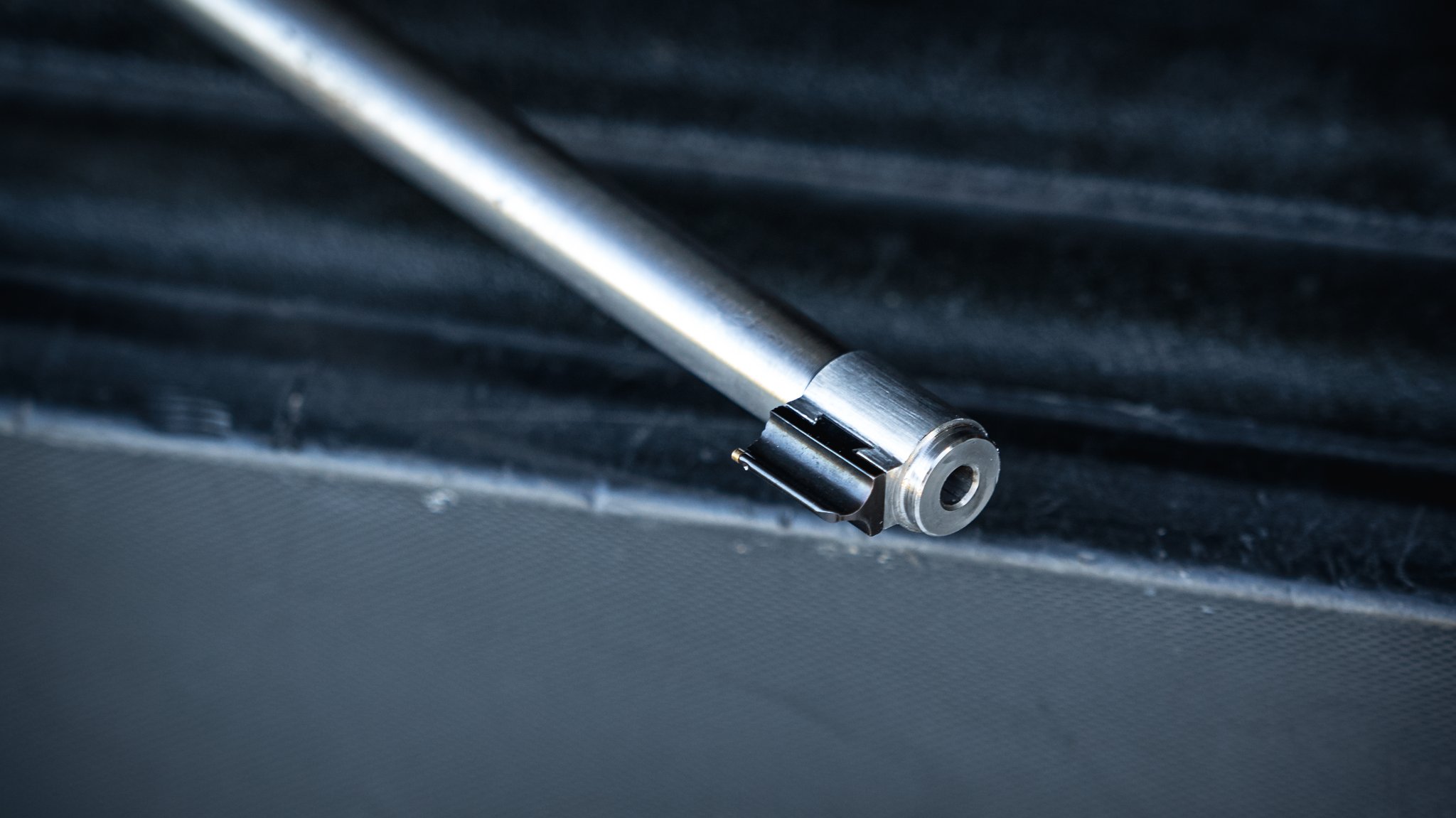
It features an 18.5-inch non-threaded barrel, though current Ruger models offer threaded 16 and 18.5-inch options with improved fiber-optic sights as standard. The lineup has expanded in recent years, with multiple configurations, finishes, and factory upgrades available. All models come drilled and tapped for optic mounting.
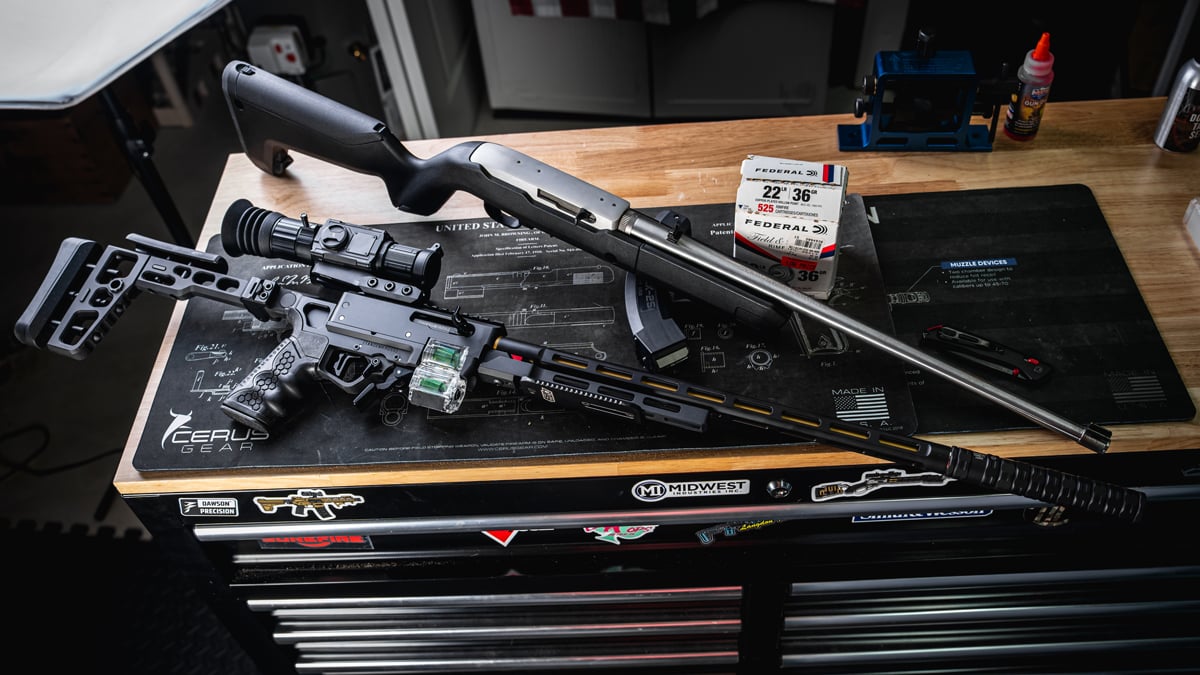
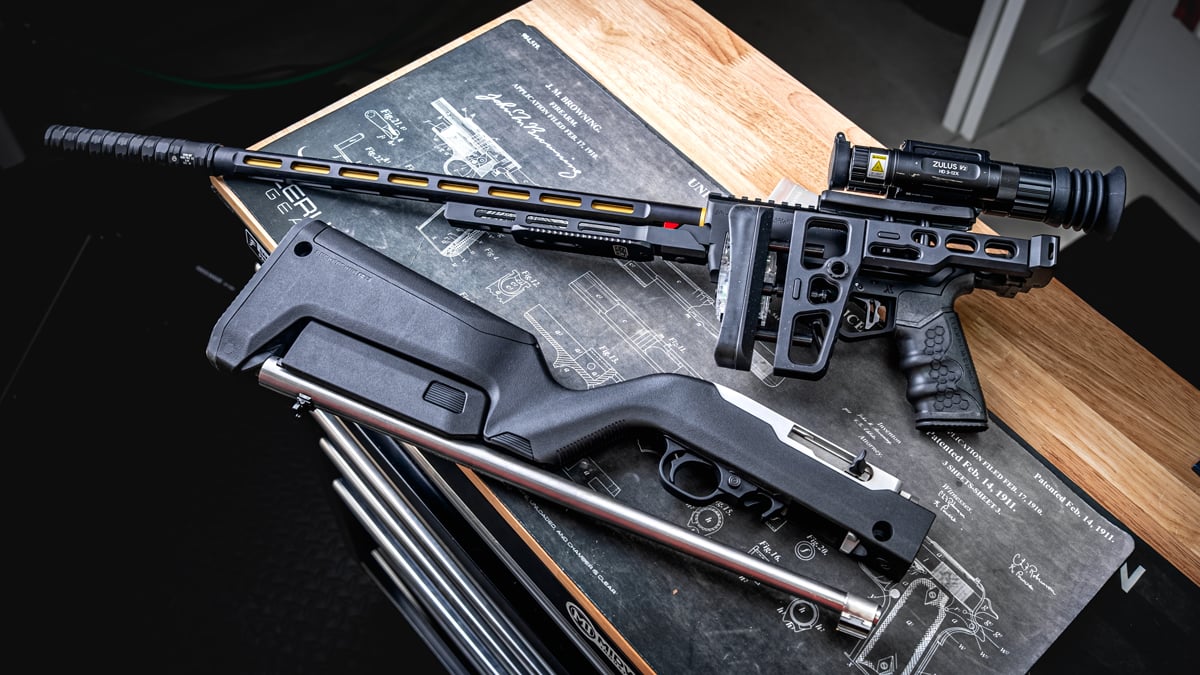
This rifle retains the standard trigger, while newer versions often include Ruger’s BX-Trigger. One of the platform’s greatest strengths remains its aftermarket support – nearly every component can be upgraded, from triggers and barrels to receivers and internal parts.
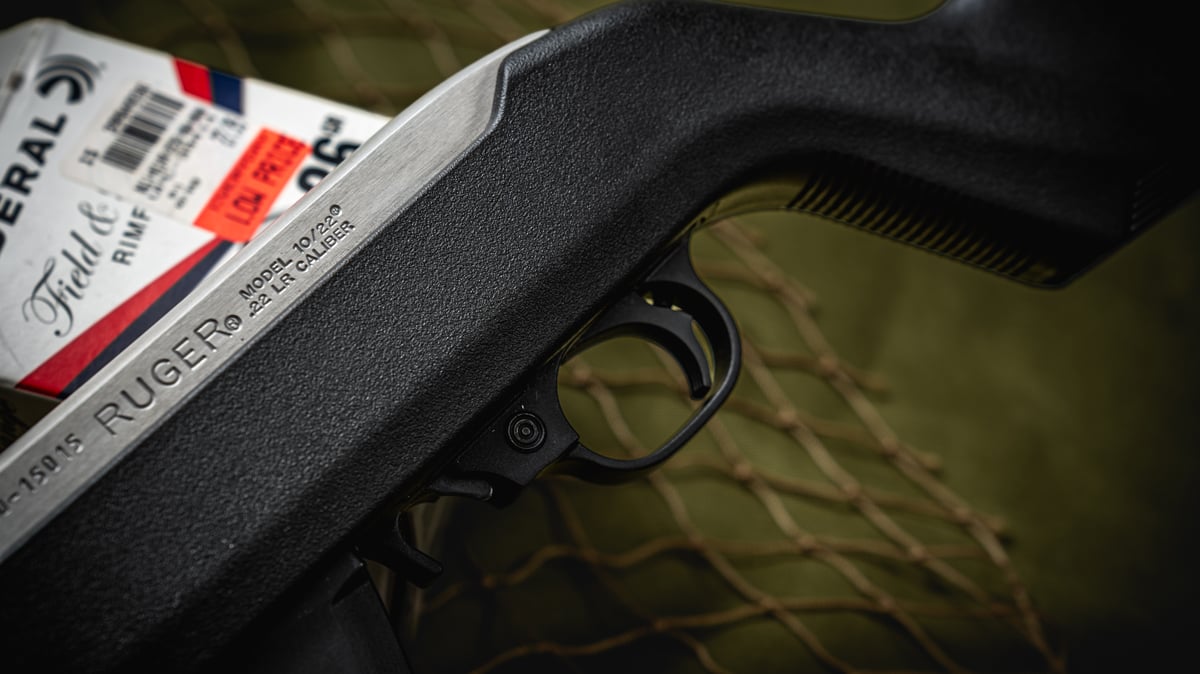
I have a full build made with a mix of parts from TandemKross and Volquartsen, with one Ruger part: the BX-Trigger. It allows for adjusting the weight of pull, overtravel, and is easily installed. If I were to keep this model, that would be the first thing I’d address.
Operation
The Ruger 10/22 Takedown can go from stowed to ready to go in about five to 10 seconds. From storage, squeeze the tabs on the handguard to release the barrel. Slightly retract the bolt, insert the barrel into the receiver, and rotate clockwise until it locks. There’s a tension ring around the barrel that allows you to adjust how tight the fit is until there’s no rattle. The lockup is solid and because the rounds are fed directly into the barrel, there’s nothing to adjust.
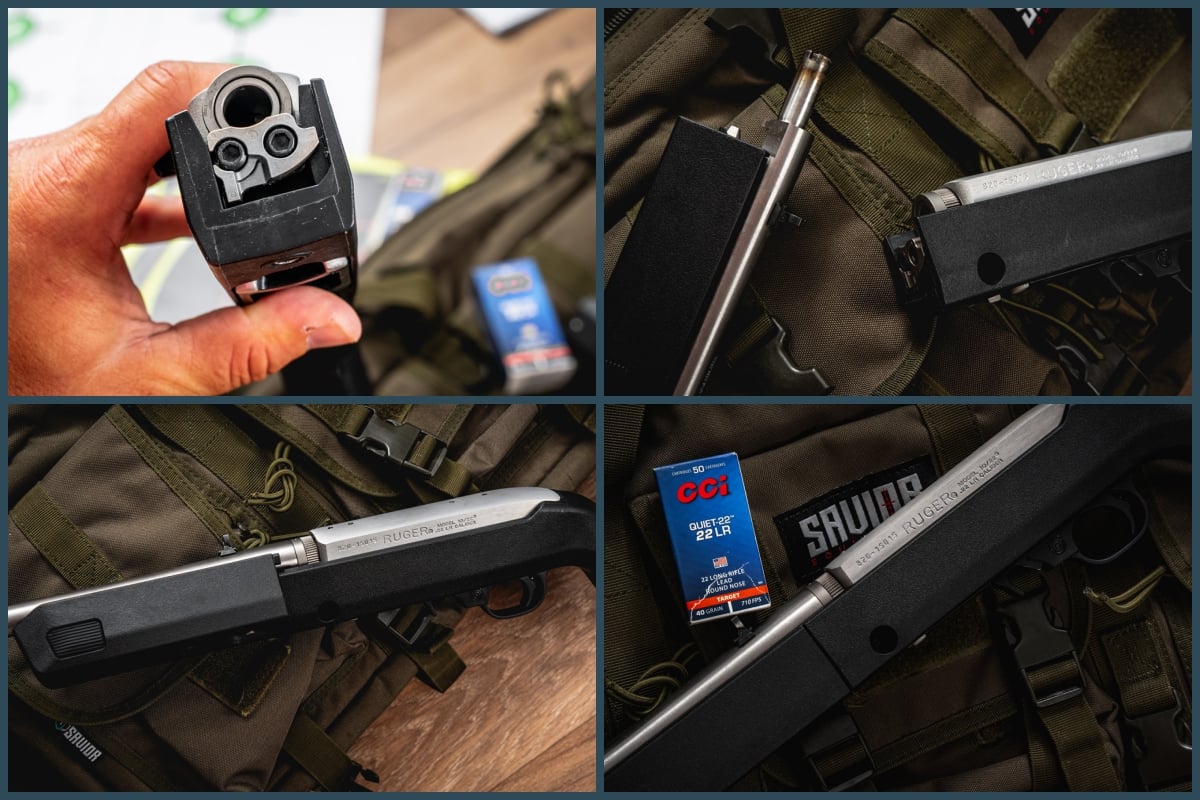
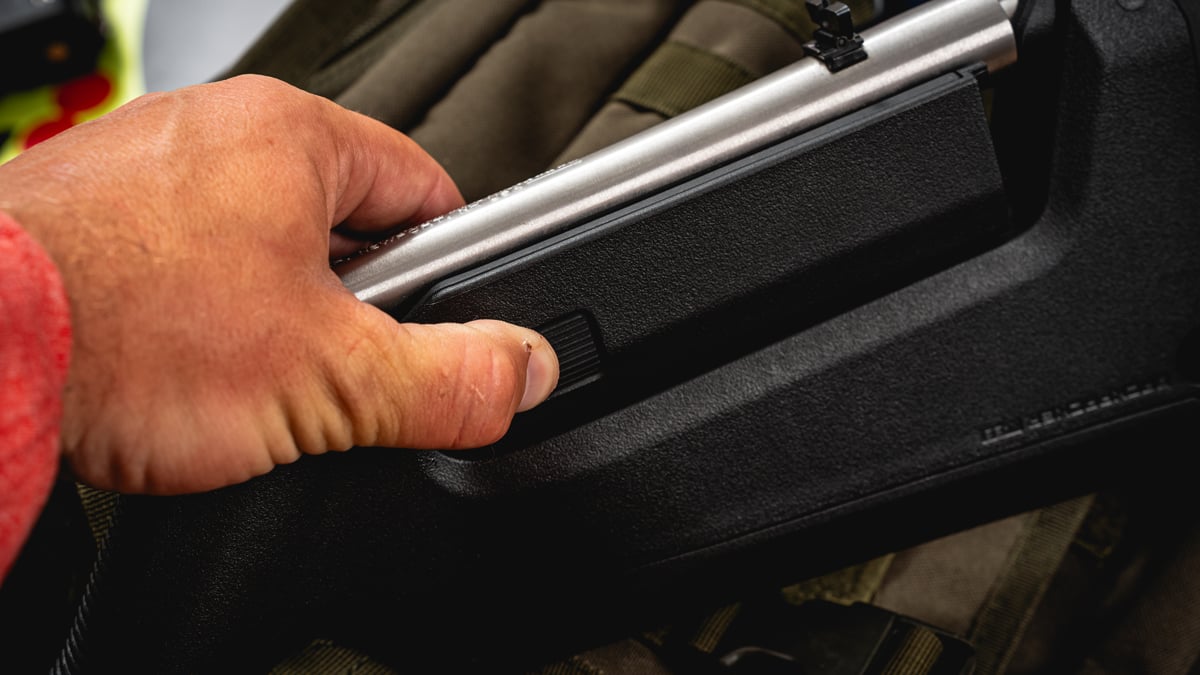
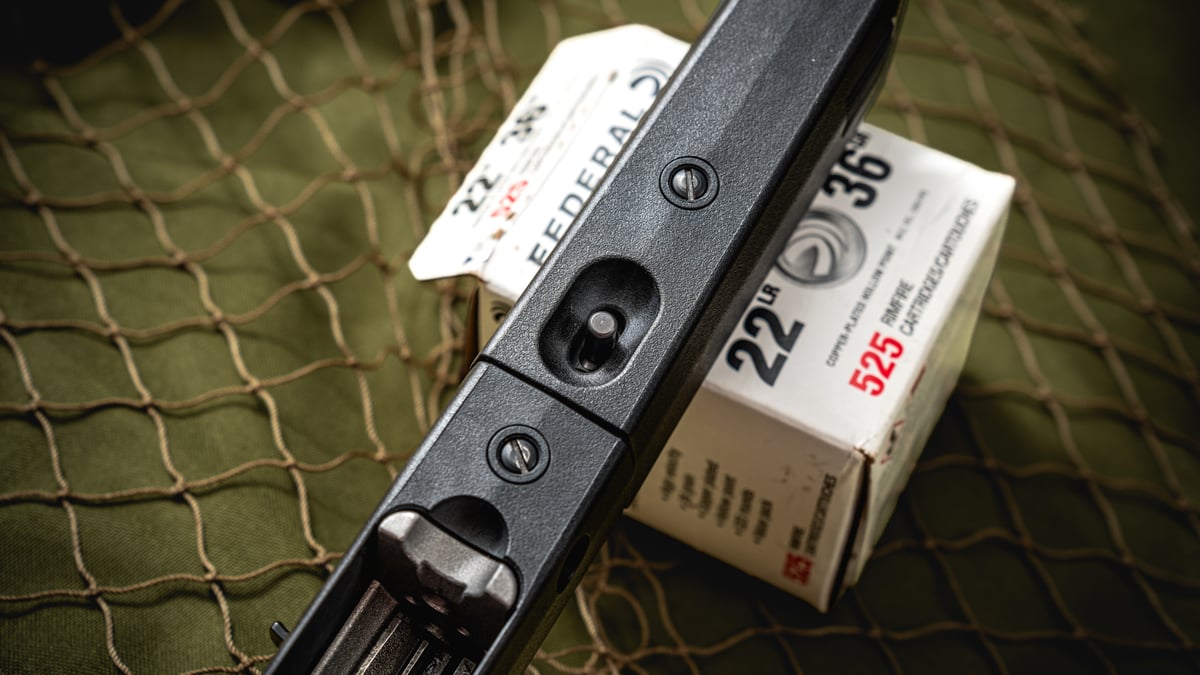
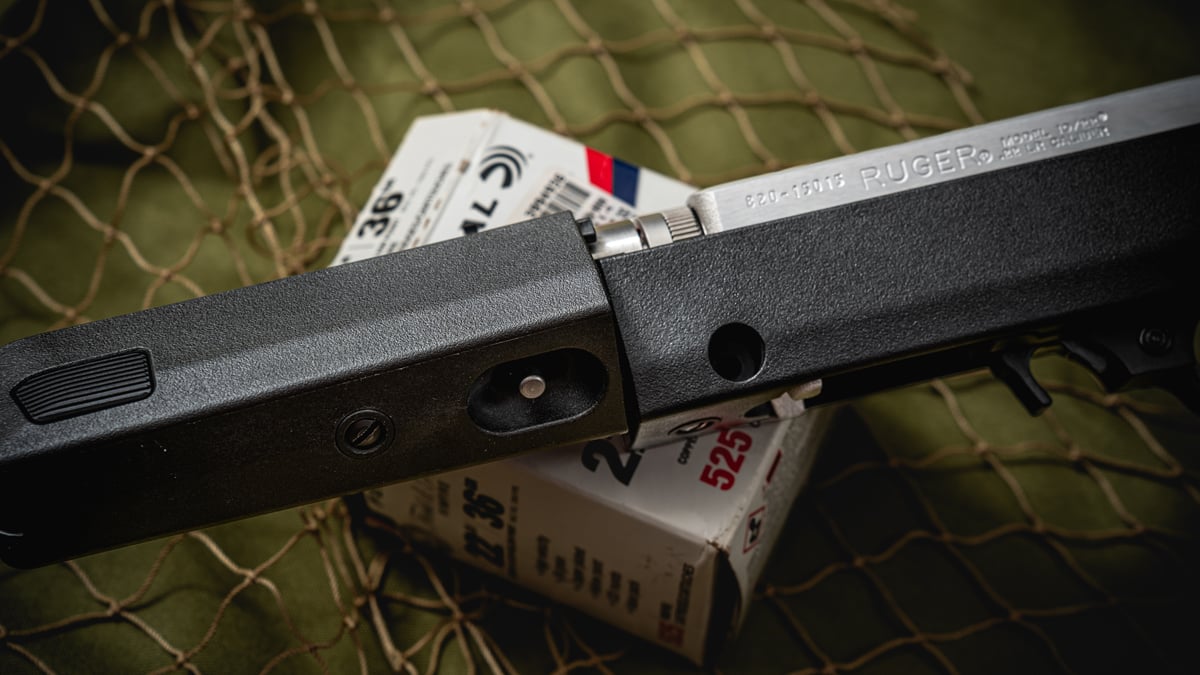
To disassemble, lock the bolt to the rear, press the takedown lever toward the muzzle, and rotate the barrel counter-clockwise. The trick is to have the bolt locked to the rear or at least held rearward. The handguard then fits between the back of the stock and grip, locking with an audible click. Once locked, the system is rigid with no noticeable movement.
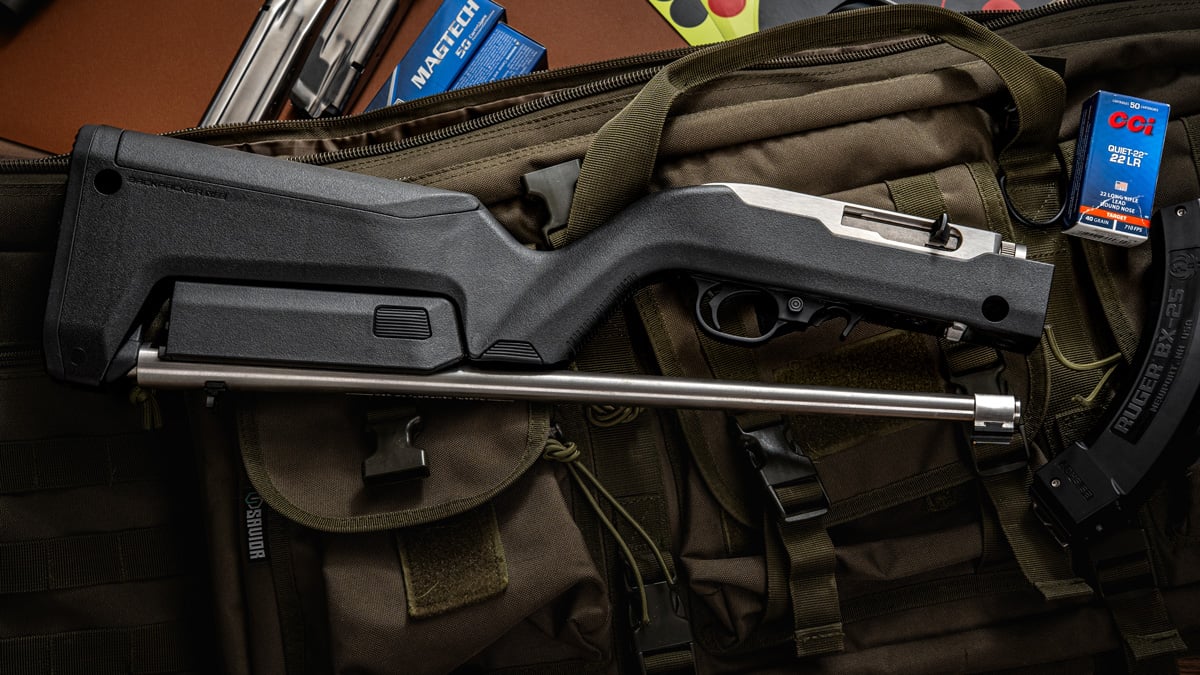
The biggest drawback of this setup is potential accuracy shift with optics. While the barrel itself is inherently accurate and the iron sights are perfectly adequate for small game, receiver-mounted optics can experience shifts in zero after repeated assembly. This is likely due to minor variations in barrel tension or movement during transport. As a result, zero should be confirmed each time the rifle is reassembled.
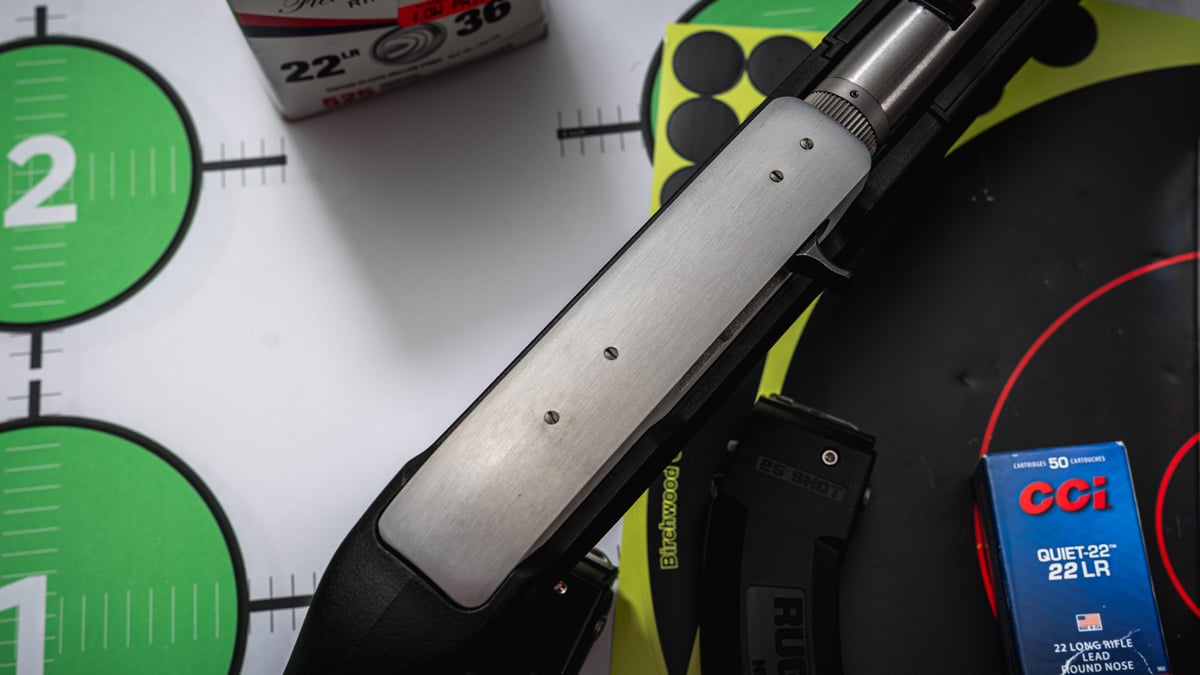
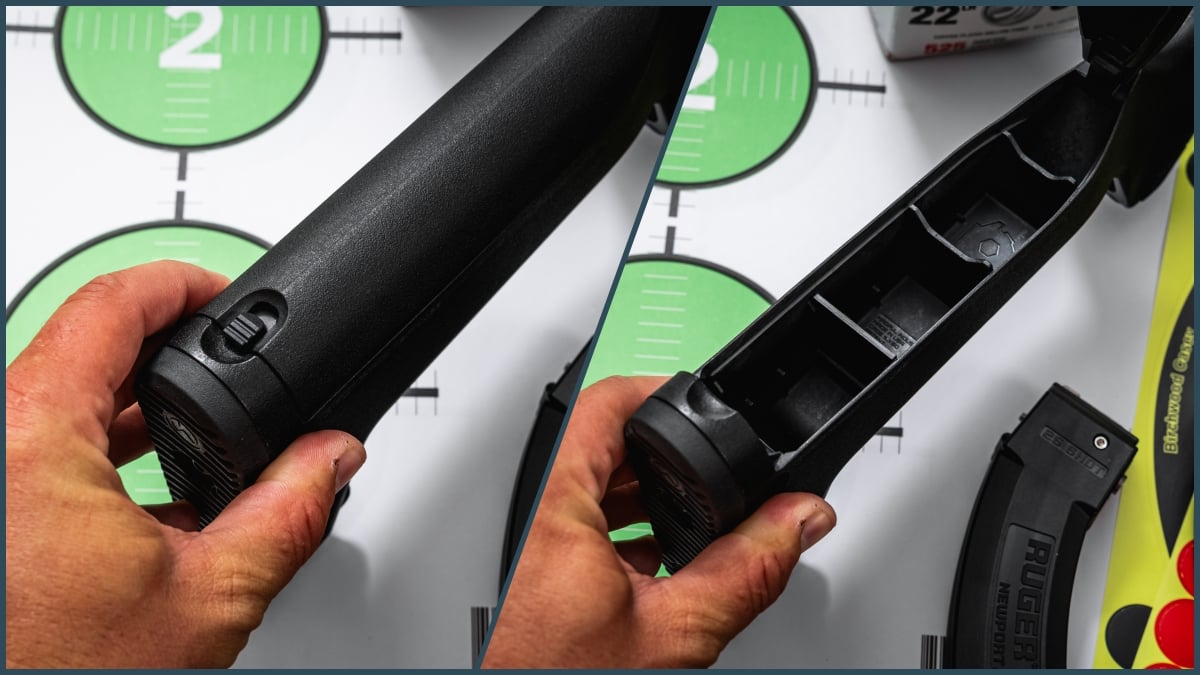
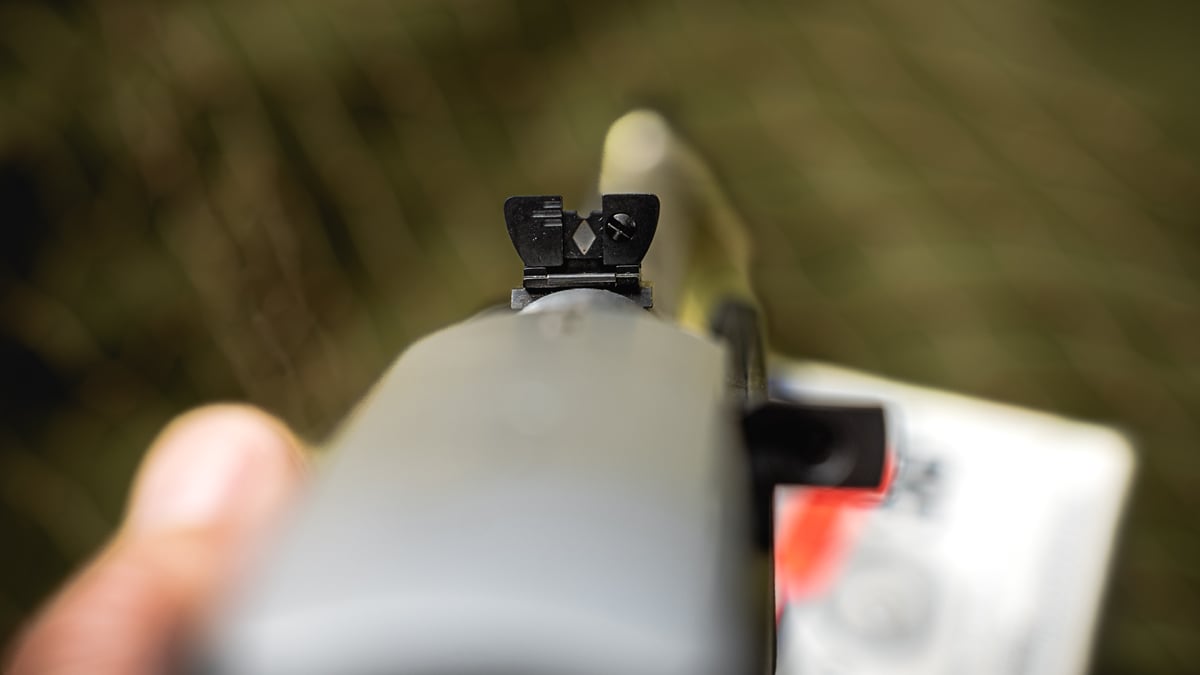
The rifle I have in for review features the standard folding leaf and gold bead front sights. While they are certainly usable, they limit the range of accuracy and can be harder to see in dim light. Ruger’s newer sets are quite a bit more functional and an excellent upgrade to this system. Using irons also keeps this entire package much more compact and lightweight.
Range Time
The Takedown is as fun and accurate as any other standard rifle I’ve shot. The Magpul stock has good ergonomics, with its pistol grip providing a more natural wrist angle. During extended shooting, I have experienced wrist pain due to the classic slanted grip, so this was a welcome upgrade. I brought a brick of Federal 36-grain 1,260 fps, some quiet CCI subs, and CCI Mini Mag 40-grain at 1,235 fps for testing.
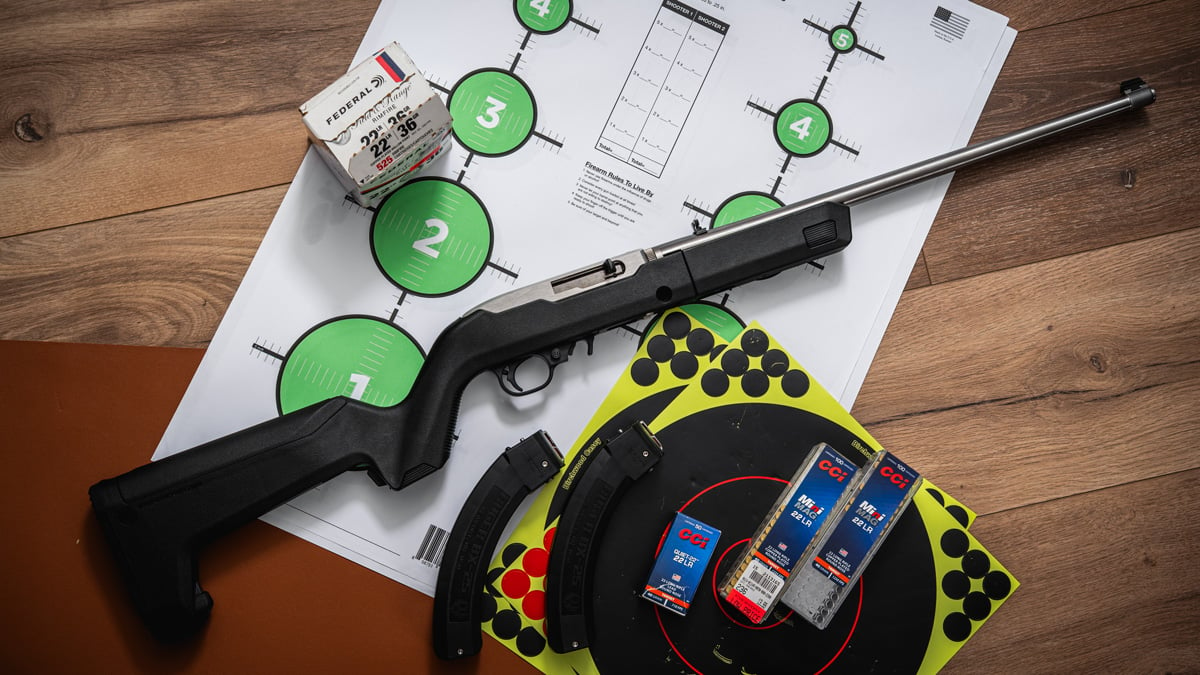
I started at 10 yards, using Tactical Target Systems training targets and Birchwood Casey 11-inch reactive targets to evaluate performance out to 25 yards – where this rifle is most relevant.
For plinking and survival, the name of the game when it comes to accuracy is small-game effectiveness. Mammals or birds in trees, rabbits on the ground, and other critters tend to spook and stay away from predators, remaining still. My goal was minute-of-squirrel at 25 yards using iron sights. Closer distances should be tighter and acceptable within a 2-inch radius.
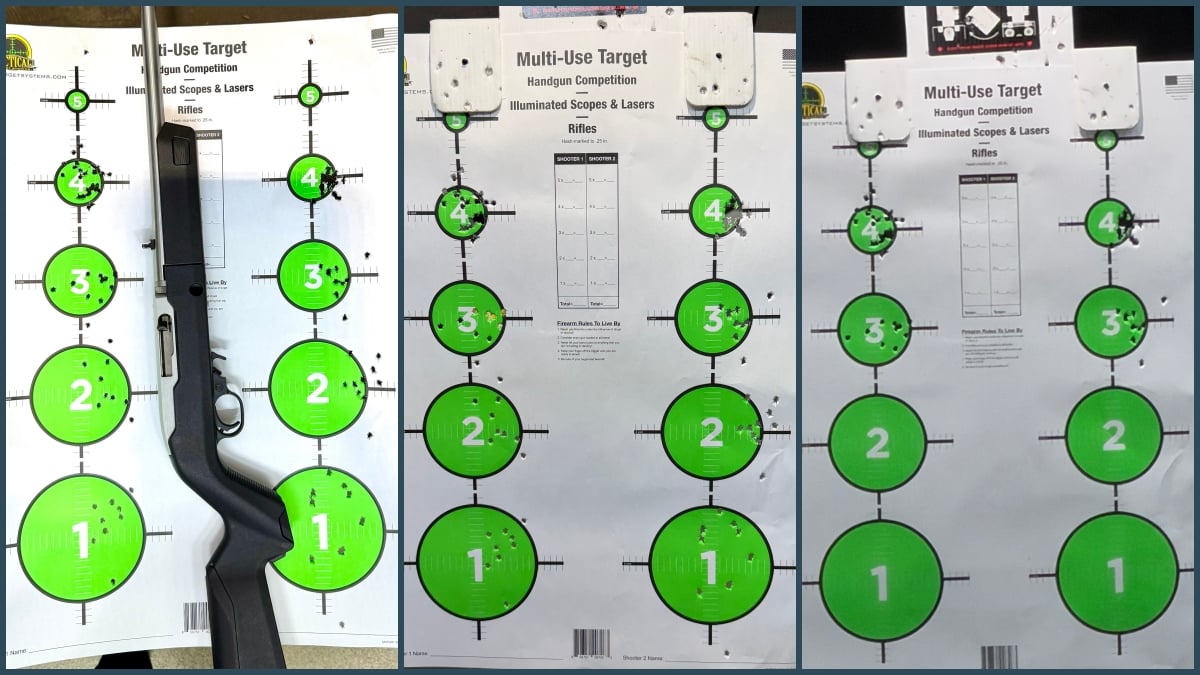
The gun handles quickly, and the Magpul stock manages a perfect cheek weld and is light enough to hold on target for longer periods of time than larger, heavier rifles. This is paramount in a true survival setting, but helpful for hiking or hunting in the woods.
Accuracy & Reliability
Recoil is basically non-existent due to the 18.5-inch barrel and mild rounds. The CCI Quiet was like shooting a BB gun, and due to the length of the barrel, noticeably less noisy – though it refused to cycle in either magazine type.
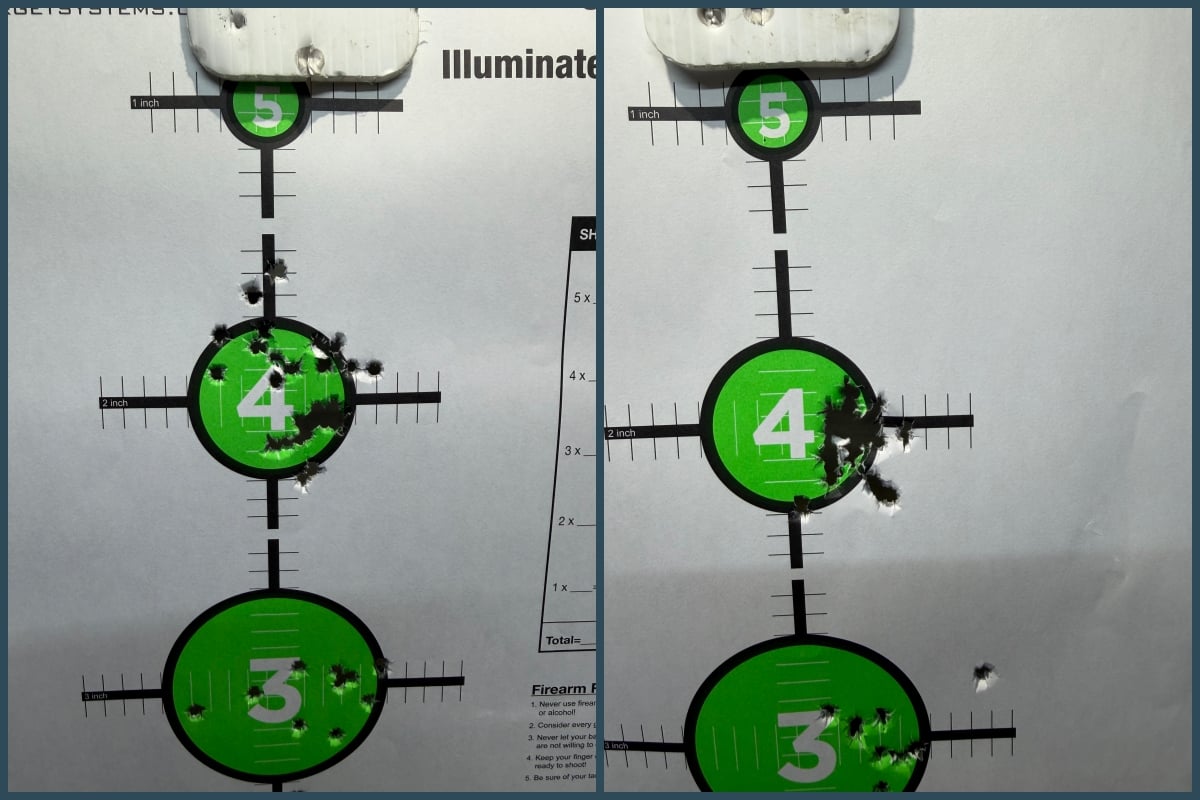
Up close, I put together a nice group, and the target showed the CCI Mini Mag capable of a little tighter grouping. I noticed that every group was slightly right, so I don’t think it was me, unless I was consistently off. I would likely drift these sights just a touch.
At 25 yards, both ammunition types were good, though I think the Federal box ammo was actually a nicer group – right around 2.5 inches. I’ll take that shooting offhand. Using the Birchwood Casey target again and taking more precise shots, the results were similar, but we see a bit of a drop for the distance.
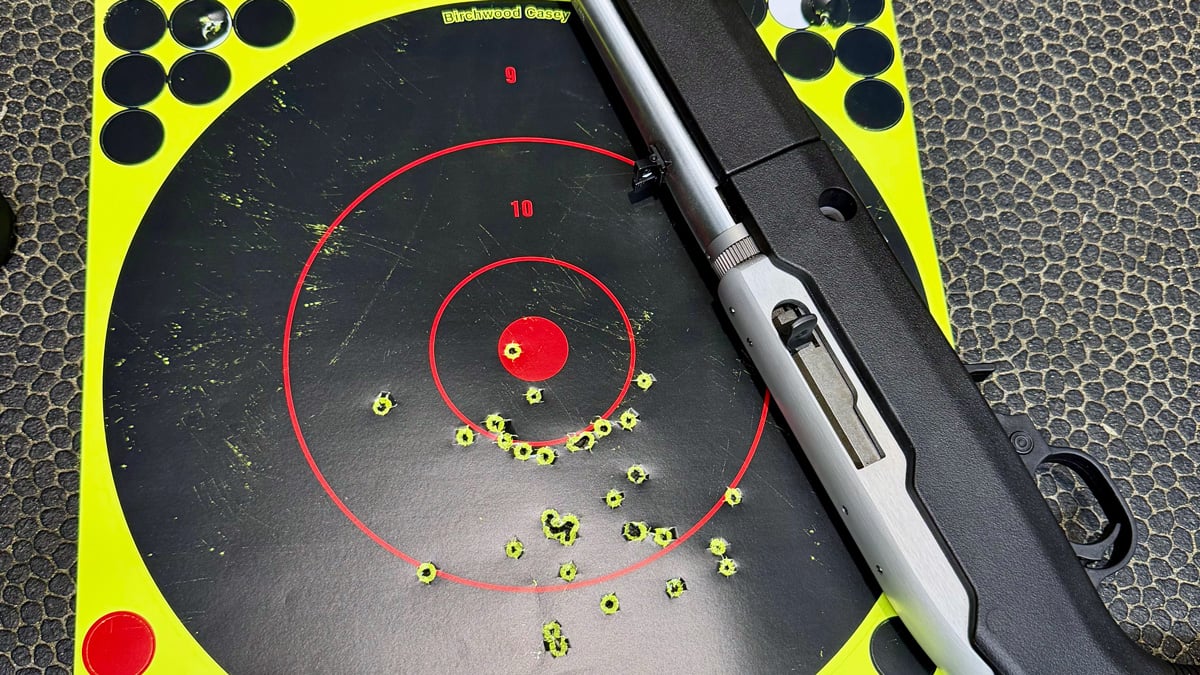
I did not really have any fliers, and groups were consistent. The only malfunctions were a bad strike on the Federal ammo and the inability to cycle the Quiet, which is likely due to lower power. Overall, this was an enjoyable experience like usual, with no real discernable drop in accuracy due to the Takedown configuration.
Final Thoughts
The Ruger 10/22 Takedown remains one of the most practical rimfire platforms available. Paired with the Magpul X-22 Backpacker stock, it becomes a highly portable, field-ready system with minimal compromise beyond potential optics zero shift.
For hiking, camping, or general preparedness, it offers an excellent balance of size, weight, and capability, while fitting easily into most backpacks or compact safes. Deployment takes seconds, with up to 40 rounds stored directly on the rifle.
As a survival-style platform, it’s exceptionally well executed, and any limitations can be easily addressed through the robust aftermarket. The 10/22 platform continues to set the standard for rimfire rifles.

Andy Budnik
Andy is a self-taught photographer obsessed with creating stunning EDC and lifestyle imagery. As a creator, he focuses on highlighting a product's best features through engaging visual storytelling. While he has a relentless drive to evolve his craft, his personal passion lies with pistols, specifically the Beretta 92.
View All Articles by Andy Budnik