The Banish Speed K
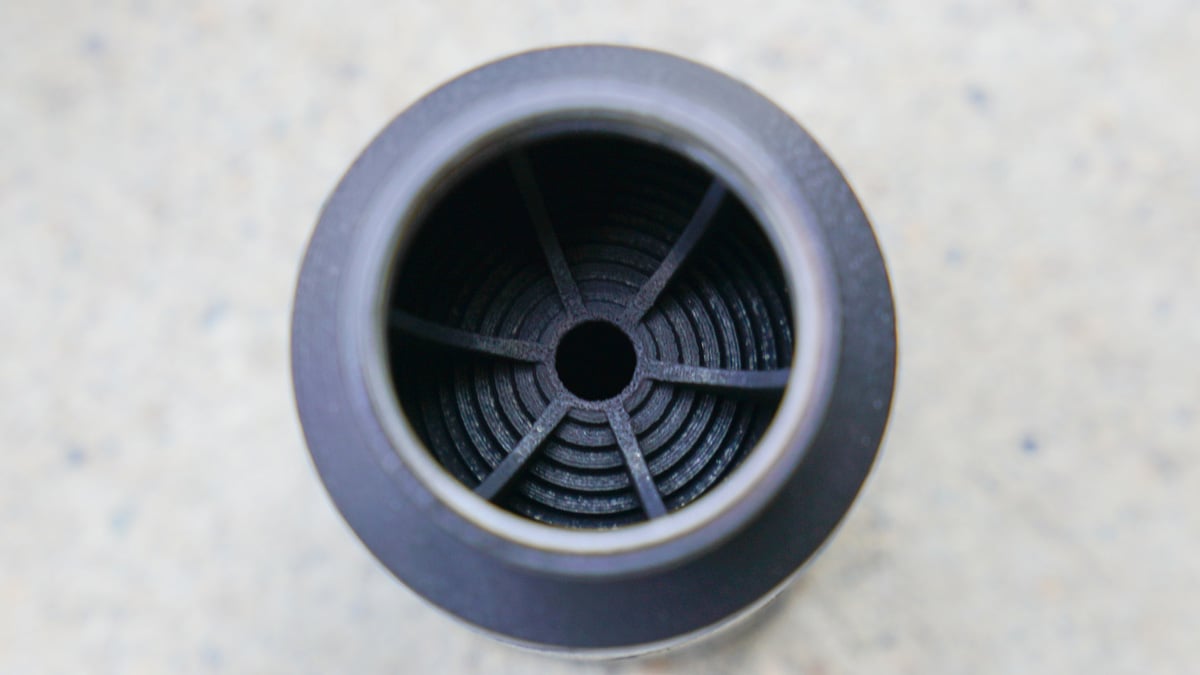
The Speed K was designed for use with heavy-shooting service carbines. This suppressor uses clipped baffles and a finned blast chamber, both of which help create turbulence and retard the escape of gas. Additionally, the fourth baffle is vented to help slow exiting gasses. These features, coupled with the complete Inconel construction, make the Speed K effective and durable.

The Banish Speed K was developed during testing procedures for law enforcement and military use. I that means it was designed around high-volume shooting protocols. According to Silencer Central, the Speed K passed multiple courses of heavy-duty SOCOM testing – which many suppressors can’t pass once.
Related: Top Reasons to Own a Suppressor
This durability is likely due to the Inconel construction and ventilated baffle design. I’m no rocket scientist, but I imagine the corrosion-resistant Inconel stands up much better than traditional materials, and allowing a portion of gas to bypass probably helps keep heat from building up as it might in a traditional suppressor design.
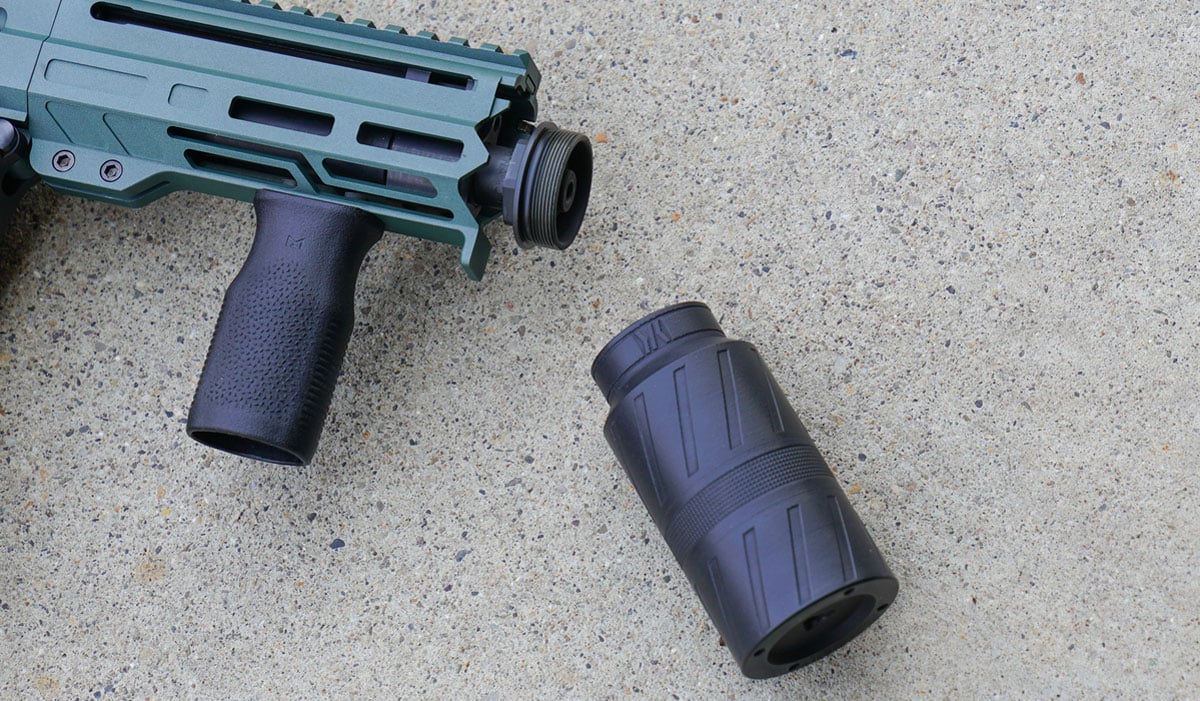
Another feature I like about the Speed K is the mounting solutions. With an industry standard hub, the Speed K can mount directly on the muzzle threads or use one of various manufacturers’ QD or brake-mounted options. For example, I used a YHM Phantom QD mount, which made it easy to swap between host firearms. That and the compact size of the Speed K make it a great option for guns made to shoot and scoot.
Specifications
- Length: 4 inches
- Diameter: 2 inches
- Weight: 14.1 ounces
- Material: Inconel
- Thread Pitch: Various direct mounts
- Caliber: 5.56
- Caliber Range: .223 to 5.56
- Sound Reduction: 20.9 dB
- Self-Service: No
- Full-Auto Rated: Yes
- Color: Black
- Finish: Cerakote
- Mount Style: Industry-standard hub mount
-
Lifetime Warranty: Yes
Mounting the Speed K
I planned on running the Speed K on a variety of different 5.56 rifles. First was my Desert Tech WLVRN, a 20-inch barreled bullpup carbine. I used the provided direct thread end cap for this configuration. I don’t do a particularly high volume of shooting with this rifle, as it’s more of a DMR-type rifle.
I also used the direct thread cap to attach it to my Quattro 15 PDW-type rifle. This one is more along the lines of the Speed K, in that it is made to put down lots of shots. With 53-round magazines and a very short barrel, this gun would give the Speed K a workout and push its durability.
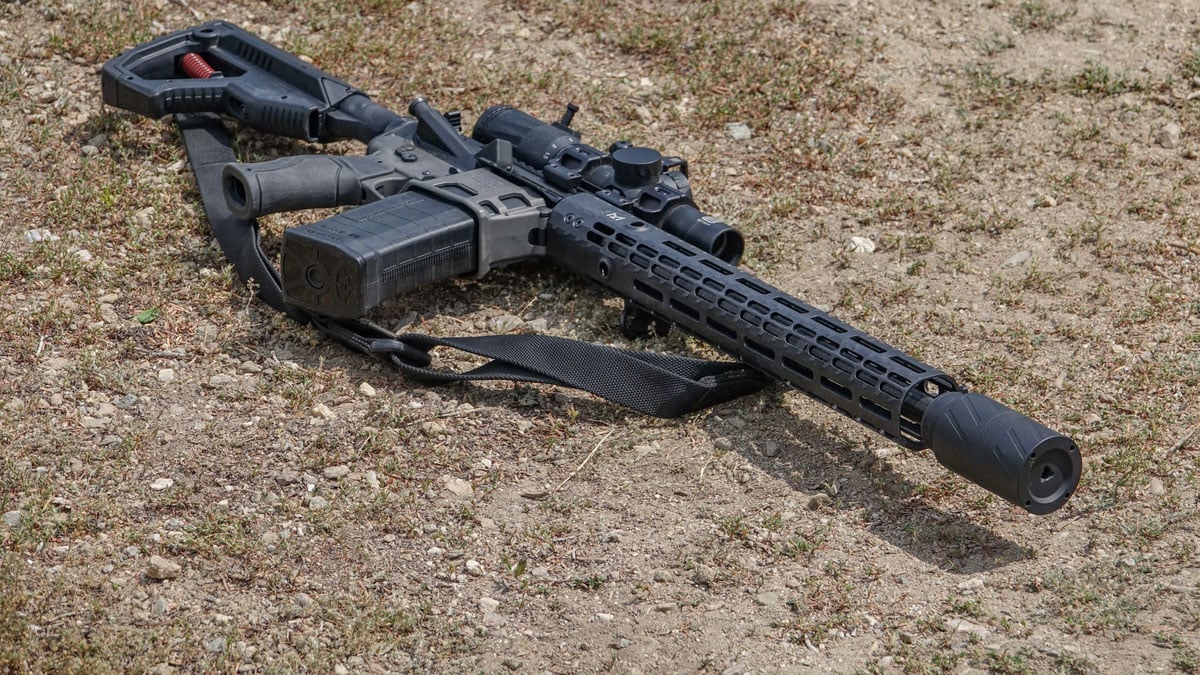
Additionally, I ran the Banish Speed K on a full-size AR rifle using a 16-inch barrel. Just for fun, I swapped out the mounting solution on that rifle. With the YHM ratcheting QD mount, I didn’t need to worry about the direct thread coming loose.
End caps from various manufacturers proved compatible. All the threads matched up nicely, making it easy to choose different options for different mounting choices.
Shooting Time
The Banish Speed K is built for abuse. Its full-auto rating and rugged construction are meant to hold up to the heat and pressure of long strings of fire. So, for the most part I used it on semi-auto rifles – mainly my two AR-15-based rifles. As mentioned, one is a custom build with a 6.5-inch barrel fed by 53-round quad mags. The other uses the same lower and 53-round mags but uses a more common 16-inch barrel. Additionally, I used the Speed K on the aforementioned Desert Tech WLVRN with its 20-inch barrel and standard 30-round Pmags.

All three rifles worked well with the Banish Speed K. I did notice a little more gas blowback on the AR rifles, whereas the WLVRN uses an adjustable gas block, allowing me to reduce the gas. I also noticed it seemed there was just a touch more operation than needed on the rifles, which could be corrected by installing another adjustable gas block.
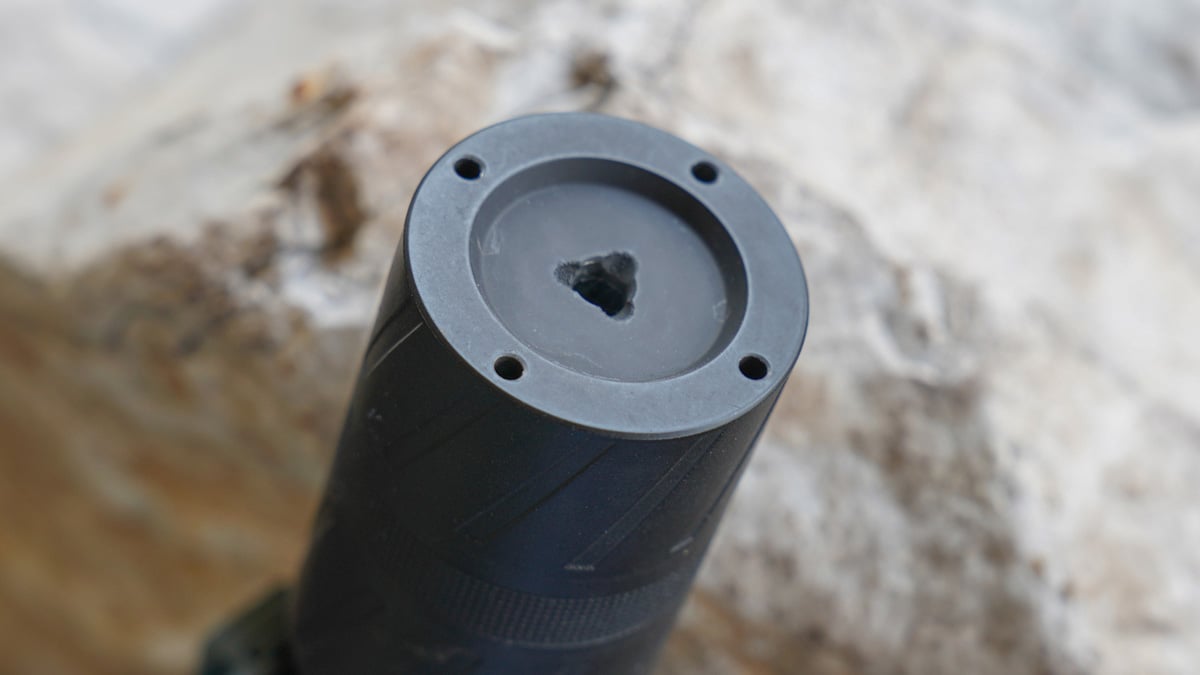
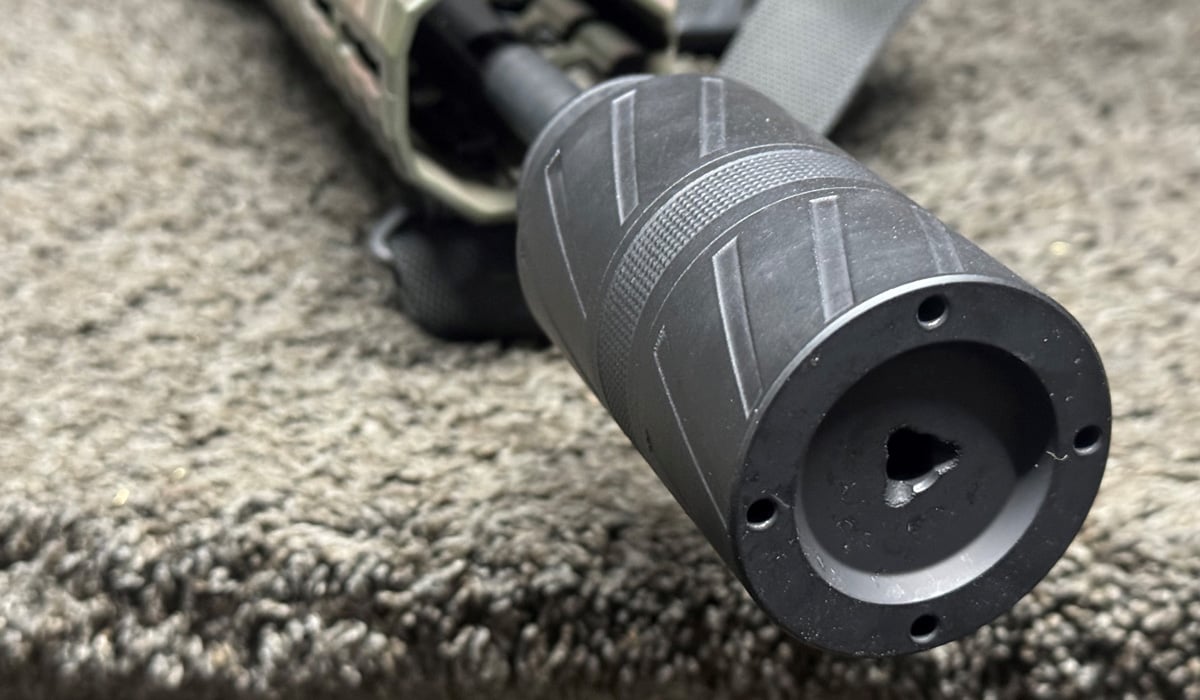
The vented baffle at the front of the suppressor results in a fascinating pattern when smoking. With a total of five holes in the muzzle end, the smoke comes out all of them. Shooting high volumes of rifle cartridges produces a significant amount of unburnt – or not completely combusted – powder.
These remnants can precipitate out of the escaping gas column and continue to burn in the suppressor as shots continue to fire. The resulting exothermic activity can cause more fire and smoke, but Inconel is very resistant to abrasion, which helps the Speed K stand up against the high-pressure sandblasting of these particulates.
Noise
Many of the more compact suppressors like the Speed K are designed to take the edge off your rifle, not necessarily to make it hearing-safe. This is a common thread with compact tactical suppressors: they often are quite loud. The idea is to remove muzzle signature and soften the concussion of the muzzle blast. I have used several suppressors like that, and they fit that purpose well.
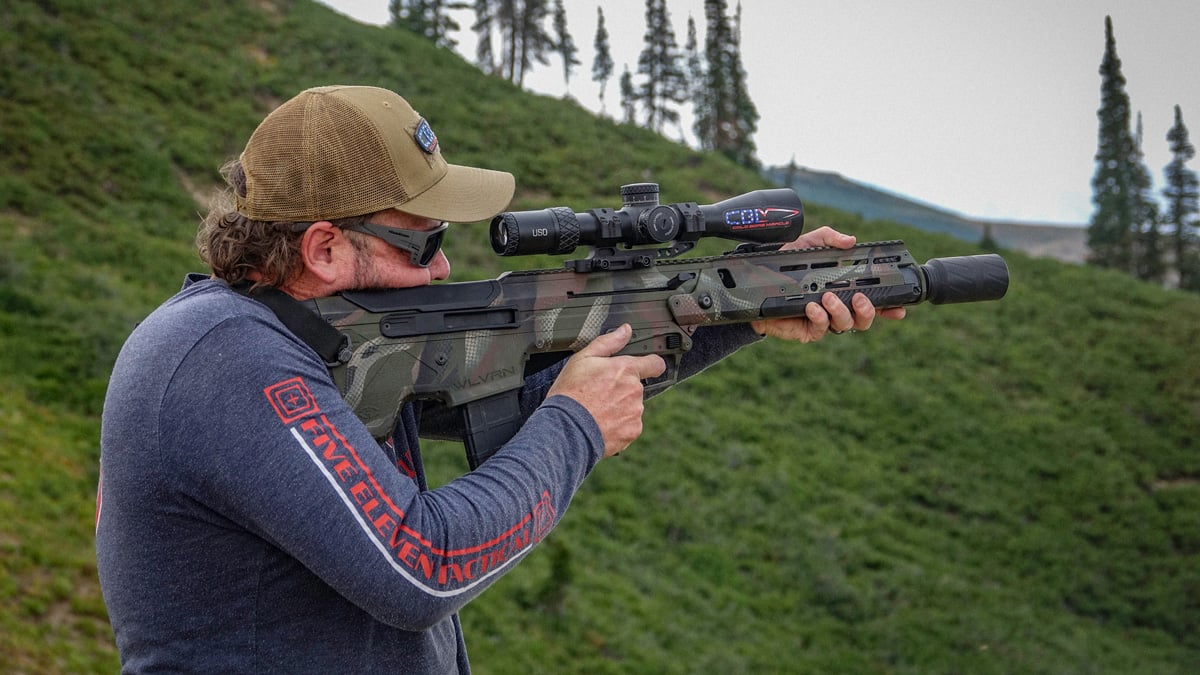
The Banish Speed K goes the extra mile. While it is a touch louder than some of my other cans on the same rifle, it is still quiet enough for my purposes. On short rifles like SBRs and such, you’re probably going to want some hearing protection, though. On the full-length rifles, I found it quiet enough to go without. Of course, this is not recommended, as most ear doctors will tell you it’s still too much.
Accuracy & Sustained Fire
I found the Banish Speed K didn’t have any effect on accuracy. Its short size and ported muzzle do a fine job of making a clean release of the projectile. If anything, I think you will shoot better with this suppressor, as it makes the rifle more pleasant to shoot. Plus, recoil is reduced, helping you to stay on target.

As expected, the Speed K does well with long strings of fire, even the particularly long strings of the Desert Tech quad mags with 53 rounds. An incredible amount of heat builds up in the suppressor with such firepower and duration, but the design and construction of the Speed K seemed to hold up to it just fine.
Final Thoughts
Compared to other full-auto-rated 5.56 suppressors, the Banish Speed K not only offers a reasonable price, but a technological advantage. The materials and design give the Speed K a nudge over some of its competition. There is also a lighter version (the Speed K Ti) made from titanium. As you might imagine, that model costs a bit more – around $200 more, to be exact.
It seems Silencer Central is breaking into a wide variety of different suppressor markets. The Banish family includes something for nearly everyone, and the Banish Speed K seems to fit squarely into the purpose of tactical rifle/carbine suppressors.

The Speed K offers functional advantages, and its advanced materials give it durability that few can boast at this price. Most of us will likely not need to abuse our suppressors in regular use, but it’s nice to know you can push the envelope with a suppressor like the Banish Speed K.