Initial Thoughts
If you’re familiar with Smith & Wesson Performance Center products, then you know they set you up nicely with items like brushes and solvents, which are not included in the purchase of a regular S&W gun. I enjoy when companies go the extra mile and complement their higher-priced guns with additional accouterments. I also appreciate the extra magazine provided with the gun. It comes with a 10, 13, and 15-round magazine in the box.

Related Review: Tuning Up with the S&W Shield Plus Performance Center
Moving past the initial extras, the pistol has the familiar feel of the Performance Center and M&P Shield Plus guns, with a great grip texture and overall aesthetic. One thing I love about this Performance Center gun is the slide serrations, which are great for press checks or clearing malfunctions. I wish S&W would adopt these across all its carry guns since these are probably my favorite slide serrations the company has made.

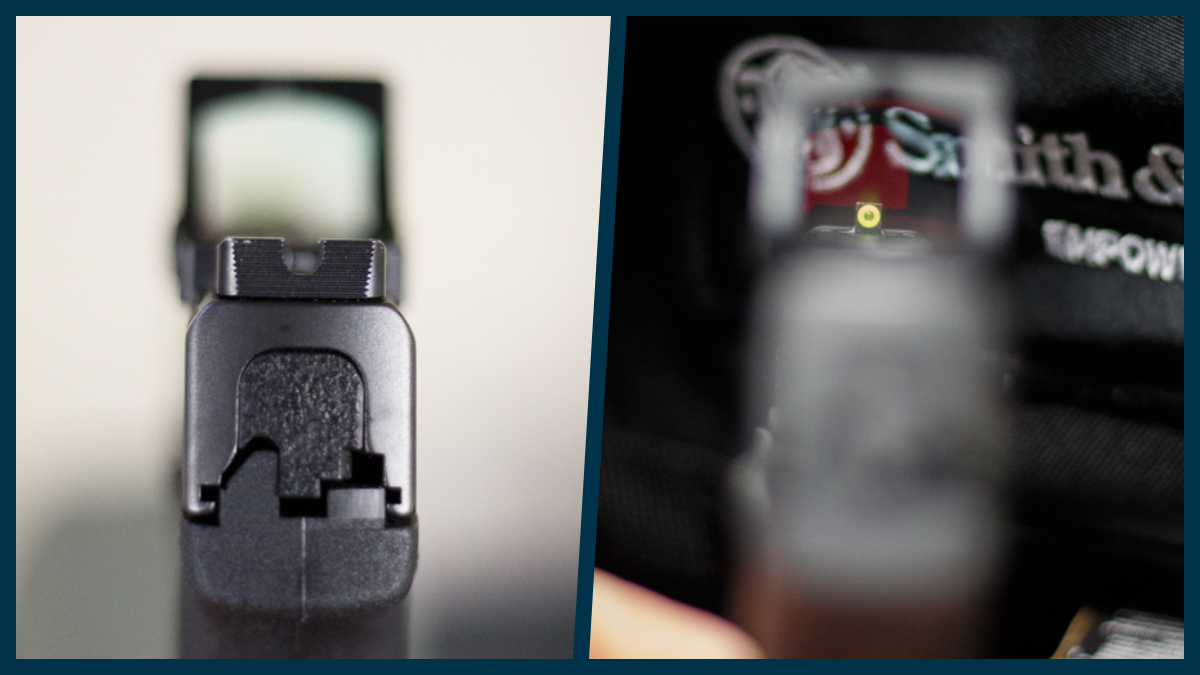
The Performance Center guns also have upgraded trigger and recoil springs, but when I first dry-fired the trigger, I noticed something a bit odd. I’ll talk about it more in a minute, but I’ll just say it surprised me the first time I encountered it. Then, of course, the compensator makes this version of the Shield Plus unique.
Specs and Features

The compensator isn’t unique to this gun, as it uses a design similar to the SIG P365 XMacro Comp, Springfield Prodigy Comp, etc. But this is the first compensator that S&W has tuned up in a Shield Plus fashion. I enjoyed the Shield Plus when it first came out, and the feature set on this gun is no different, minus the additional length of the compensator and the optics cut.
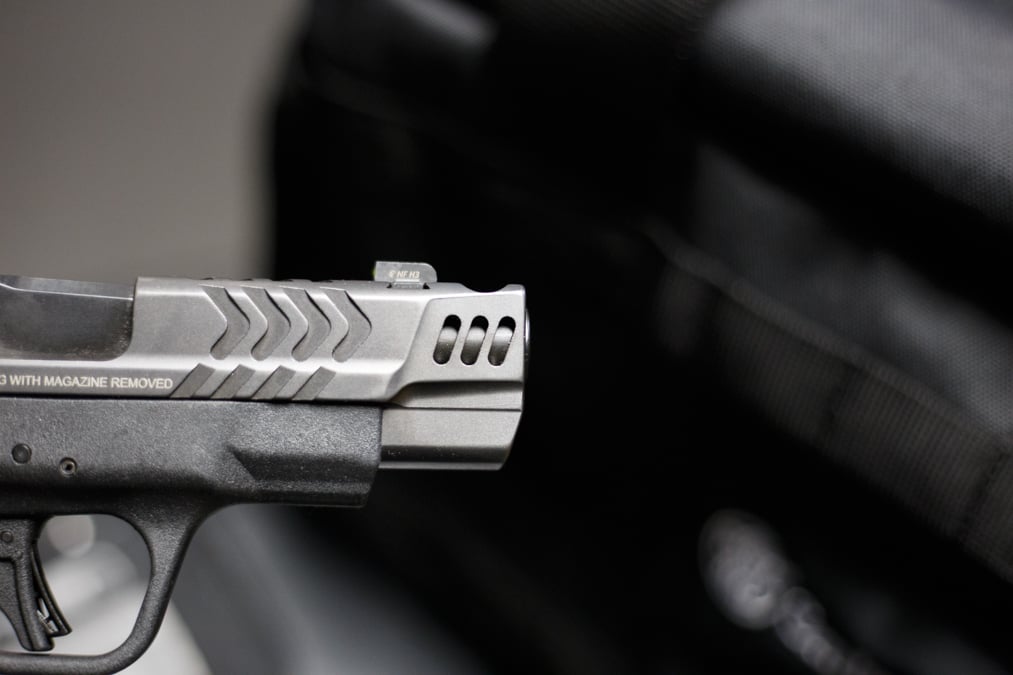
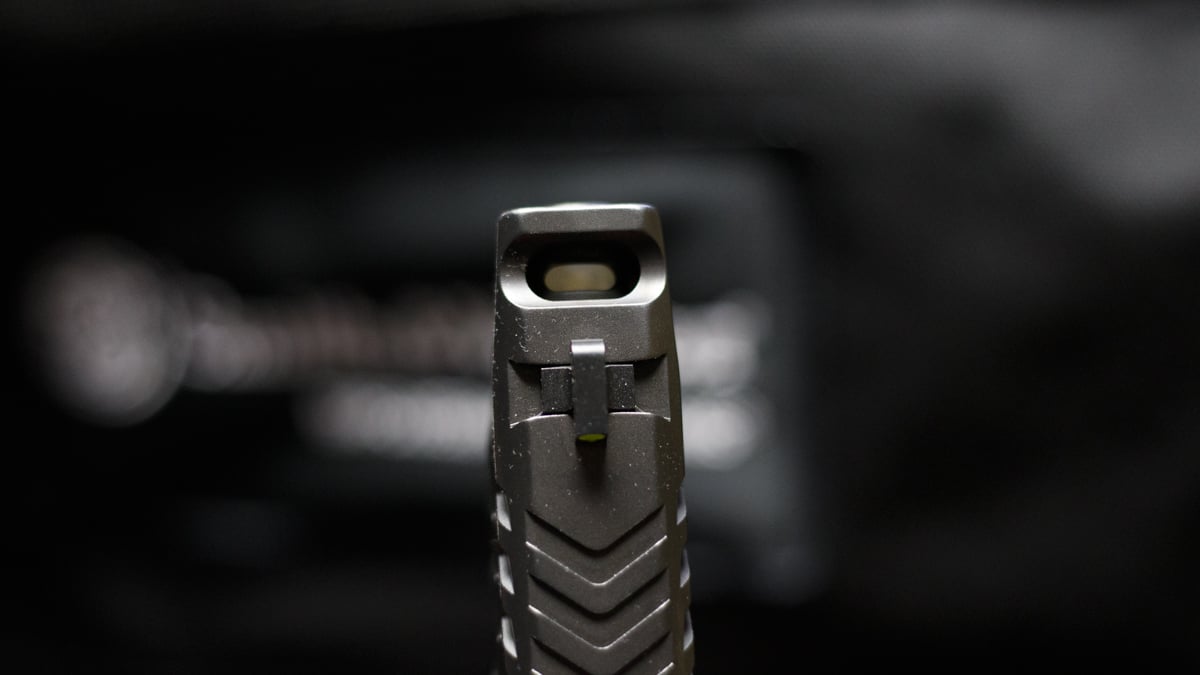
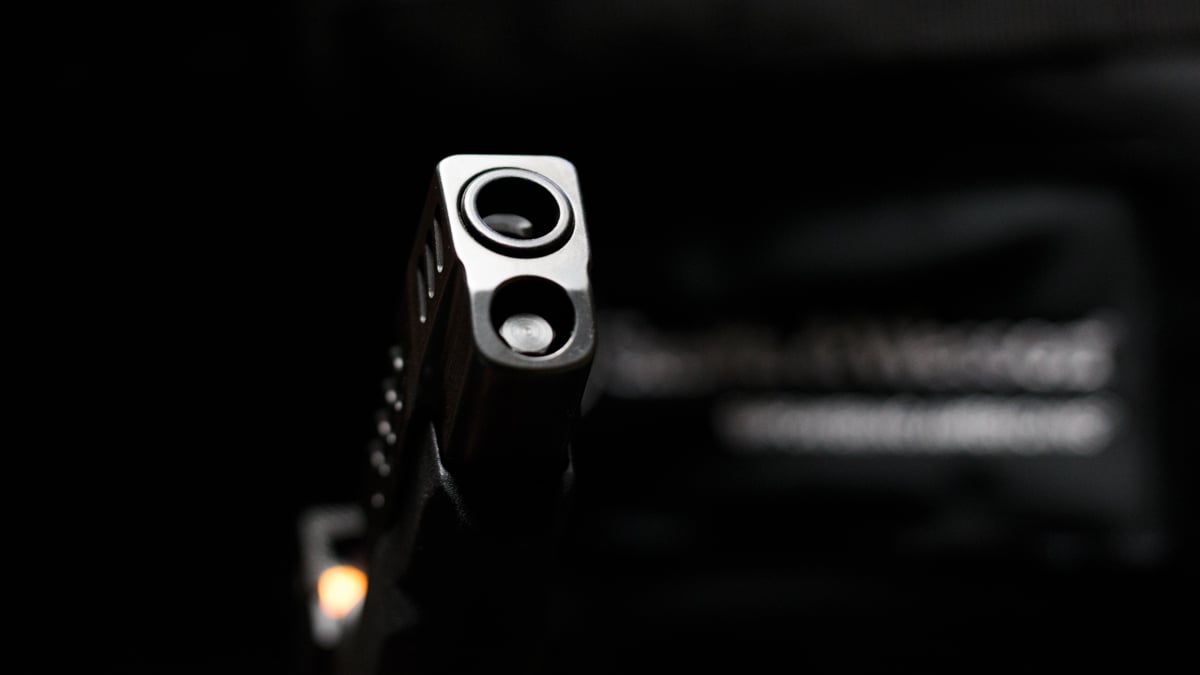
The only other feature I enjoy on this pistol that I haven’t already mentioned is the mag release. This is a carryover from the original Shield Plus. I find it easy to use, though if you’re used to a flared magwell, exchanges could be clunky at first.


Here are the specs according to the manufacturer:
Caliber: 9mm
Capacity: 10, 13, 15+1
Length: 7 inches
Barrel length: 4 inches
Height: 4.6 inches
Width: 1.1 inches
Weight: 17.9 ounces
Comparisons


Hitting the Range

The Carry Comp was a lot of fun on the range. My round count, while not exact, is nearing or just over 1,000 rounds. It ate lots of Federal American Eagle Syntac, Federal Premium Hydra-Shok, and ZSR, while also dining on select amounts of Sierra, Federal Punch, SIG Sauer, and G2 Research Helios.

I like to shoot guns without optics first, when possible. I think it give a truer sense of the gun’s capabilities, especially stacked against the competition. The OG Shield Plus does have night sights, but the Carry Comp has a larger front sight and a blacked-out rear. I found the combo on the Carry Comp easier to get on target for my old eyes, and that front sight really pops.
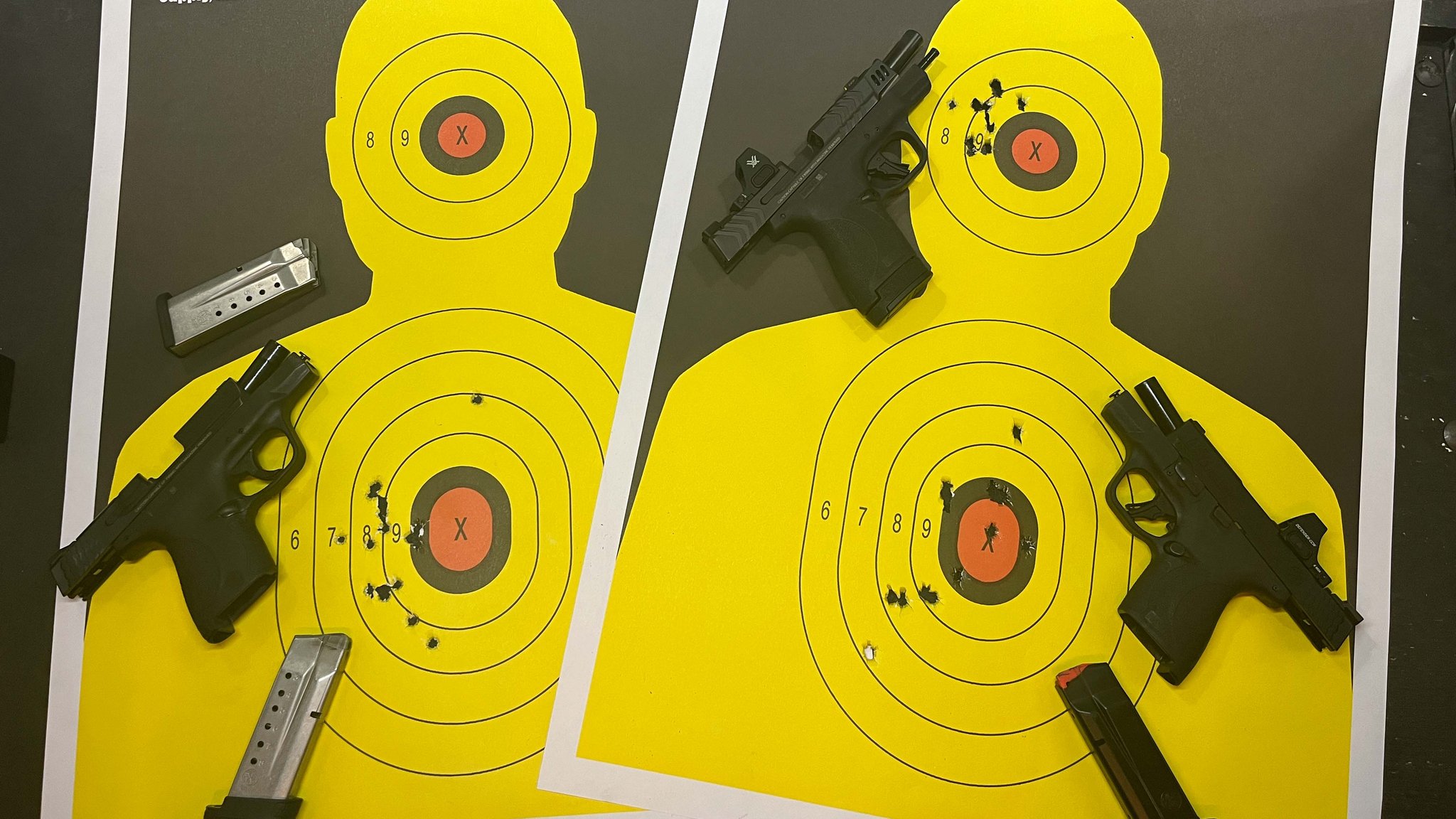
After a couple of trips to the range, I mounted Vortex Defender-CCW red dots on top of each handgun. These red dots are user-friendly, and I love the shake-awake feature. With the dots, accuracy improved on both guns, but the Carry Comp again was the clear winner.
Finally, all the controls are easy to use and manipulate. I never felt myself reaching for a slide stop or mag release. Speaking of mags, they are a bit difficult to load, especially at first. I’ve noted this in other S&W reviews, so it seems to be a bit of company-wide issue. They loosen up a bit after several hundred rounds, but I thought it should be noted. Mags do fall free with no need to rip them out.

Other than a few failures to lock back on the last round, I’ve had no complaints, minus that user-induced shooting error. That goes back to the trigger, so let’s talk about it.
Trigger

I’ve hinted at some particularities that have thrown me for a loop with this trigger. Let me be clear up front: this is more of a personal training issue than an issue with the gun itself. However, I noticed it the first time I did dry-fire, and I also noticed it once on the range.
If you don’t get a perfect trigger press on the trigger, or if you happen to be “slapping” the trigger at the range, it almost feels as if you can engage the trigger safety, but the trigger will become stuck. This hiccup shows up on the OG Shield Plus as well, so I know it’s not a single gun issue. I made this short video to demonstrate better:
I guess I didn’t notice as much on my first review of the Shield Plus a couple years back. It did cause me to misfire at the range once, again due to “slapping” the trigger and rushing my shots with poor technique. Again, I think this is 100 percent a training issue. I should be getting the proper trigger press every time; otherwise, shots don’t go where they are intended.
My concern is that in times of stress, when the adrenaline dump happens, we may not always use the best form. I think training would correct (or better yet, prevent) poor form, even in a stressful situation, but my worry is that could cost a valuable second or two.
Regardless, I decided to start carrying this handgun after a couple hundred rounds. The more I shot the gun, the more familiar I became with the trigger and the less of an issue it was. Again, it just goes to show that training can solve most issues. If it’s a matter of time and money, dry fire can also go a long way.
Carrying the Carry Comp

I reached out to our friends at Galco to secure a holster for the Carry Comp, but I wanted one that also would fit the OG Shield Plus. I wanted to be able to compare carrying the two guns to see how the compensator affected carrying comfort.

I’ve carried with many different Galco holsters in the past. All were comfortable, but I think the Cloud lineup sets the standard for comfort. The company provided me with a QuickTuk Cloud IWB holster set up for the Shield Plus.
Featured Review: Galco Cloud Series Brings Modern Amenities to 1911 Carry
The Cloud lineup features a neoprene-like backing with a sweat-wicking material overlaid on top, making these holsters especially useful in the hot summer months. I carried this on and off for about three months. I tried to carry the Carry Comp one day and the OG Shield Plus the next day to get a true sense of comfort difference.
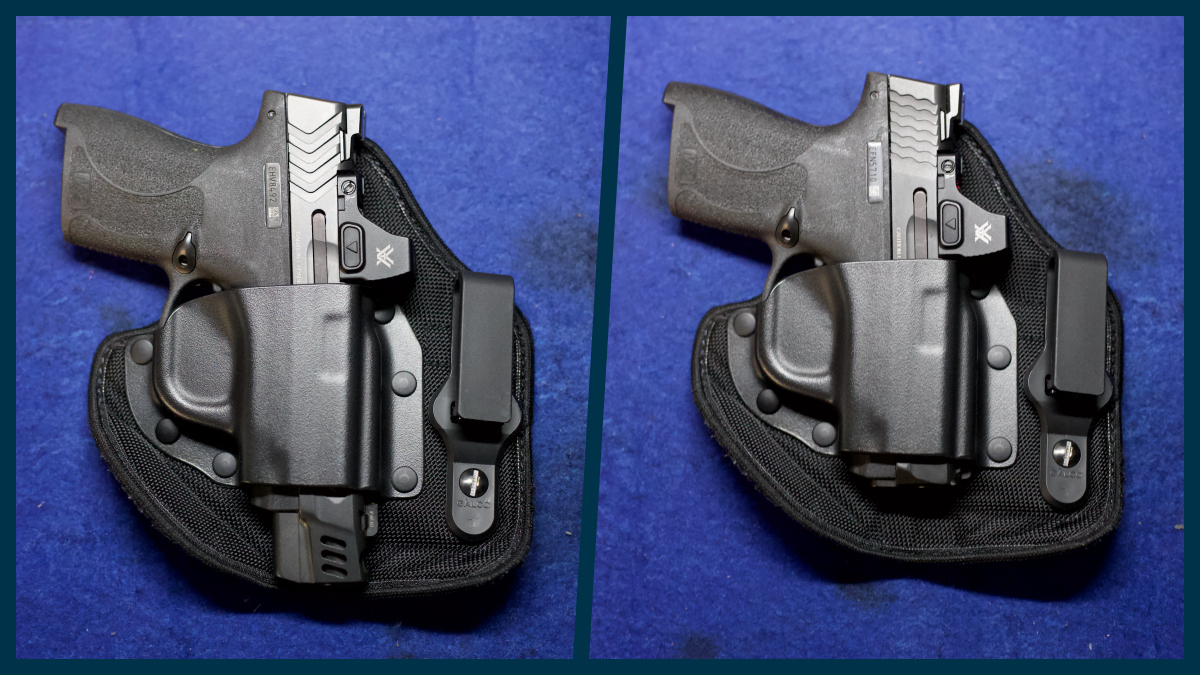
I can say, without a doubt, the OG Shield Plus is more comfortable to carry. It disappears, and you can forget you’re carrying a gun. It’s akin to carrying the P365. While the Carry Comp isn’t overly burdensome, I did notice that bit of extra length while carrying in the appendix position.
Activities like tying my shoes or sitting at a desk all day were slightly more uncomfortable, but it wouldn't stop me from carrying the gun. Part of that discomfort is because the Carry Comp extends to the very edge of the Cloud padding, but the Shield Plus stops short.


Either way, if you’re used to carrying a full-size or even a compact gun AIWB, this setup will be a breeze to carry. In the end, I would take a little more discomfort for a far more accurate gun.
Pros & Cons