Quick Overview
Launched in September 2023, the Judge Home Defender is a unique extension of the popular Judge line of Taurus revolvers. The Judge started as a relatively short-barreled handgun that capitalized on the ability to chamber a revolver for both .45 Colt and .410 shot shells. This gave it the features of a traditional revolver that doubled as a single-handed five-shot scattergun.

Taurus added later models with longer 6.5-inch barrels, but you wouldn’t dare risk putting your support hand in front of the cylinder gap to hold any of those. That pesky cylinder gap likes to shoot out problematic fire and debris when you pull the trigger on a traditional revolver.
That’s still basically true with the Home Defender. However, the new design has a specially angled forend and perfectly aligned shield to solve a problem that has plagued revolver shooters since Samuel Colt introduced his first Patersen revolver in the 1830s.

Related: Factory Tour – Taurus Thriving in Southwest Georgia
The Judge family already had a similar firearm in the Circuit Judge, which came complete with a stock. However, that stock mandated the addition of a lengthy 18-inch barrel to comply with federal law on short-barreled rifles. Or would it be short-barreled shotguns here? … Doesn’t matter.
The Home Defender’s pistol-grip-only design granted it a far more wieldy 13-inch barrel for home defense. The gun has several more tactically minded features, so let’s jump into the specs to see how it actually works.
Specs & Features

While the double-action/single-action Home Defender can shoot anything from your standard .45 Colt to .410 shot shells stuffed with birdshot or buckshot, it still hosts 1:16 rifling in the 13-inch barrel. This actually gives it some fine accuracy at 50 yards, but more on that in the shooting section.
The five-round cylinder is elongated to just over 3 inches to accommodate the longer .410 shot shells. That’s partly because the Home Defender is also beefy enough to support 3-inch shells. Given there is no stock to support the recoil, Taurus added a textured rubberized grip with finger grooves and deep rear cuts. I found this grip did its job with even my most powerful .410 buckshot loads.
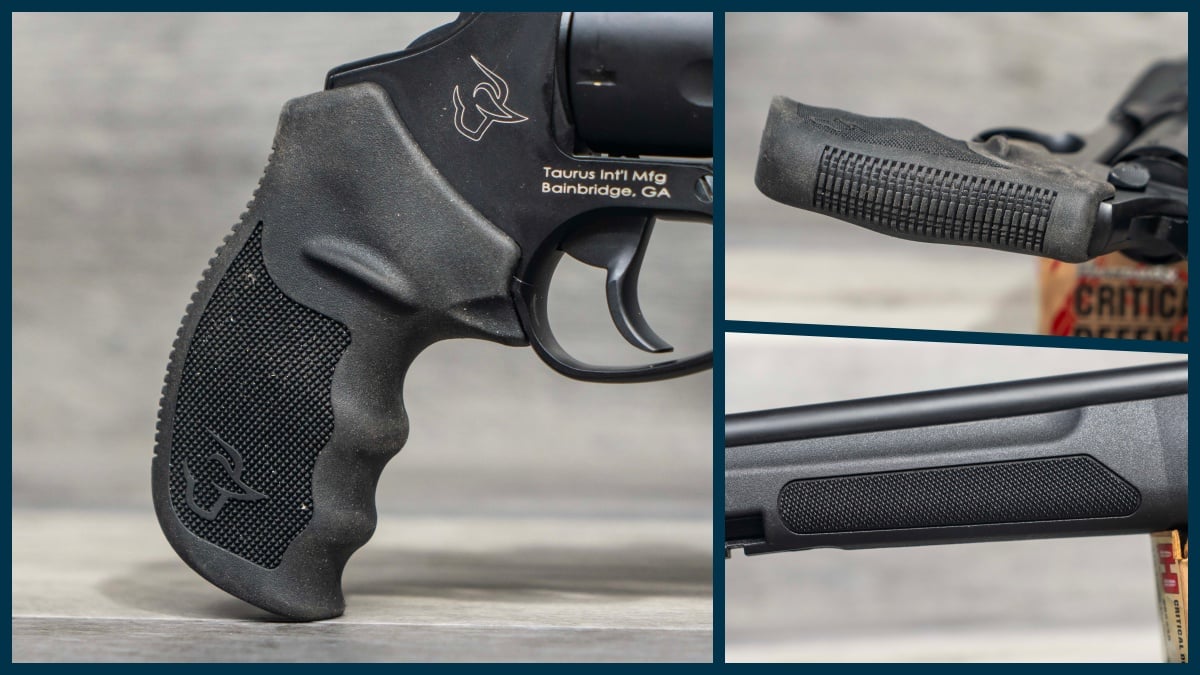
The gun remained very controllable with the textured grip, and my hand was thankful for the rubber design. There’s also a strip of texturing on both sides of the forend. That particular furniture tapers to a wide diamond-like pattern at the rear, which helps deflect any gas or debris coming from the cylinder gap. It did a great job protecting my support hand.


There’s a special shield on either side of the cylinder to protect your arm while shooting. This deflects the gas and debris up and away from your forearm while keeping it out of the gun’s action at the same time.
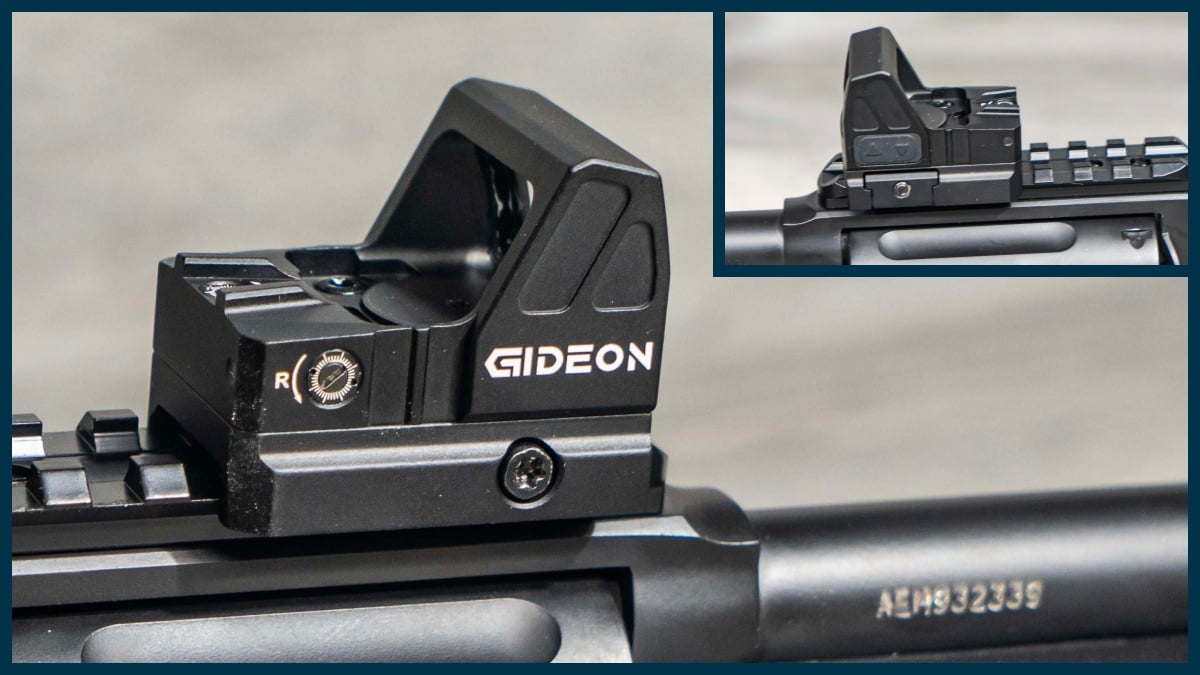
There are no fixed sights on the gun. The top 3.89-inch Picatinny rail is grooved, but there is no post to sight through. That rail gives ample room for adding an optic, which I think gels nicely with a short gun designed for home defense that would be hard to aim in the dark without an illuminated sight.


Taurus also added a short Pic rail to the front for lights and lasers. Beyond that, you have your standard revolver controls. There’s an extended ejection rod that folds into the forearm and a thumb release for the cylinder on the left side of the frame. The hammer is deeply checkered, and an internal transfer bar makes it safe to carry with a full complement of five rounds.
Here’s a quick rundown of the basic specs:
- Weight: 3.66 pounds
- Length: 19.5 inches
- Barrel Length: 13 inches
- Height: 5.9 inches
- Width: 1.94 inches
- DA Trigger Pull: 8.47 pounds
- SA Trigger Pull: 4.55 pounds
- Top Pic Rail: 3.89 inches
- Front Pic Rail: 1.87 inches
There’s 0.65 inches of travel for the double-action trigger. The pull is smooth, and I didn’t notice any stacking of tension. The break is nice and clean at 8.47 pounds, though it didn’t feel that heavy, to be honest. You can also run it rather fast, which is a plus to a “shotgun” revolver meant for home defense.
Manually cocking the hammer was very easy, whether I was holding the gun with one or two hands. The single-action trigger effectively starts at the wall with a clean, creep-free break of just 4.55 pounds.
Here’s a quick look at the hammer and trigger in action:
Keep in mind that I had to operate a camera in one hand and the Home Defender in the other to record this. So, the gun runs fine even when you’re uncomfortably positioned holding a 3.66-pound long revolver in one hand. Overall, the controls are intuitive and reliable enough to be an added benefit as a home-defense firearm.
Shooting & Accuracy
I’ll start by highlighting the optic I chose to run for this testing. I popped on a Gideon Rock, as it seemed like the best fit I had on hand. The Rock’s 15.5x22mm lens has unlimited eye relief and a nice open window shape, which was handy because I did my best shooting when I fully extended my support arm and locked it out for stability. It comes with either a red or green dot.
I was shooting in high sun for my target shooting and used a green 65mm circle. I felt that was the most reasonable choice for me if I were pressing this gun into close-range self-defense work, but my 25-yard performance impressed me enough to take the Home Defender out to 50 yards. In the end, I should have also brought a scope and rest to better test the gun’s full potential.
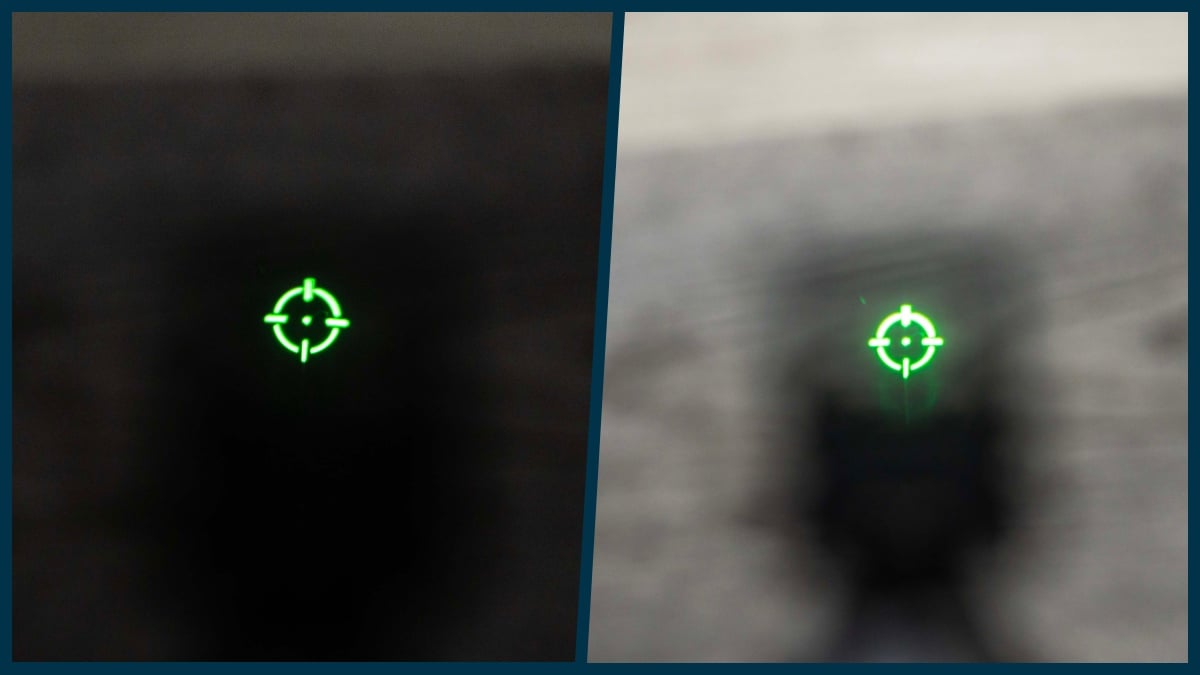
The Gideon dot survived just fine, and it’s a solid fit for the Home Defender. But the gun could support a magnified optic based on how I saw it shoot.
Here’s a breakdown of the testing results:


There’s certainly noticeable recoil to the Home Defender if you run heavier .410 self-defense loads. Still, the gun is relatively lightweight, easy to use, and offers a recoil that would appeal to a smaller-framed shooter when compared to many big-bore options. The ability to hold it with two hands mitigates that a lot. Shooting the 3.66-pound gun with .45 Colt was downright pleasant.
Here’s a rundown of the ammo I used:
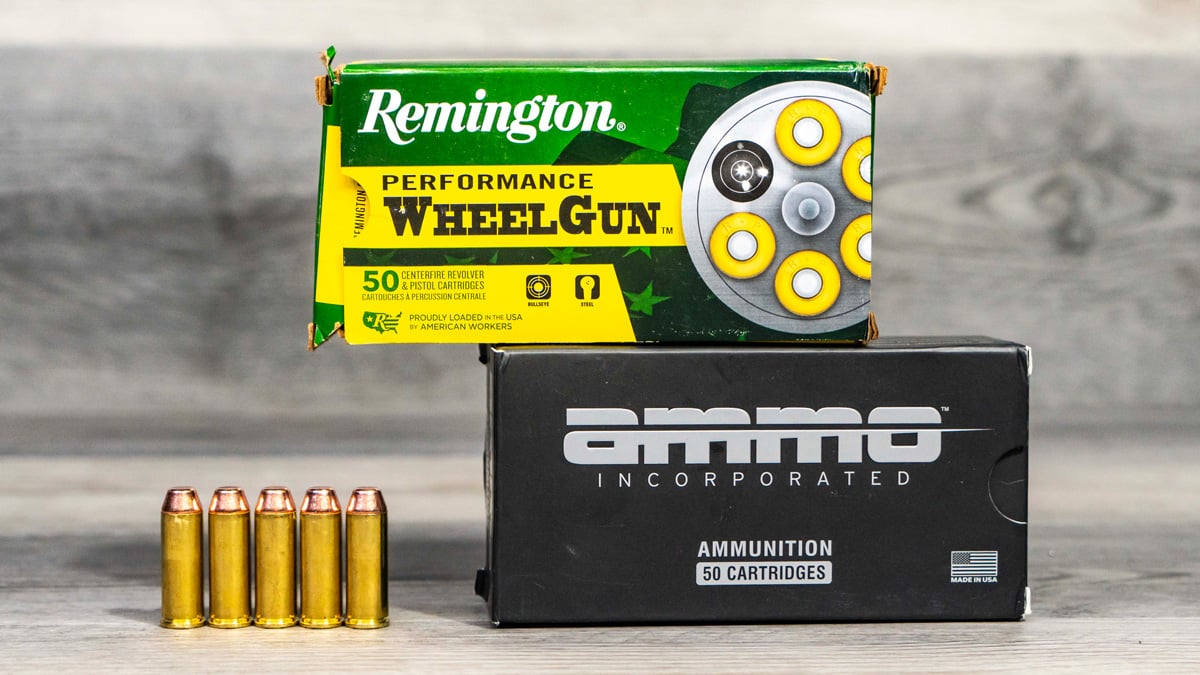
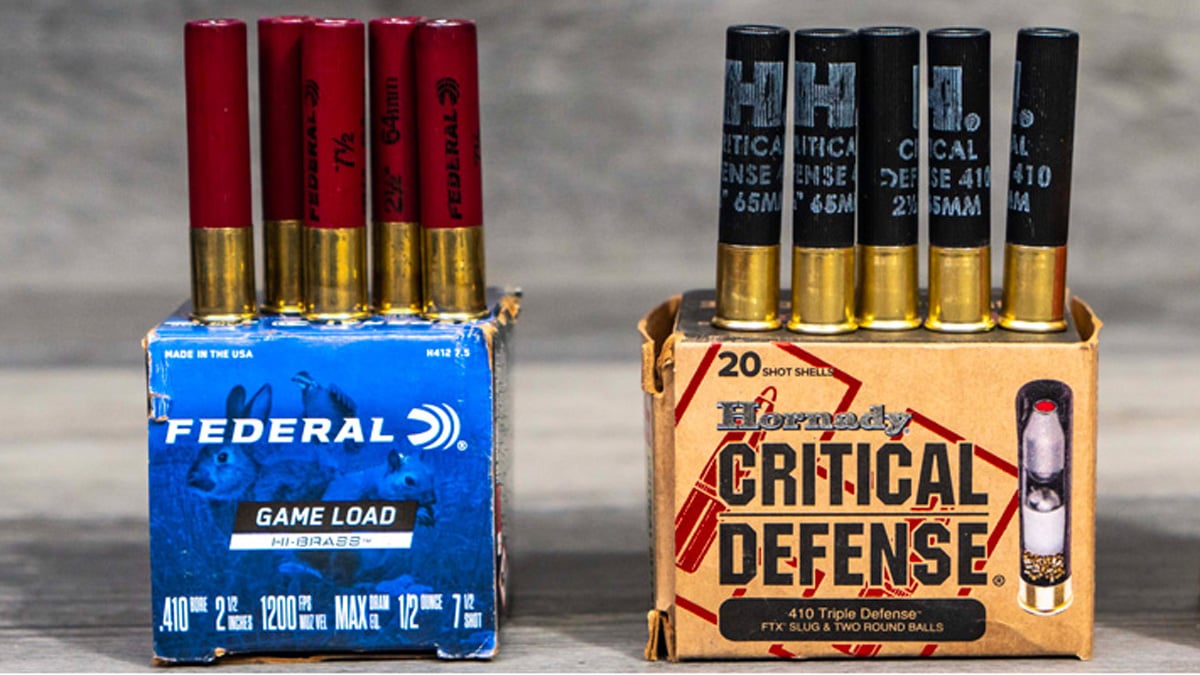
It’s worth noting that the longer barrel on the Home Defender should also make better use of the .410 ammo than the other Judges. I know that was a common concern from folks who own ones with 3-inch barrels. But with a barrel that’s 13 inches long, I didn’t notice fireballs of burning powder being wasted on the range.
All said, I had no mechanical issues. The most I could complain about was the longer .410 shells didn’t always spit out with the ejector and some had to be manually pulled. I’ve also tested one of the more budget Taurus 856s chambered for .38 Special in the past. While I liked that gun, it actually felt like it recoiled harder despite the significantly smaller caliber.
Related: Taurus 856CH Concealed Hammer Revolver Review
Unlike the popular lever-action .410 Henry Axe or the pump-action Mossberg Shockwave, the Home Defender’s revolver design allows the shooter to never move the shooting or support hands. That’s an obvious advantage for a home-defense firearm, but it’s also a feature that makes the gun very fast to shoot.
I’m no world-famous speed shooter like Jerry Miculek. But compared to pump and lever guns I’ve shot in the past, the revolver design made me feel like a speed demon. That said, the two-hand design with no stock is still awkward and takes a bit to get used to aiming. Having a wide red dot helps a lot with that.
Pros & Cons

Here’s my short list of the pros and cons for the Home Defender:
Pros:
- Reliable
- Relatively low recoil
- Nice DA and SA trigger
- Lightweight for one and two-handed shooting
- Fast and accurate
- Longer barrel makes better use of .410 ammo
- Optics ready for dots or scopes
- Front Pic rail for lights and lasers
- Positive, comfortable grip
- Very simple to operate
- Lots of .45 Colt/.410 ammo options
- Compact design for home defense
- Very enjoyable to shoot
Cons:
- Aiming is a bit awkward at first
- Limited to a five-shot capacity
- Slower to reload
-
No fixed sights
Final Thoughts

I think the pros and cons above basically sum it up. The gun has a ton of things going for it. Taurus may have designed the gun for the tight quarters of home defense, but it is capable of target shooting, close-range hunting, or as a truck/vehicle gun.
It’s relatively fast and easy to use compared to similar .410 scatterguns on the market. It also has plenty of space up top for various optics and a front Pic rail for a light that would be handy for home defense. You will need to practice with it because the design feels good but is a bit awkward to aim at first.
All in all, I’d call myself genuinely impressed with how it did on the range as well.