BACKGROUND
Derived from the Walther PP, or Police Pistol, the PPK was Walther’s answer to German police detectives’ desire for a smaller, lighter, and more concealable pistol. Ahead of its time in 1931, its features have been copied by others, and its reliability is unmatched. It was used at times by the German BND, the Nazis (including Adolf Hitler), British MI5, MI6, and the Israeli Mossad.
I love Sean Connery as James Bond. I cannot separate him from the most well-known Walther pistol ever made, and without 007, I believe the PPK would have been discontinued along with the famous P-38 Walther long ago. Connery’s portrayal of Bond has endeared the PPK to firearms enthusiasts worldwide.
Related: Walther PPK Pistol History – Warfighter Turned Movie Star & Self-Defense Favorite
MY IMPRESSIONS
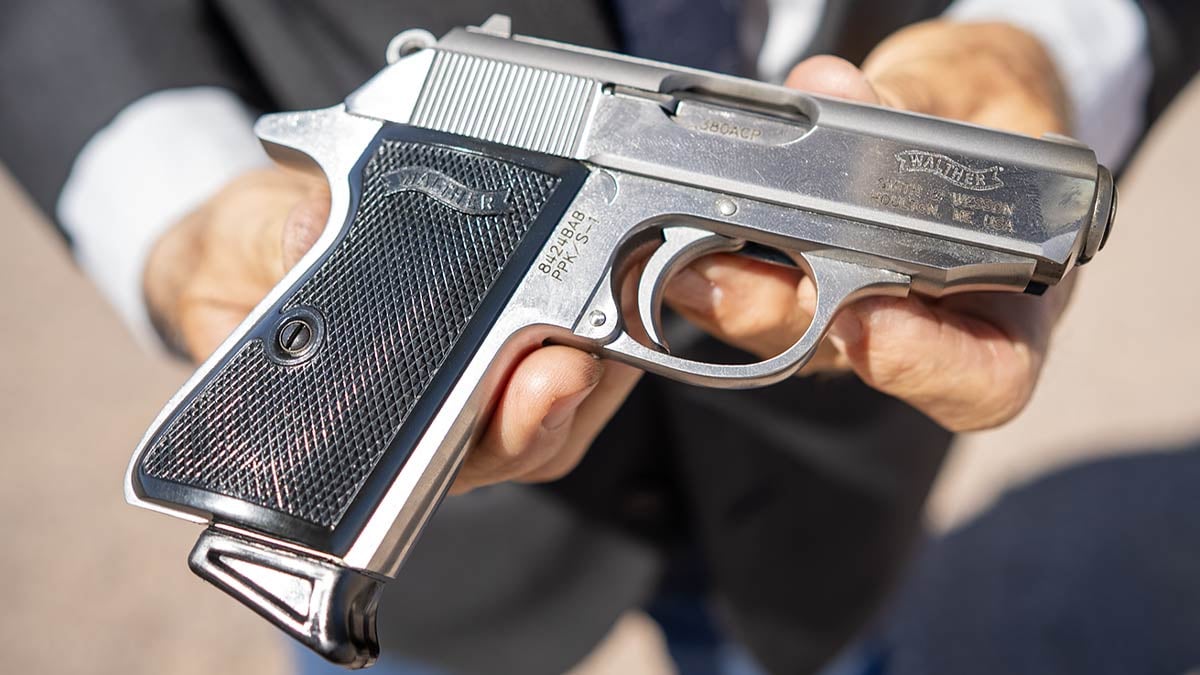
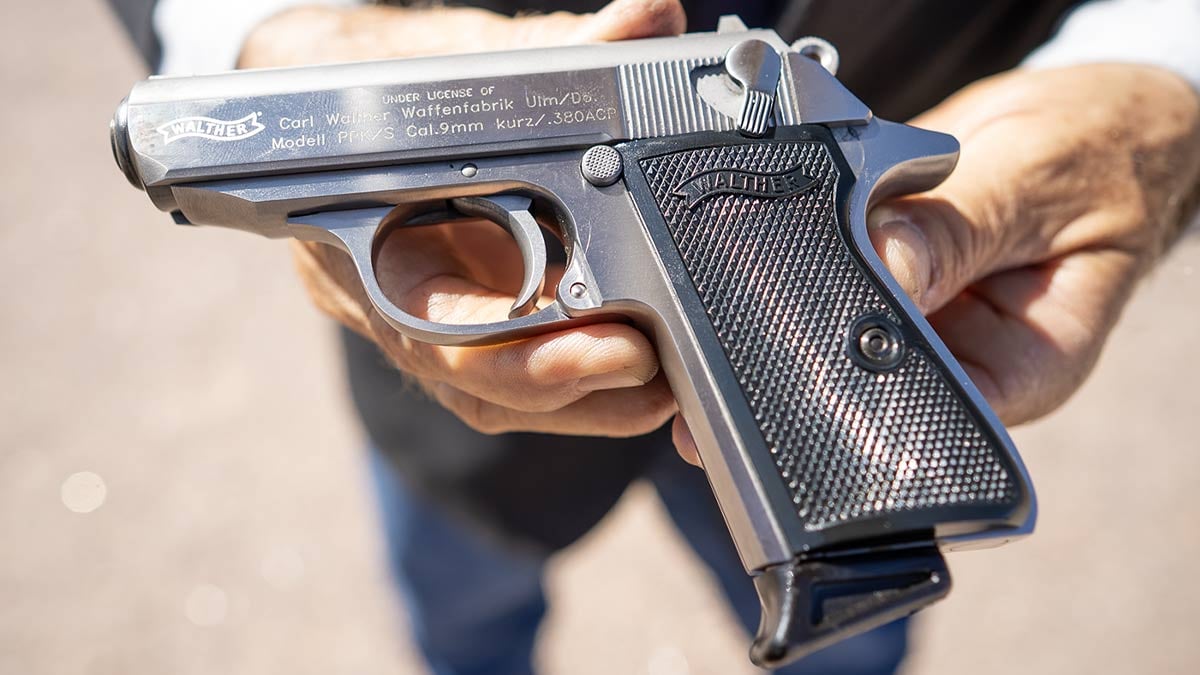
My PPK/s is a stainless version manufactured by Smith & Wesson in the U.S. prior to 2012, during a period when Smith & Wesson owned Walther and had access to the PPK for manufacture. It is a single action/double action blowback semi-auto pistol chambered in .380 ACP. The gun feels solid and heavy despite its small size. Those with large hands may have difficulty adjusting to the PPK’s short grip. The magazine's pinky extension is a big help in controlling the pistol.
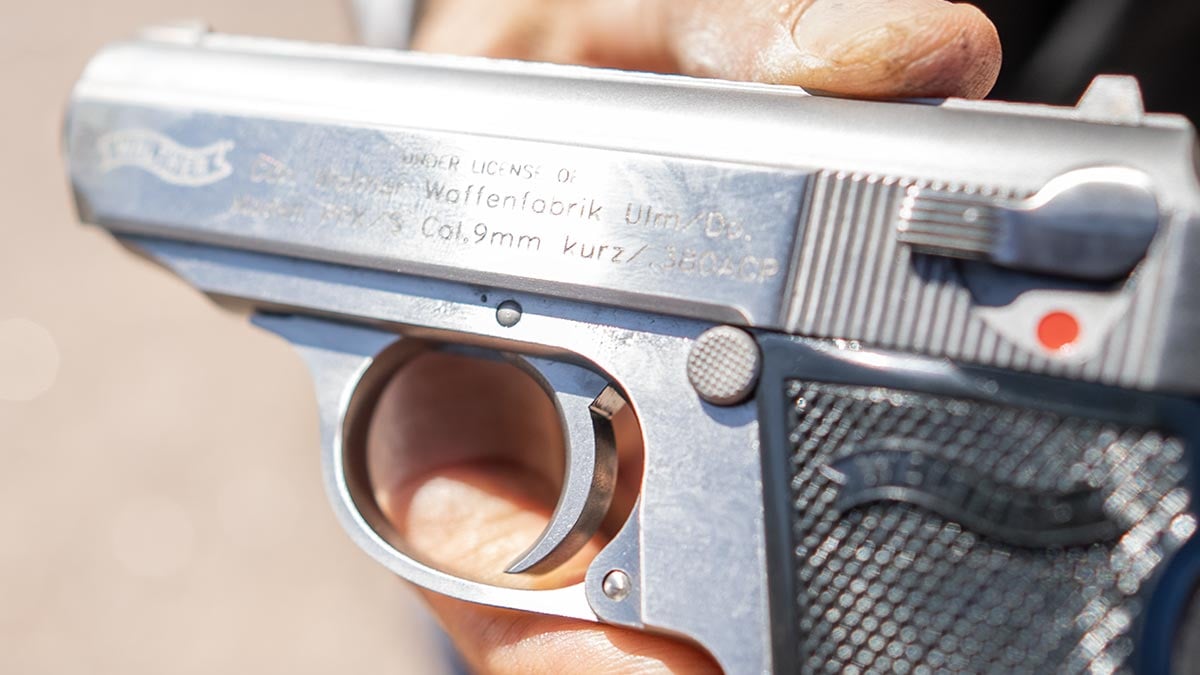
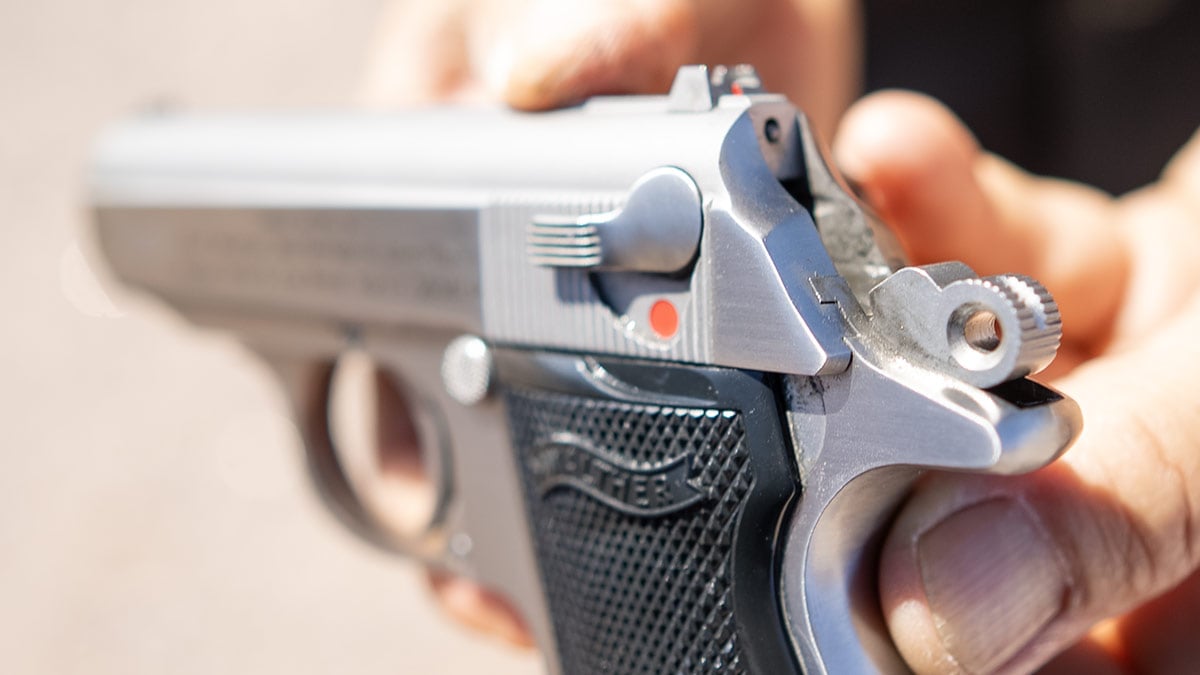
My favorite PPK/s features are the smooth trigger and decocking lever/safety. This Walther is meant for concealed carry but can be brought to bear quickly. Although heavy, the double-action trigger is smooth. Carried with the manual safety off, I can squeeze off my first round quickly. Follow-up shots are then fired in a much lighter single-action mode.
The 90-degree throw safety switch deactivates the pistol for storage in my truck or home. It also acts as a decocking lever, lowering the hammer from fully cocked to safe and acting as a disconnector. This is a wonderfully useful feature and amazing technology for 1931.
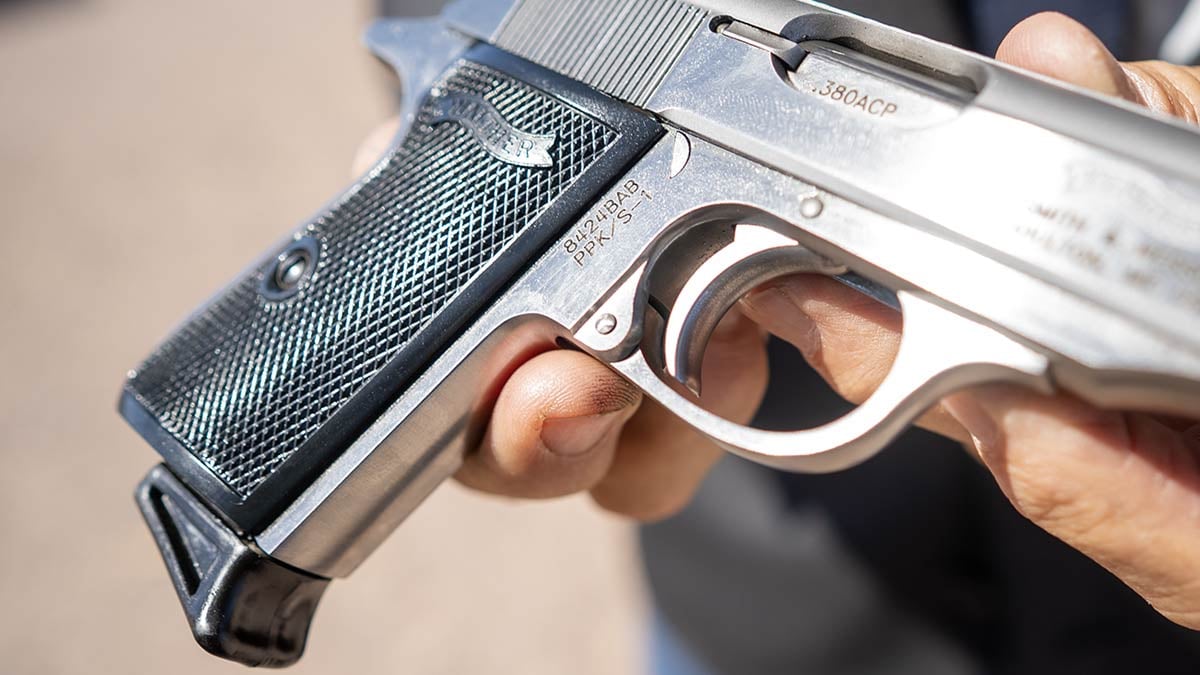
The PPK/s has a loaded chamber indicator pin located at the rear of the slide that is easy to feel with my thumb even in a darkened room. The compact size of the Walther is due to the short 3.3-inch barrel and its wraparound recoil spring. Unlike many semi-auto pistols such as the Colt 1911, this pistol has no recoil spring under the barrel, reducing the height of the gun considerably.
More Features
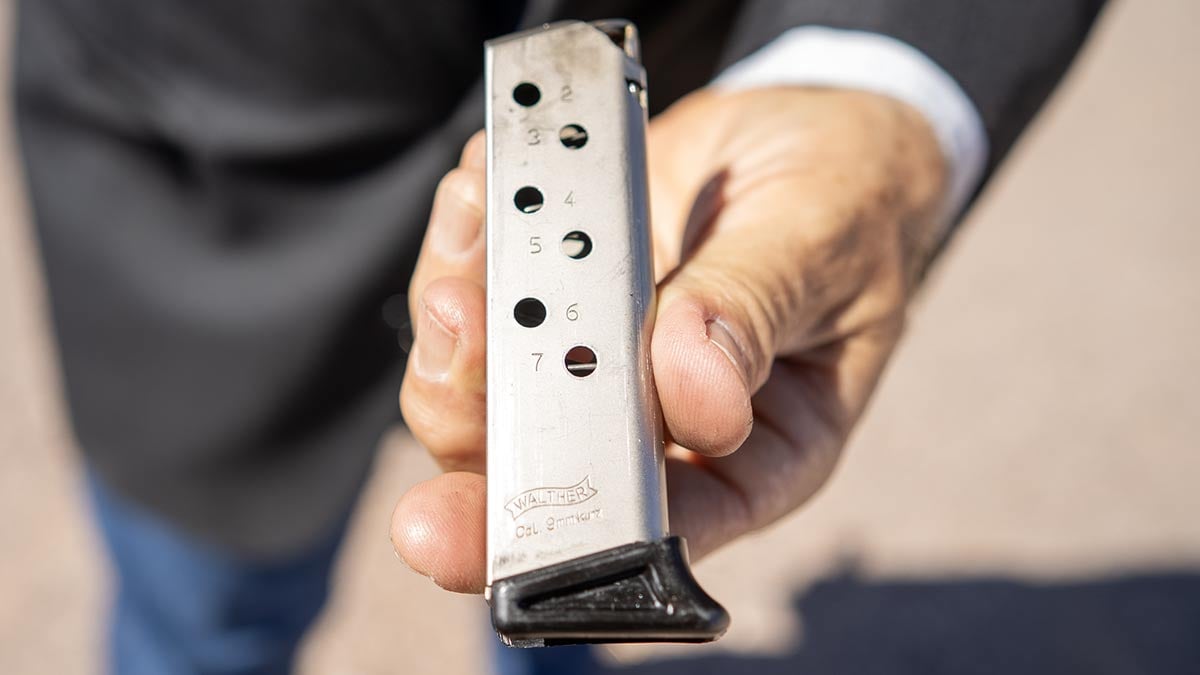
Two magazines are supplied. They are steel with round-count lightening holes and hold seven rounds of .380 ACP. Although the pistol will fire with a magazine removed, there is no way to lock open the slide without an empty magazine. Both magazines lock into the grip firmly, but I find the magazine release a bit small and difficult to activate.
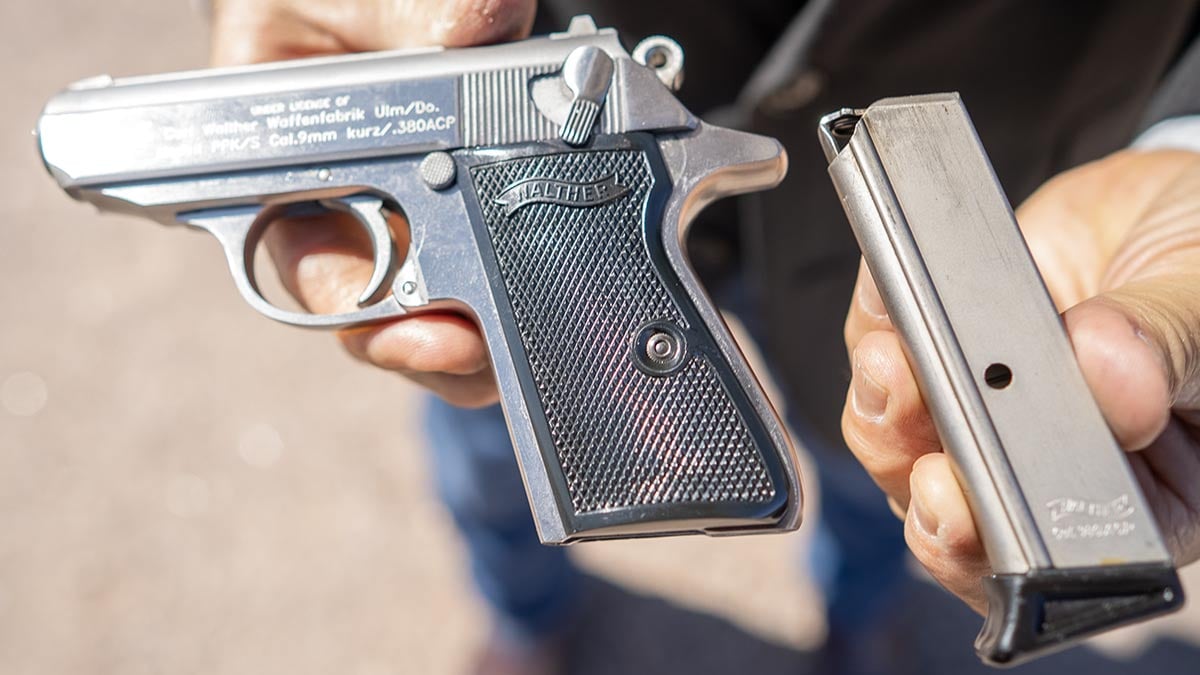
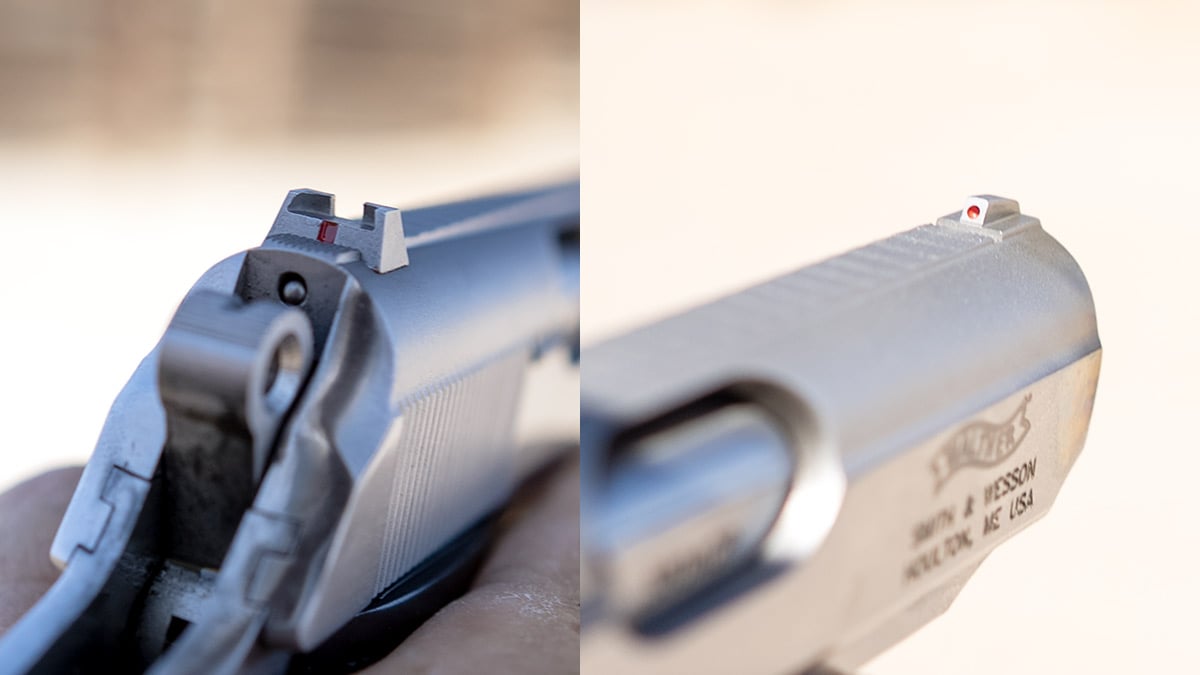
The low profile sights are snag-free but hard to see quickly. The top of the slide is serrated to stop heat mirage.
It is easy to see the PPK/s lineage next to my Walther PP. The two are similar except for size and caliber. The PP’s barrel is 1 inch longer than the PPK/s, and the PP’s magazine holds eight rounds with a slightly longer grip. The beavertail grip is extended and well-formed on the PPK/s, providing better control and protection from the hammer.
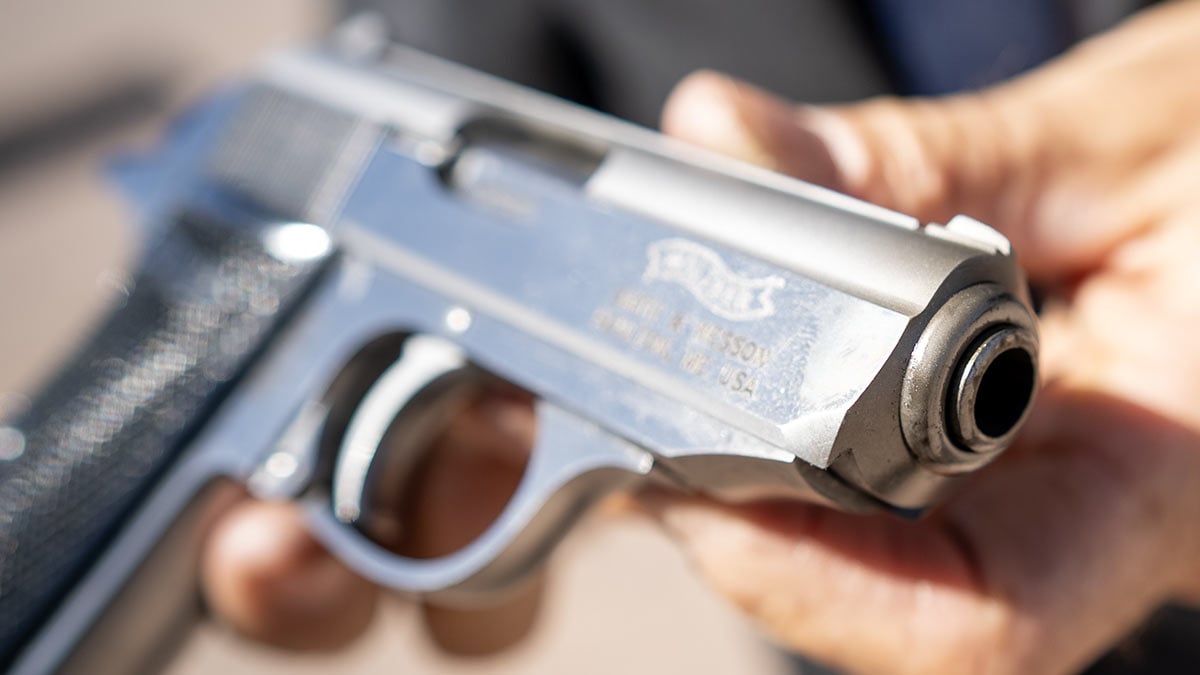
This is a thoughtfully designed defensive pistol. Its low bore axis barrel aligns well with my hand to point naturally, and I feel that I can shoot from the hip like Bond and hit something. Designed well before polymer-framed guns, it is heavy for its size, but this can be an advantage in reducing kick and aiding accuracy. The controls are easily memorized, allowing for an accurate condition check in a dark environment.
SPECIFICATIONS
- Overall length: 6.5 inches
- Height: 4.25 inches
- Width: .875 inches
- Weight: 1.5 pounds
- Trigger: Double action – 13 pounds; single action – 8 pounds
- Barrel: 3.3 inches
- Grips: Hard plastic with Walther logo
- Sights: Rear notch and front blade
- Safety: Left side frame-mounted, 90-degree throw
- Magazine: Two steel 7-round mags supplied
-
Caliber: .380 ACP (tested), .32 ACP, .22 LR
SHOOTING with BOND
Wearing my suit jacket and tie, I feel a bit like Bond. Back at the Tucson Rifle Club’s action range, I set steel milk bottle shape targets at 7 yards for a practical test using Remington 95-grain FMJ and SIG 90-grain JHP defensive rounds.
Loading a full magazine into the pistol is easy, but much force is needed to pull the slide back to load the first round. The short recoil spring is very stiff. My first shots were double action, and the trigger was tough to pull at first. It became less stiff once moving, and I could better control the break point at firing. The next single-action squeezes were much easier. I hit the center of mass each time and even managed a few head shots.
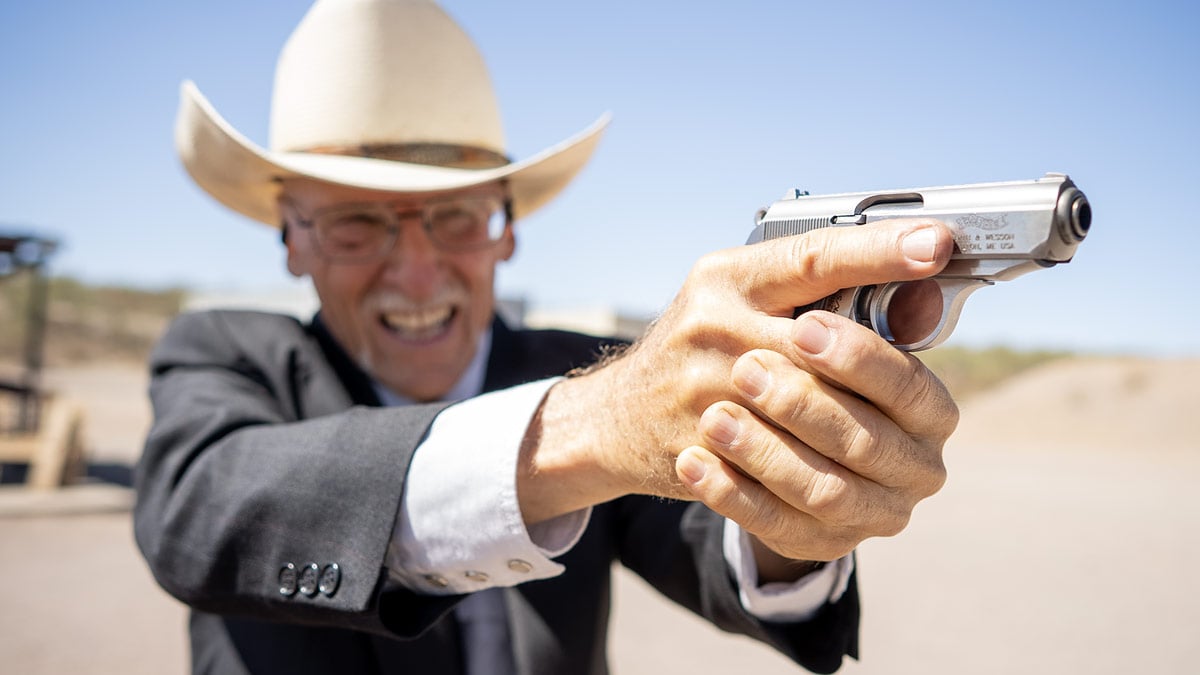
The little pistol really barks when fired but is controllable and points well. It is comfortable, and I am in command of its every function due to its compact size. Hollywood often depicts Bond aiming over his forearm while shooting, but this bit of glitz does not work for me. My conventional two-hand hold gives much better control and accuracy.
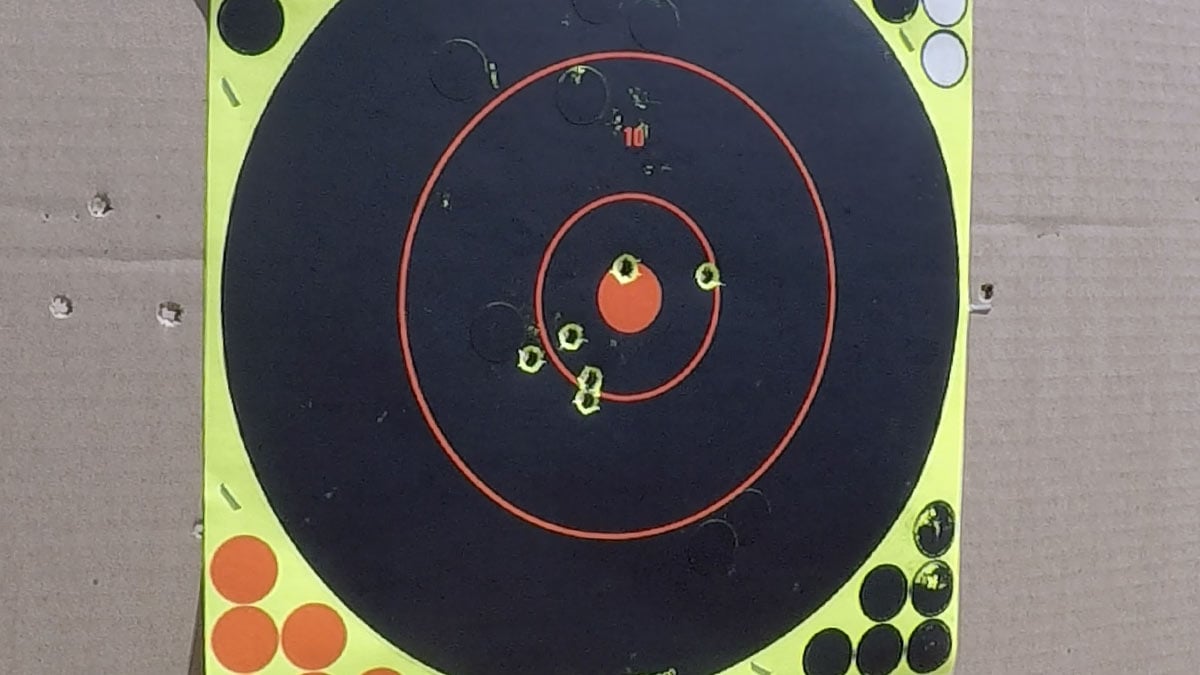
Functioning was flawless. The magazine locks open after the last shot, ready for a new insert. Empties fly out of the ejection port, and feeding is seamless even with hollow point ammunition. A final mag dump was both functional and controllable. Shooting the Walther PPK/s is fun, instinctive, and accurate. No malfunctions occurred in my testing.
PROS & CONS