Speed K vs. Fat Cat Features
Similar in size and specifications, these two suppressors do have some differences. I’ll point out the important ones. The Banish Speed K is either 3D-printed or DMLS-fabricated from Inconel. Inconel is a robust nickel-chromium alloy that is extremely resistant to both heat and abrasion. The Speed K is one solid piece of material, but as those of us who have broken suppressors before know, this type of suppressor is nearly impossible to repair. The Speed K also uses a finned blast chamber and clipped wall baffles to reduce sound.
Related Review: Cool Under Pressure – Silencer Central's Banish Speed K

The YHM Fat Cat is built in a more traditional fashion by welding together 17-4 stainless steel. It uses a Cobalt 6 blast baffle to help tame the extreme pressure, heat, and abrasion coming from the muzzle. Cobalt 6 (a cobalt-chromium-tungsten alloy) is also very resistant to heat and abrasion. The Fat Cat uses an interesting funnel shape to increase the volume of the blast chamber, and it appears the design helps create a turbulent flow to help reduce sound.

Both suppressors use the industry-standard hub mounting system. I can’t tell you how much I like and appreciate the industry moving in this direction. It has made mounting suppressors infinitely easier. You can use whichever mounting system you prefer, whether it be the YHM sRx QD system provided with the Fat Cat, something else like the Dead Air KeyMo system, or Plan B from Q. Both suppressors use a tri-clipped muzzle port, which has become a common feature.
Specifications

Host Firearms
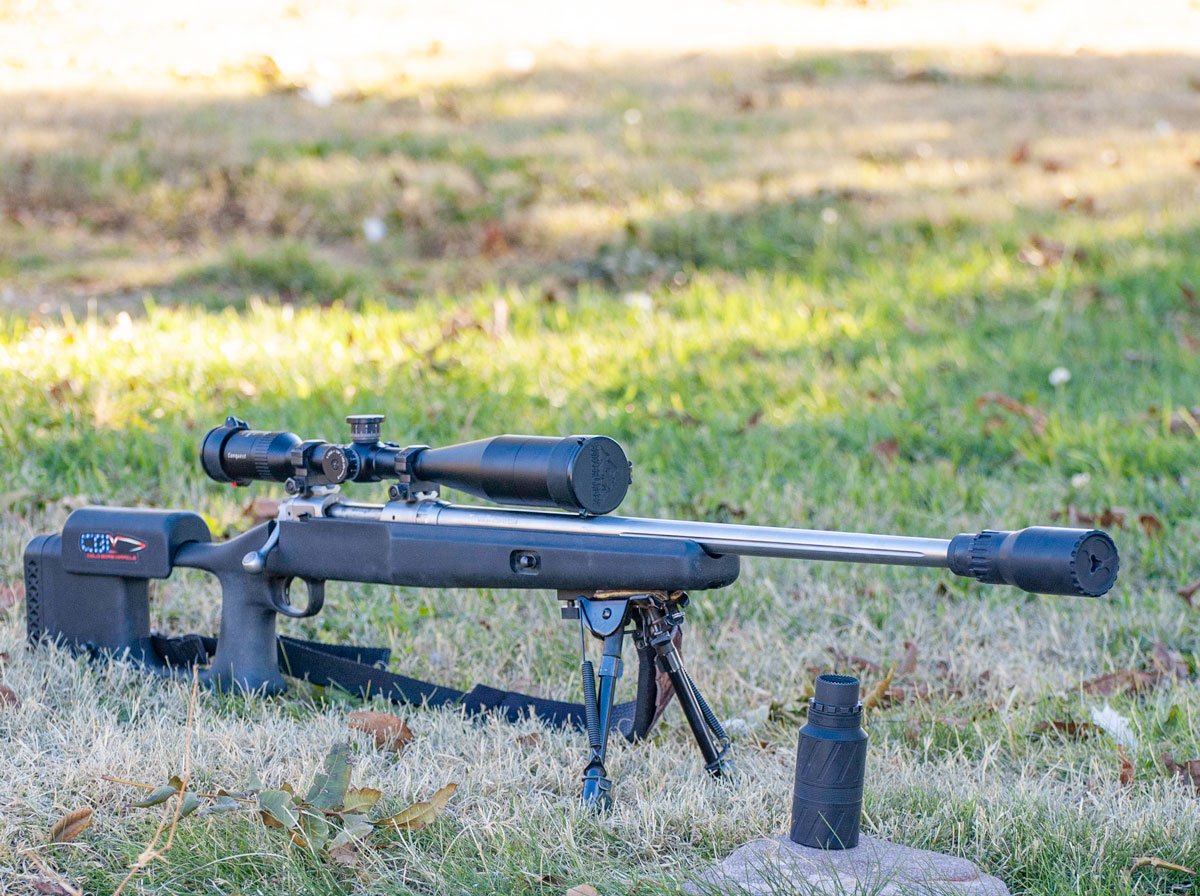
I put together a small collection of rifles that would give these two suppressors a good workout. For pure sound testing, I would run them on my Savage Model 12 chambered in .223. The bolt-action rifle would give the best opportunity to hear the report of both suppressors.
I also planned to use my Desert Tech WLVRN with the 20-inch .223 barrel, as its adjustable gas system would allow me to tune for performance and see how the two cans affected its function. I added a couple of AR-15-based rifles to the lineup, too: one a 16-inch Aero Precision build and the other a short-barreled 5.56 Quattro 15 that would also test the cans on full auto.
Sound Suppression
Shooting these two suppressors across all the host firearms gave me a pretty good idea of how they compare as I kept switching them out. It was honestly hard to tell the difference at times. Occasionally, I think the Speed K had a slightly sharper report. Both cans sounded much louder on my shorter-barreled rifle, and the noise coming from the ejection port was increased as expected.

On the longer rifles, both suppressors sounded hearing safe. The 16-inch Quattro 15 and the 20-inch WLVRN were pleasant to shoot without hearing protection. Of course, I must add the caveat that you should always wear ear protection, even when suppressed.
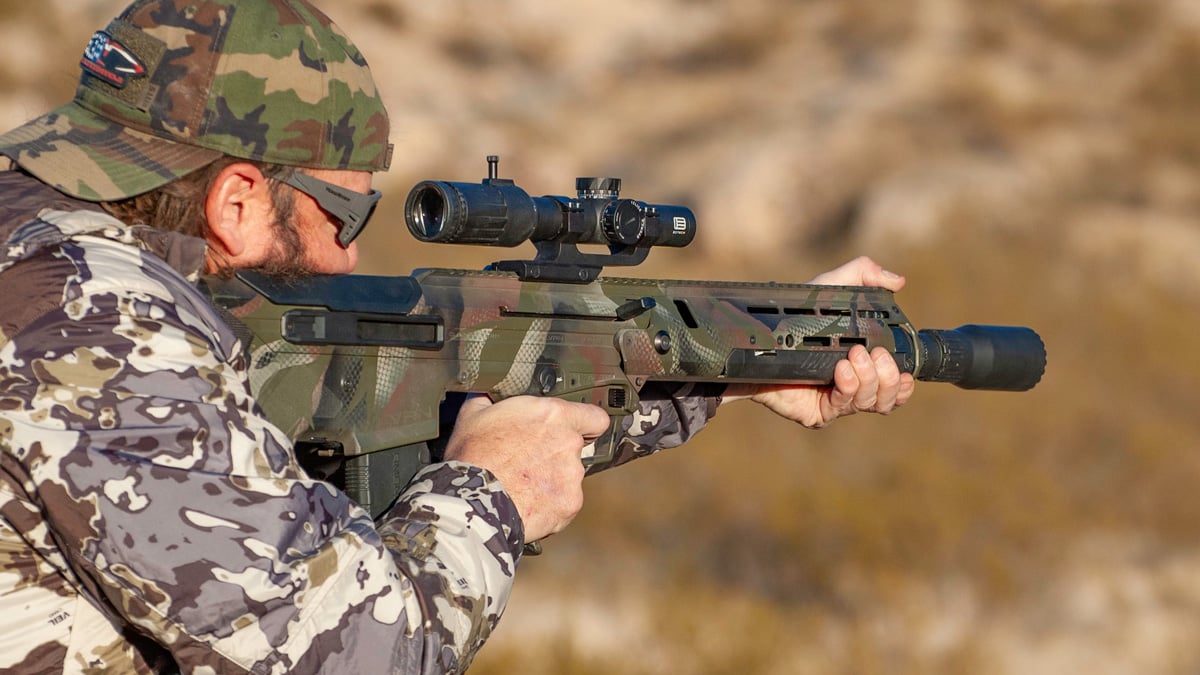
The shorter length of these two cans didn’t seem to affect their ability to effectively suppress 5.56 muzzle noise. In fact, I felt like they did every bit as good a job as “regular” 5.56 suppressor configurations, with the additional benefit of adding less overall length to your firearm.
Backpressure
Almost every suppressor out there adds at least some backpressure, and these two were not exempt. When shooting semi-automatic rifles with a suppressor, you are going to experience some blowback of gas. In some of my pictures, you can see a pulse of spent gas coming from the ejection port of the rifles. This was somewhat mitigated on the WLVRN because of its adjustable gas block, which allows you to reduce the amount of gas pressure operating the rifle.

I am used to shooting these rifles suppressed, and since I always shoot outside, for the most part it doesn’t bother me. As my dad mentioned, “It smells good.” For true gun nuts, that might be true, but it’s not exactly good for you. It’s something I just deal with, and it didn’t seem like blowback was better or worse with either suppressor.
Compatibility
During my testing, I used a variety of mounting options on both suppressors, mainly direct-thread hubs and some of the YHM QD mounting systems. The sRx mount from YHM is compact but quick to move the suppressors back and forth. It also was the least invasive to the suppressor’s blast chamber, which seemed to help effectiveness.
Related: Silencer or Suppressor – Which Way is it?
Again, I cannot state how convenient it is to be able to interchange the suppressor mounting systems. The 1.375x24 hub that everyone is moving to gives you the freedom to choose your methods. Now, if we could just get rid of the NFA and its operatives, we’d be on our way to true freedom.
Durability
Both suppressors seem to be built for abuse, but in this case, I think there is a clear difference. The Speed K feels like it weighs significantly more than the Fat Cat, which didn’t match the specs above.

Short strings of fire (10 rounds or less) didn’t heat up the Speed K much. By that, I mean you could still touch it comfortably. The Fat Cat, on the other hand, could be warm after 10 rounds. The thicker construction of the Speed K takes longer to heat up and longer to cool down. Its heavier construction also makes me think it would last longer in an all-out burn-down contest with the Fat Cat. Based on the SOCOM testing mentioned by Silencer Central, I believe I’m right.
Related: Roundup of Awesome Suppressors from Silencer Central
All that to say: I think the average suppressor enthusiast wouldn’t find too much difference in durability between these two cans. Unless you are the type to dump a case of ammo through your rifle every trip to the range, you would probably do well with either one.

If you are the kind of guy who loves to mag dump or live dangerously with forced reset triggers, you might get longer life from the Banish Speed K. That’s not to say the YHM Fat Cat won’t stand up to the same treatment; I just don’t think it would survive as long on a machine gun, though it may have nine lives.
Both suppressors can handle full-auto fire, and they did a fine job keeping the noise down. I’ll mention again, the two different construction methods were obvious, as the heat built up quickly. The thinner walls of the Fat Cat heated up quickly, but also cooled faster than the heavier Banish Speed K.
Pros and Cons
You may have already figured out the pros and cons for yourself by this point, but let me point out my own. While the Speed K seems to have an edge on durability potential, it also costs almost twice as much as the YHM Fat Cat.

The lighter titanium version of the Speed K is double the cost of the Fat Cat without the Inconel advantage. If you are looking for a machine gun suppressor, that is probably not a big deal. But if you are just a guy who loves mowing down hogs or shooting suppressed, then you’ll be more than happy with the Fat Cat. Keep in mind that for that price, the Fat Cat comes with the sRx mounting system versus a simple direct thread cap on the Speed K.
Another point I often hear NFA enthusiasts make is that DMLS suppressors cannot be repaired if damaged, whereas I know traditional-construction cans be repaired because I’ve had it done. This is a valid concern, because sometimes accidents happen.

Both cans offer great suppression and good value. If you don’t want to spend more money, the YHM Fat Cat gives you everything you need for almost half the price of the Banish Speed K. On the other hand, the Speed K comes with a SOCOM testing feather in its cap, which makes me think it would stand up better or longer to abuse.
Last Words
It’s fair to say that I like both suppressors, and if price wasn’t a consideration, I would have a hard time deciding which to get. They both look good and perform well. The Fat Cat might look a little more refined, but looks are certainly subjective.
I hope I’ve made clear to you the features and benefits of these two cans and given you some perspective on which stubby suppressor might better fit your needs.