.25 ACP History

Following the success of his earlier .32 ACP cartridge, John Moses Browning unveiled his new centerfire 6.35x16mmSR round in 1905. Better known today as the .25 ACP, .25 Auto, or .25 Automatic, this truly micro cartridge already had a Browning-designed gun to host it: the FN Model 1905.
Browning partnered with Fabrique Nationale in Belgium to launch the new gun and chambering at the early stages of a semi-auto handgun revolution that was sweeping Europe and the United States. This kicked off a kind of semi-auto micro pistol revolution that saw the rise – and eventual fall – of a large family of .25 ACP pistols at the start of the 20th century.

The .25 ACP was a notable step down in size from Browning’s first cartridge, the already minuscule .32 ACP, and was meant to allow for the creation of exceptionally small carry pistols.
Related: Browning’s .32 ACP – The Tiny Bullet That Changed Handgun History
Browning’s semi-rimmed cartridge kicked off a surge in .25 ACP handguns at the start of the 20th century that carried on until American import legislation and the rise of increasingly compact guns chambered for the more powerful .32 ACP and .380 ACP largely displaced it.
What started with the FN Model 1905/1906 grew to include the Walther Model 9, Colt 1908 Vest Pocket, Baby Browning, Bauer Automatic (a Baby Browning copy produced after 1968), Colt Junior, Mauser 1910, Astra Firecat, Tanfoglio GT27 – and the list goes on.

Small, affordable .25 ACP pistols remained quite popular in the U.S. until their availability and cheap price tags began to shift. Part of that popularity was due to a surge of budget-friendly pocket guns that were imported into the states following World War I and World War II. These guns could be had on the cheap and offered extremely discreet carry pieces that could fit into a coat, vest, or pants pocket.
Perhaps the most devastating blow against the .25 ACP family of firearms came in the form of the Gun Control Act of 1968. Among a host of changes, this law cracked down on small .25 ACP firearms with new import restrictions aimed specifically at preventing small, cheap guns from making it into the U.S. firearms market.

This effectively killed much of the supply of cheap overseas guns, though companies such as Walther were eventually able to modify designs like the PPK to get around the new restrictions. The law also had the unforeseen effect of creating a somewhat short-lived but booming industry for homegrown, cheap pocket pistols like the infamous Jennings J-25 chambered for .25 ACP and later Raven Arms Model P-25 and Sundance Industries BOA clones.

These simple blowback pistols attempted to capitalize on the gap in the micro-pistol market. Since they were inexpensive clones commonly sold via television ads, the guns came to be known as “Saturday night special” or “Ring of Fire” firearms.

As firearms designs and materials advanced, gun makers started squeezing far more powerful chamberings into increasingly smaller guns. Improved reliability of even smaller cartridges, like the .22 LR, and a general trend toward larger calibers for self-defense further undercut the .25 ACP. By the end of the 1980s, only a handful of manufacturers still made guns chambered for the cartridge. Even these were generally produced in relatively small numbers.
Ballistics & Specs

The small size of the semi-rimmed .25 ACP hints at its relatively low power as an overall cartridge. However, that power isn’t purely a product of the cartridge’s tiny stature. Even the smaller rimfire .22 LR generally packs higher velocities than the heavier and larger .25 ACP. This “weakness” was partly a design feature meant to meet the recoil and mechanical requirements of very small semi-auto pistols.

While the centerfire design helps with reliability over the somewhat finickier rimfire .22 LR, the loss in power is dramatic. If we look at a slightly larger .71-grain .32 ACP FMJ bullet at the muzzle, we get a velocity around 900 FPS with 128 foot-pounds of energy. A much smaller .40-grain .22 LR bullet offers a zippier velocity around 1,200 FPS with a comparable 128 foot-pounds of energy.
Yet, a 50-grain .25 ACP FMJ bullet yields a mere 760 FPS at the muzzle with half the energy at just 64 foot-pounds. Here's a quick comparison of the general performance of .25 ACP contrasted with a relatively comparable .22 LR round.


Accounting for this gap in power is probably best summarized by the very, very small size of many of the guns designed to fire the .25 ACP. The guns are small and feature very short barrels, yet the bullet is basically flat flying out to 50 yards with a 25-yard zero on very low sights common to pocket guns. It also has a generally flat energy and loses a mere 3 foot-pounds out to what I would call a max reasonable range of 25 yards.
Still, its small stature and lower performance numbers belie its performance on ballistics gel. We looked at this by first shooting our 10-percent ballistic gel with a combo of Federal’s 29-grain round-nose Punch .22 LR, 50-grain .25 ACP FMJ, 40-grain round-nose .22 WMR, and 71-grain .32 ACP FMJ.
This very simple test resulted in the .32 ACP passing cleanly through the block for 16+ inches of penetration. The rest were captured with the below results:

Related: Three Reasons Why .25 ACP Is 'Irrelevant'

Without diving deep into caliber and penetration debates, the takeaway is that the .25 ACP actually offers comparable penetration to something like the smaller .22 LR self-defense round, despite having significantly lower velocity. Still, neither is an ideal penetrator by most modern self-defense standards. This again points to the general sunsetting of most .25 ACP pistol designs.
Related: .380 ACP vs 9mm for Self-Defense Ammo – What’s the Real Difference?
What this ballistic comparison doesn’t demonstrate is just how interesting and nifty .25 ACP guns are to own, carry, and shoot. They may be better suited as last-ditch backup guns for self-defense, but they are very fun to collect.
Modern .25 ACP Firearms

The phrase “slim pickings” comes to mind when you hit the topic of new .25 ACP pistols. If you’re looking for a brand-new .25 ACP firearm that’s fresh from a modern manufacturer, you’ve got limited options these days.
Launched in 1991 and dropped from Taurus’ lineup in 2015, the PT-25 is no longer listed on the company’s website. It can be found in new condition if you shop around. Likewise, Seecamp’s LWS 32 pistol chambered for .32 ACP is still in production, but its arrival in the mid 1980s spelled the end of the LWS 25 chambered for .25 ACP.

Related: 10 Time-Tested Pocket Pistols and Mouse Guns
For truly new-production guns, you’ll have to turn to manufacturers like Phoenix Arms and its HP25A, which is a budget option keeping the legacy of the “Saturday night special” alive. Then there’s the more refined Beretta 21 Bobcat. That gun is still cataloged on Beretta’s website but not listed for sale. If you’re hunting for one, I’d buy it soon, because it’s unlikely there are many new ones on the way.
Notably, there’s also North American Arms’ Guardian chambered for a proprietary .25 NAA cartridge that is a bottlenecked .32 ACP case hosting a .25-cal bullet. It’s an odd revival of the .25-caliber bullet that boasts velocities to a reported 1,200 FPS.


Fortunately, there are lots of guns chambered for the small round floating around the used marketplace. Though, I have seen these dwindle over time and the prices are also rising. Still, they make for relatively affordable, easy-to-store collectibles that are just mechanically neat and fun to own.
At this point, the hunt for .25 ACP pistols may be a draw for collectors as much as anything else.
Pros & Cons
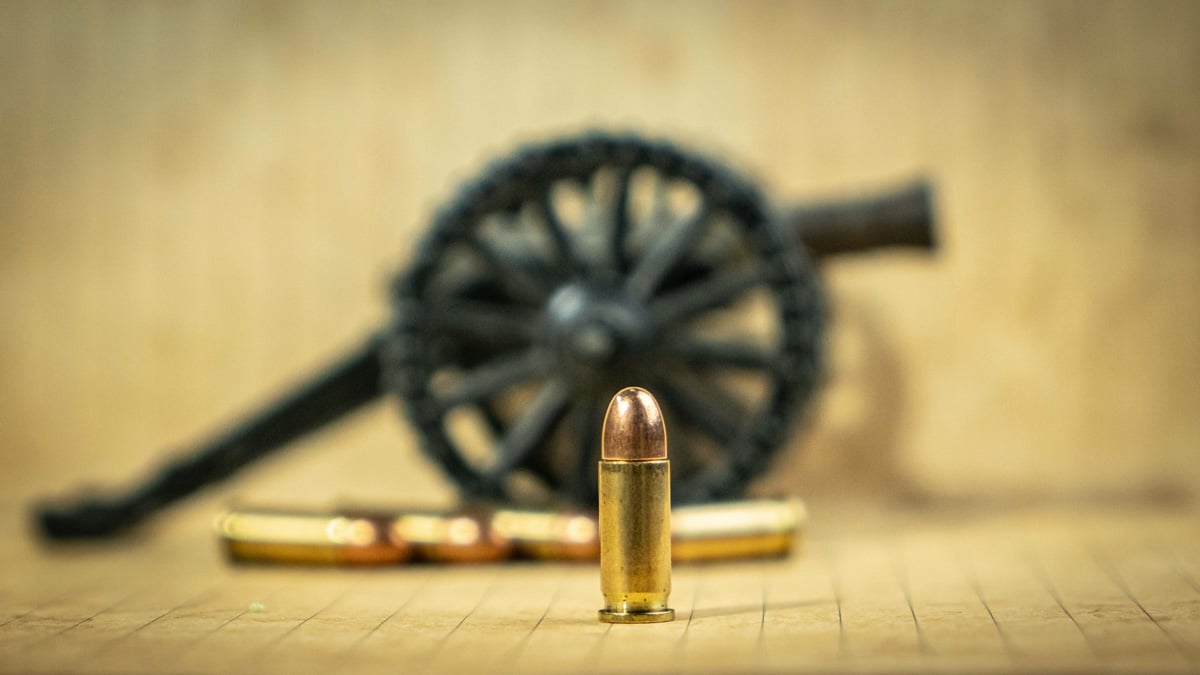
Here’s my short list of the pros and cons for the .25 ACP:
Pros:
- Very small round that makes for very small pistols
- Interesting history
- Fun to shoot
- Reliable centerfire cartridge
- Classic chambering for backup guns
- Lots of used options
- Increasingly collectible
Cons:
- Underpowered compared to modern alternatives
- Semi-rimmed design can cause “rim lock”
- Pricier than the comparable .22 LR
-
Increasingly rare chambering
Final Thoughts

It’s hard to argue that .25 ACP isn’t a very niche round these days. Few guns are manufactured for what was once an incredibly popular chambering. Still, the legacy of the .25 ACP has left us a wealth of pocket-sized firearms that are still in great working order and incredibly fun to collect and shoot.
Is it the most effective micro-caliber round for self-defense? I don’t think so, but it certainly can and has filled that role. As for myself – and I suspect many who still pocket carry classic guns like the Baby Browning – there’s an immeasurable value in the interesting, collectible nature of guns chambered for Browning’s tiny .25 ACP. Thankfully, the caliber is still in production and not very hard to find online.