Background
Time flies when you’re having fun. How can it already be over 20 years since the .17 HMR was launched? Hornady debuted the .17 Hornady Magnum Rimfire, or HMR for short, in 2002. The company not only saw a gap in the market for a smaller projectile, but also a marketing desire for something to push the range and performance of the .22 WMR.
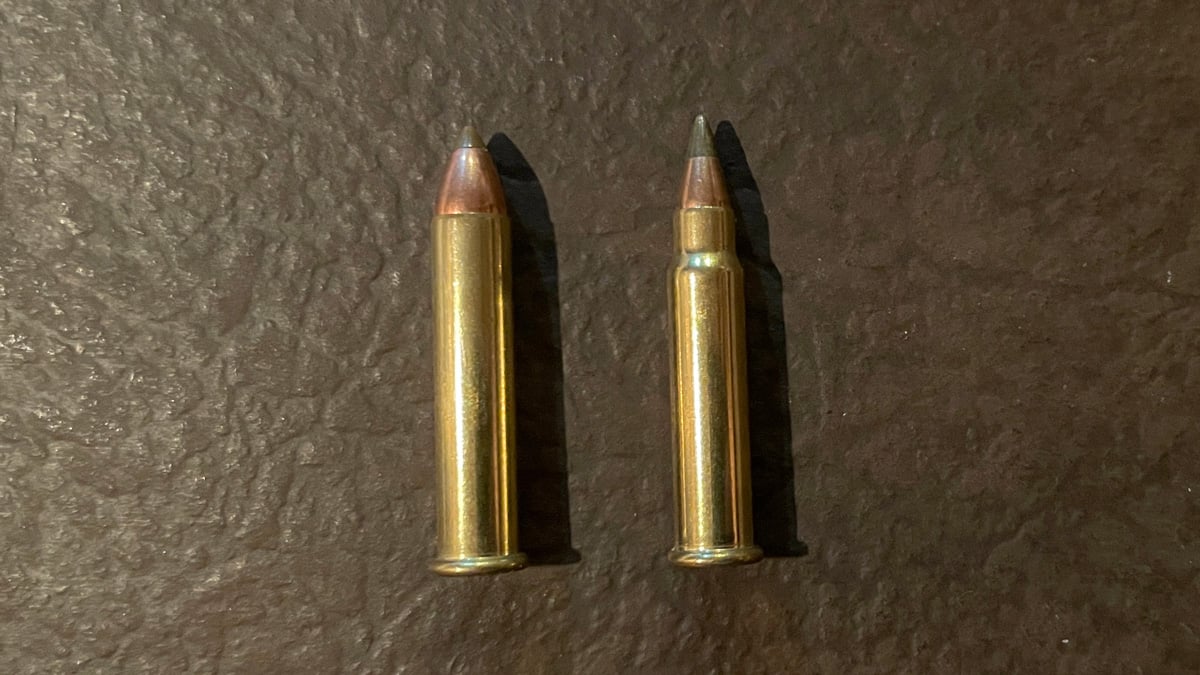
It is impossible to discuss the success of the .17 HMR without looking back at one of the most unfortunate, yet no less appreciated rounds: the 5mm Remington Rimfire Magnum. Chalk it up to poor marketing or firearms and ammo production, but although it was ahead of its time and incredibly capable, the “Five” never caught the mainstream popularity wave. (As an aside, it’s still one of our faves.)
Related: Rimfire Cartridge Basics

That old 1970s round leads in perfectly to the .17 HMR. Hornady doubtless took a good long look at the 5mm’s design and performance, then doubled down and modernized by not only replicating but increasing those velocities. The company also used the smaller and more readily available .17-caliber projectiles used much earlier on Remington’s even shorter-lived centerfire .17 Remington.
Metrics
The .17 HMR’s casing is essentially a necked-down .22 WMR casing with a 0.172-inch diameter for those miniscule pills. While the WMR is a straight-walled casing, the HMR is shouldered and slightly longer with a case length of 1.058 inches and overall length of 1.349 inches.

This is where the lightweight .17 shows its numbers. The .17 HMR uses the lightest projectiles of most any modern rimfire. The 17-grain loads remain by far the most common, though there are minor swings in either direction, including 15.5-grain and 20-grainers. There are polymer tips, JHPs, FMJs, etc. Common loads see muzzle velocities in the 2,500-fps range, with some even spicier.
Ammo
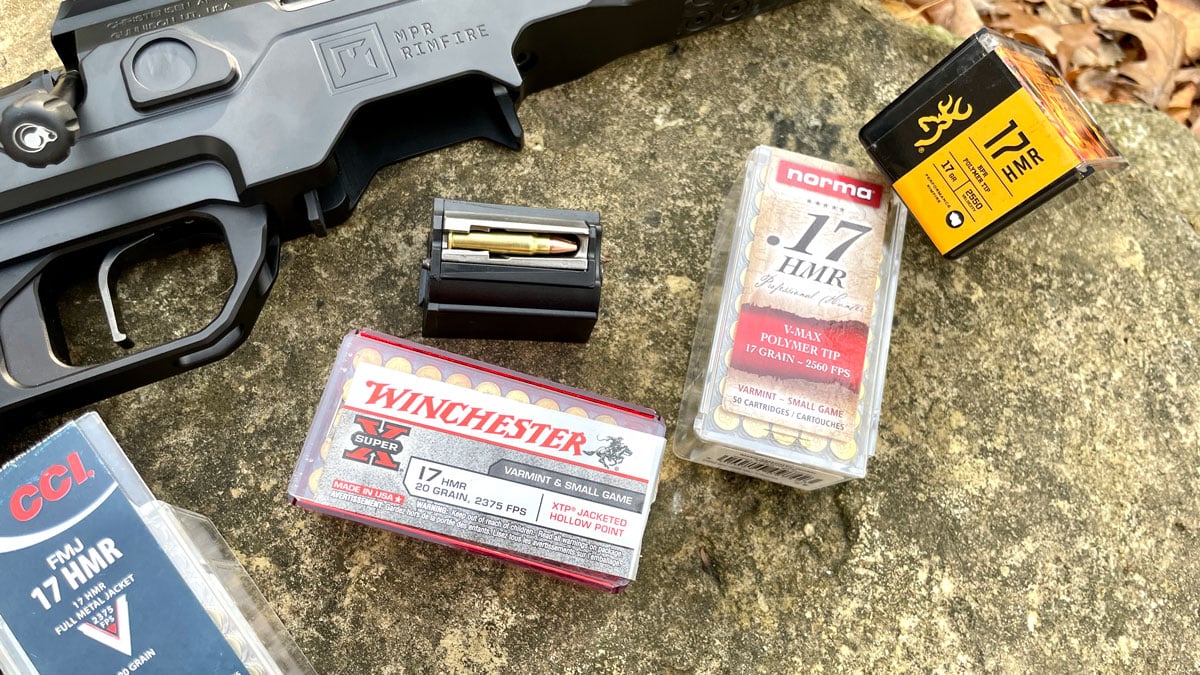
Speaking of ammunition, we’d be remiss not to mention one of the main reasons for the .17 HMR’s continued success. Though launched by ammo guru Hornady, it’s not the only manufacturer.
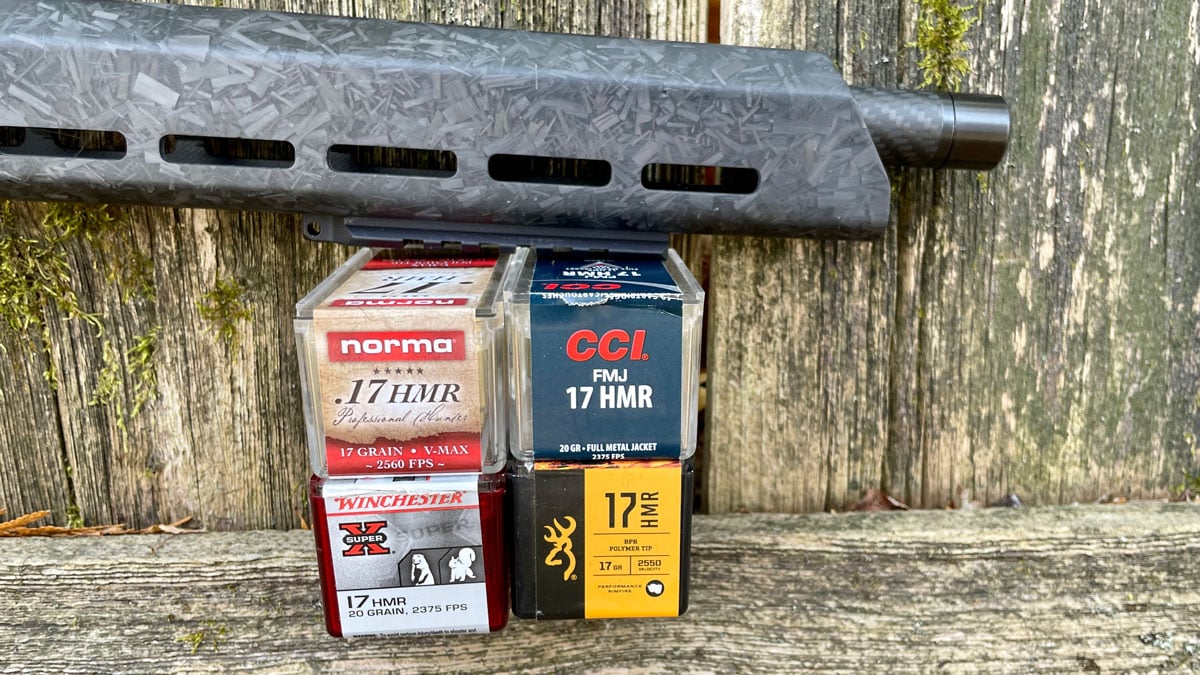
In fact, all the major players are at work here, including Federal, Remington, CCI, Browning, and Winchester. A few of our favorites for hunting everything from small game to varmints include Hornady Varmint Express 17-grain V-Max, CCI TNT 17-grain JHP, and Remington Premier Magnum Rimfire 17-grain Polymer Tip. CCI offers by far the most variations, closely followed by Hornady. One thing is certain: there’s hardly a gun shop or online retailer that doesn’t stock multiple flavors of HMR ammo.
Firearms
Just as most major ammunition manufacturers are on board, so are the gun builders. We’ve fired so many .17 HMR rifles that it’s hard to keep track. Low recoil paired with impressive performance keeps it a favorite on prairie dogs and even larger furbearers.
The most accurate to this day is Christensen Arms’ new MPR-R, but that precision comes at a cost. We’ve seen impressive shooting from guns like Henry’s Varmint Express, Ruger’s Precision Rimfire, and CZ’s 457 American. The expansive list of .17s spans prices well over a grand from brands like Volquartsen to sub-$300 budget numbers from the likes of Chiappa and Mossberg.
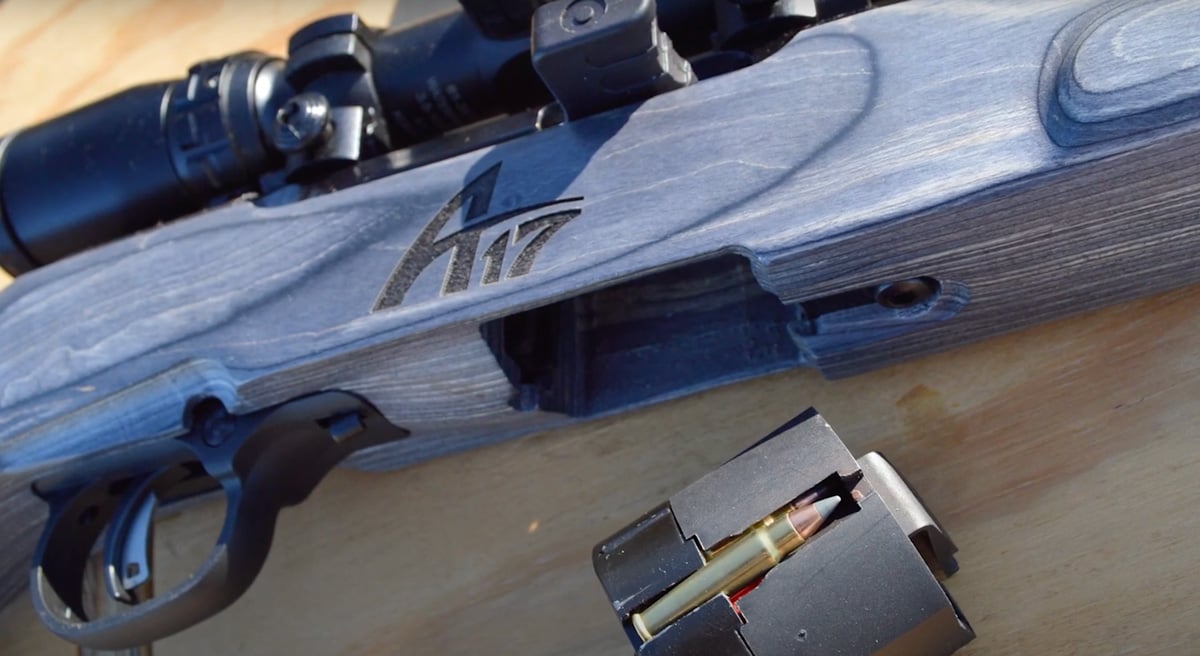
One of the most fun, yet less traditional .17 HMR rifles is the semi-automatic Savage A17. Bolt actions, single shots, and levers are plentiful; however, the .17 HMR long proved tricky for semi-auto builders. The .17 HMR generates higher pressure, making traditional blowback actions unsuccessful at best.
Savage worked out a solution, and several other repeaters have been proving themselves. That early A17 thumbhole laminate is not only a fast-cycling number, but an accurate one to boot. What’s more, the HMR has ventured beyond only long guns to find a home on several revolvers, including models from Ruger and Chiappa.
Uses
Rimfires seem born for the range. Recoil is low, ammunition is more accessible (and generally more affordable), and so are the firearms. It should come as no surprise that the .17 HMR is a dream on the range punching paper or blasting soda cans, but it really earns its keep on the hunt.

Yes, that tiny .17-caliber bullet can do the job on everything from the smallest vermin to some of the bigger furbearers. As with anything, proper practice and bullet selection is paramount, but the .17 HMR is more than up to the task.