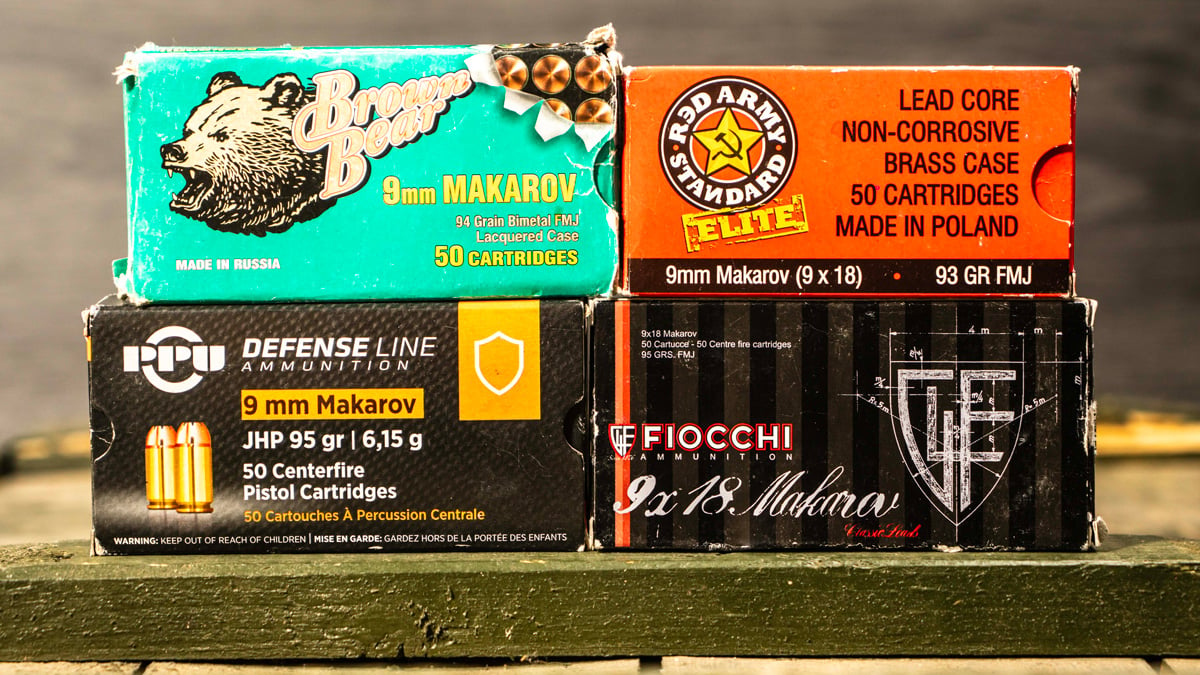
9x18mm Makarov History
Most guns are built around some popular or long-standing cartridge, but that wasn’t the case for the Russian Makarov PM pistol. Its 9x18mm cartridge (commonly called the 9mm Makarov, 9x18mm PM, or just 9mm Mak) predated any gun ready to fire it.
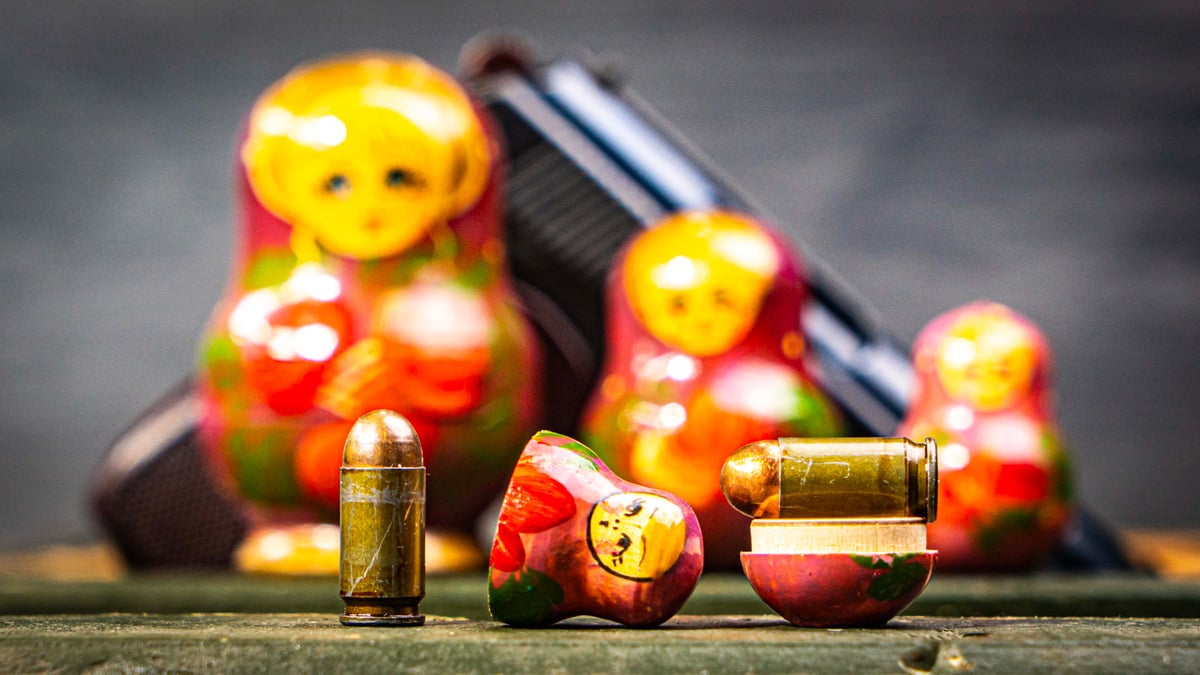
This squat little round was created in 1946 by the Moscow-born Boris Vladimirovich Semin – often written as B. V. Semin or Boris Syomin. As a Soviet engineer, Semin had his hands in the creation of the classic 7.62x39mm cartridge used in guns like the SKS and AK-style platforms.
At the time, the Russian military’s general-issue handgun was the TT-33 Tokarev, which sported the bottlenecked 7.62x25mm Tokarev round. The relatively long Tokarev cartridge offered a small but fast-flying bullet that could push velocities anywhere from 1,300 to 1,800 FPS.

Related: Tokarev Pistols – Browning’s Legacy in a Russian Gun
However, the TT-33 had several issues that included its large size, heavy weight, and easily bumped magazine ejection button. This spawned a hunt for a new handgun design and caliber better suited to self-defense roles.
Drafted around the German 9x18mm Ultra (1936), the 9x18mm Makarov offered a more potent option for smaller direct-blowback firearms like the famed Walther PP/PPK. That classic blowback design was proven and reliable, but it generally required weaker rounds like the .25 ACP, .32 ACP, and .380 ACP.
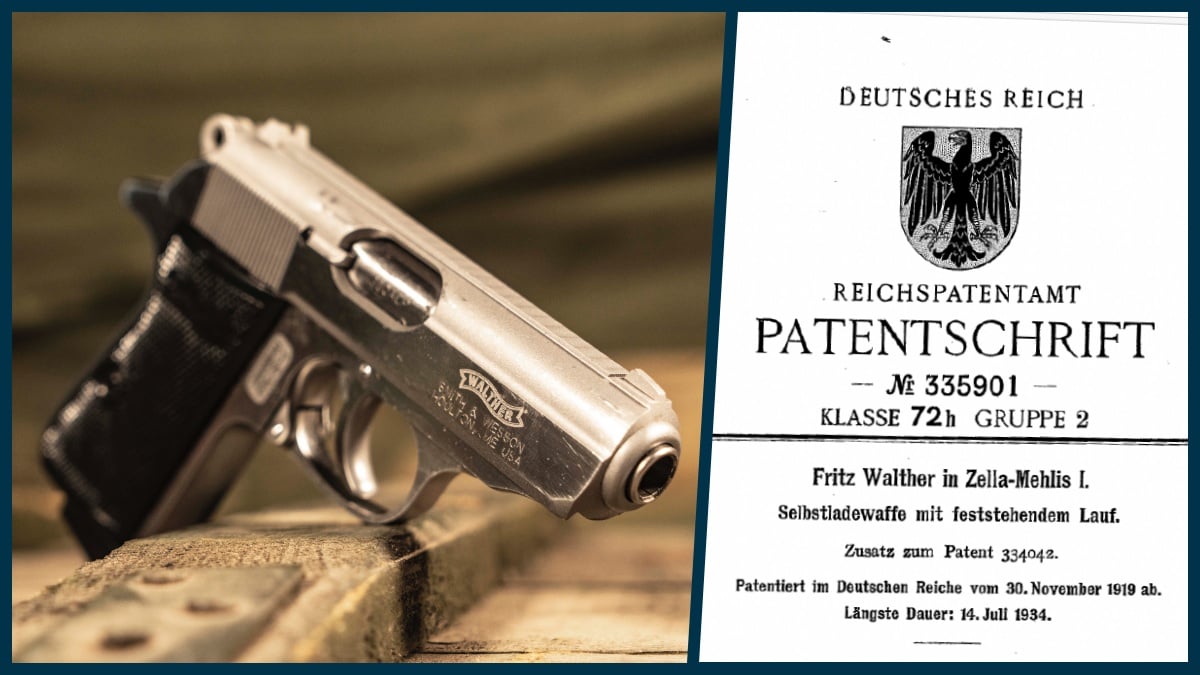
Related: Walther PPK Pistol History – Warfighter Turned Movie Star
That brings us to the Makarov PM pistol itself. Russia actually bumbled its way into WWII with a collection of respectably modern firearms, many of which ended up in the hands of the German military after it invaded Russia. Semi-auto rifles like the SVT-40 were even well ahead of most Western militaries. But the war revealed quite a few holes in its arsenal that included a light and handy sidearm.
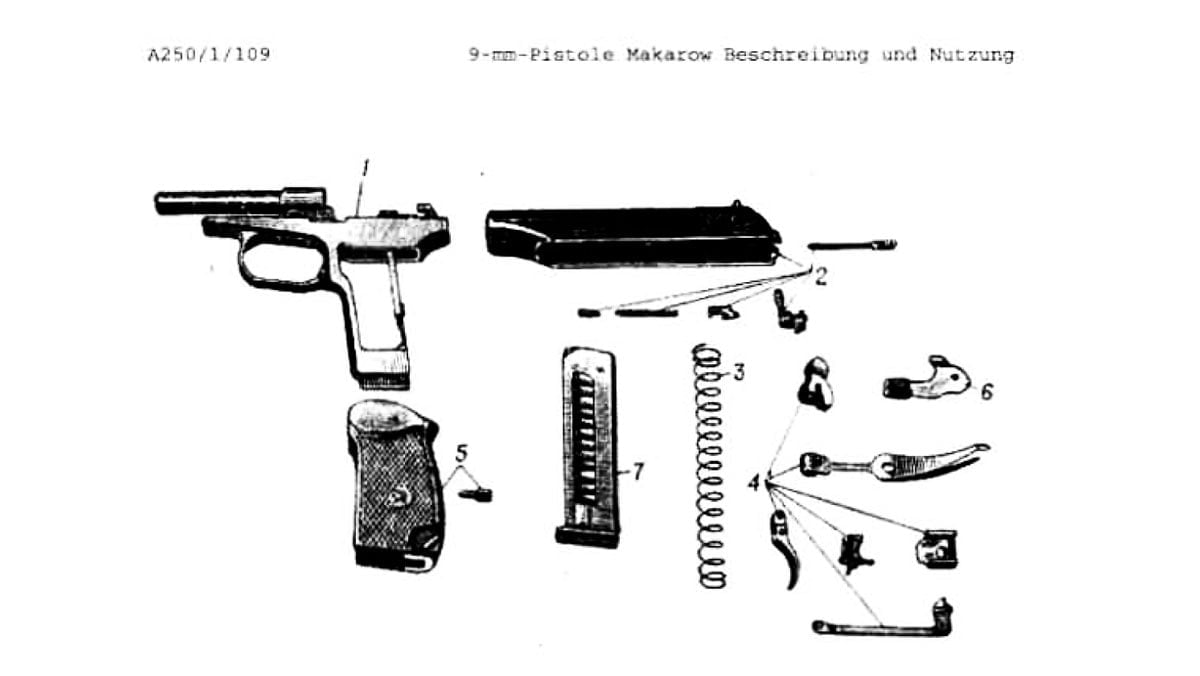
In 1947, Soviet firearm designer Nikolay Fyodorovich Makarov led a team that developed the Makarov PM pistol around Semin’s new cartridge. Unlike the older TT-33, the new Makarov PM offered a safety/decocker, a heel magazine release, a double-action/single-action trigger, a much shorter cartridge, and an accurate chrome-lined fixed barrel.

Related: Makarov PM – Russia's Warfighting 'Walther'
Its blowback design also made the pistol cheap and quick to manufacture. Every one of the gun’s mere 27 parts lent themselves to mass production. Combined with the new 9x18mm round, the Makarov offered a powerful yet compact sidearm for the Russian Army, which adopted the new handgun and caliber in 1951.
After that, Semin’s 9x18mm Makarov cartridge spread across the Soviet sphere of influence in a wide-ranging caliber standardization for pistols and submachine guns.
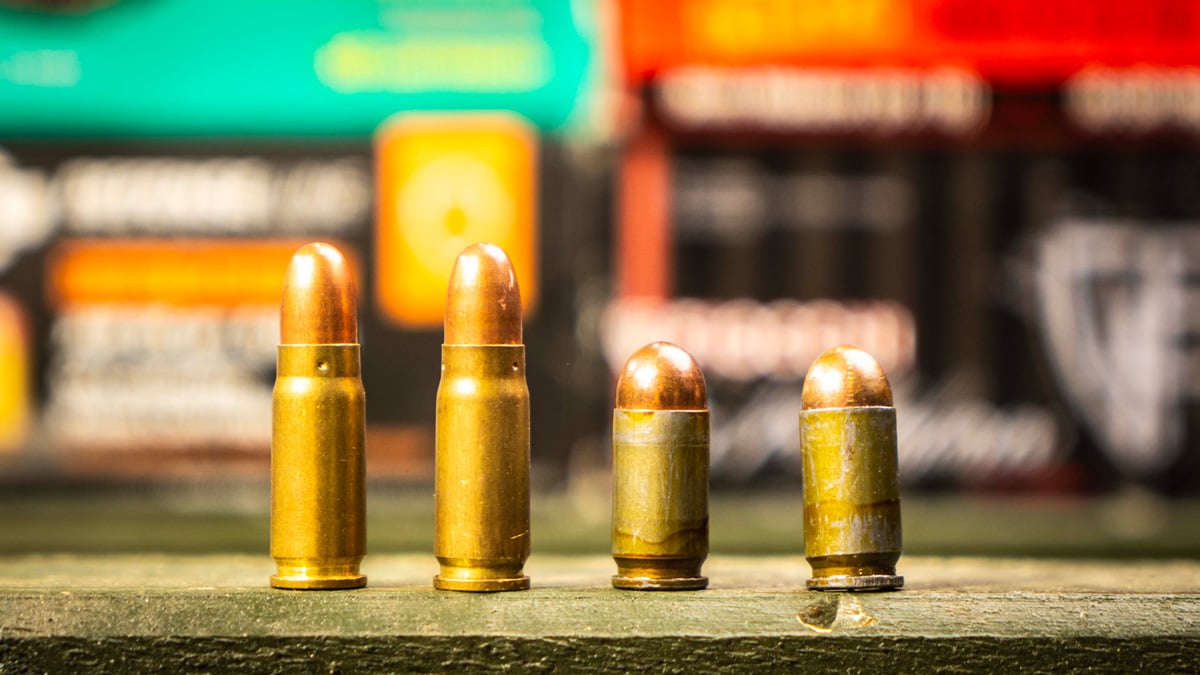
Handguns ranging from Poland’s P-64 and P-83 Wanad to Hungary’s PA-63, Czechoslovakia’s CZ 82, and a host of other pistols and sub guns emerged throughout the Cold War. As the NATO allies largely standardized their 9x19mm Luger into what is now 9mm NATO, so did the Soviet Union and its allies with their 9x18mm Makarov.
This streamlined ammunition logistics for the Eastern Bloc nations while also ensuring the standard Soviet calibers were determined by Russia. The original Makarov PM and its upgrades served as Russia’s standard sidearms until the introduction of the 9x19mm MP-443 Grach pistol in 2003.
Ballistics & Specs
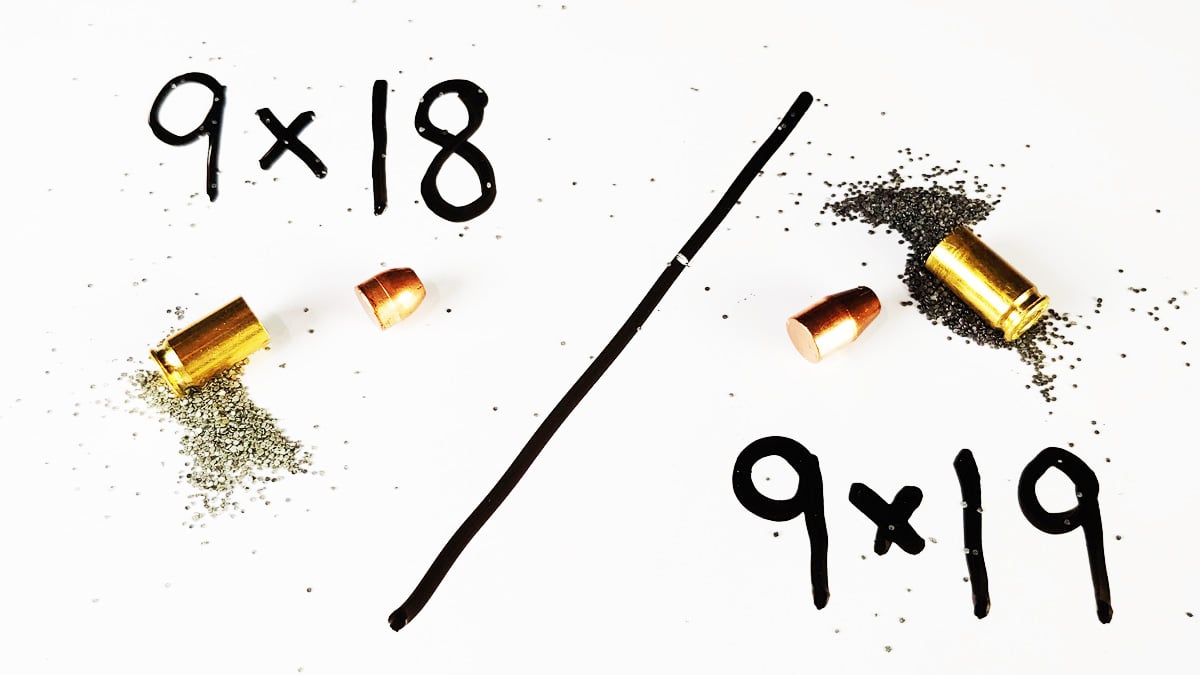
“Power” is a relative term when it comes to firearms. It really depends on the purpose of the gun in the first place.
The arrival of modern battle rifles like the AK-47, with its 30-round magazines, pushed handguns even further into the role of lightweight self-defense firearms. As such, the Soviet Union was attracted to simple blowback designs like the Makarov PM that were small, easy to use, and affordable.
Nevertheless, that blowback design had significant limitations when it came to pressure tolerances. Cartridges with higher pressures – like the 9mm Luger – generally require some form of mechanical locking, unlocking, or delaying process to manage the pressure and subsequent recoil. Simple blowback designs rely only on a recoil spring and the reciprocating mass of the slide.

Higher pressures require larger and heavier slides, which undercut the cost savings and compact size of the gun. So, you can look at the 9x18mm Makarov as a compromise. While the 9mm Luger offers a maximum average pressure of 35,000 psi (based on SAAMI standards), the 9mm Makarov case can manage a mere max of 24,100 psi.
You can compare that to the 21,500 psi offered by the common .380 ACP. I say all that just to illustrate that the 9x18mm Makarov offers a lot of “power” as far as direct-blowback handguns are concerned.
That pressure creates a boost in velocity and energy. Here’s a quick look at how the 95-grain .380 ACP, 95-grain 9x18mm Mak, and 124-grain 9x19mm Luger compare when it comes to velocity and energy:
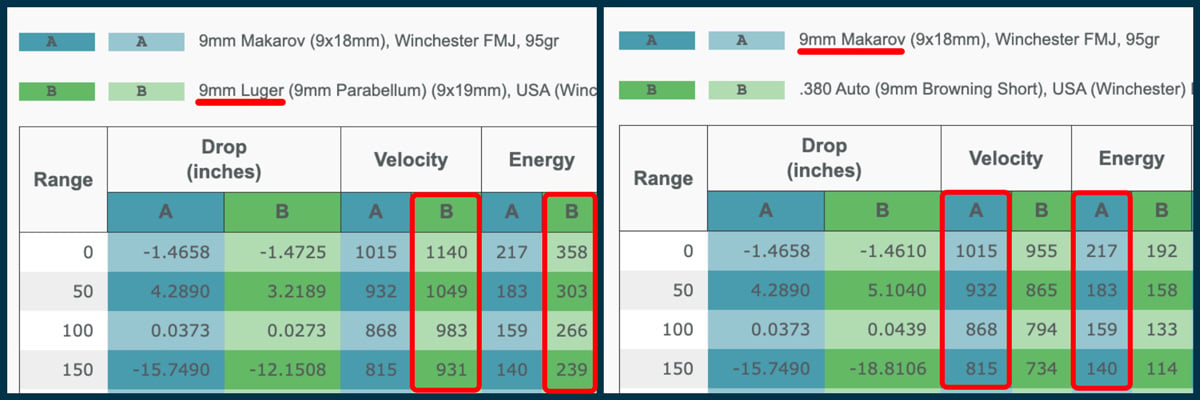
The 95-grain 9x18mm FMJ Makarov bullet offers a modest 6.3-percent improvement (60 fps) in muzzle velocity over the .380 ACP, but that translates to a 13-percent increase in foot-pounds of energy over the slower 95-grain FMJ .380 ACP bullet. At 50 yards, that improvement in velocity jumps to 7.8 percent for the 9x18mm bullet and provides 15.8 percent more foot-pounds of energy over .380 ACP.
That’s a sizable increase over the .380 ACP with even better downrange performance, but it’s a far cry from the numbers you’ll get with the 9x19mm Luger cartridge. The above 124-grain FMJ 9mm Luger bullet offers a muzzle velocity that is 12.3 percent higher than the 95-grain 9x18mm Makarov.

That 12.3-percent increase in velocity comes out to a whopping 65-percent increase in foot-pounds of energy because of the added bullet weight. At 50 yards, the 9mm Luger’s velocity is still 12.6 percent higher with 65.6 percent more foot-pounds of energy than the 9x18mm Makarov.
It’s worth remembering that in the first half of the 20th century, chamberings such as .380 ACP, .32 ACP, and even the diminutive .25 ACP were still relatively common offerings among European militaries and law enforcement.
Related: Browning’s .32 ACP – The Tiny Bullet That Changed History

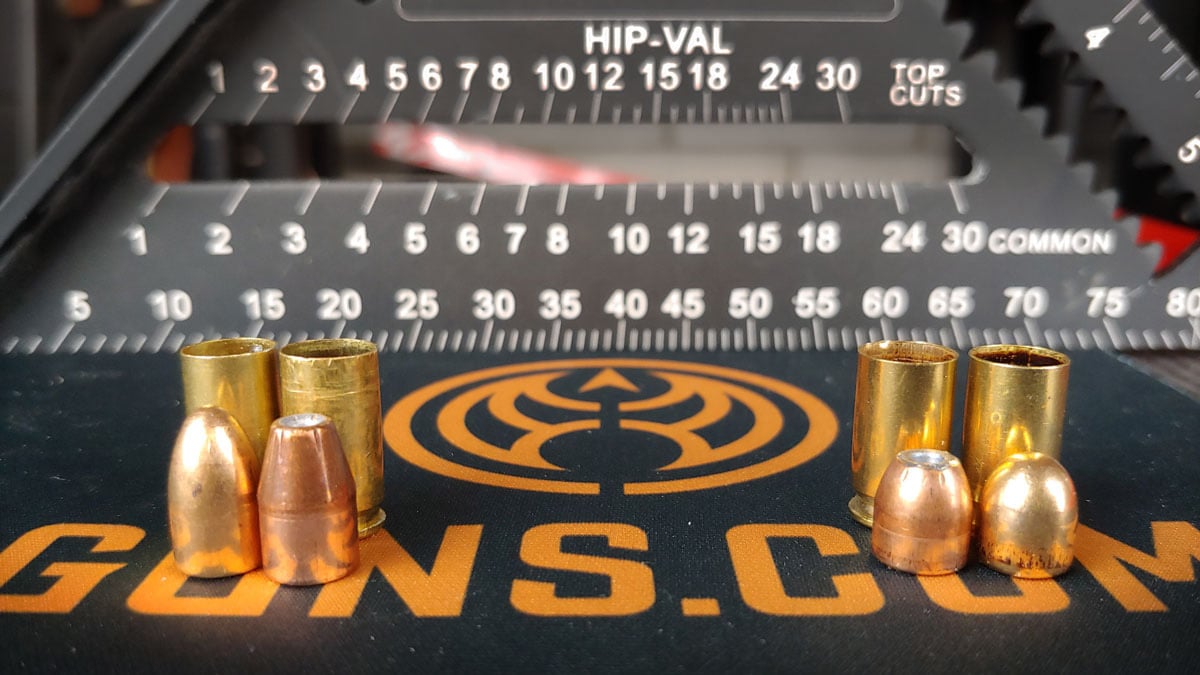
Another advantage of the 9x18mm Makarov cartridge was its stubby size. Your standard 9mm Luger round measures in at a normal max height of 1.169 inches. The 9x18mm Mak shrinks that to 0.984 inches.
This allows for a shorter action and narrower magazine well. Hence, guns chambered in 9x18mm Makarov are normally smaller than most contemporary service pistols chambered for 9mm Luger.
9x18mm Firearms
I’m an unabashed fan of collecting guns chambered for the peculiar 9x18mm Makarov cartridge. As an admirer of budget guns and military surplus, there are quite a few options still floating around at reasonable prices for discerning collectors.
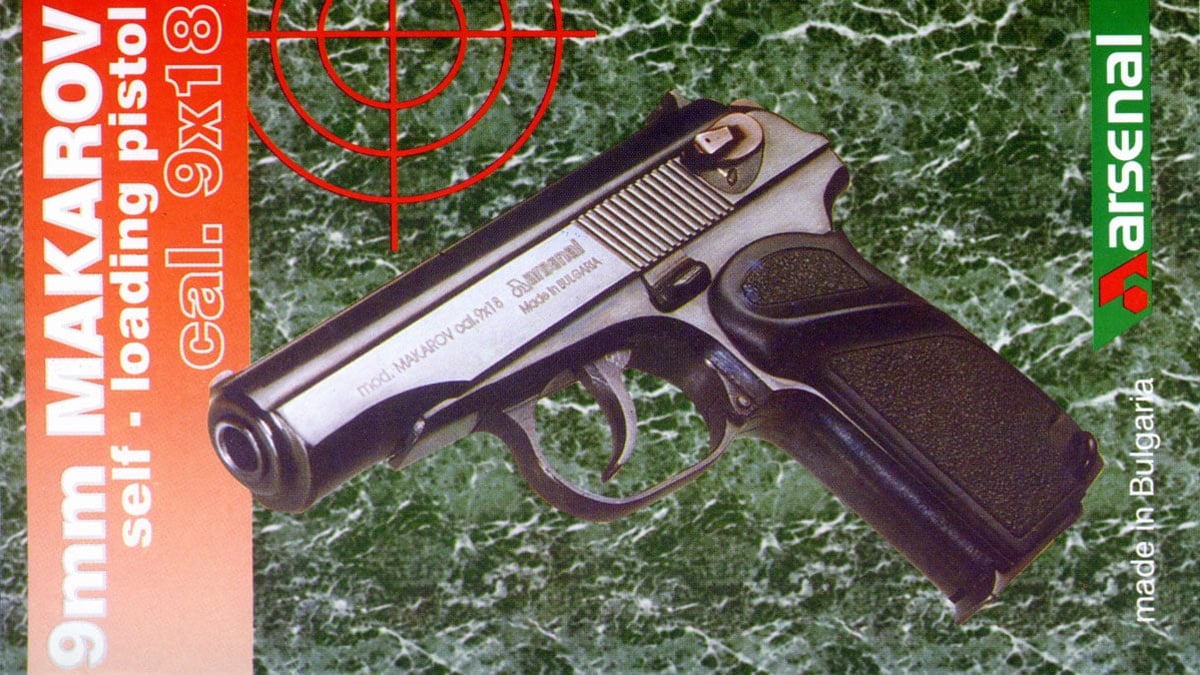
The original 8+1 double-action/single-action Russian Makarov PM had several direct clones used by East Germany, Bulgaria, and China. Minor upgrades occurred over the years, which included things like adjustable sights and adding ergonomic grips on some variants.

A modernized Russian Makarov PMM adopted in 1990 reworked the design to include a double-stack 12-round magazine and the ability to handle higher-pressure loads. Baikal offered a commercial variant of the Makarov PM for international sale starting in the 1990s. These are still in production, though current import/export restrictions on Russian arms apply.
Designed in the 1950s, Poland’s homegrown P-64 jammed the short cartridge into an even smaller handgun than the original Makarov PM. The single-stack P-64 resembles the modern SIG Sauer P365 in size but offers a capacity of just 6+1 rounds. The later Polish P-83 Wanad was designed in 1978 and bumped that to 8+1 with a larger frame.

Related: Vintage Concealed Carry – The Polish Radom P-64
The larger P-83 relied heavily on stamped metal parts, while the smaller P-64 is still hefty in the hand thanks to its use of machined parts. Even though the 9x18mm Makarov cartridge offers less power than the 9mm, I can attest to the fact that both the P-83 and P-64 are very easy to carry but snappy guns to shoot.

Hungary’s FEG PA-63 and shortened RK-59 broke the mold for Makarov designs in 1963 by incorporating an aluminum frame. Even though it’s larger than Poland’s P-64, the PA-63 still weighs 4 percent less with a larger 7+1 capacity. The PA-63 also boasts an ergonomic grip complete with a thumb shelf. That results in a surprisingly pleasant shooting experience, and felt recoil is notably less with the PA-63 than with the smaller P-64.
Then there’s the double-stack Czech CZ 82. This 12+1 pistol includes a lot of features that will be familiar to American shooters. That includes a hammer-fired design with a thumb safety similar to the 1911 but a single-action/double-action trigger for second-strike capabilities.

Related: CZ 82 Review – Military Surplus Concealed Carry Pistol
The CZ 82 doesn’t feature a decocker like most mil-surp guns in the Makarov family. Additionally, it has a button magazine release, unlike the Makarov PM and P-64.
Then there’s the truly bizarre R-92 revolver with a 9x18mm Makarov cylinder and an army of submachine guns. These included the Polish PM-63 RAK, Czech vz. 65/82 Škorpion, and Russian PP-90/91/93. There was even the improvised Borz guns used by Chechen fighters in the 1990s and chambered for the common 9mm Mak.
Pros & Cons
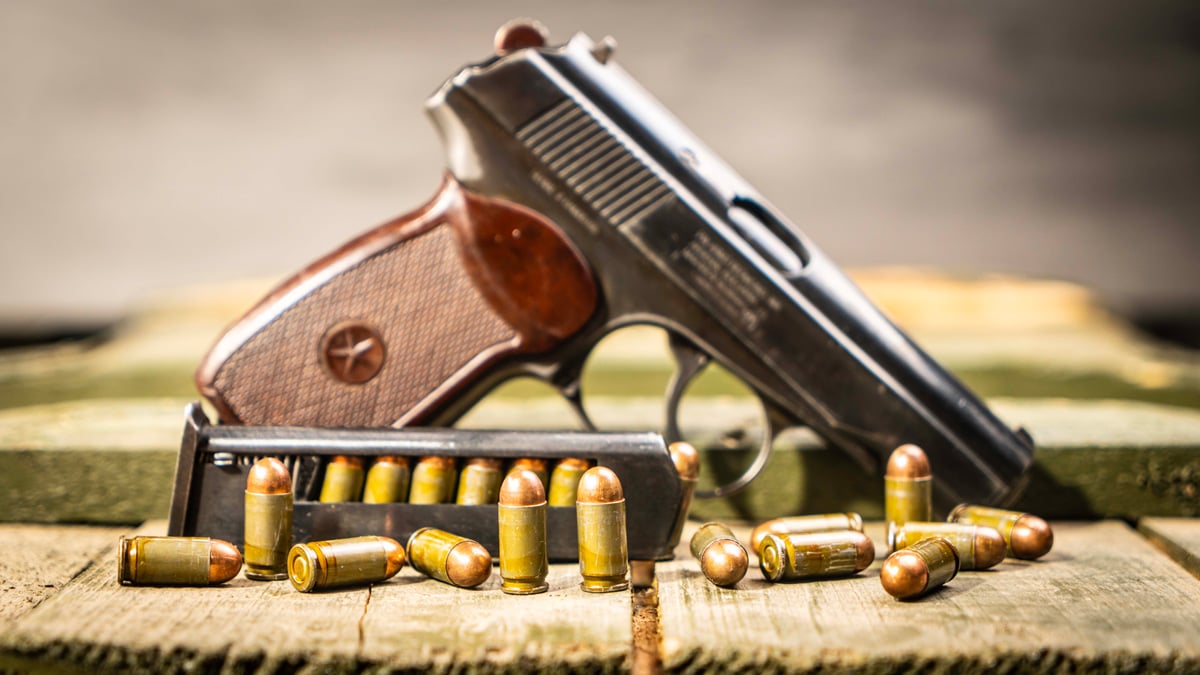
While it’s hardly a dead cartridge, I feel confident saying the 9x18mm Makarov is a round heading into the sunset at this point. Thankfully, there are tons of surplus guns floating around and enough demand to keep ammunition and accessories in production.
Here are my top five pros and cons for the 9x18mm Makarov cartridge and guns chambered for it:
Pros:
- Interesting history
- More powerful than .380 ACP
- Affordable surplus guns for collecting
- Plenty of accessories and ammo
- Still effective for concealed carry
Cons:
- Very few new options
- Ammo is less potent than 9mm Luger
- 9x18mm ammo is less common
- Most surplus guns have low capacities
-
9x18mm pistols tend to be heavier
Final Thoughts

For many people, the appeal of the 9x18mm Makarov cartridge and the guns chambered for it is pure history. The Makarov family of firearms offers a budget-friendly way to get into collecting Cold War guns.
Still, there are a lot of folks who carry these handguns for self-defense even today. Soviet-era surplus guns are plentiful, and they were once extremely affordable. Prices have gone up, sure, but a well-built military-surplus pistol chambered for 9x18mm Makarov still offers a lot of robust value and interesting history at a price that collectors like me can still enjoy.
The Makarov round and its family of firearms are a great blend of history and functionality.