HISTORY
When the Civil War ended in 1865, it opened the Western United States to exploration and settlement. Oliver Winchester was a firearm visionary and knew muzzleloading rifles were inadequate for protection and taking game on the trek West. His 1860 Henry repeating rifle saw limited success during the war but was limited by weak rimfire ammunition.

Public Domain, via Wikimedia Commons)
In 1873, Winchester Repeating Arms perfected the lever-action rifle. It departed from the old brass or bronze frame receivers and instead used steel with removable plates for cleaning and servicing. The new ammunition loading gate allowed topping off the magazine at any time. It was also the first Winchester rifle to use powerful brass-cased centerfire ammunition.
Related: A Primer on the Gun that Won the West – Winchester 1873
Imagine crossing the country with the first successful repeating saddle carbine at a time when the U.S. Army was still using the single-shot Springfield Trapdoor rifle. The 73 Winchester could have been called the AR-15 of its time!
MY IMPRESSIONS
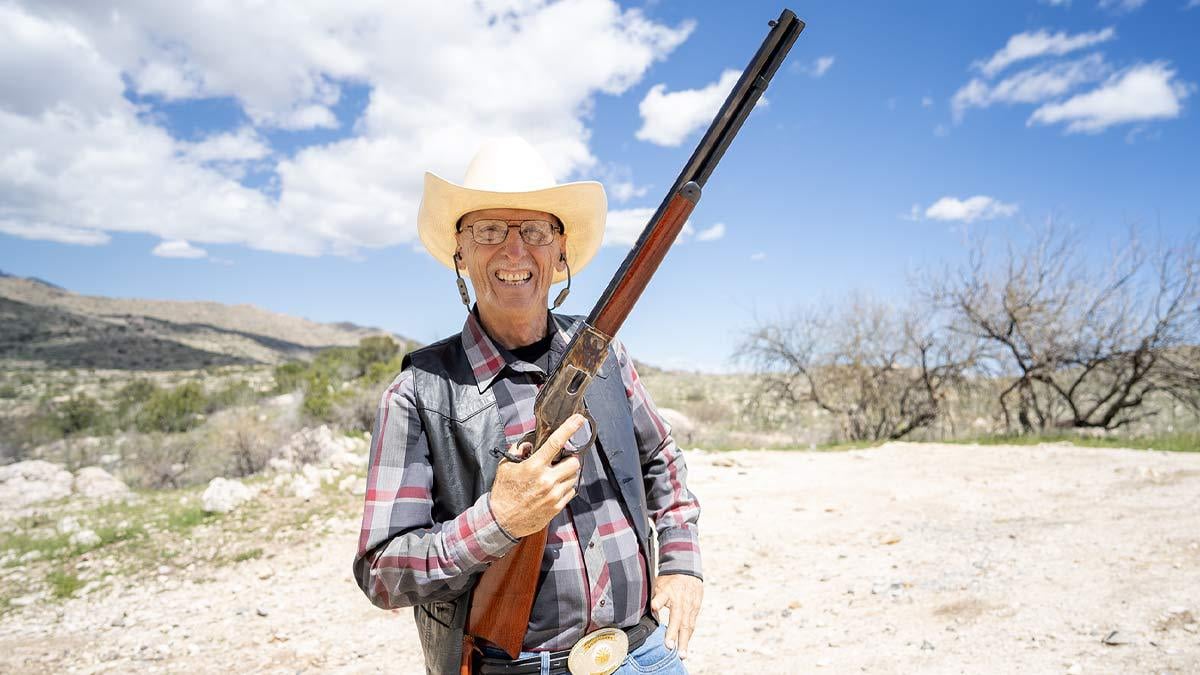
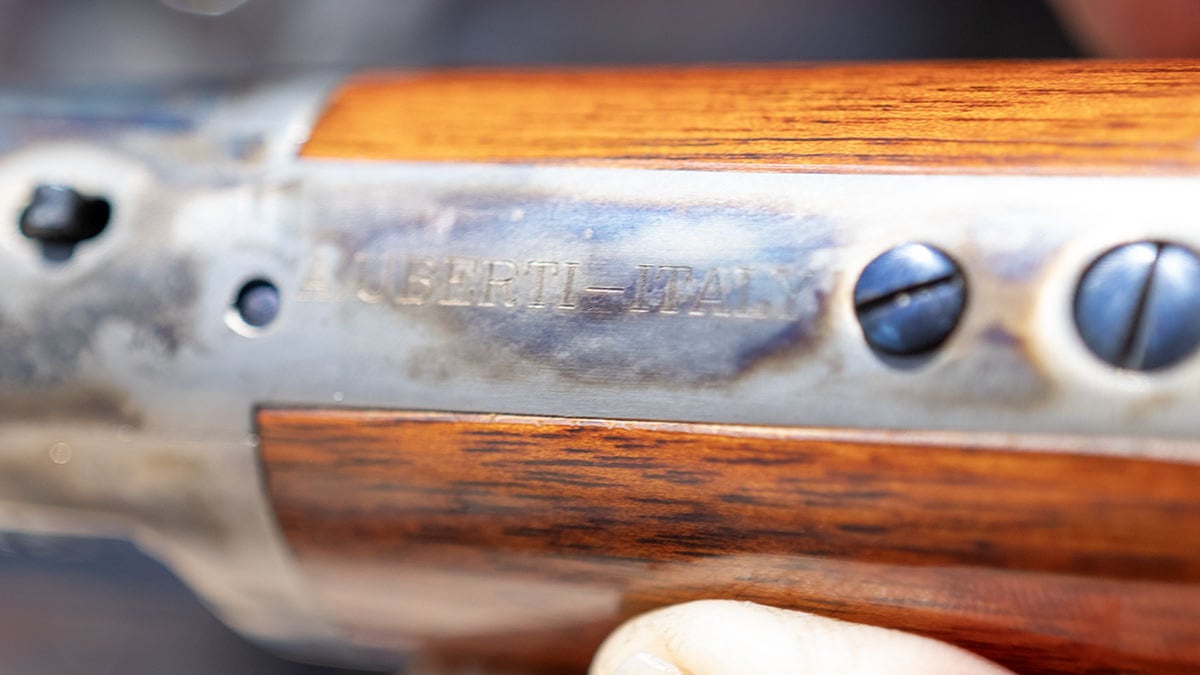
Made by Uberti of Italy and imported by Cimarron Arms, this beautiful Saddle Carbine balances and points instinctively. The short octagon barrel keeps the center of gravity near its center of length, making the rifle seem lighter than it is.
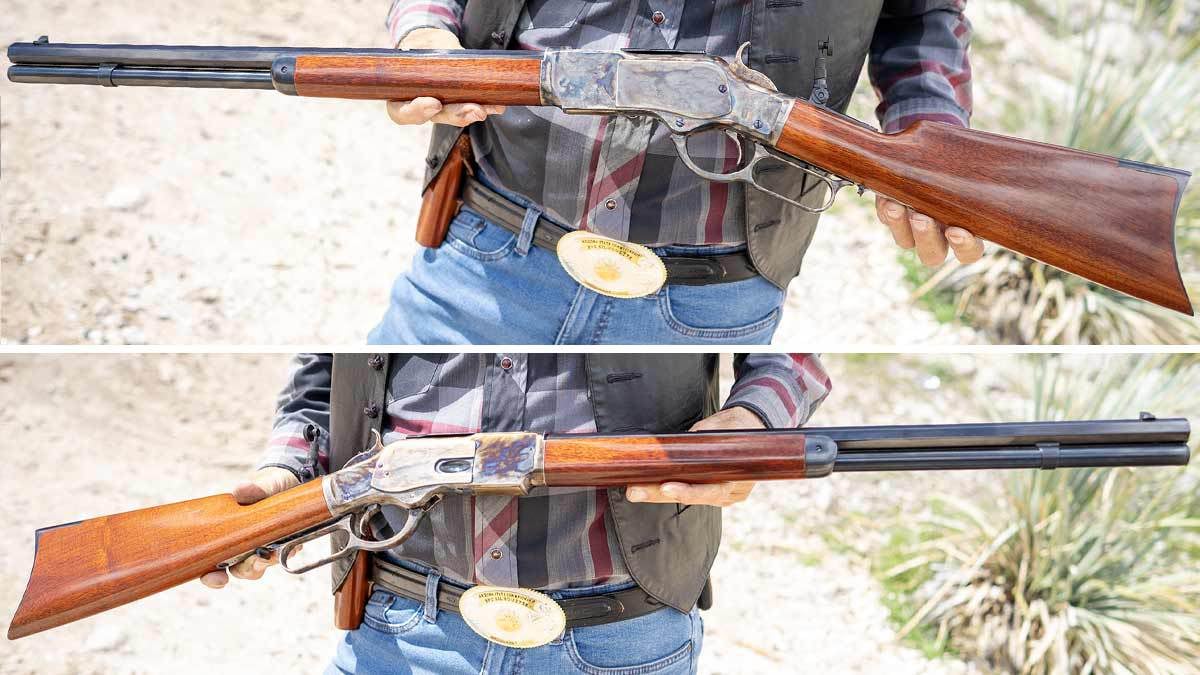
The polished red walnut stock and forend are attractive, slim, and functional. The barrel aligns with my eye naturally as if it were a well-fitting shotgun. I can point and shoot this gun at close range accurately.
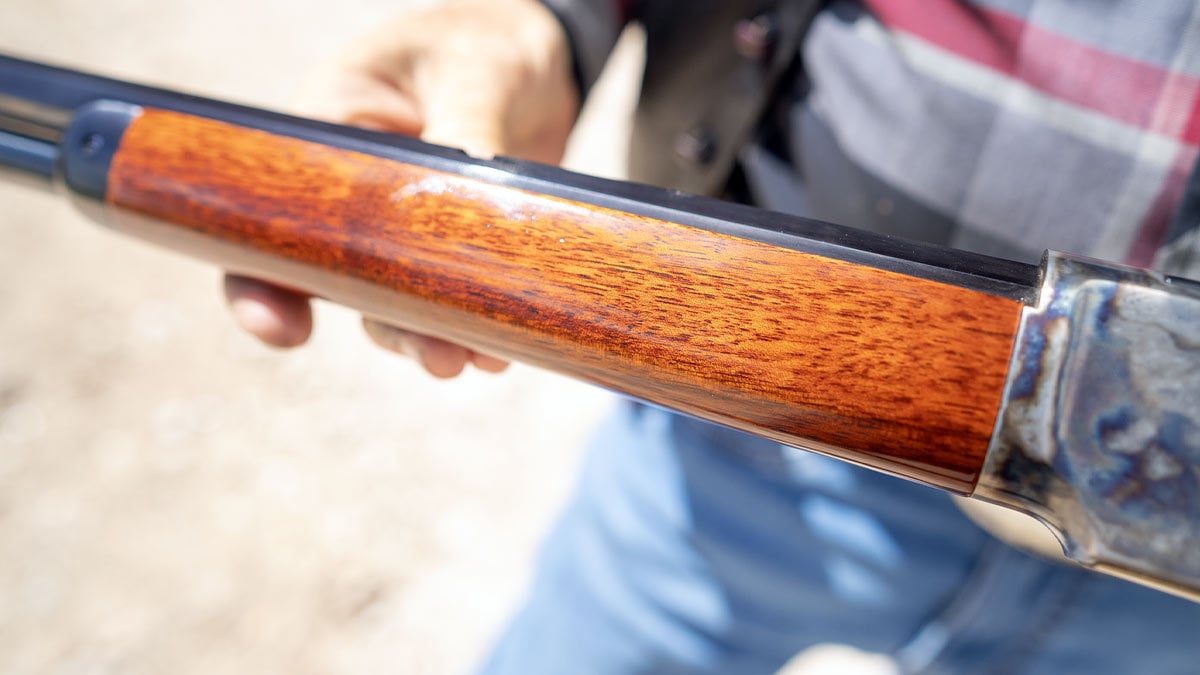
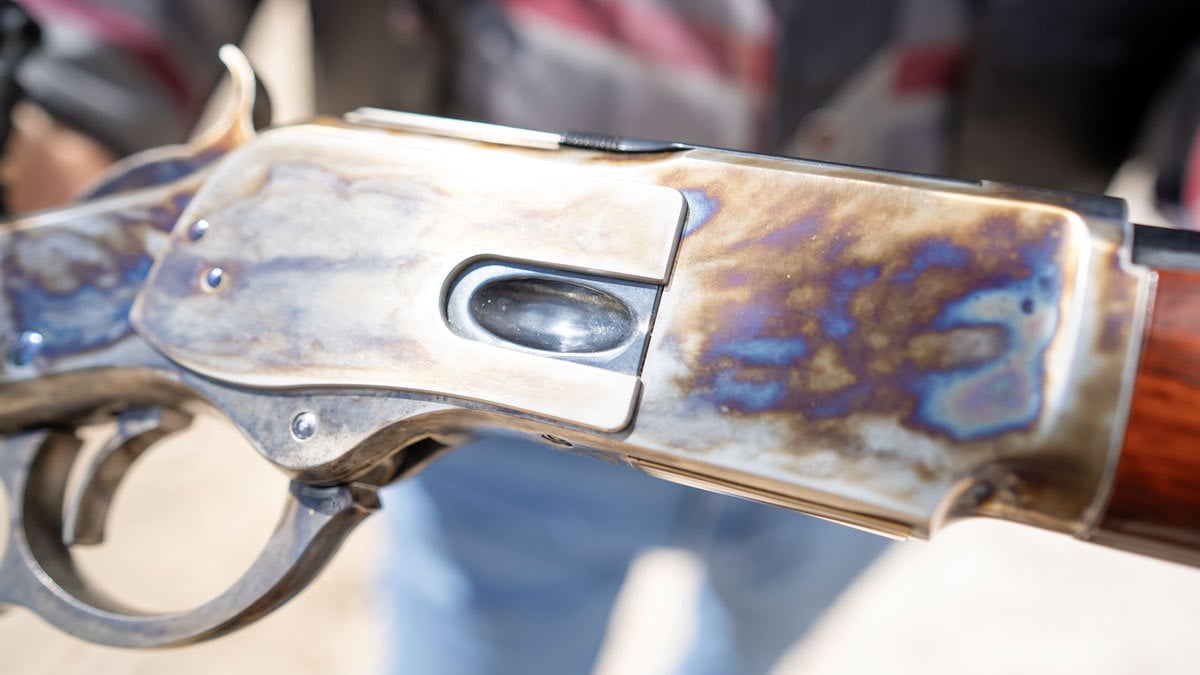
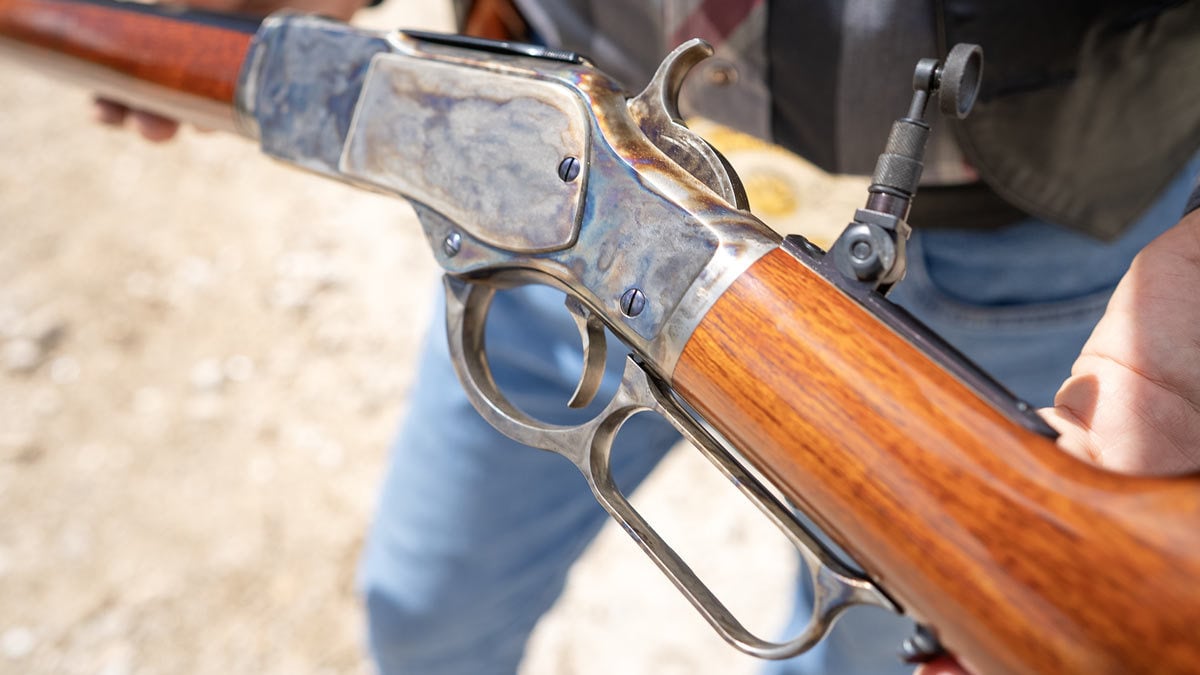
I love the look of this carbine! The color-case-hardened receiver glows with mixed hues of black, blue, and gray. This finish is an old-school means of protecting the metal from damage.
A Smooth Operator
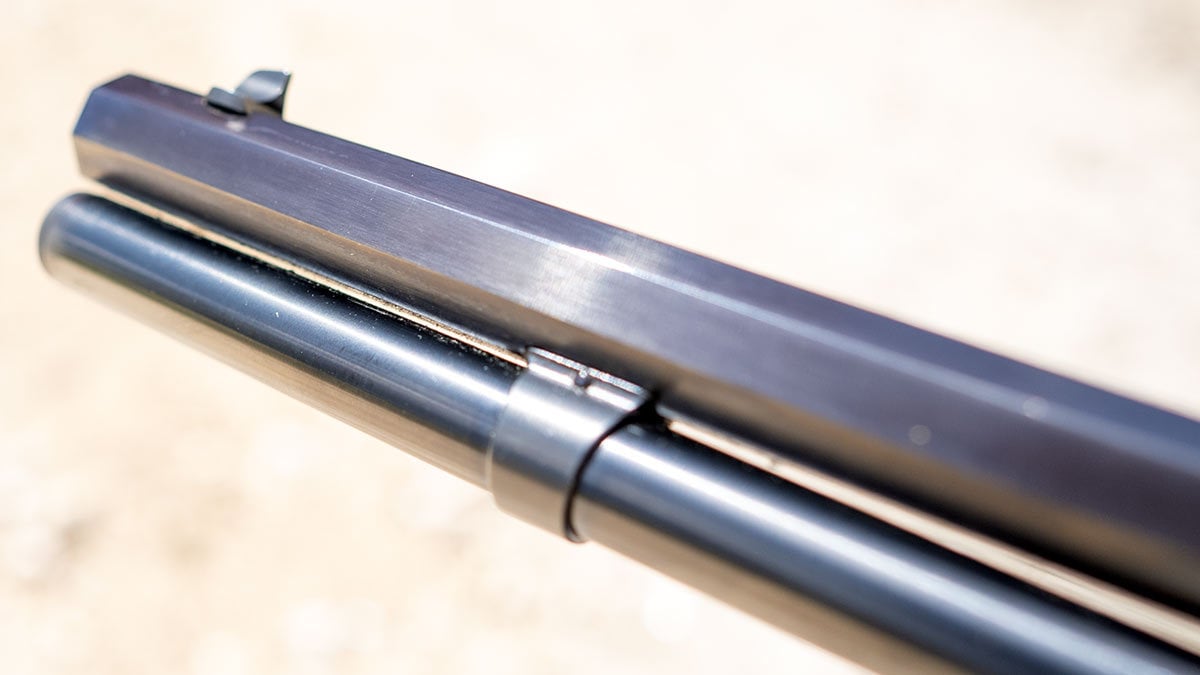
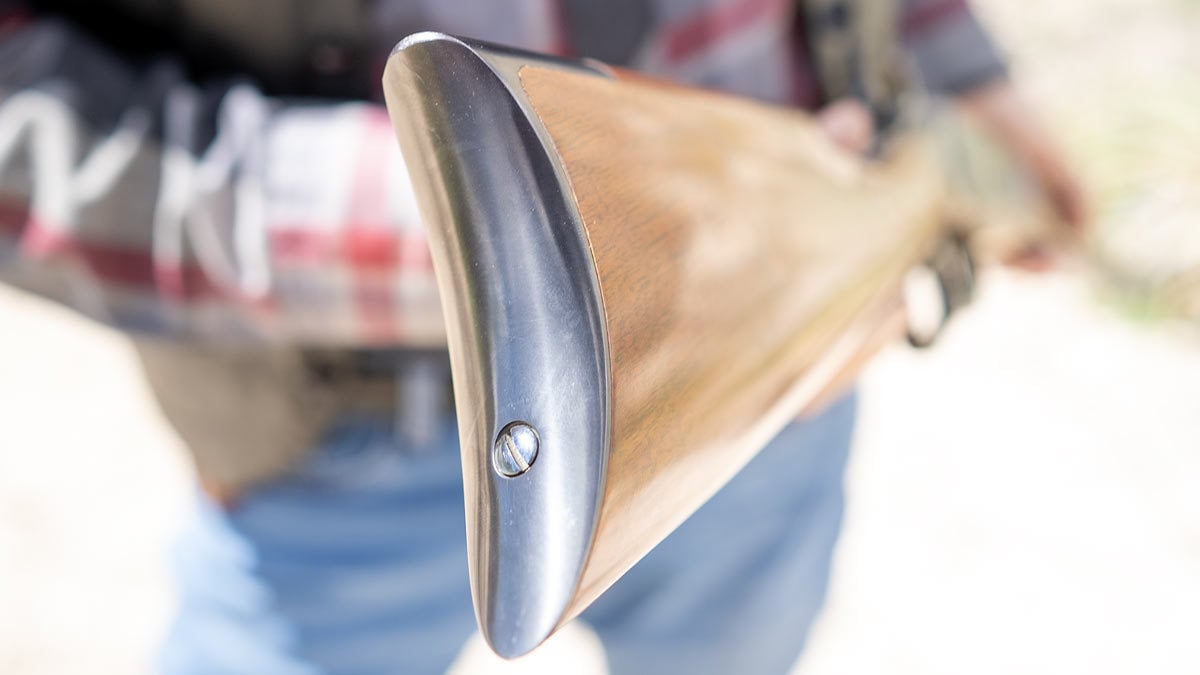
The straight grip stock melds into my hand as I feel for the trigger within the lever loop. The crescent-shaped steel buttplate has a retro look yet is most functional when shooting off-hand. Check out that octagon barrel. The deep blue color looks great, and its weight adds accuracy in aiming.
Smooth does not fully describe this action. It functions as if it were slick and wet inside. Moving the lever is deceptively simple yet hides complex mechanical functions inside the receiver. Linkages move in unison to extract a round from the magazine, lift it in line with the breech, ram it home with the bolt, and cock the hammer all in one fluid cycle of the lever.

All Uberti-made rifles that I have examined have this in common. They are well-made copies of the old classic design. I can envision this carbine as a handy truck gun, a home defense rifle, or a cowboy action competition gun. It might be suitable for pistol-caliber silhouette rifle matches as well.
Related Review: Uberti 1873 – Silhouette Shooter's Dream Gun
AMMUNITION
The 73 Winchester could not have won the West without a new type of ammo. The .44 Winchester Center Fire, or simply .44-40, took ammo to a new level. The brass cartridge case used a centerfire primer and held 40 grains of black powder, more than other pistol cartridges.

It pushes a 200-grain lead flat-nosed bullet faster than the slow Henry .44 rimfire round that it replaced. Colt firearms was so impressed with this round that the famous 73 Colt Peacemaker was chambered in .44-40. It was a perfect match for the Winchester rifle.
My ammo used for testing was loaded by national champion Chip Mate. Chip was part of the winning U.S. muzzleloader rifle team that traveled to Hungary last year. He is also a past Arizona State Champion in lever-action silhouette rifle, so he knows a thing or two about loading black powder.
His load is 34 grains of 1 ½ Fg Swiss brand black powder moving a 200-grain RCBS lead cast bullet. This slightly tapered cartridge can move the bullet to over 1,300 feet per second. That is a recipe for impressive stopping power and accuracy for a repeating rifle in its time.
THE SPECS
- Weight: 7 pounds, 8 ounces
- Overall Length: 39 inches
- Length of Pull: 13 inches
- Trigger: 4 pounds
- Barrel: 19 inches, full octagon
- Receiver: Color-case-hardened steel
- Stocks: Walnut
- Magazine: Full-length tubular 12-round capacity
- Sights: Front post, tang-mounted Lyman No.2 Peep (customized)
-
Caliber: .44-40 (.44 Winchester Center Fire)
SHOOT ‘EM UP!
My test range in Area 51 is an appropriate backdrop for the Winchester 73. No doubt there were many lawmen, desperados, and settlers through here 150 years ago. Holding this saddle carbine here feels natural, almost as it has been here before.
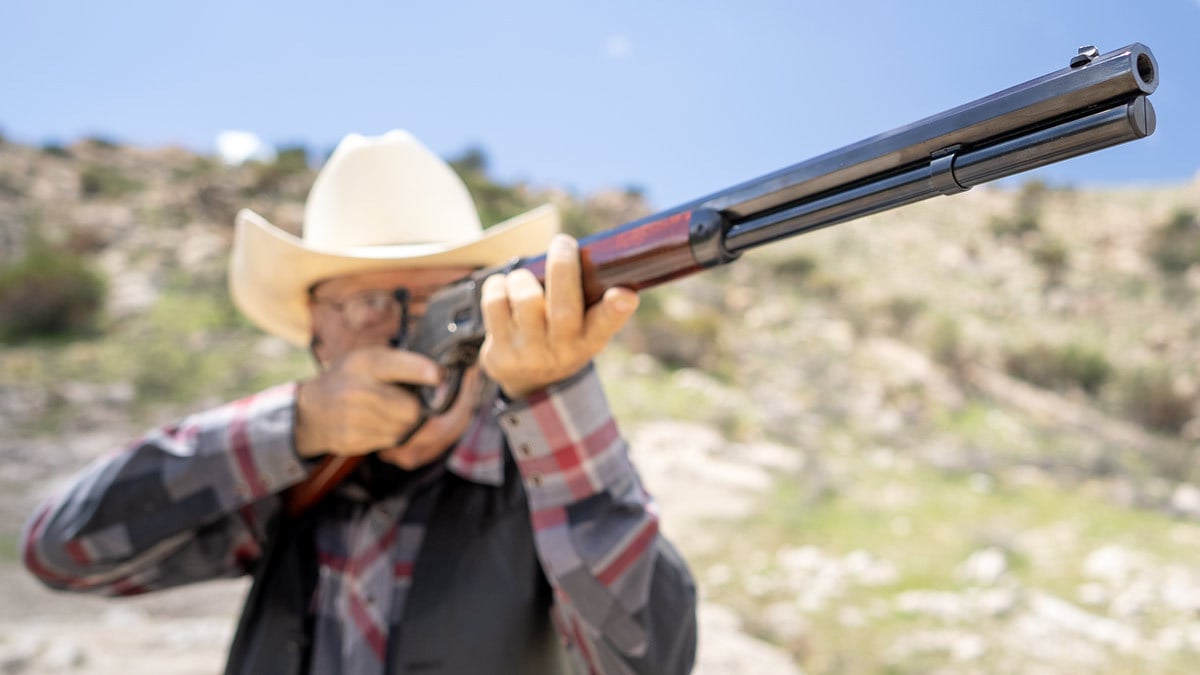
It is easy to load the 12-round magazine from the loading port. One round forces the next one into place. Cocking the lever raises the first cartridge into the chamber from the magazine, and the rifle is ready to fire. Notice the dust cover automatically retracts when the gun is cocked.
A disconnector keeps the action safe until the lever is closed. The Lyman Number 2 tang-mounted peep sight narrows the sight picture to aid in long-range accuracy. I like that.

Felt recoil is noticeable but not punishing. What is noticeable is the great cloud of white smoke that blasts out when fired! It covers my target for a moment, making it difficult to see my hit. Notice how quickly the heavy steel swinger target moves when hit by the lead slug. That is amazing firepower for an old gun design.
Alien root beer jugs beware: the 73 Winchester is here! The 2-liter plastic bottles explode as if hit by hollow-pointed jacketed bullets. It is hard to believe that lead slugs can have this much explosive power! Even when I engage the targets at over 50 yards, the jugs explode violently.
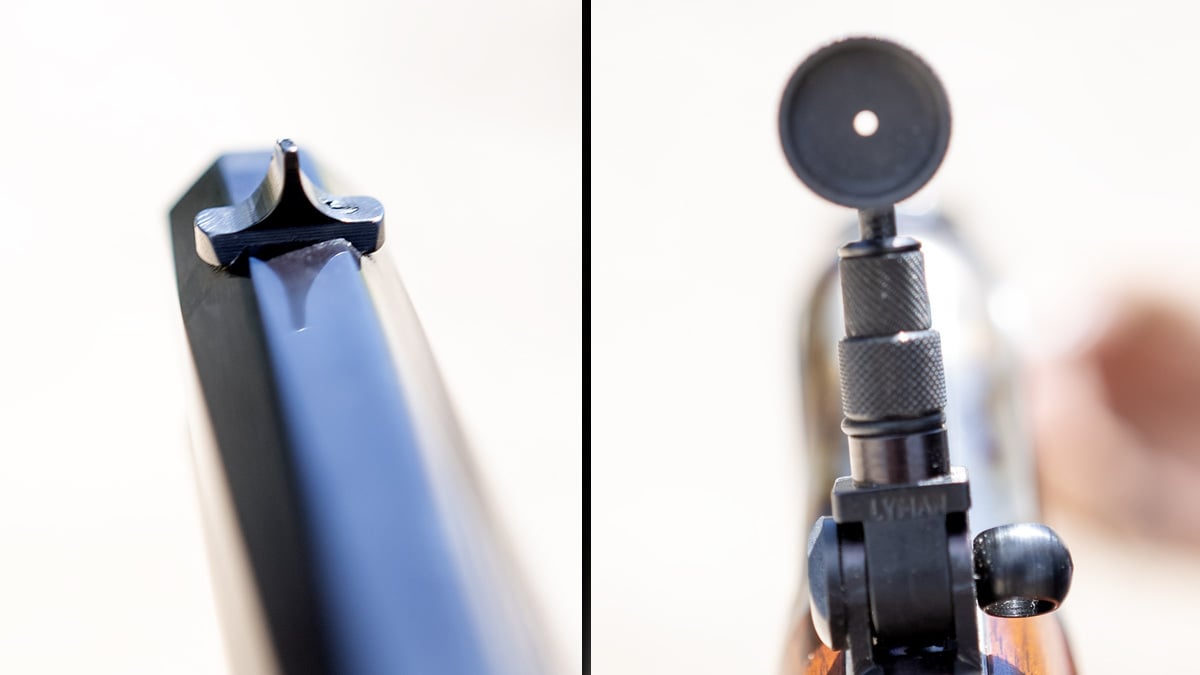
Although the standard carbine comes with mid-barrel buckhorn sights, I am grateful that they have been replaced by the Lyman Number 2 tang sight. It is very accurate at longer distances and correct for this carbine. This gun was meant to be fired off-hand. It is capable of quick fire at 10 yards and aimed slow fire out to 100 yards. That is versatility that I appreciate.
PROS & CONS
Pros:
- High quality, well-made
- Well-balanced
- Fast-firing slick action
- Beautiful color-case-hardened receiver
- Gorgeous wood
- Loading gate easy to load and top off
- Dust cover
- Disconnector activated by lever
-
Available in .44 WCP, .45 Colt, and .357 Magnum chamberings
Cons:
- Limited to pistol caliber cartridges only
-
Pricey, but you get what you pay for!
Conclusion
What do the Texas Rangers, Pat Garrett, Billy the Kid, William Cody, Butch Cassidy, Belle Star, Annie Oakley, and I all have in common? We all own and love the Winchester 73.
No other rifle has lasted so long and been so popular. With the shooting sports of cowboy action and silhouette lever gun gaining more shooters every day, the Winchester 73 will go on for another 100 years. Grab your 73 Winchester soon – you will not be sorry!