CZ 52 History
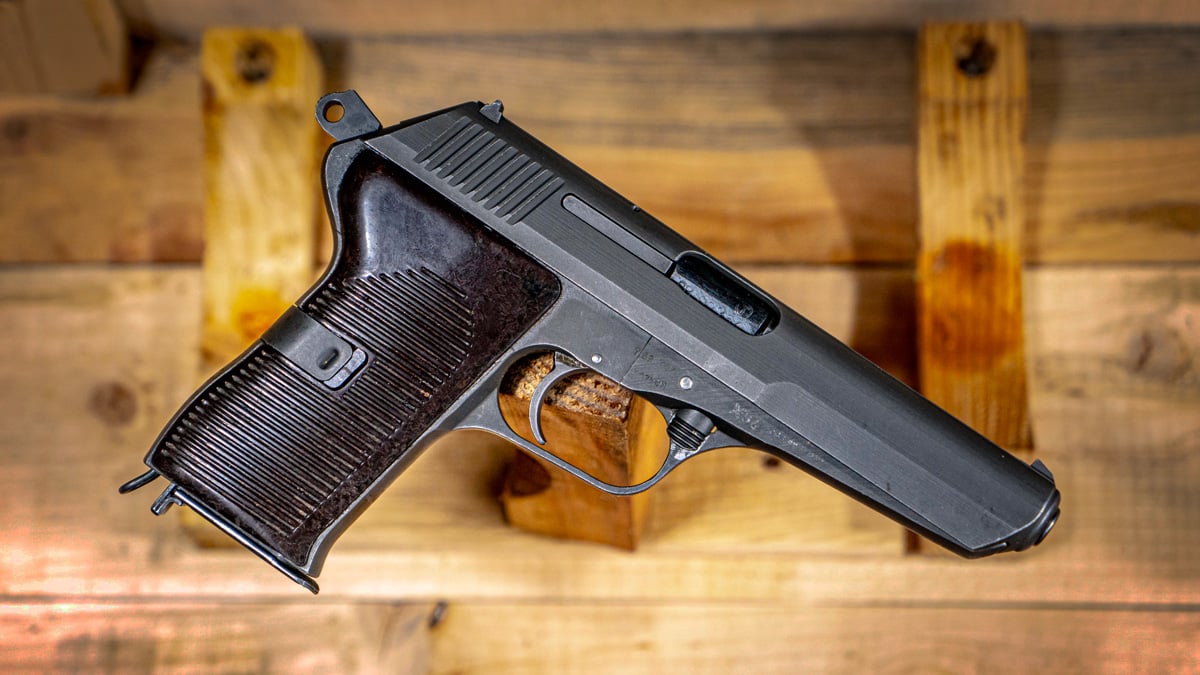
Technically named the vz. 52 (“vzor” meaning model), the CZ 52 was designed by the brothers Jan and Jaroslav Kratochvíl in the early 1950s. They originally intended to chamber the gun for the increasingly popular 9x19mm Luger, but the start of the Cold War made this a political and logistical liability for Czechoslovakia.
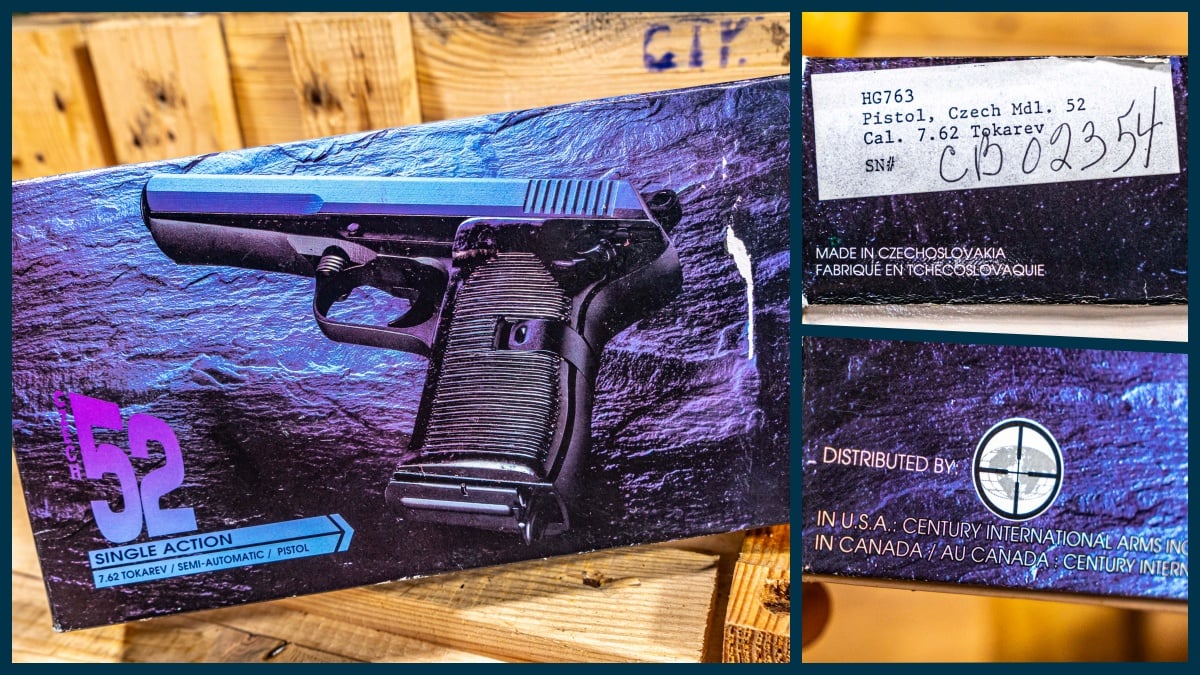
Prior to the arrival of the CZ 52, the Czechoslovak military was balancing its sidearm needs between a handful of foreign and domestic pistols of various calibers. That included the Czech-designed vz. 50 chambered for .32 ACP.
The two guns shared strikingly similar looks. However, the increased power of the CZ 52’s chambering necessitated a very different internal design from the simple blowback vz. 50.

Related: CZ 50 – James Bond's .32 ACP Cold War Alter Ego?
As a satellite state of the Soviet Union, there was obvious political pressure to chamber the new gun in the Russian-designed 7.62x25mm Tokarev. Since the Soviets already had a massive stockpile of 7.62mm Tokarev ammo and firearms after World War II, it made for an easy choice in 1952.
The Tokarev cartridge had a lot more going for it than the political influence of the Soviet Union. The bottlenecked design of the 7.62x25mm cartridge led to very high velocities for the lightweight 7.62mm/.30-caliber projectile.
Regardless, Czechoslovakia rejected the idea of simply using the Russian TT-33 Tokarev pistol design and adopted the CZ 52 as a homegrown option instead.
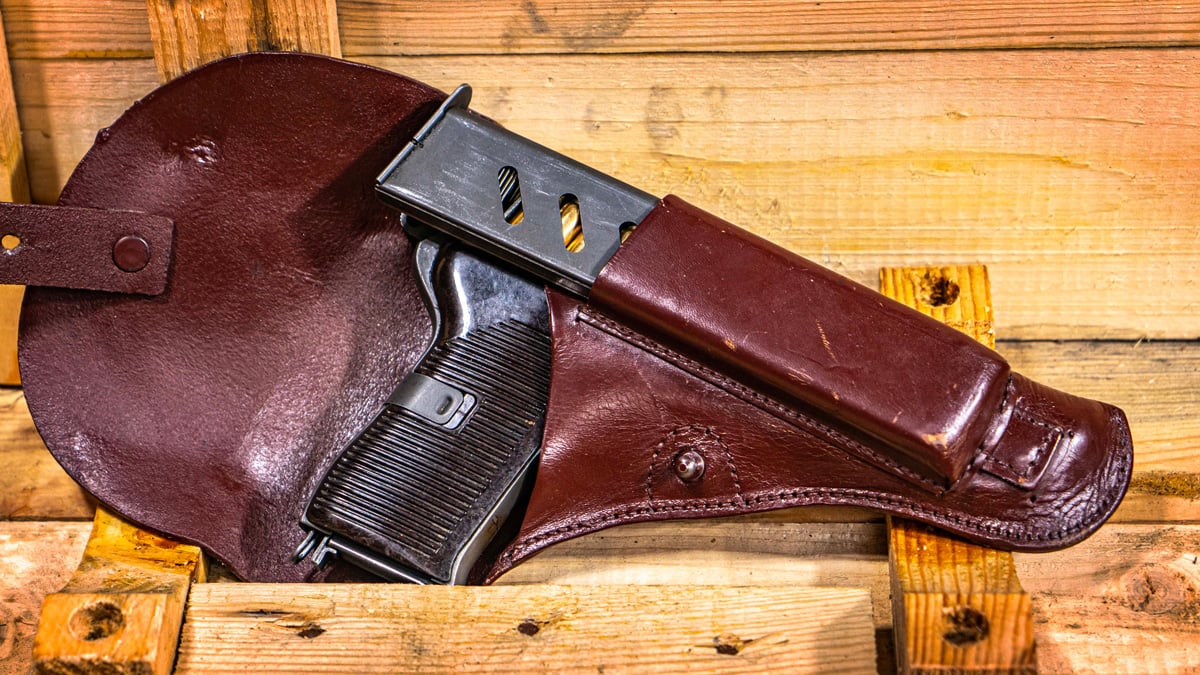

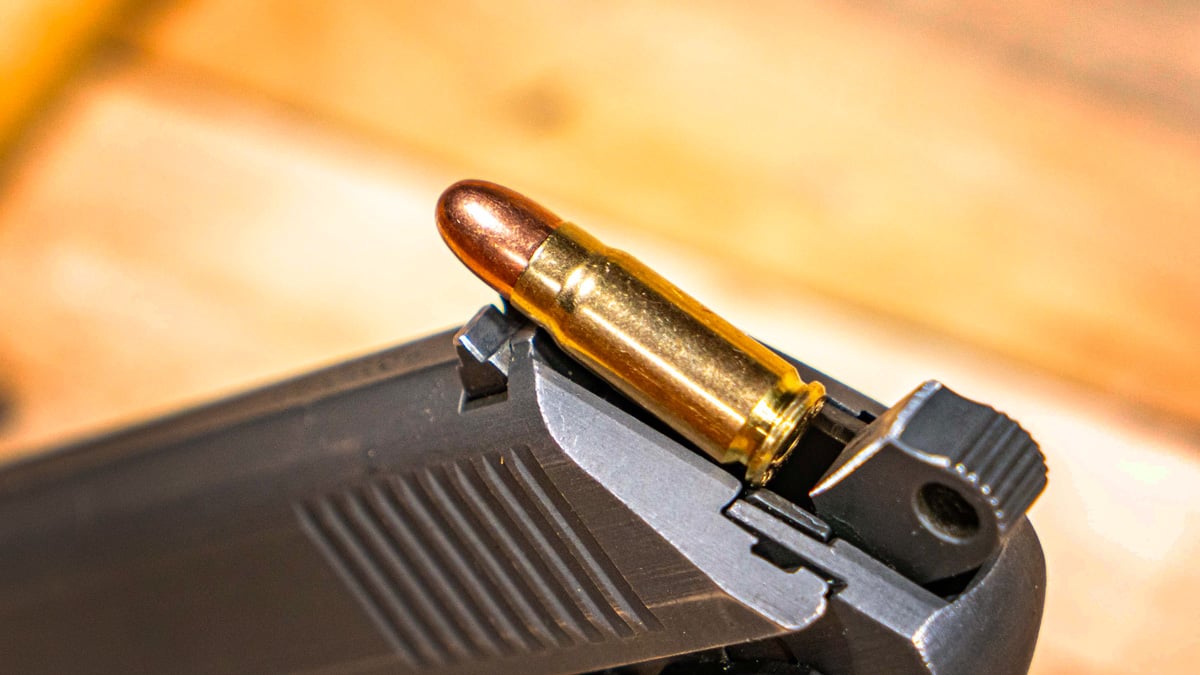
Using the 7.62mm Tokarev cartridge meant there would be relatively high chamber pressures. The CZ 52’s designers compensated for this by using a clever roller-locked operating system. Between 1952 and 1954, CZ manufactured roughly 200,000 roller-locked CZ 52s at the Česká Zbrojovka plant in Strakonice, located in the modern-day Czech Republic.
Despite the short production run, the arsenal of CZ 52s served from 1952 until 1982, when another Soviet feat of political engineering signaled the design’s ultimate demise. Even as the designers felt pressure to use the Soviet 7.62mm Tokarev, the Russians were going in another direction in the 1950s with the newly designed Makarov pistol.
Related: CZ 82 Review – Vintage Military Surplus Concealed Carry
Chambered for the much shorter 9x18mm Makarov, this new Russian pistol design led the Czechoslovak Socialist Republic to once again change its arms production. The result was the simple blowback CZ 82 (vz. 82) adopted in 1983 and chambered for 9x18mm Makarov.
Specs & Features

The single-action-only roller-locked CZ 52 is an all-steel giant even by today’s military pistol standards. However, it was shockingly ahead of its time in many ways in 1952. Its roller-locked design is related to a similar mechanism used in the MG 42 machine gun during WWII. It predated the roller-delayed system popularized by Heckler & Koch.
Remarkably, the CZ 52’s roller-locked technology came more than a decade before Heckler & Koch introduced the legendary roller-delayed MP5. It came nearly two decades before the P9, which was HK’s first roller-delayed pistol. That roller-delayed design has its origins in the older roller-locked system.
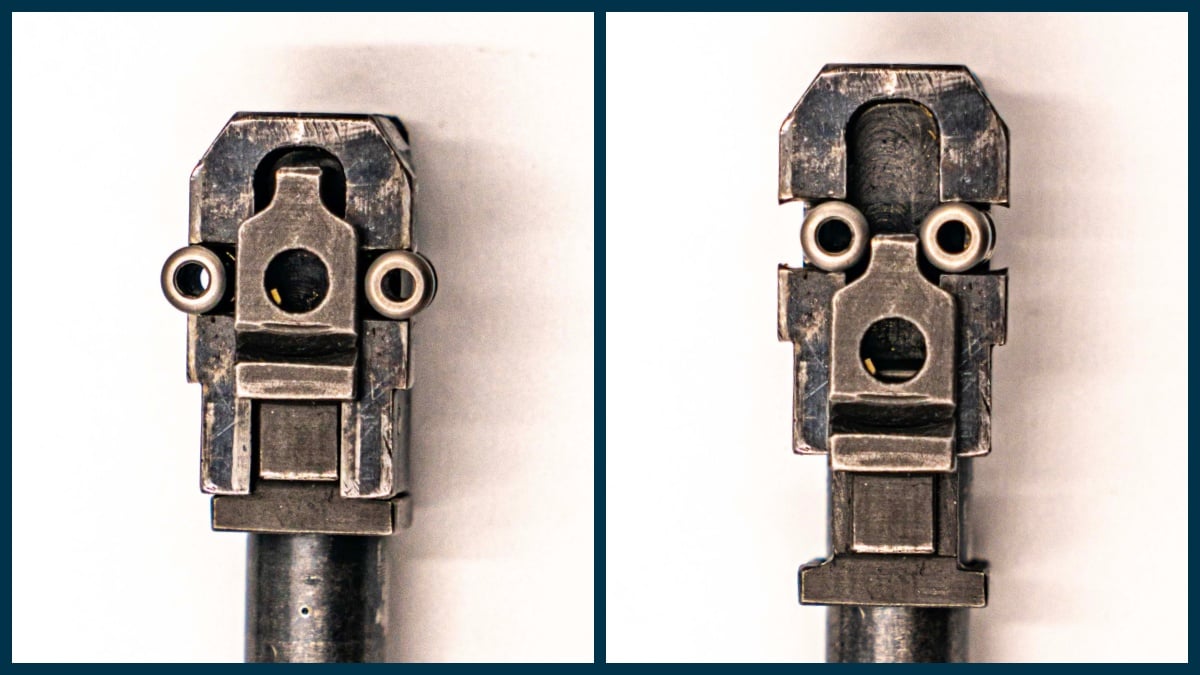


Essentially, the CZ 52’s short-recoil operating system uses the recoil spring to maintain pressure and hold the two rollers in the locked position with the slide. The barrel and slide remain locked together by the rollers until the gun is fired. This pushes the non-fixed barrel and slide back slightly.
Related: Tokarev Pistols – Browning’s Legacy in a Russian Gun
At the same time, the pistol frame holds the barrel’s roller cam block still. This allows the rollers to drop into recessed cuts to unlock the barrel and slide. The recoil spring then pushes the slide forward, reengaging the cam and rollers to relock the barrel and slide. The system is meant to allow the gun to use higher-pressure ammo like the 7.62x25mm Tokarev, which doubled as a submachine-gun caliber.


The gun’s next most notable feature is its severe grip angle that measures around 12 degrees. You can compare that to the sloping 22-degree angle on a Glock 17 and even the more vertical 18-degree angle found on the classic 1911. It makes the CZ 52’s grip feel as if it were nearly at a right angle relative to your hand.
Here’s a quick breakdown of the basic specs for the CZ 52:
Weight: 1.96 pounds
Length: 8.25 inches
Barrel Length: 4.72 inches
Sight Radius: 6.56 inches
Height: 5.51 inches
Width: 1.16 inches
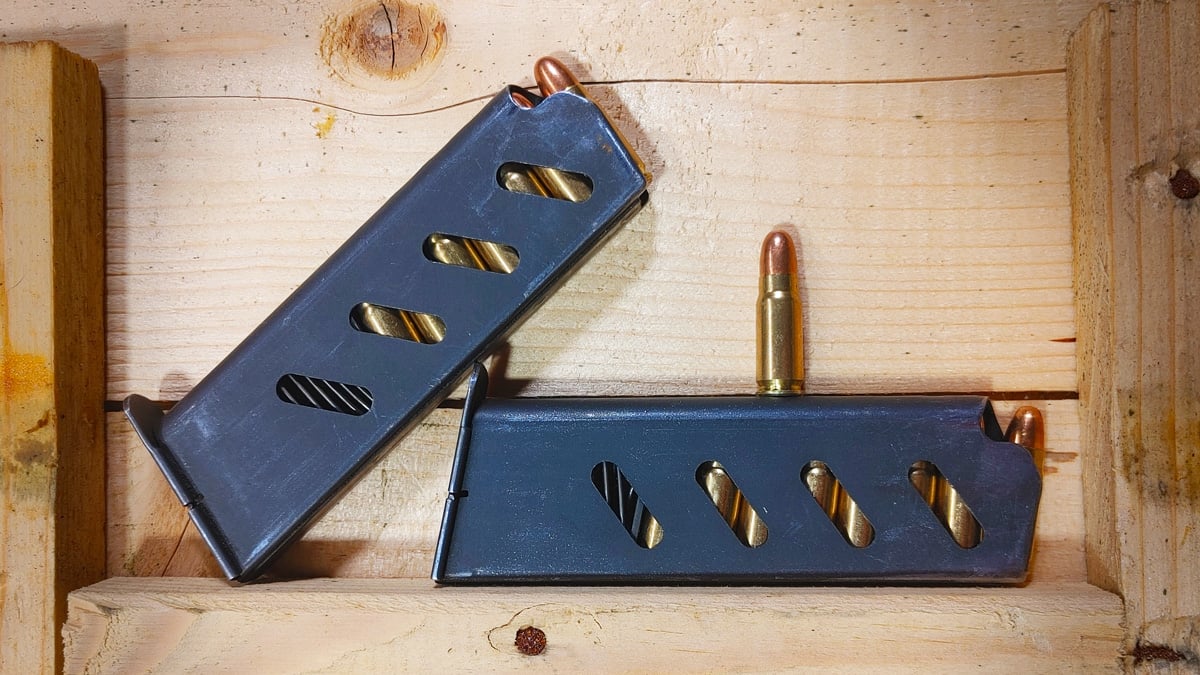
Capacity: 8+1
Trigger Pull: 5.69 pounds
There’s 0.16 inches of trigger take-up to get to the wall. The wall has just a hint of creep before the break, making the total trigger travel just 0.2 inches. The reset is even shorter at about 0.16 inches. Overall, it’s an above-average trigger for a Cold War relic.
Here’s a look at that trigger in action:
I find the addition of a decocker to be particularly fascinating on this single-action-only design. Once the hammer is cocked to the rear, you can place the gun on safe by pushing the right-side safety/decocker lever up. If you push it past the first locking position, it will engage a decocker that drops the hammer.
Related: Makarov PM – Russia's Warfighting 'Walther'
You can even cock the gun and chamber a round when the safety is on. However, the decocker effectively kills the gun since it only has a single-action trigger. A user would have to manually recock the hammer to fire the chambered round.
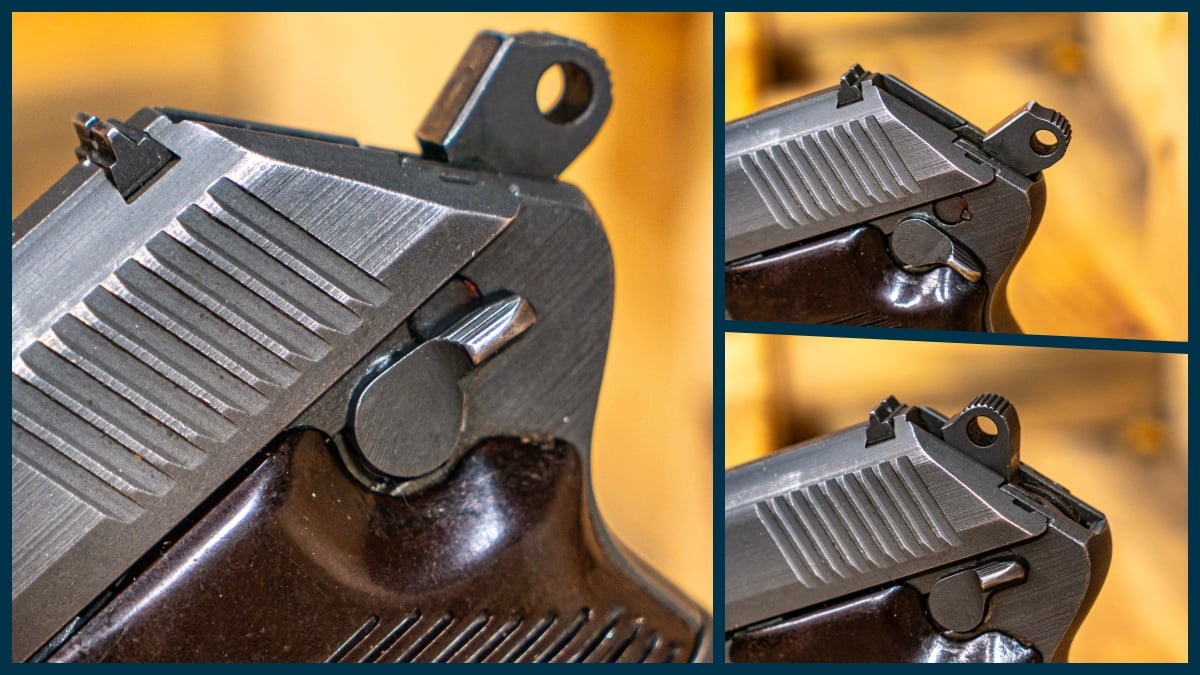


Safety mechanisms on the CZ 52 include a rebounding hammer, a spring-loaded firing-pin block, and a manual thumb safety that keeps the sear from moving and releasing the hammer. The springy firing-pin block remains engaged until the trigger is pressed.
Range Testing
Despite boasting muzzle velocities greater than 1,300 fps, I’ve always found that guns chambered for the 7.62x25mm Tokarev cartridge have relatively soft recoil. That’s generally true for the heavy CZ 52, but the strange grip shape and top-heavy profile make it seem a bit clumsy in my hands.
I got accustomed to the grip angle when I started shooting, and my targets below will show that it didn’t have a big impact on my final accuracy.
On that note, here’s how the CZ 52 fared for me with eight rounds shot from 20 feet at a slow rate of fire.
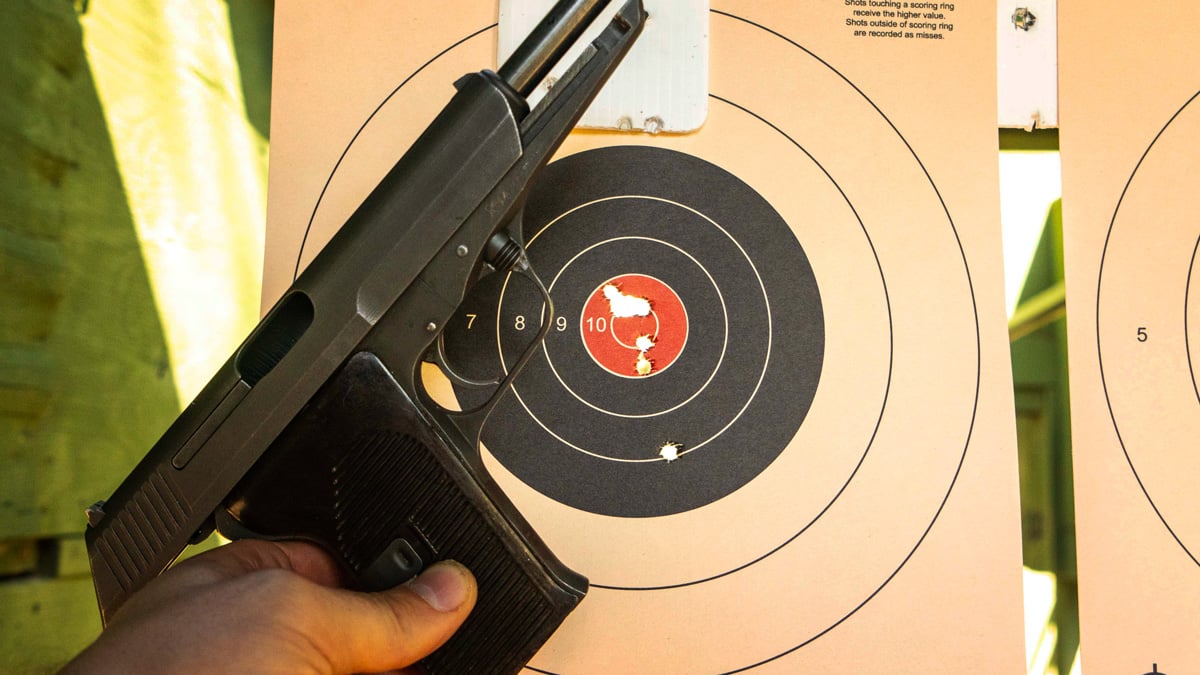
My group opened when I sped up my shooting pace. This gave me the below group.

And here’s my final group shot at 35 feet.

I limited my testing to just 100 rounds because the CZ 52 is an older gun that doesn’t need to be abused. Plus, Tokarev ammo is at a premium price these days. All 100 rounds for this testing were new-manufacture 85-grain PPU FMJ. The gun cycled reliably for all of it. I’ve also done ballistic testing with 7.62x25mm Tokarev, and it has some unique penetrating qualities.
Related: Zastava M57 Pistol Review + 7.62 Tokarev Body Armor Test

Overall, I’d call the CZ 52 an awkward but reliably accurate shooter. The gun feels large and top-heavy in my hands. While not ideal from an ergonomics perspective, the end result is still a gun that can predictably shoot out the center of a target at reasonable handgun ranges.
Pros & Cons
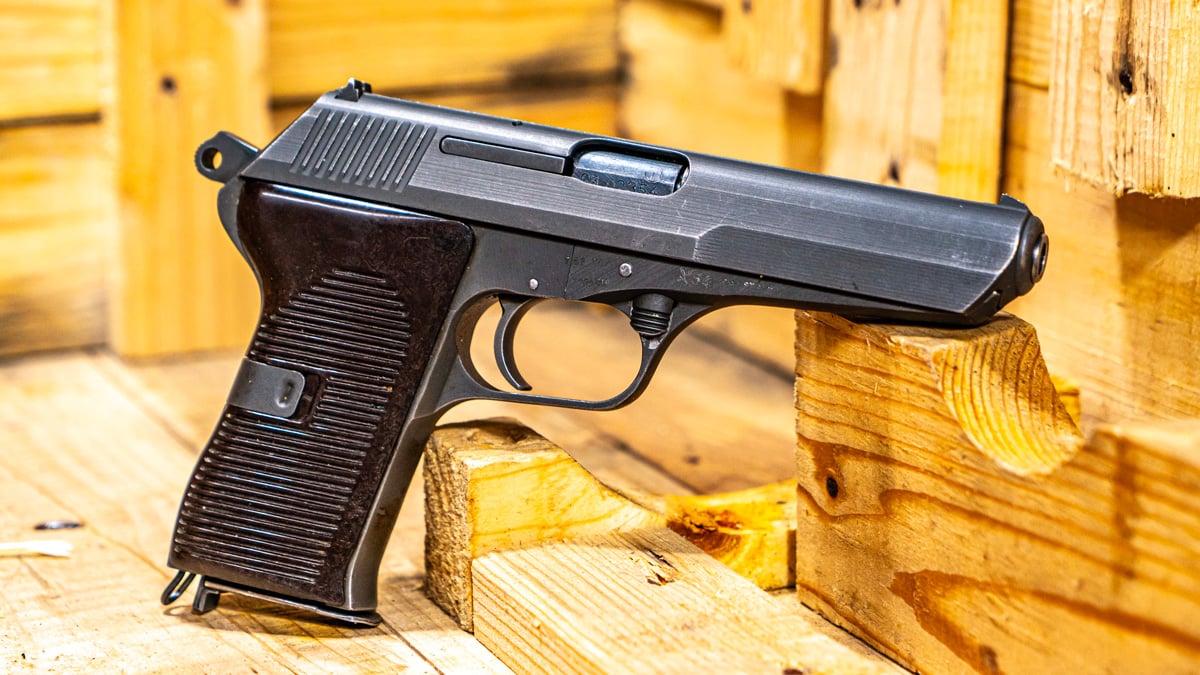
Here are my top five pros and cons for this CZ 52:
Pros:
- Unique roller-locked design
- Interesting Cold War history
- Accurate and reliable
- Decent trigger
- Potent 7.62x25mm Tokarev chambering
Cons:
- Steep vertical grip angle
- Aging parts and design
- Low capacity for size
- Heavier weight
-
7.62mm Tok ammo is less common
Final Thoughts

As a child of the late Cold War, I have a collector’s itch for Soviet-era guns. This CZ 52 is now a permanent member of my personal collection, which includes other Cold War relics like the Czech CZ 82, Bulgarian Makarov PM, Yugoslavian M57 Tokarev, and other East European firearms.
Beyond just the potent 7.62x25mm Tokarev chambering and roller-locked design, it’s the CZ 52’s place in history that really captures my interest. Sadly, the same historical status that makes guns like this cool also means they are increasingly hard to find and more expensive over time.
For right now, the CZ 52s I’ve seen for sale remain within the realm of affordability for budget-minded collectors like me.
Like cool old firearms like this one?
Check out our Military Classics and Collectors Corner for more.