Mauser HSc History
Founded in 1811 and well before the unification of the fractured German states, Mauser had a front seat to Germany’s rise to power and conflict in the 19th and 20th centuries. It grew into one of Germany’s premier arms manufacturers and is probably best known today for its long line of military bolt-action rifles and the broom-handled C96 pistol.

But the German military and commercial market also had an eye for much smaller firearms chambered for the diminutive .32 ACP round, also known as 7.65x17mmSR or 7.65mm Browning Short. These were relatively common sidearms for German soldiers through both world wars with guns like the mousey Mauser Model 1910/1914/1934, spacey Astra 300, and Walther PPK of “James Bond” fame. Even though they were chambered for the small .32 ACP, these guns helped fill the German military’s desperate need for millions of sidearms.
The Mauser HSc was a peculiar design that came out just in time to enter service with the German military in WWII. It was in part Mauser’s answer to the popularity of the hammer-fired double-action/single-action Walther PP series and similar designs in the 1930s.
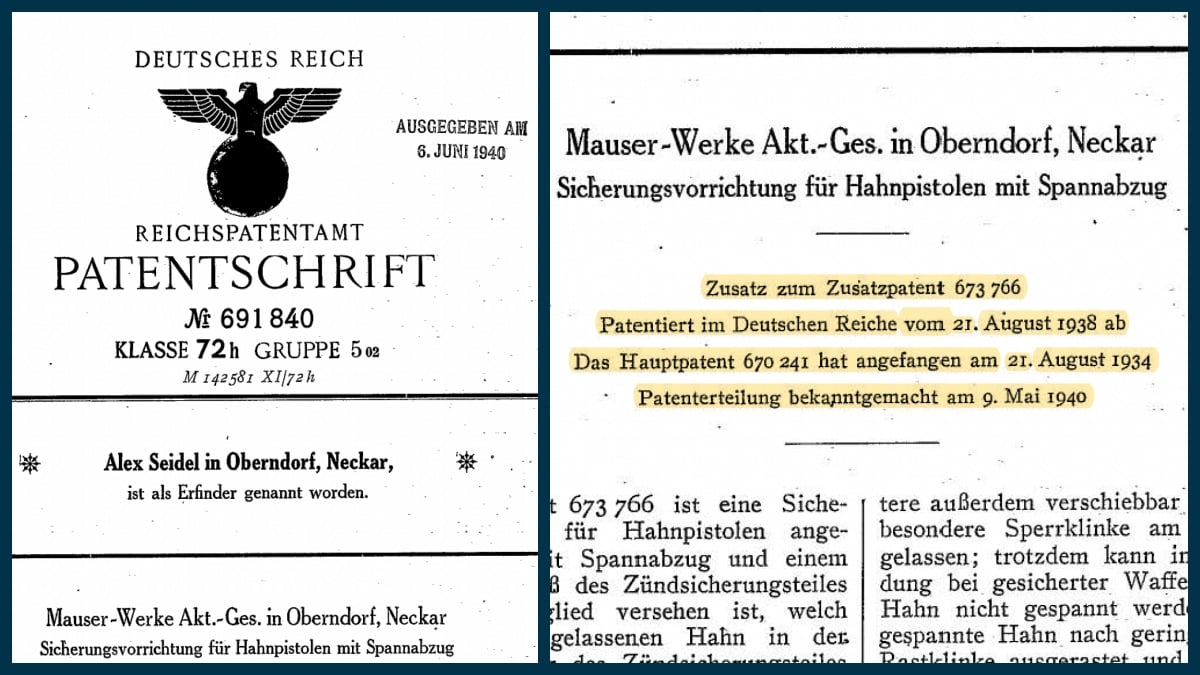
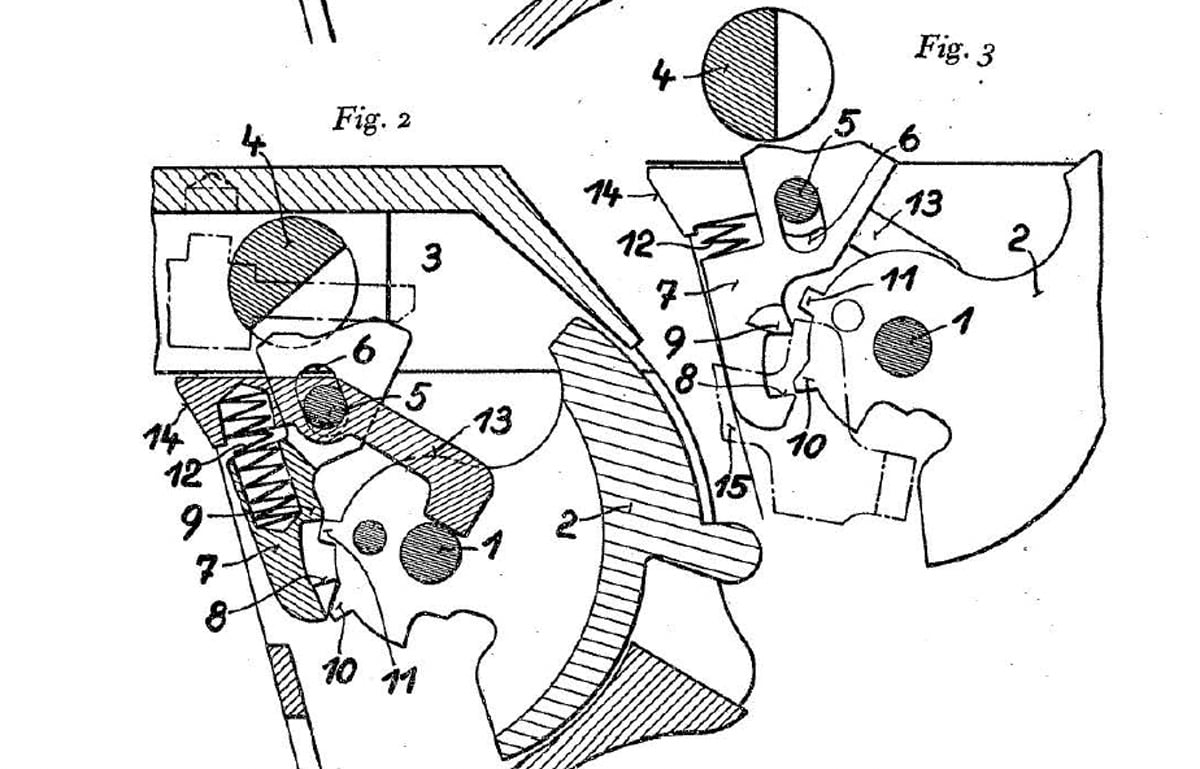
To bring its new hammer-fired pistol to life, Mauser turned to designer Alex Seidel, who filed numerous patents for the gun through the 1930s. These culminated in the granting of the final patent – “Sicherungsvorrichtung fuer Hahnpistolen mit Spannabzug” (German Patent No. 691,840) – in 1940. This expanded on Seidel’s clever safety device that I’ll discuss in the specs section.
Though not originally intended for the military, the HSc brought a unique hammer-fired design back into the Mauser pistol lineup on the eve of war and changed the fate of Seidel’s new gun. By the end of WWII, Germany produced more than 250,000 HSC pistols. That continued into post-war French production until 1946 and resumed for commercial production from 1968 to 1977.
As a fun fact, Seidel later moved on to become a co-founder of Heckler & Koch in 1949.
Captured German Pistol
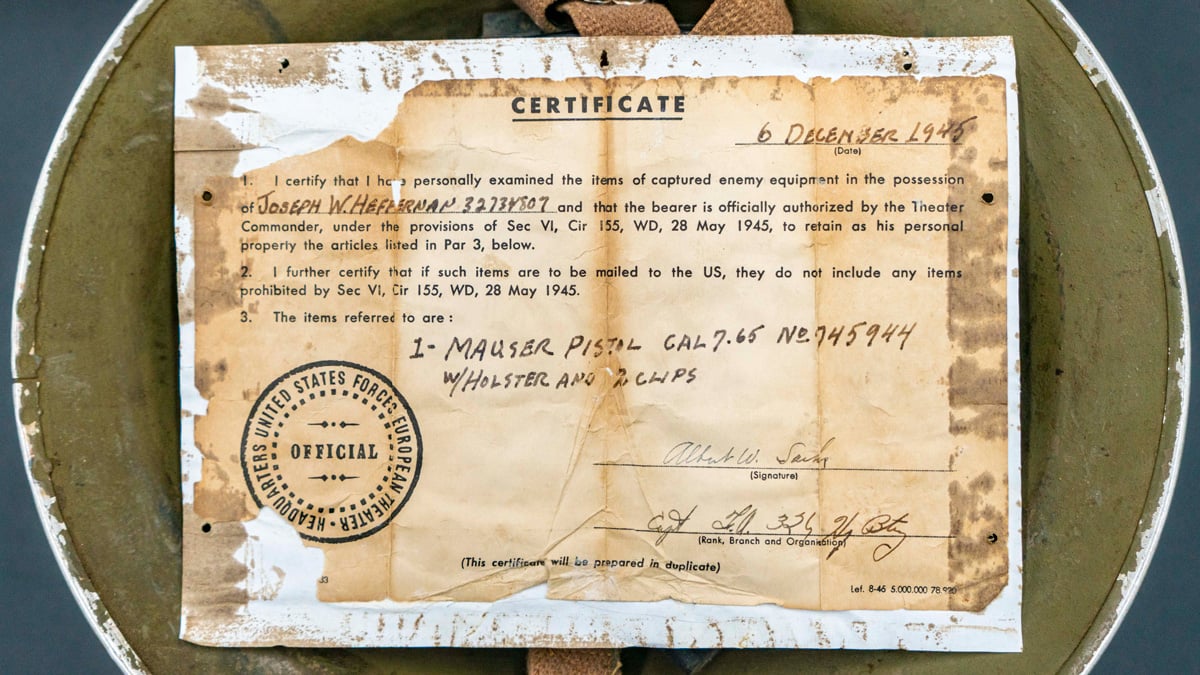
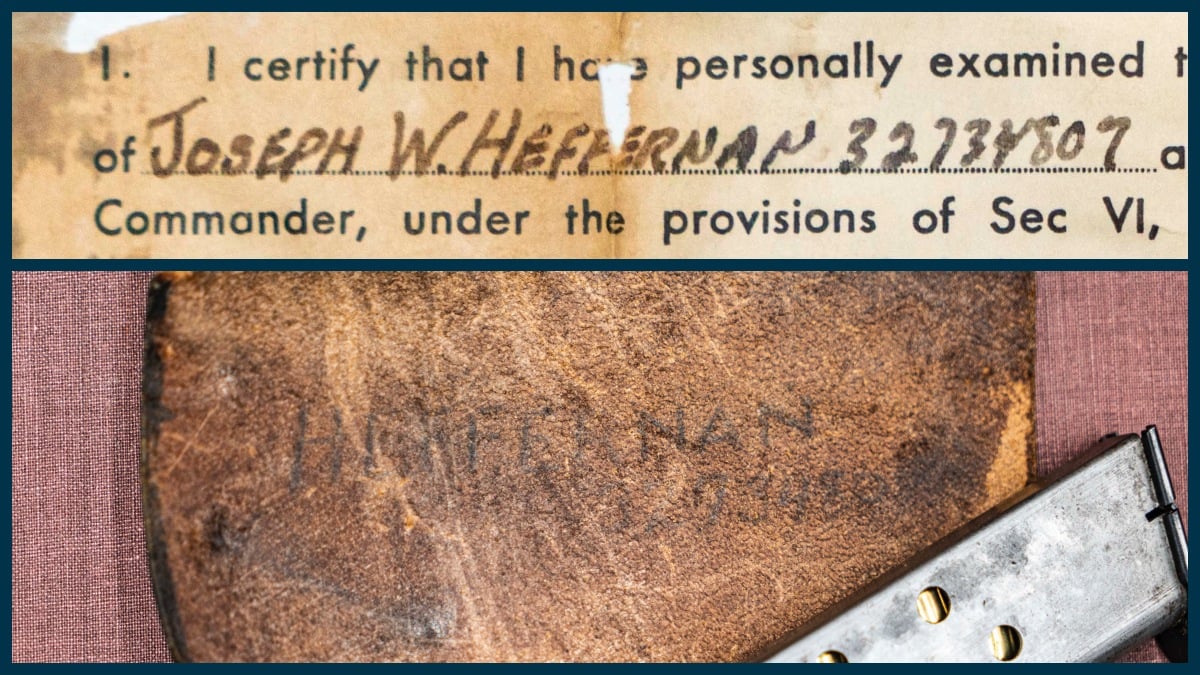
German sidearms were prized war trophies for American GIs, and this little HSc was no exception. There is no telling exactly when it was taken off a German service member during the war, but the capture paperwork notes that it was registered for return to the states on December 6, 1945.
That doesn’t come as any surprise given the date is several months after the end of the war in Europe and the final surrender of the Japanese Empire in the Pacific Theater. American troops were now slowly on their way home, and this gun was claimed by one Joseph W. Heffernan and came with its original leather holster and two magazines.
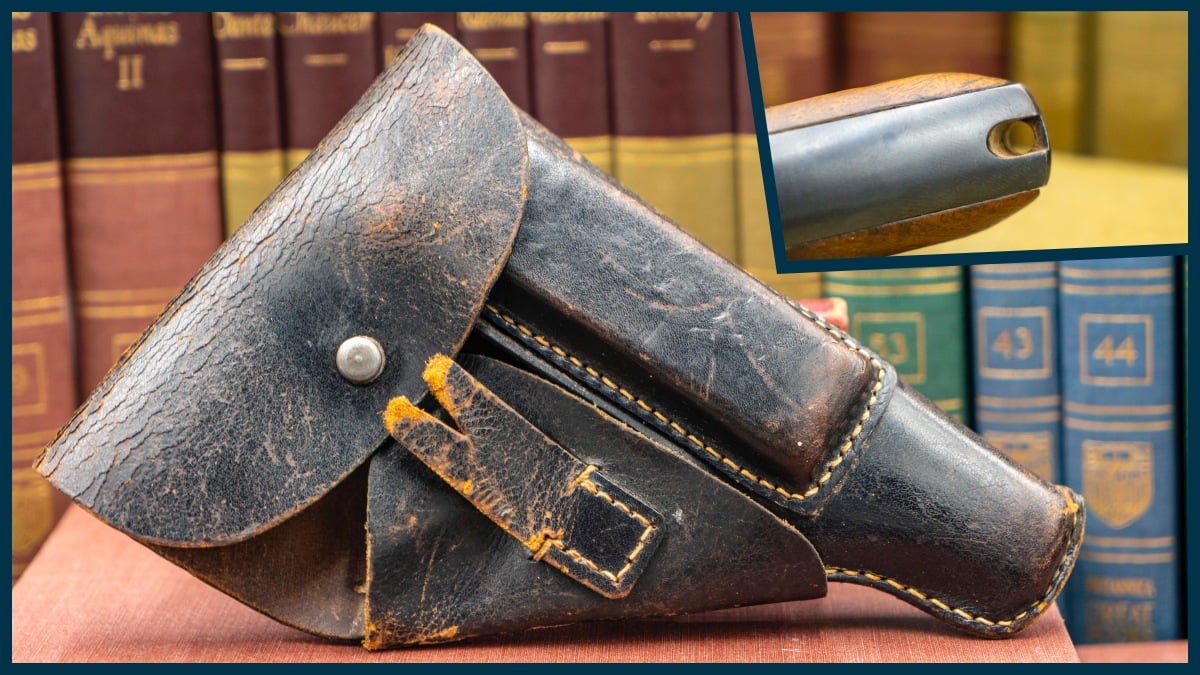
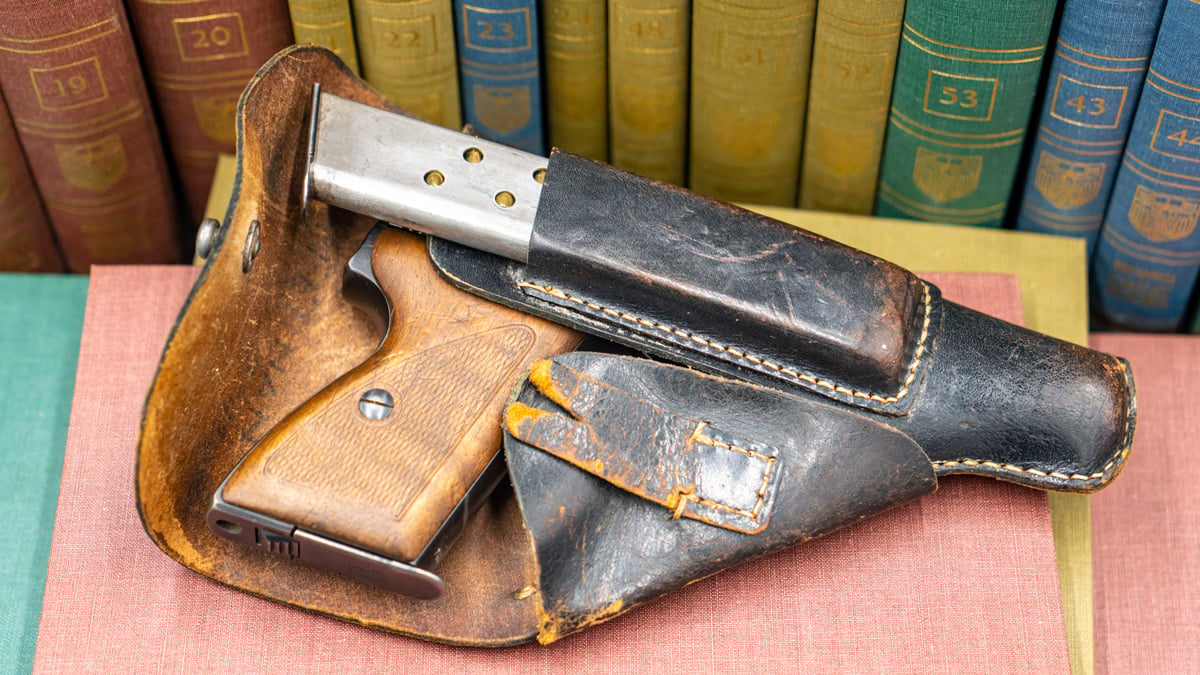
Fortunately, the collection is still intact. Heffernan also marked the holster flap with his last name. That may be because rumor has it the folks responsible for shipping captured guns back to the U.S. were often thought to have somewhat sticky fingers.

The gun itself also hints at its origins as a firearm issued by the German military, instead of the common personal purchases that also pop up. Following German law, it has the typical government nitro proof mark stamped on the frame (an eagle over the letter N).

Commercial guns were blank on the left side, but this one bears the German army’s mark in the form of an eagle over the number 135. An eagle over 655 and WaA135 was also used by the army at various points of production.
On this piece, serial numbers on the frame, barrel, and slide are all matching. The latter two were marked only with the last three digits of the full serial number. It is stamped on the bottom of the barrel and etched into the front of the slide. Mauser is marked on the bottom of both magazines.

The serial number 745,944 places the gun as an early war production piece produced some time between the end of 1940 and August 1942. That’s backed by the earlier use of acid etching to mark the model number and manufacturer on the slide.
Later guns had roll-stamped marks instead. Given the production date and wear on the holster and firearm, it’s likely this pistol spent a fair amount of time on the hip of some unknown German service member with an equally unknown fate.
Specs & Features

While the history of this piece is a fantastic addition as a collectible, the Mauser HSc is a fine and mechanically interesting specimen in its own right. In fact, the name HSc – short for Hahn Selbstspanner or self-cocking hammer – hints at the unique nature of how this semi-auto pistol works. The gun has a hammer that is uniquely shrouded such that it is hidden in both the cocked and uncocked position. It is a true double-action/single-action gun, but with a twist.
There is no manual decocking mechanism. The firing pin, safety, and slide release system are all uniquely designed in such a way that there is no real need for such a feature. The safety levers the firing pin up and down. Moving the safety up to the firing position lowers the firing pin into striking alignment with the hammer. Pushing it down into the safe position raises it out of alignment with the hammer.

The safety also locks the hammer and the slide. However, you can place the gun on safe with the hammer in either the cocked or decocked position. You can also cock the hammer, place the gun on safe, and then decock the hammer while the gun is on safe by pulling the trigger, if desired.
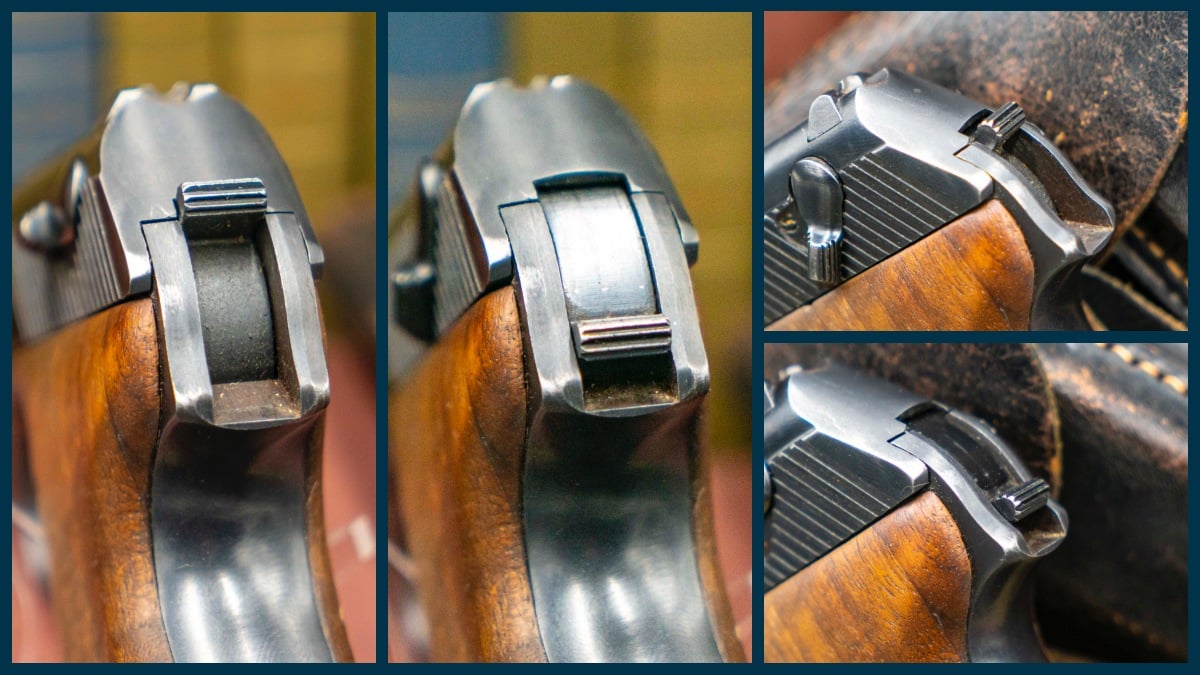
Seidel cleverly maneuvered around existing decocking patents. Instead of a decocking lever like the Walther PP series of pistols, the gun automatically decocks itself with the safety on when a magazine is inserted and the slide moves forward.
Here’s a quick rundown of the basic specs:
- Length: 6.25 inches
- Barrel Length: 3.33 inches
- Sight Radius: 4.93 inches
- Height: 4.37 inches
- Width: 1.11 inches
- Slide Width: 0.85 inches
- Weight: 1.325 pounds
- Trigger Pull (DA): 10.56 pounds
- Trigger Pull (SA): 5.44 pounds
Seidel built a lot of other interesting features into the HSc. First, as with some other Mausers, there is no external slide release/stop. That feature is built into the gun and the magazine. There is a long lever on the left side inside the action that performs multiple functions. It engages with the magazine as an integral magazine disconnect safety, slide release, and slide lock. The magazine has a cut in the rear of the follower to work with this system.

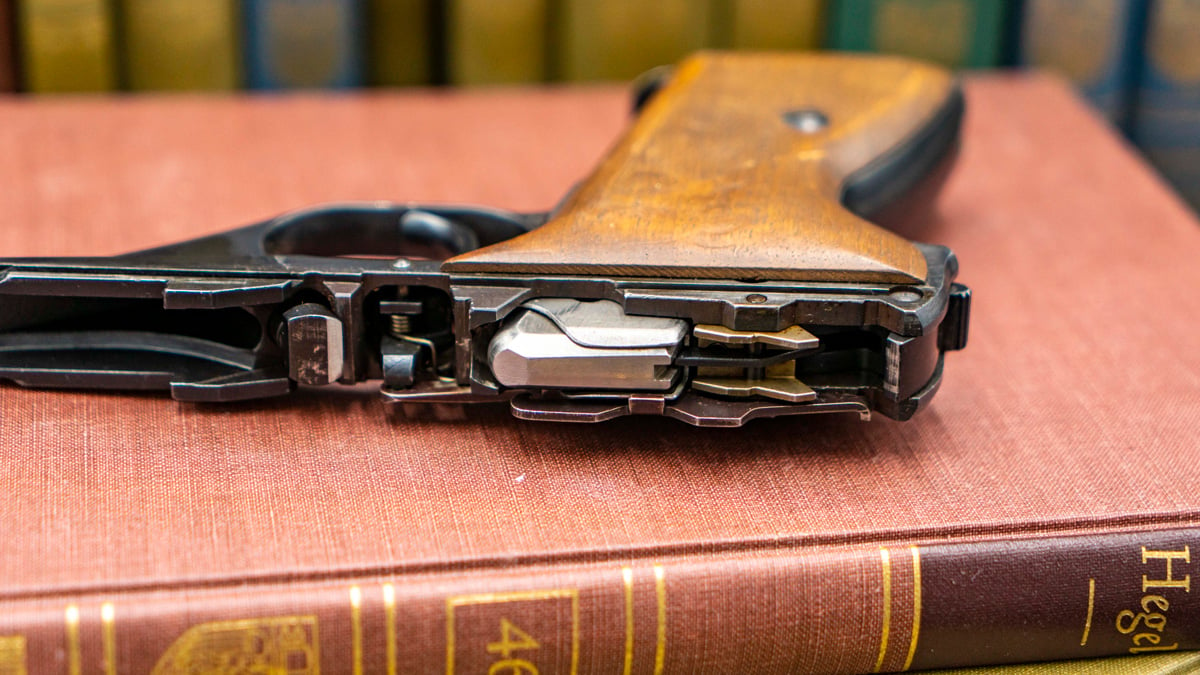
Inserting a magazine deactivates the magazine safety and raises the slide release. This sends the slide forward and chambers a round. The magazine follower then locks the slide back after the final round, and the elongated lever takes on the slide-lock function when the magazine is removed. In theory, you never need to manually rack/release the slide to load the gun.
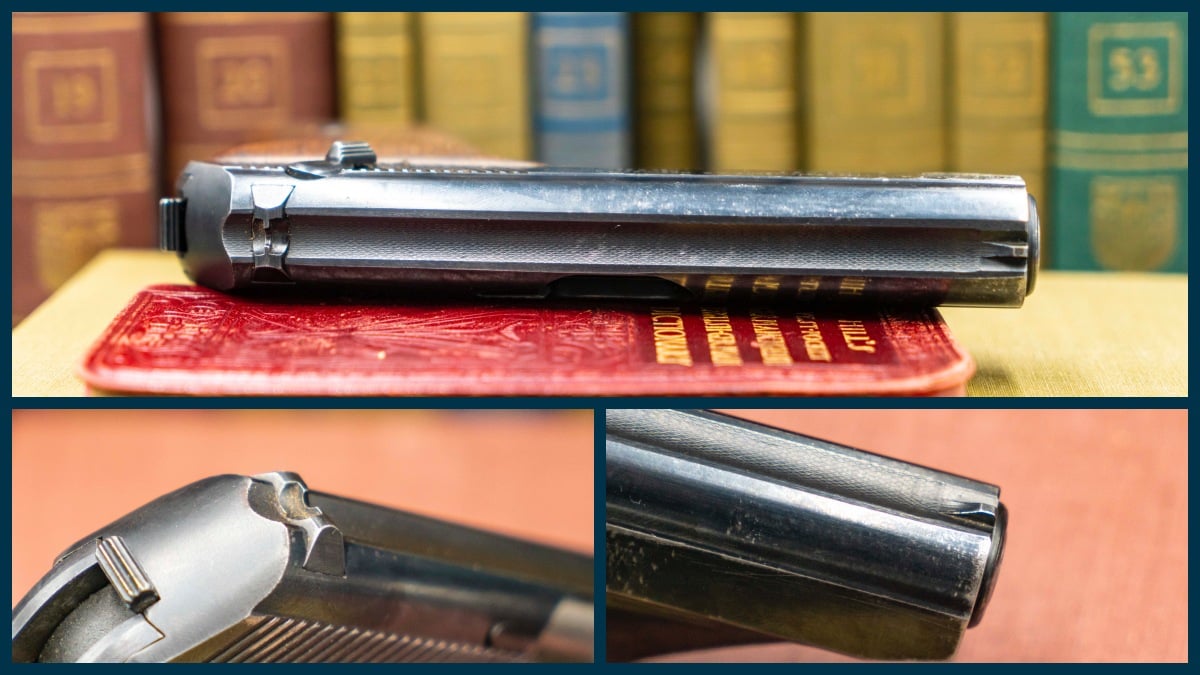
The sights are crude but well-made, with an adjustable dove-tailed rear notch and deep textured channel along the length of the slide. Taking the gun apart uses another unique feature. There is a takedown latch inside the trigger guard that connects to the barrel lock that holds the slide to the frame. Pushing down on the latch allows you to pull the slide from the frame.
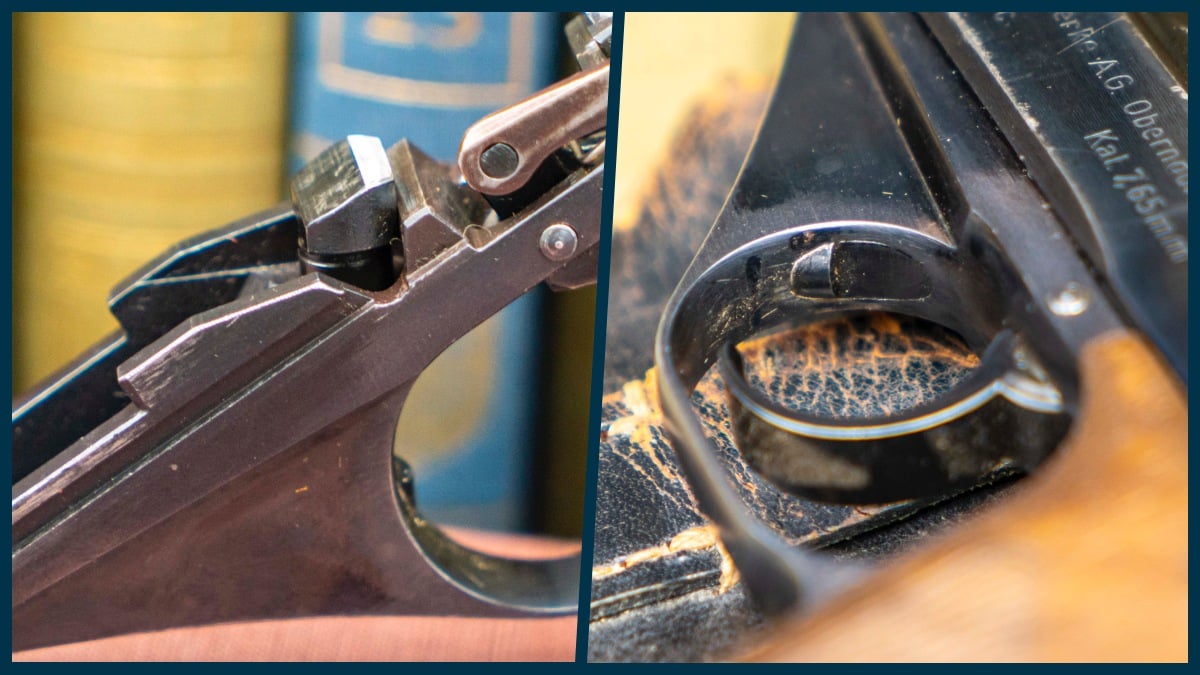
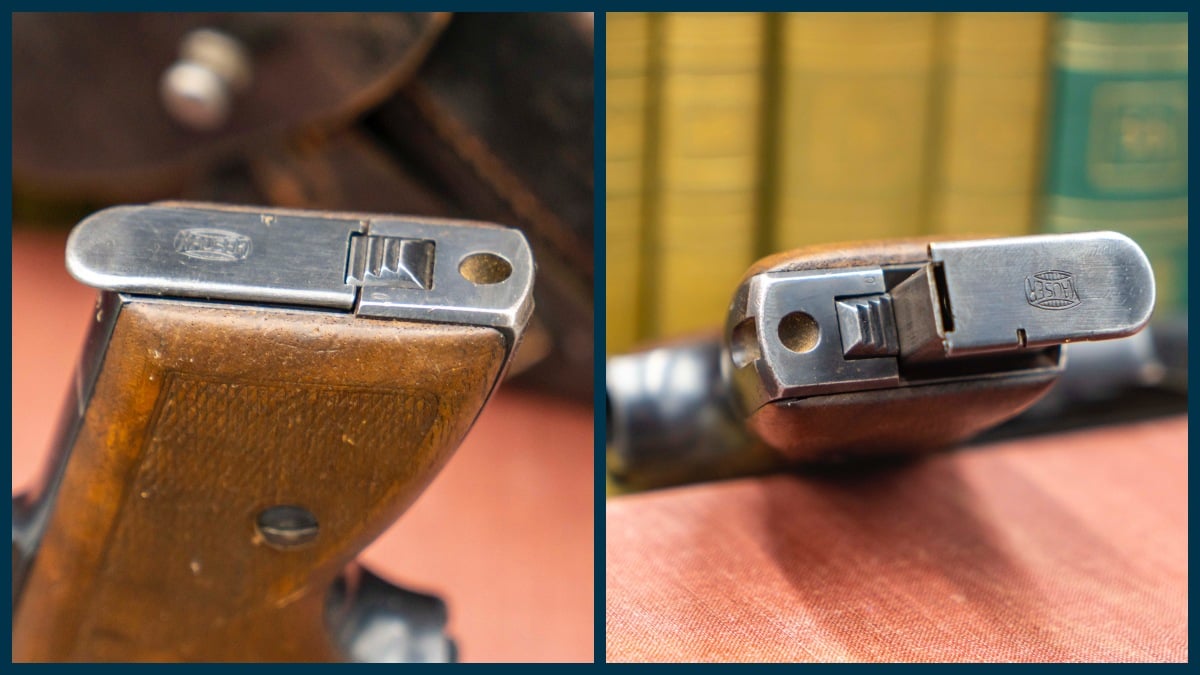
There is a heel release for magazines, which was common for European guns and small handguns in general. Finally, the .32 ACP models came with an 8+1 capacity, while later .380 ACP designs with 7+1 capacities dominated commercial guns by the end of production.
Range Testing
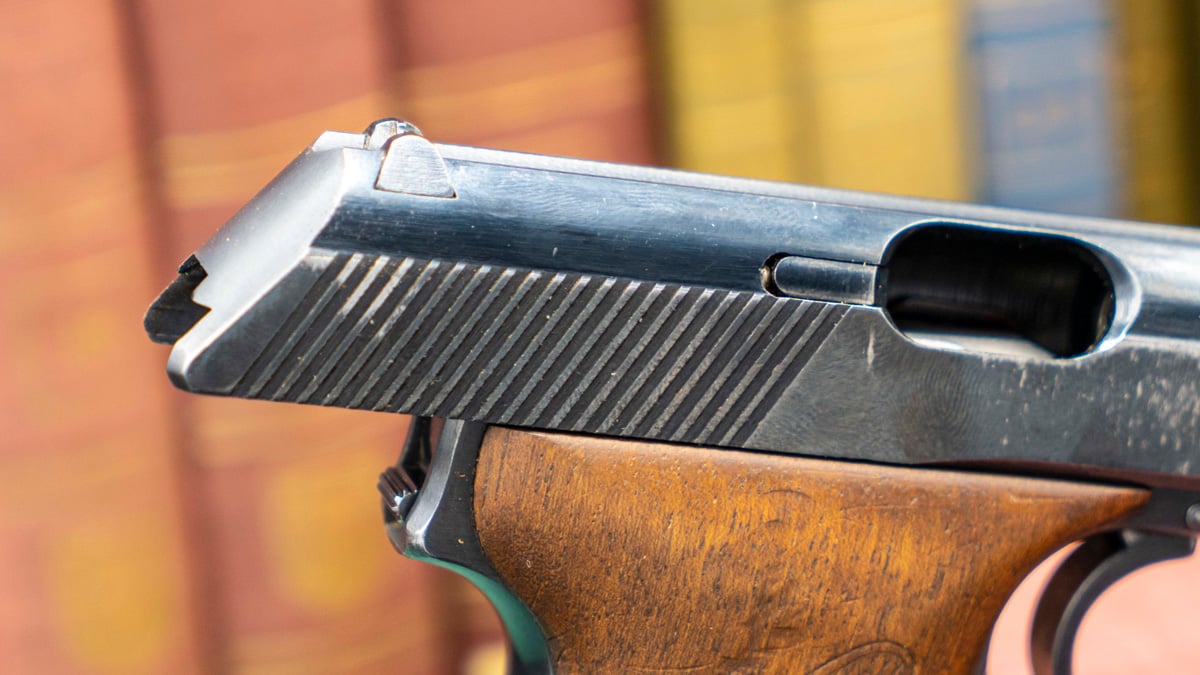
Some shooters might raise their nose at the idea of using a .32 ACP gun for self-defense purposes much less military service. The simple truth is that the practice was fairly common in the first half of the 19th century, and this little gun has some shooting chops.
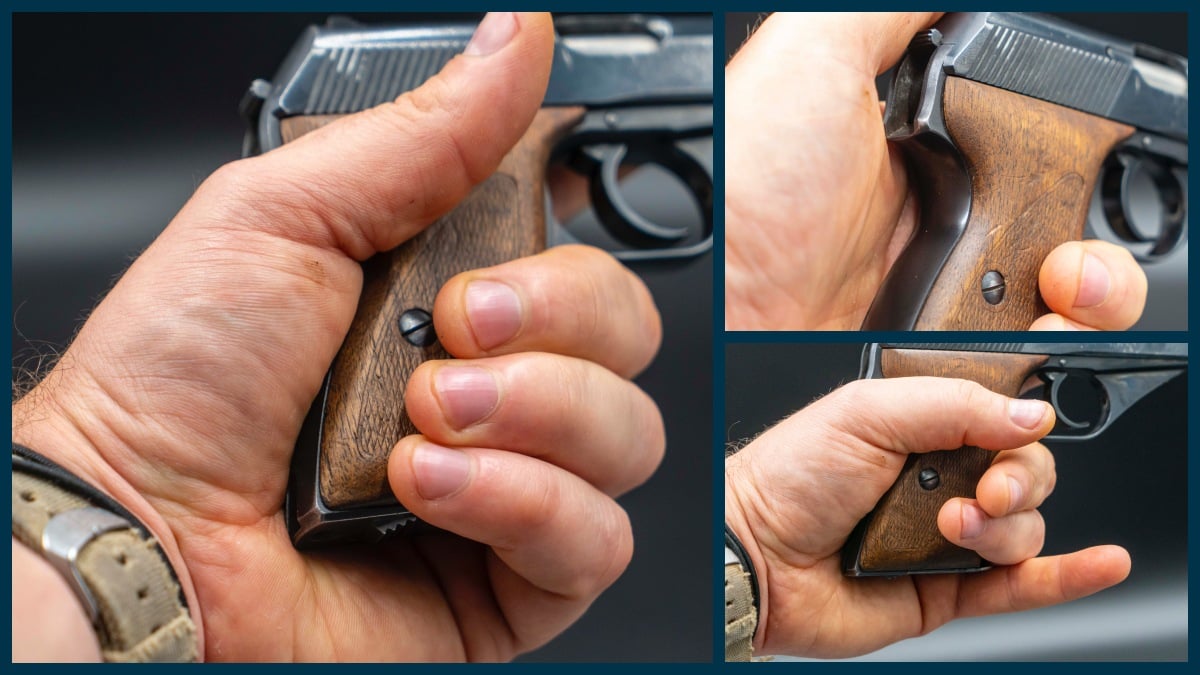
The grip is simple but wonderfully shaped to slide deep into the palm of my hand. It only allows for a two-finger grip, but the deep curve at the top of the backstrap makes it snug, comfortable, and controllable.
As for the trigger, the 10.56-pound double-action pull stacks as you draw in the trigger and makes an audible click right before you come to the trigger wall before the break. The single-action pull is nearly half the distance and starts with a positive but light take-up to the wall. I find the 5.44-pound break to be surprisingly crisp with just a tiny bit of creep.
I didn’t want to abuse this gun in testing, given its history and the price of .32 ACP ammo. I did put both magazines through the gun one time without any issues, and the accuracy for such a small gun was fantastic.

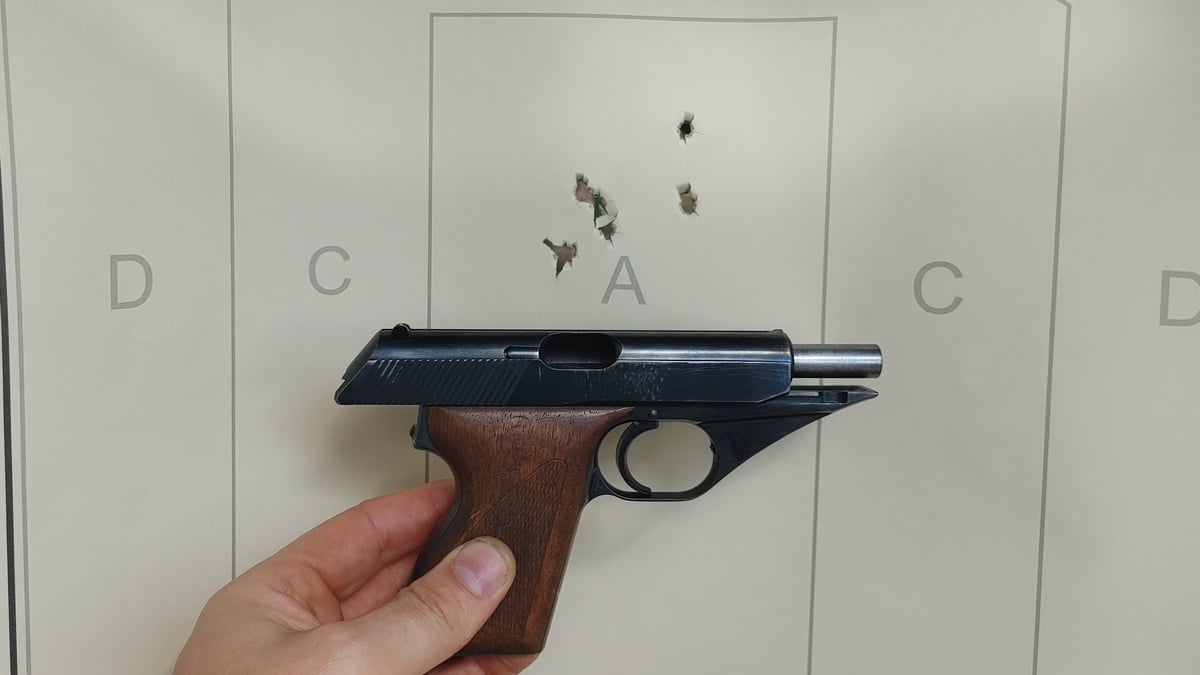
At 20 feet, I put three rounds well within an inch of each other. At 30 feet with more rapid fire, the gun created a tight group with both double-action and single-action shots with little effort. Recoil is very manageable even with my pinky hanging off the bottom, though the gun printed just a tad high between 20 and 30 feet.
All in all, it’s a very pleasant gun to shoot.
Pros & Cons

Here’s my short list of pros and cons:
Pros:
- Awesome history
- Original paperwork, mags, and holster
- Very interesting design
- Small and concealable
- Shrouded hammer
- Low recoil
- Very accurate
- Well made
- Comfortable grip shape
- Good DA/SA trigger pull
Cons:
- Less common, smaller .32 ACP ammo
- Short grip
-
Low total production levels
Final Thoughts
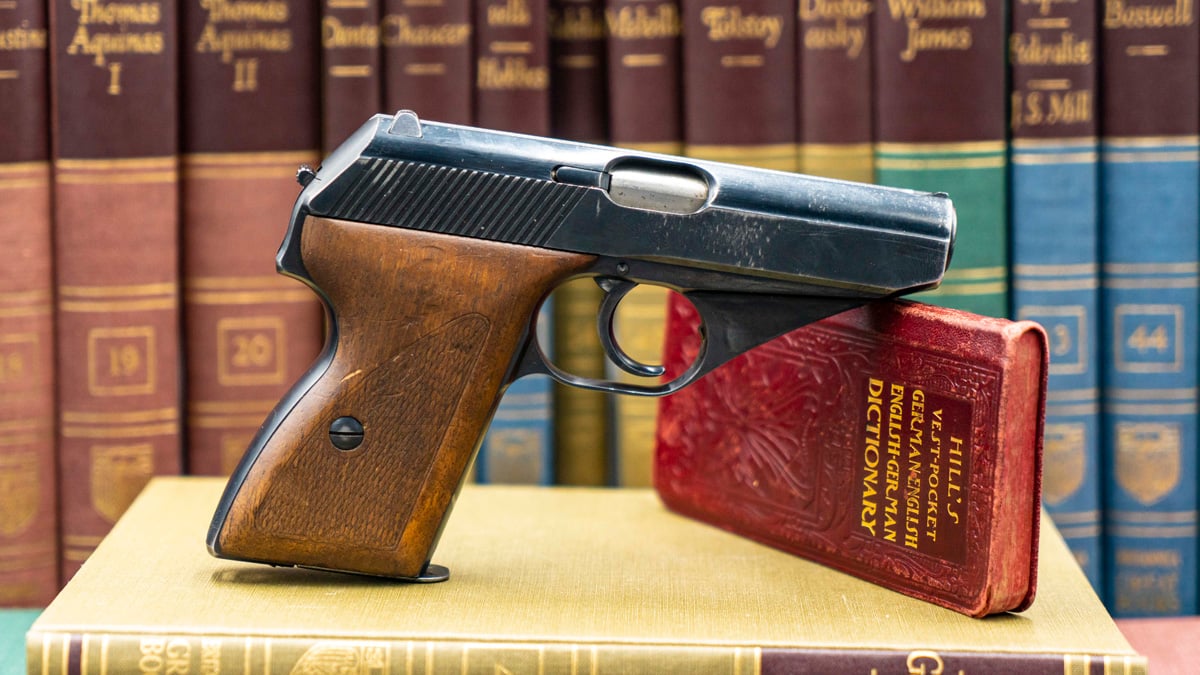
There are still quite a few Mauser HSc pistols floating around even though they have long been out of production. Lots of these guns came back with American GIs, and even more trickled in during the Cold War.
Surprisingly, these guns are not overly expensive despite the fact they were produced in relatively few numbers compared to pistols like the Luger P08 and Walther P38. I can see the appeal these had as carry pieces, and I’m sure they could still hold their own as reliable, concealable carry guns today.
However, for a historic firearm like this with all the original paperwork and extras, I imagine it would serve as an even better addition to a personal collection for a history buff/gun nut. Personally, I’d love to keep it. But this one is on its way back to the Guns.com Vault, so it will hopefully find a grateful forever home soon enough.
Like cool old firearms like this?
Check out our Military Classics and Collectors Corner for more.