Background

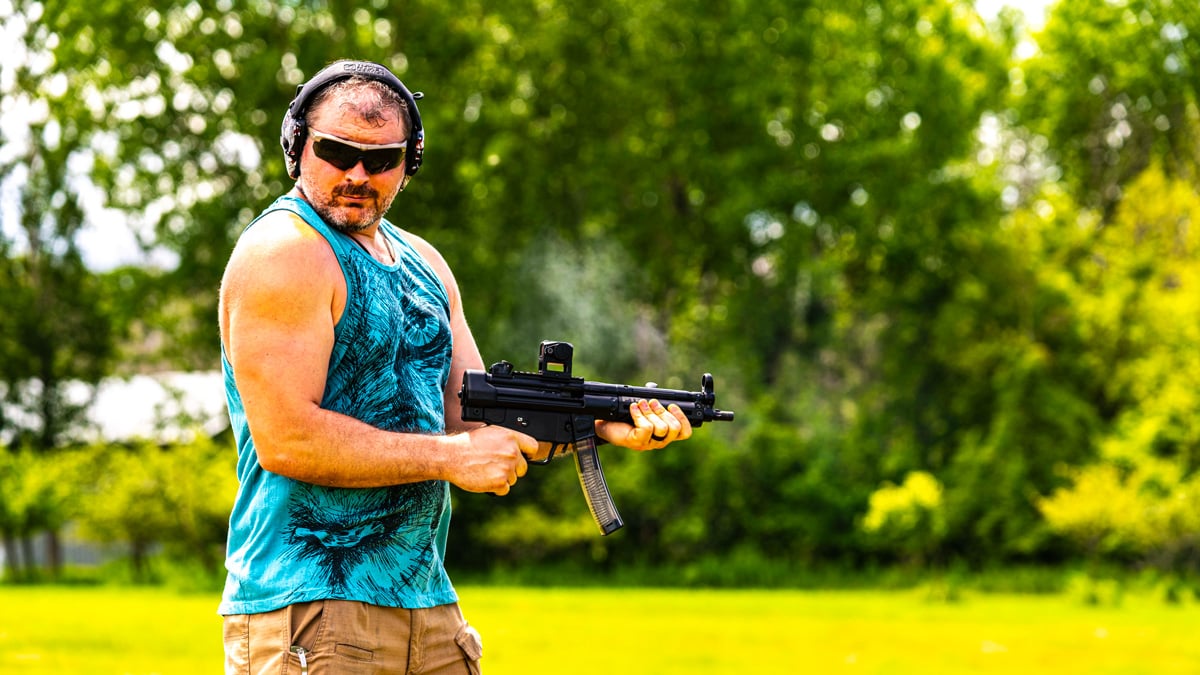
The PTR 9 series includes the extra-short PTR 9KT, the PTR 9C featuring three barrel lugs for fast suppressor mounting, the PTR 9 CT that offers both barrel lugs and 1/2x28 TPI threading for suppressors, and even a throwback PTR 9CT Classic. The company also offers a host of roller-delayed rifles and the Archon Firearms handgun that uses something dubbed AF-Speedlock technology.
Built by South Carolina-based PTR Industries, this family of MP5 clones boasts modern upgrades to improve on an already proven design. If anyone can make the MP5 better, it’s PTR as a company that almost solely revolves around roller-delayed designs.

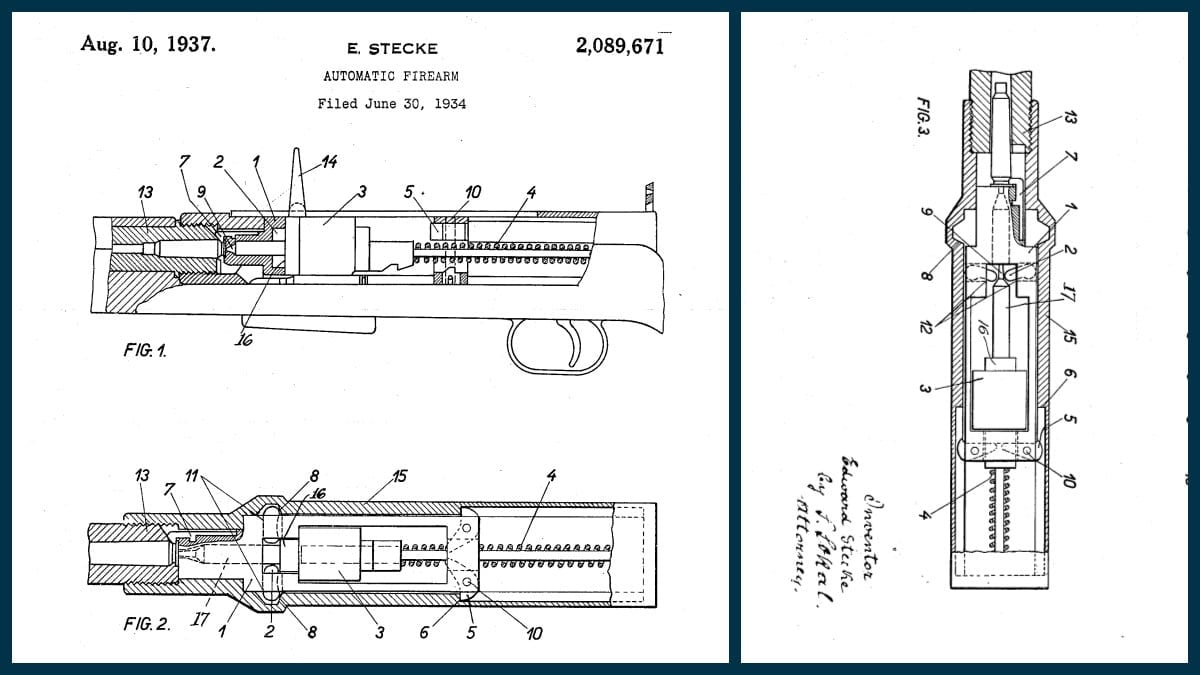
The design has been around since the mid-1960s in the form of the Heckler & Koch Maschinenpistole 5 (i.e. MP5). These guns were meant to serve as affordable yet modernized submachine guns for the post-WWII era. The stamped parts cut costs, and the development of the roller-delayed system made them very reliable.
Related: Two Guys One Gun, Episode 8 – Is the MP5 Still Relevant?
The designs may be decades-old Colt War-era firearms tech, but PTR Industries has continued innovating the roller-delayed system. That includes a new PTR 9RS (Reverse Stretch). This hybrid mixes the receiver from the bigger 9CT with the shorter barrel of the 9KT.
Specs & Features

I’ve dug into the MP5-type roller-delayed operating system in a previous review. To summarize, the roller-delayed process uses rollers inside the bolt head that semi-lock the bolt in place until firing. Once the gun fires, these rollers are forced into recesses inside the bolt head, and the action both unlocks the bolt and slows the bolt head’s rearward movement relative to the bolt carrier.
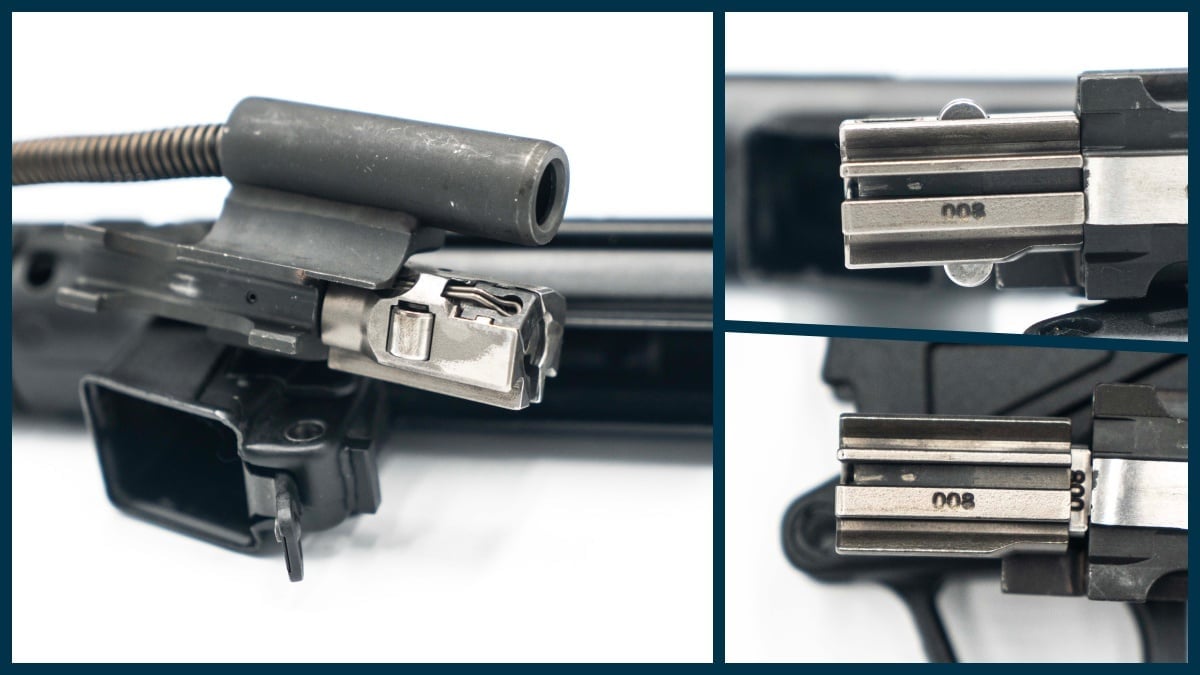
It makes for a very robust and reliable action that's comfortable to shoot; however, the large bolt has a long distance to travel inside the firearm. This shifts the gun’s center of gravity noticeably. It all makes for a very controllable, accurate, but somewhat rocky design to shoot as a pistol.
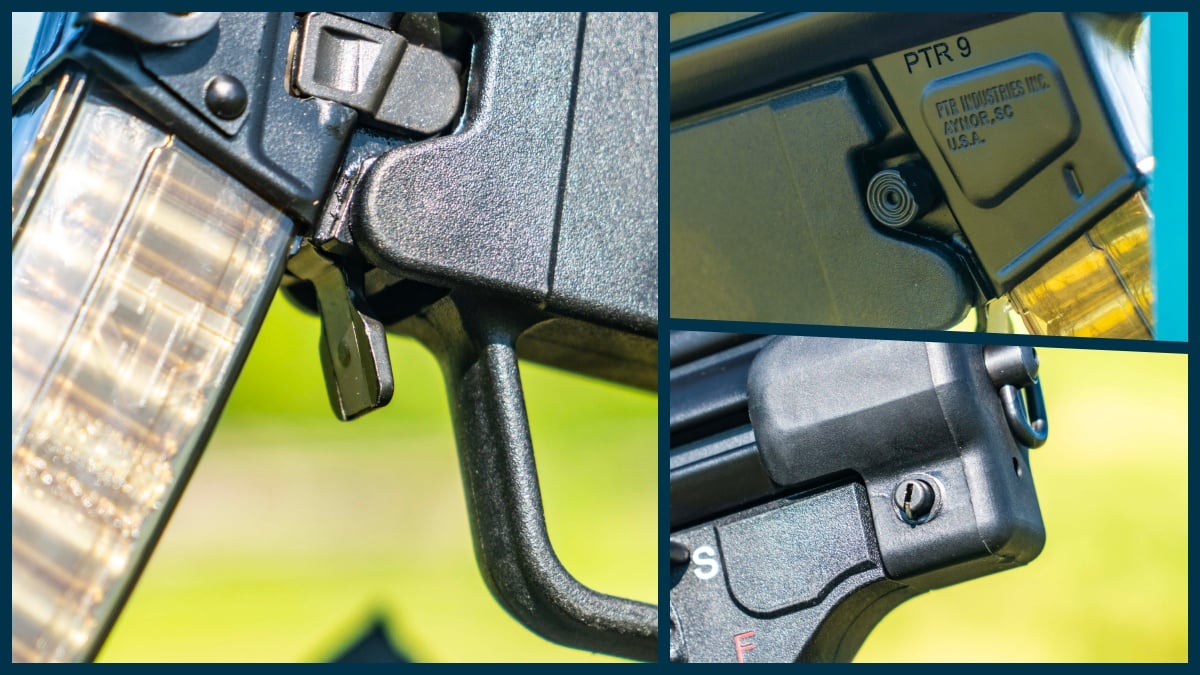
The PTR 9C and its kin all use this system in a far upgraded chassis over the original. There’s very little grit or drag to the bolt that you’ll often get with more budget-friendly clones like Century Arms AP5s. It includes serious updates to your top sights with a steel Picatinny rail mounted to the receiver and an aluminum handguard with M-LOK slots.


Related: Century Arms AP5-M Review – Budget MP5K Clone
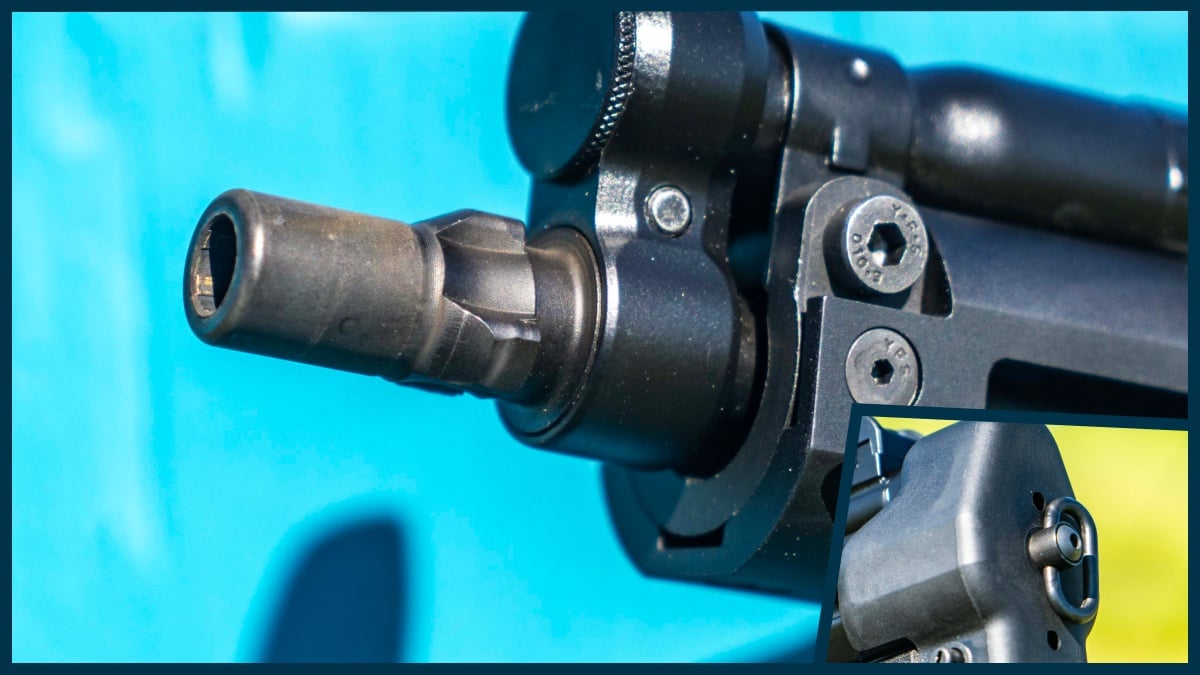
PTR 9s feature a nitride-heat-treated barrel. This is equipped with a three-lug mounting point at the front for quickly attaching and detaching suppressors. There’s a dead-blow-weighted, full-auto bolt carrier with tungsten fill. That bolt is nitride-treated for protection.
Here are some basic specs for the PTR 9C:
- Weight: 5.05 pounds
- Length: 17.75 inches
- Sight Radius: 13.25 inches
- Barrel Length: 9 inches
- Top Pic Rail: 4.5 inches
- Handrail Length: 5.5 inches
- Capacity: 30+1 9mm
- Trigger Pull: 4.94 pounds
The trigger breaks at a nice – for an MP5 clone – pull weight of just 4.94 pounds. There’s 0.15 inches of light, springy travel to the wall. That wall breaks with 0.1 inches of travel. It’s a bit clunky, but that’s part of the original design, which was well-suited for controllable full-auto fire. The reset is fast, positive, and audible with a travel length of 0.22 inches.


Your fixed sight options include an adjustable rear aperture and front sight post protected by a solid metal ring. I found these low enough to easily use the iron sights underneath a raised optics mount.

Additional features include a sling attachment point at the rear. PTR also ships these guns as packages that include a heavy-duty range case, two magazines, a rear sight tool, and a single-point bungee sling. I dislike bungee slings because they make shooting less stable, as the bungee tugs back with every pull. Still, it’s an added perk to have one.
Range Testing + Video
I’ll dig into the shooting details below. But first, here’s a video to show you how that gun handles on the range. It includes precision shooting tests at 25 yards and rapid-fire and suppressed-shooting testing.
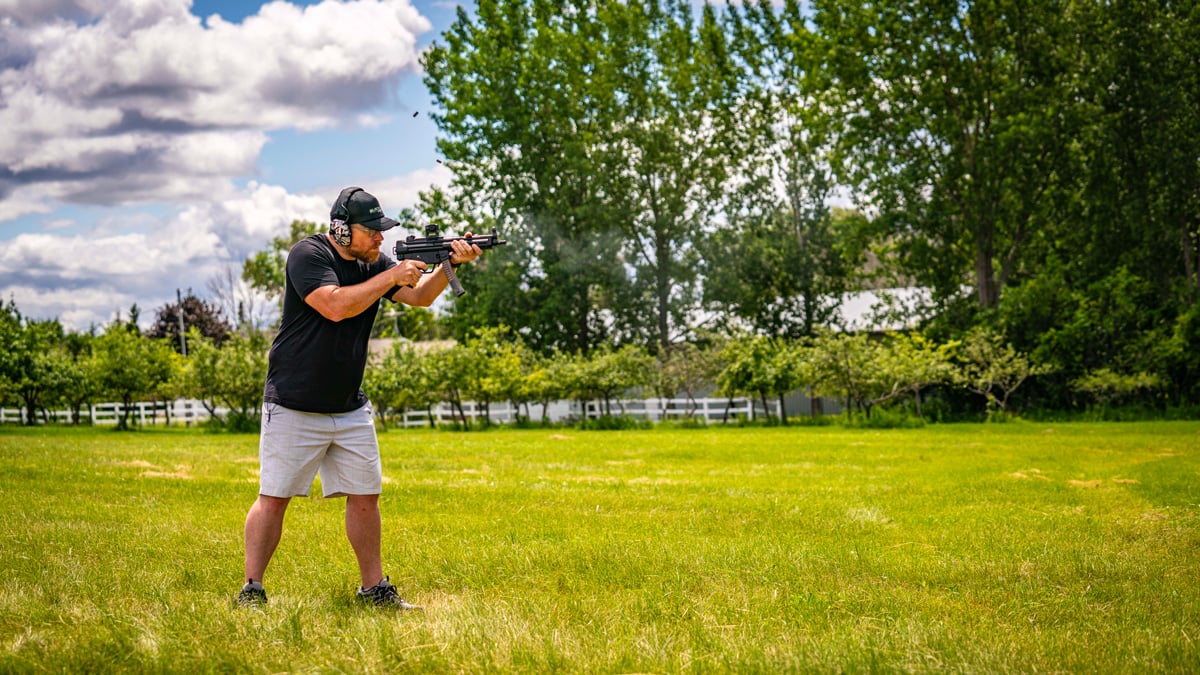
That video will give some idea of how accurate and reliable the PTR 9C was on the range. For that shooting, I was routinely ringing 6-inch steel plates at distances of 15 and 25 yards. In my opinion, that’s the ideal zone to use this platform. I did this with both my iron sights and my 3-MOA Gideon Mediator red dot.
The gun will chug through ammo, but the large moving bolt makes it increasingly hard to hold onto targets at longer ranges the faster you shoot. Here’s a paper target of what I get when I shoot it rapidly at 25 yards.
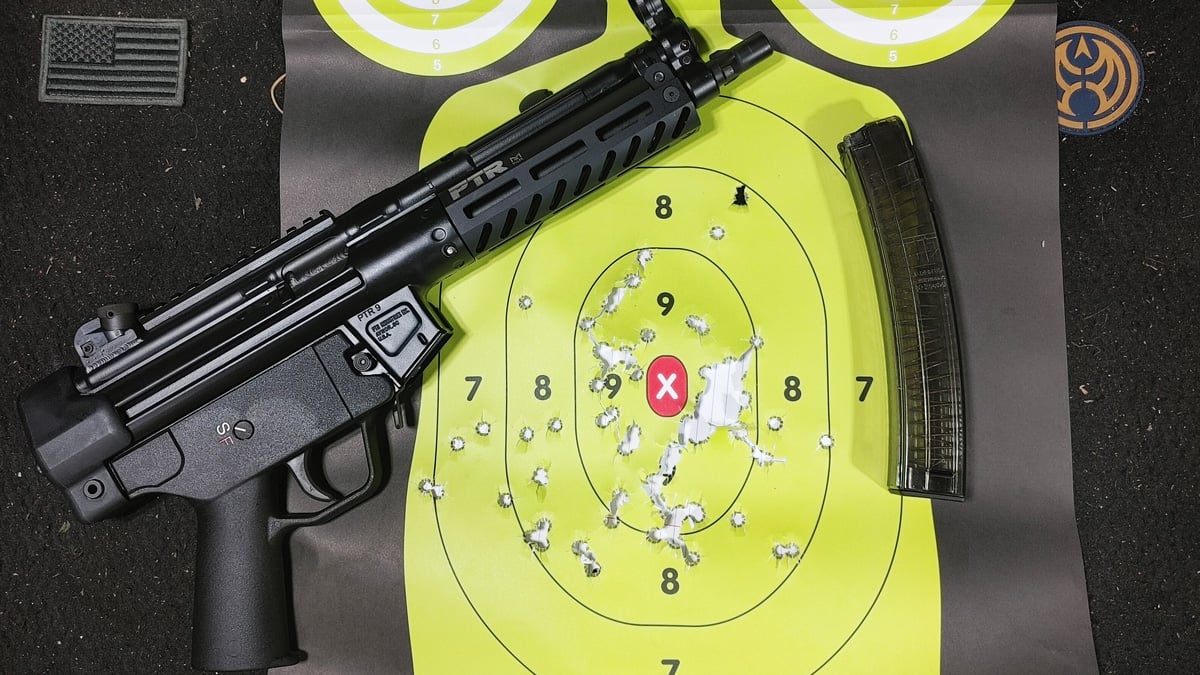

I’ve now tested this gun through winter and summer conditions outdoors. It’s chewed through 1,000 rounds of a mix of 9mm ammo over months of testing. I had only one issue on my very last range trip. Most of my shooting was done with budget-friendly 115-grain Remington Range FMJ, 115-grain steel-cased Winchester USA Forged FMJ, 115-grain Fiocchi Range Dynamics FMJ, Federal 115-grain American Eagle FMJ, and extra-budget 124-grain brass-cased ZSR FMJ.
Related: My Favorite Machine Gun – H&K MP5 SD
I burned through most of that ammo as fast as I could shoot because, well, that’s half the gun of an MP5 clone. The faster you shoot, the more the gun rocks in your hands. Hence, accuracy is limited without a stock to support it. But reliability is not.
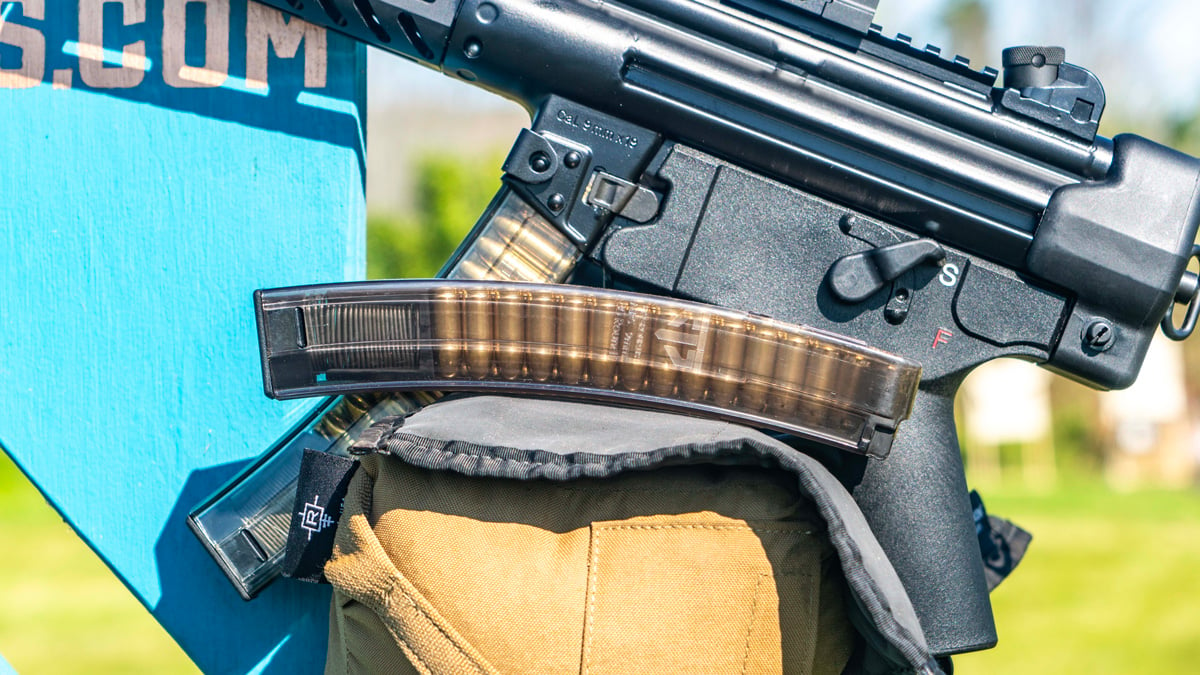

My only issue came from a single mag of coated Federal 124-grain Syntech. These have a synthetic coating that may have caused the failure to extract the casing. It could also have simply been the months of shooting without cleaning or a poorly inserted magazine that finally caught up to it.
Regardless, it has been at least 99.9 percent reliable, which is as effective as that hand sanitizer your doctor has probably been using for years. Overall, from a shootability, reliability, and accuracy perspective, the gun is about as solid as you can expect from a pistol based on the MP5.
Pros & Cons
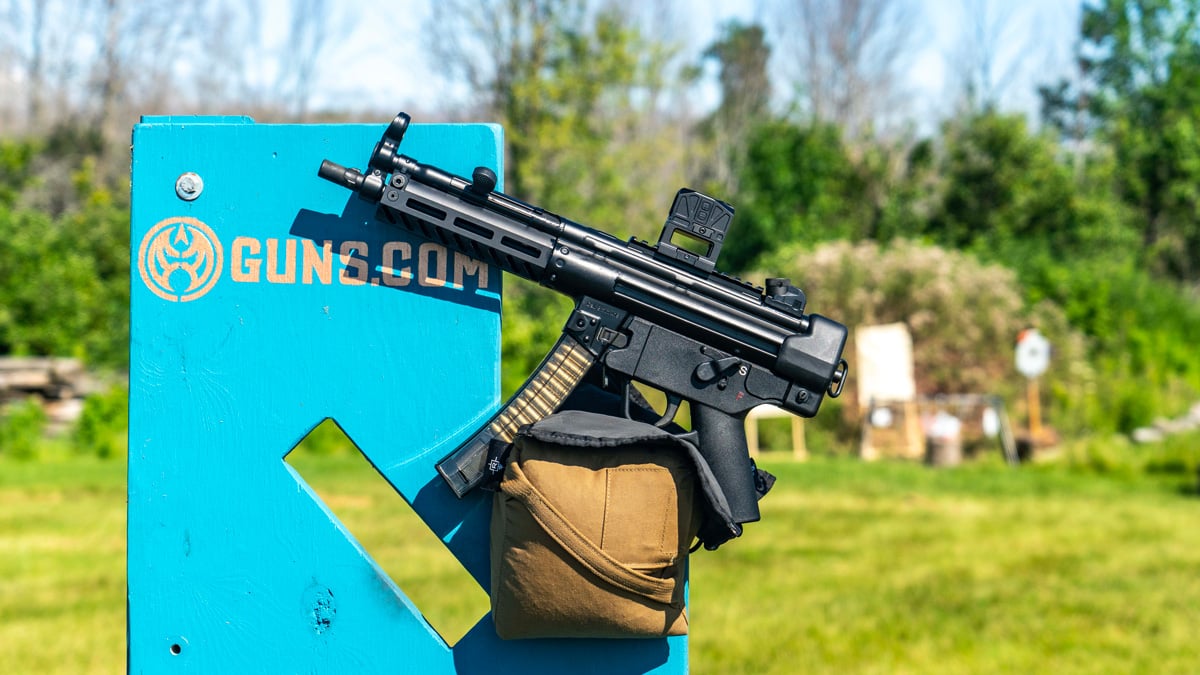
Here’s my short list of the pros and cons for the PTR 9C:
Pros:
- Classic design
- Three-lug barrel suppressor mount
- Steel Picatinny optic rail
- Aluminum handguard with M-LOK
- Improved trigger
- Decent accuracy
- Very reliable
- Easy to shoot
- Will run very fast
- Sling mount at the rear
- Improved safety lever feel
- Good iron sights included
Cons:
- Generally pricier than other MP5 clones
- Not ambidextrous
- Heavy for one-handed operation
- Pistol grip has little texture
-
No last-round hold open
Final Thoughts
I love a good classic. The MP5 design is certainly that, and PTR Industries kept much of the gun’s good looks while adding a ton of useful upgrades. I’ve tested several MP5 clones so far, and this one ran the smoothest with the best trigger.
Quality comes at a cost. But it’s hard to beat classic firearm designs that offer made-in-America quality and innovation. You get both with the PTR 9 series.