Overview
In the early 1990s, the first revolver I purchased was a secondhand Taurus Model 80, the company's 1:1 clone of the Smith & Wesson Model 10. With fixed sights, walnut grips, and a 3-inch barrel that had a pencil profile and a semi-exposed cylinder rod, the six-shot .38 SPL had a very old-school look to it. It was probably made in the late 1970s – when Taurus and S&W were sister companies – but looked as if it walked in right from the Eisenhower era. Like you should don a fedora just to load it.
The thing is, that Taurus, which already was, let’s say, "well broken in," when I picked it up, was tough to beat. I had it for a good 20 years and shot it often, putting box after box of rounds through it, sans issue. I only let it go just after Hurricane Katrina, passing it on to an older gentleman who had the Gulf of Mexico rise and swallow his whole house, gun collection included. He wanted something basic and easy to figure out. Something that worked. The old Taurus 80 came to mind and fit the bill.
No light, no red dot, no polymer. Just a practical and reliable gun that’s concealable if such a thing is needed.
Taurus long ago went to a more modern full-lug style of double-action revolver, and legacy models such as the M80, discontinued in 1996, faded into history.
Similarly, Rossi, the Brazilian rifle and revolver maker that Taurus acquired in 1997, previously made the no-frills five-shot Model 68 in .38SPL, in both 2- and 3-inch formats, for a generation. I long ago picked one up that had been imported to the States in the 1980s by Virginia's Interarms and loved it. Although by all accounts a "budget" gun, it nonetheless had a good fit and finish as well as a high polished deep bluing on all parts and hardwood grips. I love it still.

Sadly, like the Taurus Model 80, the Rossi Model 68 also faded into gun history.
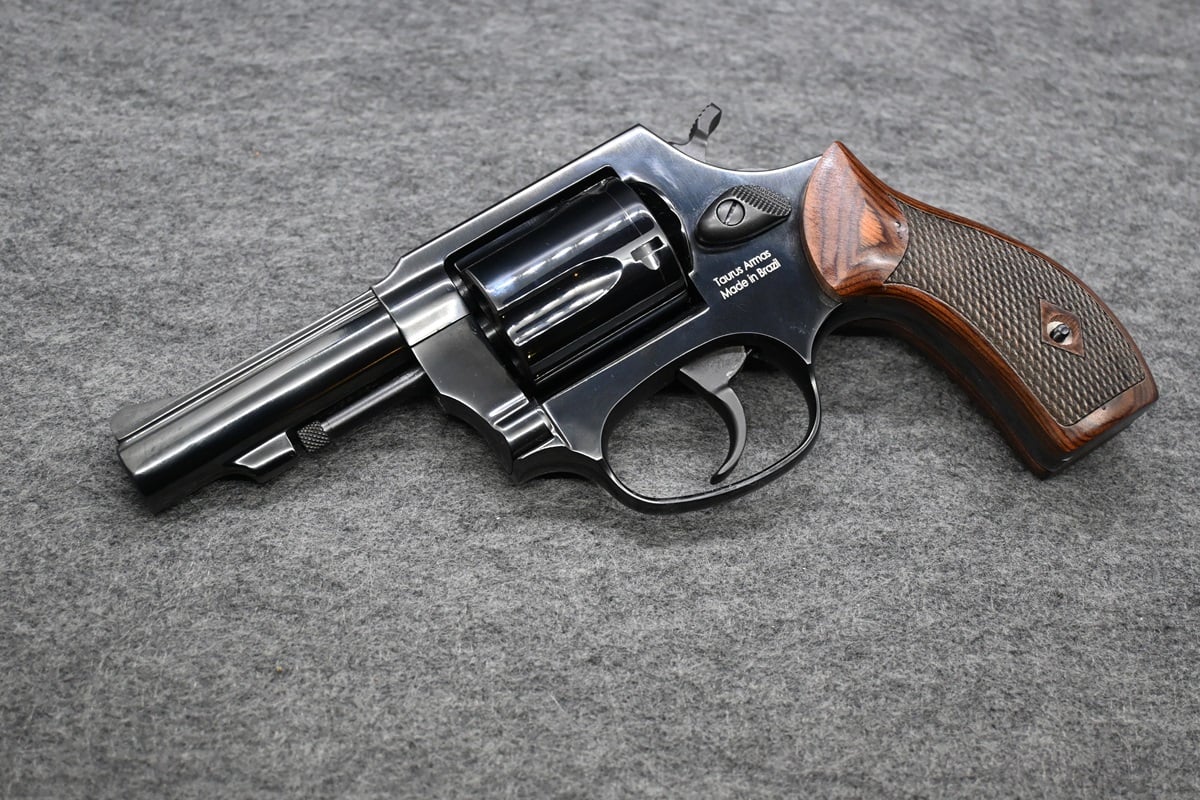
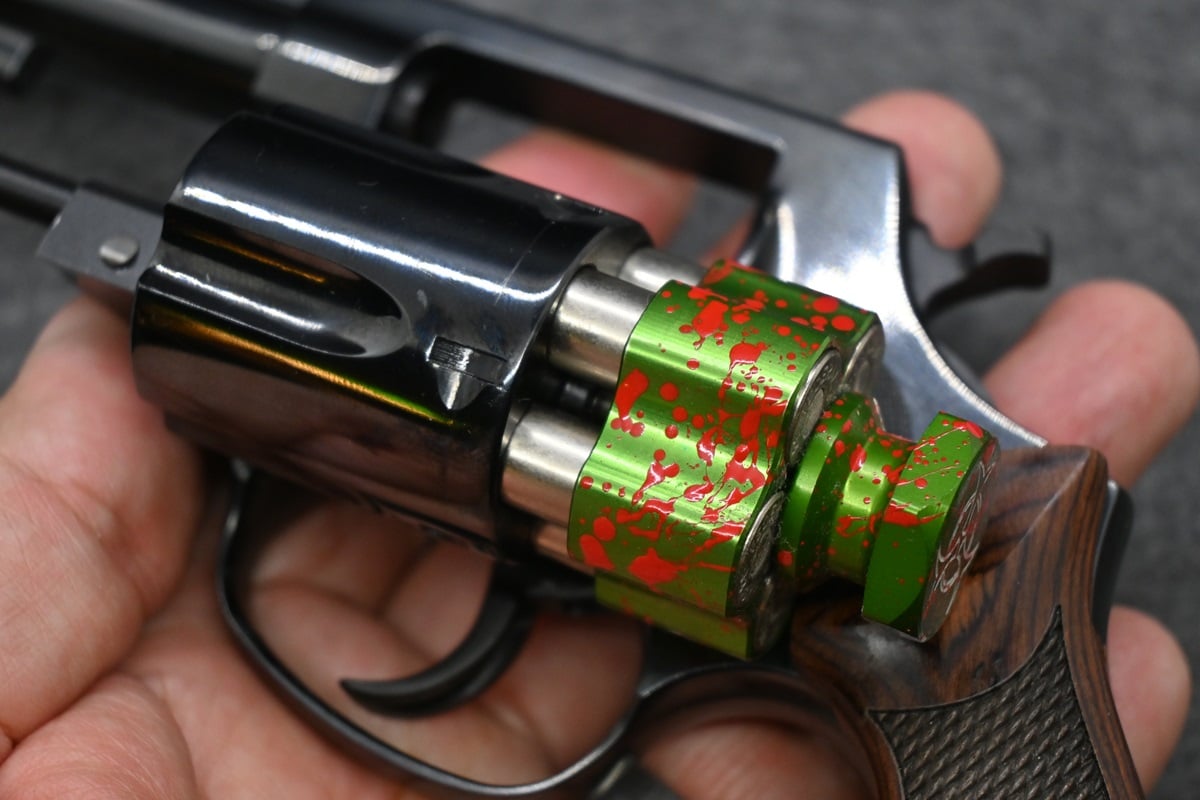
With all this being sad, it was great news earlier this year to find out that Heritage Manufacturing, another maker under the Taurus umbrella, borrowed a page from days past to bring forth, like a phoenix materializing into Burt Reynolds' man room from a puff of unfiltered Pall Malls: the Roscoe. A gun that shouldn't exist according to the market, being outdated and quaint, the Roscoe runs fixed sights, a five-shot cylinder, options for 2- and 3-inch barrels, and comes clad with both a polished finish and wood grips.
Plus, it retails in the $300s, new.
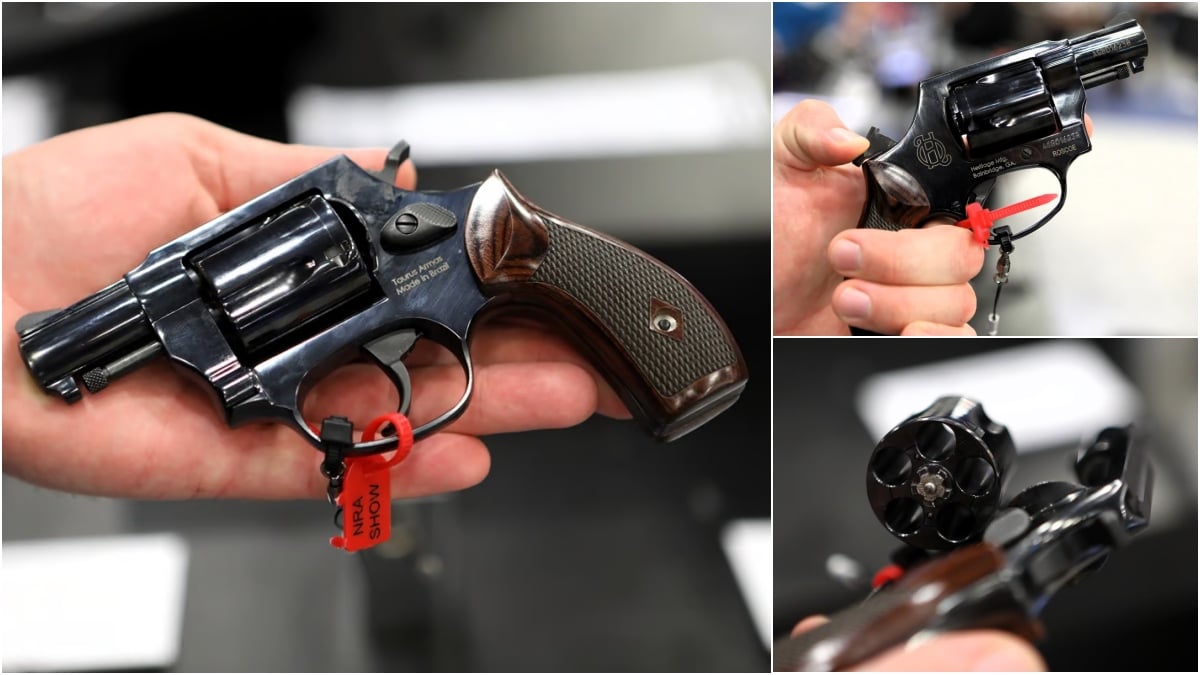
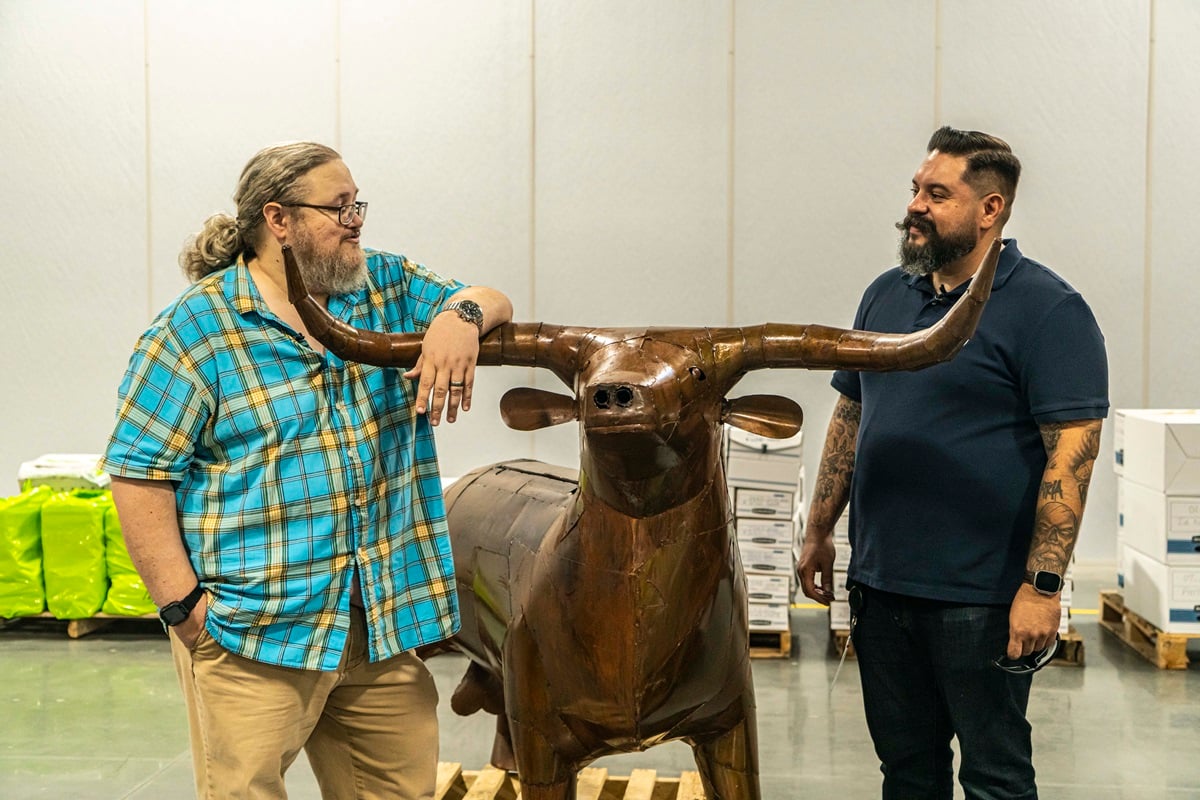
We talked to Caleb Giddings (Mister Revolver) with Taurus at this year's NRA Show about the new Roscoe and were excited to get our hands on it.
"It's perfect for someone who just wants a five-shot concealed carry gun, or if you just want a very simple defensive firearm, we've got it," said Giddings.
Why Roscoe?
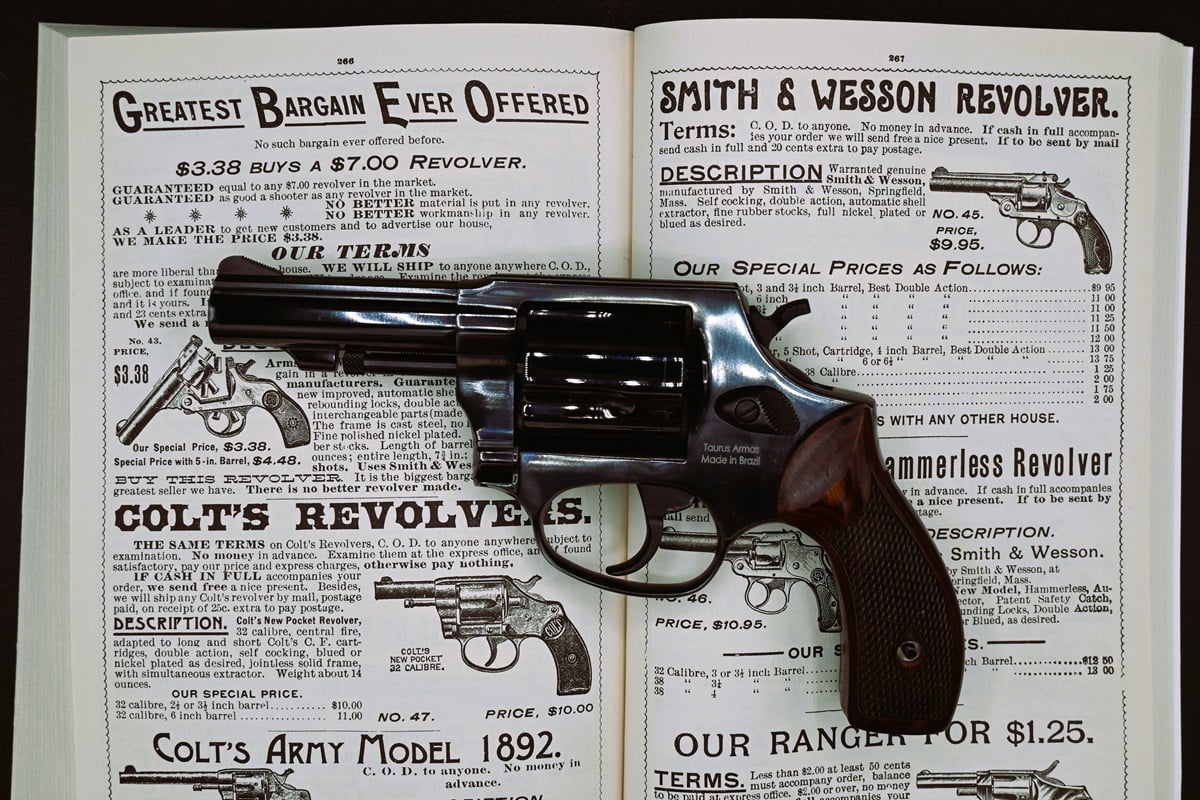
The term "Roscoe" dates to at least the 1910s and soon after became a slang term for a handgun. We've used it in the past. Even Merriam-Webster recognizes the use.
Joseph Wambaugh's tragicomic police novel "The Choirboys" has a main character that repeatedly refers to his .38 as such.
Crime noir novelist Damon Runyon, in his 1944 "Omnibus," used the term no less than 13 times. Take this rain-soaked, cigar-chewing passage from that tome, for example:
Naturally, Bookie Bob is greatly surprised when I poke my head into his car and tell him I wish the pleasure of his company for a short time, and at first he is inclined to argue the matter, saying I must make a mistake, but I put the old convincer on him by letting him peek down the snozzle of my John Roscoe.
Heritage leaned into this era of Philip Marlowe, Sam Spade, and Mike Hammer in its marketing for the Roscoe.
"The Heritage Roscoe is our tribute to the legendary gunfighters of the 1930s, 40s, and 50s," says the company. "The hard-boiled detectives battling mob crime, the movie sleuths, and even the real-world cops of that era all had something in common. They carried a revolver; the Heritage Roscoe is a recreation of those guns."
For full disclosure, Heritage provided this Roscoe revolver for review purposes. All testing was done on this one gun, which has been under evaluation since June.
The Specs (3-inch model)
- Overall length: 7.50 inches
- Barrel length: 3 inches, 1:16-in RH Twist
- Overall width: 1.41 inches at the widest point over the cylinder
- Overall height: 4.80 inches
- Magazine capacity: 5-shot cylinder
- Sights: Fixed
- Trigger pull: 12 pounds double-action, 5.5 pounds single-action (10-pull average).
- Weight: 23.5 ounces (unloaded)
Features








Trigger
The double-action/single-action trigger system on the Roscoe is, regrettably, vintage. Nothing to write home about, it has a long (0.60-inch) yet steady DA pull that hits the scales north of 10 pounds. You can always manually cock the hammer and go single-action with a delightful 6-pound squeeze through a short and immediate wall.
Video of both, below:
Reliability
We found the cylinder timing and lockup on the Roscoe – the heart and soul of a wheel gun – to verifiably run well on the range. No shaving lead. Everything lining up shot after shot. In all, we put about 400 rounds through the Roscoe, balanced between 300 target loads and 100 self-defense loads, and all 400 were delivered downrange without issue. To be fair, this is a small-framed revolver, so we had to do this across two range sessions to give our paws and the gun a chance to cool down. It is not a comfortable gun to shoot, but no small-framed .38 can say it is built to deliver on that metric.


The revolver gummed up with carbon pretty well during testing, especially when it came to ejecting spent brass, which got stubborn after the first 100 rounds, but the Roscoe still delivered and never lost time.
Accuracy
Small-framed revolvers are never accurate at a distance, particularly when fired in double action. This is compounded by the narrow, round butt grips and fixed sights. However, Roscoe proved more than capable of practical accuracy at 15 yards, keeping fist-sized groups at that range even in a decent cadence. Pushing back to 25, we were still able to hit an IPSC plate with some concentration, albeit with a lot more Charlies and Deltas than Alphas.

Pros & Cons
Pros
- Classic styling
- Affordable
- All steel construction
- Bright blue (polished nitride?) finish
- Hardwood grips
- Simple
- Reliable
- Accurate at practical distances
Cons
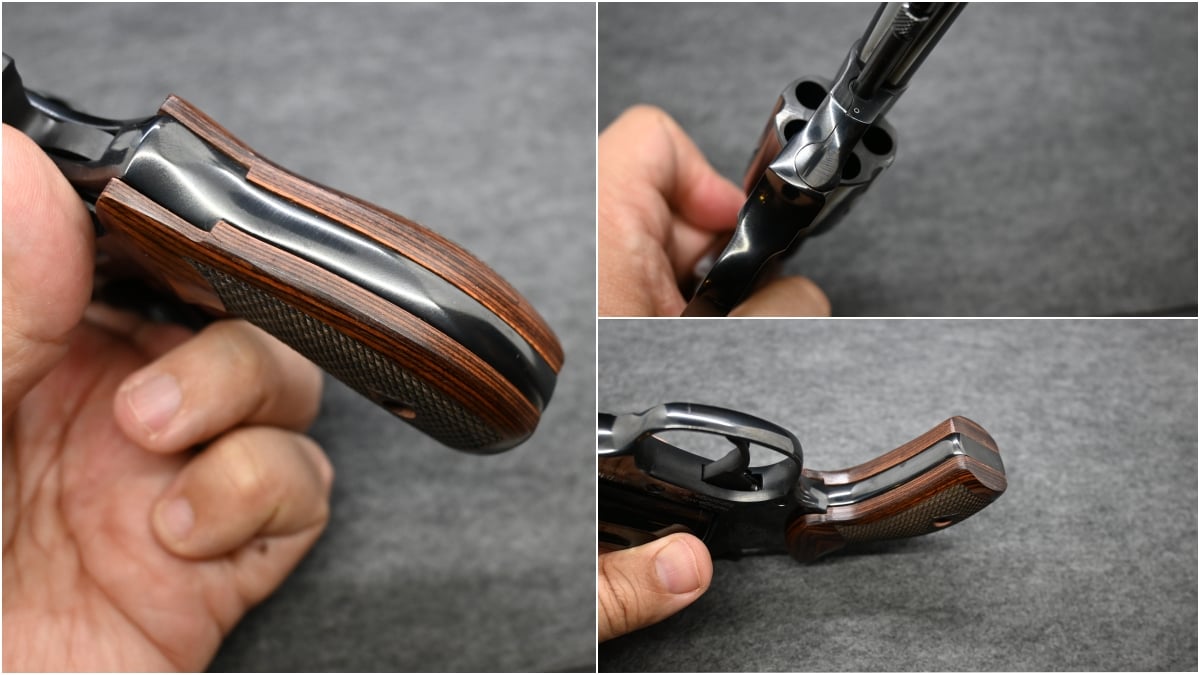
- Thin, awkward grips
- Only five shots
- Heavy compared to modern competitors
- Very heavy DA trigger
Conclusion
Much like the long-discontinued Taurus Model 80 and Rossi Model 68, guns that are now some 30 years out of production, the Heritage Roscoe is a simple and rugged .38 revolver that looks good and doesn't break the bank. It has the look and feel of a vintage S&W J-frame but without the cost – and, unlike a classic Smith or Colt Dick, you can take it to the range and beat on it without losing any collector value. Plus, it has some modern features that you didn't find in those guns such as the transfer bar and heavy barrel profile.
You can always get one and turn it into a budget Fitz Special, which seems like a great choice if looking for that.
Is it the best .38 for concealed carry or personal defense compared to more modern designs with shrouded hammers, better triggers, options for adding optics, and weight savings via the inclusion of aluminum and polymer? Not even close, but it can still clock in when needed. It is no slouch in terms of practical accuracy and is rated to run .38 +P on occasion.
It’s nice to see the Heritage time travel with the Roscoe, which is a bit of fresh air, albeit with a twinge of cigar smoke to it.