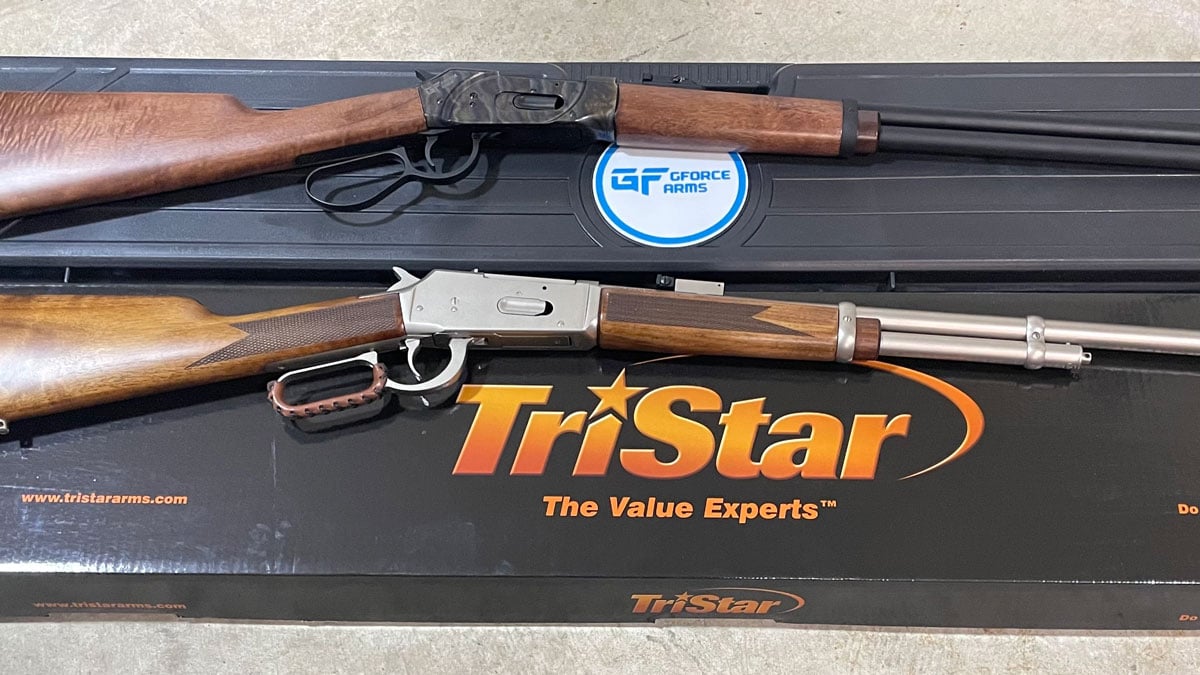
Design Similarities

At first glance, we wondered if the GForce LVR410 and TriStar LR94 had come from the same factory in Turkey. While that doesn’t seem to be the case, the physical likenesses are unmistakable. Both are built around an aluminum alloy receiver, fitted with a round steel barrel, and dressed in Turkish walnut furniture.
Related: LR94 – Budget Shotgun Boss TriStar Enters Lever Land
Related: Budget Lever-Action Shotgun – Reviewing GForce’s LVR410
Metrics
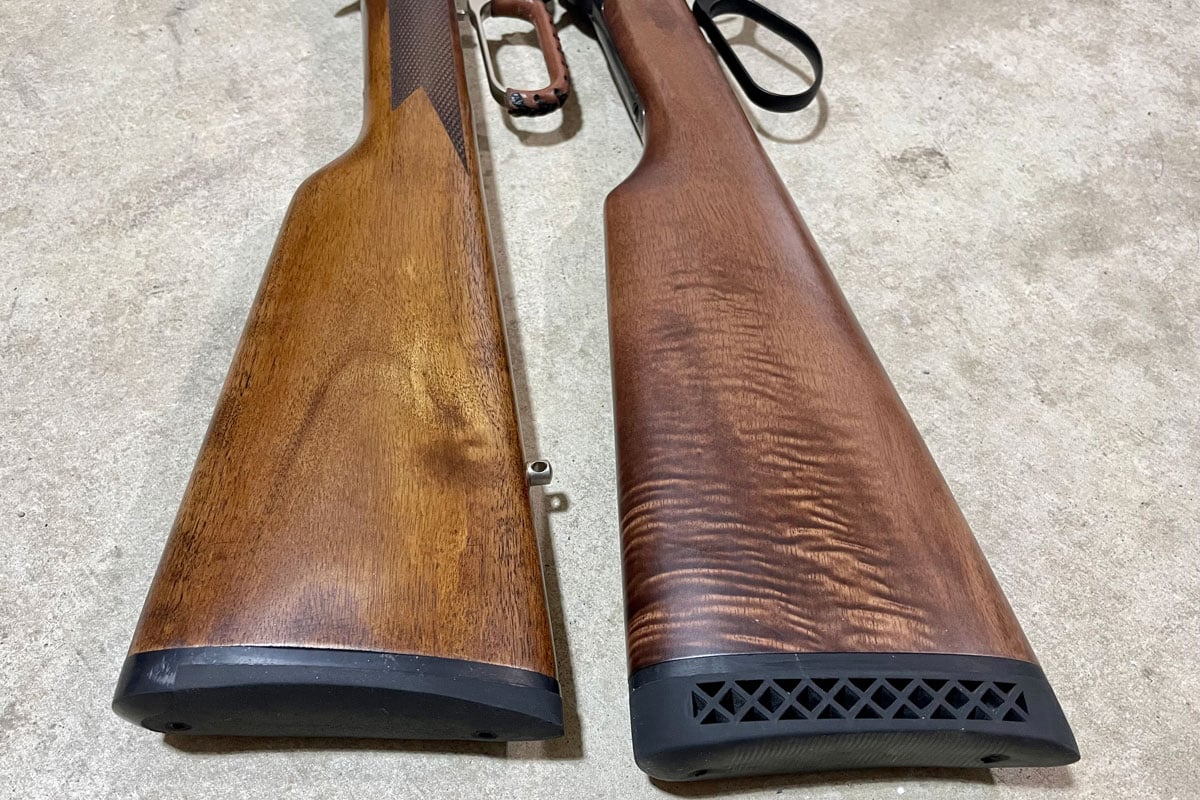
Tristar LR94 (test gun)
- Barrel: 22 inches
- Overall: 40.5 inches
- Length of Pull: 14 inches
- Capacity: 5+1 rounds
- Lever size: Standard
- Weight: 6.3 pounds
GForce LVR410 (test gun)
- Barrel length: 24 inches
- Overall length: 43 inches
- Length of pull: 14.25 inches
- Capacity: 9+1 rounds
- Lever size: Large loop
-
Weight: 6 pounds empty
Extras
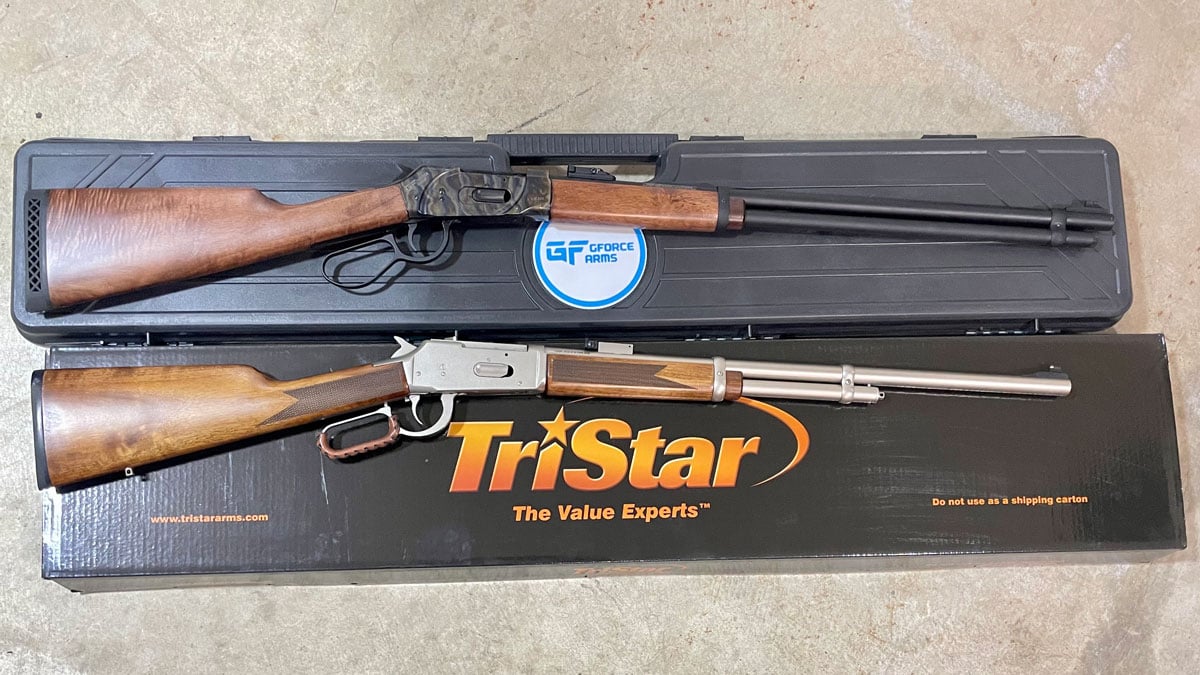
Though we’re comparing two slightly different model variants, both guns are part of their respective company’s base lineups. What bonuses do buyers get with each? TriStar offers the leather-wrapped loop, which offers an extra dose of cowboy flair.
GForce doubles down with not only a full set of choke tubes in a tiny case, but also a quality hard-sided gun case. The TriStar LR94, meanwhile, ships in a cardboard box with only one Benelli Mobil-style choke tube included.
Sights
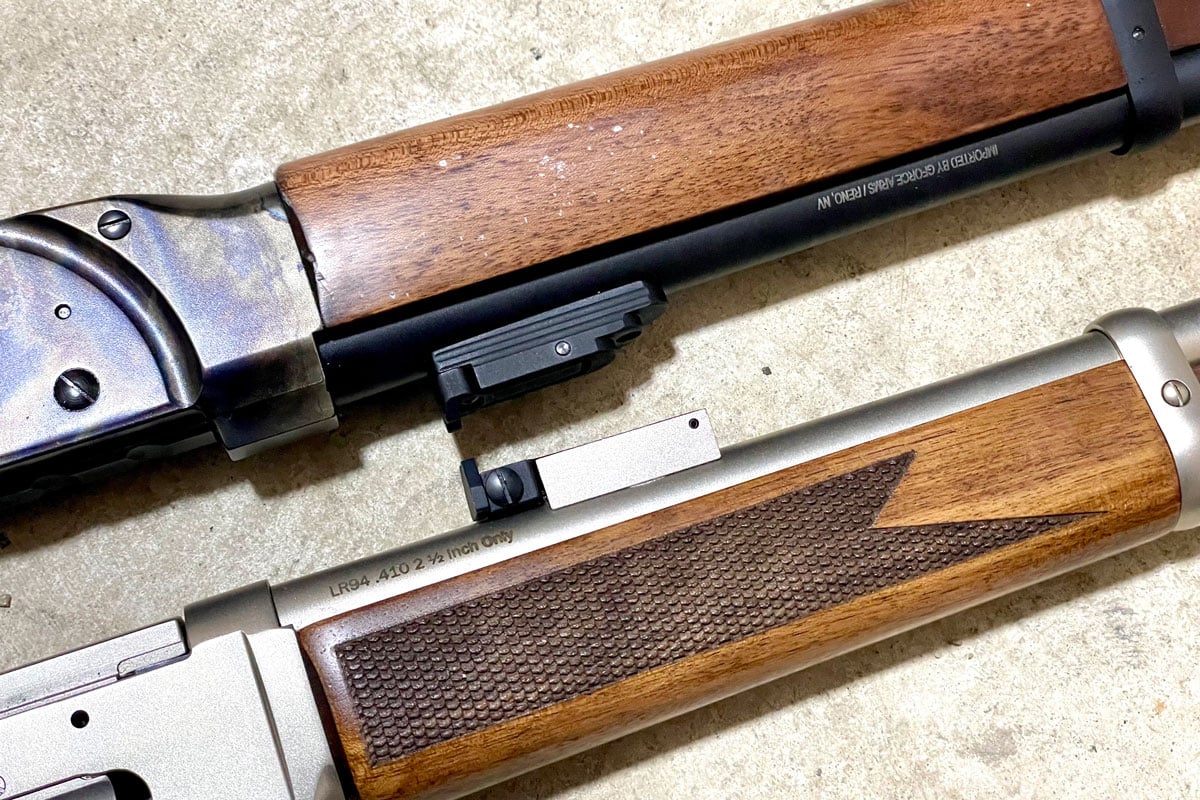
The iron sights on these two shotguns are similar, with a rifle-style design that is more uncommon on shotguns. For instance, traditional lever shotguns like those from Henry Repeating Arms use a simple front bead. The two import guns, however, sport the adjustable blade.
One of our hangups with the TriStar centered on its boxy rear sight, which has sharp edges. Current GForce iterations wear a similar sight, but with more rounded corners and less intrusive profile. The GForce also offers a HiViz front sight, an upgrade over the TriStar’s standard beaded blade.
Safety
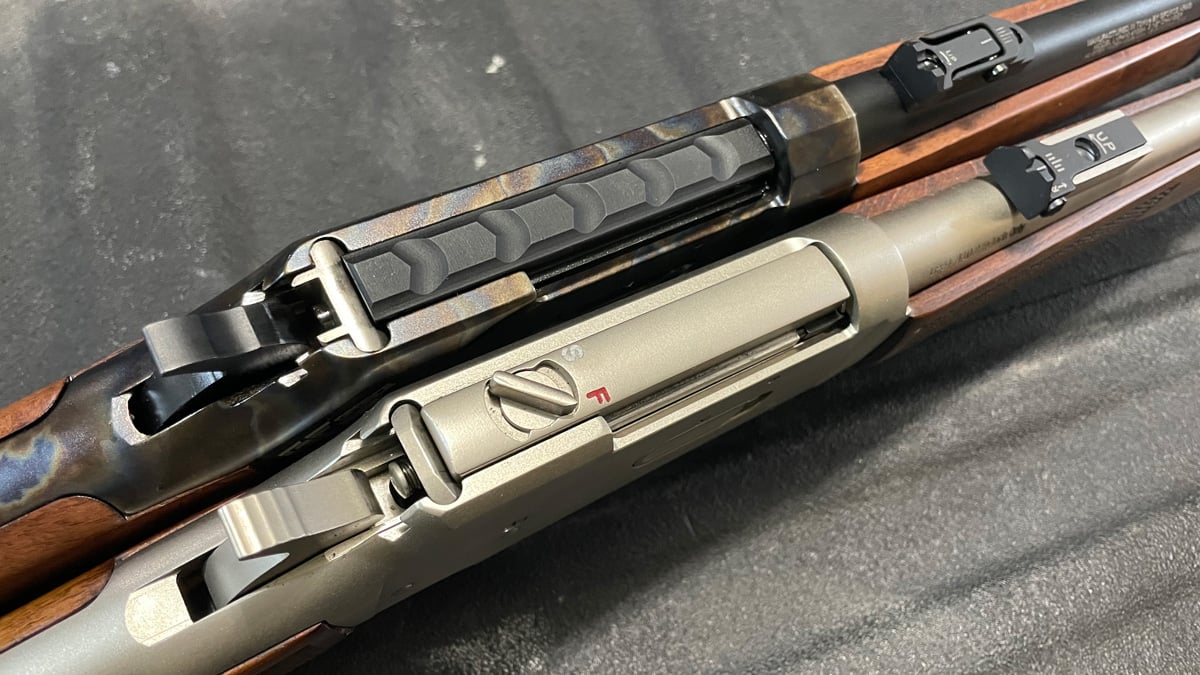
Both scatterguns offer safety features, but one touts not one or two, but three safety systems. The GForce LVR410 uses the standard – and largely unseen – lever tang safety that requires the lever be fully closed. In fact, we found that pulling the lever snugly against that lower tang was required in order to fire.
The TriStar, meanwhile, is decked out in security features. In addition to the same tang safety and a rebounding hammer safety, it has a mechanical dial safety. Located atop the bolt, the turnable dial must be rotated from safe to fire prior to engaging a target. Some shooters will prefer the unfettered GForce, while others likely appreciate the multiple fail-safes of the TriStar LR94.
The Function Conundrum
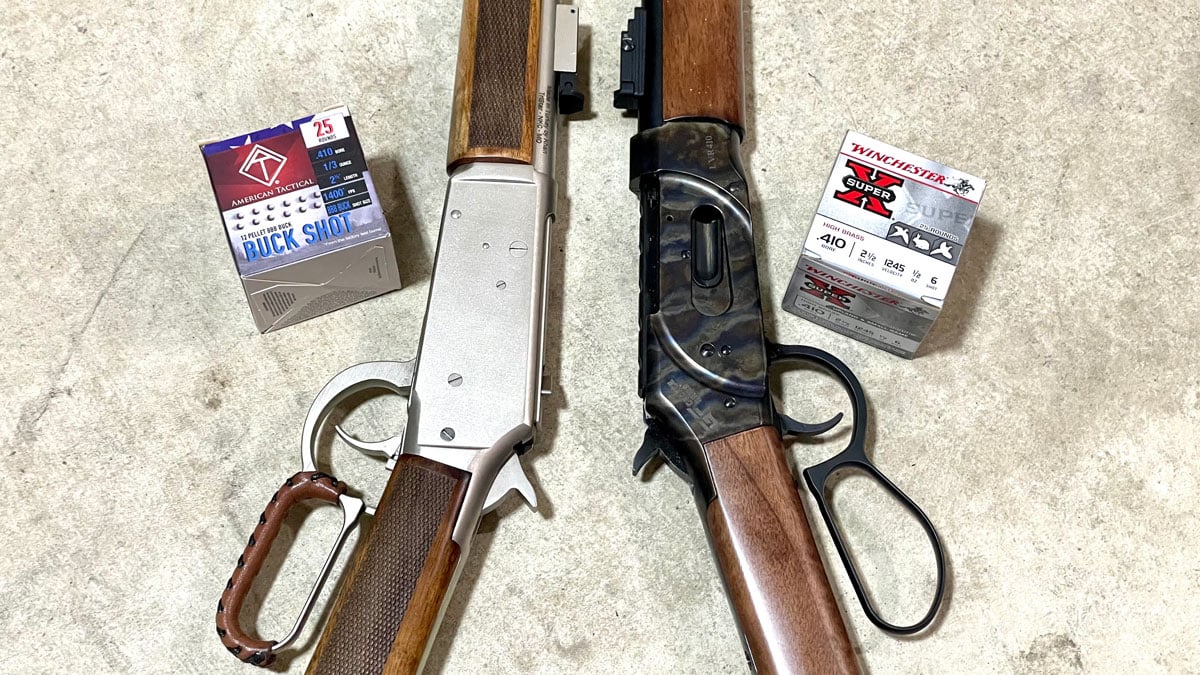
On so many of the firearms we review these days, flawless functionality out of the box is a given. In this burgeoning world of international lever shotguns, however, things haven’t been so simple. Both of these scatterguns required a break-in period, though one demanded considerably more attention. While both were a little rough on the action when compared to higher-end guns from brands like Henry and Marlin, both smoothed out nicely after significant range time.
TriStar’s LR94 rings in at a higher price point, but it required less work to get it running like a champ. While we experienced a few hiccups in feeding during the first dozen rounds, a thorough cleaning and more shooting had it running flawlessly in short order.
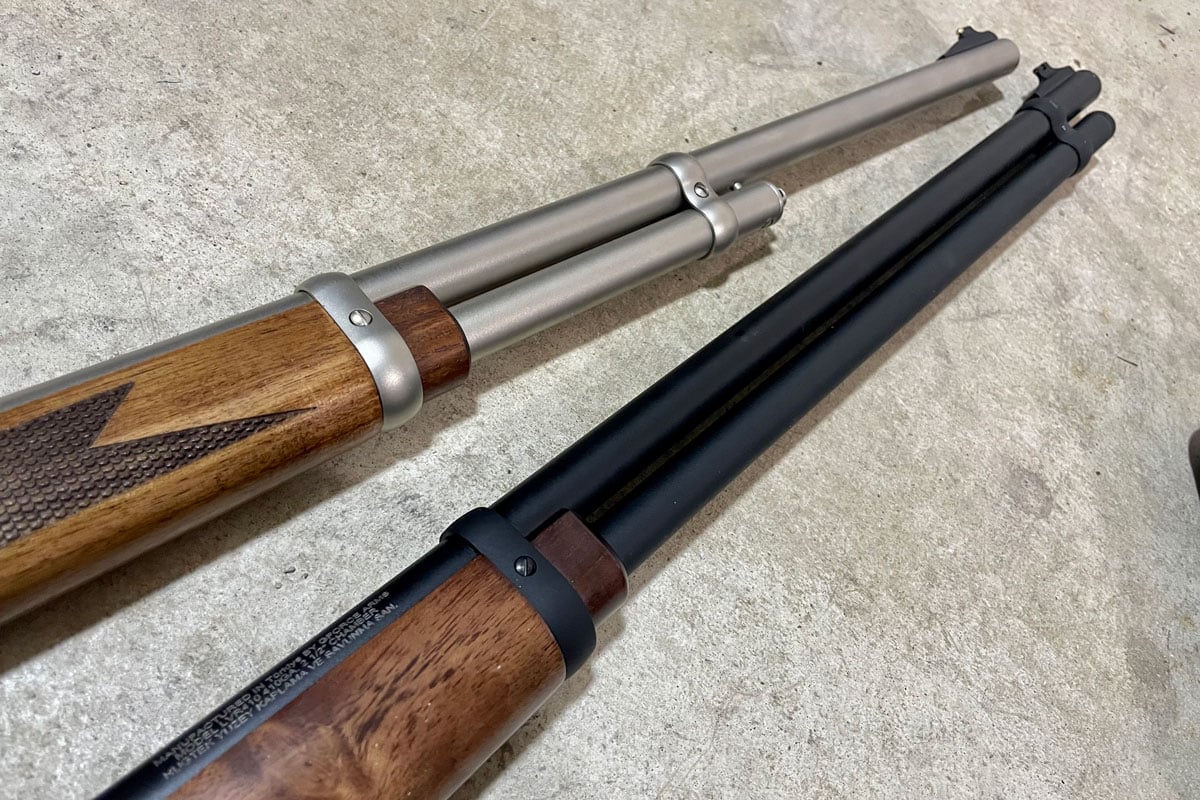
The GForce, meanwhile, tested our patience; however, its significantly lower price point might make that toil worthwhile. The company’s website clearly states the LVR410 requires a full cleaning prior to shooting, as well as an unspecified break-in period. The clean and lube job is a necessity, but the number of break-in rounds was rather high.
Reliable feeding proved the greatest issue of several, but after over 200 rounds, the gun was running well when the shooter worked the action with authority. Speaking of both guns, they’re a whole lot of fun when they’re cleaned, broken-in, and doing their thing. It all comes down to the cost-work-benefit equation.
Dollars and Cents