Purpose of the Suppressor
The overall purpose of the suppressor is to provide a safer and more enjoyable shooting experience. Since the inception of the suppressor, the goal has been to improve safety. The history of the invention of the firearm silencer is rooted in Hiram Percy Maxim’s desire to prevent hearing loss and bodily harm to the shooter.
When selecting a can, the user must also consider its intended use. What platform is it mounting to? What caliber? How many rounds will be shot in one sitting? Does weight matter? These questions should all be answered before you start shopping.
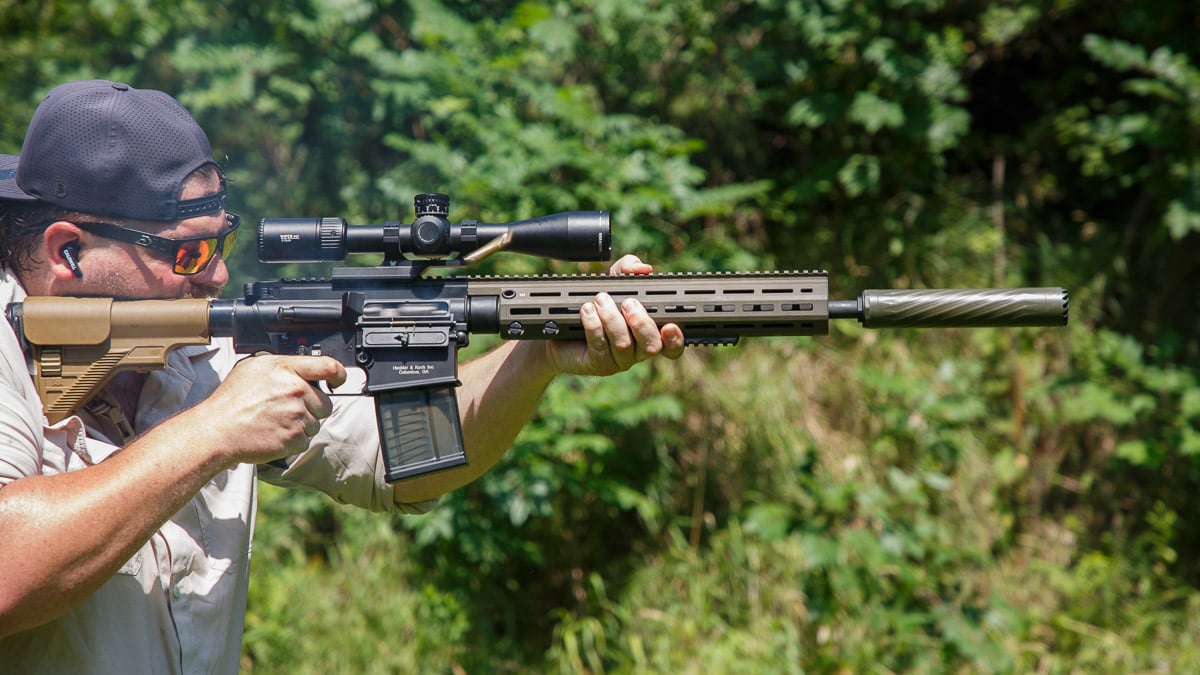
One suppressor may be great for a semi-automatic, direct gas impingement system, but not as effective in a bolt gun. One may be rated for .300 Winchester Magnum but made of a heavy material that adds too much weight to a hunting rifle that will be slung as the hunter stalks through harsh terrain. Intent of use and purpose matter.
Advancing Technology
Sadly, because of the draconian and unconstitutional National Firearms Act restrictions, suppressor technology has lagged over its 100 years of existence. With organizations like the American Suppressor Association working to restore those rights that have been unconstitutionally stripped from Americans, there have been some key victories as of late. Shorter wait times, simplified online forms, and the elimination of the $200 tax stamp have all contributed to the suppressor’s jump in popularity.

With this popularity and demand comes rapid advancement in technology and manufacturing practices. In the past 10 years, baffle systems have become more complex, materials have become more versatile, and 3D printing has allowed for stronger and more effective suppressor designs. This is truly the golden age of suppressors in the United States.
Construction Materials
The suppressor may look like a simple metal tube, but it’s more complex than that. The metal used in the construction of a suppressor will affect how much the suppressor can handle and how much it weighs. The general rule is that if you want a light suppressor, it probably won’t be duty use (full auto) rated, and if you want a duty use can, it probably isn’t light.
Considering that the AR-15 is one of the most popular firearms in the United States, combined with the growing use of forced reset triggers and fast-shooting throw drills and training, duty-rated cans are in demand. On the flip side, many folks are looking to trek through the wilderness on hunts with bolt-action rifles that will only fire a couple of times a day, so cutting weight is the priority.
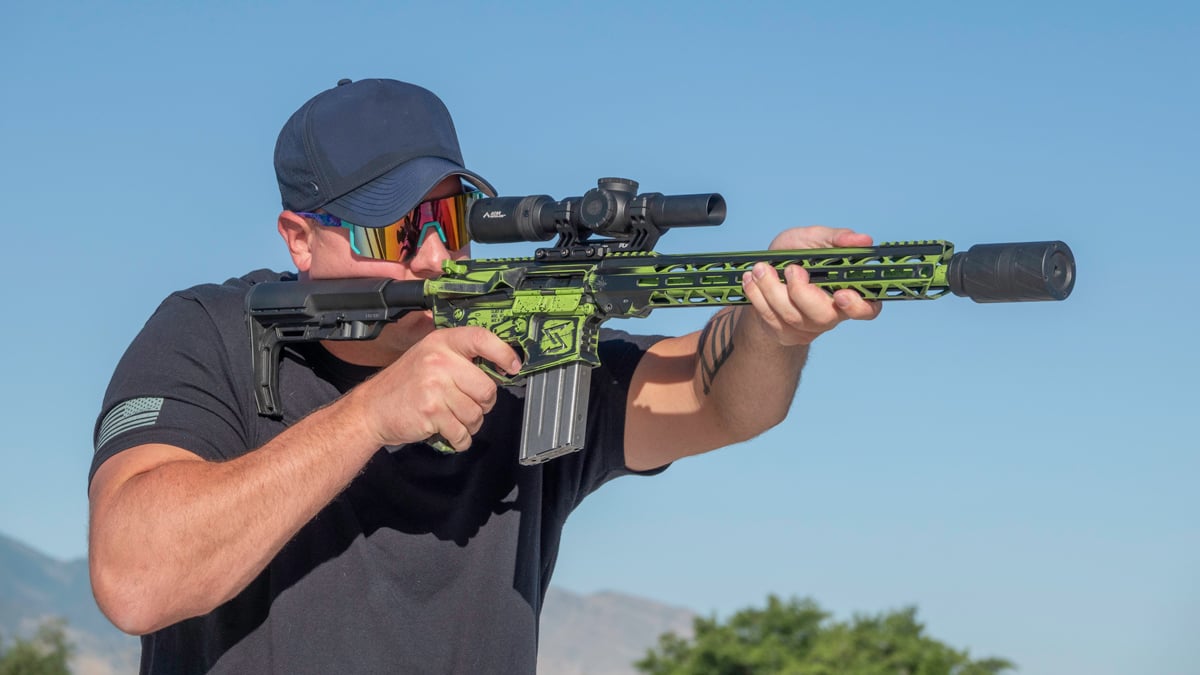

Generally, suppressors are constructed of Inconel, stainless steel, aluminum, or titanium. Inconel and stainless steel are heavier and have high melt points, while titanium and aluminum are typically lighter and not able to handle as much heat.
That said, the light/heavy rule may be changing, as several companies are introducing hybrid cans constructed of mixed metals that are both light and full-auto rated. B&T’s Print-XH line, most of Huxwurx’s new cans, and offerings from several other companies are beginning to bridge the gap between weight reduction and durability.

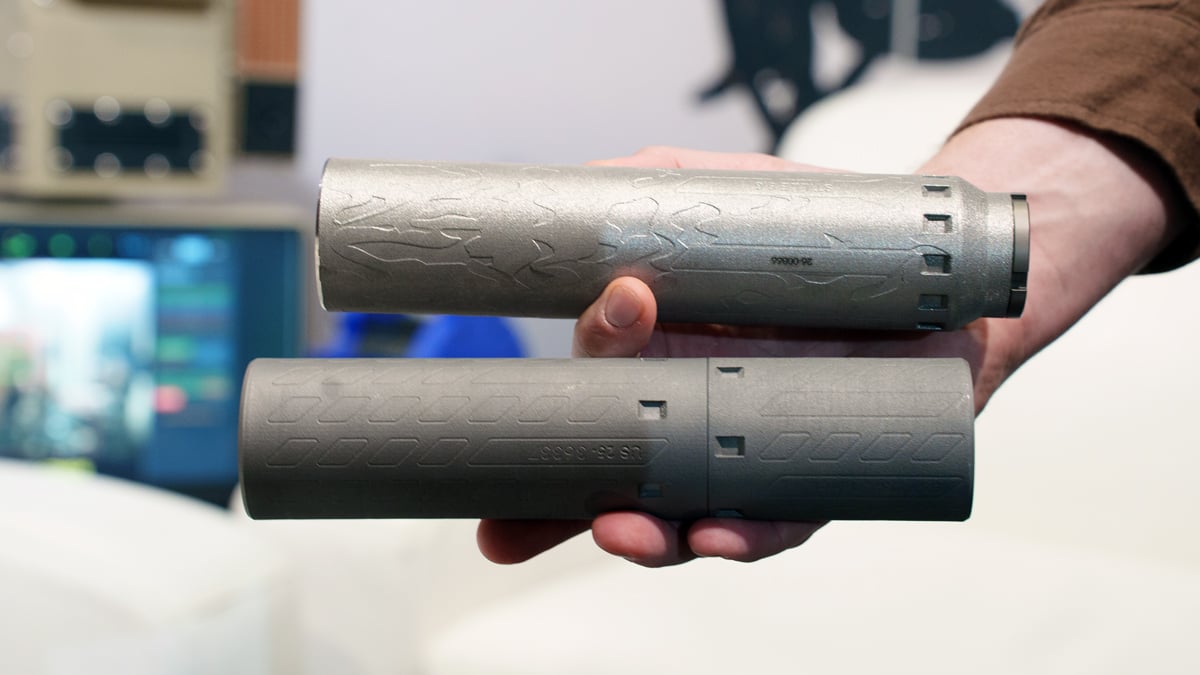
Additionally, the type of metal used can affect the spark and flash from a round being fired. This is especially important if you plan to train or hunt under night vision or do not want to give your position away. Titanium is notorious for sparking, and much like a cast iron skillet, must be seasoned to prevent sparking. Some companies treat their titanium suppressors to mitigate this risk, but most titanium cans cause a significant spark.
Baffle Designs
The design of the baffle is to allow for the expansion and cooling of gasses. Baffles can be constructed in several different ways. Traditional suppressors feature a metal sleeve or tube, with baffles that fit inside of the tube. These baffles can free-float individually, as on the Banish 30, or be constructed of a monocore, like on Hi-Point’s new cans. Some suppressors have no tube but are simply baffles welded together.
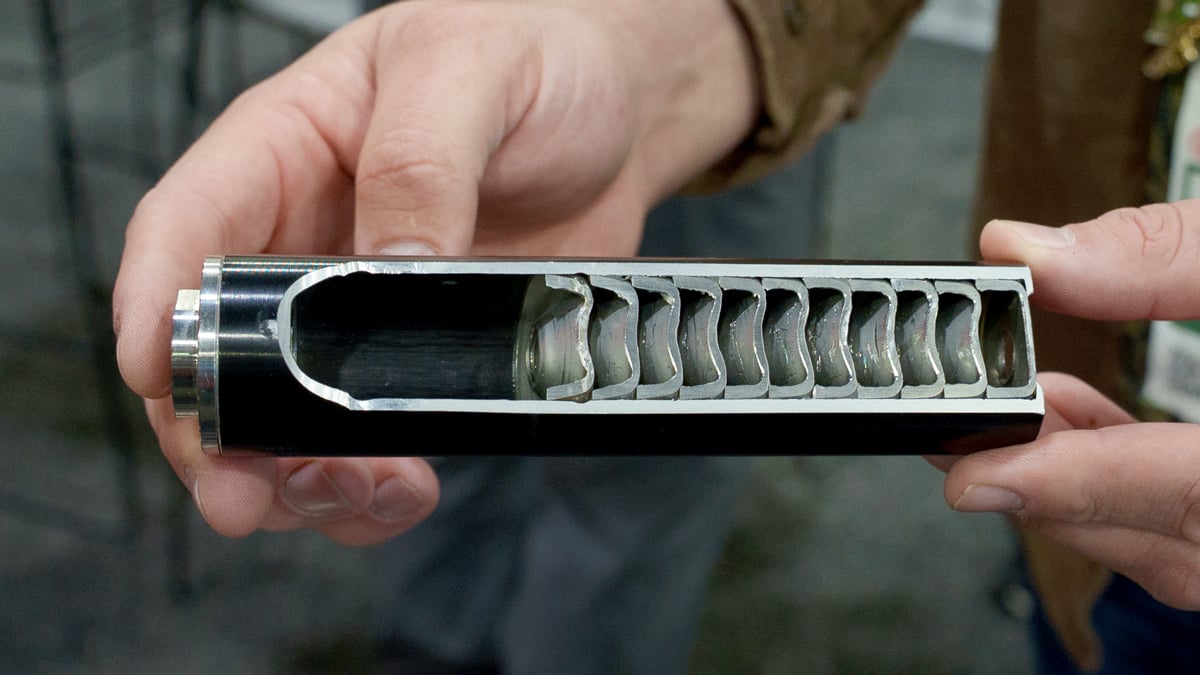
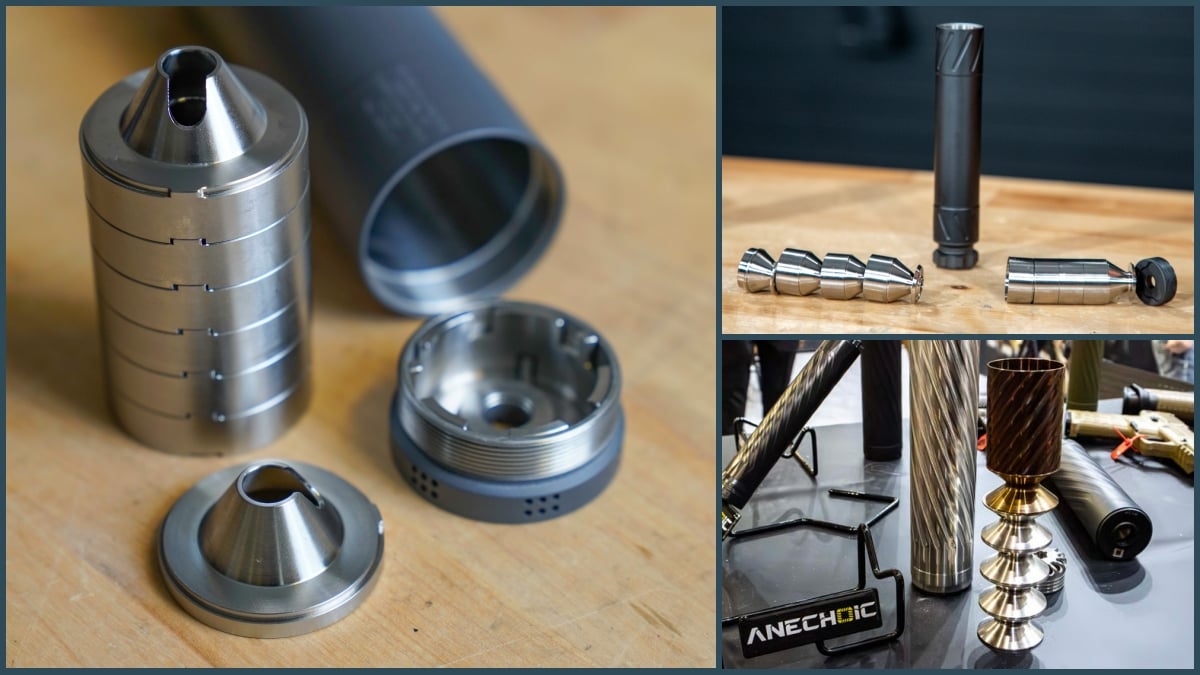
The most modern construction practice is in additive material manufacturing, or 3D printing. The 3D-printing process allows for more complex baffle designs that help push the gas forward and spin the gas so that it dissipates faster, doesn’t vent near the shooter, does not increase parts wear, and produces a quieter sound signature.
3D printing also allows use of those aforementioned lighter, stronger metal mixes. This is because 3D-printed suppressors are one piece, with no welds or weak points, allowing for increased pressures.
Standard
The standard suppressor design is a closed-off baffle system. Going all the way back to some of the first suppressors introduced and all the way up to cans like the Banish 30, a traditional suppressor design is engineered to trap the expanding gases and bring down the sound signature. Typically, cone-style baffles are stacked through the design, and the end cap has one hole where the bullet and excess gas exits.

These cans are ideal for bolt guns, as they tend to be quieter. The downside is that due to the restricted exit for the gas at the muzzle, in semi-automatic firearms, the buildup of gas vents in the shooter’s face. That increases bolt speed, which leads to parts wear and fouls up the gas system more quickly.
Flow-through
Many modern suppressors focus on reduced backpressure. Huxwurx was one of the first companies to push this concept in its products, with a flow-through end cap that allows gas to escape faster from the suppressor at the muzzle.
Reduced-backpressure cans are designed to prevent excess gas from being vented in the shooter’s face, decrease the speed of the bolt in semi-automatic platforms, and mitigate gas buildup they can lead to increase flash signatures.
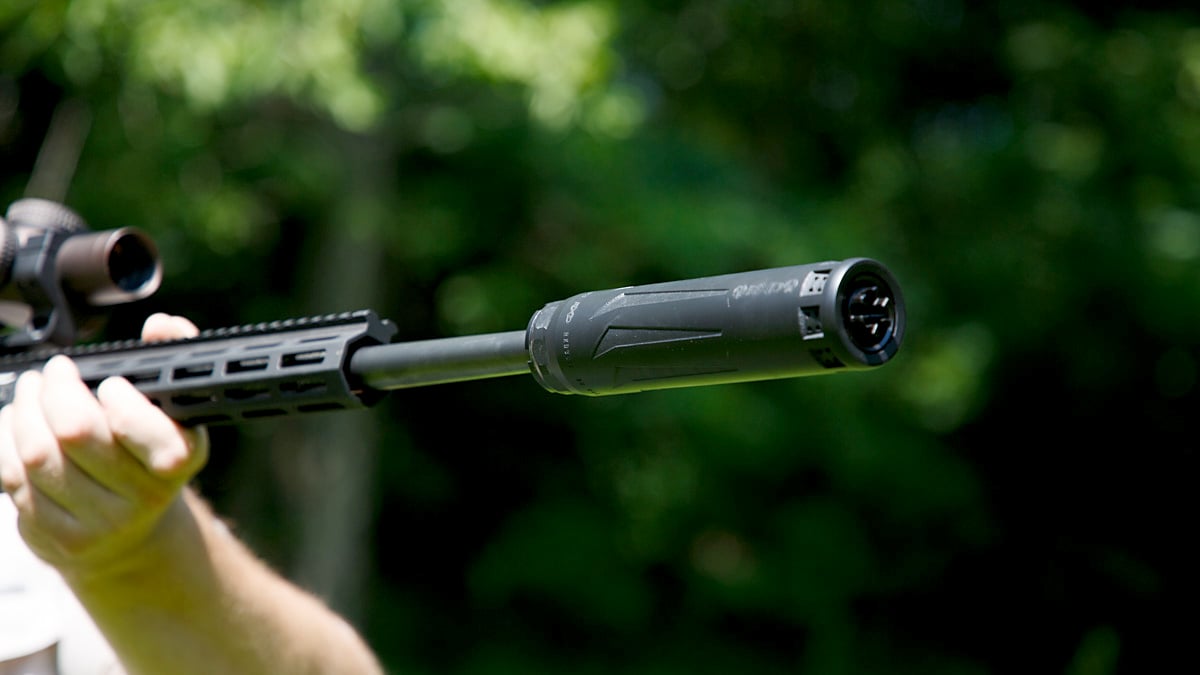
Some of the newer suppressor and baffle designs, like the Dead Air RXD30Ti and the SilencerCo Scythe, feature vents intended to reduce recoil. This is important, especially if you are shooting larger rifle calibers. After all, a suppressor is a safety device and should be designed to reduce wear on the firearm and wear on the shooter.
There are pros and cons to both systems, and at the end of the day it depends on the host platform, as does choosing a mounting system.
Mounting Systems
Mounting a suppressor sounds like a simple task, but there is no shortage of methods for fixing a suppressor to a barrel.
Direct Thread
The oldest, most common method of mounting a suppressor is by direct threads. Most modern firearms have threaded barrels, with a wide selection of thread pitches for different calibers.
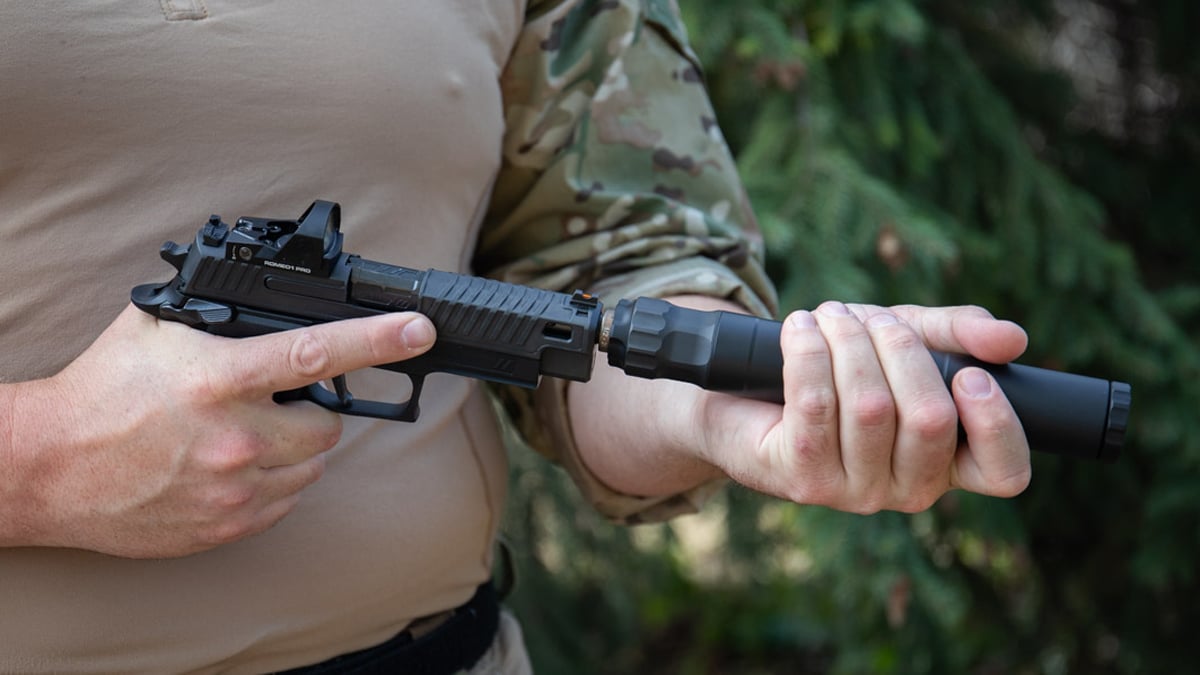
This is an easy and simple mounting solution. Having a suppressor directly threaded to your barrel eliminates extra parts, muzzle, devices, and pieces that can mean more weight and looser seals. Direct-threading a suppressor to a barrel is one of the most secure and reliable mounting methods.
Quick Detach
The more hip, cooler way to mount a suppressor is with a quick-detach system. QD cans and muzzle devices are trendy, and there are plenty of patterns available. The benefit of the QD system is that muzzle threads will never be exposed and a firearm can be swapped from suppressed to unsuppressed instantly.
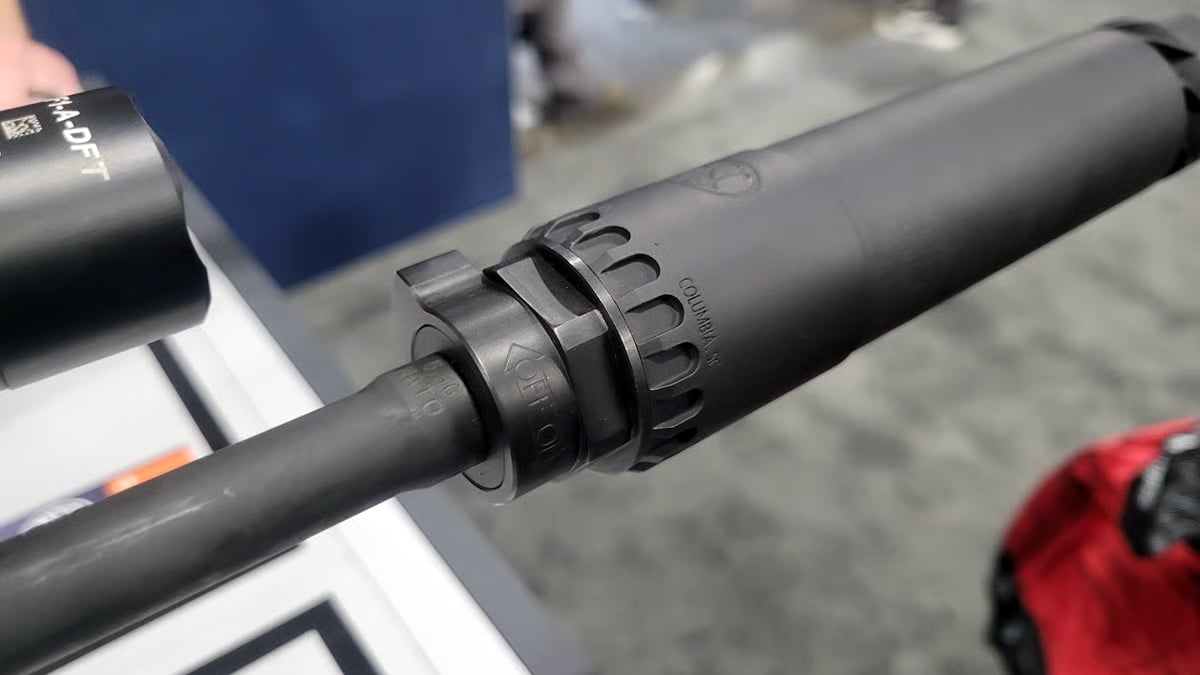
QD also means the same muzzle device can be used for several different firearms. It overcomes complications like varying thread pitches to make it quick and easy to move one suppressor to a plethora of different platforms. Additionally, certain muzzle devices like chamber brakes can act as additional baffles to further reduce sound.
There are several downsides to the QD system. First, it can be expensive. Most muzzle devices are at least $80. Second, it adds more pieces to the end of your gun, which increases weight. Lastly, depending on the mounting system, you might not get as tight of a seal as you would from a direct thread.
Piston for Handguns
Suppressing handguns is not as simple as suppressing a rifle. Most handguns are based on a Browning action with a barrel that needs to move for reliable function. This complication necessitates a piston or booster. Hanging weight on a barrel that moves can cause malfunctions; therefore, you need a piston with a spring that suspends the weight of the suppressor long enough for a reliable function.
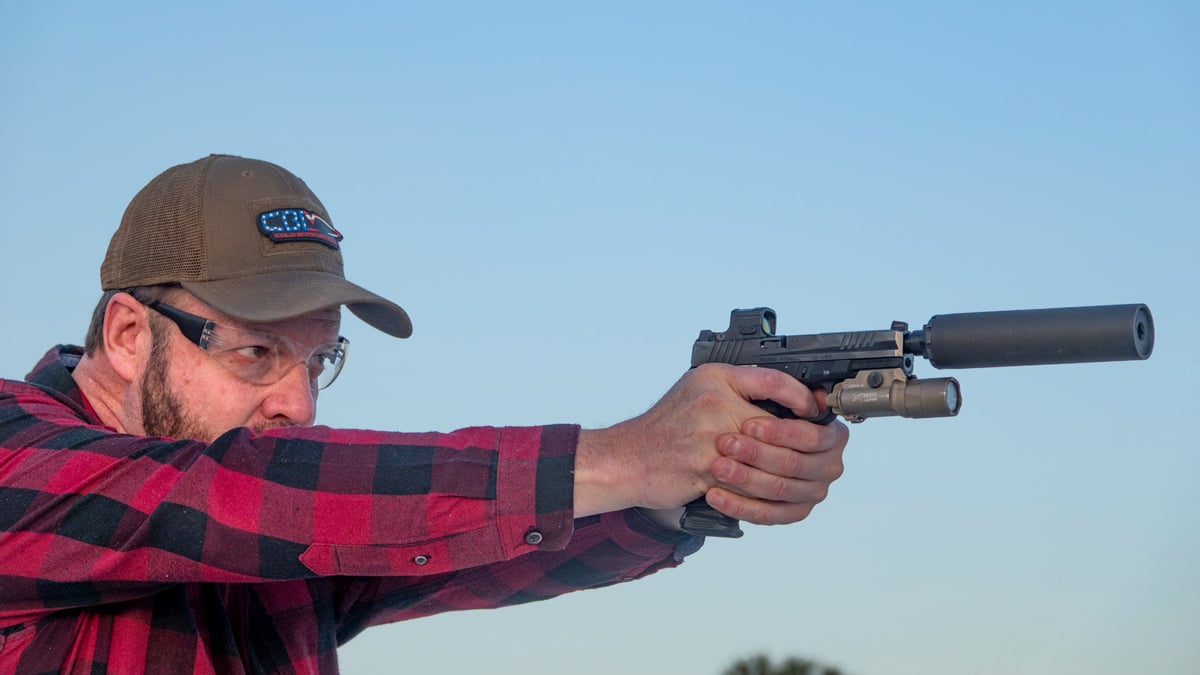
Pistons are often referred to as Nielsen devices, as an ode to the original patent. It is worth noting that a piston is not to be used with a fixed barrel. While most handguns operate on a Browning action, some use fixed barrels, and nearly every pistol caliber carbine uses a fixed barrel.
If a piston is attached to a fixed barrel, it can cause a baffle strike and damage the inside of your suppressor. Many handgun caliber suppressors have spacers that can be put together with a piston to fix the piston in place.
HUB
The most modern method of mounting a suppressor involves the industry-standard HUB. The suppressor HUB is a 1.375x24 thread pitch that allows the attachment of just about any of the mounting solutions we’ve already discussed.
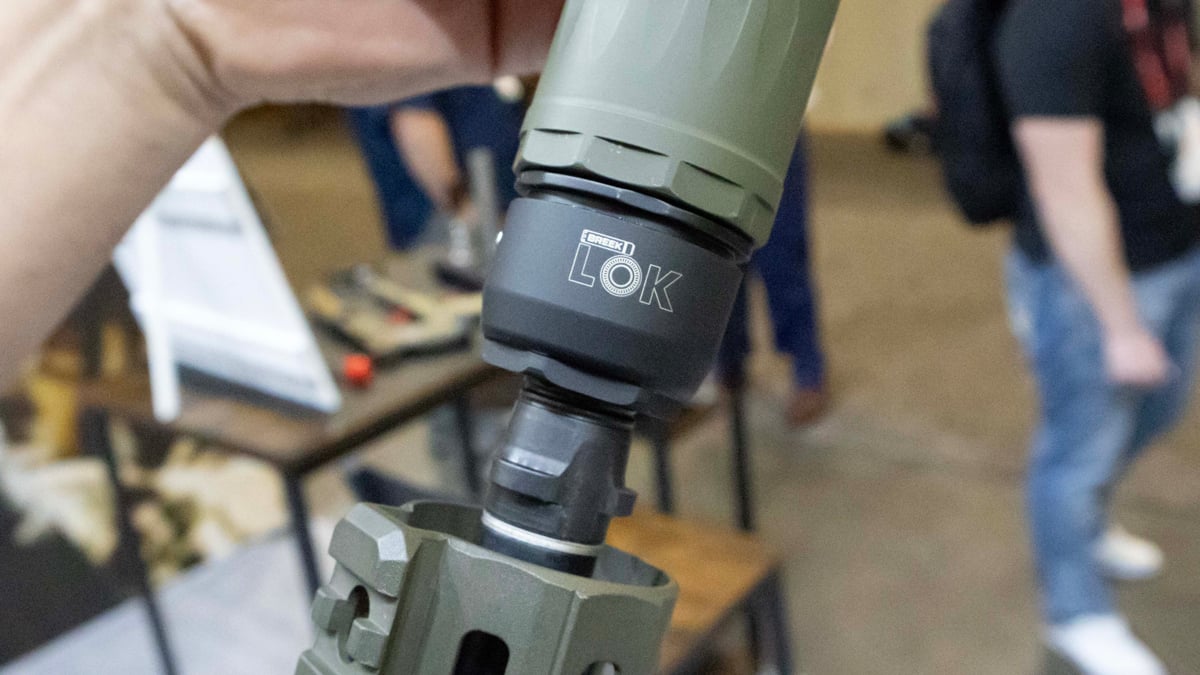
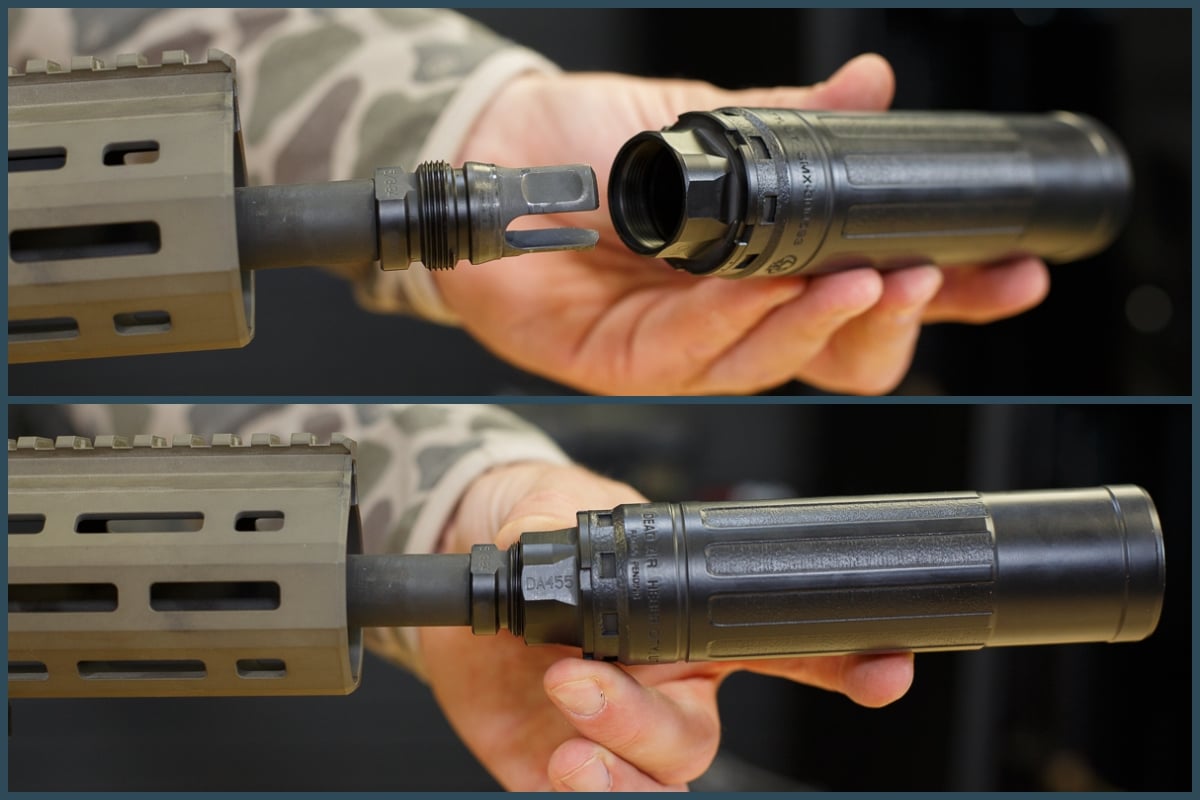
The beauty of the HUB is that you can mix and match manufacturers. Since the HUB threads are standardized, a HUB-compatible Rugged suppressor can now take a Dead Air Xeno HUB adapter. Thus, suppressors can be moved from platform to platform without limiting any brand to one mounting system.
The downside of the HUB design is that extra pieces add weight. Especially if a suppressor is QD, you are now adding the weight of the suppressor, the weight of the muzzle device, and the weight of the adapter to the end of your firearm.
Caliber Ratings
The last thing to consider when selecting a suppressor is the caliber rating and tolerance. The suppressor can shoot the caliber it’s sized for and anything smaller. For example, the Dead Air Sandman X is a .30-caliber can, so it can fire anything from .30 caliber down to .17 HMR.
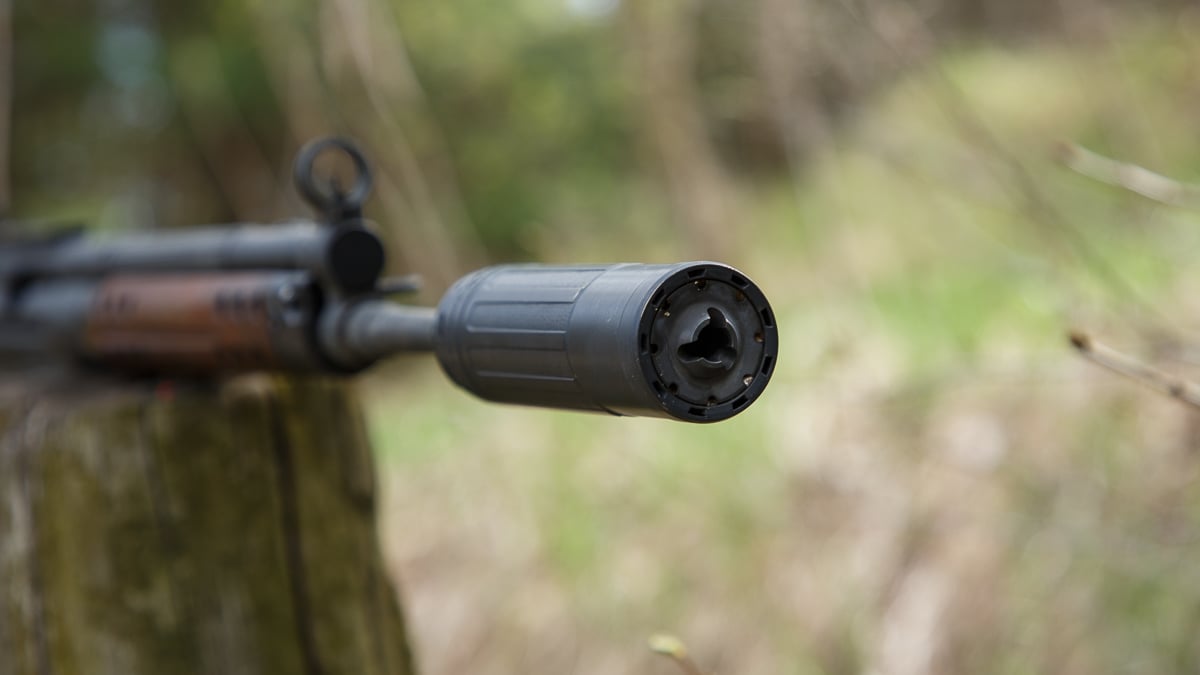
The exception to that rule is handgun-specific cans. Handgun calibers operate in much lower pressures than rifle calibers, so most handgun cans are not rated for rifle pressures. While a 9mm (.36-cal) suppressor can technically fit a .223 Rem round, it may not be rated for that pressure, which bring us to our next point: suppressors also have pressure ratings.
Sticking with the example of the Sandman X, that can is rated for .300 Remington Ultra Magnum, basically meaning it can handle almost every .30-caliber round. Other .30-caliber suppressors may only be rated for rounds like .300 Blackout, so it is always important to check the maximum caliber rating with the manufacturer.
Firing Schedules
Suppressors are also rated for different firing schedules. Put in simple terms, a suppressor may be full-auto rated or not, which is important for folks who do a lot of training, lots of shooting with rapid follow-up shots, or use FRTs and echo-triggers.
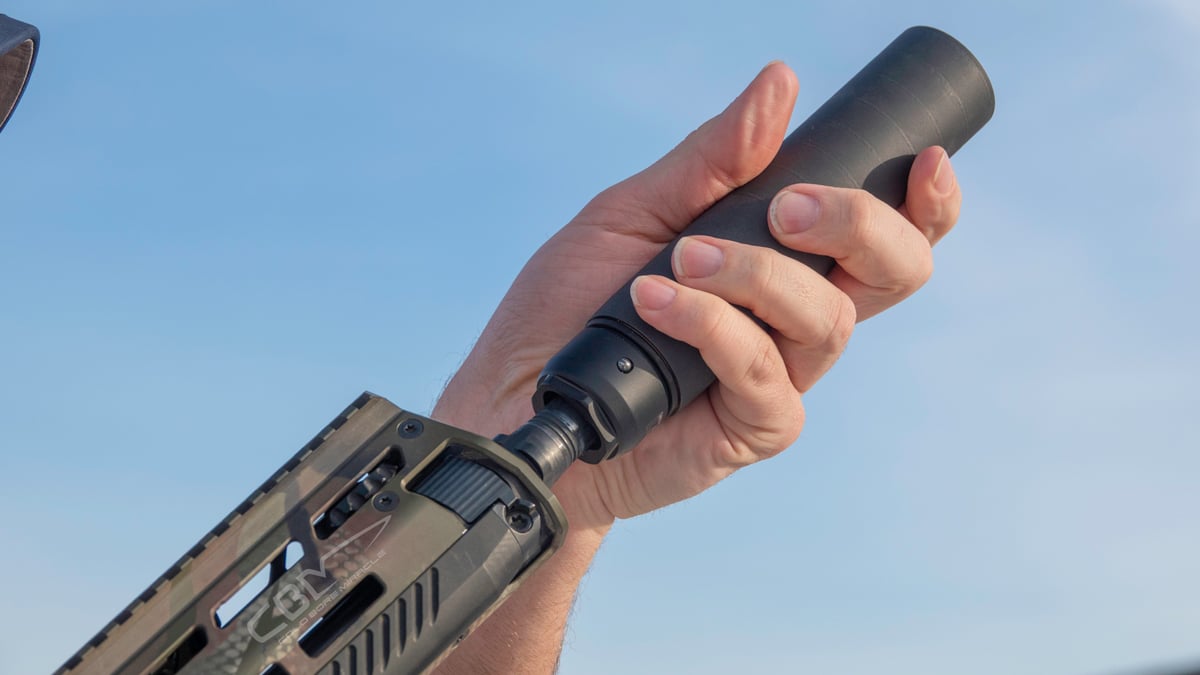
There is not really a consensus on what a full-auto rating means, as there are different standard standards set by different companies and organizations. Anytime a suppressor says that it is full-auto rated, you should double-check the manufacturer’s definition.
For example, an Anechoic 30L is full-auto rated for about 20-30 rounds of .308 Win and then a cool-down period, whereas most Surefire suppressors are tested at the SOCOM Table 2 standard of eight 30-round magazines in rapid succession.
Summary
Trying to learn about suppressors to make an informed decision can feel like drinking from a fire hose. It is important to assess your needs and intended purpose of the suppressor, then research as many suppressors in that particular category. No suppressor is perfect for every single firearm or application, and a lot of of it comes down to personal preference.
The most important thing to remember is to start shooting suppressed. Suppressed shooting is the civilized way to shoot, and ultimately it is a safer way to shoot. Once you start shooting suppressed, you’ll never go back.