Birth of the AK
The first thing that normally throws some people off is the term “AKM.” The AK design dates to the 1940s, and often rocks the nomenclature AK-47, "AK" standing for "Avtomat Kalashnikova" (or automatic Kalashnikov rifle) and the year of 1947.
The rifle was designed by a Soviet Army officer named Mikhail Kalashnikov. As legend goes, he was frustrated that the Soviets could barely field one bolt-action rifle per three men, while the Germans were fielding semi- and full-automatic designs. At some point, he encountered the STG-44, which got him thinking about what he could design.

In 1945, the Soviets adopted the 7.62x39 cartridge, rivaling the German 7.92x33 Kurz round. Both cartridges laid the groundwork for the transition to the intermediate rifle cartridge. The idea was that these smaller rounds would bridge the gap between the full-powered rifle and submachine gun cartridges, offering versatile performance.
What’s In a Name?
In 1945, Mikhail Kalashnikov did work on a rifle with the goal of military adoption, but the SKS became the new service rifle for the Soviet Union. After going back to the drawing board, Kalashnikov introduced a design in 1947 for military trials. The rifle went through several tests, some updates, and was adopted in 1949.
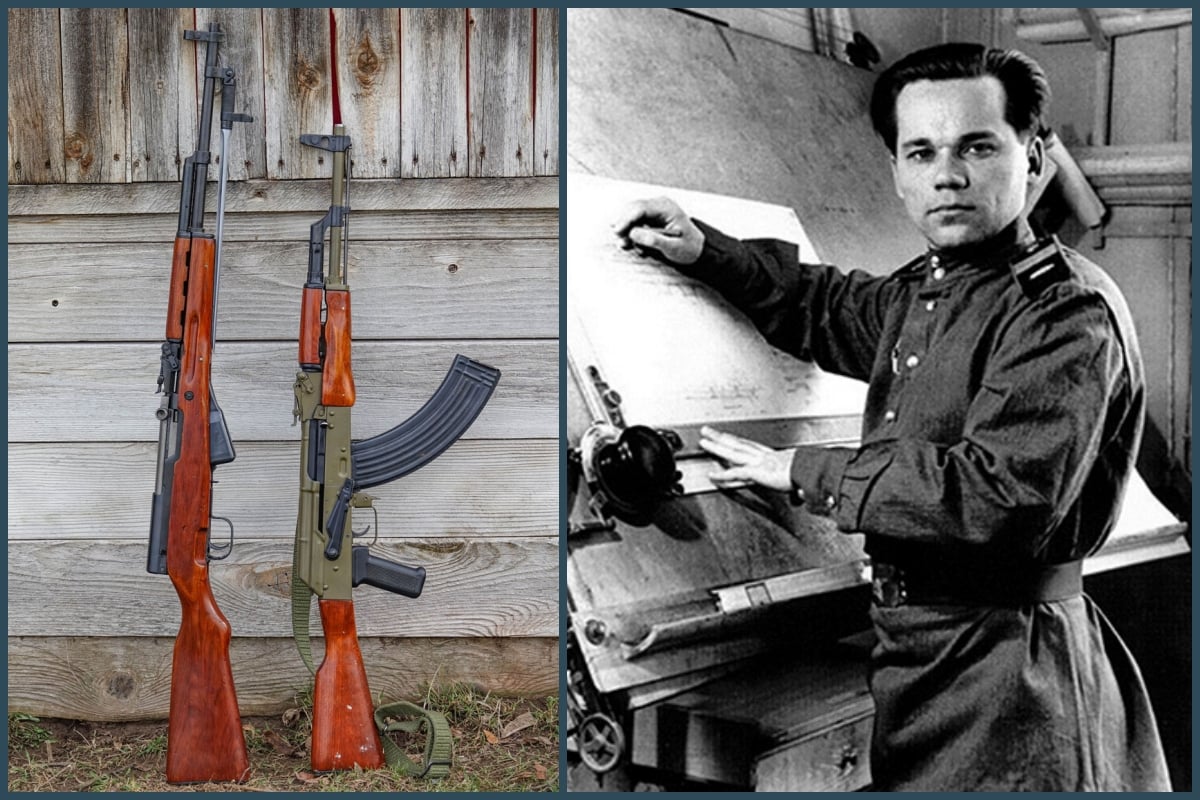
This is where the confusion with the name began. The AK-47 is the term that everyone knows, starting with the 1947 contract rifle. That rifle went through several iterations, with the Type 2 having a milled receiver and the Type 3 finally getting the lightened stamped receiver. Still, with all these design changes and production challenges, the AK-47 was not the mass-produced version of Kalashnikov’s design that many people think it is.

In 1959, the AK got a makeover. A new stamped receiver was added along with the iconic AK slant muzzle brake on a threaded barrel, and a lightening in the design that dropped almost a pound of weight. This rifle was designated the AKM, with the “M” standing for modernized.
Popularity
The AKM became one of the most mass-produced and widely adopted service rifles in the entire world, seeing conflict on pretty much every continent. The design was ubiquitous and was associated with communist nations around the globe. The rifle also gained a reputation for being nearly indestructible, with mythical reliability.


The AKM was cheap to manufacture, easy to learn, and was made to loose tolerances, which helps it function reliably. Outside of military and insurgent service across the globe, the rifle is also extremely popular in domestic use. Since the 1990s, the AK has had a stronghold of users in the United States.
AR-15 Rivalry
The rifle was deployed opposite the American AR-15 (M-16) design in several combat zones, creating a deep rivalry. The AK is often seen as much more reliable than the AR-15 and much less accurate.
Both are false assumptions.

(Photo: U.S. Army Heritage and Education Center)
The AR-15 is extremely reliable and the system well sealed. The AK has more openings for dirt and fouling, but the loose tolerances can aid in reliability. The long-stroke gas piston runs cleaner than the direct gas impingement of the AR.
One contributing factor to the AK’s reputation for being extremely reliable is that actual AK-47s are still in use in many parts of the world, after years of firing surplus corrosive ammo. The design seems to last forever.


Function
While the AKM may look a bit like a German STG-44, it functions differently. Like the M1 Garand, the AKM is operated by a long-stroke gas piston. The gas block just behind the front sight redirects gas onto a piston rod that pushes back on the bolt and recoil spring.
The AKM receiver has a loose stamped metal piece that hinges over the receiver as a dust cover. This piece is held in place by the recoil springs and protects the chamber, bolt, and trigger housing. Because of the loose nature of the piece, it can be hard to mount optics that hold zero. Many modern AKs have a side-mounted optic system for a more solid mechanism.


The long-stroke gas piston can run more cleanly, as the bled-off gas and debris actuates a rod that is far away from the chamber. This can also make it harder to suppress, as the piston bleeds off excess gas and makes a "pop."

The 16.3-inch barrel is standard for almost every AK, with a tangent rear sight mounted to the trunnion on the receiver and a fixed front sight block. Over 60 years later, the slant brake is still extremely popular with most modern AKM productions.
Controls
The AKM’s controls are simple. A paddle-style safety lever covers the right side of the receiver. This lever can be dropped down to put the gun into “fire” and doubles as a dust cover and a way to prevent the bolt from being charged.

The magazine release is a simple flap in front of the trigger guard. Once released, the magazine can be rocked in or out of place.
Summary

The AKM is one of my favorite rifles. There is no denying the impact the design has had on history, and there many reasons to love and shoot it. Everyone should have an AK in their collection.